
Gond art Symbolism
Gond Art Symbolism: The Sacred Tree and What It Reveals About a Forest People's Worldview
Explore the symbolism of Gond art, from its intricate patterns and animal motifs to the stories, beliefs, nature, and traditions behind them.

Rooftop
Author
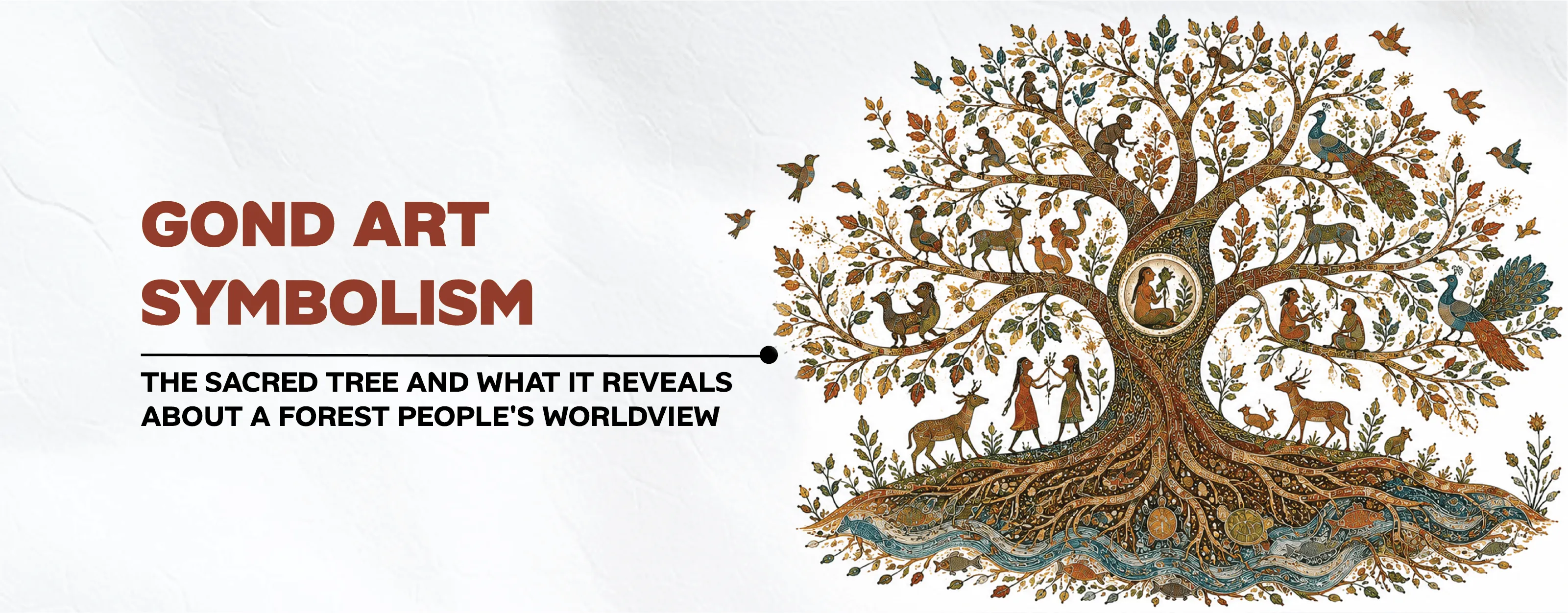
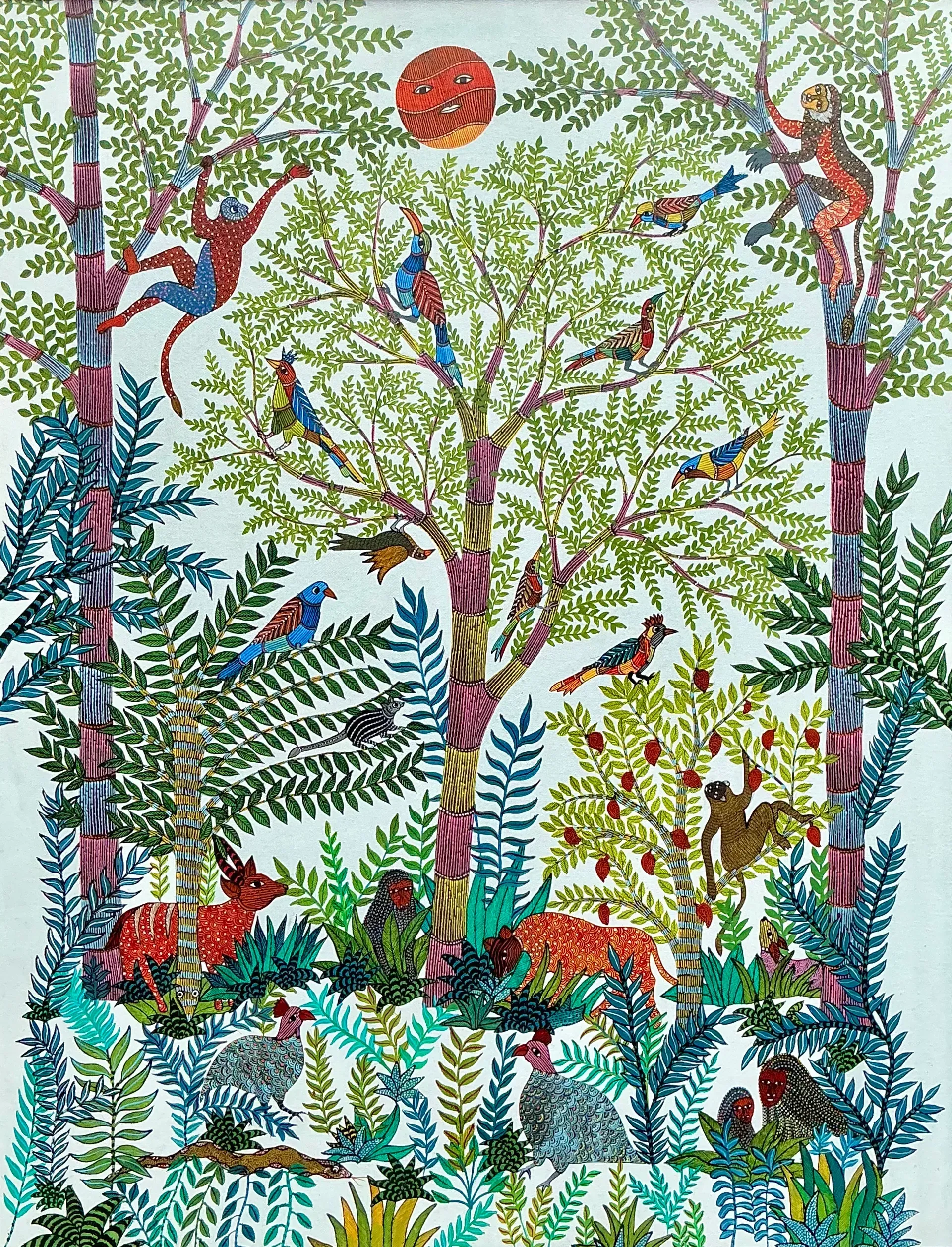
To gaze at a tree in a Gond painting is to see far more than a botanical subject. In the Jangarh Kalam tradition, the tree often becomes the centre of a larger world, connecting humans, animals, spirits, and ancestors within the same composition. These figures do not exist in separate hierarchies. They share the same space, reflecting a view of nature in which different forms of life are closely connected.
This sense of connection is also reflected in the way Gond artists build their compositions. Branches can extend into birds and animals, while roots spread into the earth below, allowing one form to flow naturally into another. The tree therefore becomes a visual link between the different parts of the natural and spiritual world, with its patterns and lines holding the composition together.
Why Is the Tree Not a Tree?
Tree Gond Art
In Gond cosmology, the tree connects paatal, dharti, and aakash: the netherworld beneath the earth, the world of the living, and the sky where the ancestors reside. Its roots reach down into paatal, connecting the tree to the spirits of the earth, while its branches stretch towards aakash and the world above.
There is no sharp divide between what lies beneath the tree and what grows above it. The roots and branches are part of the same living form, moving in opposite directions while remaining connected to the same source. The tree therefore brings together death and life within a single image. Its roots disappear into the dark earth, while its canopy reaches towards the light, reflecting the cyclical relationship between what dies, what remains, and what grows again.
Every Creature Has a Place
Look closely at a Gond painting and the animals and birds are rarely there simply to fill an empty space. They belong to the world being depicted. A peacock may appear among the branches, a snake may wind through the roots, or a tiger may emerge from the dense patterns of the forest. Each creature carries its own associations within Gond beliefs and adds another part to the story of the natural world.
The Peacock (Mor)
Gond Peacock
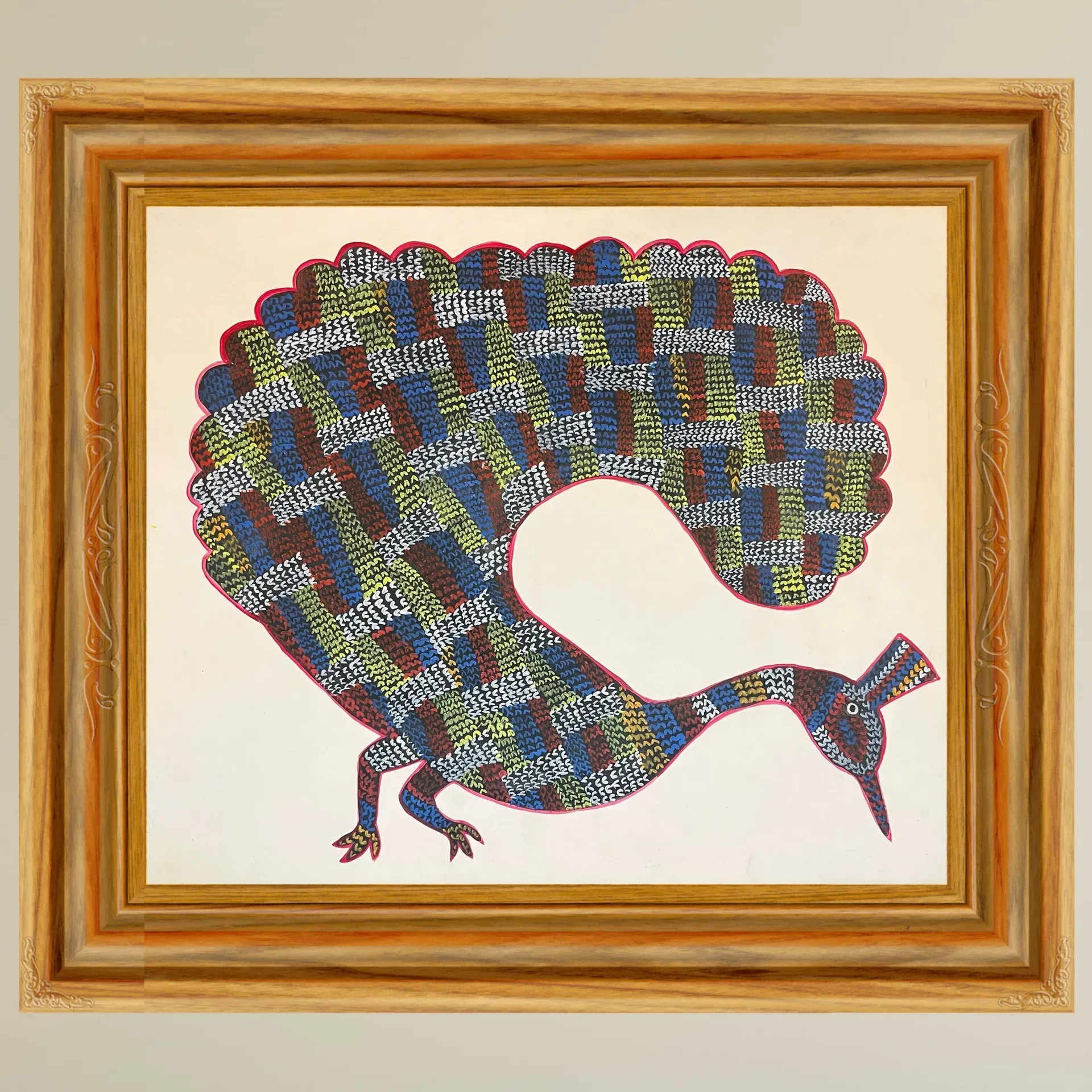
The peacock is closely associated with the monsoon and the arrival of rain. Its presence can therefore bring ideas of fertility, prosperity, and renewal into a painting. The bird also occupies a place between the everyday and the spiritual, making it a recurring figure in Gond imagery. Its elaborate form gives artists plenty of scope for the detailed patterns and lines that define the tradition.
The Snake
Snake Gond Art Credit - International Indian Folk Art Gallery
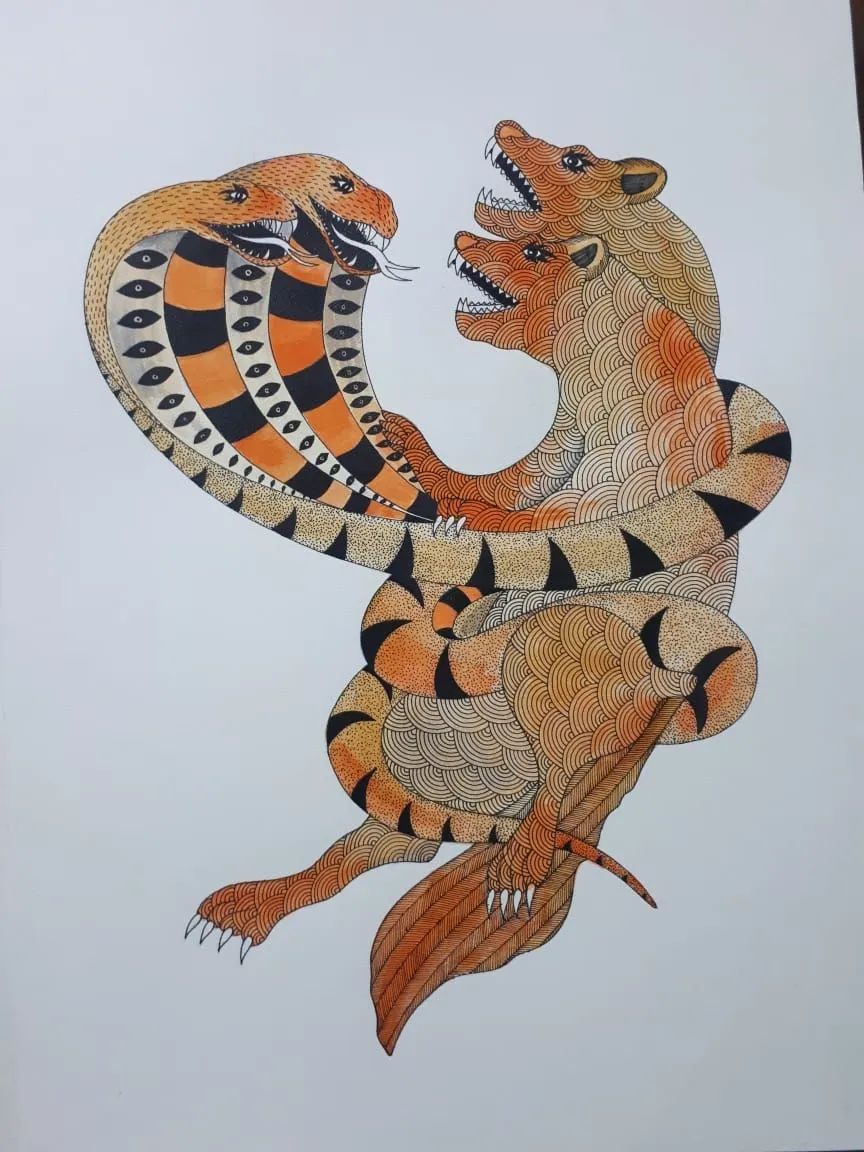
The snake is often associated with the earth beneath our feet and the hidden world below it. When shown around the roots of a tree or moving through the undergrowth, it can represent a connection to underground spaces, water, and the forces that remain unseen. Its position near the roots also ties it to paatal, the netherworld that forms part of the Gond understanding of the universe.
The Tiger (Baghbana Dev)
Tiger Gond Art
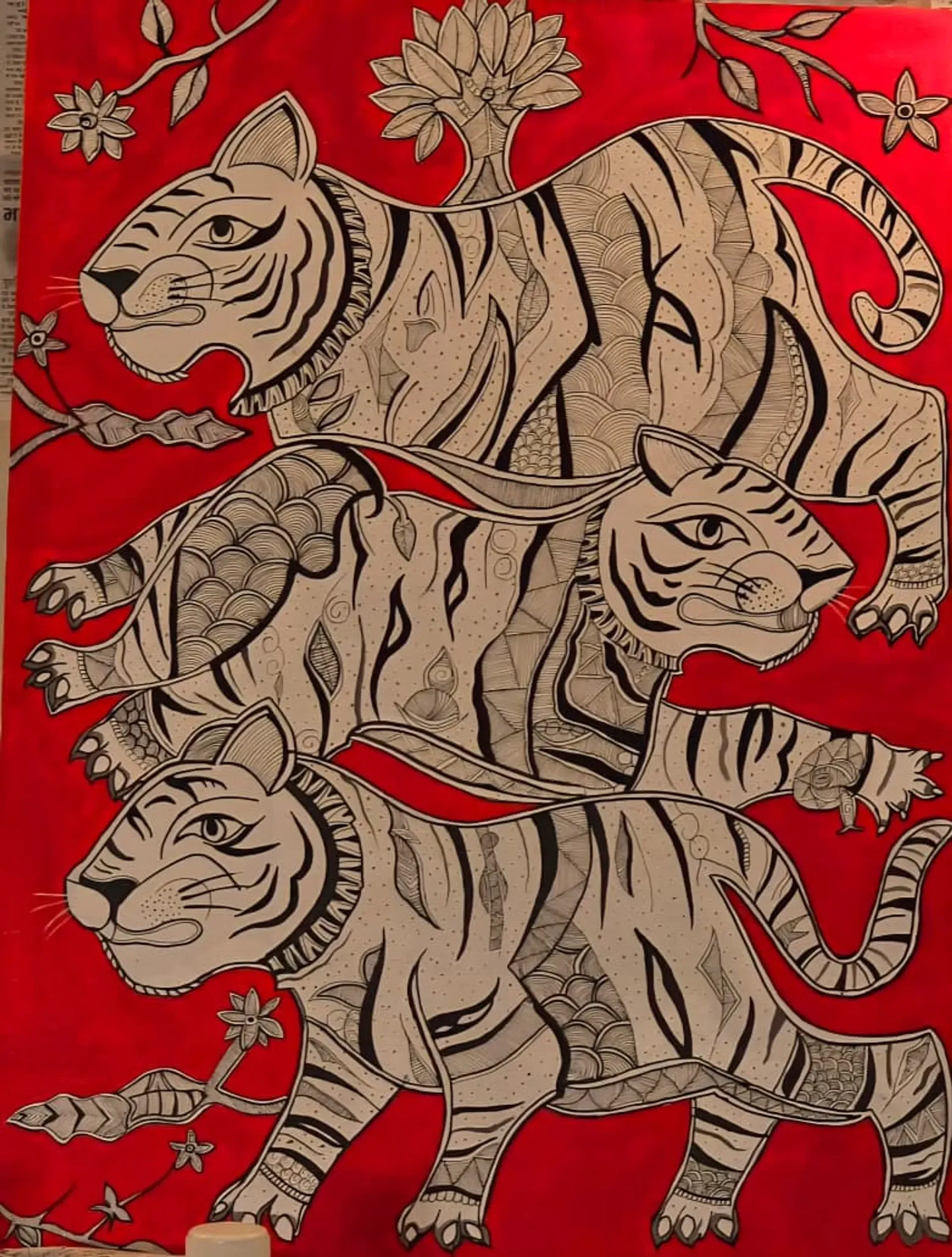
The tiger carries a different kind of presence. As Baghbana Dev, it is associated with the forest and its power, marking the space where the human world meets the wild. Its appearance in a painting can therefore suggest both reverence and caution. The tiger is not simply another animal in the forest. It represents a force that humans must recognise and respect.
Placed within the tree, these creatures become part of the same world as the humans, spirits, and other forms of life around them. The branches, roots, animals, and figures overlap and connect rather than being separated into individual scenes. That is one of the striking things about Gond compositions: the forest is presented as a shared space, where every creature has a place within the larger picture.
The Fill Pattern as Prayer
The tiny lines, dots, waves, and dashes that fill the forms in a Gond painting are among its most recognisable features. They can look like simple decorative patterns at first, but for the artist, making them requires time, patience, and sustained attention. A single leaf, bird, or animal may contain hundreds of repeated marks, each one placed by hand.
This repetition can also become a meditative part of the painting process. Patterns such as lehers (waves) and sarson ke daane (mustard seeds) require the artist to work slowly and consistently, turning the act of painting into a practice of concentration. In some Gond traditions, this relationship between repetition, focus, and devotion is closely connected to the spiritual character of the art.
Dots and lines also do more than create texture. They give movement and life to figures that might otherwise appear flat on the surface. A bird's body can be filled with one pattern, a tree with another, and an animal with another, giving each form its own rhythm while keeping the entire composition connected. What may first appear to be a collection of tiny marks is therefore an important part of how a Gond painting is drawn, understood, and experienced.
What the Gond Worldview Asks the Viewer?
A Gond painting does not always place the human figure at the centre of the scene. Animals, trees, birds, and spiritual beings can occupy just as much space and receive the same attention to pattern and detail. A tree may be as carefully rendered as the person standing beside it, while an animal can command as much attention as the human figures around it.
That way of composing a painting reflects a different understanding of the relationship between people and nature. Humans are part of the forest rather than separate from it, and the natural world is not treated simply as a backdrop to human life. This is particularly visible in paintings where people, animals, trees, and spirits appear within the same interconnected space.
Seen today, this perspective can also feel relevant to the way we think about environmental damage. Gond art does not present nature as something existing outside human life. The tree, the river, the animal, and the person are connected, so damage to one affects the world around it. The paintings invite the viewer to look at that relationship rather than seeing humans as separate from the natural world.
Why Does This Philosophy Survive in Paint?
For generations, Gond knowledge was passed down through stories, songs, and oral traditions. Pardhan bards played an important role in this process, using the Bana to accompany songs about the community’s history, beliefs, gods, and relationship with the natural world. Much of this knowledge lived in memory and performance rather than in written records.
As changes to forest access and land ownership disrupted traditional ways of life, keeping these stories and beliefs alive became increasingly important. Painting eventually offered another way to record and pass on this knowledge. Images of trees, animals, spirits, and stories from Gond mythology could carry ideas that had previously been shared through oral traditions.
This became especially significant when Gond artists began working on paper and canvas in the 1980s, with Jangarh Singh Shyam playing a major role in that transition. The move from walls and other traditional settings to portable artworks allowed Gond imagery and stories to travel beyond the communities where they originated. The paintings could now be preserved, exhibited, collected, and passed from one generation to another, giving Gond artists another way to keep their cultural knowledge visible.
You Understood Gond Art, Now Learn it
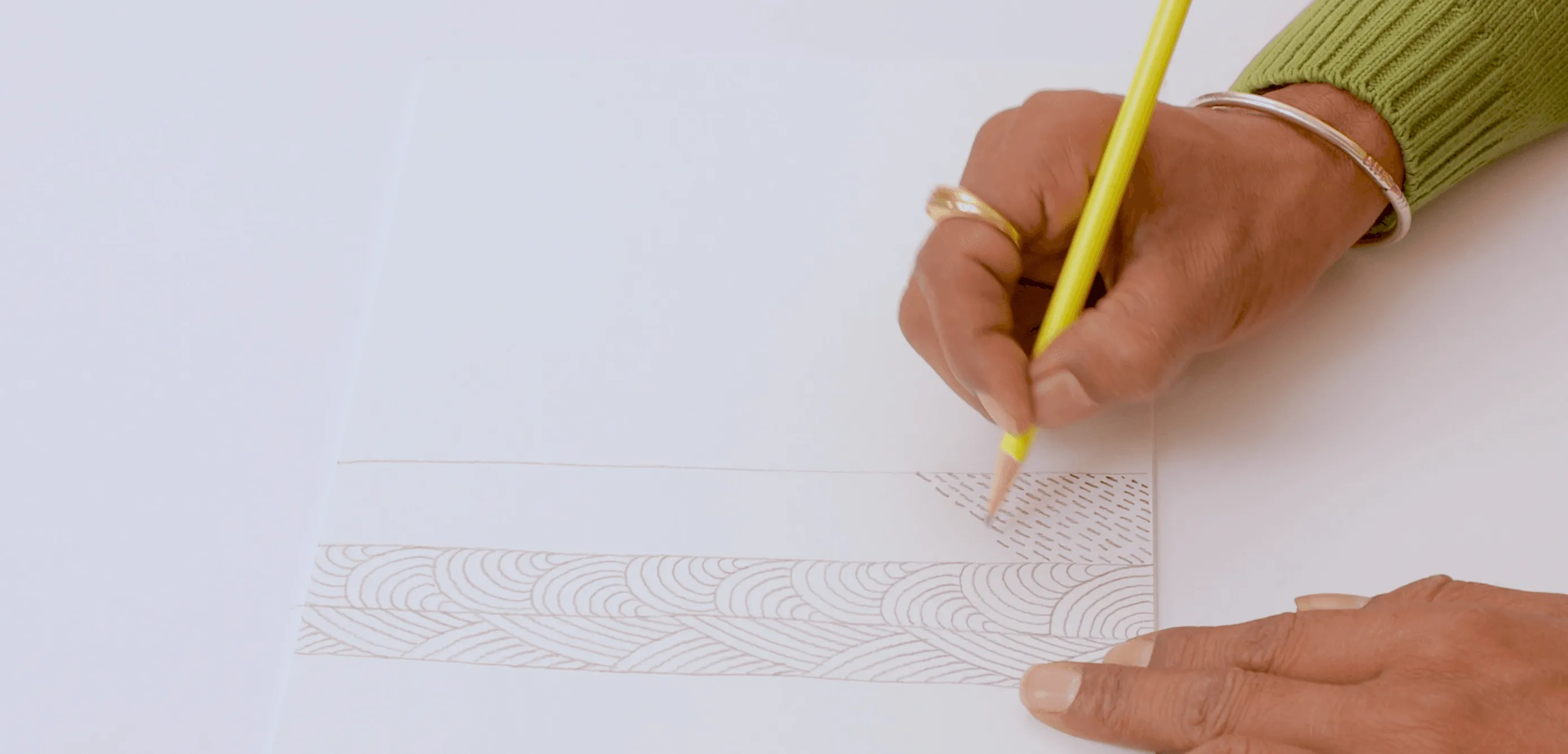
Gond Art First Session
Understanding Gond art means looking beyond its colours and intricate patterns. The trees, animals, stories, dots, and lines all come from a way of seeing the world that has been carried across generations. Learning how those elements are created offers another way to appreciate what goes into a Gond painting and why its visual language continues to matter.
For those who want to take that understanding further, Rooftop’s Gond Art Course with Venkat Raman Singh Shyam offers the opportunity to learn directly from an artist who has practised the tradition for more than four decades. Across 6 hours, 4 chapters, and 28 lessons, Venkat takes learners through the history and origins of Gond art, its patterns, brushes, colours, and creative process, followed by beginner, intermediate, and advanced lessons. Rather than treating Gond painting as a collection of patterns to reproduce, the course introduces the ideas and techniques behind the art and gives learners the tools to develop their own work.
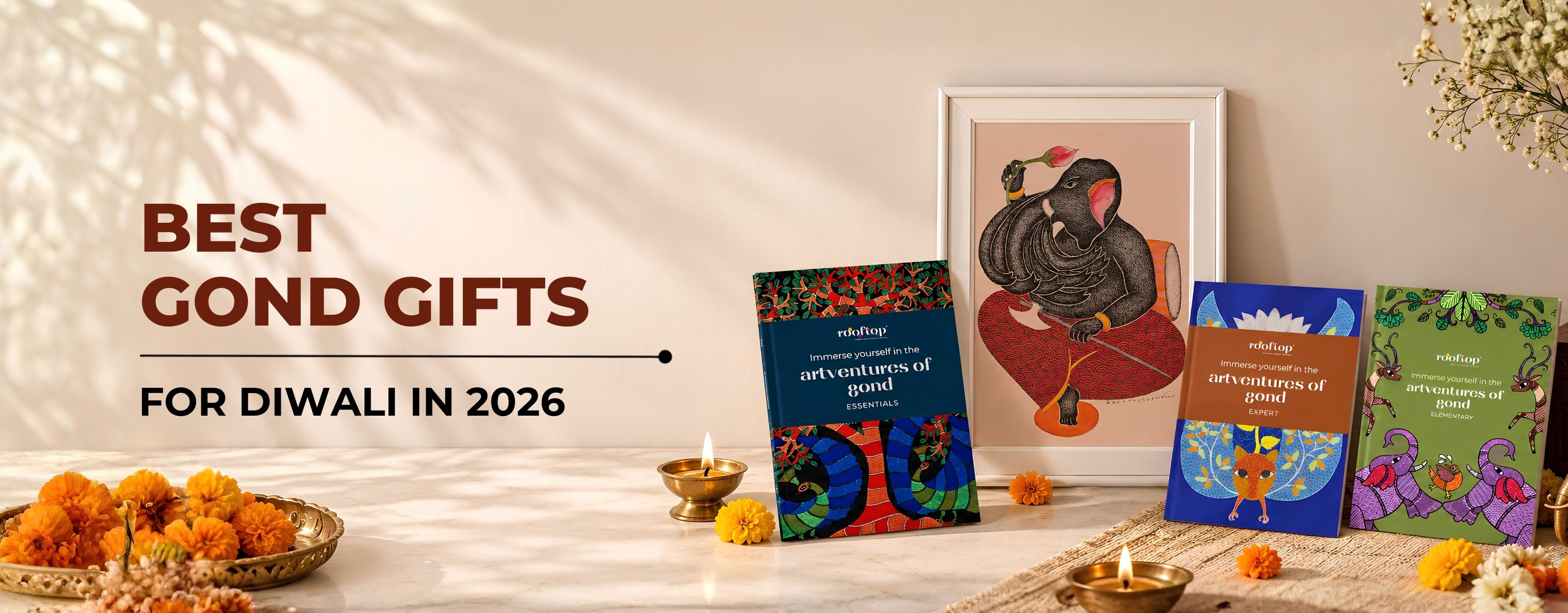
Rooftop’s Artventures of Gond series offers another way to explore the tradition through books. The series includes Artventures of Gond: Elementary, Essentials, and Expert, allowing readers to build their understanding progressively, from the basic visual language of Gond art to its more detailed techniques and ideas.
Gond art has travelled a long way from the walls and forests where its stories were first passed down. However, its continued life depends on people seeing, understanding, and learning it. Whether you begin with its stories, study its patterns, or pick up a brush yourself, engaging with Gond art is also a way of keeping that visual language in use.