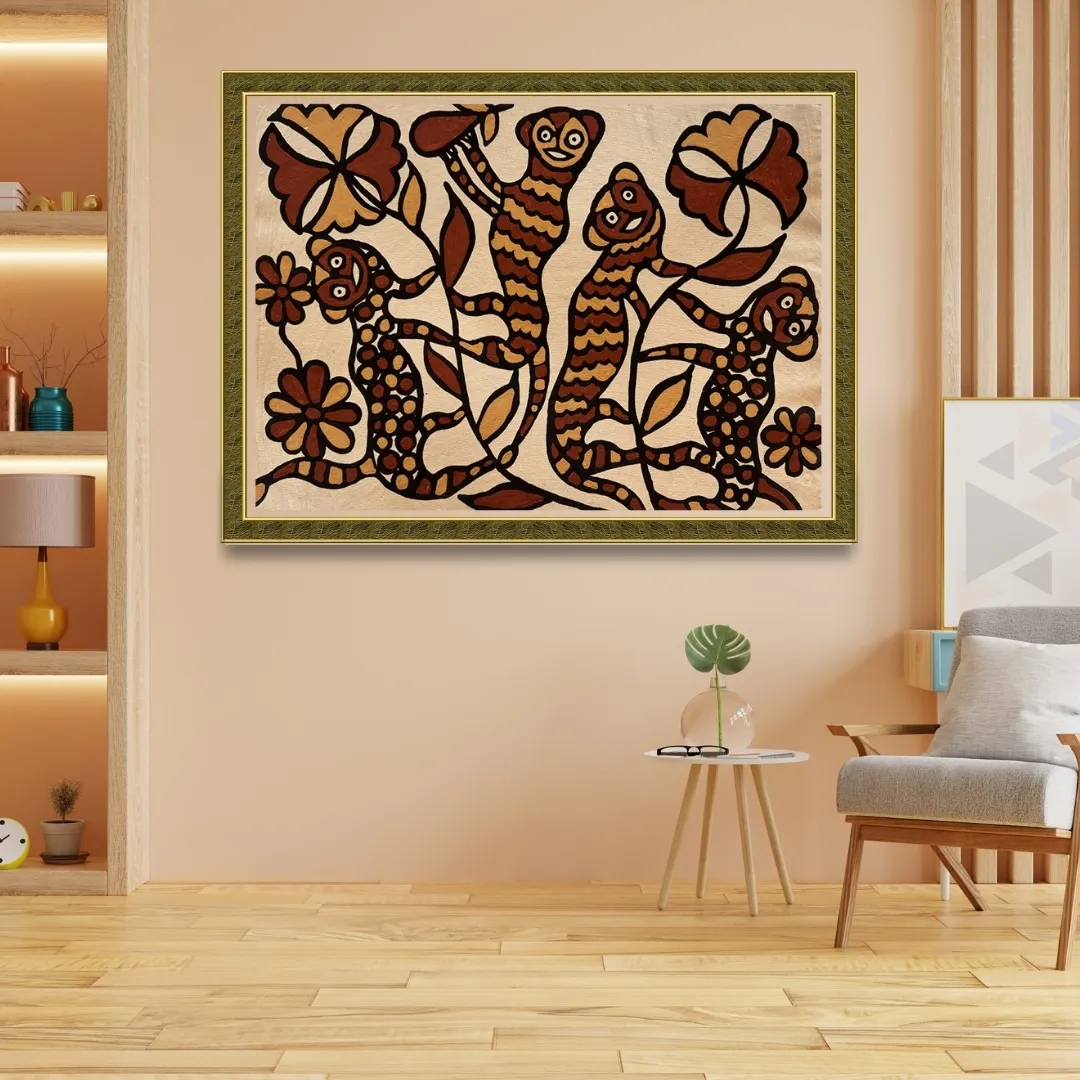
The Playful Canopy
$ 829


Let's learn about Sohrai art form!
Deep in the forests of Hazaribagh, Jharkhand, women from the Munda, Oraon, and Santhal tribes pick up handfuls of earth each year — black, white, red, and yellow — and turn the walls of their homes into something extraordinary. Sohrai art is a ritualistic wall painting tradition practised on the day after Diwali, when the harvest is in and cattle are honoured. Rooted in nature worship, community life, and a worldview that sees animals as embodying sentient spirits, Sohrai art is one of the most authentic expressions of Indian folk art still alive today. Each year, this sohrai festival art draws entire communities together in celebration.
What Is Sohrai Art?
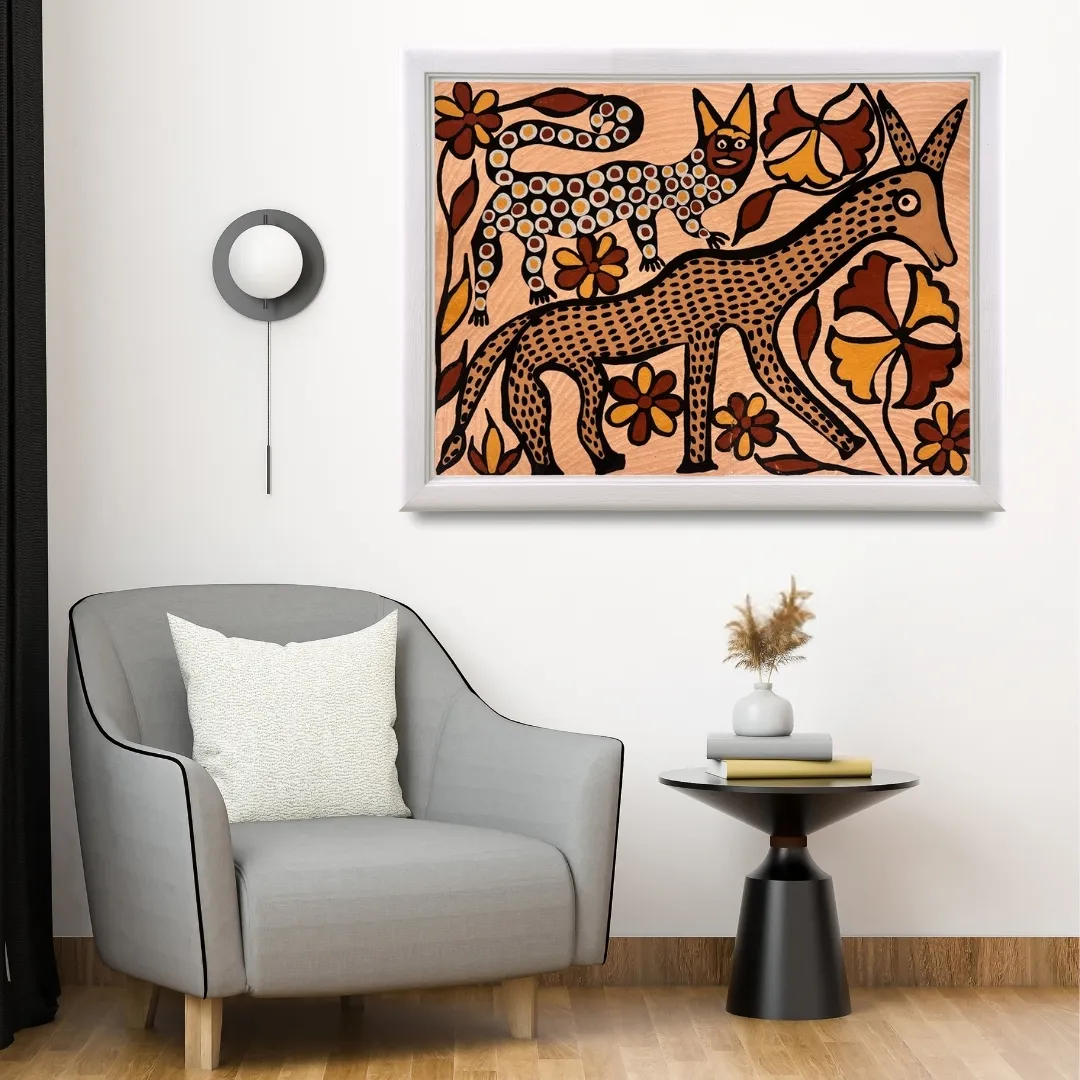
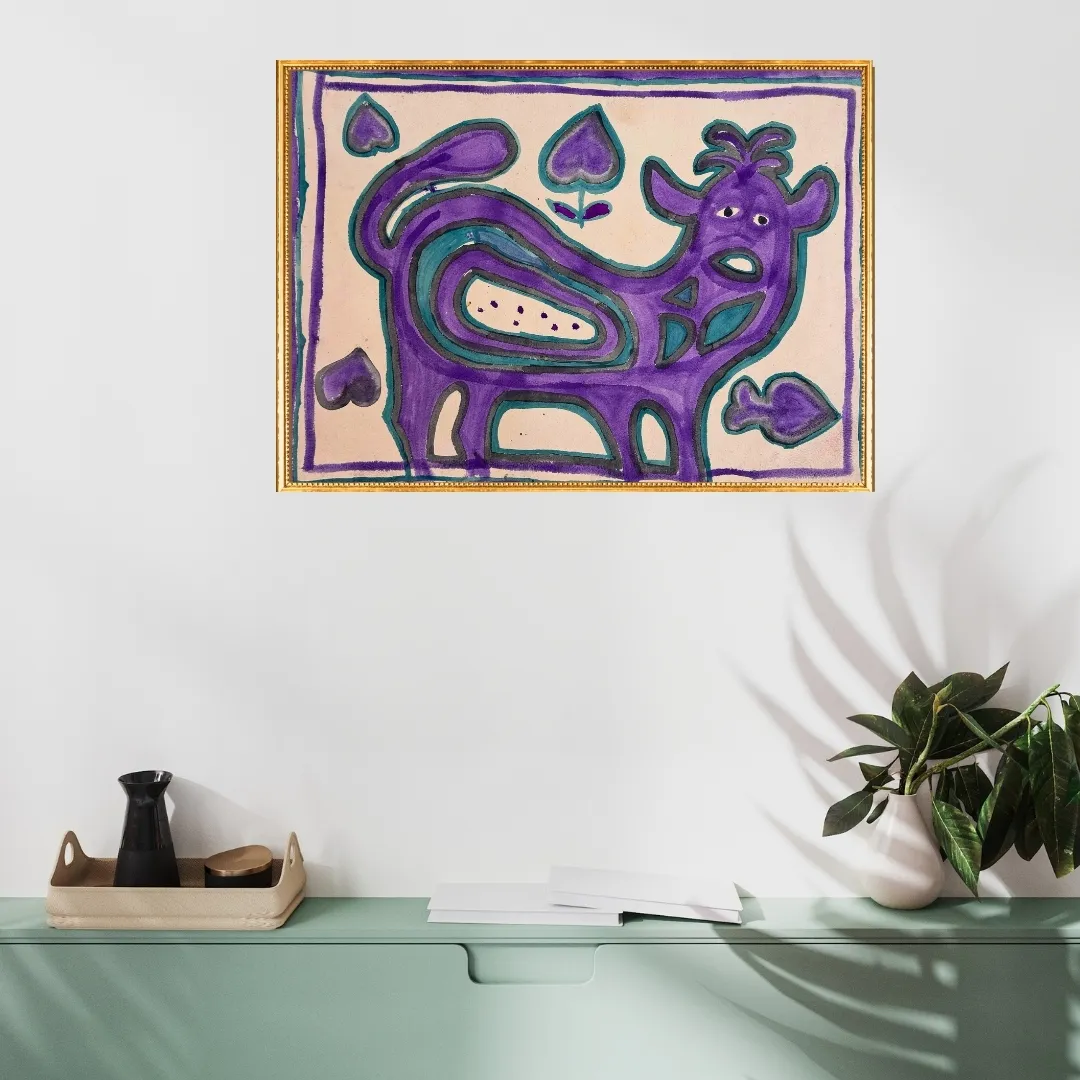
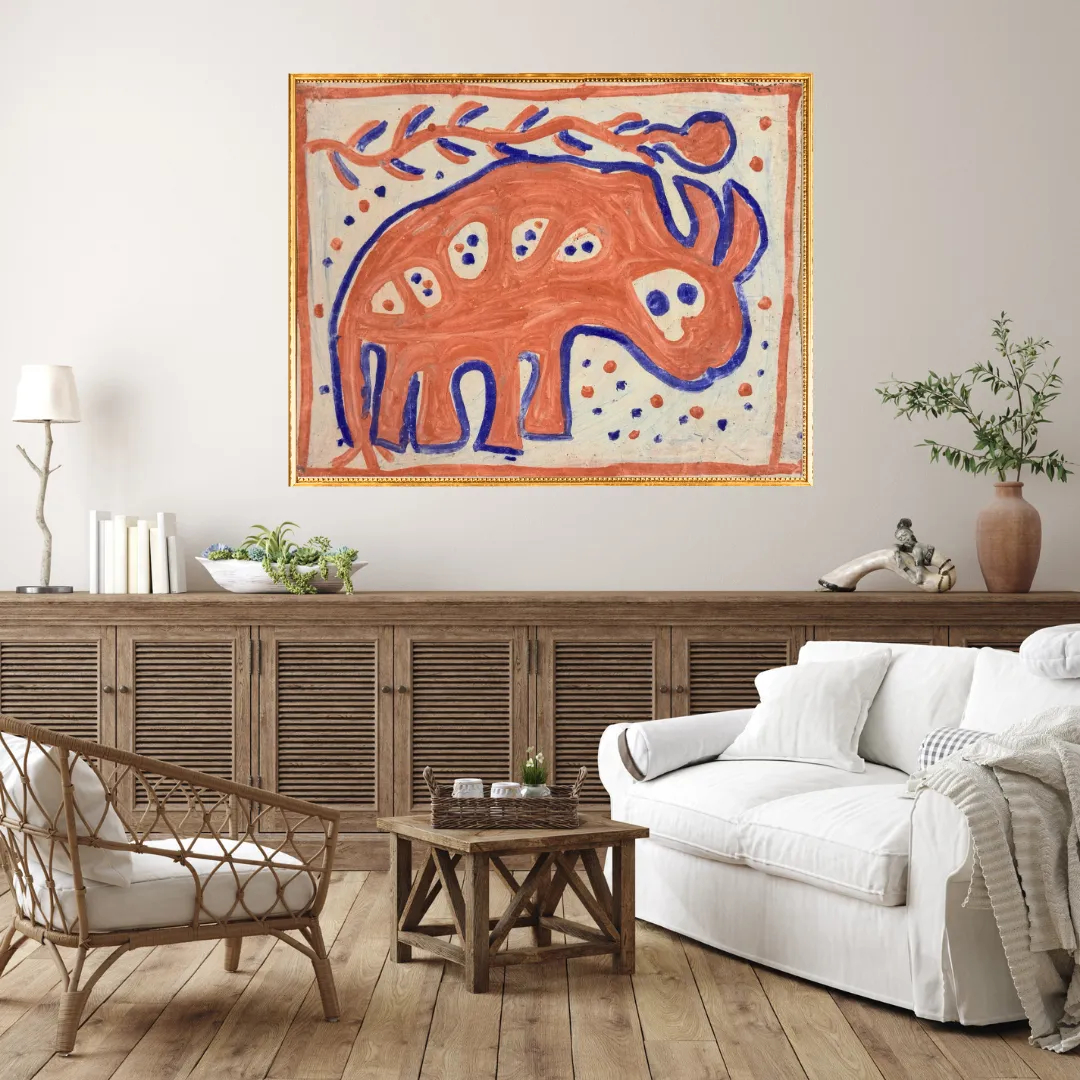
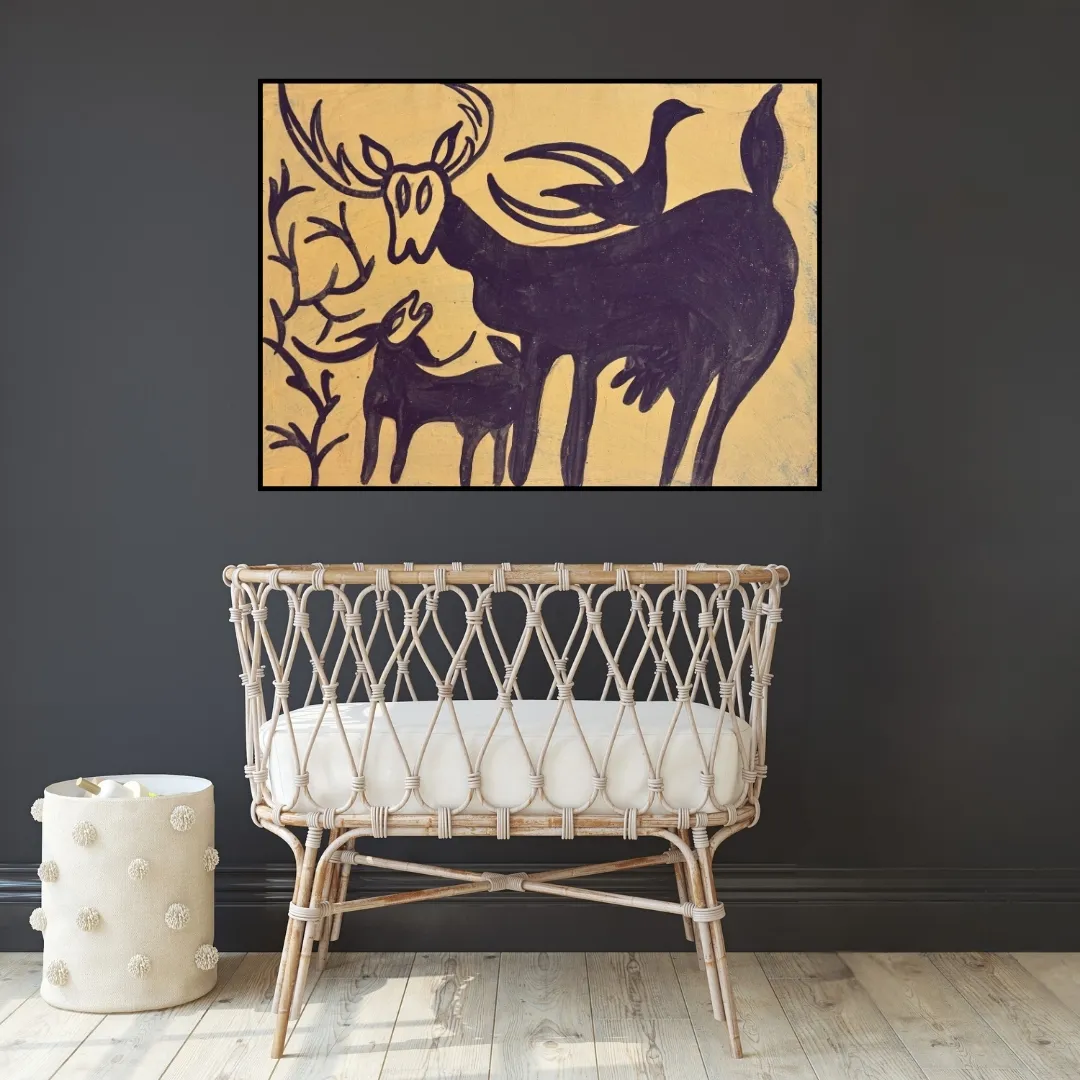
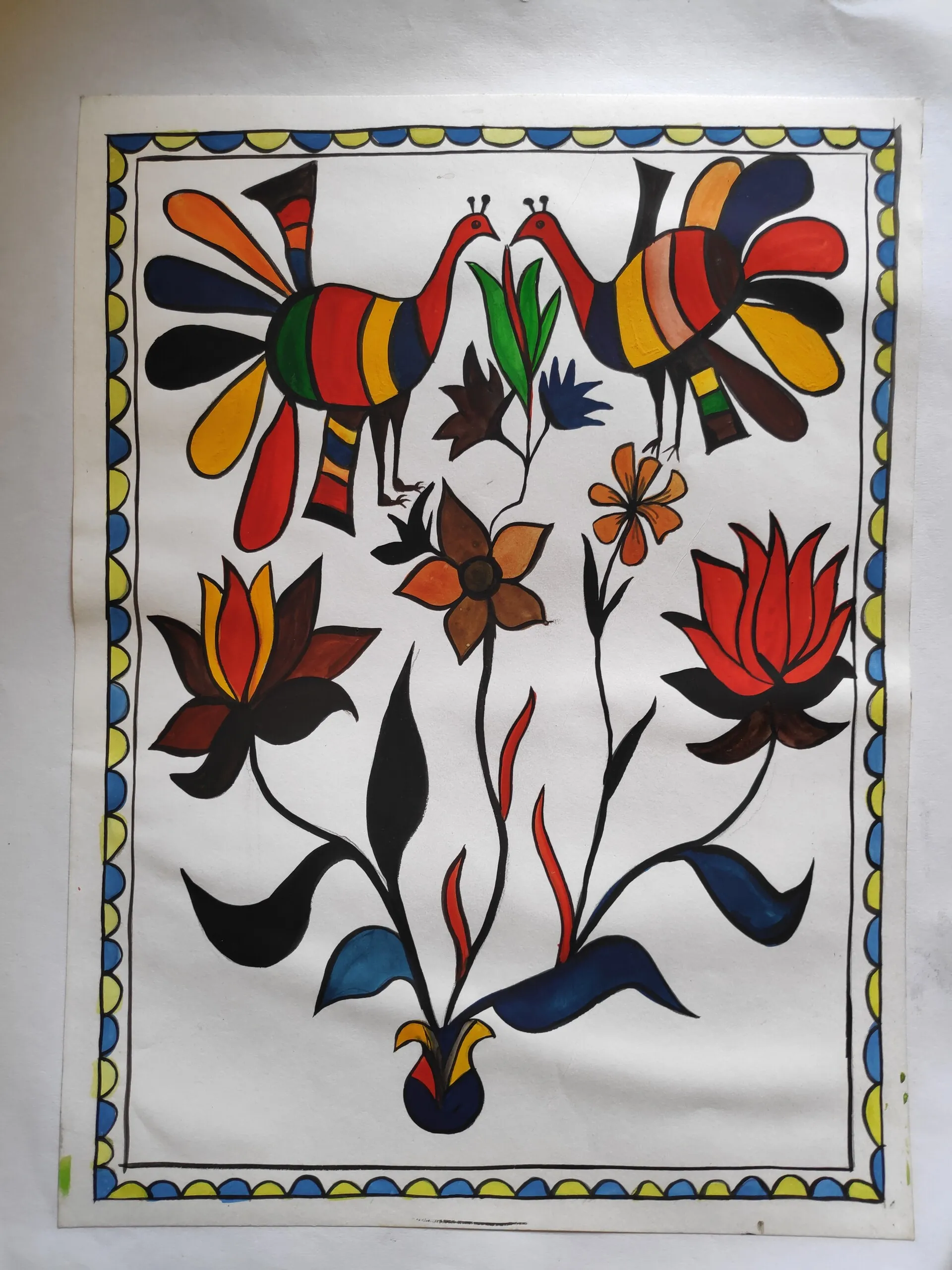
What is Sohrai painting? Sohrai art is a traditional wall painting practised by tribal communities of Jharkhand, primarily in and around Hazaribagh district. The name is believed to derive from the word 'soro', a term from the Palaeolithic age meaning 'to drive with a stick'. The paintings are made exclusively by women, who apply natural earth pigments directly onto the plastered walls of their homes using their hands, cloth, sticks, or twigs. Motifs feature peacocks, elephants, fish, sparrows, cows, and flowering plants — all drawn from the forested environment these communities inhabit. The art is created during the Sohrai festival, which falls in October or November around Diwali, and serves as an act of thanksgiving to nature, a welcome to a new harvest, and an offering of honour to cattle.
History and Origin
The roots of Sohrai art reach back to the Palaeolithic era — its style of thick outlines, simplified figures, and earth-toned animal motifs shows a strong continuity with cave painting traditions found across the Hazaribagh region. Historically, tribal communities across Jharkhand and parts of West Bengal practised this ritualistic art as part of the annual Sohrai festival, painting their homes to mark the harvest season and to worship the forces of nature. The Munda, Santhal, Oraon, Prajapati, and Khurmi communities each had their own storytelling art practices, yet shared Sohrai art as a common ritual. Over time, the tradition became almost exclusively associated with the Munda and Oraon tribes, whose women passed the artistry down through generations. Today, Sohrai paintings have received Geographical Indication (GI) status, and the Ranchi airport along with many commercial spaces in Jharkhand now display them publicly. This sohrai painting of jharkhand is now celebrated far beyond the state, drawing recognition from art lovers nationwide.
Key Features and Visual Style
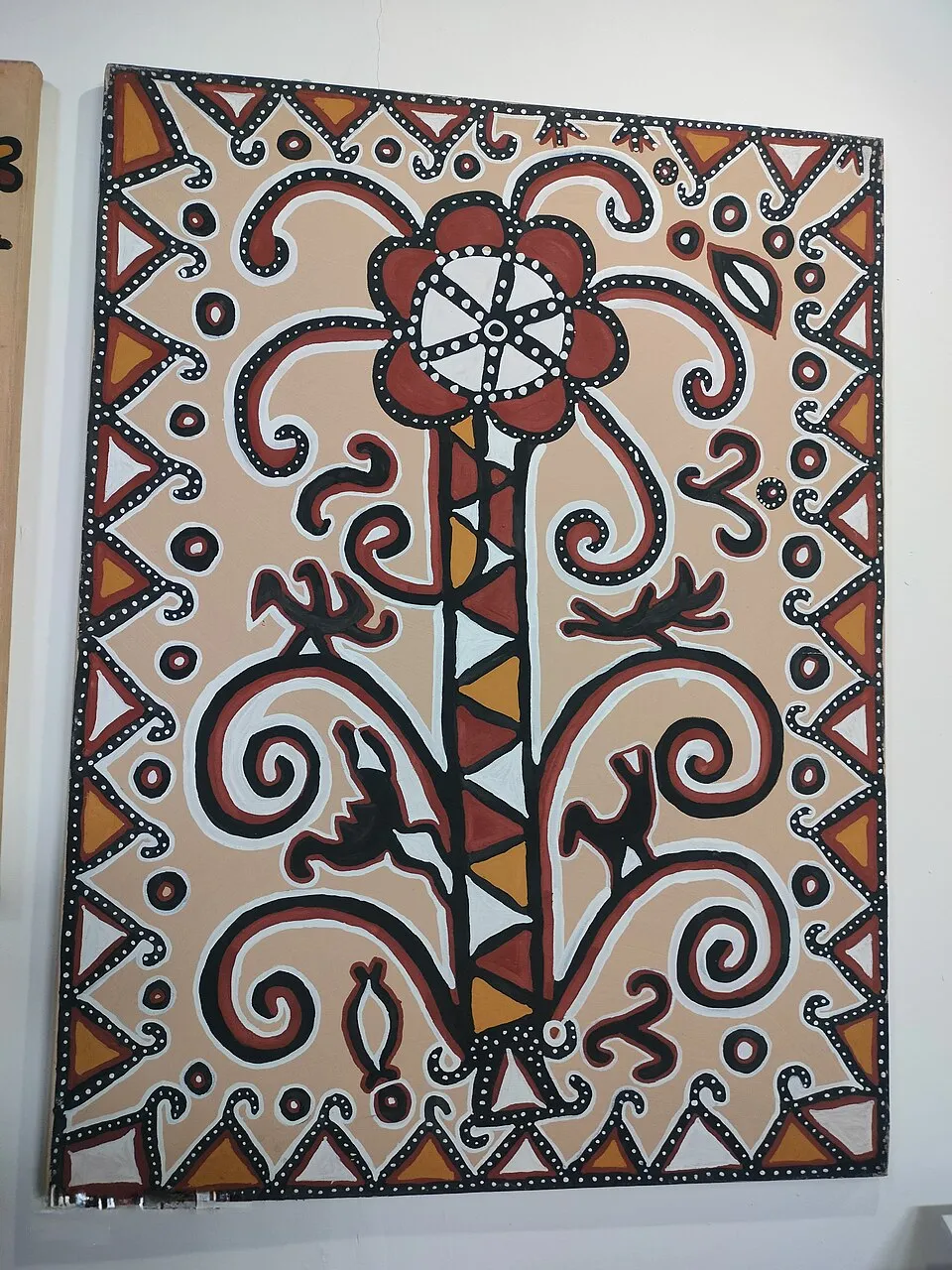
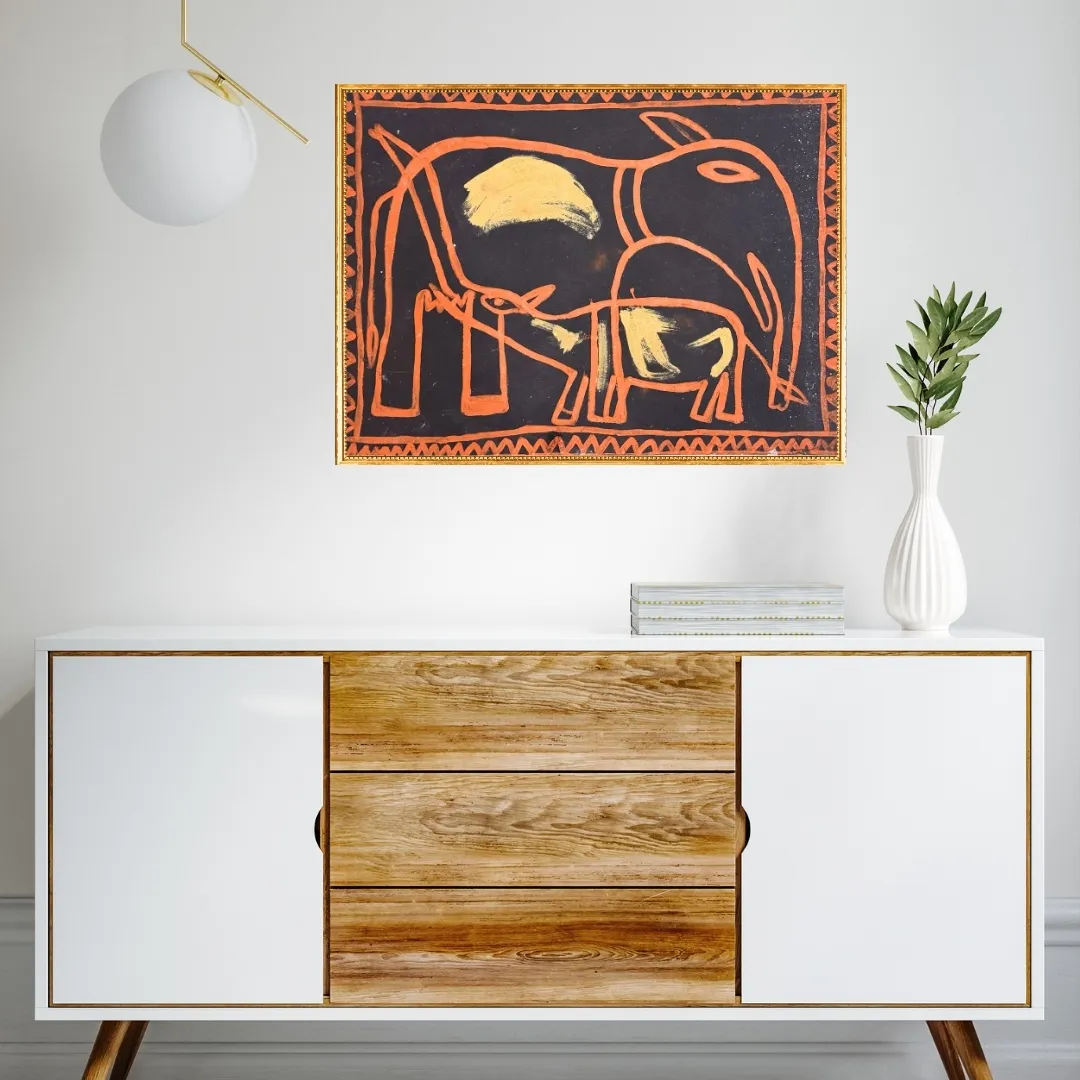
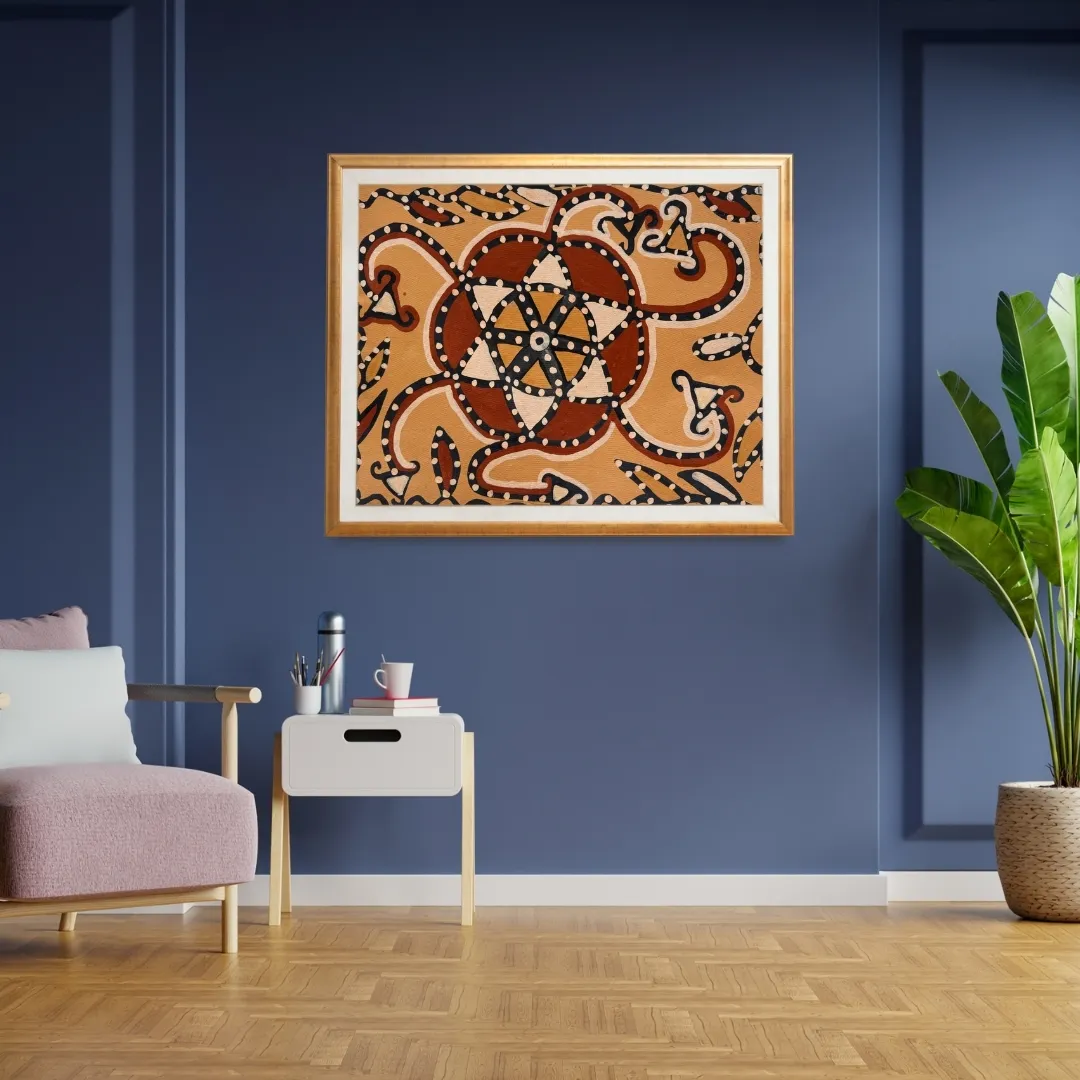
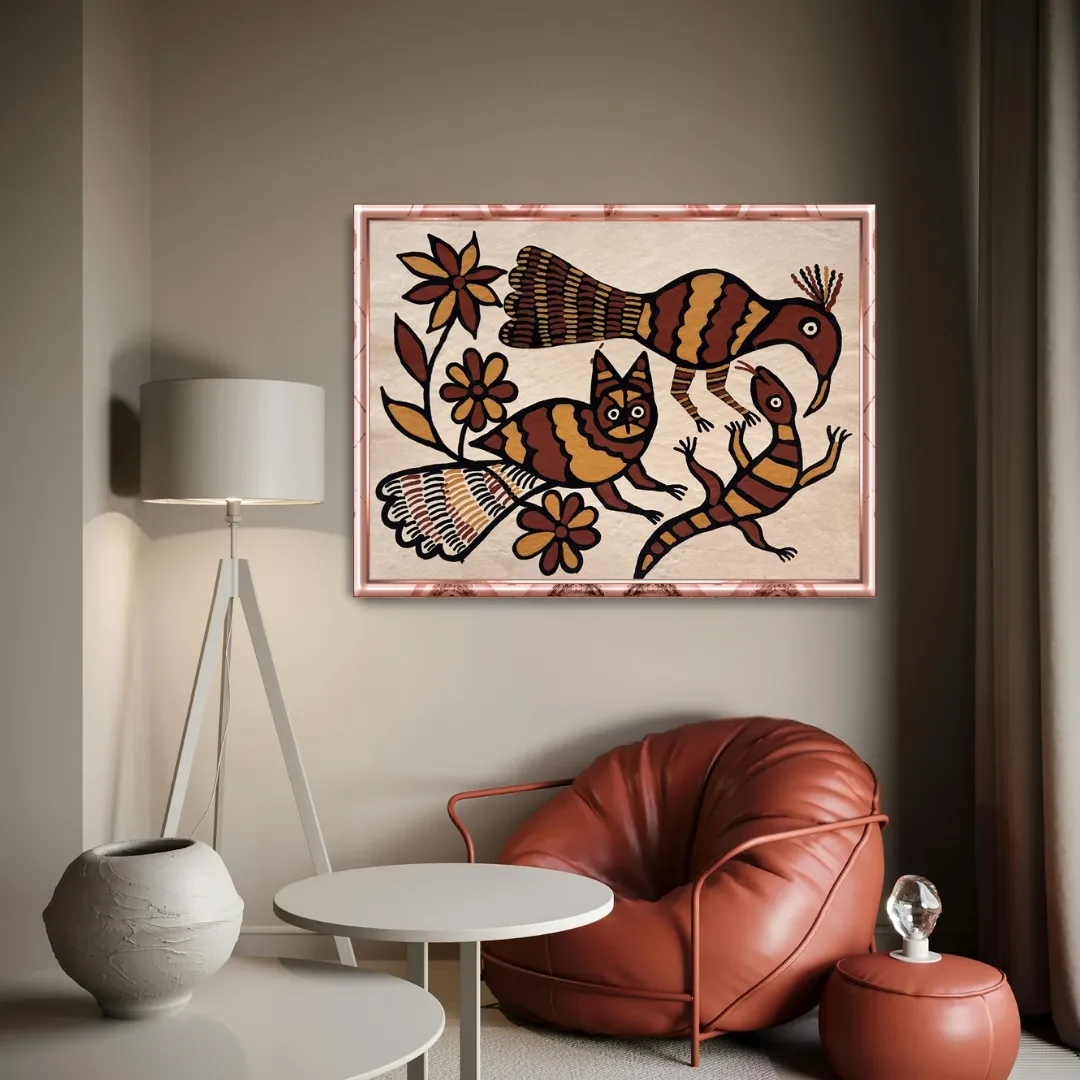
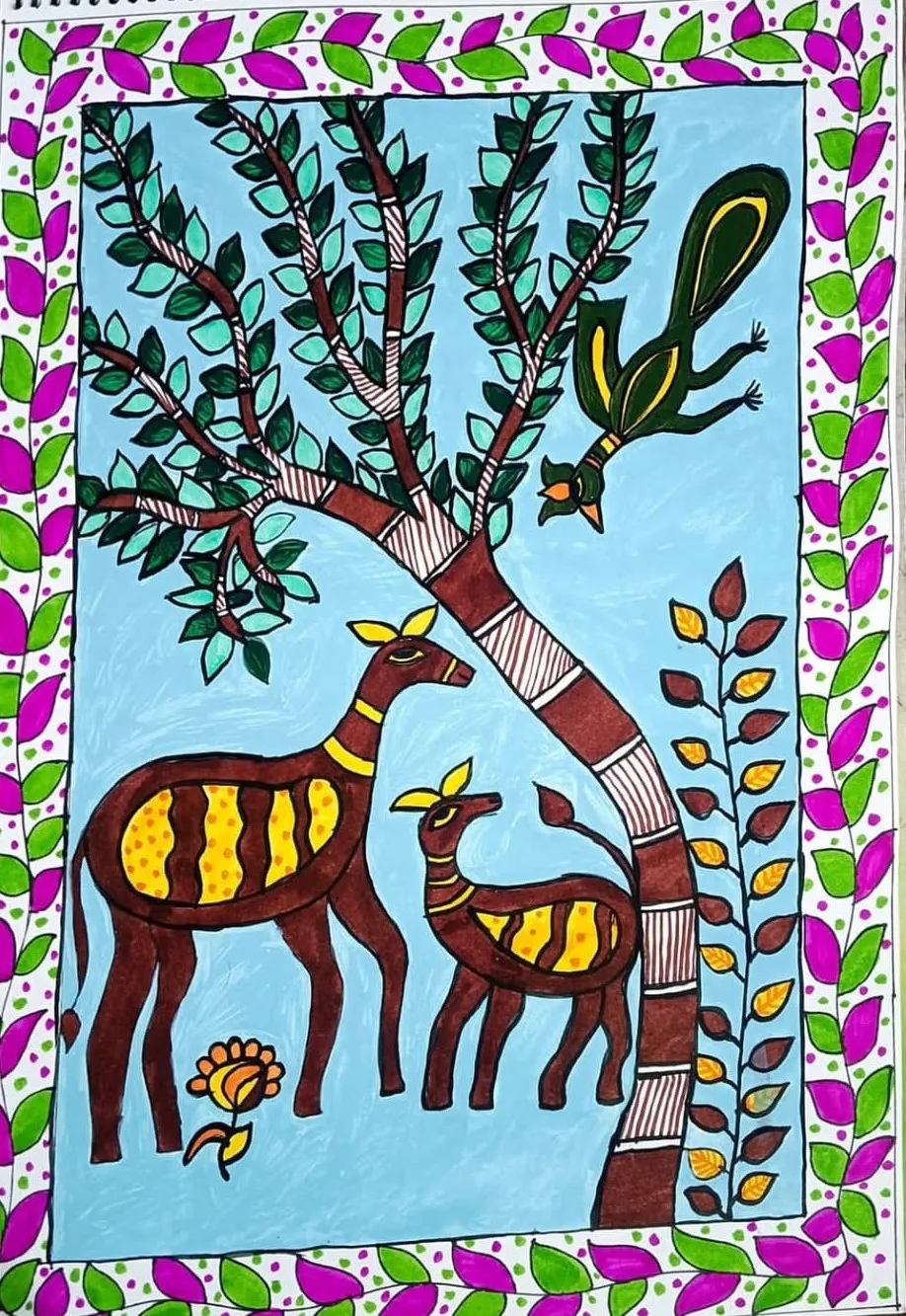
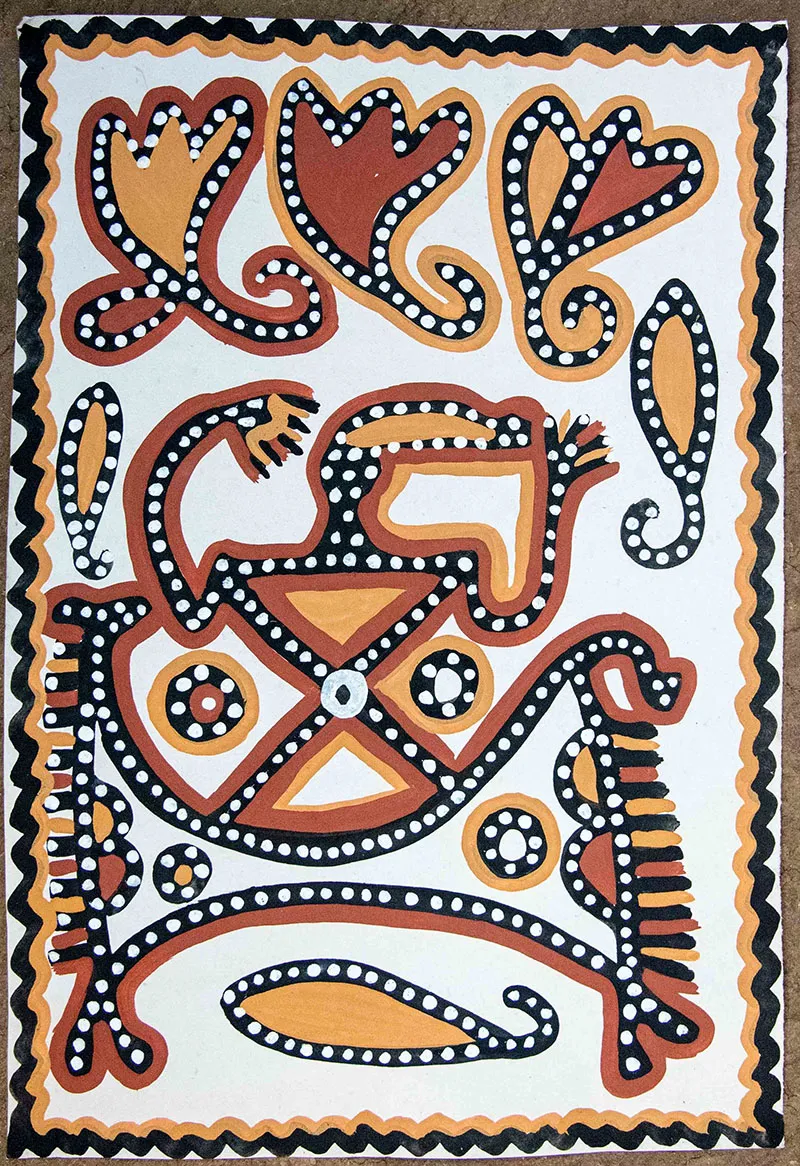
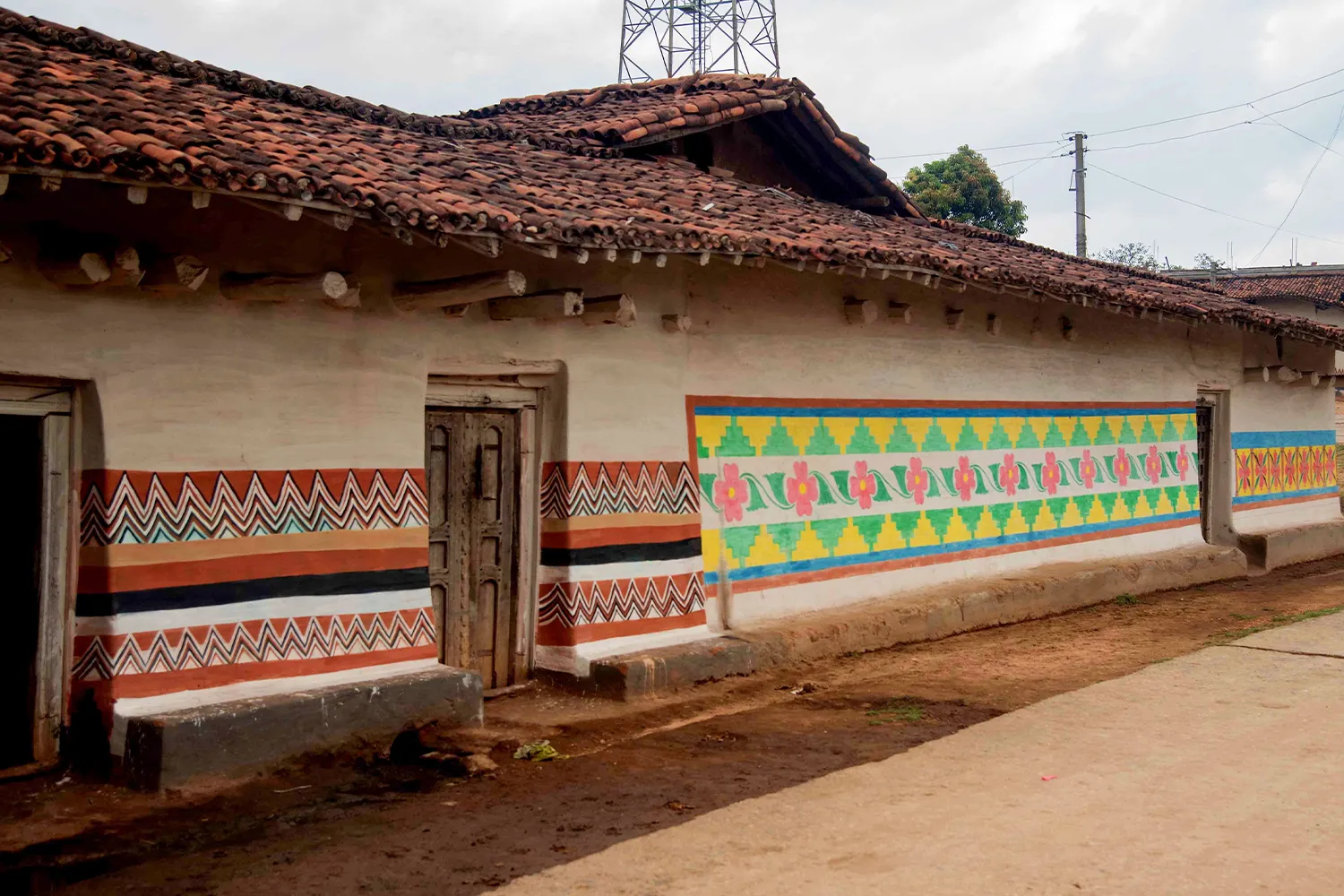
Sohrai paintings are recognisable by their earthy palette, bold outlines, and the density of flora and fauna motifs. They share an aesthetic kinship with Palaeolithic cave art but are colourful, layered, and deeply community-specific. The paintings are applied onto walls that are first coated with a layer of white paint; a background of red or black is then added, over which the motifs are outlined and filled.
Natural earth pigments : black from kali mitti (manganese black), white from dhuddhi mitti or charak mitti (white mud), red from laal mitti or geru (red oxide), and yellow from pila mitti (yellow ochre).
Central motifs : peacocks, elephants, fish, sparrows, cows, and dense floral and leaf designs drawn from the forested landscape of Jharkhand.
Application tools : traditionally applied using fingers, hands, cloth, sticks, and twigs; today some artists also use paintbrushes.
Style : decorative and symbolic frescos with thickly outlined figures, simplified anatomy, and an earthy colour scheme that reflects the environment of the artists.
Religious fusion : motifs reflect a religion that blends nature worship and Hinduism, with most designs drawn from the natural world and a small number depicting Hindu deities.
Expanding medium : once painted only on mud walls, Sohrai paintings are now also made on paper and textiles for broader reach.
Famous Artists of Sohrai Art
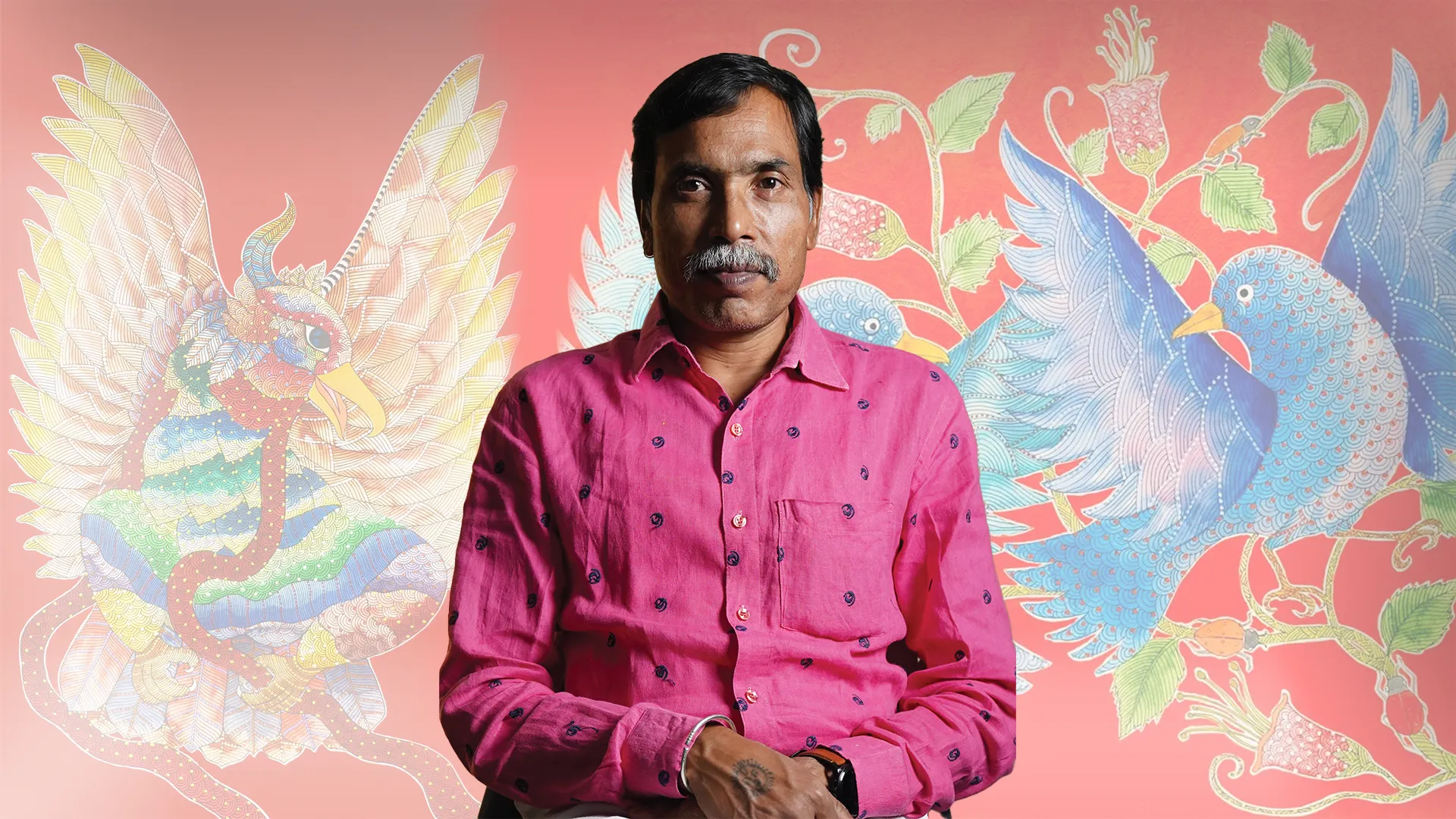
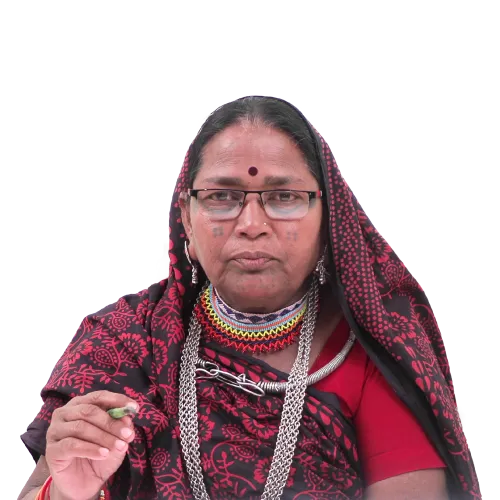
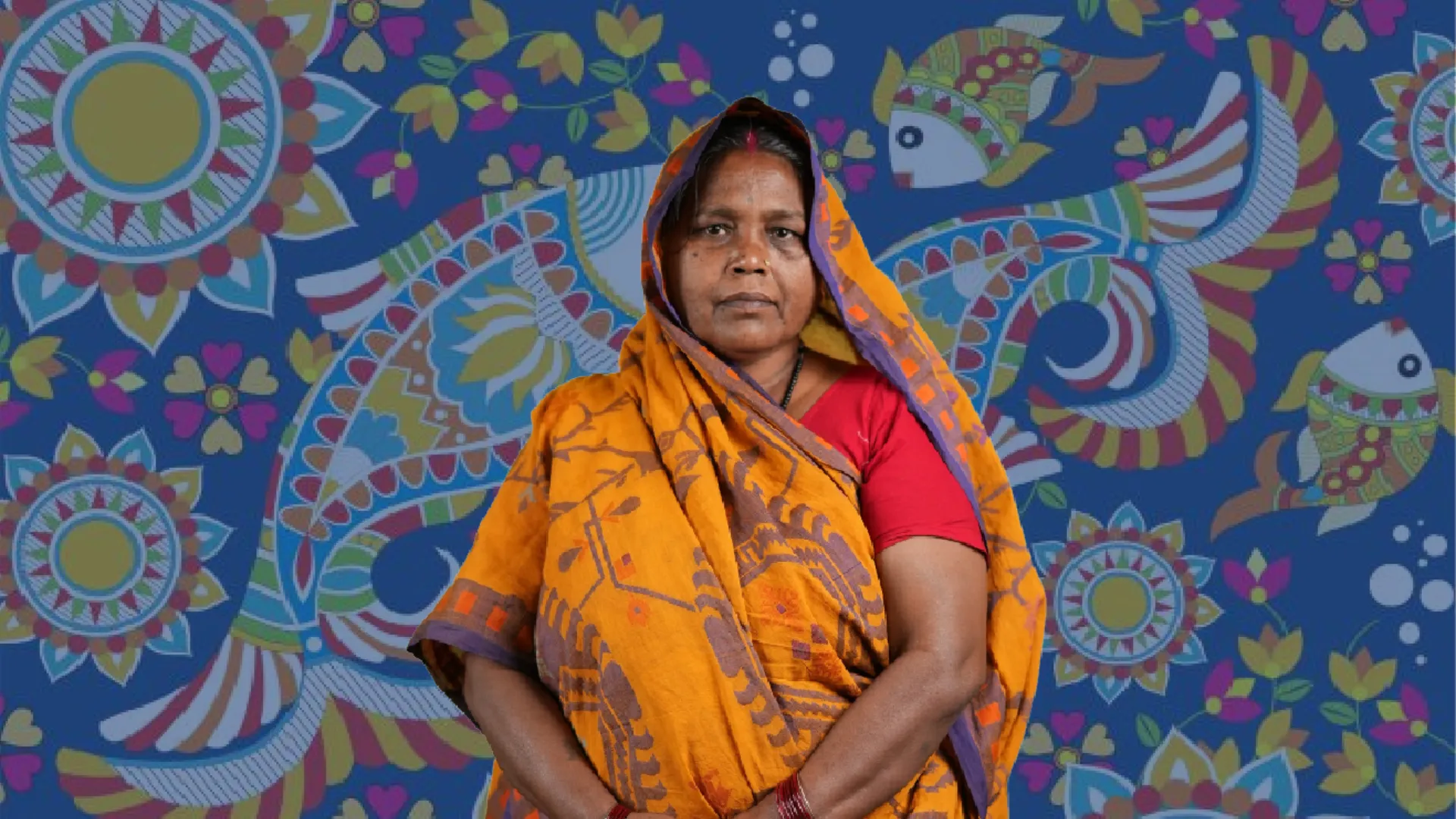
While Sohrai art is a community practice rather than an individual pursuit, several artists from Jharkhand have brought it to wider recognition. Dulari Ekka, from Hazaribagh district, is among the most celebrated Sohrai practitioners, known for her intricate animal and floral compositions. She has been associated with national exhibitions showcasing tribal art forms. Philomina Tirkey, also from Jharkhand, is recognised for her work in preserving and promoting Sohrai alongside Khovar art. Dulari Ekka and Philomina Tirkey are among the Jharkhand artists whose profiles are featured on Rooftop. The Khovar tradition, which is a sister art to Sohrai and practised in the same communities, is closely related — you can explore both through Rooftop's Sohrai Khovar workshop in Hazaribagh. Together, sohrai and khovar painting are often studied as complementary tribal traditions of the same Jharkhand communities.
Those exploring hazaribagh sohrai art can start with hands-on learning from master practitioners. If you are wondering how to learn Sohrai art online, the most direct path is through a practitioner from the tradition itself. Rooftop's courses connect learners with master artists from across India's folk traditions. You can also explore the immersive Sohrai Khovar workshop in Hazaribagh for a hands-on experience with natural pigments and traditional techniques taught in the communities where the art originated.
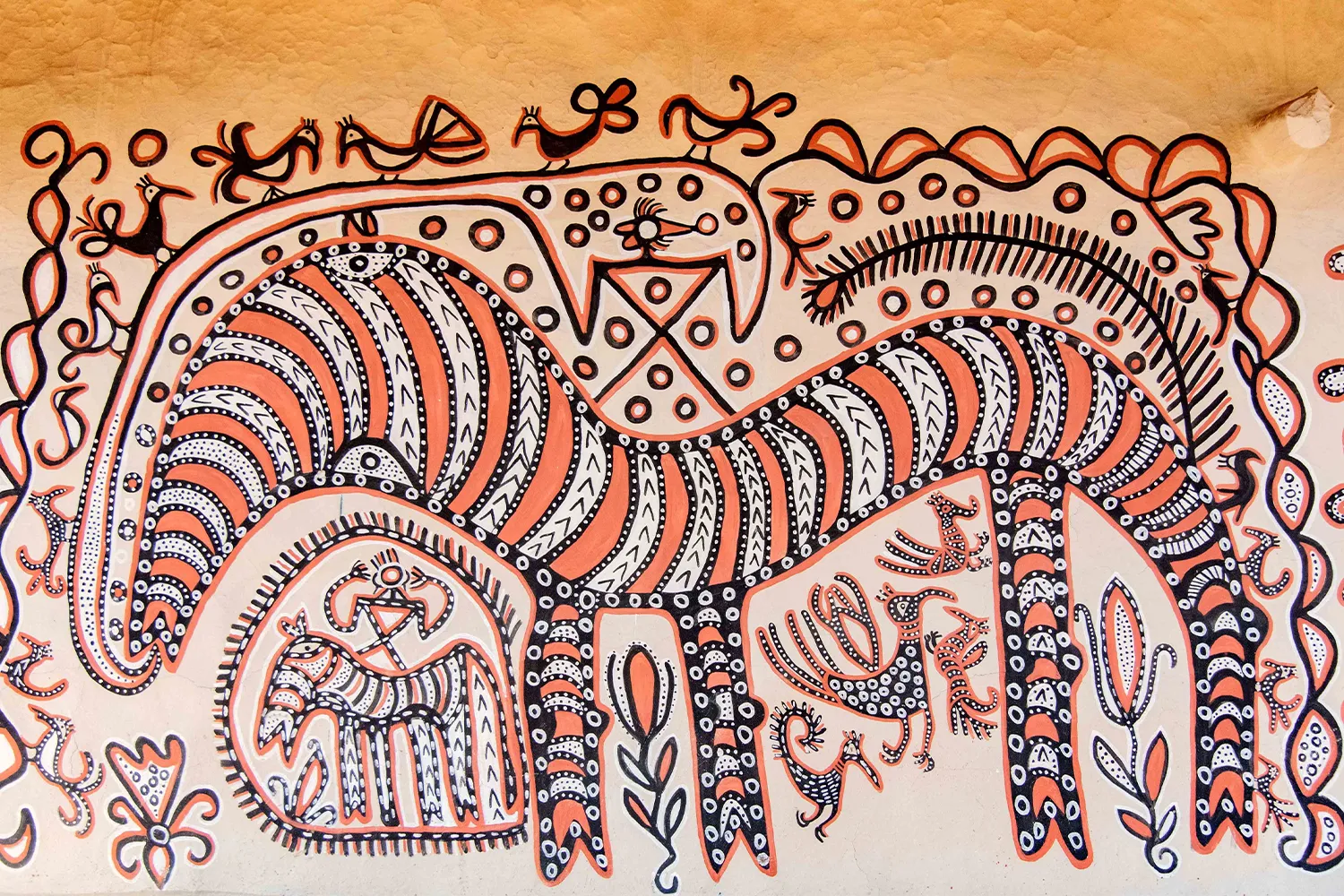
Authentic Sohrai paintings from Jharkhand can be seen at the Ranchi airport and commercial spaces across the state, which now display GI-tagged Sohrai works as part of government promotion campaigns. Tribal art festivals in Jharkhand, particularly around the Diwali period, also showcase the art in its living context. To buy original Sohrai works, Rooftop's shop carries authentic pieces and sohrai painting designs by traditional artists. You can also explore the Paitkar painting and Santhal art traditions from nearby communities on Rooftop's Art Wiki.
What is Sohrai art and where does it come from?
Sohrai art is a ritualistic wall painting tradition practised by tribal communities of Hazaribagh, Jharkhand, during the Sohrai harvest festival in October or November. The paintings are made on mud walls using natural earth pigments by women from the Munda, Oraon, Santhal, Prajapati, and Khurmi communities. The name Sohrai is thought to derive from the Palaeolithic word 'soro', meaning 'to drive with a stick'. The art celebrates the harvest, honours cattle, and expresses gratitude to the forces of nature.
Which communities in Jharkhand practise Sohrai paintings?
Sohrai paintings are practised by several tribal communities across Jharkhand, including the Munda, Oraon, Santhal, Prajapati, and Khurmi tribes. Today, the Munda and Oraon are the most active practitioners of this tradition. The art is exclusively made by women, who learn it from older women in the family, making it a transgenerational practice passed down without formal instruction.
What materials and colours are used in Sohrai art painting?
Sohrai art painting uses entirely natural earth pigments sourced from the soil around Hazaribagh. Black is derived from kali mitti (manganese black), white from dhuddhi mitti or charak mitti (white mud), red from laal mitti or geru (red oxide), and yellow from pila mitti (yellow ochre). These pigments are applied using hands, fingers, cloth, sticks, and twigs, though some contemporary artists now also use paintbrushes. No synthetic dyes or commercial paints are used in traditional Sohrai work.
How is a Sohrai painting made step by step?
The process begins with coating the mud wall with a layer of white paint to create a base. A background colour - either red or black - is then applied over this layer. The artist outlines the motifs, which typically include peacocks, elephants, cows, fish, and floral designs, and then fills in the colours. The entire painting is completed on the day after Diwali, when the community gathers to decorate homes as part of the Sohrai festival rituals.
Is Sohrai art GI-tagged?
Yes, Sohrai art has received Geographical Indication (GI) status, which formally recognises it as a cultural product of Jharkhand. The official sohrai painting gi tag has strengthened recognition of the craft as a protected regional art form. This recognition has helped bring the art form to a wider audience: the Ranchi airport and several commercial establishments in Jharkhand now display Sohrai paintings. Government campaigns have also promoted the art through exhibitions and public art installations across the state.
Can I learn Sohrai art online or through a workshop?
Yes, you can explore Sohrai art through Rooftop's Sohrai Khovar workshop in Hazaribagh, which offers a hands-on experience with natural pigments and traditional painting methods in the community where the art originates. Rooftop also offers a range of folk art courses taught by master artists from across India, allowing learners to engage with traditional Indian art forms at their own pace.
Sohrai art is one of India's oldest living folk traditions - a practice that connects the human world with the natural one through earth, colour, and ritual. Explore Sohrai art courses and workshops on Rooftop and begin your journey with one of Jharkhand's most treasured folk traditions.
Sources
Image Sources
"Sohrai Painting." Impart Encyclopedia of Art, 21 Apr. 2022, https://imp-art.org/articles/sohrai-painting/. Accessed 16 July 2026.
"Sohrai Painting #4 (30 cms × 42 cms)." International Indian Folk Art Gallery, https://indianfolkart.org/product/sohrai-painting-4-30-cms-x-42-cms/. Accessed 16 July 2026.
"Sohrai Painting." Impart Encyclopedia of Art, 21 Apr. 2022, https://imp-art.org/articles/sohrai-painting/. Accessed 16 July 2026.
"Sohrai Painting." Impart Encyclopedia of Art, 21 Apr. 2022, https://imp-art.org/articles/sohrai-painting/. Accessed 16 July 2026.
Bharti, Ila. "Sohrai Painting." ArtStation, https://ilabharti.artstation.com/projects/Xn053l. Accessed 16 July 2026.
"File: Sohrai and Kohbar Paintings 03.jpg." Wikimedia Commons, https://commons.wikimedia.org/wiki/File:Sohrai_and_Kohbar_Paintings_03.jpg. Accessed 16 July 2026.