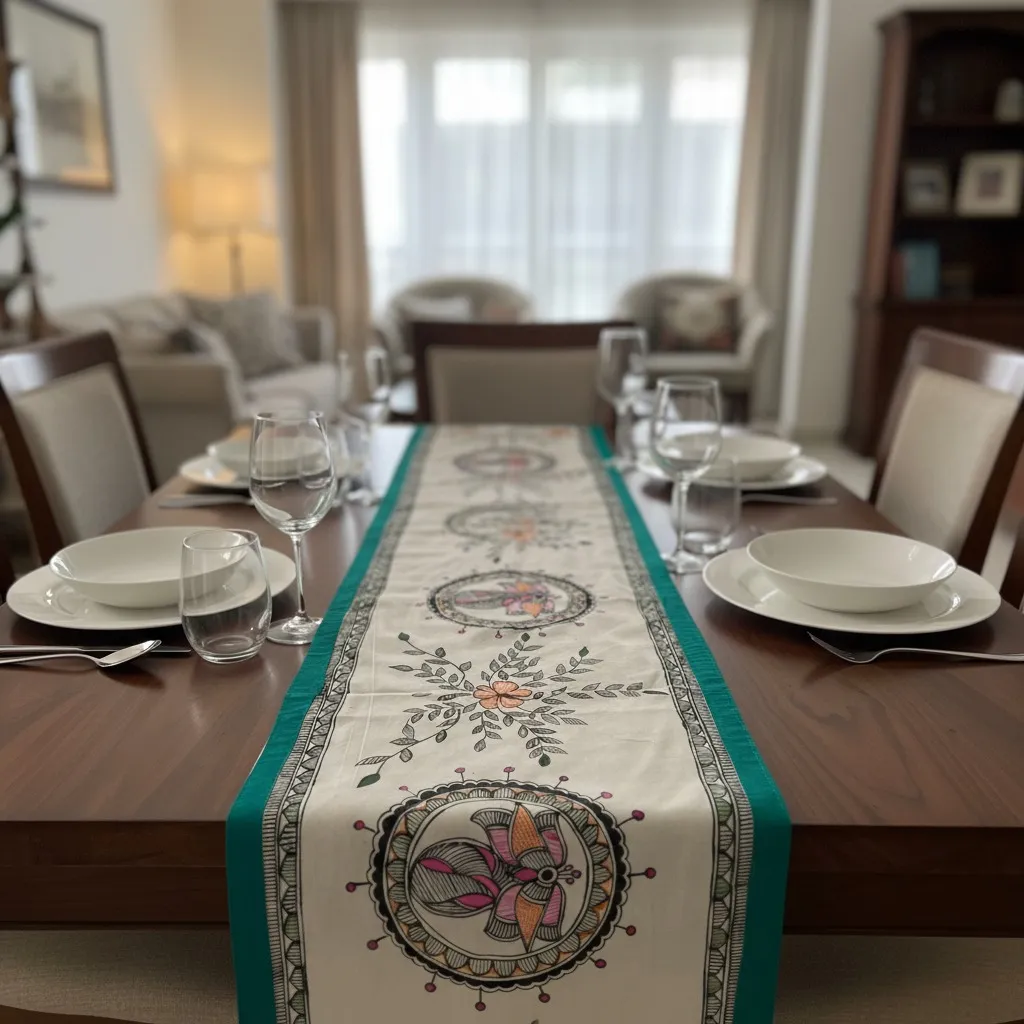
Hand Painted Madhubani Art Work Table Runner {Mayura}
$ 79



What are the origins of India's most famous folk art? Let's find out
Madhubani painting is one of India's most recognisable and continuously practised folk art traditions, originating from the Mithila region of Bihar. Painted for over a thousand years by women on the mud walls of homes, this art form carries within its lines the stories of gods, nature, and everyday life. Today it has travelled from village walls to galleries worldwide, yet its roots remain firmly in the soil of northern Bihar, making it one of the most vital examples of living Indian folk art.
What Is Madhubani Painting?
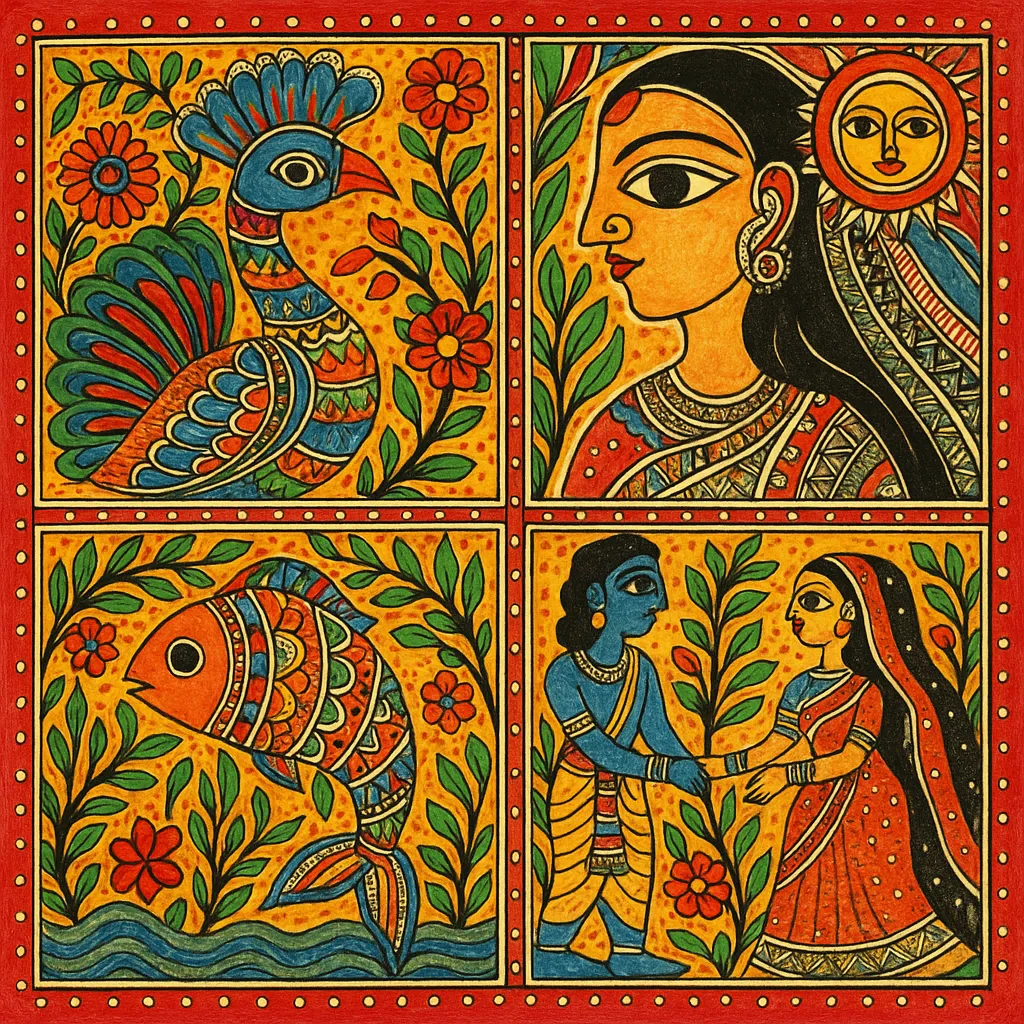
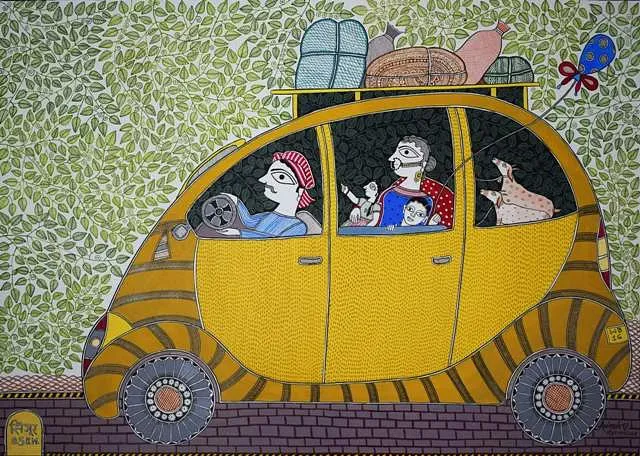
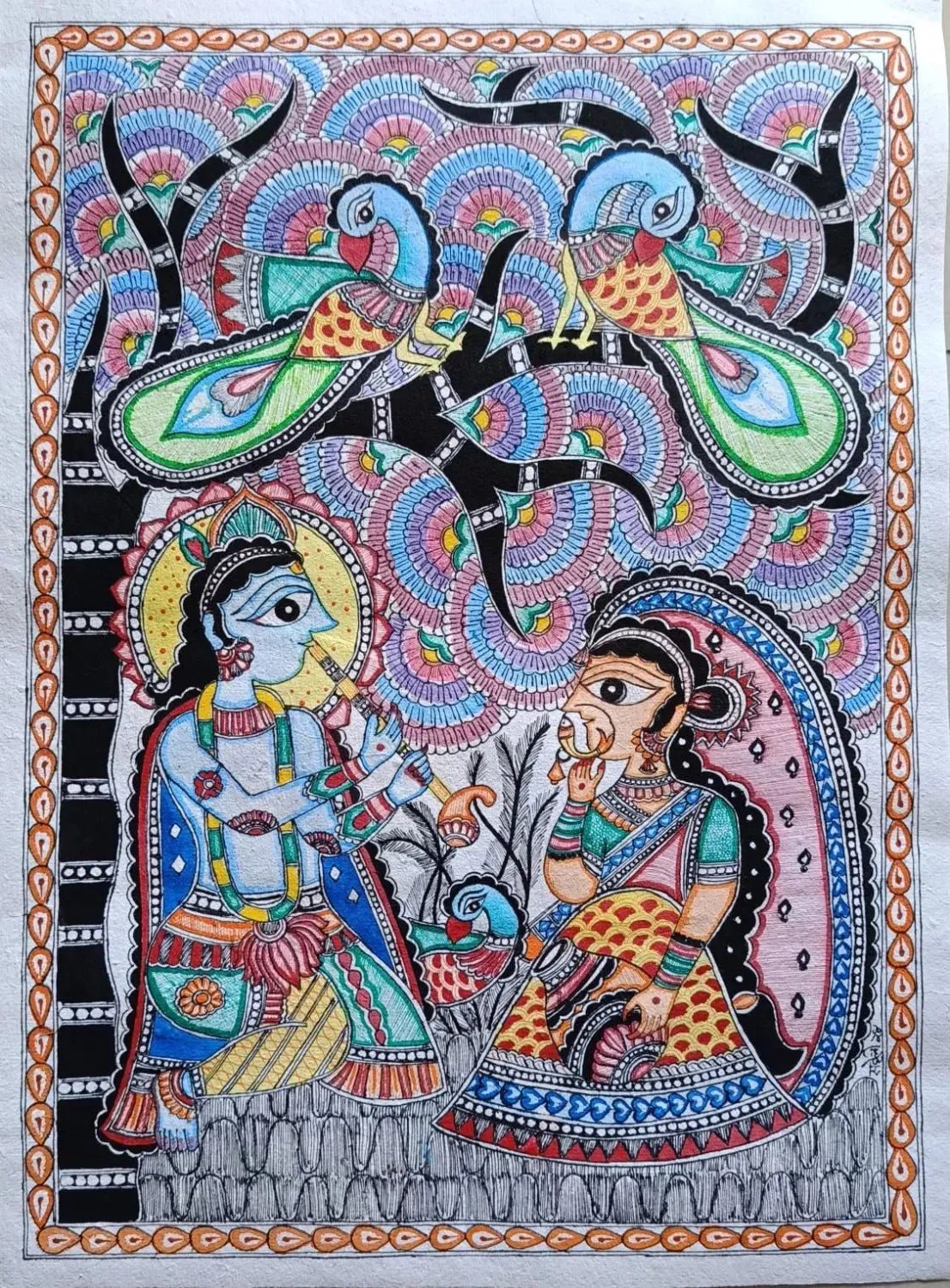
What is Madhubani painting? Madhubani painting is a traditional folk art from the Mithila region of Bihar in northern India, also known as Mithila painting. The name Madhubani comes from the district of Madhubani, which literally means 'honey forest' in the local language. This art is primarily created by women from the Maithili-speaking communities and has been passed down through generations as part of household ritual and celebration. Visually, it is defined by bold outlines, flat two-dimensional figures, densely packed patterns, and vivid natural colours derived from plants and minerals. Paintings are made on freshly plastered mud walls, hand-made paper, and fabric, including Madhubani painting saree designs, using brushes made from bamboo twigs and cloth. The themes revolve around Hindu deities, nature, fertility, and auspicious occasions such as weddings and festivals. Explore the full range of Indian folk art traditions on the Rooftop Art Wiki.
History and Origin
The origins of Madhubani painting are believed to go back to around the 7th or 8th century, rooted in a society where painting was not a commercial activity but a sacred ritual. According to Hindu tradition, King Janaka of the Mithila Kingdom commissioned artists to decorate the city walls for the wedding of his daughter Sita to Lord Rama, an event described in the Ramayana. This legend places the art form within one of India's oldest religious narratives. For centuries, Maithili women painted on the inner walls and floors of their homes, using a rice paste called pithar on the floor in a practice known as aripan. It was only in the 1960s, when Bihar faced a severe drought, that government efforts led by Pupul Jayakar encouraged women to paint on paper so their work could be sold, bringing Madhubani painting into the mainstream for the first time.
Key Features and Visual Style
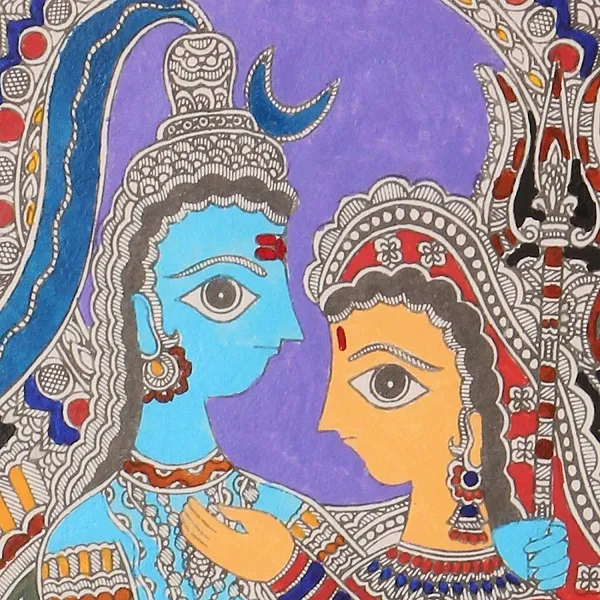
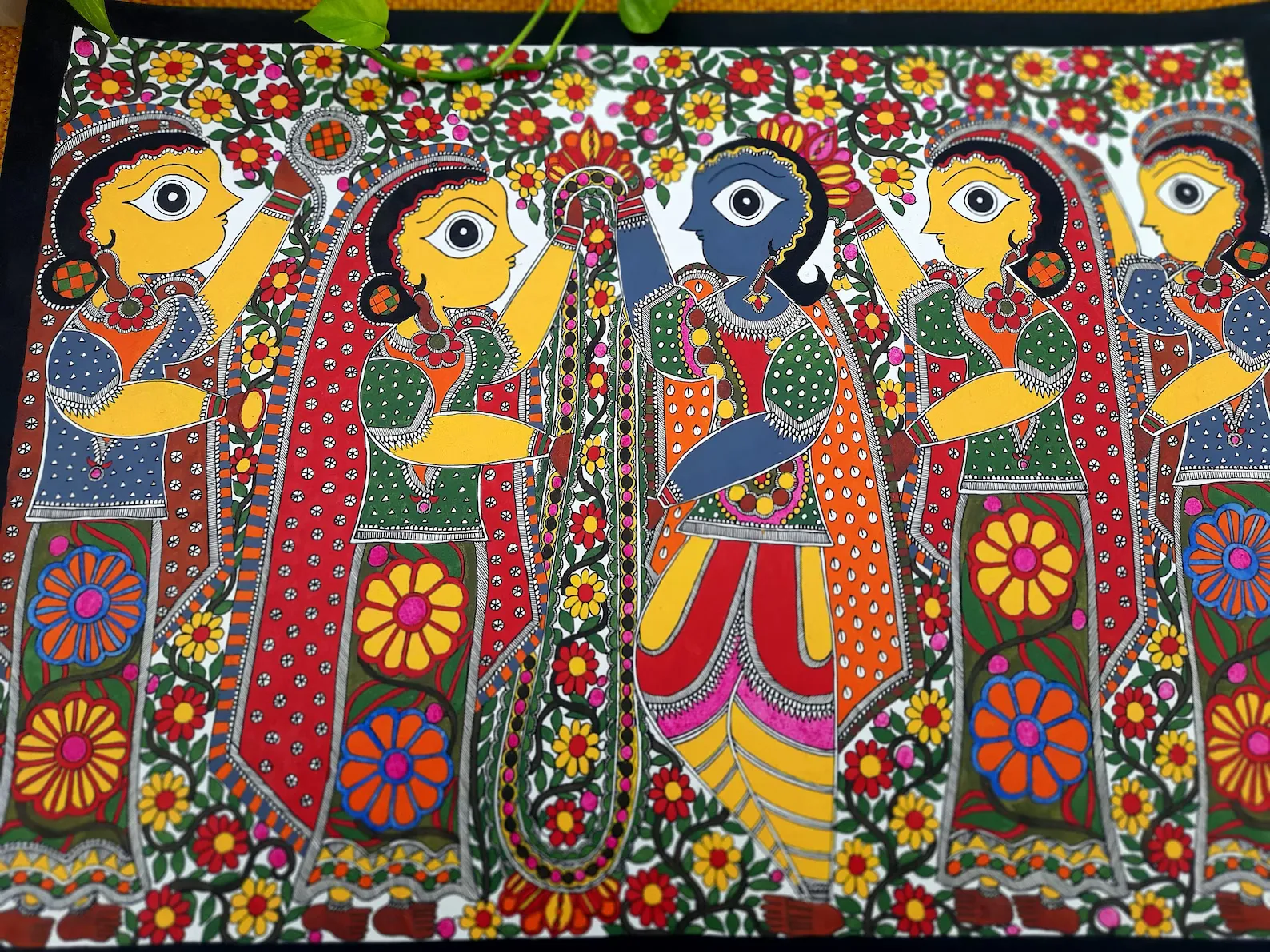
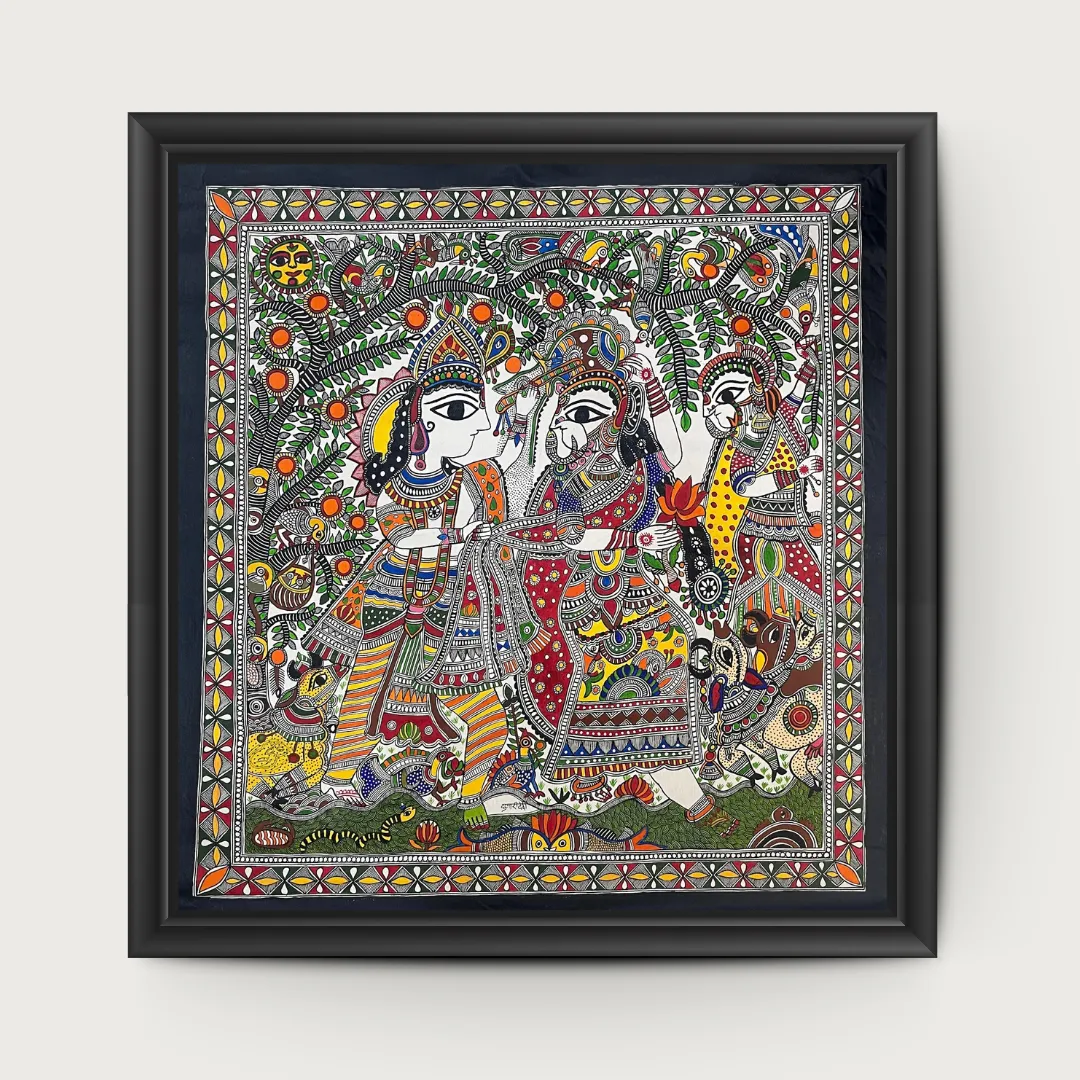
Madhubani painting is immediately identifiable by its complex geometrical patterns, bold black outlines, and densely filled compositions that leave almost no empty space on the surface. Five distinct styles developed across different communities in Mithila, each with its own character. The Bharni style, practised by the Kayastha community, fills figures with vivid flat colour. The Kachni style - the primary example of Madhubani art black and white - uses fine line work to create detailed cross-hatching without solid colour fills. The Godna style is rooted in traditional tattoo motifs with a limited black-and-red palette. The Kohbar style is made specifically for wedding rooms and features lotus and bamboo motifs as symbols of fertility. Key visual features of Madhubani painting designs include:
Natural pigments derived from lamp black, turmeric, indigo, red from kusum flowers, and yellow from singaar or jasmine flowers, all mixed with natural gum as a binder to give lasting colour.
Bold double-line borders filled with simple geometric patterns or intricate flower designs, which frame every composition and are the first element drawn by the artist.
Human figures with large bulging eyes and a nose pointed outward from the brow, rendered in a flat two-dimensional style without perspective or shading.
Common motifs including fish, peacock, serpent, lotus, sun, moon, and bamboo, each carrying specific symbolic meanings related to fertility, divinity, and protection.
Surfaces traditionally of whitewashed mud walls or cow-dung plastered walls, with outlines drawn using a bamboo twig and colour applied with a small cloth called pihua tied to a stick.
Densely packed compositions where every part of the surface is filled with patterns, cross-hatching, or decorative fill, a defining quality that sets Madhubani painting designs apart from other Indian folk styles.
Famous Artists of Madhubani Painting
Sita Devi of Jitwarpur village in Madhubani district was one of the first artists to bring this tradition to national attention in the 1960s and is credited with establishing the Bharni style as a distinct school. She was honoured with the Padma Shri in 1981.
Ganga Devi from Ranti village in Madhubani is celebrated for her narrative painting series depicting the Ramayana and scenes from her own life. She received the Padma Shri in 1984 and her work is held in major international museum collections. Jagdamba Devi of Madhubani is known for her mastery of the Kachni line-drawing style and was among the first artists to receive the National Award for her contribution to this tradition.
Mahasundari Devi from Ranti village, Madhubani, is a Padma Shri recipient known for paintings that blend the Kachni and Bharni styles and document mythological stories with exceptional detail.
Baua Devi from Jitwarpur in Madhubani district is one of the most celebrated living practitioners of the Godna style, known for integrating traditional tattoo motifs into large-scale compositions. She received the Padma Shri in 2017. Explore the Madhubani painting course by Dulari Devi on Rooftop, taught by a master artist from the Mithila tradition.
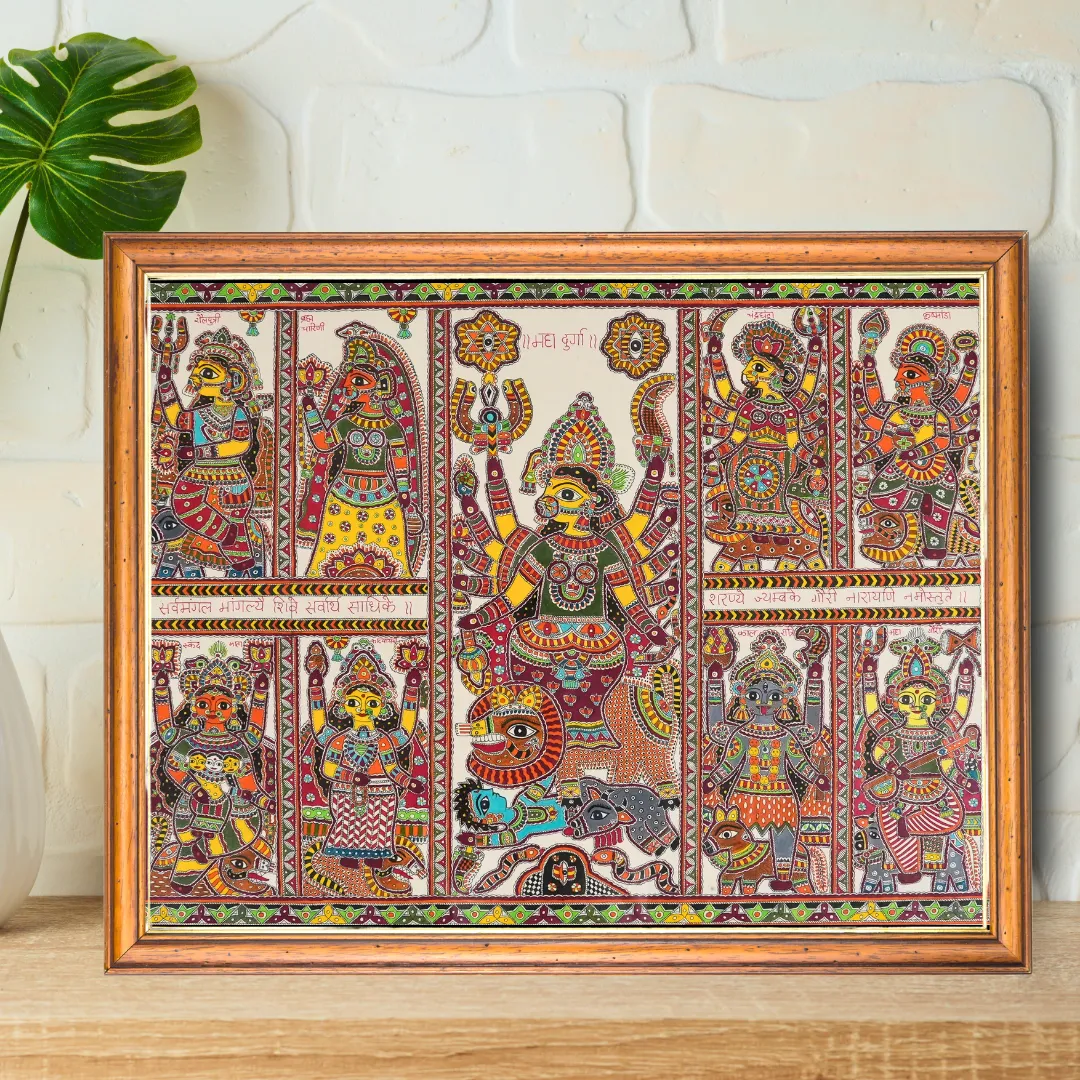
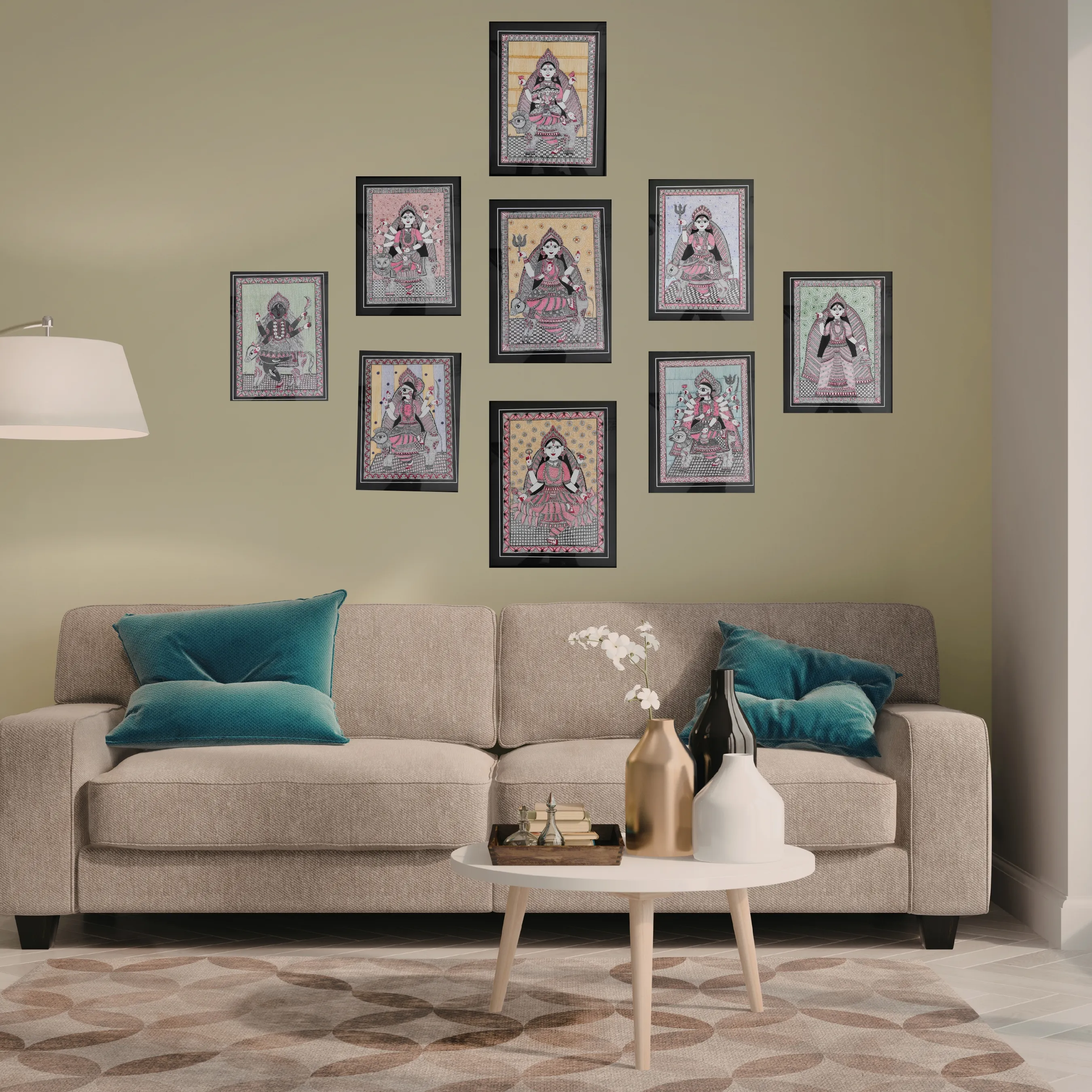
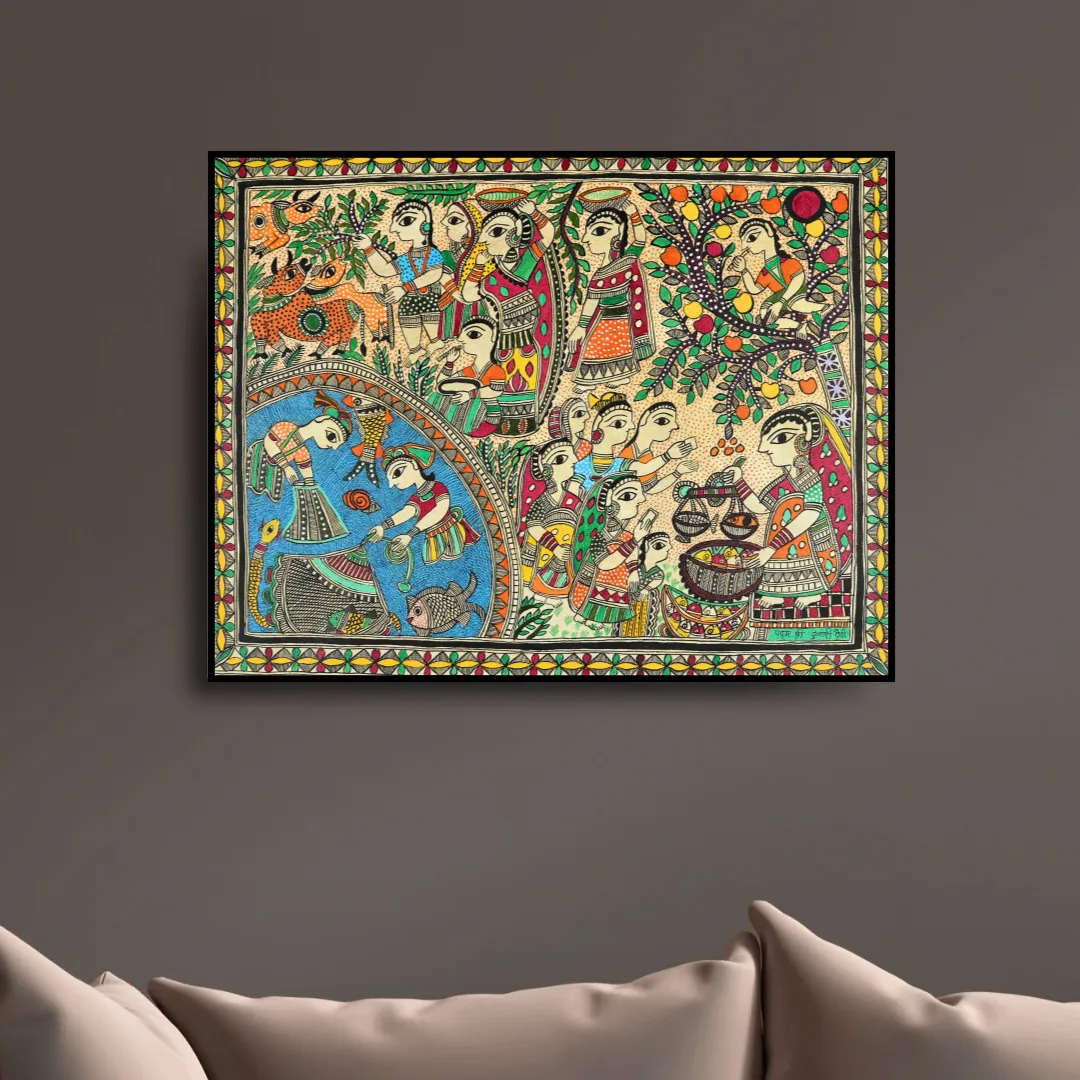
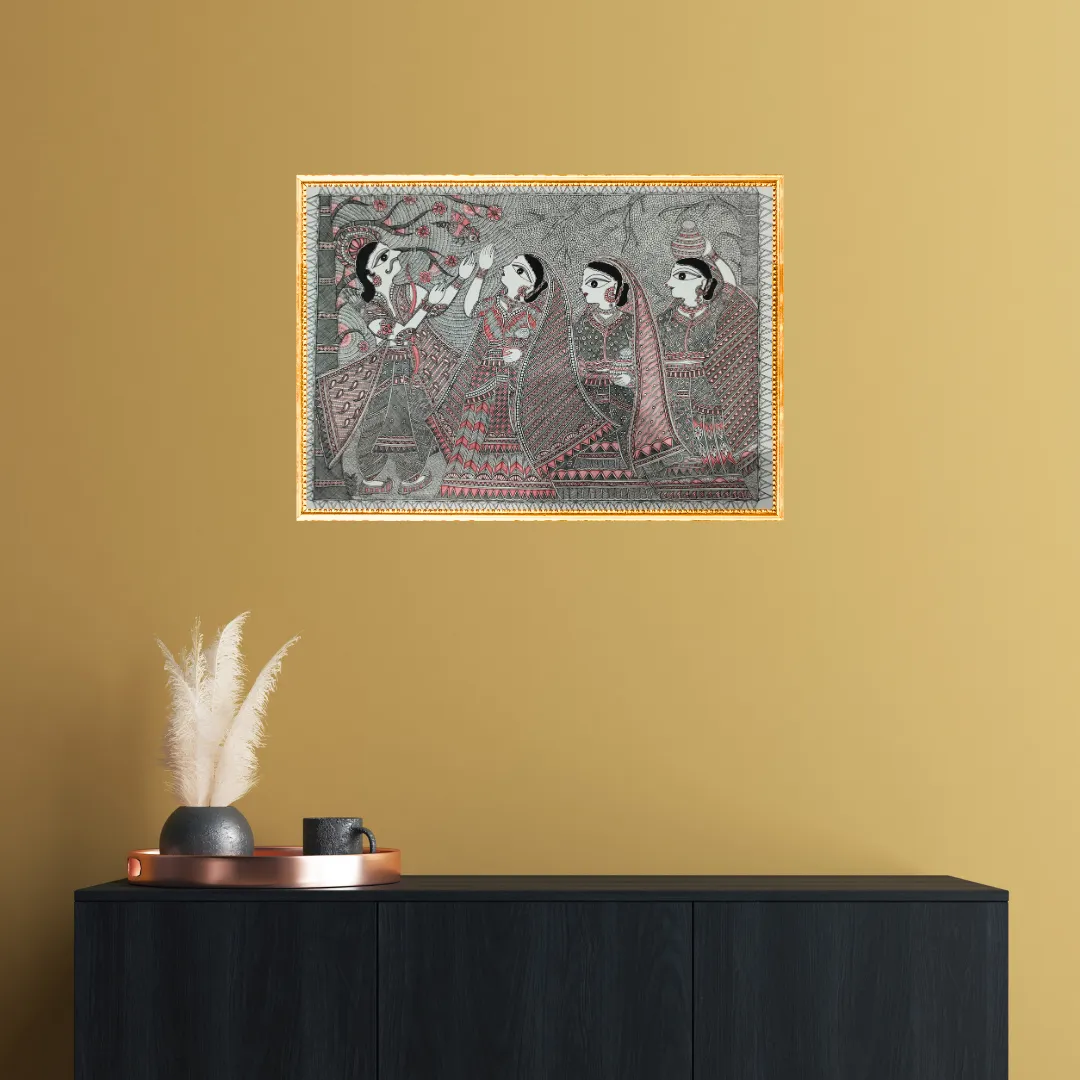
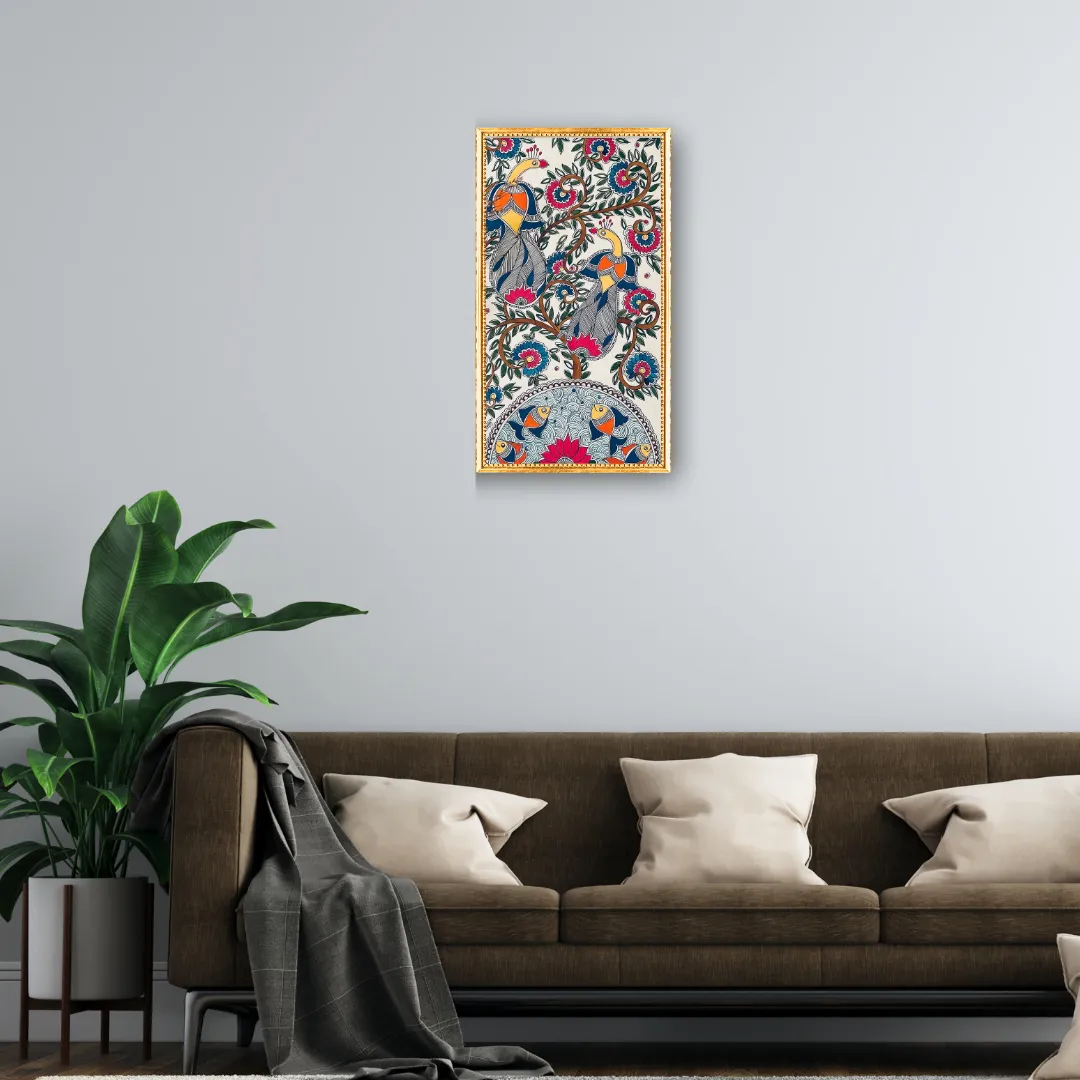
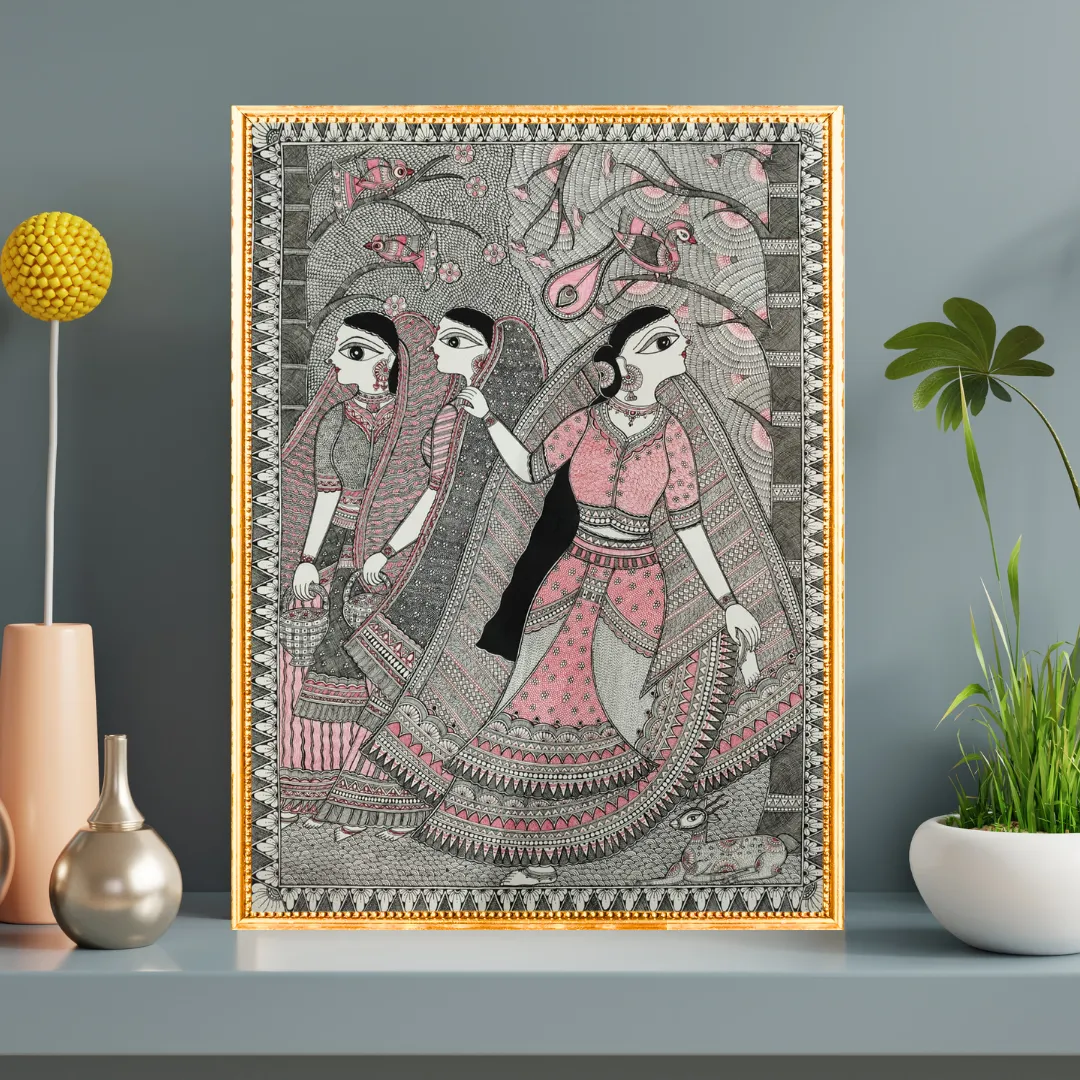
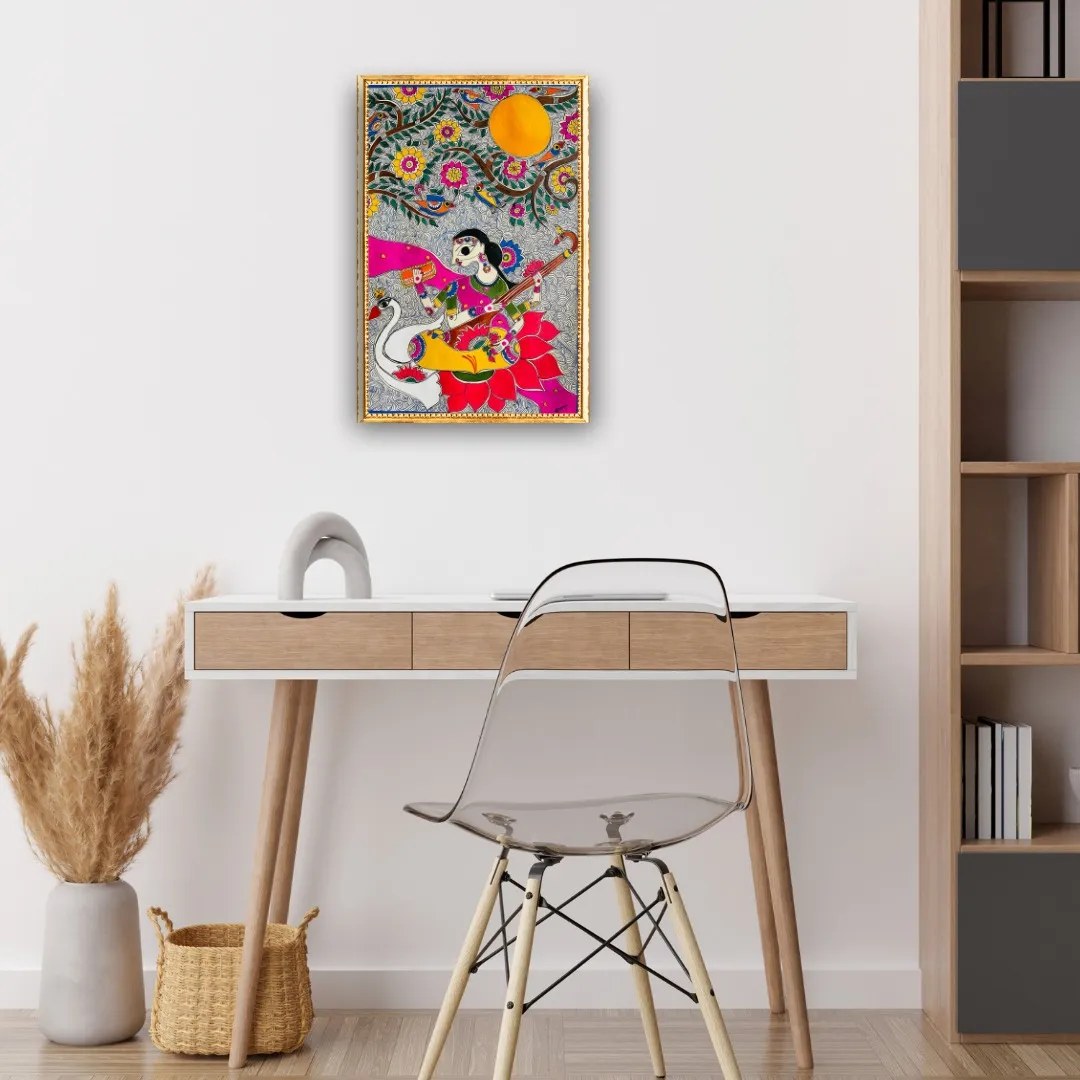
If you have been wondering how to learn Madhubani painting online in India, Rooftop offers structured courses taught by master artists who have practised this tradition all their lives. The Madhubani painting course by Dulari Devi takes you step by step through the foundational techniques - from drawing the double-line border to filling motifs using natural colour methods - so you learn the art the way it has always been taught. No prior art experience is needed to get started. A Madhubani coloring book can also be a helpful starting point for beginners who want to practise the motifs before picking up a brush.
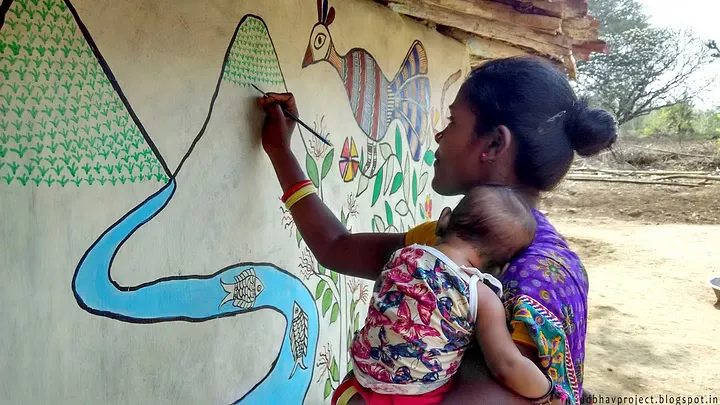
While Madhubani painting images are widely shared online, nothing compares to viewing the original in person. The best place to experience Madhubani painting in person is Jitwarpur and Ranti village in Madhubani district, Bihar, where artists still work in their homes and studios. In museums, the Crafts Museum in New Delhi and the Victoria and Albert Museum in London hold significant collections. For buying authentic work, Dilli Haat in New Delhi regularly features Mithila artists. Rooftop's shop carries original Madhubani paintings sourced directly from master artists, ensuring the work is authentic and the artist is fairly credited.
What is Madhubani painting and where does it come from?
Madhubani painting is a folk art tradition from the Mithila region of Bihar in northern India, created by women of the Maithili-speaking community for religious and ceremonial purposes. It is characterised by bold outlines, flat two-dimensional figures, and natural pigments derived from plants and minerals. It is also called Mithila painting and takes its name from Madhubani district, where many of its most prominent practitioners have lived and worked.
What are the different styles of Madhubani painting?
There are five main styles: Bharni, Kachni, Tantrik, Godna, and Kohbar. Bharni is known for bold colour fills, while Kachni relies on fine line hatching without solid colour - making it the main example of Madhubani art black and white within the tradition. Godna draws on traditional tattoo motifs and uses a limited palette. Kohbar is made specifically for wedding rooms and features fertility symbols like lotus and bamboo, and each style was historically practised by a different community within Mithila.
Who are the most famous Madhubani painting artists in India?
Some of the most celebrated artists include Sita Devi and Ganga Devi, both from Madhubani district, Bihar, who helped bring the tradition to national and international recognition in the 1960s and 1970s. Jagdamba Devi was the first to receive a national award for Madhubani art, and Baua Devi, still active today, is one of the foremost practitioners of the Godna style. All of these artists received the Padma Shri, India's fourth-highest civilian honour.
What materials and colours are used in Madhubani painting?
Traditional Madhubani painting uses natural pigments from plants and minerals: black comes from lamp black, white from ground rice, blue from indigo and the leaves of apple tree and tilcoat, yellow from the singaar or jasmine flower, and red from kusum flowers. These colours are mixed with natural gum to help them adhere to the surface, and outlines are drawn with bamboo twigs while colour is applied using small cloth wicks tied to a stick.
Can I learn Madhubani painting online in India?
Yes, Rooftop offers online Madhubani painting courses taught by master artists from the Mithila region. These courses are designed for complete beginners and cover everything from understanding the five styles to learning how to draw and fill motifs correctly. Learning from a practising traditional artist ensures you understand not just the technique but also the cultural meaning behind each symbol.
Where can I buy authentic Madhubani paintings in India?
Authentic Madhubani paintings can be purchased directly from artists in Jitwarpur and Ranti village in Bihar, or through verified platforms like Rooftop's shop that source work directly from master artists. Dilli Haat in New Delhi also hosts Mithila artists during craft exhibitions. It is important to buy from sources that name the artist and confirm the work is hand-painted using traditional methods, as machine-printed reproductions are widely available in the market.
Madhubani painting has survived for over a thousand years not because it was preserved in a museum but because it remained alive in the hands of the women who made it part of daily life. Learning it today means connecting with a tradition that has moved through centuries of rituals, harvests, and celebrations. Explore Madhubani painting courses on Rooftop and begin your journey with one of India's most enduring folk art traditions.
Thakur, U. (2003) Madhubani Painting. Pune: Abhinav Publications.
Bevington, K. H. (1989) Madhubani Painting: Women, Art and Modernization in the Fourth World. Berkeley: University of California.
Dayal, B, (2015) Madhubani Art. Belgium: Museum of Sacred Art.