
<link rel="stylesheet" href="https://cdn.rooftopapp.com/fonts/fonts.css">

Your Cart

Your cart is empty

Shop Indian Art Online: Original Paintings and Handmade Products

Shop Indian art online at Rooftop for original paintings, handmade home decor, jewellery, clothing and art books. Buy directly from Indian artists and artisans.

Showing 1 – 4 of 4

Seller: dildar-qureshi
Ragini Todi in Pahari School
CertifiedOnly 1 left

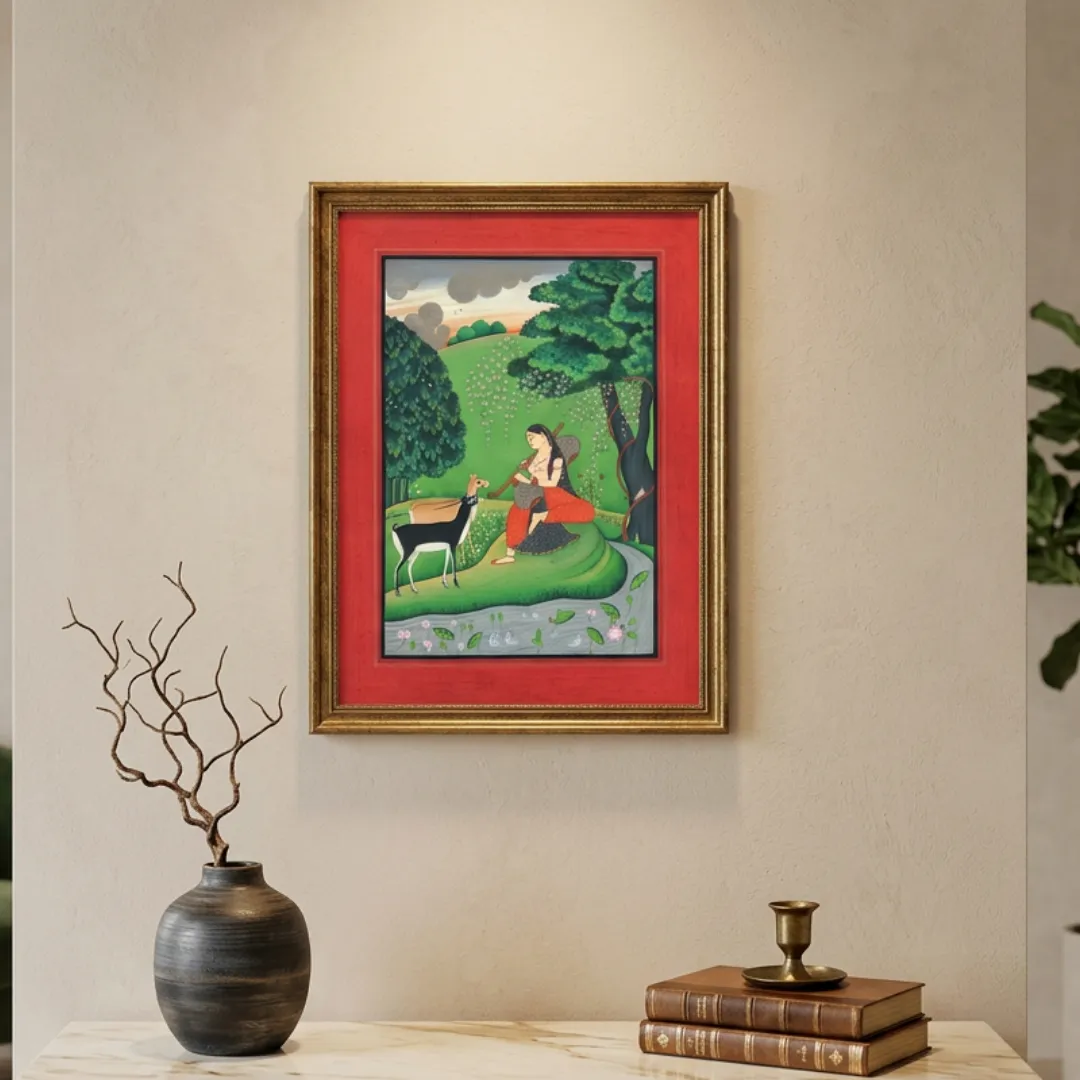
Ragini Todi in Pahari School

A solitary female figure stands within a quiet landscape, her presence defined by grace, longing, and inward reflection. In Ragini Todi in Pahari School, the woman appears absorbed in the emotional atmosphere that surrounds her, a hallmark of the ragamala tradition where music and mood become visual poetry. She stands amid stylised trees and gentle hills, her posture calm yet expressive, as though listening to a melody carried by the stillness of the natural world. The composition unfolds with delicate balance, allowing the figure and the landscape to exist in harmonious dialogue. The painting reflects the refined aesthetics of the Pahari school of miniature painting, known for its lyrical landscapes, elegant figures, and subtle colour palettes. The environment surrounding the figure is carefully arranged: slender trees, soft hills, and open sky create a tranquil setting that enhances the emotional tone of the ragini. In the ragamala tradition, Ragini Todi represents a mood of quiet yearning and contemplative solitude, often depicted with a female figure in communion with nature. Executed with the delicate linework and decorative precision characteristic of Pahari painting, the artwork celebrates a classical Indian artistic heritage where music, poetry, and painting intersect. The careful detailing of garments, foliage, and architectural or natural elements reveals the discipline of miniature artistry. Through its graceful composition and poetic subject, Ragini Todi in Pahari School becomes both a visual interpretation of musical emotion and a continuation of India’s rich miniature painting tradition. Why This Artwork Stands Out The painting represents Ragini Todi, part of the classical ragamala tradition that visually interprets musical moods. The elegant figure and tranquil landscape reflect the refined aesthetics of the Pahari school of miniature painting. Delicate linework, balanced composition, and soft colour palettes highlight the precision of traditional miniature techniques. The artwork beautifully merges music, nature, and emotion, embodying the poetic spirit of classical Indian art.
$ 1,249
Radha disguised as Krishna.
Only 1 left

Folk Art

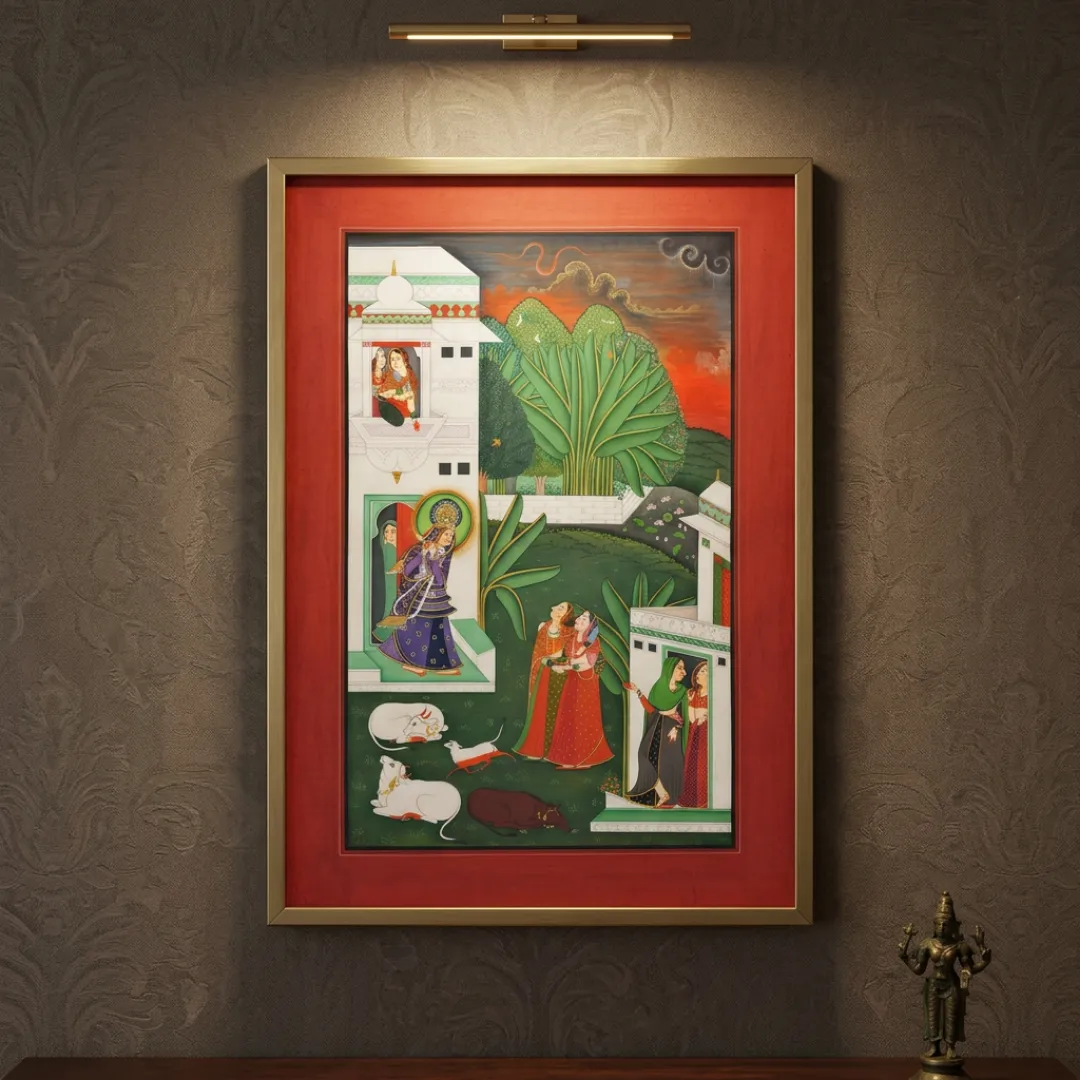
Radha disguised as Krishna.

A solitary figure stands dressed in the familiar attire of Krishna—peacock feather crown, flowing garments, and the poised grace of the divine flute player. Yet the expression carries a different tenderness. In Radha Disguised as Krishna, the painting captures a poetic moment from the devotional imagination where Radha adopts the form of her beloved. The transformation is not meant to deceive but to express devotion so complete that the boundary between lover and beloved dissolves. The figure appears calm and contemplative, as though inhabiting Krishna’s presence while remaining deeply aware of her own longing. The composition unfolds with the lyrical elegance often associated with classical miniature traditions. The figure stands within a carefully arranged landscape of stylised trees, gentle ground, and open sky. Every element is placed with deliberate balance, allowing the viewer’s attention to rest on the subtle emotional tension within the scene. The costume and symbols of Krishna—the flute, the peacock feather, the graceful posture—become visual clues that guide the viewer toward the deeper narrative of Radha’s devotion. Through delicate linework and controlled colour, the artwork reflects the poetic storytelling that characterises many devotional paintings of the Krishna–Radha tradition. Rather than depicting dramatic action, the painting focuses on emotional transformation. Radha’s disguise becomes a metaphor for spiritual unity, where devotion reaches a point where identity itself begins to merge with the divine. The work stands as a gentle reflection on love, longing, and the spiritual imagination that has shaped centuries of Indian art and poetry. Why This Artwork Stands Out The painting portrays the rare and poetic theme of Radha adopting the form of Krishna, symbolising complete devotional unity. Delicate detailing and balanced composition reflect the refined storytelling tradition of classical Indian miniature painting. Symbolic elements such as the flute and peacock feather visually connect the figure to Krishna’s divine identity. The artwork captures a deeply emotional moment from Krishna–Radha lore, blending mythology, devotion, and visual poetry.

$ 2,009
DILKASHI "Nayika's Playful Dalliance"
Only 1 left

Handmade Paper

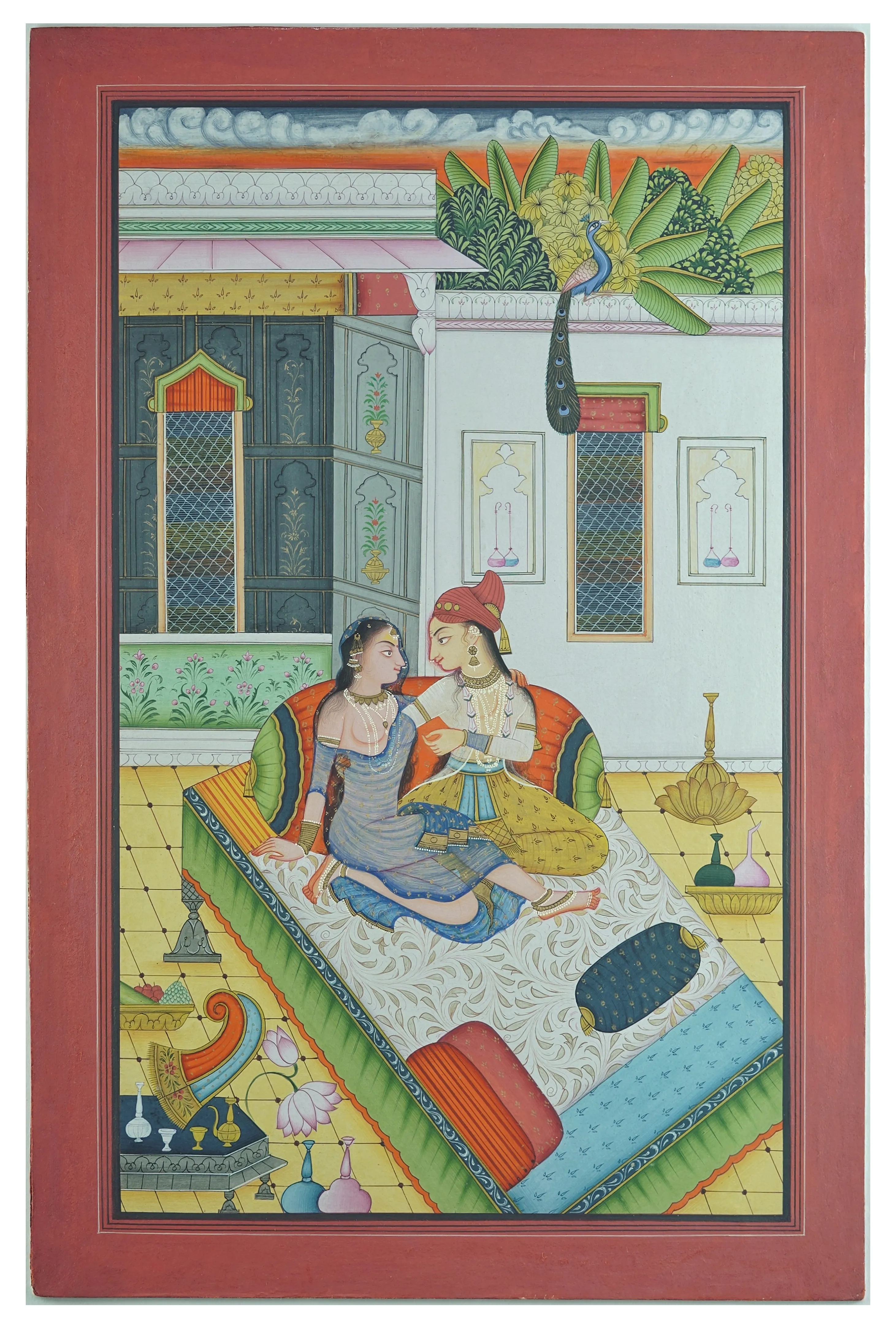
DILKASHI "Nayika's Playful Dalliance"

Nayika's Playful Dalliance captures a tender moment of mischief between two graceful companions, their forms intertwined on ornate bolsters within a palace pavilion of quiet splendor. One in flowing blue, the other in regal red, they exchange subtle caresses amid peacocks and gilded vessels, evoking unspoken delight. Natural pigments on layered handmade paper (Wasli) With real gold and silver also.

$ 2,009
NAYIKA-01 Yawning Nayika in Kotah School
12% OFFCertifiedOnly 1 left

Figurative & Portraiture

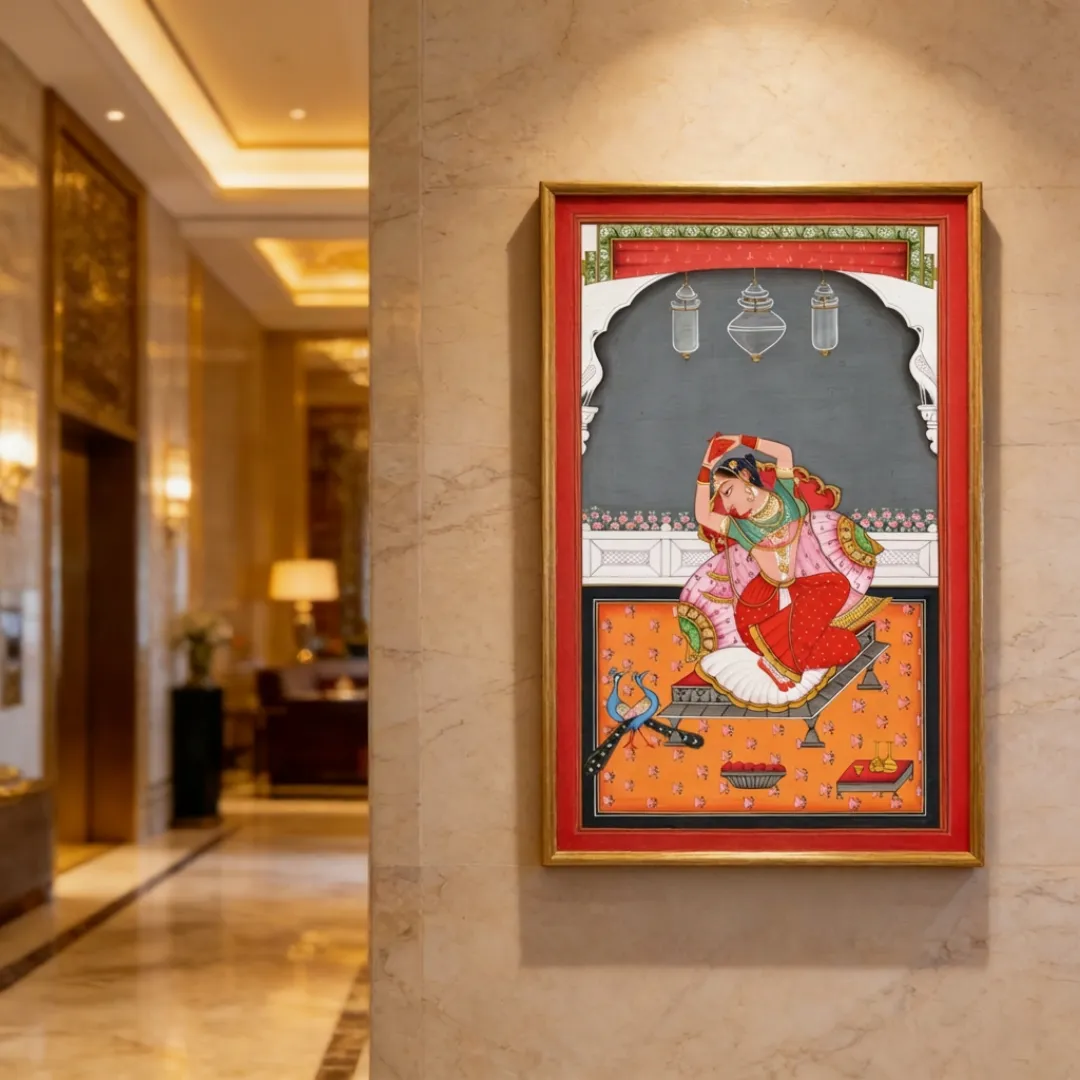
NAYIKA-01 Yawning Nayika in Kotah School

A solitary woman stands within a quiet courtyard, caught in a moment that feels both intimate and unguarded. In NAYIKA-01 Yawning Nayika in Kotah School, the figure stretches slightly as she yawns, her posture relaxed and unselfconscious. The gesture is simple yet revealing, capturing a moment of everyday human experience rarely emphasized in classical painting. Draped in flowing garments and adorned with delicate ornaments, the nayika appears suspended between wakefulness and reflection, as though the stillness of the surrounding space has gently slowed time. The composition reflects the aesthetic sensibilities of the Kotah school of miniature painting, known for its attention to naturalistic detail and carefully balanced environments. The architectural setting and landscape elements are arranged with precision, creating a quiet stage upon which the figure becomes the focal point. The gesture of yawning introduces a subtle narrative, suggesting the private rhythms of palace life and the emotional states explored in traditional nayika themes within Indian art. Executed with delicate brushwork and controlled colour, the painting highlights the refined craftsmanship associated with Rajput miniature traditions. Fine outlines define the figure’s posture, while soft hues and decorative details enrich the surrounding environment. Rather than presenting grandeur or spectacle, NAYIKA-01 Yawning Nayika in Kotah School captures a fleeting human moment, turning an ordinary gesture into a lyrical expression of mood, time, and quiet introspection. Why This Artwork Stands Out The painting captures a rare and intimate subject—a nayika caught in the natural gesture of a yawn, bringing human immediacy to classical miniature art. The composition reflects the refined aesthetics of the Kotah school, known for balanced settings and detailed narrative scenes. Delicate brushwork and controlled colour highlight the craftsmanship of traditional Rajput miniature painting. The artwork transforms an everyday moment into a poetic study of mood, time, and quiet reflection.

$ 1,279$ 1,449