
<link rel="stylesheet" href="https://cdn.rooftopapp.com/fonts/fonts.css">

Your Cart

Your cart is empty

Shop Indian Art Online: Original Paintings and Handmade Products

Shop Indian art online at Rooftop for original paintings, handmade home decor, jewellery, clothing and art books. Buy directly from Indian artists and artisans.

Showing 341 – 360 of 1772

Daily Rituals XI
CertifiedOnly 1 left

Tribal Art

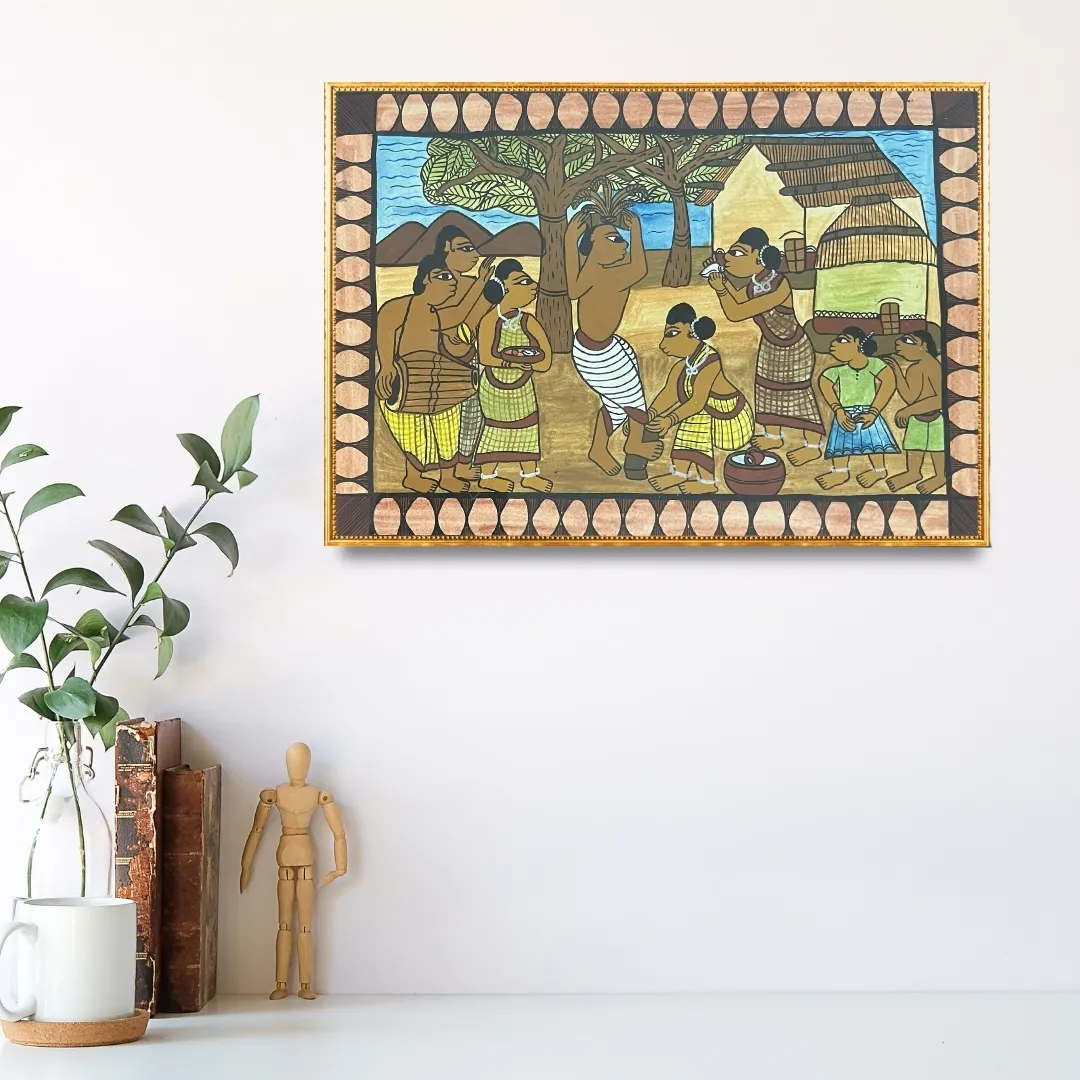
Daily Rituals XI

Across the surface, figures appear engaged in gestures that reflect the quiet continuity of everyday village rituals. Men and women move through the scene carrying objects, preparing offerings or pausing in moments of interaction, their forms outlined with bold contour and filled with compact linear patterning. Each figure stands distinct yet connected, creating a rhythmic sequence that mirrors the steady pace of communal life. The composition unfolds horizontally in the narrative tradition of Paitkar painting, allowing multiple scenes of daily activity to share a single pictorial field. Bright colours—rich reds, luminous yellows, deep blues and vibrant greens—are arranged in flat planes that lend clarity and vitality to the image. Patterned garments and repeating decorative motifs establish a consistent visual rhythm across the surface. Working within the storytelling traditions of tribal and Paitkar folk art, Kishor Gayen transforms everyday practices into structured pictorial narratives. In acrylic on canvas or paper, he documents gestures of work, devotion and social exchange that define village existence. Daily Rituals XI becomes a reflection of cultural continuity, where the rhythms of daily life are preserved through colour, pattern and balanced composition.
$ 189
Daily Rituals X
CertifiedOnly 1 left

Tribal Art

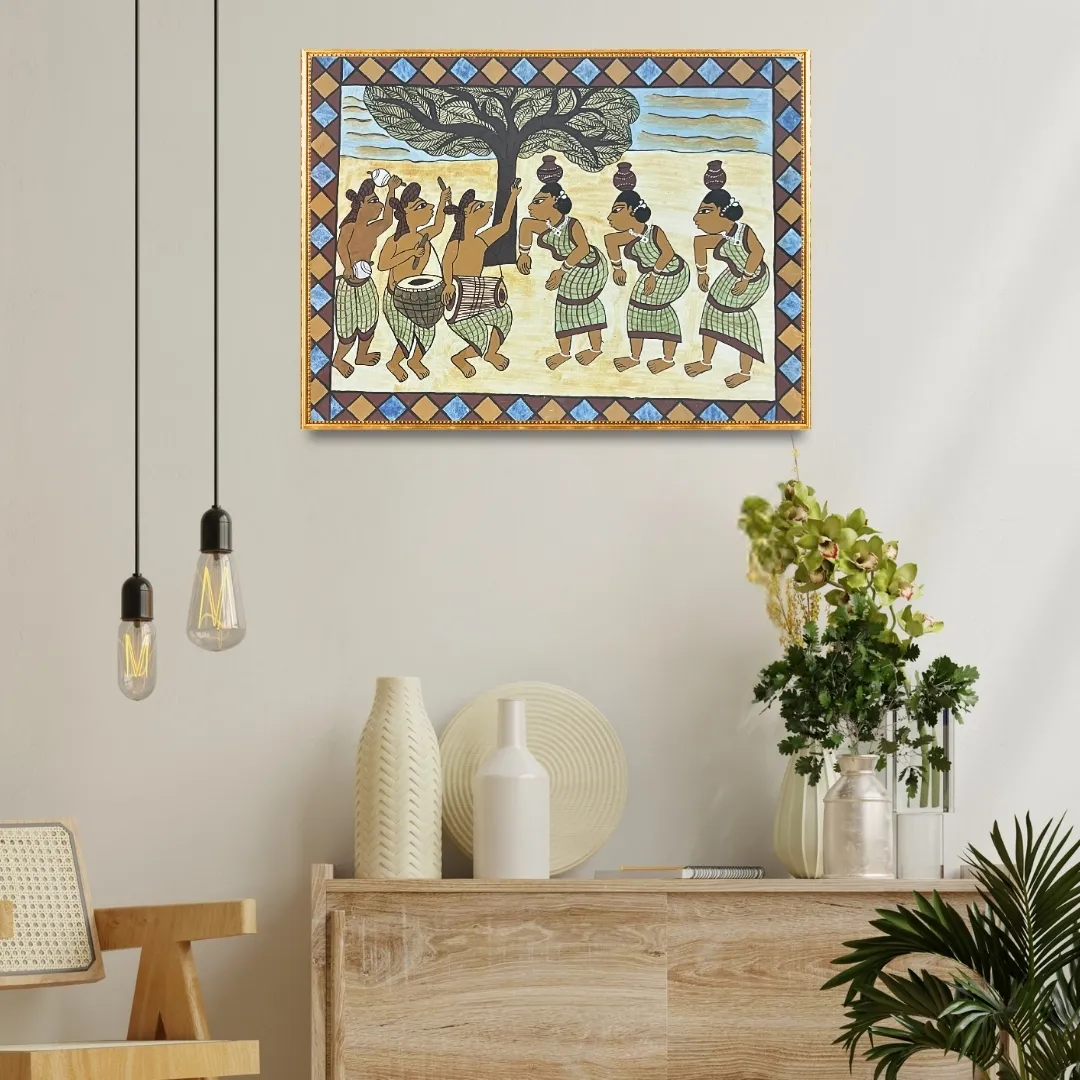
Daily Rituals X

Figures move through the composition in calm sequence, each engaged in gestures that reflect the rhythms of everyday village rituals. Men and women appear carrying objects, preparing offerings or pausing in quiet interaction, their bodies defined by bold contours and filled with compact linear patterns. The figures remain distinct yet interconnected, forming a visual rhythm that mirrors the steady flow of communal activity. The composition stretches horizontally in the narrative spirit of traditional Paitkar painting, allowing multiple moments of daily life to unfold within a single pictorial field. Bright colours—vivid reds, warm yellows, deep blues and lush greens—are applied in flat planes that give the scene clarity and vibrancy. Patterned garments and repeating decorative details create a steady cadence across the surface, guiding the viewer’s eye through the sequence of figures. Working within the storytelling traditions of tribal and Paitkar folk art, Kishor Gayen translates everyday experiences into structured visual narratives. In acrylic on canvas or paper, he records gestures of devotion, work and social interaction that define village life. Daily Rituals X becomes a reflection of shared identity and cultural continuity, where ordinary actions are preserved through colour, pattern and balanced composition.
$ 219
Daily Rituals IV
CertifiedOnly 1 left

Tribal Art

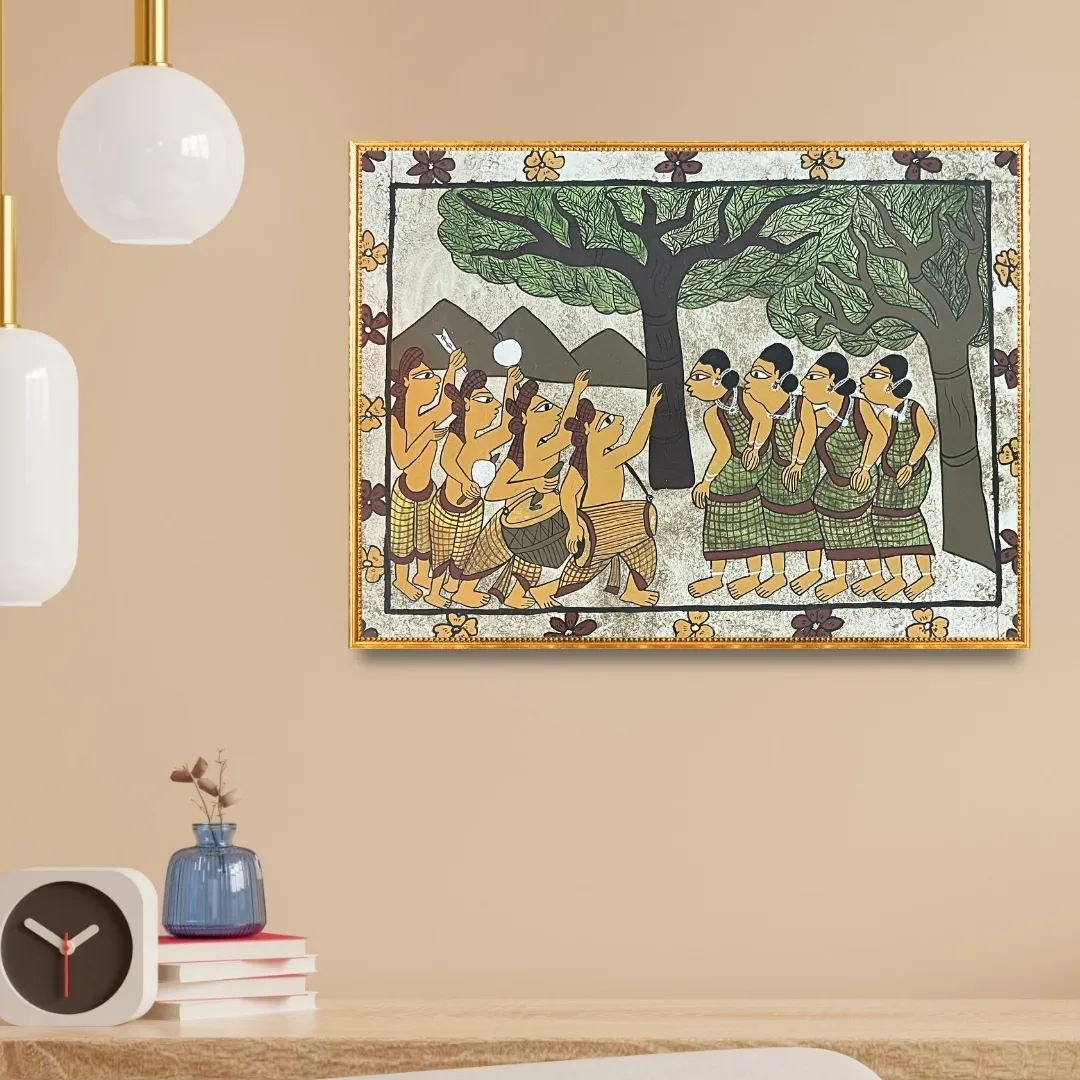
Daily Rituals IV

A sequence of figures appears across the composition engaged in gestures that reflect the quiet rhythms of everyday village rituals. Men and women move through the scene carrying objects, preparing offerings or interacting in moments of shared activity. Their forms are defined by bold contours and filled with compact linear patterns, creating a visual rhythm that mirrors the steady pace of daily life. The composition unfolds horizontally in the narrative spirit of traditional Paitkar painting, allowing several moments of routine activity to exist within a single pictorial field. Bright colours—vermilion reds, warm yellows, deep blues and vibrant greens—are applied in flat planes that bring clarity and vitality to the image. Patterned garments and repeating decorative motifs create a consistent cadence across the surface, guiding the viewer’s eye through the procession of figures. Working within the storytelling traditions of tribal and Paitkar folk art, Kishor Gayen transforms everyday practices into structured pictorial narratives. In acrylic on canvas or paper, he documents gestures of work, devotion and social interaction that define village existence. Daily Rituals IV becomes a reflection of shared identity and cultural continuity, where ordinary actions are preserved through colour, pattern and balanced composition.
$ 319
Krishnanagar Clay Hut Set | Golu Dolls

Sculptures & Figurines

Krishnanagar Clay Hut Set | Golu Dolls

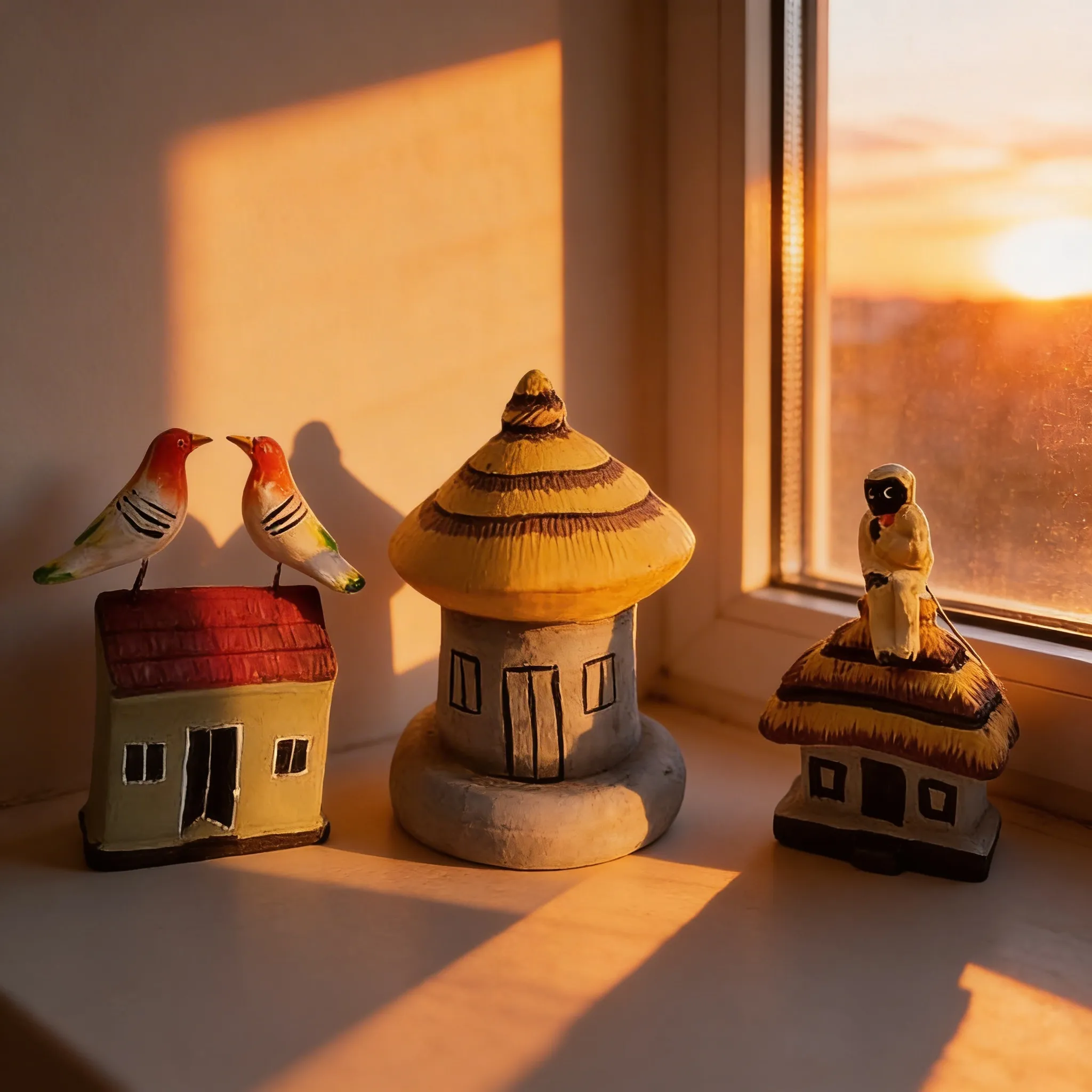
A cluster of small huts sits together within the composition, their forms shaped from clay with a simplicity that reflects village life. In the Clay Hut Set Golu Dolls, each structure carries the charm of handmade craftsmanship, with textured walls, sloping roofs, and subtle detailing that suggest a lived-in environment. The arrangement feels like a miniature settlement, where each hut contributes to a collective scene rooted in tradition and everyday rural architecture. The composition is built through repetition and variation. While the huts share a common form, small differences in shape, texture, and detailing give each piece its own identity. The clay surface retains its natural character, allowing the handmade process to remain visible. These variations create a sense of authenticity, turning the set into more than decorative objects—they become a representation of a cultural setting brought into miniature form. Traditionally used in festive displays such as Golu arrangements, the Clay Hut Set Golu Dolls connects to a broader cultural practice of storytelling through arranged figurines. Each piece becomes part of a larger narrative, where scenes are built and reimagined during celebrations. The set blends craft, culture, and decoration, offering a tactile and visual way to bring elements of rural life into festive and domestic spaces. Why This Product Stands Out The set captures the essence of traditional village architecture through handcrafted clay huts. Each piece carries subtle variations, highlighting the authenticity of handmade craftsmanship. Designed for Golu displays, the set supports cultural storytelling and festive arrangements. The natural clay texture adds warmth and a rustic aesthetic to home décor.

$ 29
Maharashtrian Family Clay Dolls

Sculptures & Figurines

Maharashtrian Family Clay Dolls

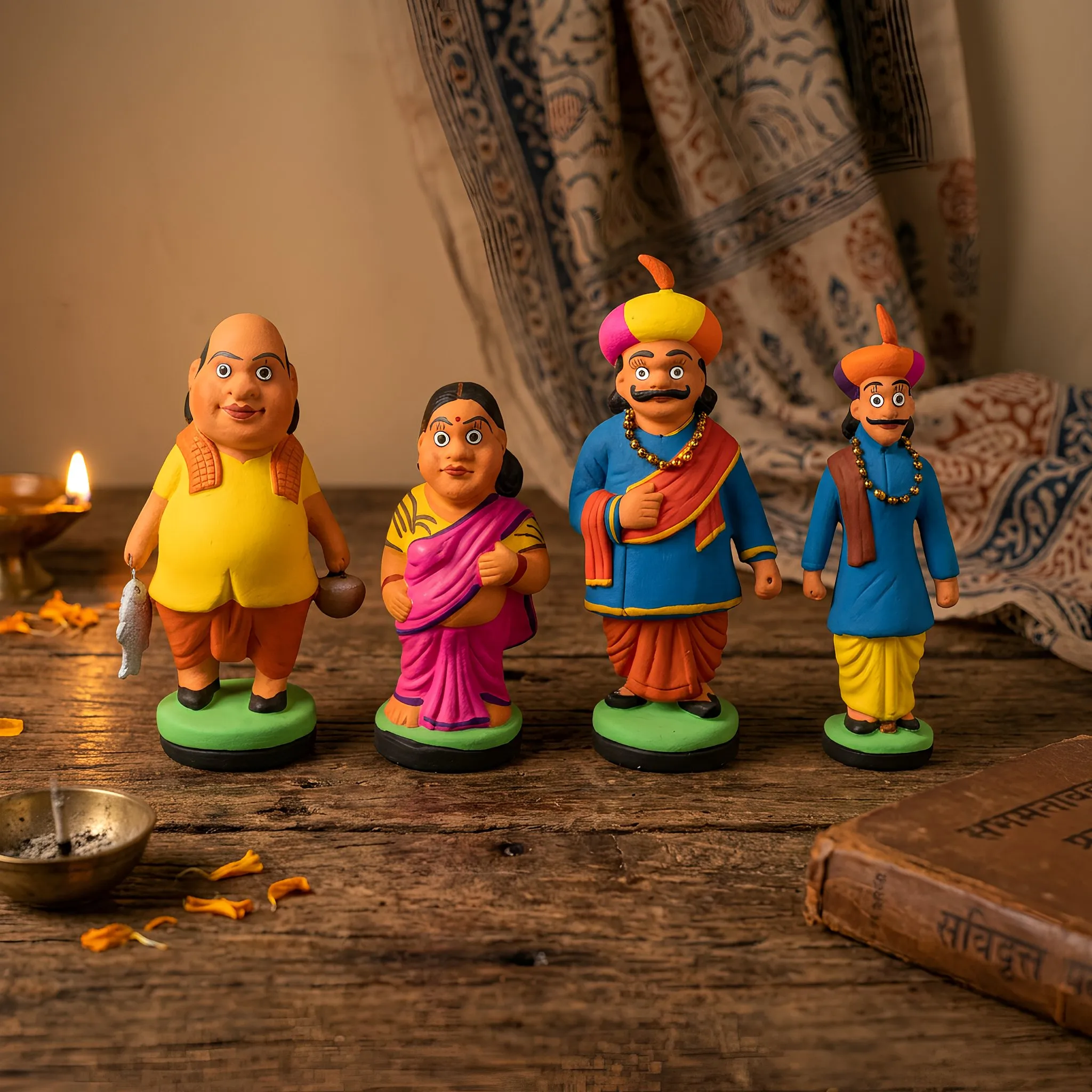
A small group of figures stands together, their presence shaped through clay into a scene that reflects everyday life in a Maharashtrian household. In the Maharashtrian Family Clay Dolls, each figure is defined by traditional attire and posture—the drape of a nauvari saree, the presence of a dhoti and pheta, the quiet gestures that suggest conversation, work, or shared routine. The arrangement feels less like individual objects and more like a moment captured in miniature, where relationships and cultural identity become visible through form. The composition relies on variation within unity. Each doll carries distinct features and clothing, yet they remain visually connected through shared material and style. The clay surface retains its handmade texture, allowing small irregularities to enhance authenticity rather than diminish it. Colour is applied with care, highlighting garments and details without overwhelming the sculpted forms, ensuring that the figures remain grounded and expressive. Traditionally suited for festive displays such as Golu arrangements or cultural showcases, the Maharashtrian Family Clay Dolls bring regional identity into decorative storytelling. The set becomes a representation of community and heritage, where clothing, posture, and grouping reflect lived traditions. Through handcrafted detail and cultural specificity, the dolls transform into more than decorative items—they become a visual narrative of Maharashtrian life. Why This Product Stands Out The dolls represent a traditional Maharashtrian family, highlighting regional attire and cultural identity. Handcrafted clay construction preserves the authenticity and individuality of each figure. Subtle detailing in clothing and posture creates a sense of narrative and everyday life. Ideal for Golu displays, cultural décor, or collectible folk sets, adding depth to festive arrangements.

$ 29
Krishnanagar Clay Carrom Set | Golu Dolls

Sculptures & Figurines

Krishnanagar Clay Carrom Set | Golu Dolls

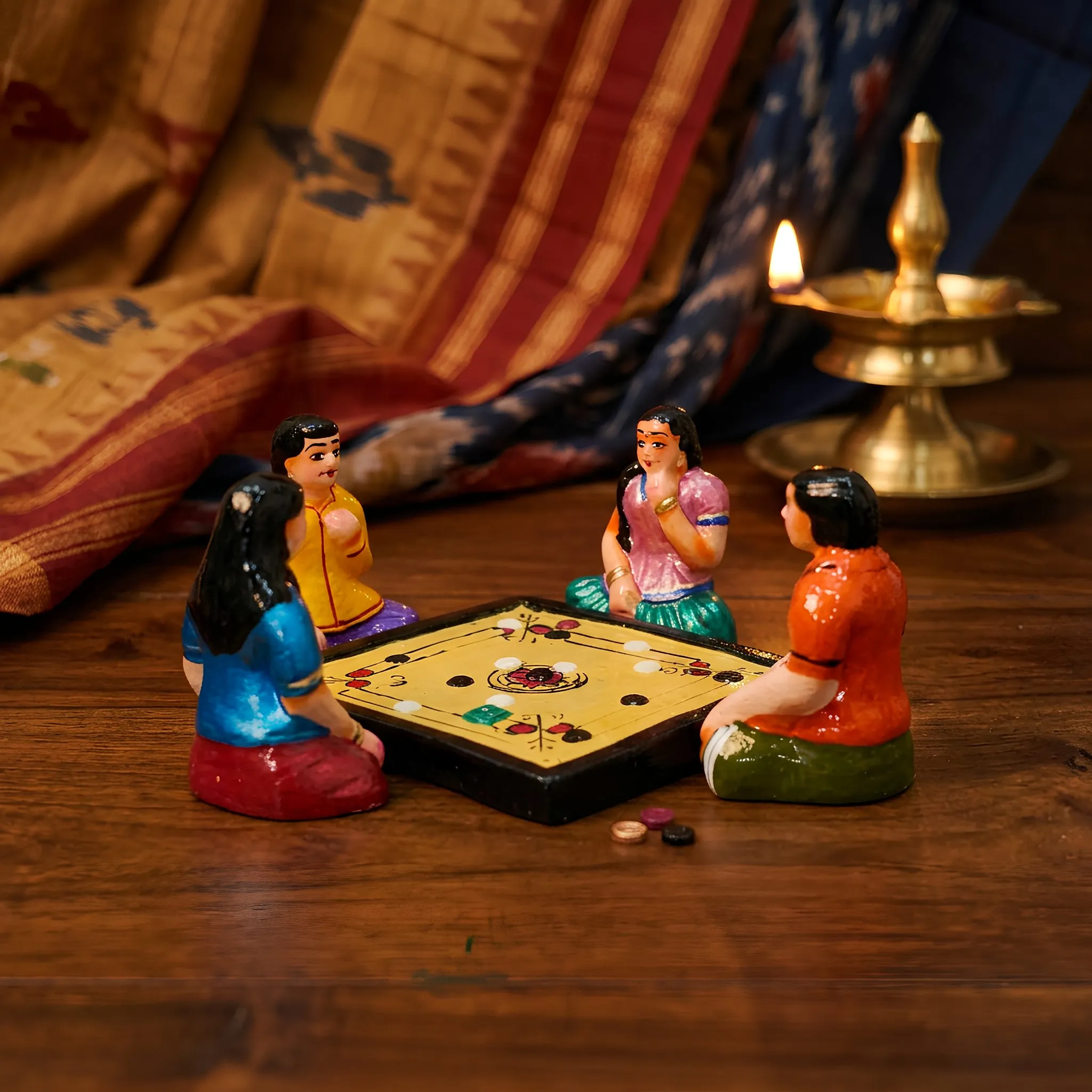
A familiar game unfolds in miniature form, where a small group gathers around a clay-rendered carrom board, frozen in a moment of quiet concentration. In the Clay Carrom Set Golu Dolls, each figure is positioned with intent—hands extended, bodies slightly leaning forward—suggesting the focused rhythm of play. The board sits at the centre, anchoring the scene, while the surrounding figures create a circle of interaction that brings the composition to life. The arrangement captures both activity and stillness. While the figures remain sculpted in clay, their postures imply movement, as though the next strike is about to happen. Subtle detailing in clothing and form reflects everyday life, grounding the scene in a relatable domestic setting. The handmade texture of clay remains visible across the figures and the board, reinforcing the artisanal nature of the piece. Traditionally suited for Golu displays, the Clay Carrom Set Golu Dolls transforms a common social activity into a cultural vignette. It becomes more than a decorative object—it becomes a narrative moment that reflects leisure, community, and shared experience. By capturing a simple game within a handcrafted format, the set brings warmth and familiarity into festive storytelling arrangements. Why This Product Stands Out The set depicts a carrom game scene, capturing a familiar social activity in miniature form. Handcrafted clay figures convey subtle gestures that suggest interaction and movement. The central board anchors the composition, creating a balanced and engaging arrangement. Ideal for Golu displays and cultural décor, adding a relatable and lively narrative elem ent.

$ 29
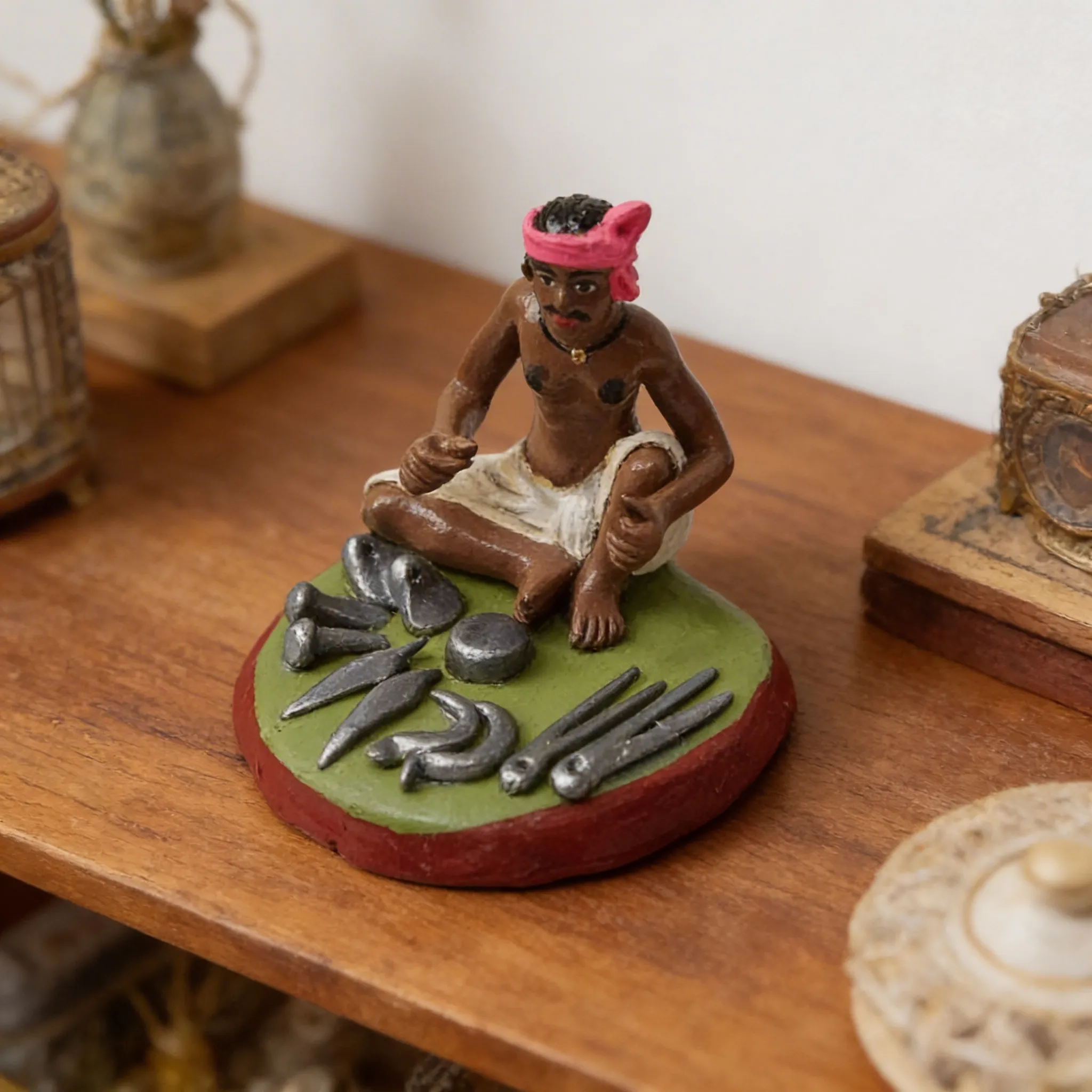
Farmer Clay Figurine | Traditional Golu Doll

Sculptures & Figurines

Farmer Clay Figurine | Traditional Golu Doll

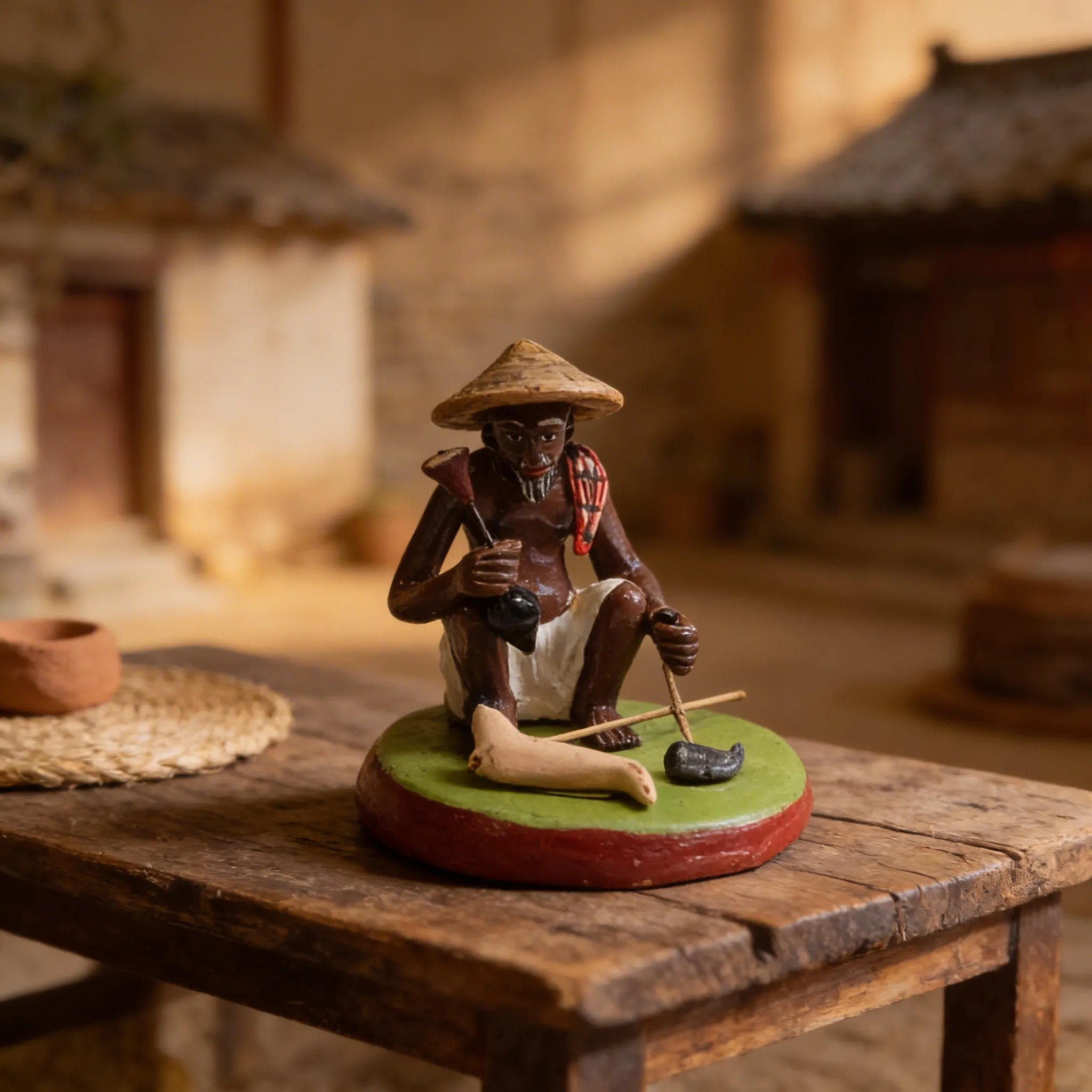
A single figure stands with quiet presence, its form shaped in clay with a simplicity that reflects traditional craftsmanship. In the Clay Figurine Traditional Golu Doll, the posture is composed and balanced, suggesting a character drawn from everyday life, mythology, or cultural memory. The surface carries the subtle textures of hand-modelling, where small variations in form give the figurine a sense of individuality. Painted details add life to the piece, highlighting attire, expression, and ornamentation without overwhelming the natural quality of the clay. The composition is centred and self-contained. The figure occupies its space with clarity, allowing attention to rest on its gesture and detailing. The handcrafted nature of the work is evident in the gentle irregularities of shape and finish, which enhance rather than diminish its character. These qualities give the figurine a presence that feels both personal and rooted in tradition. Traditionally used in Golu displays, the Clay Figurine Traditional Golu Doll becomes part of a larger narrative arrangement during festive celebrations. It can represent a deity, a cultural figure, or a scene from everyday life, contributing to the storytelling aspect of Golu. Through its handcrafted form and cultural context, the figurine carries forward a practice that blends decoration, ritual, and artistic expression. Why This Product Stands Out The figurine reflects traditional clay craftsmanship, preserving the authenticity of handmade Golu dolls. Hand-painted details enhance the character and cultural identity of the piece. The simple yet expressive form allows it to fit into a variety of Golu themes and arrangements. Ideal for festive displays, cultural décor, or collectible sets, addi ng depth to storytelling compositions.

$ 19
Tribal Games
CertifiedOnly 1 left

Tribal Art

Tribal Games

Across the composition, a group of figures appears engaged in playful movement, capturing the lively spirit of traditional tribal games. Men, women and children interact through gestures of running, gathering and friendly competition, their bodies defined by bold contours and filled with compact linear patterns. The figures remain distinct yet connected, forming a rhythmic sequence that reflects the energy and camaraderie of communal play. The composition extends horizontally in the narrative tradition of Paitkar painting, allowing multiple moments of activity to unfold across a single pictorial field. Bright colours—vivid reds, warm yellows, deep blues and vibrant greens—are applied in flat planes that lend clarity and vibrancy to the scene. Patterned clothing and repeating decorative motifs create a steady cadence across the surface, guiding the viewer’s eye through the arrangement of figures. Working within the storytelling traditions of tribal and Paitkar folk art, Kishor Gayen translates scenes of recreation and interaction into structured visual narratives. In acrylic on canvas or paper, he records gestures of movement, play and social connection that define everyday life within the village community. Tribal Games becomes a reflection of shared joy and cultural continuity, where moments of play are preserved through colour, pattern and balanced composition.
$ 219
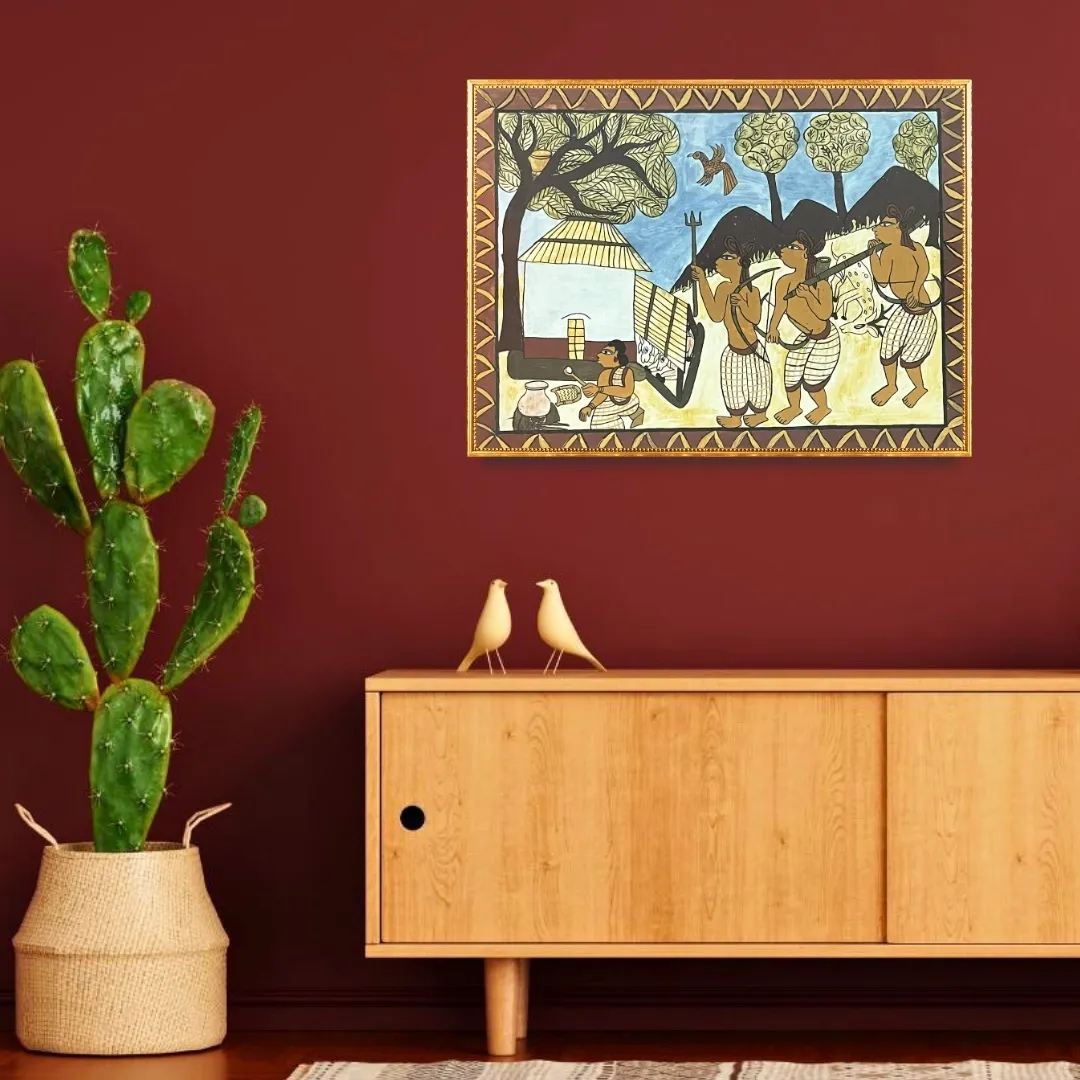
Paitkar Tribals II
CertifiedOnly 1 left

Tribal Art

Paitkar Tribals II

Figures appear across the composition engaged in everyday gestures that reflect the rhythms of tribal community life. Men and women move through the scene carrying objects, walking together or pausing in quiet interaction, their forms outlined with bold contours and filled with compact linear patterns. Each figure stands distinct yet connected, creating a visual sequence that captures the steady flow of communal activity. The composition unfolds horizontally in the narrative tradition of Paitkar painting, allowing several moments to exist within a single visual field. Bright colours—rich reds, luminous yellows, deep blues and vibrant greens—are arranged in flat planes that bring clarity and vitality to the image. Patterned clothing and repeating decorative motifs establish a rhythmic surface that guides the viewer’s eye through the procession of figures. Working within the storytelling traditions of tribal and Paitkar folk art, Kishor Gayen translates the gestures of everyday life into structured pictorial narratives. In acrylic on canvas or paper, he documents moments of movement, work and social exchange that define village existence. Paitkar Tribals II becomes a reflection of shared identity and cultural continuity, where ordinary experiences are preserved through colour, pattern and balanced composition.
$ 219
Handmade Falwala Clay Figurine | Golu Doll

Sculptures & Figurines

Handmade Falwala Clay Figurine | Golu Doll

A lone vendor stands with a basket of fruits, his presence shaped in clay with quiet attention to everyday detail. In the Handmade Falwala Clay Figurine Golu Doll, the figure captures a familiar street scene, where the falwala—fruit seller—appears mid-routine, carrying his goods with practiced ease. The arrangement of fruits adds a sense of colour and livelihood to the composition, turning a simple figure into a small narrative of daily work and exchange. The composition focuses on character and gesture. The posture of the figure, the positioning of the basket, and the detailing of attire work together to convey movement within stillness. Subtle variations in the clay surface reveal the handmade process, giving the figurine an authentic and tactile quality. Painted accents highlight the fruits and clothing, bringing contrast and visual interest without overpowering the natural form. Traditionally used in Golu displays, the Handmade Falwala Clay Figurine Golu Doll contributes to storytelling through scenes of everyday life. It adds a relatable human element to festive arrangements, representing the rhythm of local markets and community interaction. Through its handcrafted form and cultural context, the figurine becomes both a decorative object and a reflection of lived experience. Why This Product Stands Out The figurine depicts a fruit vendor (falwala), capturing a relatable scene from everyday life. Handcrafted clay modelling highlights authenticity and artisanal craftsmanship. Painted details in fruits and attire add colour and narrative depth to the piece.

$ 19
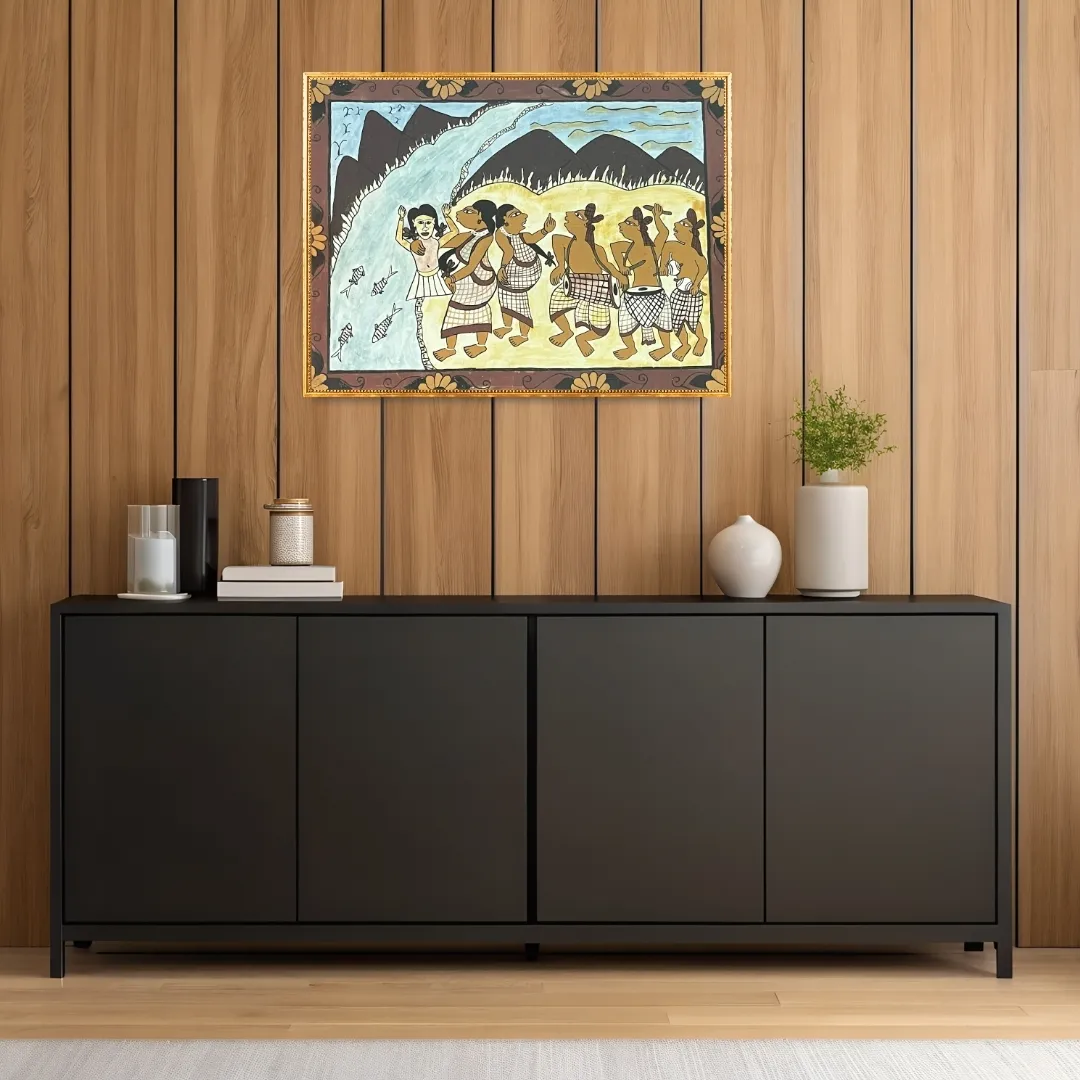
Festival Celebrations I
CertifiedOnly 1 left

Tribal Art

Festival Celebrations I

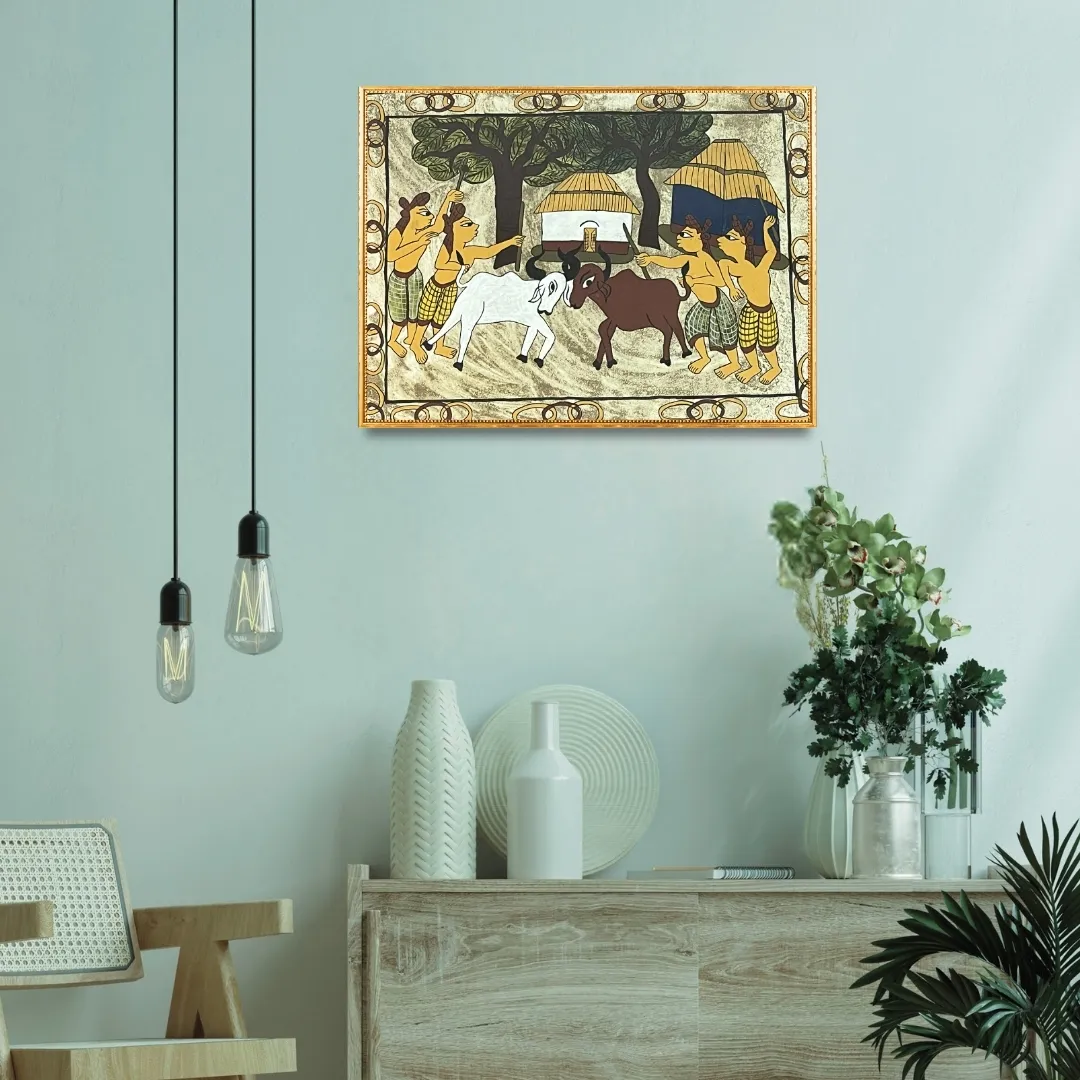
Figures gather across the composition in a lively sequence that reflects the joy and collective energy of a village festival. Men and women appear engaged in celebration—walking together, playing instruments or participating in shared activities that mark a moment of communal festivity. Their forms are defined by bold contours and filled with compact linear patterns that create a rhythmic visual flow. The scene unfolds horizontally in the narrative style of traditional Paitkar painting, allowing multiple moments of celebration to appear within a single pictorial field. Bright colours—rich reds, glowing yellows, deep blues and lush greens—are arranged in flat planes that bring clarity and movement to the image. Patterned garments and decorative details establish a lively rhythm across the surface. Working within the storytelling traditions of tribal and Paitkar folk art, Kishor Gayen transforms scenes of festival life into structured visual narratives. In acrylic on canvas or paper, he records the gestures and interactions that define collective celebration. Festival Celebrations I becomes a reflection of cultural continuity, where shared joy and ritual are preserved through colour, pattern and balanced composition.
$ 219
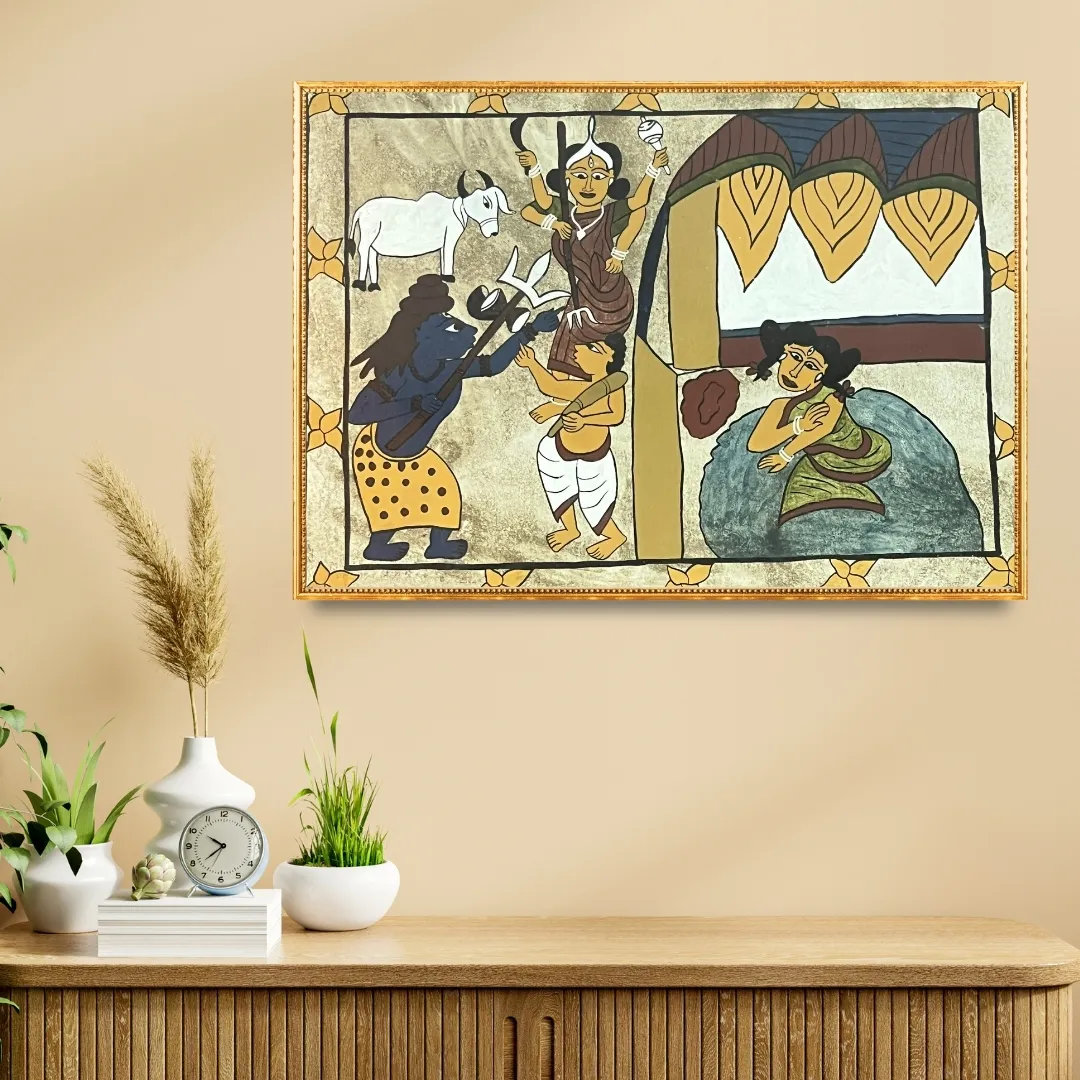
Lord Shiva
CertifiedOnly 1 left

Tribal Art

Lord Shiva

The composition centres on the powerful figure of Lord Shiva, portrayed with calm authority and symbolic presence. Surrounded by elements associated with devotion and mythology, Shiva appears in a composed stance that reflects spiritual strength and cosmic balance. The gestures and attributes connected to the deity create a visual narrative that expresses reverence and sacred energy. The painting unfolds with clarity and rhythm in the narrative spirit of Paitkar folk art. Bright colours—vermilion reds, luminous yellows, deep blues and vibrant greens—are applied in flat planes that give the image vibrancy and focus. Decorative motifs and patterned details surrounding the figure create a structured visual field that guides the viewer through the sacred imagery. Working within the storytelling traditions of tribal and Paitkar art, Kishor Gayen translates spiritual narratives into expressive visual compositions. Using acrylic on canvas or paper, he combines bold outlines and patterned forms to convey mythological themes rooted in community belief and devotion. Lord Shiva becomes a reflection of cultural memory where spiritual symbolism is preserved through colour, pattern and narrative composition.

$ 219
Trimurti
CertifiedOnly 1 left

Trimurti

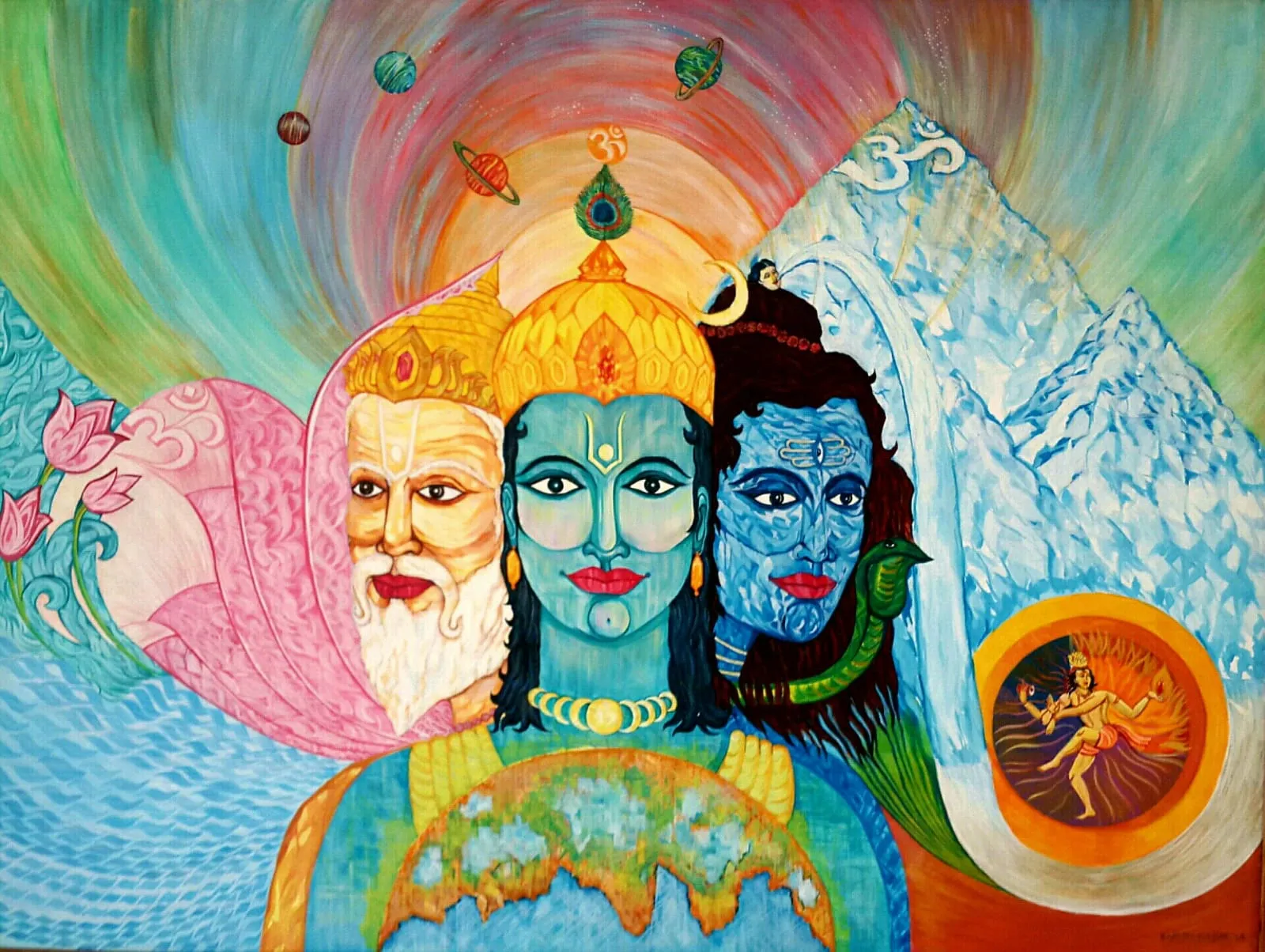
Three figures emerge within the composition, their forms aligned in a unified presence that represents the cosmic triad of creation, preservation, and transformation. In Trimurti, the identities of Brahma, Vishnu, and Shiva are brought together not as separate entities but as interconnected forces that define the cycle of existence. Each form carries its own symbolic attributes—calm composure, sustaining strength, and transformative power—yet they exist within a shared visual rhythm that emphasizes balance over separation. The composition is structured around unity and symmetry. The three figures are arranged in a way that allows each to be distinct while remaining part of a cohesive whole. Subtle detailing in posture, ornamentation, and expression helps differentiate the deities, while the overall arrangement reinforces their interdependence. The space around them remains measured and controlled, allowing the focus to remain on the relationship between the three forms. In Trimurti, the artwork becomes a visual expression of philosophical thought. Rather than presenting mythology as narrative, it reflects the idea of universal balance, where creation, preservation, and dissolution are not opposing forces but essential aspects of a continuous cycle. Through its composed structure and symbolic clarity, the painting invites contemplation on the interconnected nature of existence and the enduring presence of these divine principles. Why This Artwork Stands Out The artwork represents the Trimurti—Brahma, Vishnu, and Shiva, embodying creation, preservation, and transformation. The balanced composition emphasizes unity while maintaining the individuality of each deity. Symbolic detailing highlights the philosophical depth of the concept. The painting transforms mythology into a contemplative visual expression of cosmic balance.

$ 549
The 5 Elements
Made to OrderCertified

Combo's

The 5 Elements

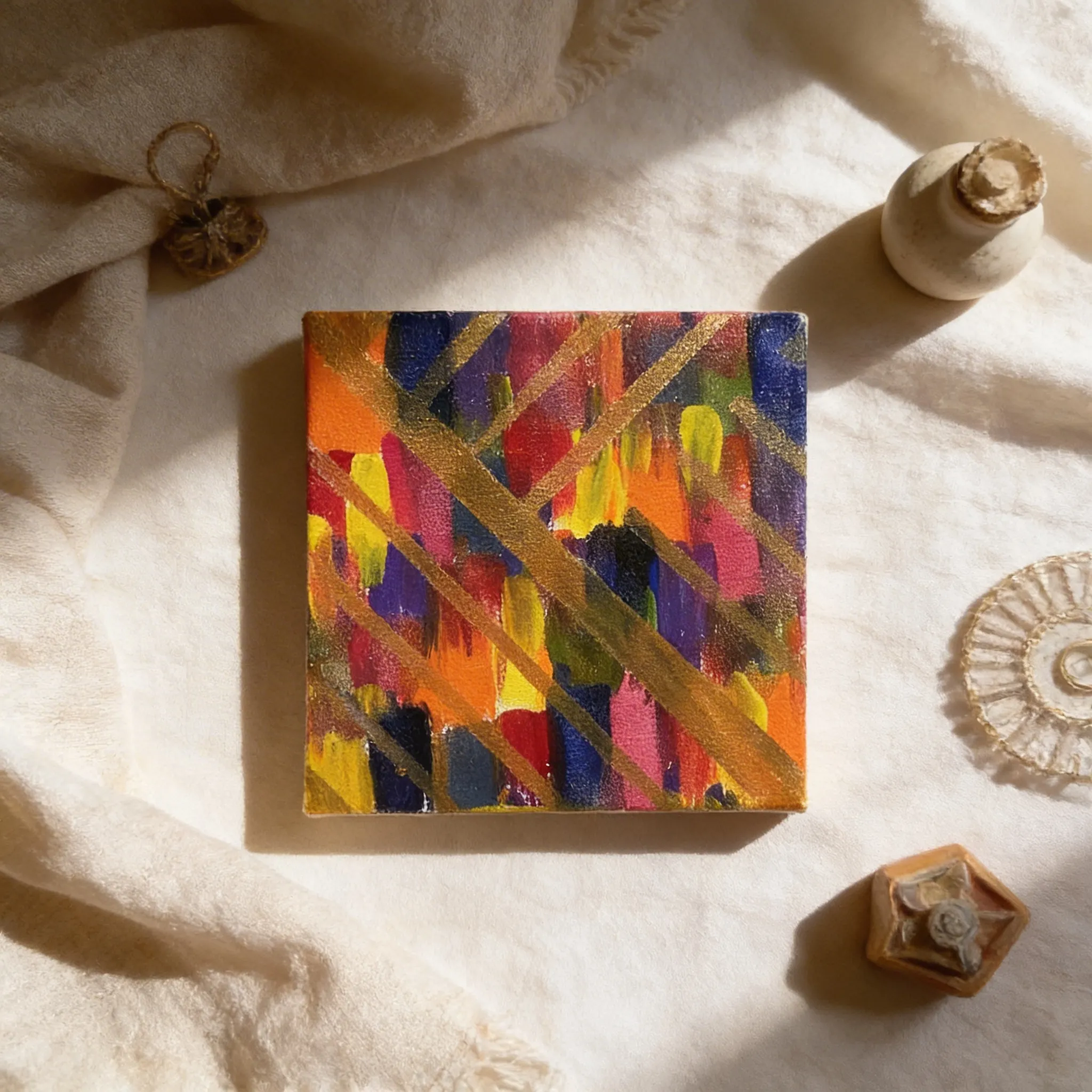
Five distinct forces unfold across the composition, each representing one of the fundamental elements—earth, water, fire, air, and space. In The 5 Elements, these forces are not depicted as isolated symbols but as interconnected presences that flow into one another, suggesting a balance that sustains both nature and existence. Colours shift across the canvas to reflect each element: deep earthy tones anchor the ground, fluid blues move through the composition, warm reds and oranges introduce energy, while lighter hues evoke air and openness. Together, they create a visual rhythm that feels both dynamic and harmonious. The composition builds its strength through balance and transition. Each element occupies its own space while remaining visually linked to the others, forming a continuous cycle rather than separate parts. Textures and forms change subtly across the surface, guiding the viewer’s eye from one element to the next. The arrangement suggests movement without chaos, where each force exists in relation to the others, reinforcing the idea of natural equilibrium. In The 5 Elements, the artwork becomes a reflection on the fundamental principles that shape the world. Rather than presenting a literal interpretation, it explores the essence of each element through colour, texture, and flow. The painting invites contemplation, encouraging the viewer to consider the interconnected nature of these forces and the balance required to sustain harmony within both the natural world and human experience. Why This Artwork Stands Out ### The painting represents the five fundamental elements—earth, water, fire, air, and space—through a unified visual composition. Smooth transitions between colours and textures create a sense of continuous movement and balance. The abstract approach allows each element to be experienced emotionally rather than literally. The artwork conveys a strong sense of harmony and interconnectedness central to natural and philosophical thought.

$ 29
City Pulse
Only 1 left

Contemporary Art

City Pulse

Vertical forms rise across the canvas like a dense cluster of buildings, their edges softened and blurred into one another as though seen through motion or memory. In City Pulse, the architecture does not stand still; it seems to vibrate with an underlying rhythm, as if the city itself is breathing. Lines stretch upward while colours shift between cool greys, deep blues, and sudden accents of light, suggesting windows, reflections, and fleeting moments within the urban landscape. The scene is not fixed—it feels in constant transition, capturing the energy rather than the structure of the city. The composition is driven by repetition and movement. Tall, linear shapes create a visual cadence that echoes the vertical rise of skyscrapers, while subtle variations prevent uniformity. Light appears in fragments, scattered across the surface like signals of life within the buildings. The lack of precise detail allows the viewer to experience the city as sensation rather than location, where speed, density, and rhythm become the defining elements. In City Pulse, the artwork transforms the urban environment into an abstract expression of motion and energy. The painting reflects the continuous flow of life within a city—its noise, its pace, and its unspoken patterns. Rather than depicting a specific place, it captures the feeling of being within one, where every structure contributes to a larger, living rhythm. Why This Artwork Stands Out The vertical composition captures the rhythmic energy of a modern cityscape. Abstracted architectural forms convey movement rather than static structure. Subtle light accents suggest life within the urban environment without literal detail. The painting translates the city into a visual pulse, emphasizing energy and flow.

$ 49
Divine Melody of Radha Krishna
24% OFFCertifiedOnly 1 left

Religious Art

Divine Melody of Radha Krishna

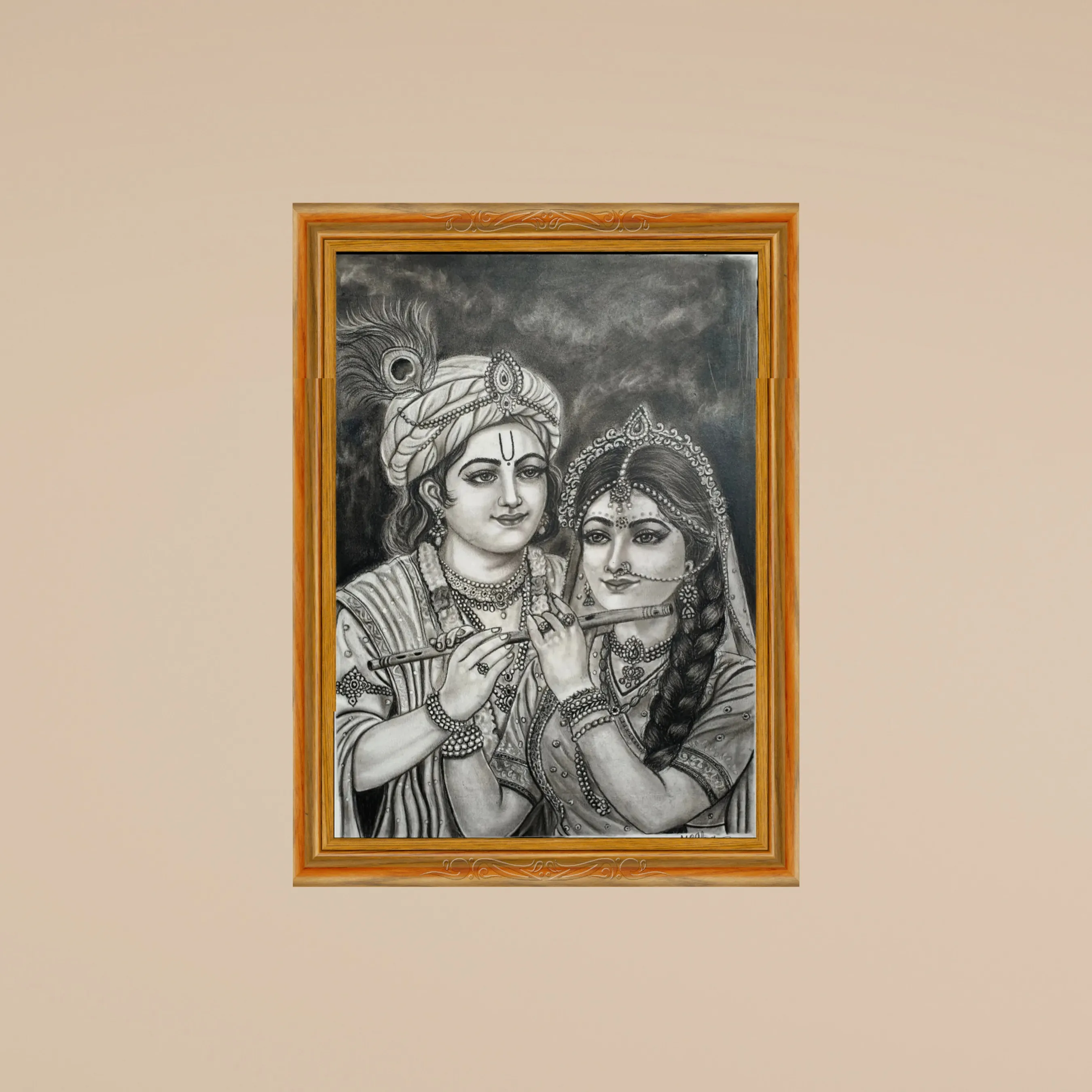
Two figures sit close within the composition, their presence defined by a quiet harmony that feels both intimate and timeless. In Divine Melody of Radha Krishna, Krishna holds the flute gently, its implied sound shaping the atmosphere of the painting, while Radha leans into the moment with a calm, attentive grace. Their forms are not merely placed beside each other but seem to exist within the same rhythm, as though music itself has drawn them into a shared space of stillness and devotion. The scene unfolds not as an event, but as a feeling—an unspoken exchange carried through melody. The flute is the painting’s silent axis. It connects the two figures, guiding the viewer’s eye across the composition and anchoring the emotional tone of the work. Surrounding elements—whether foliage, patterns, or soft landscape forms—remain secondary, allowing the relationship between Radha and Krishna to remain central. The composition relies on balance and proximity, where gesture and gaze replace movement, and where the absence of sound becomes as significant as the idea of music itself. In Divine Melody of Radha Krishna, the artwork moves beyond narrative into devotional symbolism. The pairing of Radha and Krishna has long represented the union of the human and the divine, and here that union is expressed through the idea of music as a spiritual medium. The painting captures a moment where devotion becomes harmony, where presence becomes shared experience, and where the divine is felt not through grandeur, but through quiet connection. Why This Artwork Stands Out The composition centres on the musical and emotional bond between Radha and Krishna, expressed through the symbolic presence of the flute. The close positioning of the figures creates a sense of intimacy and shared spiritual space. The restrained composition allows emotion and symbolism to take precedence over narrative detail. The artwork reflects the timeless theme of divine love and harmony, central to Krishna–Radha traditions.

$ 59$ 69
Handmade Floral Vase Still Life
23% OFFCertifiedOnly 1 left

Still Life

Handmade Floral Vase Still Life

A vase filled with flowers rests at the center of the composition, its presence quiet yet deliberate. In Handmade Floral Vase Still Life, the arrangement is not overly elaborate; instead, it focuses on balance and form, where each flower contributes to a measured visual rhythm. Petals open gently outward while stems gather within the vase, creating a natural structure that feels both composed and organic. The surrounding space remains calm, allowing the still life to exist without distraction, as though time itself has slowed around the arrangement. The composition draws attention to the relationship between object and space. The vase anchors the painting, while the flowers introduce movement through their varied shapes and directions. Light falls softly across the surface, creating subtle contrasts that define volume and texture. The background remains understated, ensuring that the viewer’s focus stays on the interplay between the floral forms and the container that holds them. In Handmade Floral Vase Still Life, the artwork embraces the traditional still life approach while maintaining a contemporary sensitivity to simplicity and mood. The handmade quality is reflected in the gentle irregularities of form and brushwork, giving the painting a personal and tactile presence. Rather than presenting the flowers as decorative elements alone, the composition becomes a study of quiet observation, where everyday objects are elevated through careful attention and artistic restraint. Why This Artwork Stands Out The balanced arrangement of flowers and vase creates a harmonious and visually stable composition. Soft lighting and subtle contrasts highlight texture and depth within the still life. The restrained background keeps the focus on form, colour, and natural structure. The handmade quality introduces warmth and individuality into a classic still life subject.

$ 79$ 99
13 Darshan (Set of 13 paintings)
CertifiedOnly 1 left

Folk Art

13 Darshan (Set of 13 paintings)

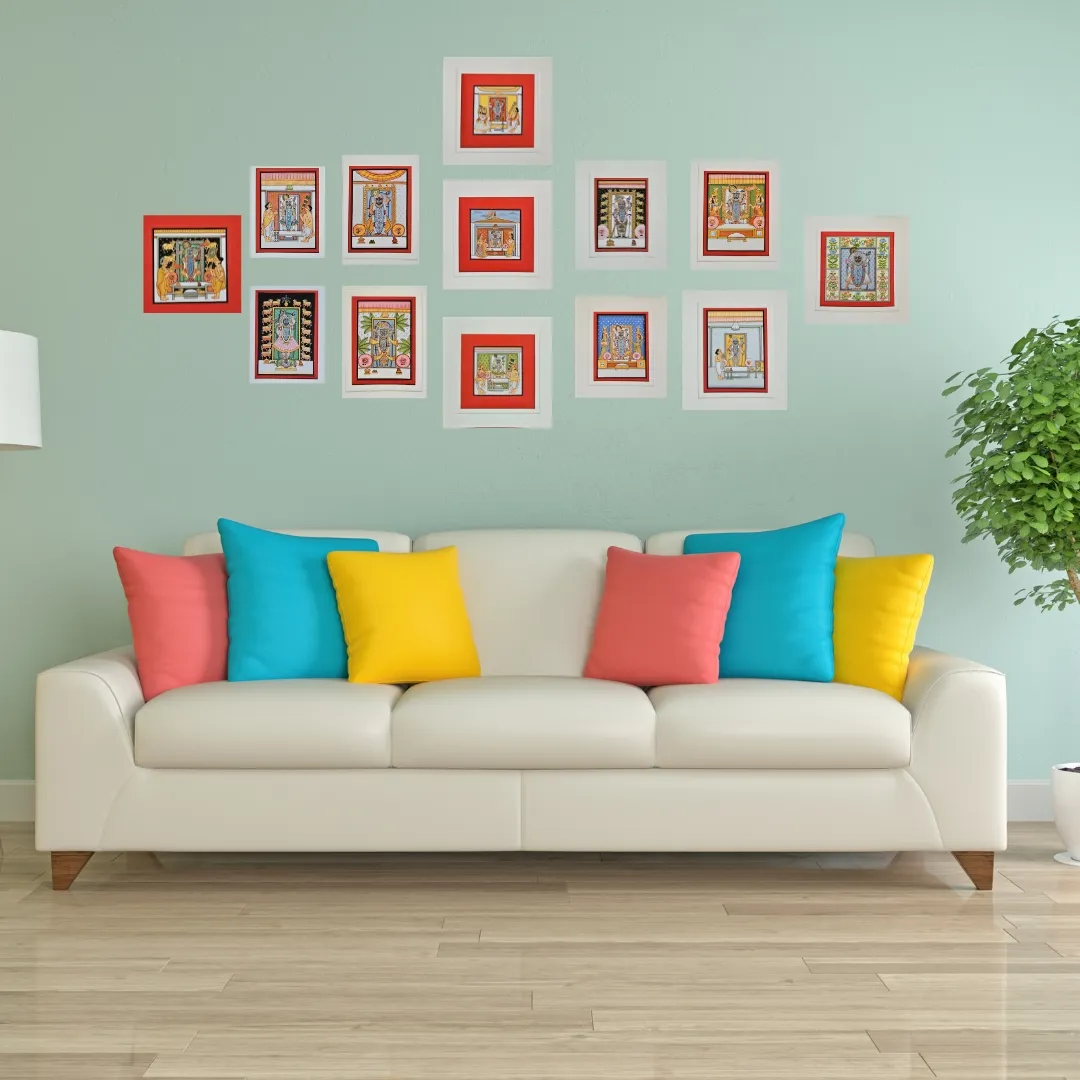
The artist’s vision for this comprehensive piece is to chronicle the entire devotional calendar of Lord Shrinathji, meticulously illustrating the specific Shringars (divine adornments) that define each phase of the year. By depicting twelve distinct forms corresponding to each month, the artwork serves as a visual journey through significant festivals such as Annakut, Janmashtami, Radhashtami, and Gopashtami. At the heart of this seasonal cycle, the artist has placed the Sharad Purnima shringar as the central focal point, emphasizing its unique spiritual importance. This composition acts as a sacred timeline, capturing the ever-changing yet eternal beauty of the deity as he is celebrated through the shifting moods and rituals of the Hindu calendar.

$ 3,889
Sharad (Krishna Leela)
CertifiedOnly 1 left

Folk Art

Sharad (Krishna Leela)

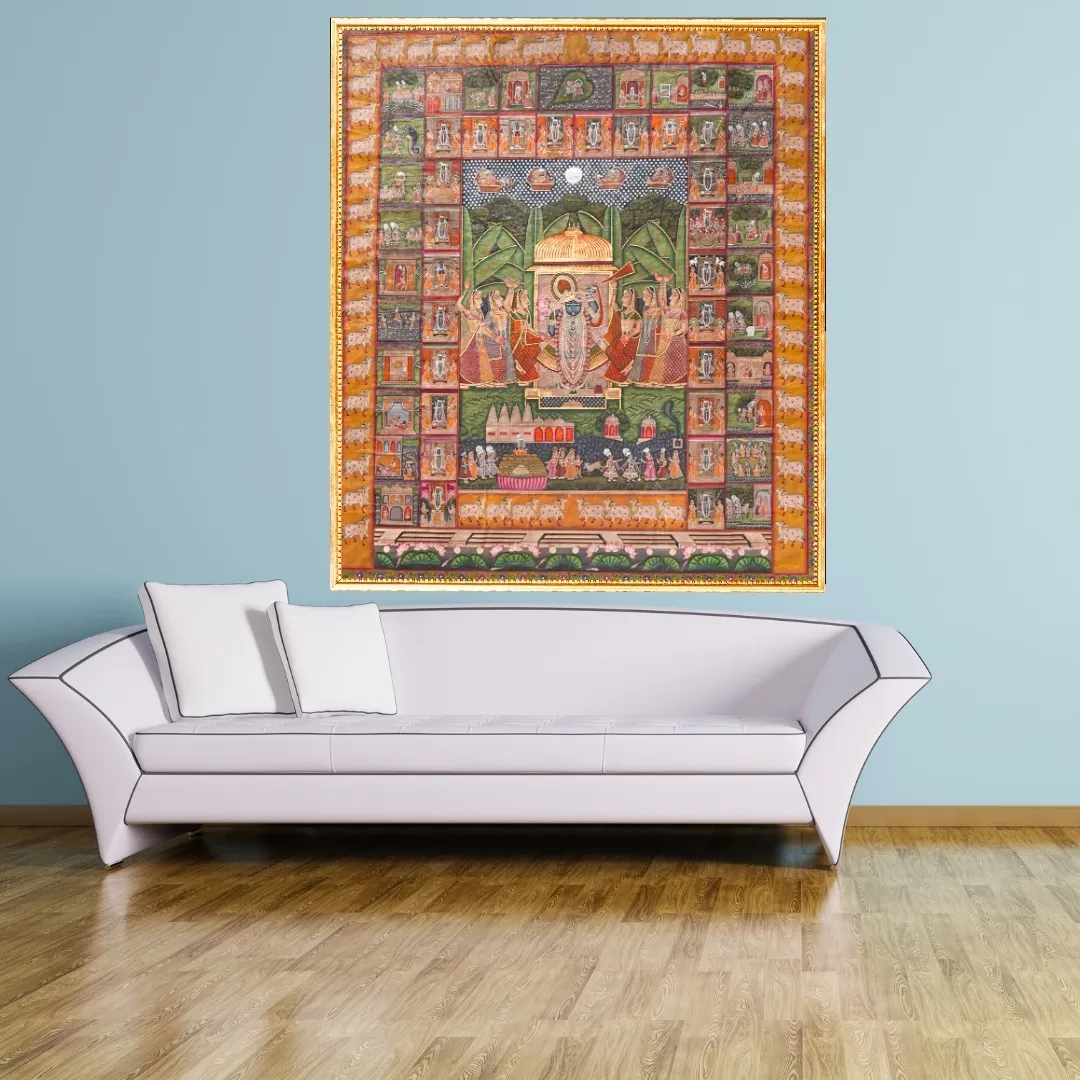
In this painting, the majestic Shringar of the Sharad Purnima festival is depicted with Lord Shrinathji as the central figure. He is flanked by Gopis on both sides, while other deities are shown arriving to witness the Darshan. At the bottom, two additional scenes portray the Annakut and Daan Leelas. The entire composition is framed by the traditional 24 Darshans, and beyond that, various episodes of the Krishna Leela—spanning from his birth to the slaying of Kansa—are illustrated. A prominent scene in the center depicts the Lalan form of Lord Krishna on a Peepal leaf, surrounded by several other childhood pastimes. Finally, a distinctive yellow border filled with cows represents Shrinathji's primary role as Gopal, the protector of cattle.

$ 9,059
Hindola (Janmashtami)
CertifiedOnly 1 left

Folk Art

Hindola (Janmashtami)

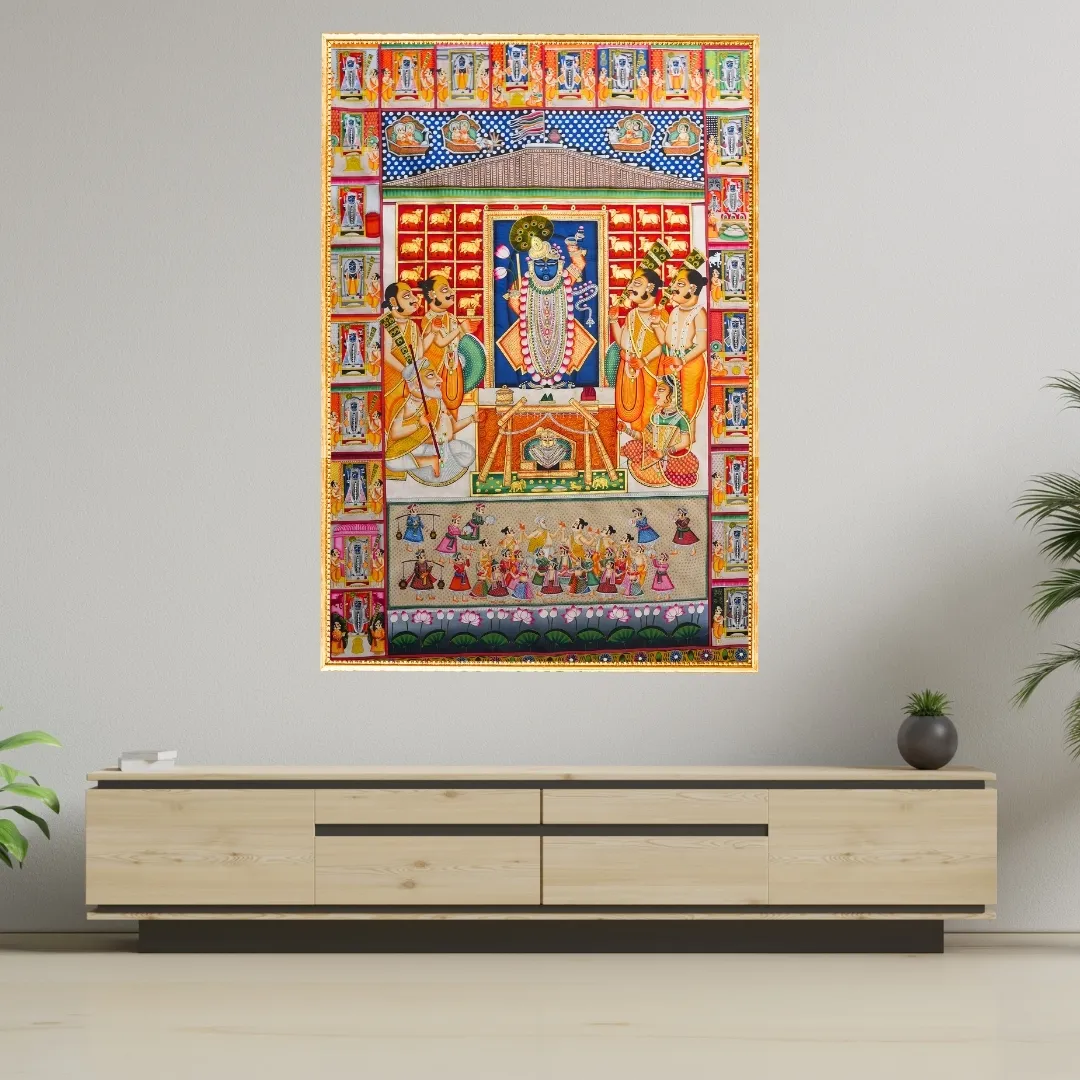
The artist’s vision for this piece is to celebrate the joyous festival of Janmashtami, the birth of Lord Krishna. The central focus is the Lalanji form—the infant Krishna—being lovingly cradled in a swing by Nand Baba and Mata Yashoda. Surrounding the child are golden toys, symbolizing the divine and cherished nature of his infancy. Above this tender scene, the artist has placed the majestic form of Shrinathji, reinforcing the belief that Shrinathji is indeed a manifestation of Lord Krishna himself. To provide a complete spiritual experience, the composition is framed by the 24 Darshans, a traditional element included in such paintings to allow devotees to witness the various other divine forms and manifestations of the Lord alongside his primary image.

$ 3,889