
Your Cart

Your cart is empty

Paintings Indigenous Art: Authentic Handmade Indian Art

Buy Paintings Indigenous Art on Rooftop. Authentic handmade Indian art created by master folk artists. Shop original Indian handmade art online.

Showing 73 – 96 of 804

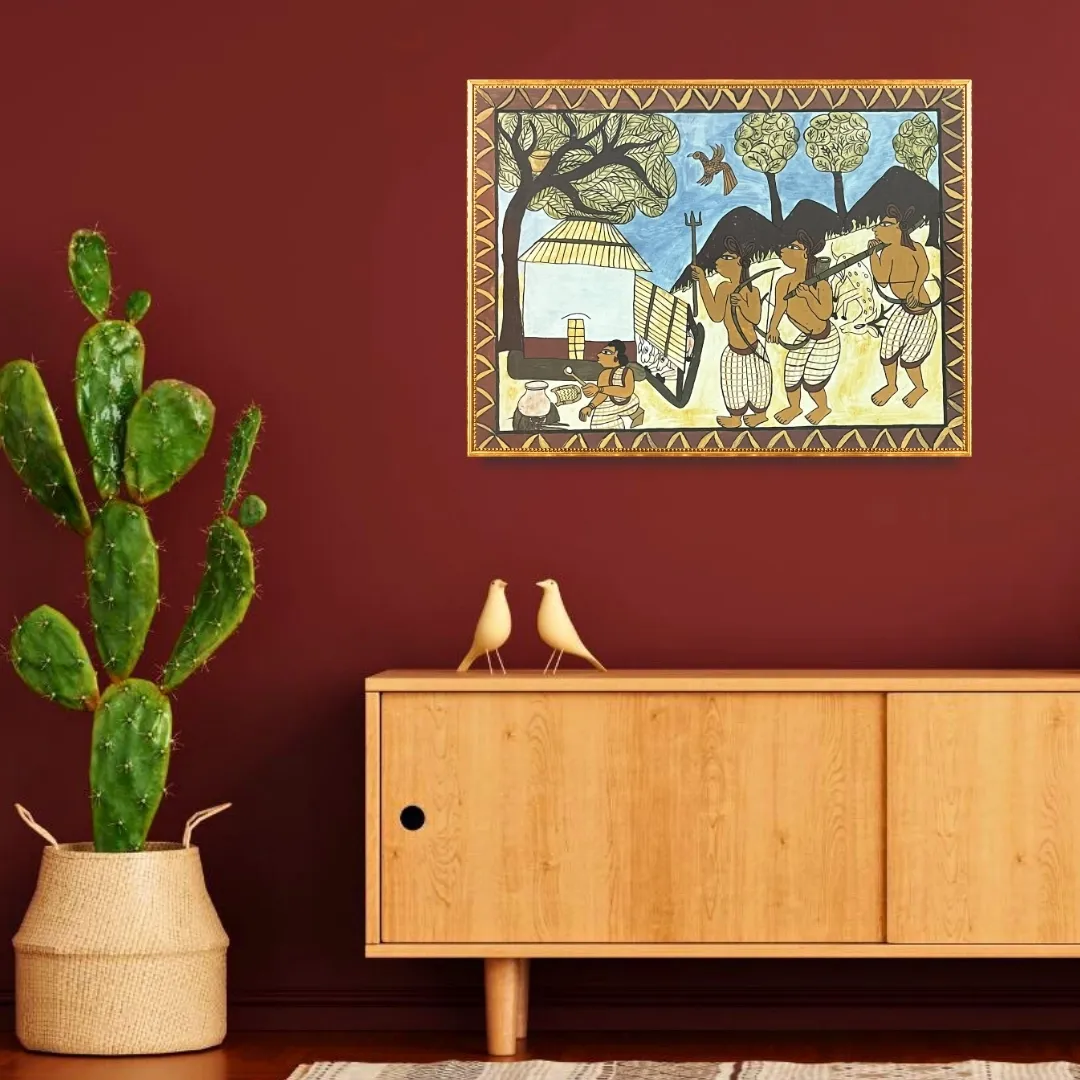
Paitkar Tribals II
CertifiedOnly 1 left

Tribal Art

Paitkar Tribals II

Figures appear across the composition engaged in everyday gestures that reflect the rhythms of tribal community life. Men and women move through the scene carrying objects, walking together or pausing in quiet interaction, their forms outlined with bold contours and filled with compact linear patterns. Each figure stands distinct yet connected, creating a visual sequence that captures the steady flow of communal activity. The composition unfolds horizontally in the narrative tradition of Paitkar painting, allowing several moments to exist within a single visual field. Bright colours—rich reds, luminous yellows, deep blues and vibrant greens—are arranged in flat planes that bring clarity and vitality to the image. Patterned clothing and repeating decorative motifs establish a rhythmic surface that guides the viewer’s eye through the procession of figures. Working within the storytelling traditions of tribal and Paitkar folk art, Kishor Gayen translates the gestures of everyday life into structured pictorial narratives. In acrylic on canvas or paper, he documents moments of movement, work and social exchange that define village existence. Paitkar Tribals II becomes a reflection of shared identity and cultural continuity, where ordinary experiences are preserved through colour, pattern and balanced composition.
$ 219
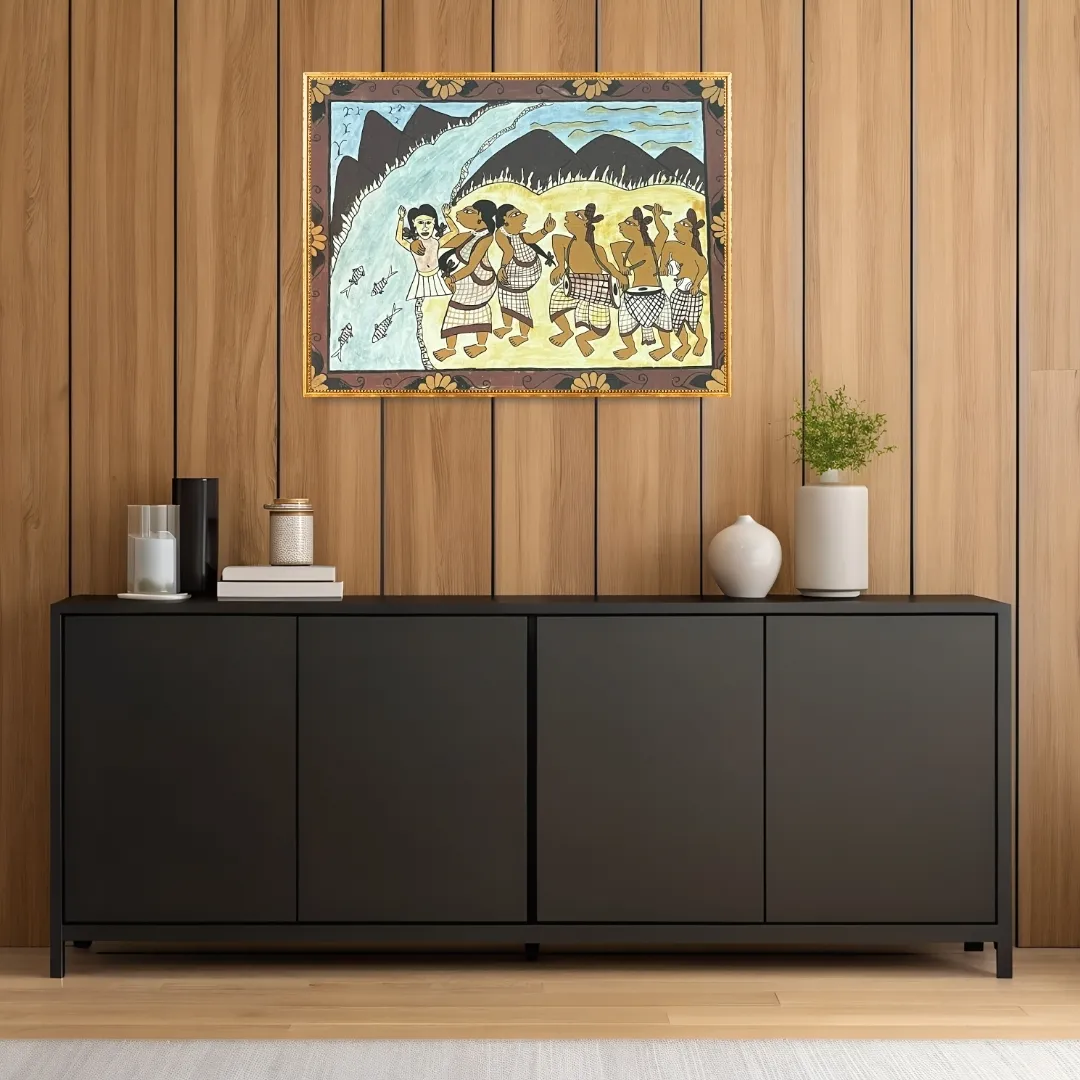
Festival Celebrations I
CertifiedOnly 1 left

Tribal Art

Festival Celebrations I

Figures gather across the composition in a lively sequence that reflects the joy and collective energy of a village festival. Men and women appear engaged in celebration—walking together, playing instruments or participating in shared activities that mark a moment of communal festivity. Their forms are defined by bold contours and filled with compact linear patterns that create a rhythmic visual flow. The scene unfolds horizontally in the narrative style of traditional Paitkar painting, allowing multiple moments of celebration to appear within a single pictorial field. Bright colours—rich reds, glowing yellows, deep blues and lush greens—are arranged in flat planes that bring clarity and movement to the image. Patterned garments and decorative details establish a lively rhythm across the surface. Working within the storytelling traditions of tribal and Paitkar folk art, Kishor Gayen transforms scenes of festival life into structured visual narratives. In acrylic on canvas or paper, he records the gestures and interactions that define collective celebration. Festival Celebrations I becomes a reflection of cultural continuity, where shared joy and ritual are preserved through colour, pattern and balanced composition.
$ 219
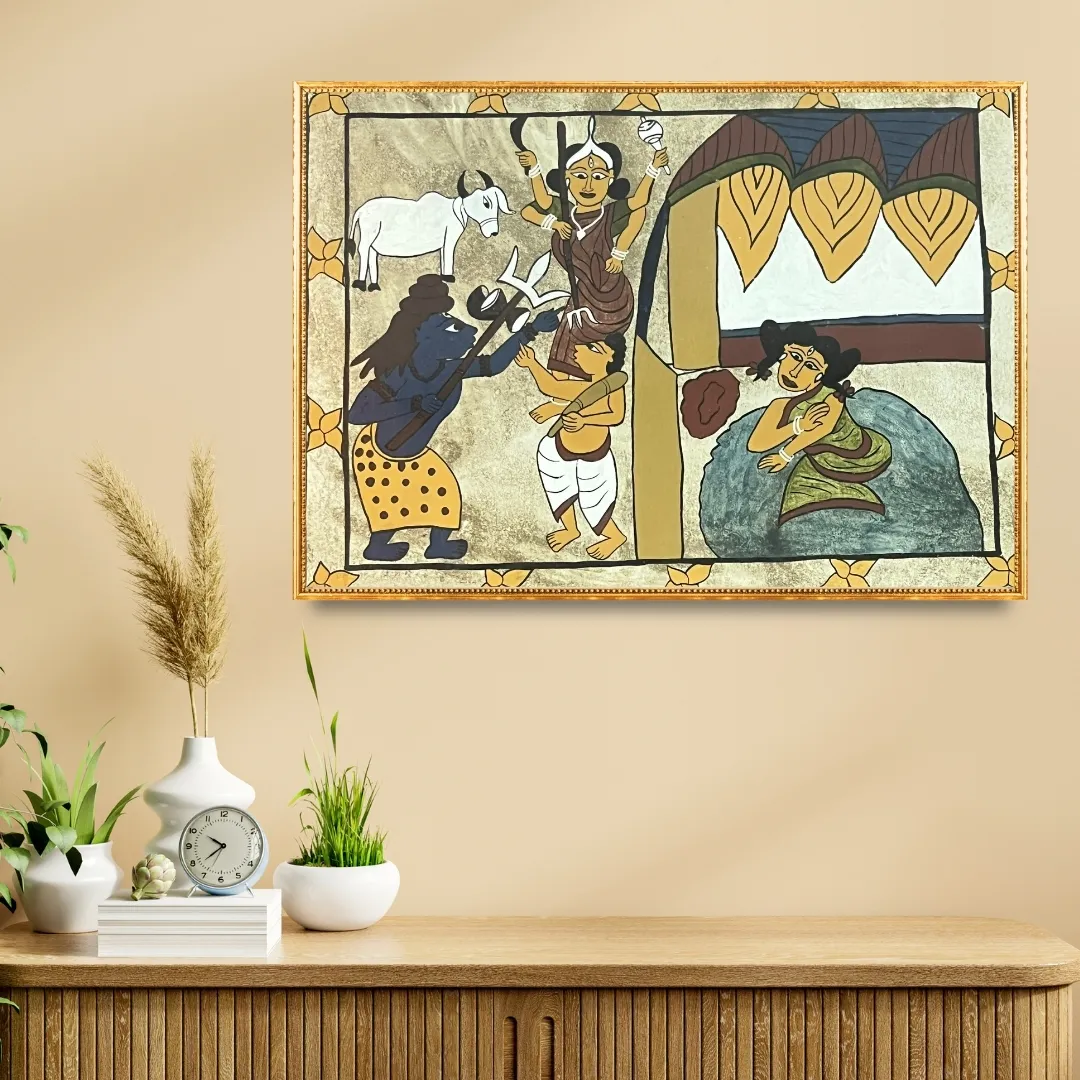
Lord Shiva
CertifiedOnly 1 left

Tribal Art

Lord Shiva

The composition centres on the powerful figure of Lord Shiva, portrayed with calm authority and symbolic presence. Surrounded by elements associated with devotion and mythology, Shiva appears in a composed stance that reflects spiritual strength and cosmic balance. The gestures and attributes connected to the deity create a visual narrative that expresses reverence and sacred energy. The painting unfolds with clarity and rhythm in the narrative spirit of Paitkar folk art. Bright colours—vermilion reds, luminous yellows, deep blues and vibrant greens—are applied in flat planes that give the image vibrancy and focus. Decorative motifs and patterned details surrounding the figure create a structured visual field that guides the viewer through the sacred imagery. Working within the storytelling traditions of tribal and Paitkar art, Kishor Gayen translates spiritual narratives into expressive visual compositions. Using acrylic on canvas or paper, he combines bold outlines and patterned forms to convey mythological themes rooted in community belief and devotion. Lord Shiva becomes a reflection of cultural memory where spiritual symbolism is preserved through colour, pattern and narrative composition.

$ 219
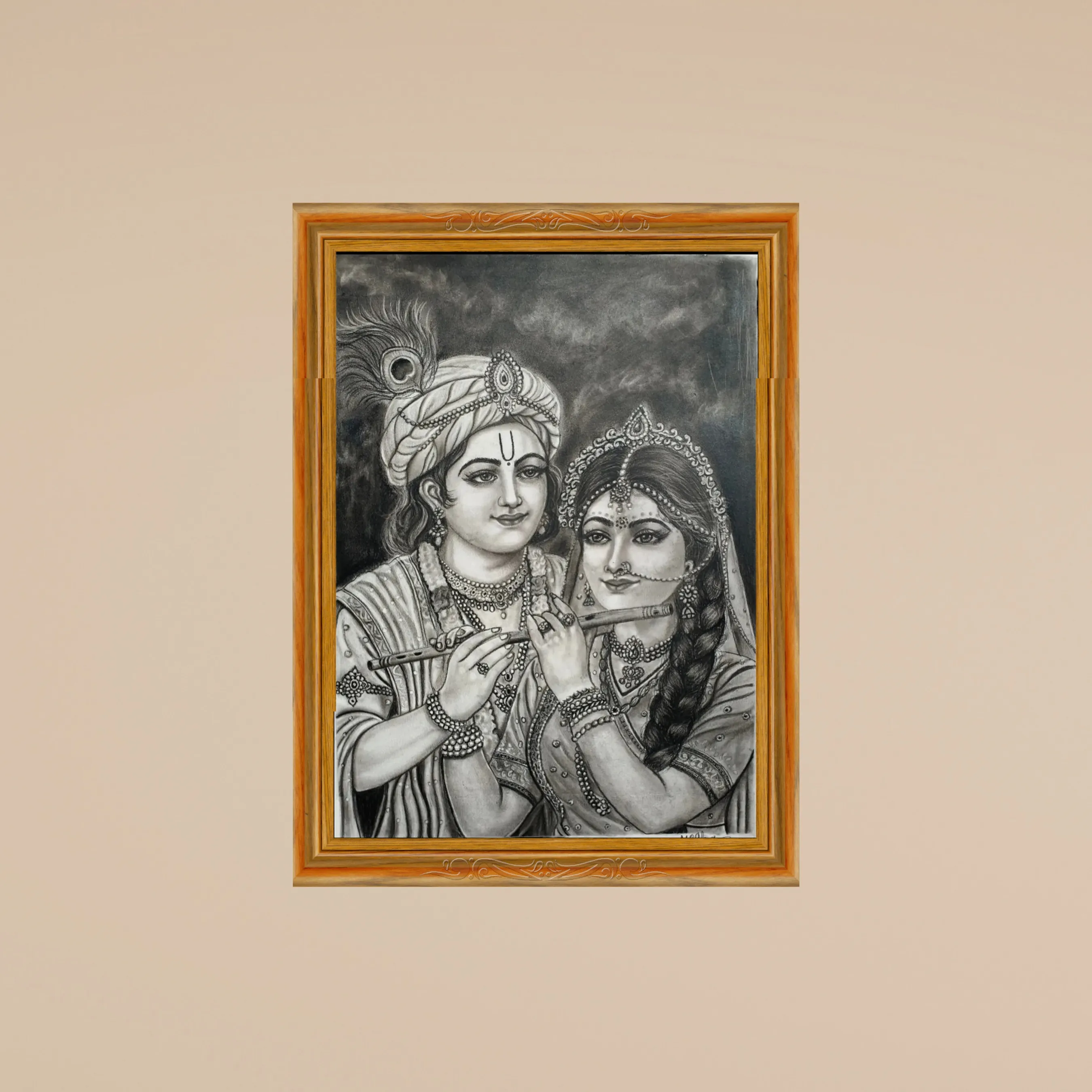
Divine Melody of Radha Krishna
24% OFFCertifiedOnly 1 left

Religious Art

Divine Melody of Radha Krishna

Two figures sit close within the composition, their presence defined by a quiet harmony that feels both intimate and timeless. In Divine Melody of Radha Krishna, Krishna holds the flute gently, its implied sound shaping the atmosphere of the painting, while Radha leans into the moment with a calm, attentive grace. Their forms are not merely placed beside each other but seem to exist within the same rhythm, as though music itself has drawn them into a shared space of stillness and devotion. The scene unfolds not as an event, but as a feeling—an unspoken exchange carried through melody. The flute is the painting’s silent axis. It connects the two figures, guiding the viewer’s eye across the composition and anchoring the emotional tone of the work. Surrounding elements—whether foliage, patterns, or soft landscape forms—remain secondary, allowing the relationship between Radha and Krishna to remain central. The composition relies on balance and proximity, where gesture and gaze replace movement, and where the absence of sound becomes as significant as the idea of music itself. In Divine Melody of Radha Krishna, the artwork moves beyond narrative into devotional symbolism. The pairing of Radha and Krishna has long represented the union of the human and the divine, and here that union is expressed through the idea of music as a spiritual medium. The painting captures a moment where devotion becomes harmony, where presence becomes shared experience, and where the divine is felt not through grandeur, but through quiet connection. **Why This Artwork Stands Out** - The composition centres on the musical and emotional bond between Radha and Krishna, expressed through the symbolic presence of the flute. - The close positioning of the figures creates a sense of intimacy and shared spiritual space. - The restrained composition allows emotion and symbolism to take precedence over narrative detail. - The artwork reflects the timeless theme of divine love and harmony, central to Krishna–Radha traditions.

$ 59$ 69
13 Darshan (Set of 13 paintings)
CertifiedOnly 1 left

Folk Art

13 Darshan (Set of 13 paintings)

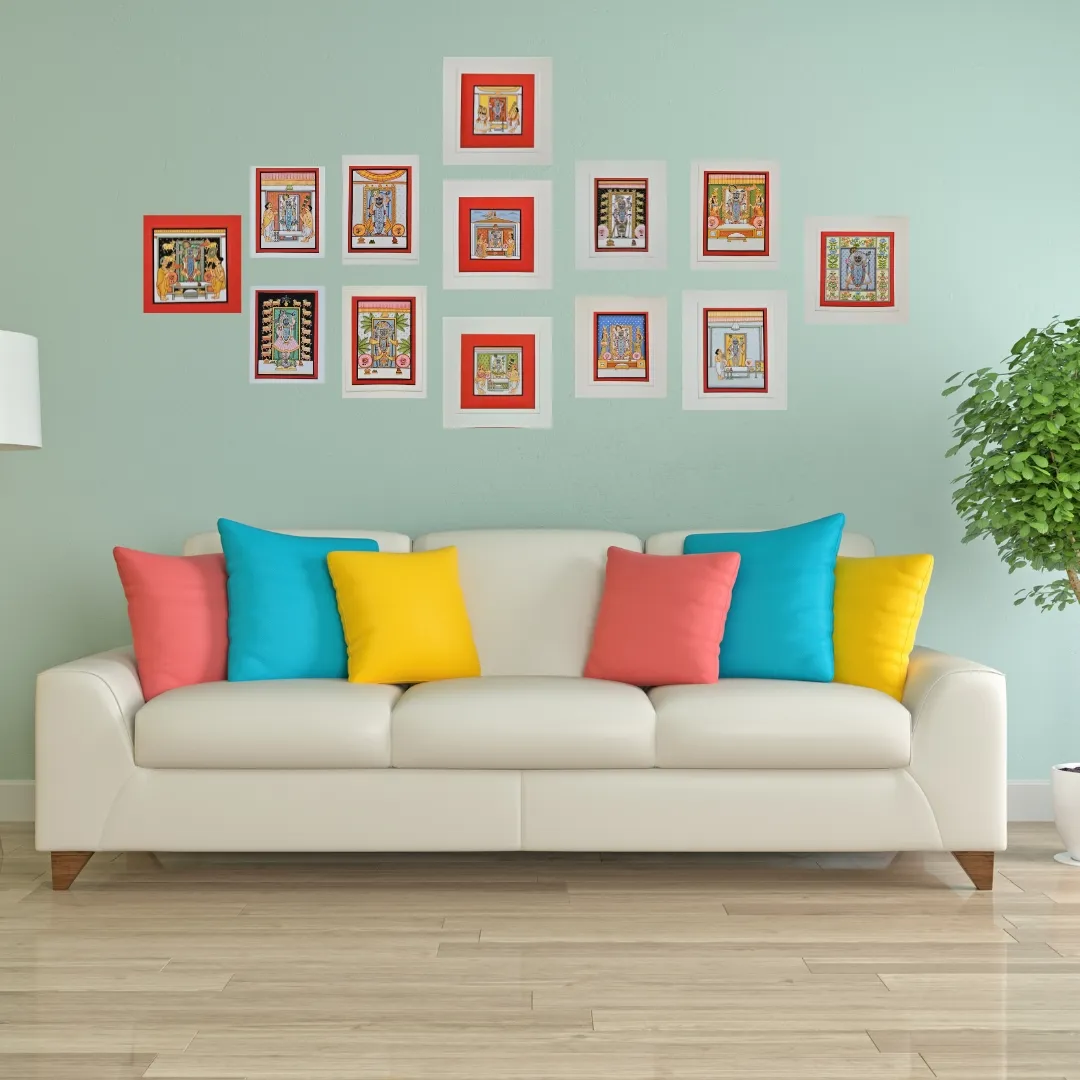
The artist’s vision for this comprehensive piece is to chronicle the entire devotional calendar of Lord Shrinathji, meticulously illustrating the specific Shringars (divine adornments) that define each phase of the year. By depicting twelve distinct forms corresponding to each month, the artwork serves as a visual journey through significant festivals such as Annakut, Janmashtami, Radhashtami, and Gopashtami. At the heart of this seasonal cycle, the artist has placed the Sharad Purnima shringar as the central focal point, emphasizing its unique spiritual importance. This composition acts as a sacred timeline, capturing the ever-changing yet eternal beauty of the deity as he is celebrated through the shifting moods and rituals of the Hindu calendar.

$ 3,849
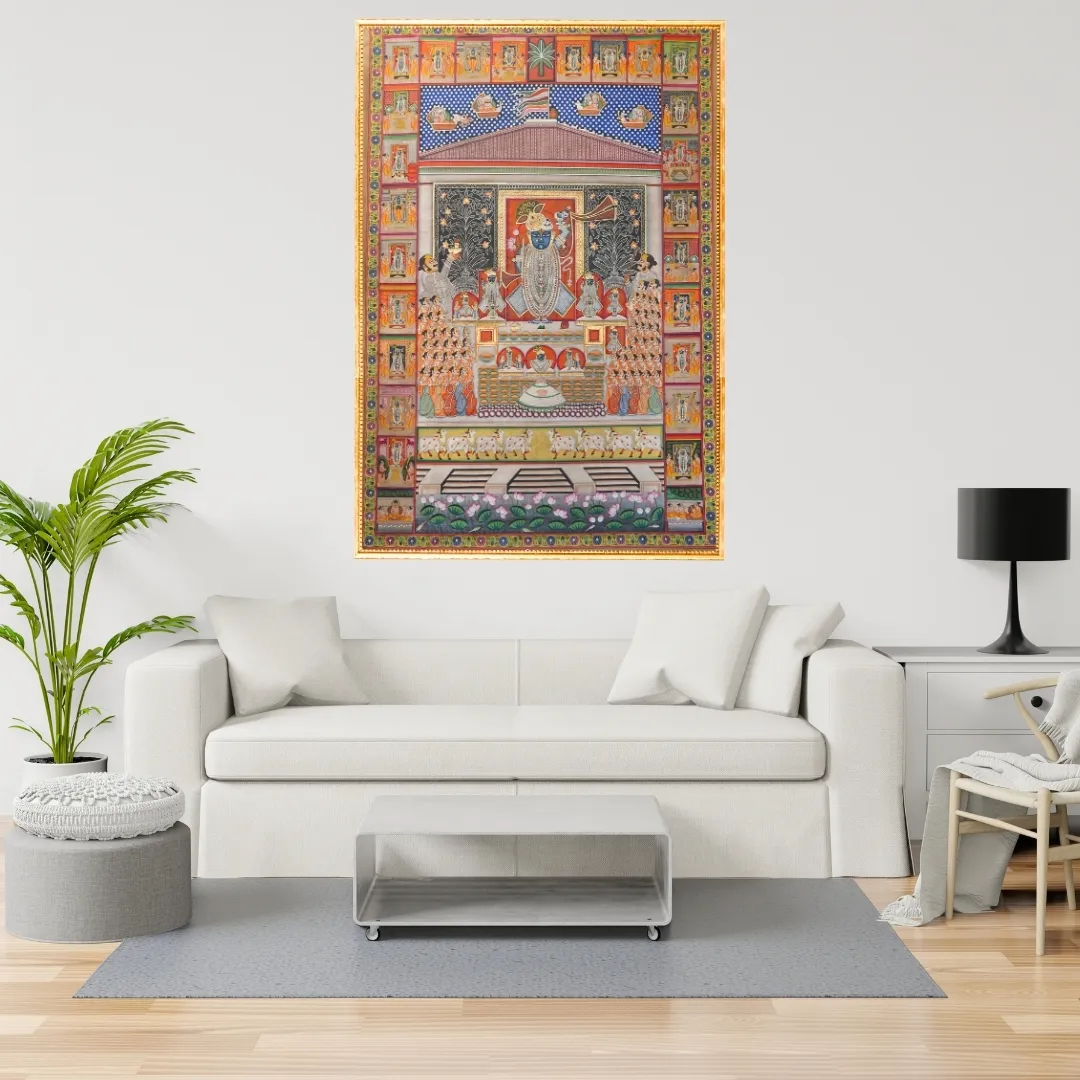
Sharad (Krishna Leela)
CertifiedOnly 1 left

Folk Art

Sharad (Krishna Leela)

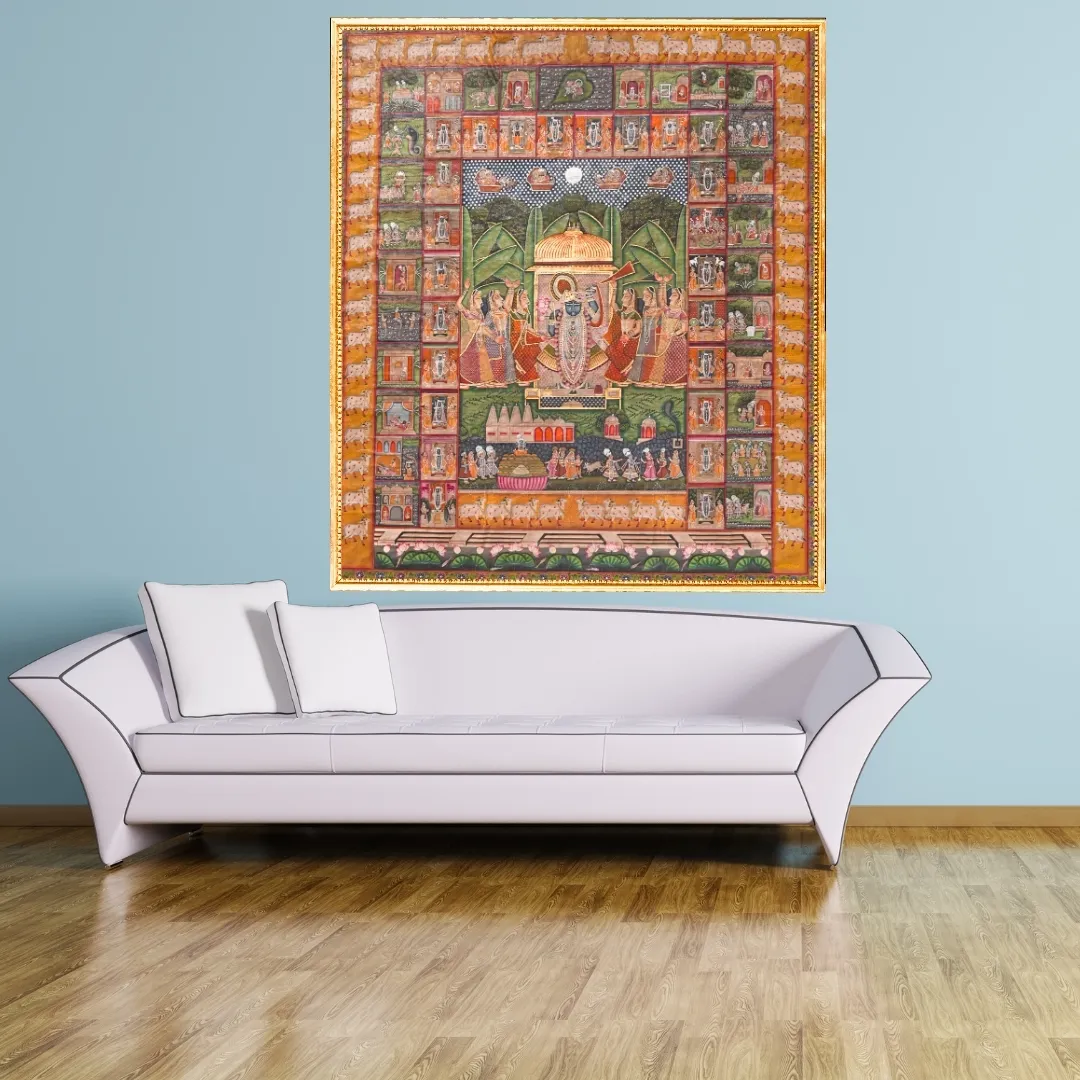
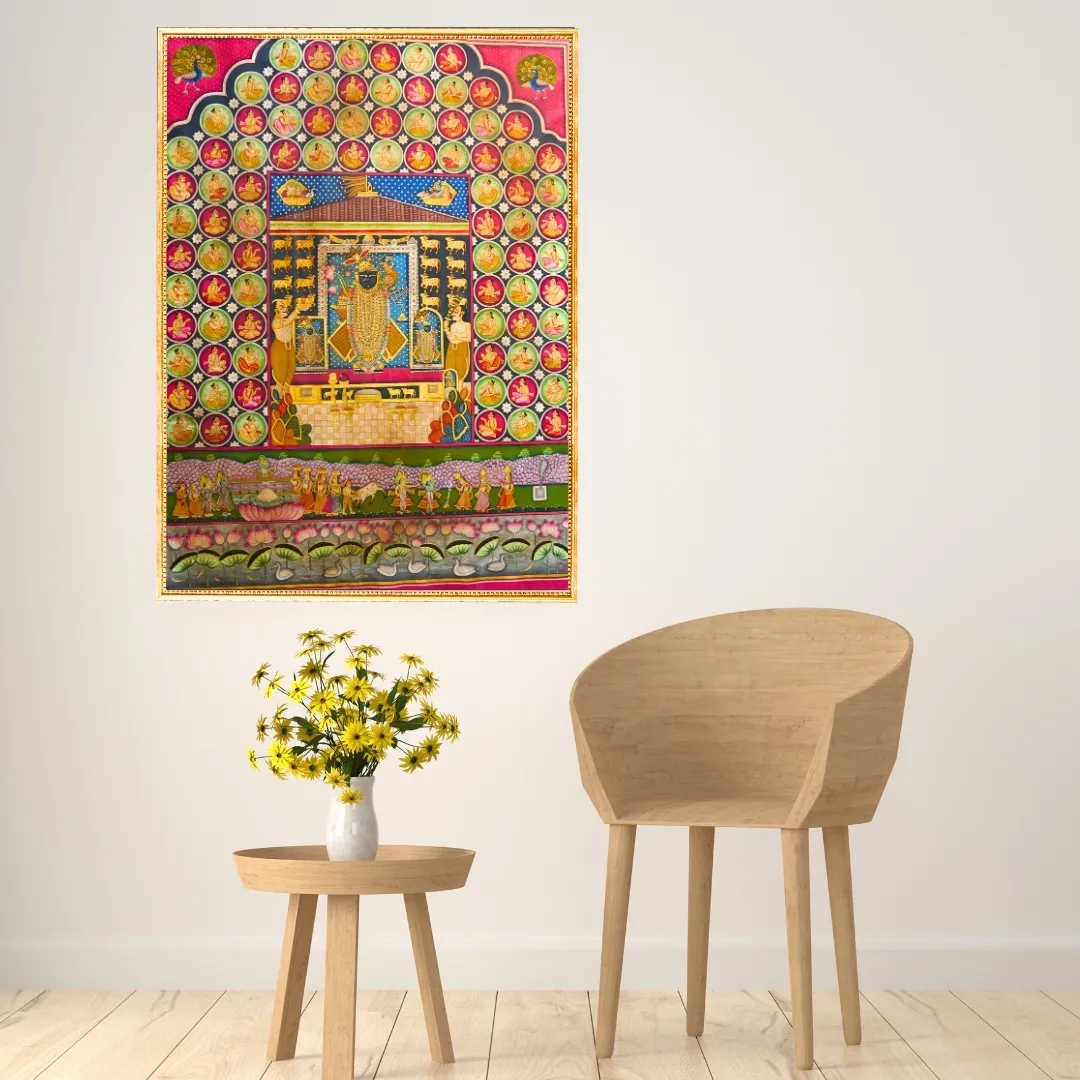
In this painting, the majestic Shringar of the Sharad Purnima festival is depicted with Lord Shrinathji as the central figure. He is flanked by Gopis on both sides, while other deities are shown arriving to witness the Darshan. At the bottom, two additional scenes portray the Annakut and Daan Leelas. The entire composition is framed by the traditional 24 Darshans, and beyond that, various episodes of the Krishna Leela—spanning from his birth to the slaying of Kansa—are illustrated. A prominent scene in the center depicts the Lalan form of Lord Krishna on a Peepal leaf, surrounded by several other childhood pastimes. Finally, a distinctive yellow border filled with cows represents Shrinathji's primary role as Gopal, the protector of cattle.

$ 8,979
Hindola (Janmashtami)
CertifiedOnly 1 left

Folk Art

Hindola (Janmashtami)

The artist’s vision for this piece is to celebrate the joyous festival of Janmashtami, the birth of Lord Krishna. The central focus is the Lalanji form—the infant Krishna—being lovingly cradled in a swing by Nand Baba and Mata Yashoda. Surrounding the child are golden toys, symbolizing the divine and cherished nature of his infancy. Above this tender scene, the artist has placed the majestic form of Shrinathji, reinforcing the belief that Shrinathji is indeed a manifestation of Lord Krishna himself. To provide a complete spiritual experience, the composition is framed by the 24 Darshans, a traditional element included in such paintings to allow devotees to witness the various other divine forms and manifestations of the Lord alongside his primary image.

$ 3,849
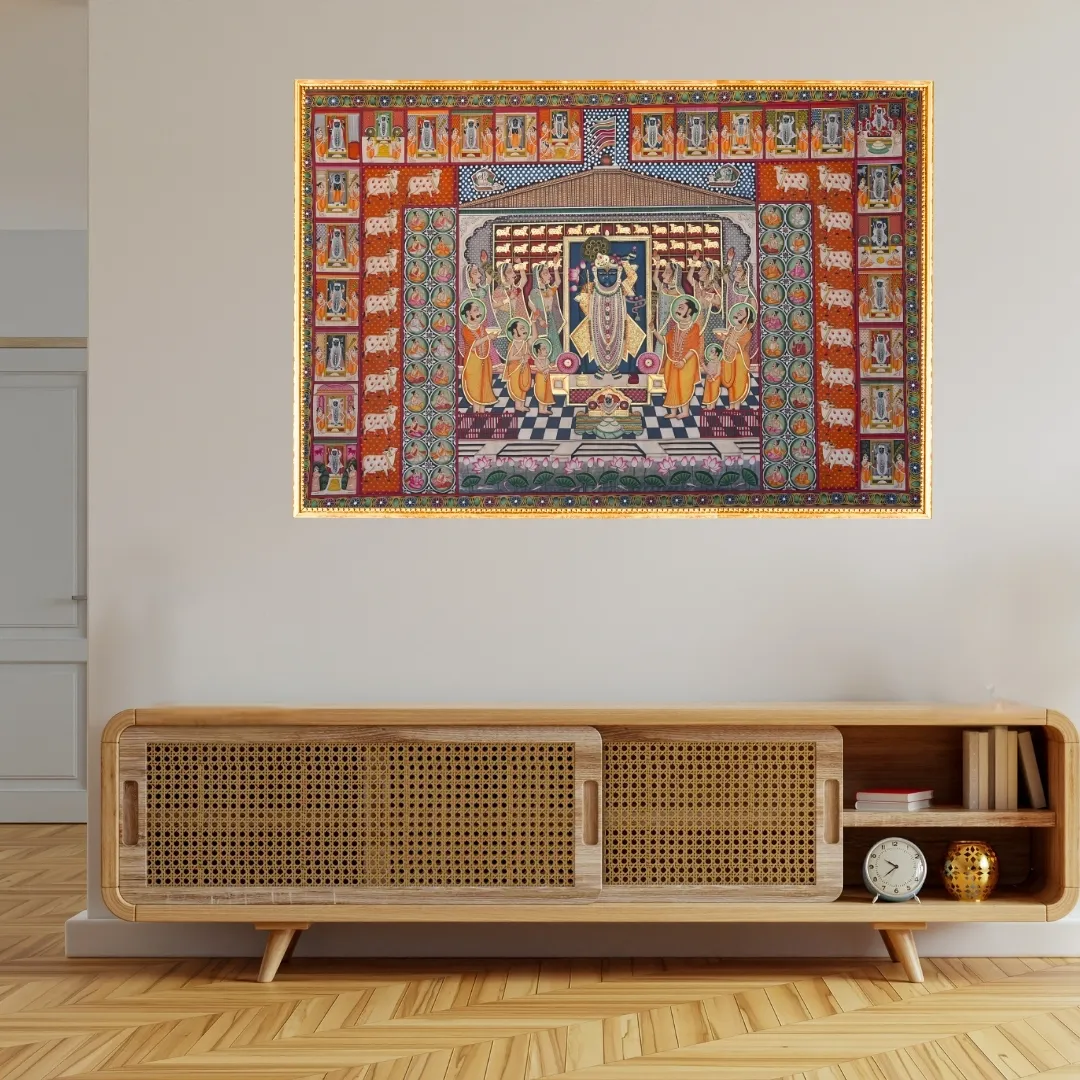
Sharad
Only 1 left

Folk Art

Sharad

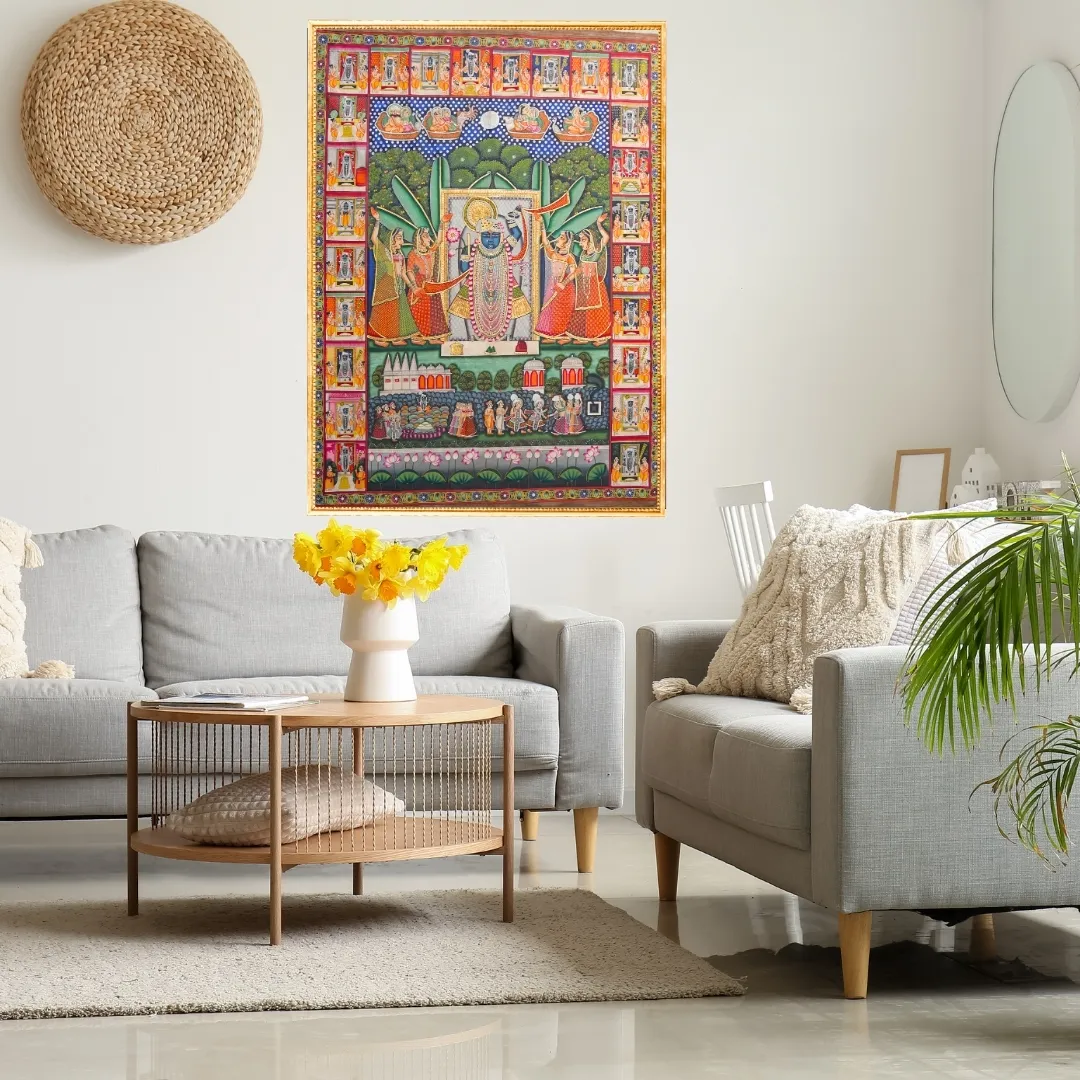
The artist’s vision for this masterpiece, titled Sharad, is to celebrate the onset of the winter season (Sheet-kaal) through the divine lens of Sharad Purnima. At the heart of the painting is the iconic Raasleela, depicted under a radiant full moon positioned directly above Lord Shrinathji. The Gopis are captured in elegant dance poses, embodying pure devotion. To elevate the spiritual narrative, the artist includes celestial witnesses—Lord Shiva, Brahma, Narad, and Indra—who descend to gaze upon the divine dance. The composition is further enriched by integrating three other significant shringars: the Annakut leela, the Daan leela, and the foundational 24 Darshans that frame the three sides of the central scene. This piece serves as a comprehensive visual anthology of Shrinathji’s most cherished pastimes and seasonal celebrations.

$ 3,849
Daan Leela
CertifiedOnly 1 left

Folk Art

Daan Leela

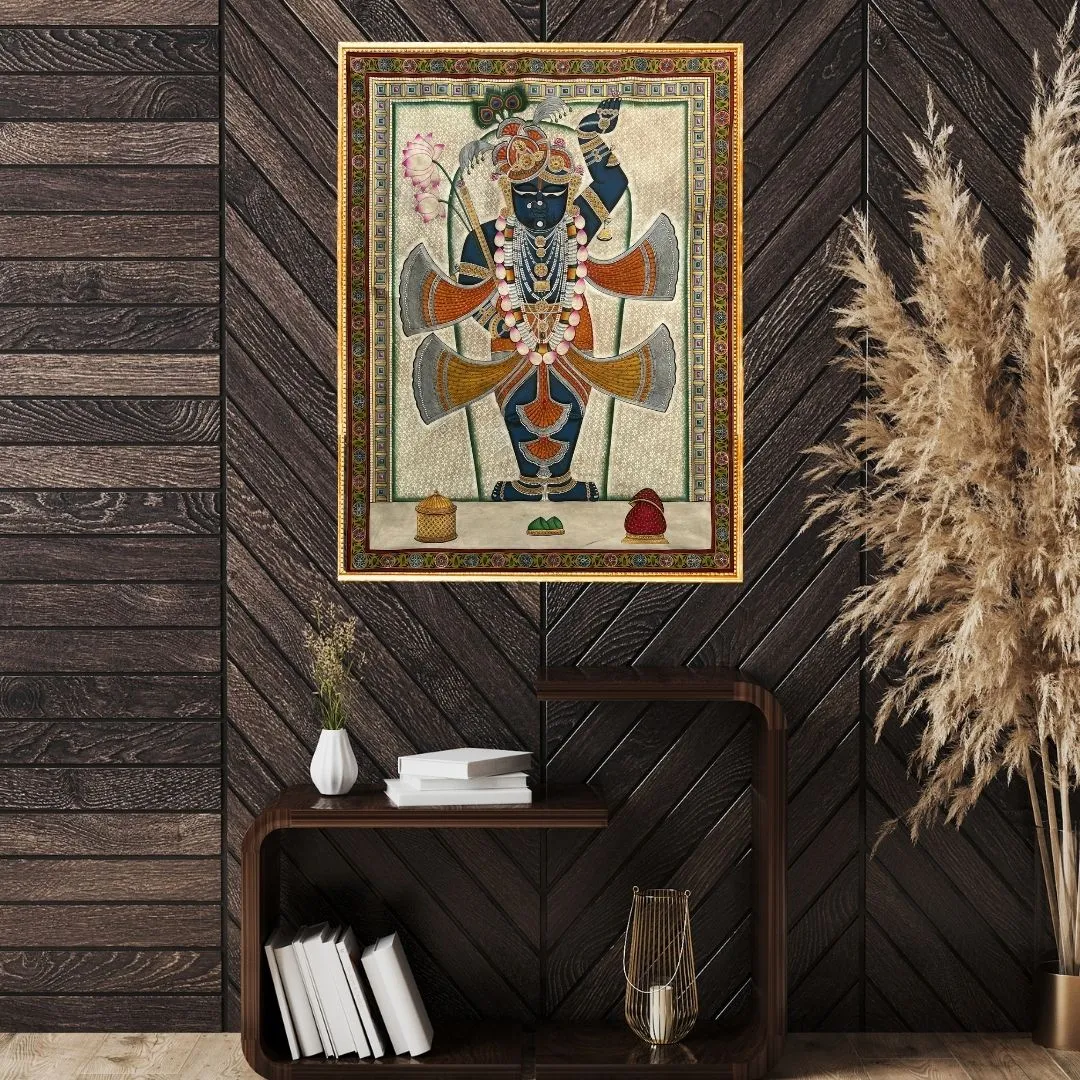
The artist’s vision for this painting is to showcase one of the many revered forms of Lord Shrinathji as they are worshipped in different locations, such as Govind Devji in Jaipur and Shrinathji in Nathdwara. This specific piece focuses on the Bankey Bihariji form, characterized by a distinctive tribhanga posture where the neck, one leg and knees are bent. This "bent" or "Bankey" stance is a central theme of the artwork. To complement this divine figure, the artist has placed three Gopis on either side, each carrying traditional offerings like butter, buttermilk, curd, and milk, creating a scene of vibrant devotion and communal worship.

$ 5,129
Annakoot (84 Baithak)
CertifiedOnly 1 left

Folk Art

Annakoot (84 Baithak)

The artist’s vision for this painting is to illustrate the profound lineage of devotion within the Pushtimarg tradition, specifically focusing on the relationship between Lord Shrinathji and Mahaprabhu Vallabhacharyaji. This work commemorates the historical moment when Lord Shrinathji appeared in a dream to Vallabhacharyaji, revealing his location on Govardhan Hill and granting him the honor of performing the first worship. The painting serves as a visual record of the Vanshavali (lineage), depicting the 84 Baithaks or representatives that have continued the sacred traditions of the lineage over time. These types of Pichwai paintings are highly sought after by collectors and devotees for their historical and spiritual significance. By blending divine history with the physical lineage of practitioners, the artist captures the enduring legacy of faith that connects the past to the present in the service of Shrinathji.

$ 3,079
Mangla Darshan
CertifiedOnly 1 left

Folk Art

Mangla Darshan

The artist’s vision for this painting is to capture the spiritual essence of the Mangala Darshan, the first and most auspicious of the eight daily viewings of Lord Shrinathji. This morning ritual represents the awakening of the deity after his rest (Shayan), symbolizing a fresh beginning of devotion each day. The artwork reflects the deep significance of this moment in the Sanatan tradition, illustrating the sequence of sacred acts—from gently waking the Lord and his ritual bath (Snaan) to his intricate adornment (Shringar) and the subsequent prayers. By focusing on this first of the four pre-noon Darshans, the artist emphasizes the purity and sanctity of the early morning hours, inviting the viewer to partake in the very first divine glimpse of the day.

$ 1,539
Gopashtami
CertifiedOnly 1 left

Folk Art

Gopashtami

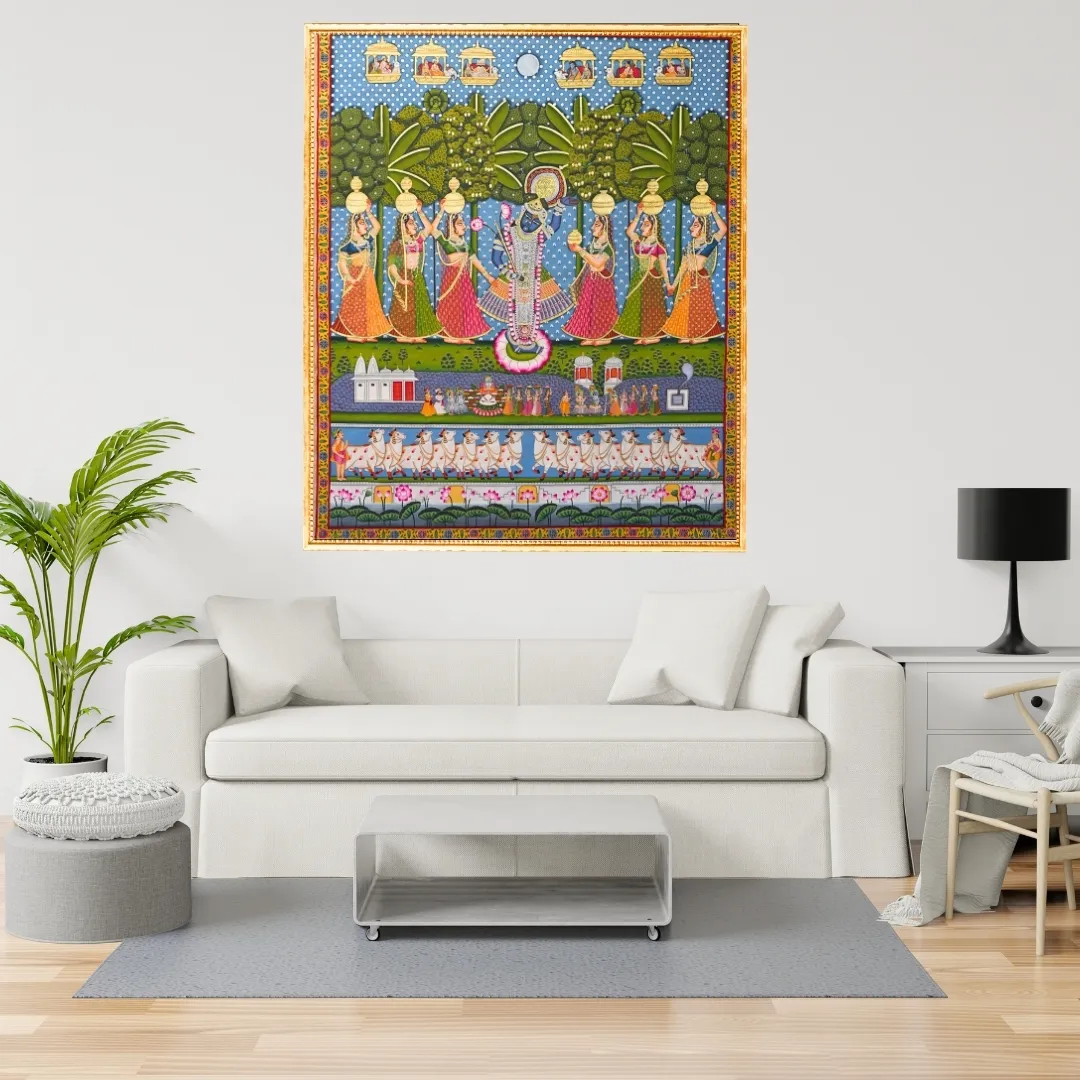
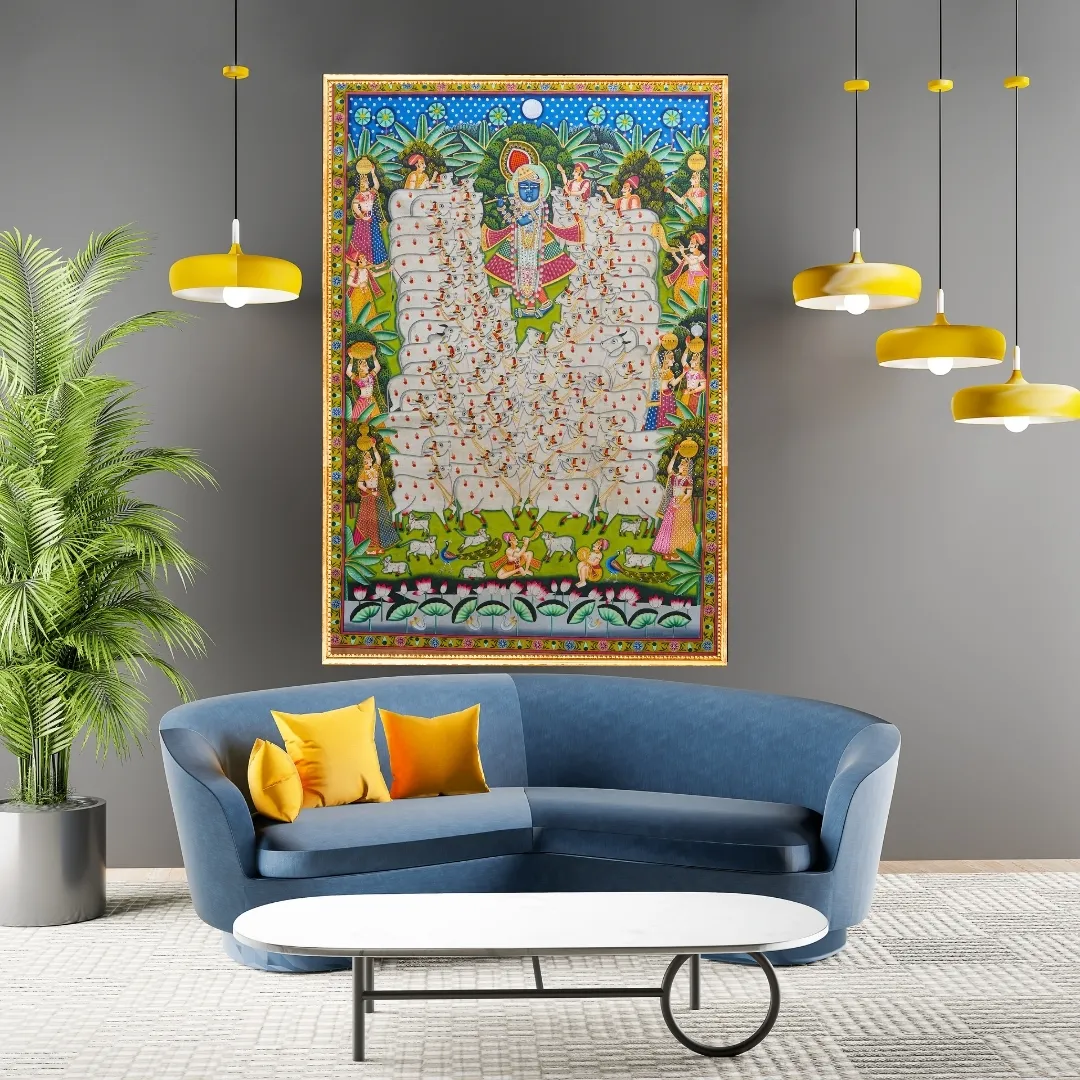
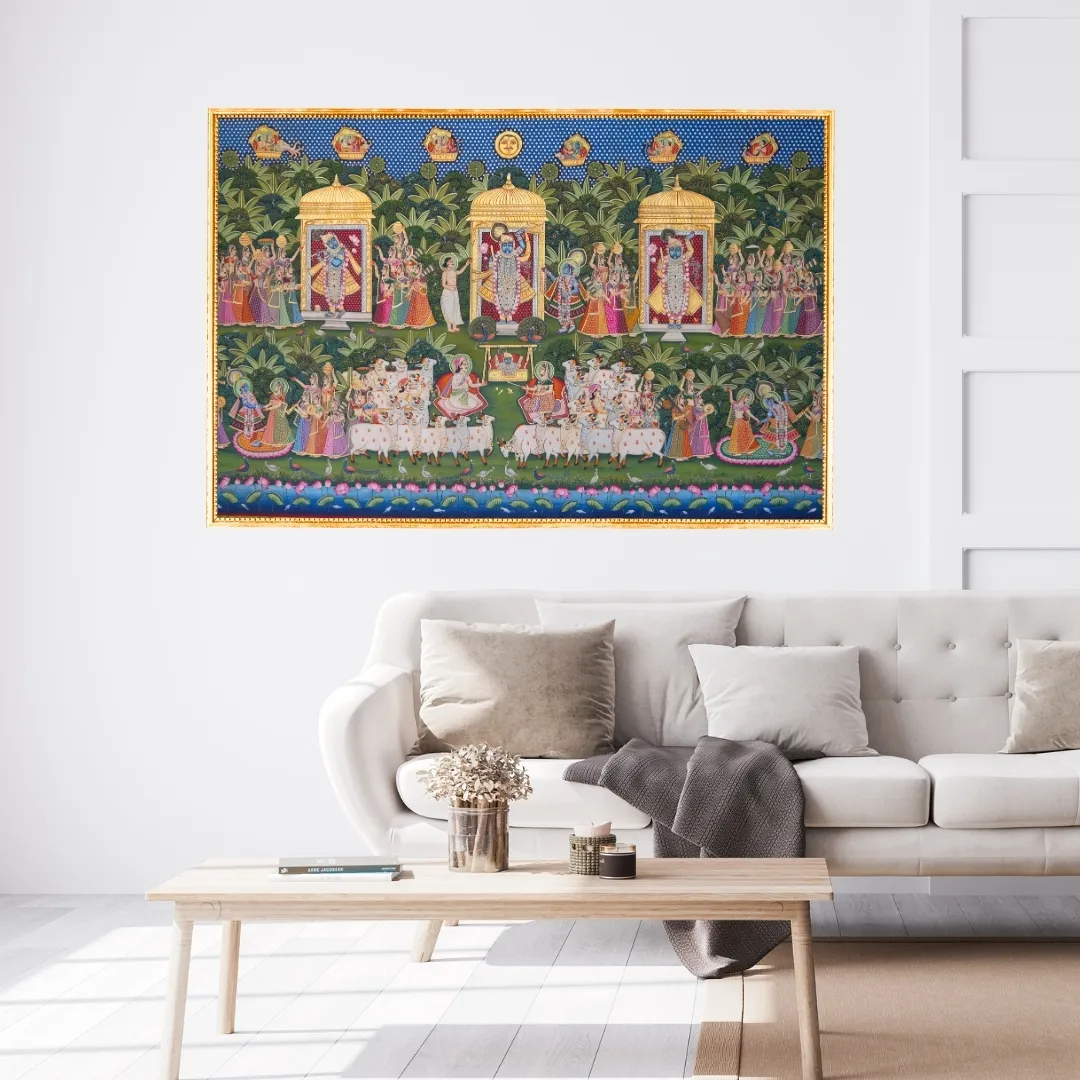
The artist’s vision for this painting is to honor the sacred festival of Gopashtami, emphasizing its spiritual significance within the Pushtimarg tradition. At the heart of the composition is Lord Shrinathji, surrounded by a lively assembly of cows, cowherds (Gwals), and Gopis, capturing the communal joy of the occasion. The artist highlights the ritualistic importance of this day, which falls on the eighth day after Diwali during the Kartik Shukla Paksha, a time dedicated to the elaborate decoration and veneration of cows. Much like the celebration of Krishna Janmashtami, the artist portrays Gopashtami as a pivotal event where the bond between the divine and the cattle—essential to Krishna's life in Vraj—is celebrated with great devotion and artistry.

$ 2,049
Annakoot
CertifiedOnly 1 left

Folk Art

Annakoot

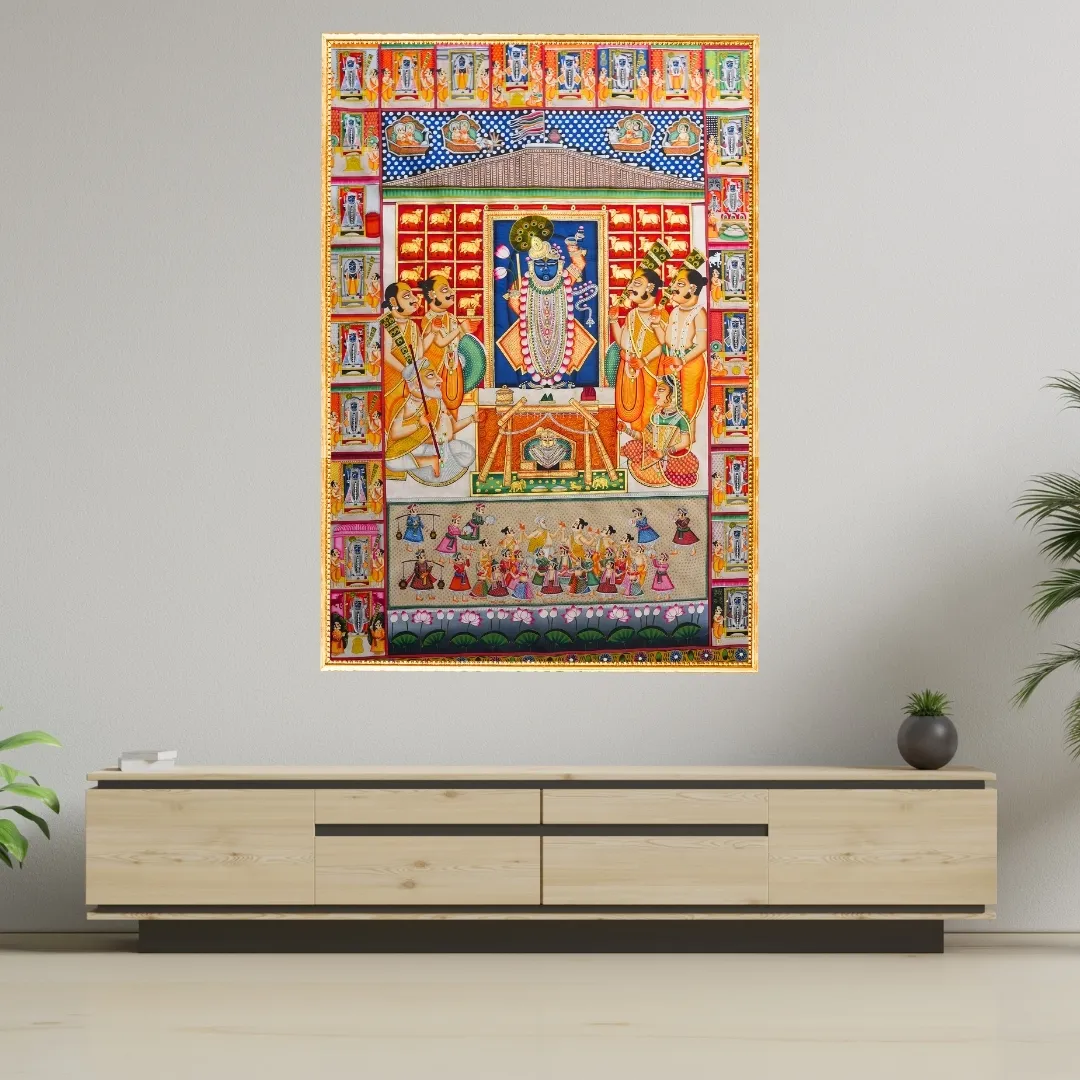
The artist’s vision for this painting is to capture the grand and vibrant Annakut Mahotsav, a significant festival celebrated the day after Diwali. At the heart of the piece is the elaborate offering of chhapan bhog or 56 dishes is presented to Lord Shrinathji. To emphasize the sacredness of the occasion, the artist has framed the central scene with the 24 Darshans, representing the primary divine viewings of the Lord. A key element of this vision is the depiction of the ""Loot""—a playful and traditional act where communities like the Bhil and various cowherds (Gwals) participate in gathering the blessed prasad. The artist intentionally uses the concept of ""loot"" to mirror Lord Krishna's own childhood antics, such as his famous stealing of butter, transforming a chaotic moment into one of divine joy and community bond. The scene is further elevated by the presence of celestial beings arriving to witness the festivities from above, while priests (Pandits) facilitate the sacred rituals below.

$ 6,409
Vanshavali
CertifiedOnly 1 left

Folk Art

Vanshavali

The artist’s vision for this piece is to celebrate the rich tradition and lineage associated with Lord Shrinathji. At the center of the painting, Shrinathji is adorned in the festive Annakut Shringar, symbolizing abundance and devotion. Surrounding this central figure are twenty-four distinct depictions of the deity, representing the two Darshans—one for the Shukla Paksha and one for the Krishna Paksha—that occur each month throughout the year. This visual representation highlights the seasonal and cyclical nature of worship in the Shrinathji tradition. The composition also pays homage to the spiritual guardians of this faith. In addition to the sacred cows that flank the central image, the painting features circular portraits of the descendants of Vallabhacharyaji. These figures, known as the Vanshavali, are the lineage of priests who have historically performed the sacred rituals and maintained the temple's traditions. By including them, the artist emphasizes the enduring connection between the divine and the dedicated families who serve Him across generations.

$ 6,409
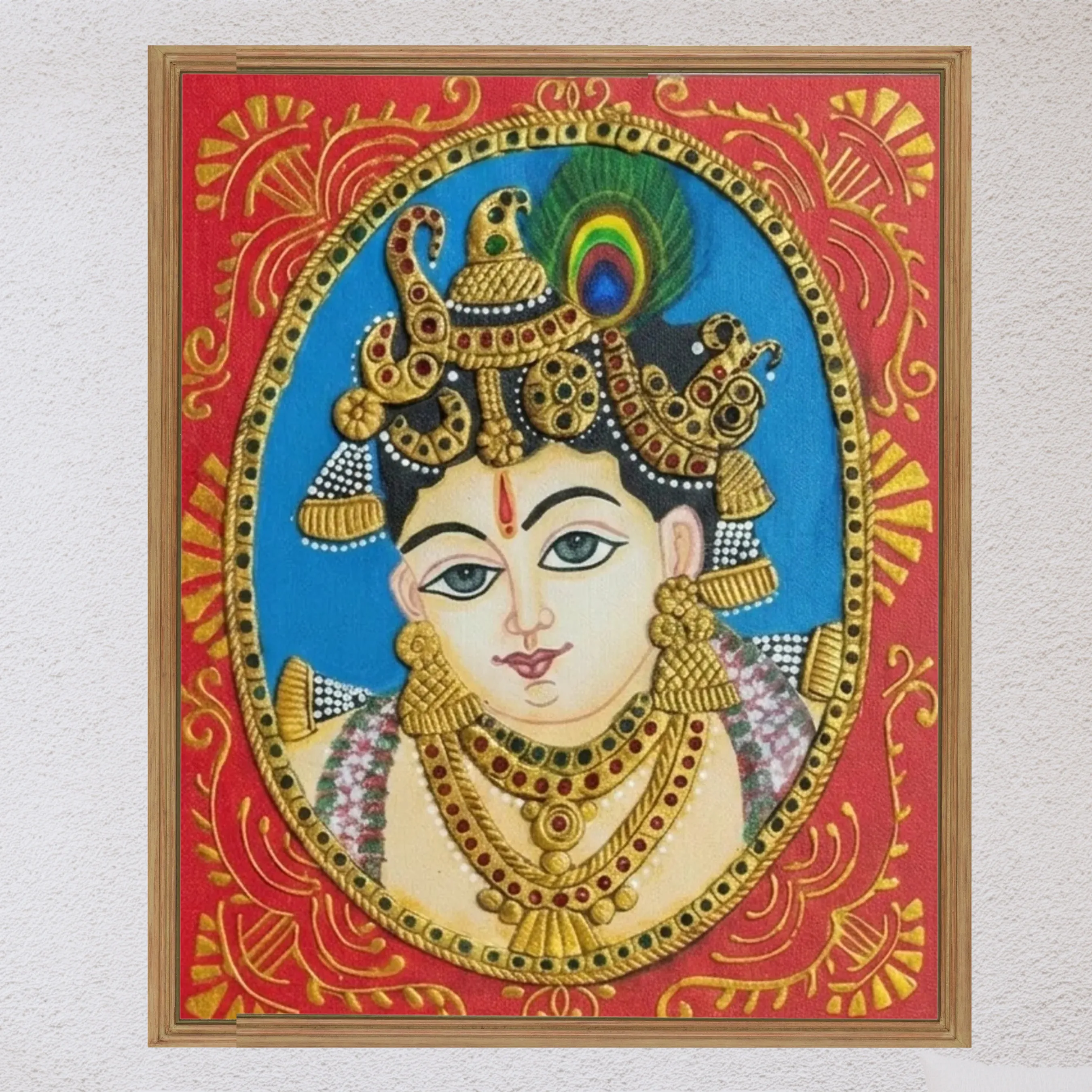
Handcrafted Shri Krishna Portrait
40% OFFCertifiedOnly 1 left

Religious Art

Handcrafted Shri Krishna Portrait

A serene portrait of Shri Krishna emerges from the composition, where gentle expression and graceful ornamentation capture the divine charm of the beloved deity. In the Handcrafted Shri Krishna Portrait, Krishna’s face becomes the central focus, framed by symbolic elements such as the peacock feather crown and subtle decorative motifs that echo his divine identity. The calm gaze and soft expression evoke the spiritual presence often associated with Krishna, creating a portrait that feels contemplative and devotional rather than dramatic. The composition is designed to emphasise Krishna’s tranquil presence. Delicate details in the crown, jewellery, and surrounding ornamentation add richness without overwhelming the figure. The portrait balances simplicity with decorative elements, allowing the divine form to remain visually prominent while the surrounding design enhances the sacred atmosphere of the artwork. Carefully handcrafted, the artwork reflects the tradition of devotional portraiture in Indian art. The attention to detail and textured surface reveal the artisan’s skill in shaping and finishing the piece by hand. In the Handcrafted Shri Krishna Portrait, the familiar iconography of Krishna is transformed into a piece that functions both as spiritual imagery and as decorative wall art, bringing a sense of calm devotion and cultural artistry into the space where it is displayed. **Why This Artwork Stands Out** - The portrait captures the serene expression and divine symbolism associated with Lord Krishna. - - Handcrafted detailing highlights the skill and care involved in creating the artwork. - - Iconic elements such as the peacock feather and decorative ornaments reinforce Krishna’s spiritual identity. - - The piece works as both devotional imagery and elegant wall décor for homes or sacred spaces.

$ 49$ 79
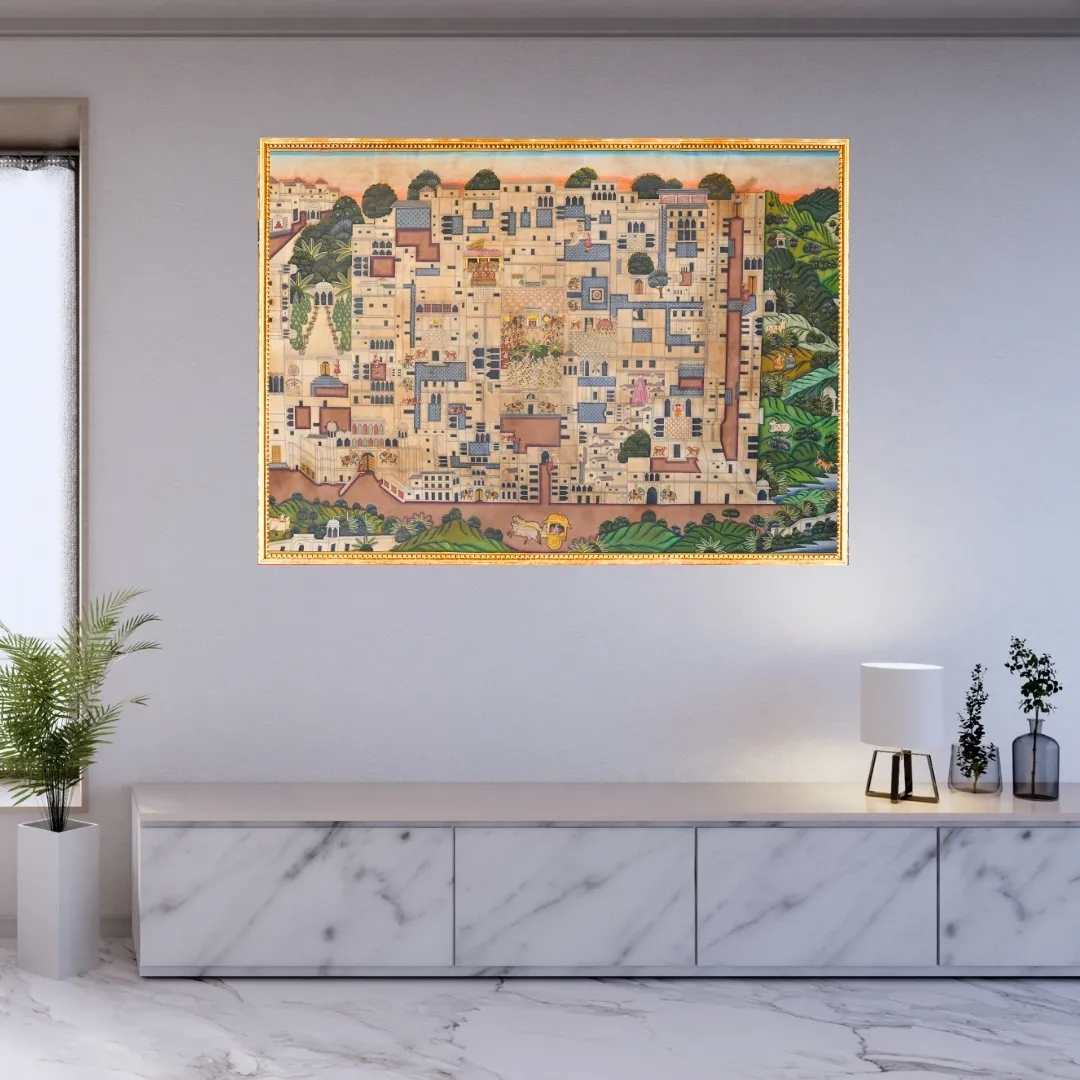
Nathdwara Map
CertifiedOnly 1 left

Folk Art

Nathdwara Map

The artist’s vision for this piece is to provide a comprehensive and sacred cartography of Nathdwara, the holy village centered around the Shrinathji Temple. Rather than a mere architectural sketch, this "Map Painting" serves as a spiritual guide that meticulously details the layout of the entire temple complex and its surroundings, including various buildings and key landmarks. The composition is designed to lead the viewer through the pilgrim's journey, highlighting the main temple of Shrinathji, the iconic Kamal Chowk (Lotus Courtyard), and the specific temple dedicated to Lalanji. By illustrating the exact points of entry and the spatial relationship between these sacred sites, the artist transforms a physical location into a meditative map, allowing the devotee to mentally navigate the divine terrain of Nathdwara.

$ 2,569
Tri Darshan
CertifiedOnly 1 left

Folk Art

Tri Darshan

The artist’s vision for this masterpiece is to encapsulate the rhythmic cycle of daily devotion by portraying three sacred Darshans of Lord Shrinathji, weaving together both the majestic and the intimate aspects of his divinity. In the upper register, the artist illustrates the universal reverence for the deity as celestial beings descend to witness his glory, while the Gopis provide a grounded sense of devotion by bringing offerings of fresh butter. This heavenly grandeur is beautifully balanced in the lower section by a tender depiction of Vatsalya Bhava, or parental love, where Nand Baba and Mata Yashoda are seen gently rocking the infant Lalanji (Bal Gopal) in a swing. Flanked by cows on either side to symbolize the pastoral essence of Vraj, the painting serves as a visual narrative of the Pushtimarg tradition, moving from the awe of the cosmos to the warmth of a cradle.

$ 6,409
Meera
Only 1 left

Contemporary Indigenous

Meera

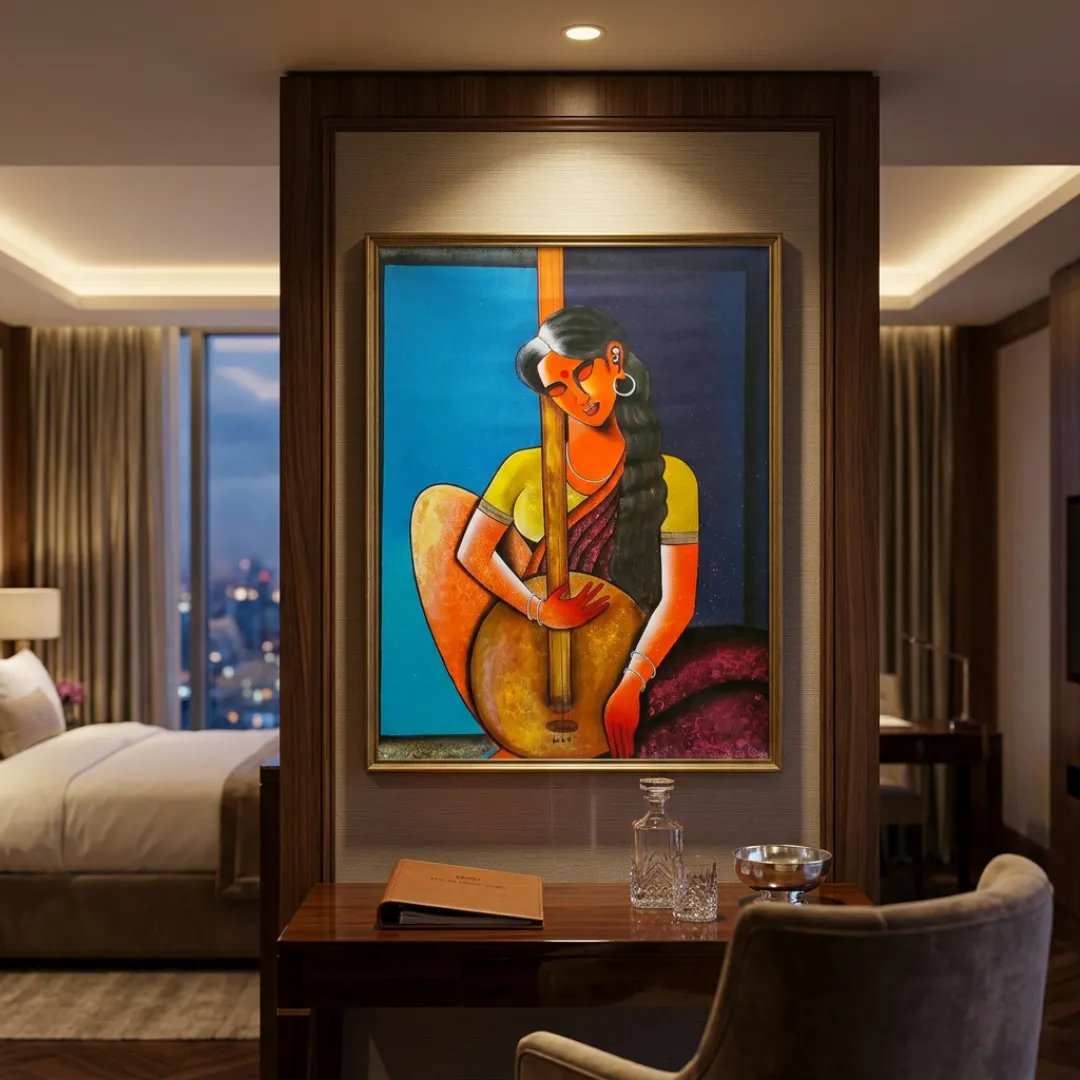
She leans into the instrument the way one leans into a long-held thought. Eyes closed, head resting gently against the neck of the tanpura, her body curves around it with an ease that speaks not of performance but of private communion. The hand that rests on the body of the instrument is still, fingers barely grazing the surface, as though the music has already moved past the need for touch and lives now entirely within her. Her dark hair falls in loose waves over one shoulder. A red bindi, silver hoops, the glint of bangles at the wrist: the details are present but unannounced, worn the way familiar things are worn, without self-consciousness. The background divides cleanly behind her, a deep teal to the left and a near-black night sky to the right, the two fields separated by the long vertical line of the tanpura's neck which bisects the composition with the quiet authority of a horizon standing upright. The figure herself is rendered in warm oranges and ochres, the skin luminous against both grounds, her purple and gold saree anchoring the lower half of the canvas in richer, denser colour. The painting works in the tradition of the contemplative Indian figure, a lineage that reaches from classical miniature to modern expressionism, but its emotional register is its own: not mythological distance, not theatrical devotion, but the particular quality of a woman alone with sound. This is Meera not as legend but as feeling, the moment before the bhajan begins, or the moment after it has ended and the silence is still full. Why This Artwork Stands Out **** - The vertical tanpura neck bisecting the composition creates a structural boldness that is both visually striking and iconographically resonant, dividing the world into the known and the devotional. - The warm, luminous rendering of the figure against a cool, dark ground gives the painting an inner glow that feels less like technique and more like conviction. - The figure's closed eyes and stilled hand convey a state of absorbed interiority that invites the viewer into stillness rather than spectacle. - The painting draws on a deep tradition of the devotional Indian female figure while arriving at something intimate, contemporary and emotionally immediate.

$ 119
Hanuman Chalisa
CertifiedOnly 1 left

Folk Art

Hanuman Chalisa

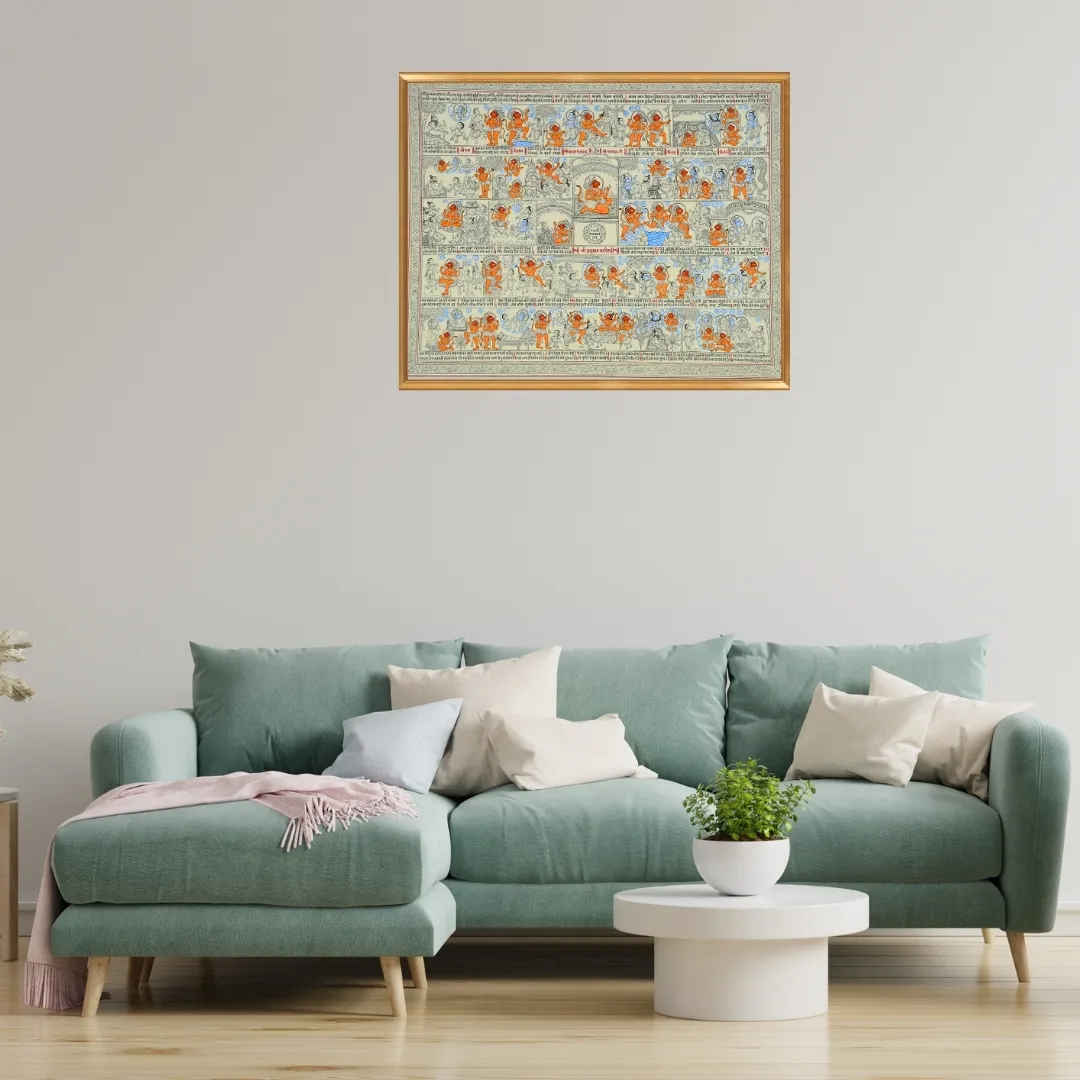
This miniature Hanuman Chalisa represents a significant technical achievement, as the artist pioneered this small-scale format in 2012. Measuring just slightly over 10 x 12 inches, the painting manages to house the entire text of the three dohas and forty chaupais alongside their corresponding narrative scenes. The artist notes that a work of this complexity at such a small scale is unprecedented in the field. The composition employs a selective color strategy, where blue and orange are used to draw the viewer's focus specifically toward the figures of Lord Ram and Hanuman. To maintain this emphasis, all other elements are kept muted and rendered primarily through intricate black outlines. Because of the extreme precision required for this scale, particularly in the written script and detailed scenes, a magnifying glass is recommended to fully appreciate the minute brushwork.

$ 6,409
Krishna Leela
CertifiedOnly 1 left

Folk Art

Krishna Leela

This artwork illustrates the various chapters of Krishna Leela using a distinctive geographical layout. The composition is divided by the Yamuna River in the center, with Mathura depicted on the right and the villages of Gokul, Barsana, and Nandgaon on the left. The right side of the painting captures significant events from Krishna's birth and his time in Mathura, including his escape from prison with Vasudev and the ultimate slaying of King Kansa. The left side of the canvas focuses on Krishna’s childhood and youth, featuring miracles such as the lifting of Govardhan Mountain, the defeat of various demons, and the divine Raas Leela. This specific piece is rendered in gold and bold black outlines, providing a rich, shimmering finish that highlights the most important scenes in a condensed, impactful format.

$ 639
Summer
CertifiedOnly 1 left

Folk Art

Summer

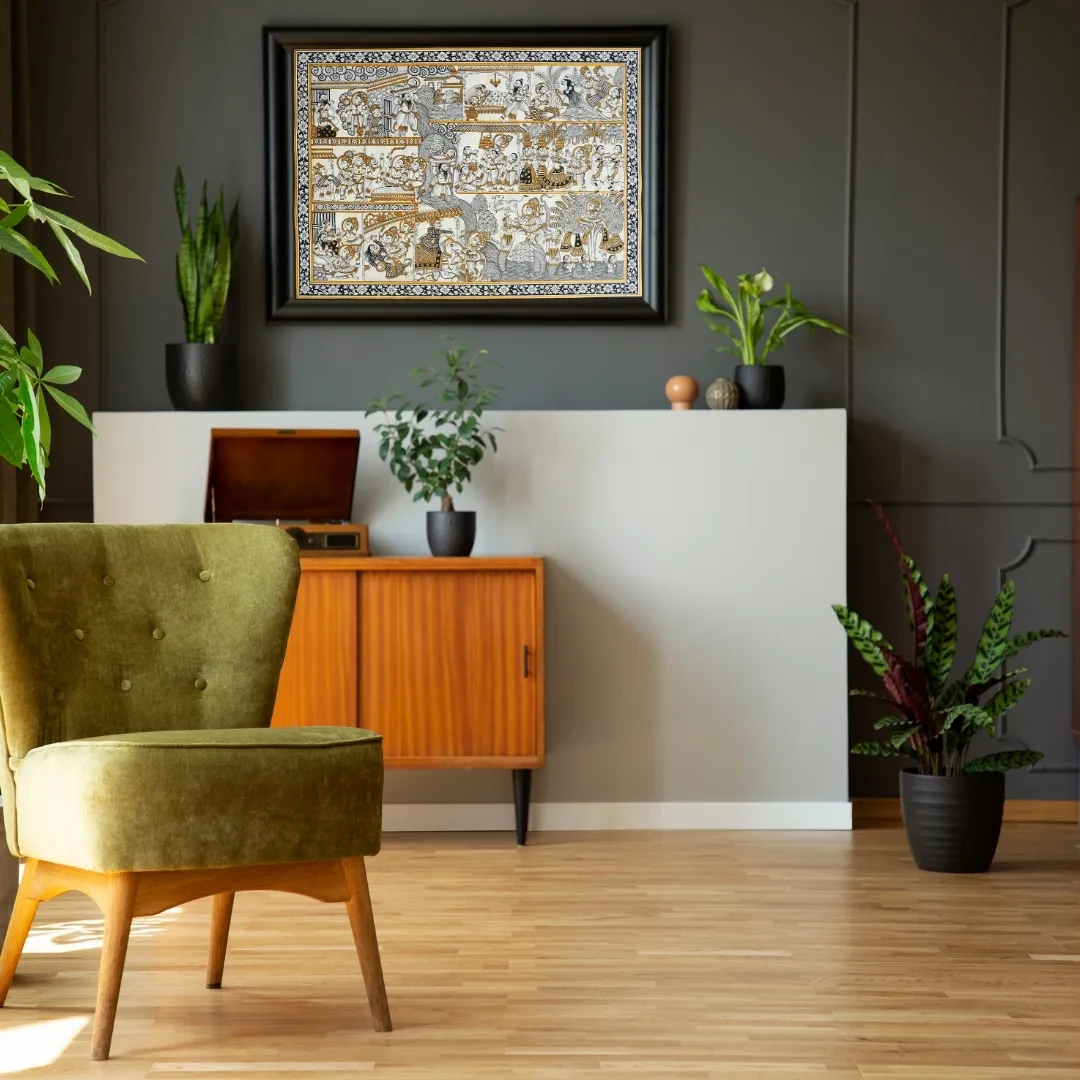
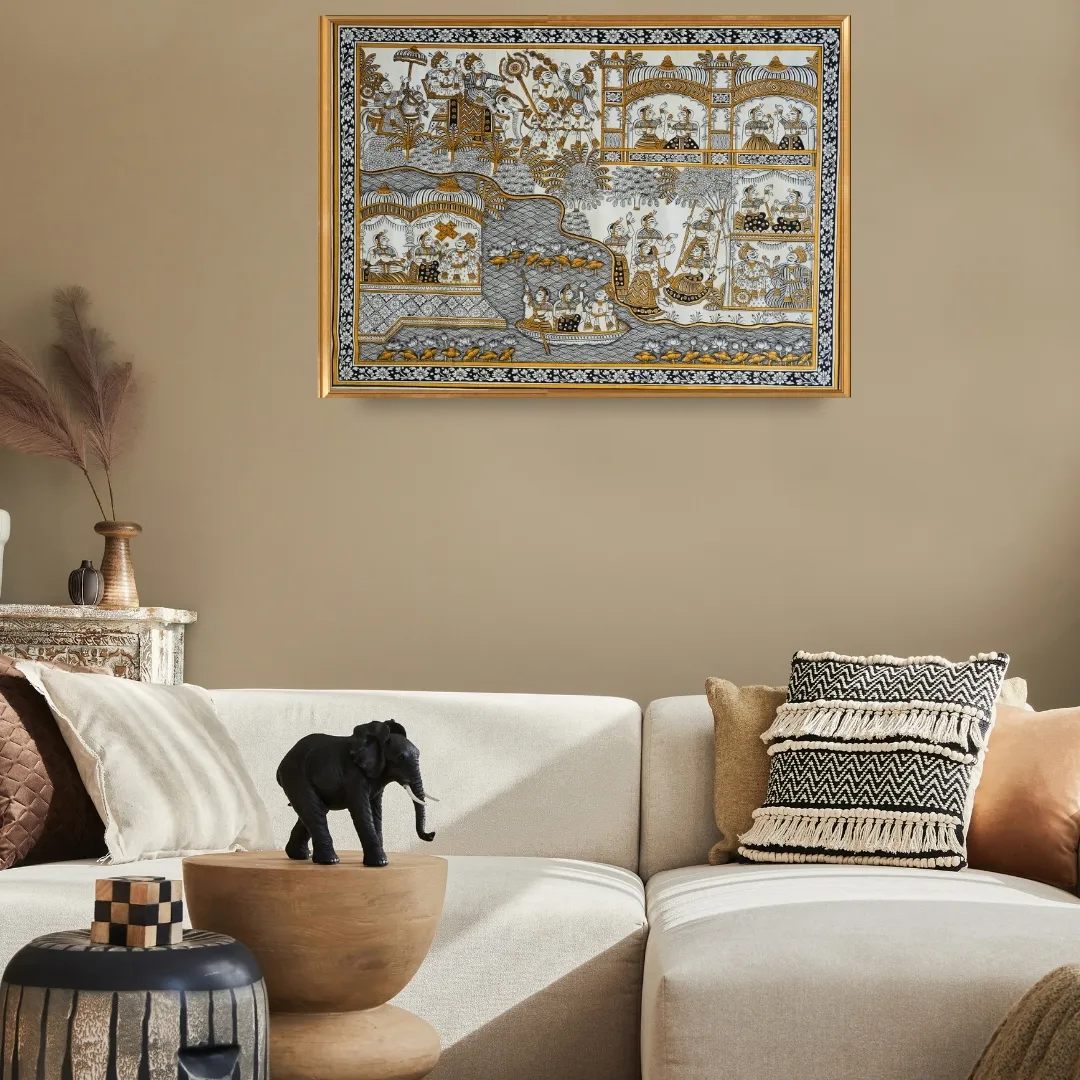
This painting is a representation of a summer’s day spent at the royal court. This artwork is a marked departure from the erstwhile religious themes seen in Phad paintings before and is a secular depiction of royalty enjoying a summer’s day. Idyllic representations of the King and Queen playing chaupar together, enjoying a boat ride in the evening, and a hunting scene are described here among various other scenes. The compositional style of using the river body to demarcate the painted area and the details created in gold and black outlines verily catch the viewer’s eye.

$ 639
Krishna Raas Leela
CertifiedOnly 1 left

Folk Art

Krishna Raas Leela

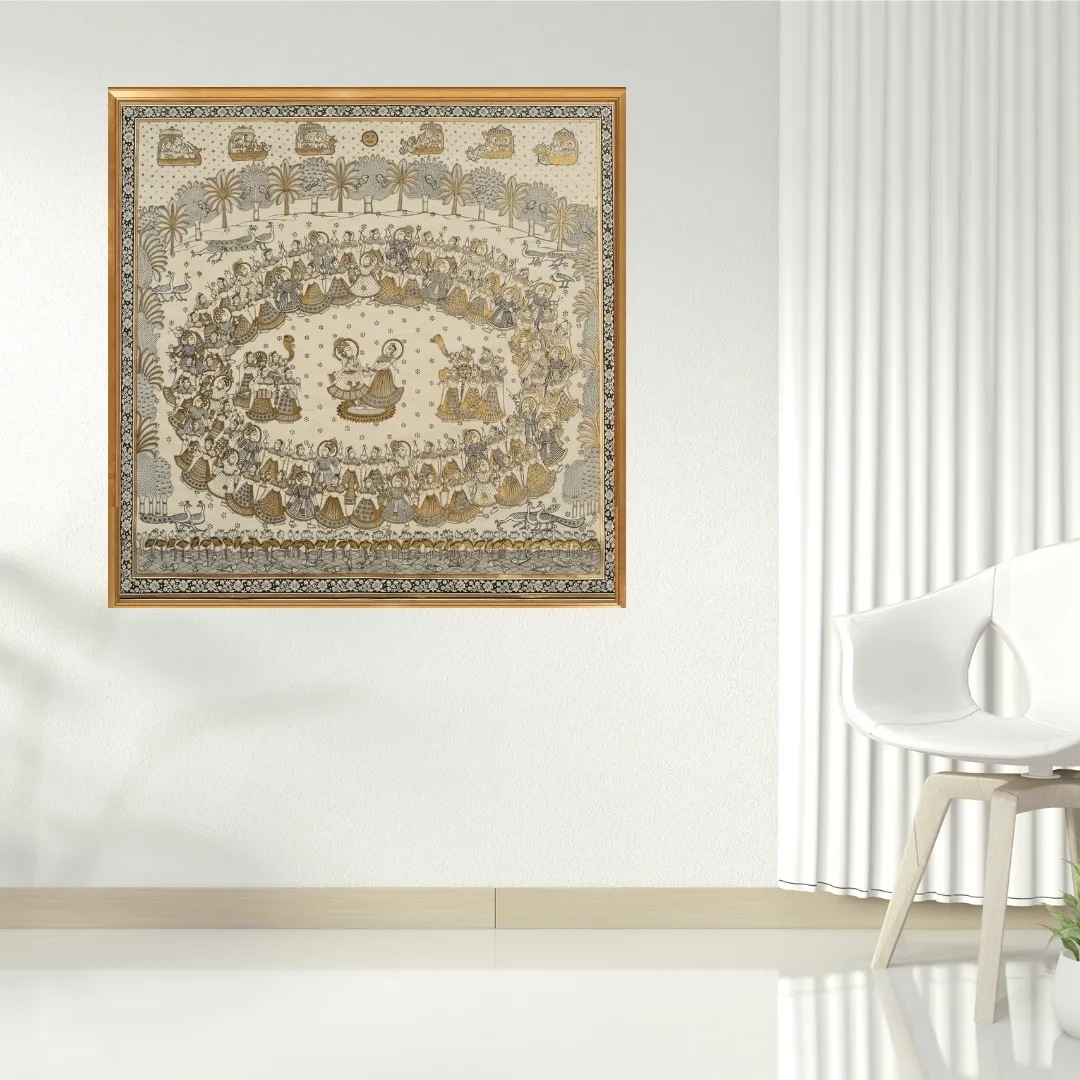
This artwork features the celestial Raas Leela performed on the night of Sharad Purnima, reimagined from the traditional Pichwai style into the Phad folk tradition. The painting is executed with a sophisticated gold and black outline, moving away from the large, simple designs typical of folk art to introduce a ""fine art"" level of intricate detail. The artist has focused heavily on minute details, particularly in the costumes of the figures, to elevate the traditional craft. The composition is unique for its double-round formation, showing Lord Krishna dancing with the Gopis in two concentric circles rather than the standard single ring. At the center, Radha and Krishna are depicted playing the flute amidst a setting that includes the Yamuna River, lotuses, and fish. The background is densely filled with stars and divine observers in the sky, ensuring every part of the canvas is rich with artistic detail.

$ 3,079
Hanuman Chalisa
CertifiedOnly 1 left

Folk Art

Hanuman Chalisa

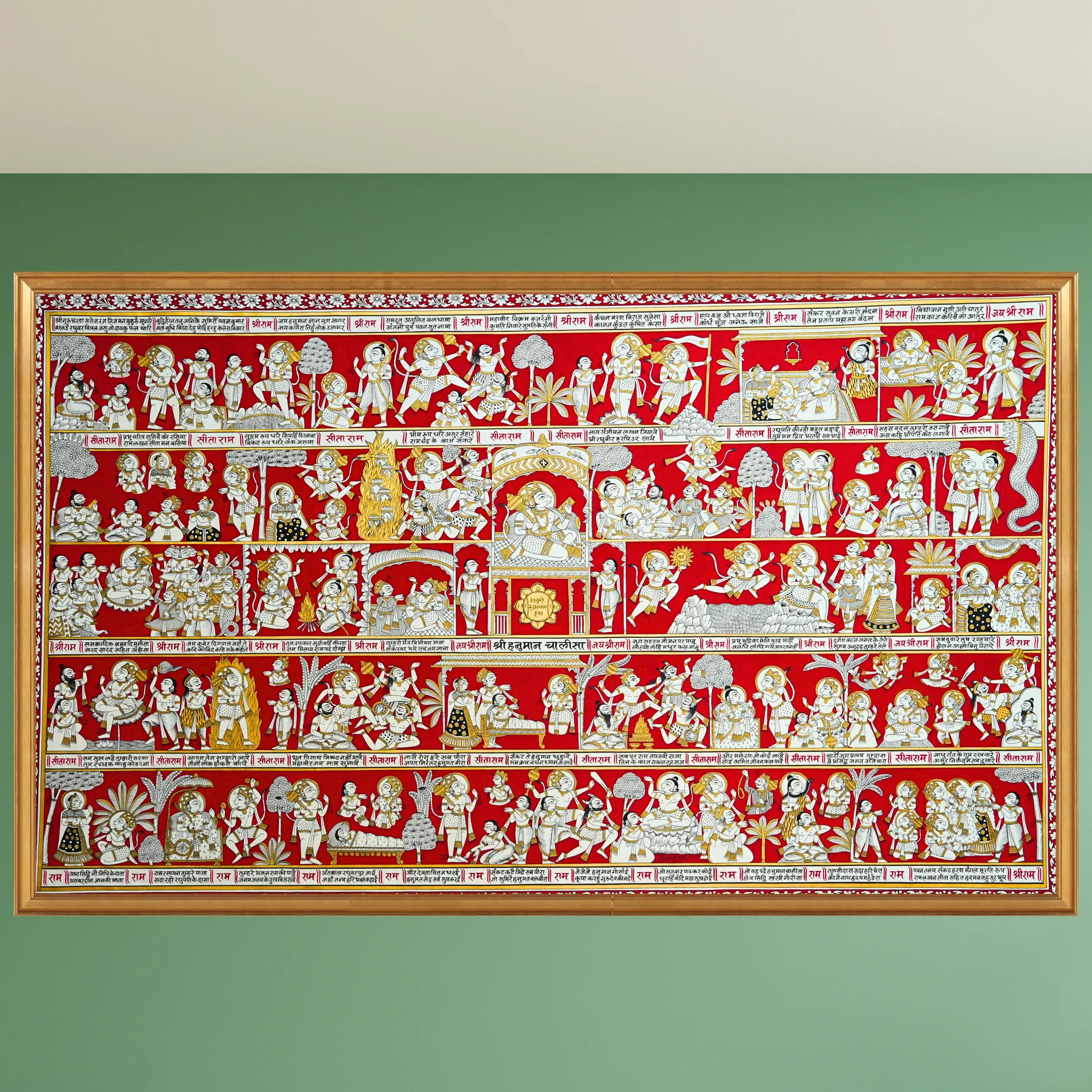
This artwork is dedicated to the Hanuman Chalisa, rendered in a striking red and gold color palette on a significant scale. The piece features the complete text of the prayer—including all three dohas and forty chaupais—meticulously written in Devanagari script. The painting is characterized by its detailed narrative scenes and powerful character expressions, carefully depicting Lord Hanuman's varying moods, from intense anger to gentle politeness. Every element, including atmospheric details like clouds, has been included to create a comprehensive and expressive visual representation of the sacred verses.

$ 3,849
Traditional pabuji ki phad 3
CertifiedOnly 1 left

Folk Art

Traditional pabuji ki phad 3

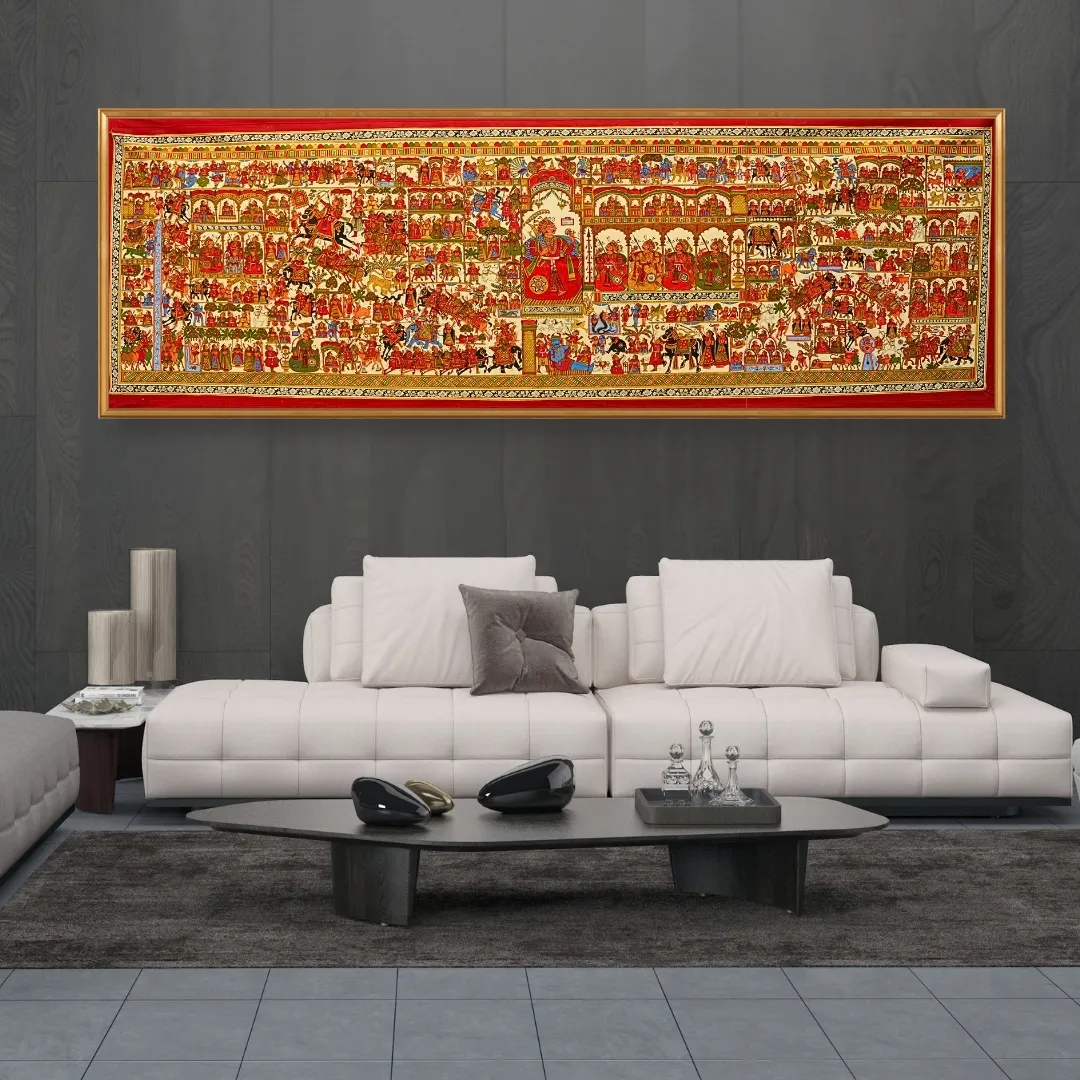
Created in 2004, this National Merit Award-winning Phad painting offers an expansive visual narrative of the life and legends of the folk deity Pabu ji Rathore. The composition meticulously follows the traditional storytelling structure used by Bhopa and Bhopi oral narrators, opening with auspicious invocations of Lord Ganesha, the Dashavatara, and other sacred scripts. The artwork captures the quest for his famous mare, Kesar Kalmi, and his subsequent meeting with the deity Goga ji. A central theme involves Pabu ji fulfilling a promise made at his niece Kelam's wedding to provide camels as a gift. Much like Lord Rama sent Hanuman to find Sita, Pabu ji dispatches his trusted aide, Harmal, to Lankeya (in modern-day Pakistan) to locate the animals. The painting illustrates the strategic mission to retrieve the camels, the romantic union with Princess Phulwanti in Soda, and the ultimate sacrifice where Pabu ji achieves martyrdom while defending a Charani woman’s cows.

$ 8,979