
Which Hindu God Paintings Belong in Your Home?
Which Hindu God Paintings Belong in Your Home According to Vastu
Wondering which Hindu god painting belongs in your home? Explore the symbols, meanings and Vastu traditions behind popular deity artworks.

Rooftop
Author
When people look for Vastu advice about religious paintings, the conversation usually starts with two things: the deity and the direction. Ganesha is recommended near entrances, Saraswati is associated with study spaces, Lakshmi with wealth and prosperity, while Shiva, Krishna, Durga and other deities are assigned their own sets of recommendations. There is some traditional thinking behind these associations, but the way they are presented online can make the subject seem much simpler than it actually is. Hindu religious art has a much larger visual language, where a deity can be represented through an animal, an object, a weapon, a vehicle or a particular attribute without the god or goddess appearing directly in the painting.
This is where the subject becomes more interesting. A swan can point towards Saraswati, a bull towards Shiva, a tiger or lion towards Durga, and a flute towards Krishna because these symbols have developed strong associations with particular deities over centuries of Hindu art and storytelling. These are not simply decorative motifs added to make a painting look more traditional. They carry information that a viewer familiar with the iconography would recognise immediately. Modern Vastu writers, including Kathleen Cox in Vastu Living, use many of these associations when discussing religious imagery in the home, although it is useful to distinguish modern Vastu interpretations from the much older traditions of Hindu iconography and religious art.
The Deity and the Symbol Behind It
Symbols Behind Simple Paintings
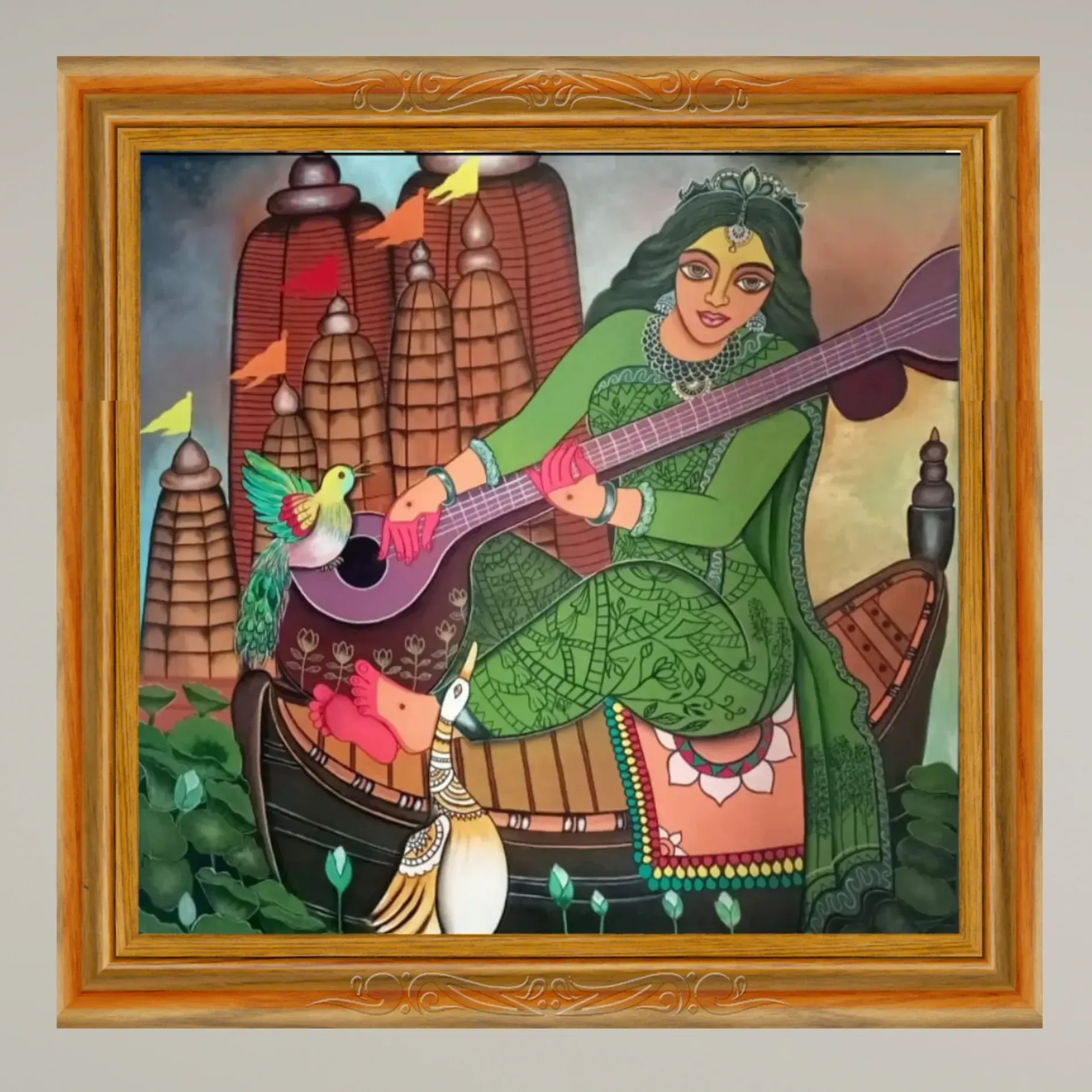
Different Hindu deities have a wide range of symbols associated with them, and some of these can work as representations even when the deity itself is not shown. Brahma, for example, is associated with the lotus, a string of beads and the swan, while Saraswati is connected with the swan as well as books, music, the lotus and the veena. Shiva can be represented through the Shiva linga or through Nandi, his bull and devoted companion, while Durga is closely associated with the lion and tiger that appear as her vehicles in different traditions.
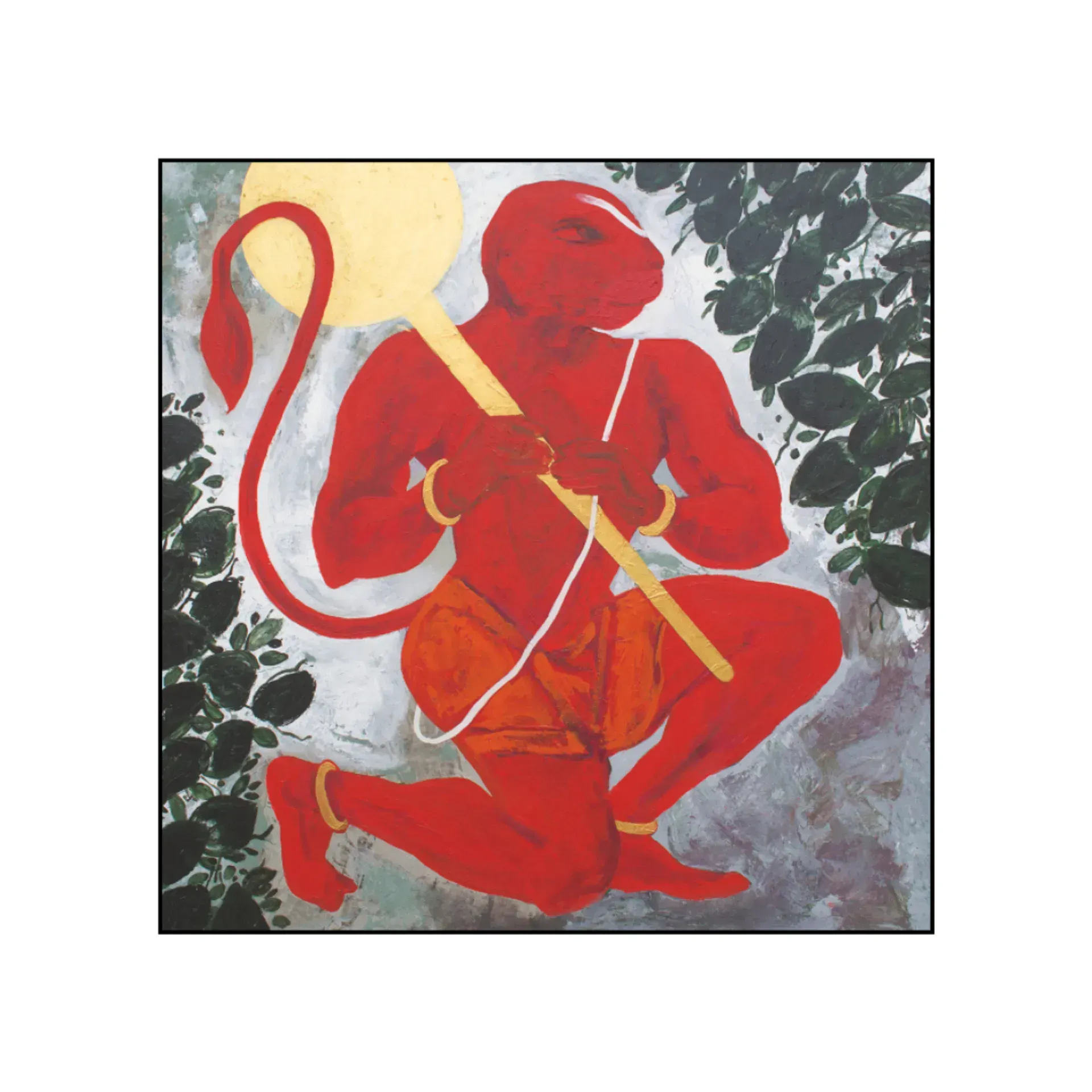
Ganesha has perhaps the most immediately recognisable symbolic form because the elephant is so closely connected with his identity. Lakshmi is associated with the lotus, coins, elephants and other symbols of prosperity, while Vishnu has a much broader set of associations that includes the conch shell and the different forms of his avatars. Rama is commonly represented through his bow and arrow, Krishna through his flute and Hanuman through the monkey form that is central to his iconography. These associations are familiar enough that a painting does not always need to show the entire figure of a deity for the reference to be understood.
The same principle can be seen throughout traditional Indian painting, where objects and animals often carry meanings that go beyond their literal appearance. A lotus is not simply a flower in a religious painting, just as a peacock, conch, veena or flute may be doing more than filling an empty space in the composition. The viewer is expected to recognise these elements as part of a larger visual vocabulary. This is particularly useful when choosing artwork for a home because a symbolic painting can bring a particular religious or cultural association into a room without necessarily becoming a large devotional portrait.
Why Traditional Images Follow Certain Rules
Traditional Paintings and their Specifics
There is also a technical side to the representation of Hindu deities that is easy to miss when religious paintings are discussed only through Vastu. Traditional Indian art developed detailed systems for representing human and divine figures, including rules around proportion, posture, gesture and other aspects of the image. The concept of tala, for example, was used as a unit of measurement in Indian iconometry, with proportions applied to different parts of the human figure. Texts dealing with painting and sculpture contain detailed discussions of these proportions because an image of a deity was not considered something that could simply be drawn according to the artist's personal preference.
The Vishnudharmottara Purana, particularly its section on painting known as the Chitrasutra, discusses proportions and the construction of the human figure alongside colour, composition and other aspects of painting. Other traditions of Indian iconography go much further into the measurements used for divine figures and the characteristics associated with particular forms. This is one reason traditional religious imagery can look so specific even when different artists interpret the same deity in their own style. There is a framework underneath the image that goes beyond simply knowing which god is being depicted.
This also explains why symbolic representations can be useful in a domestic setting. A full devotional image of a deity carries a certain visual and religious weight, while an artwork featuring a swan, lotus, flute or Nandi can make a quieter reference to the same tradition. A study, for example, can use imagery associated with Saraswati without necessarily requiring a large portrait of the goddess. The distinction is not about one being more religious than the other, but about the different ways in which a particular association can be introduced into a room.
Choosing a Deity for Different Rooms
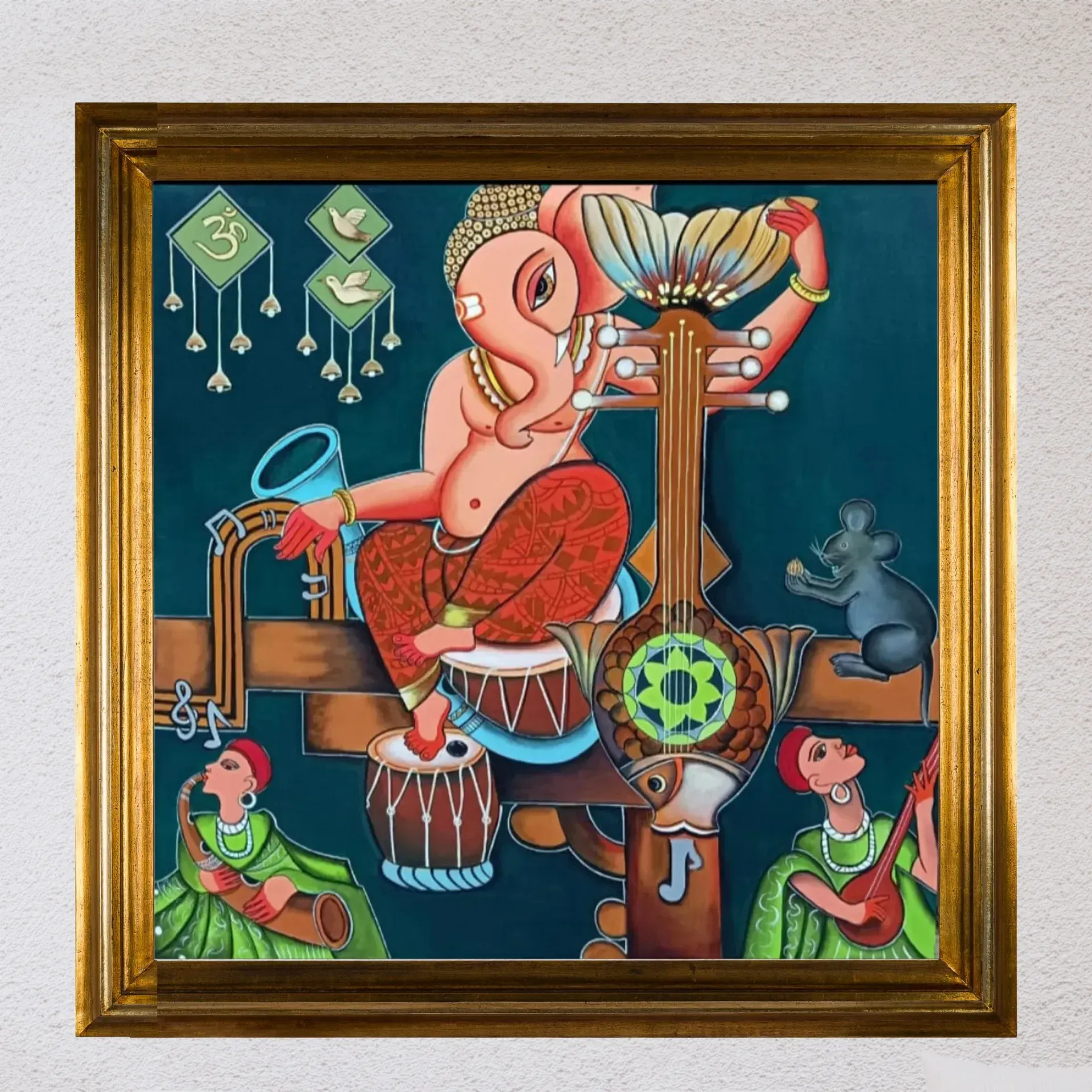
Paintings that suit different rooms
This is where modern Vastu advice tends to become very specific, sometimes more specific than the classical sources allow. There are numerous recommendations online assigning particular gods to particular rooms and directions, but they do not always agree with one another, and they should not all be treated as though they come from one ancient Vastu rulebook. Vastu deals extensively with the organisation and orientation of a house, while Hindu iconography has its own traditions governing the representation of deities. The two overlap in places, but they are not exactly the same system.
Saraswati is an obvious choice for a study, library, music room or child's learning space because her associations with knowledge, education, music and the arts already suit the purpose of these rooms. A painting of Saraswati can work in such a space, but so can an artwork featuring a swan, lotus, book or musical instrument associated with her. The same approach can be applied to Krishna, whose flute, cows and peacock feathers create a recognisable visual connection, or to Rama, whose bow and arrow are among his most familiar attributes.
Ganesha is commonly associated with entrances and spaces connected with new beginnings because of his role as the remover of obstacles. Lakshmi imagery is often used in rooms connected with work, money and prosperity, including home offices, while Shiva imagery can range from a calm representation of Shiva in meditation to Nandi or the Shiva linga. Durga presents a similar range, with the lion or tiger carrying associations of strength and protection. These connections can help narrow down the kind of artwork that suits a room, although the specific directional rules found in modern Vastu advice can vary considerably.
The particular form of the deity matters just as much as the deity itself. A peaceful painting of Shiva in meditation creates a very different atmosphere from a dramatic depiction of Shiva in a fierce form, just as a calm image of Durga differs from a painting showing her in the middle of a battle. Krishna can appear in playful childhood scenes, devotional Radha-Krishna compositions or quieter pastoral settings, and each of these works will change the visual character of a room differently. Choosing religious art therefore involves looking at the actual composition rather than treating every painting of the same deity as interchangeable.
The Mood of the Painting Still Matters
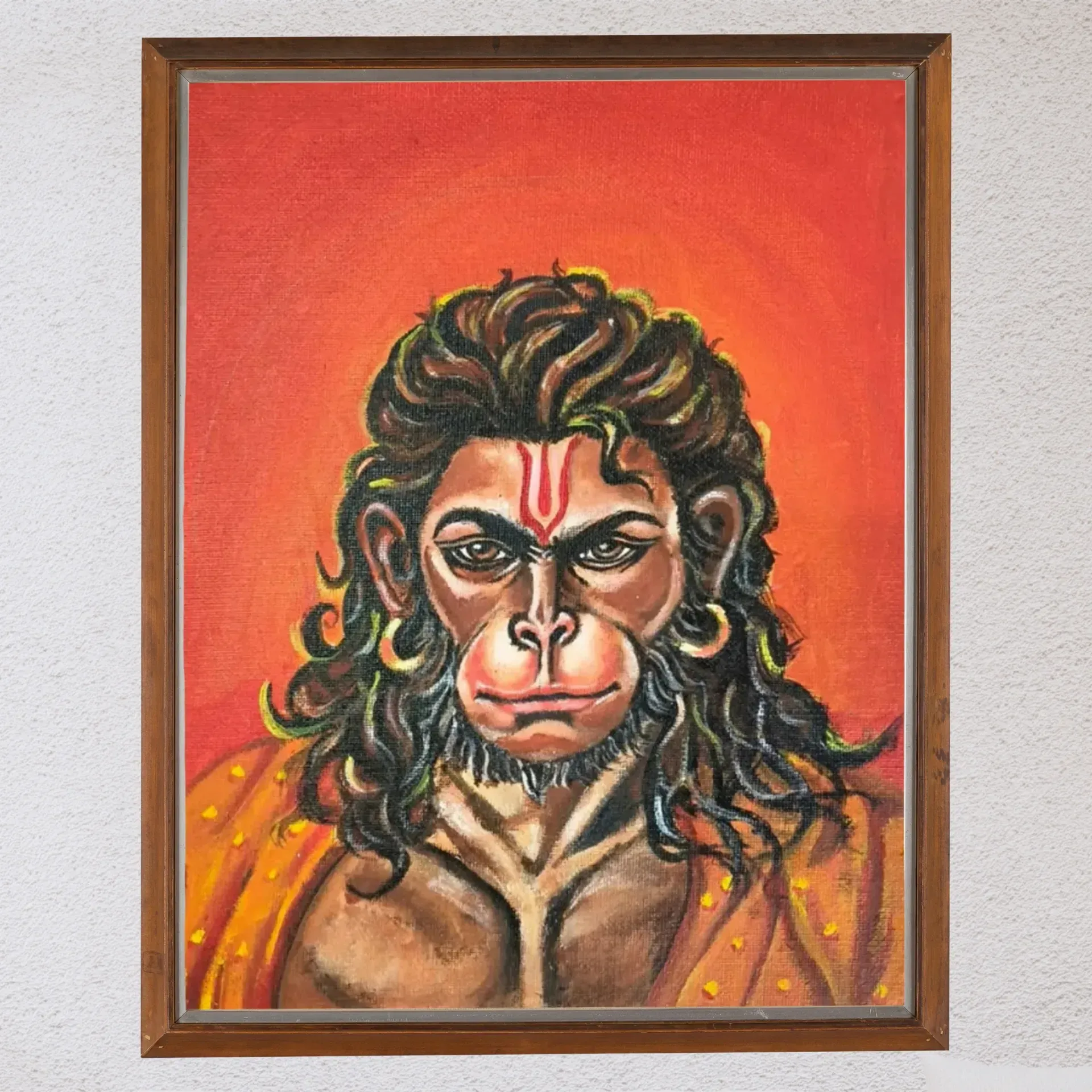
Different Moods of a Painting
This connects with the older Indian understanding of rasa, which is particularly relevant when religious imagery is being brought into a home. The Vishnudharmottara discusses nine rasas in painting, covering emotions and experiences ranging from love and humour to heroism, anger, fear, disgust, wonder and peace. When it discusses paintings appropriate for homes, it gives particular importance to Shringara, Hasya and Shanta, associated broadly with beauty and love, playfulness and peace. The text therefore gives some importance to the emotional character of the image rather than treating the subject alone as the deciding factor.
This distinction becomes important when choosing images of deities associated with warfare or destruction. Durga's battle with Mahishasura is one of the most important subjects in Hindu art, and a traditional painting of that scene is not somehow an inappropriate or negative representation of the goddess. At the same time, it is visually and emotionally very different from a peaceful depiction of Durga. The same applies to Shiva, whose iconography includes both deeply contemplative forms and fierce, destructive ones. The deity remains the same, but the experience created by the painting changes considerably.
The older approach therefore gives more room for context than the usual online advice about "positive" and "negative" paintings. A battle scene can have a legitimate religious and artistic purpose, but a home does not necessarily have to contain every kind of imagery that exists within a tradition. The Vishnudharmottara itself makes distinctions between the imagery suitable for a house and that which can appear in other settings, which suggests that the function and atmosphere of a space were important considerations alongside the subject of the painting.
A Simple Way to Think About Religious Art and Vastu
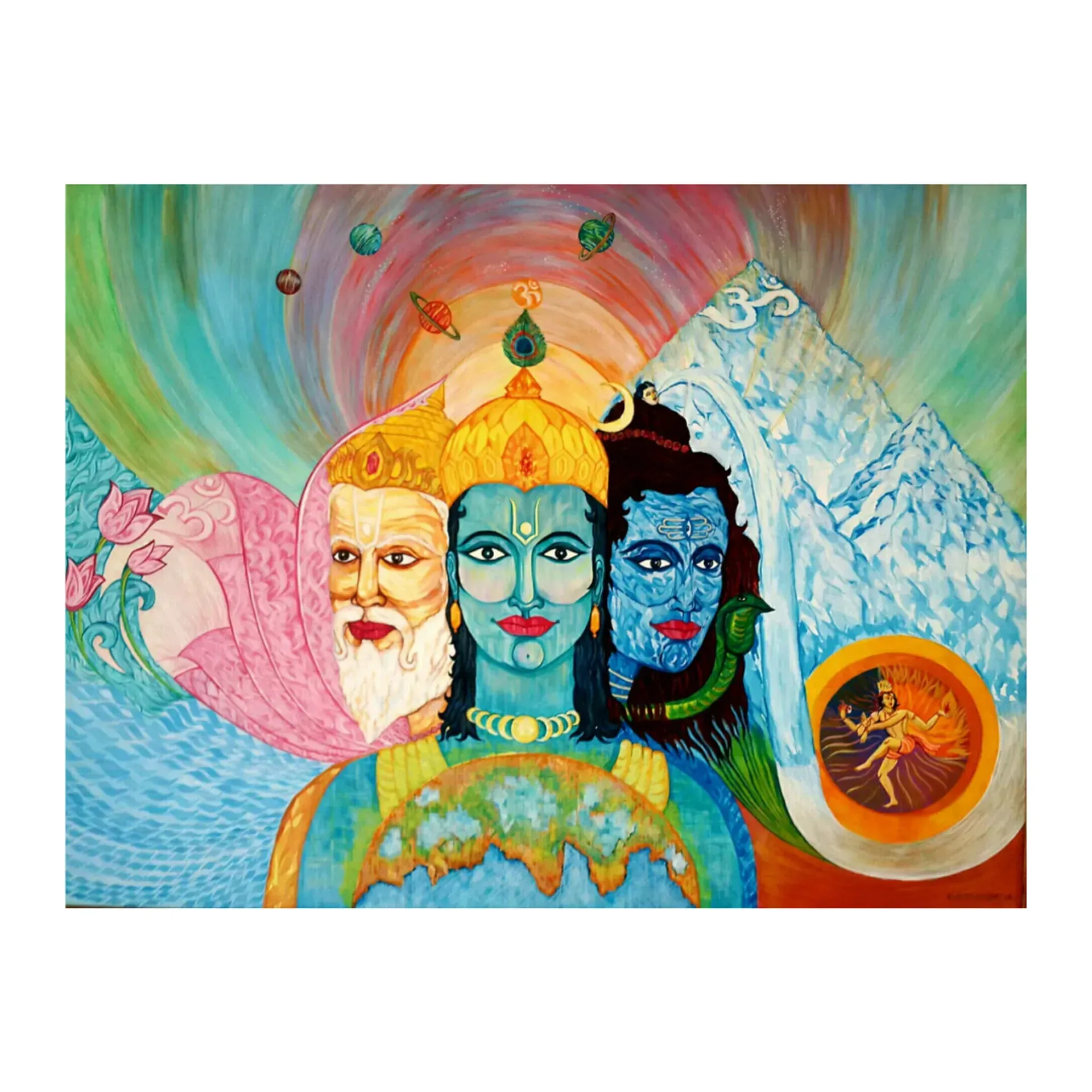
Simpler way to pick a painting
Rather than beginning with a fixed list of gods and directions, it makes more sense to consider a few different elements together. The first is the deity and the symbolism associated with them, because understanding the visual language makes it easier to choose an artwork that actually has meaning beyond its decorative appearance. The second is the particular form of the image, since a peaceful portrait and a dramatic mythological scene can create very different atmospheres even when they depict the same god or goddess.
The room itself comes next. A study, bedroom, entrance, living room and prayer space do not necessarily serve the same purpose, so there is no reason for the artwork in each of them to create exactly the same atmosphere. Saraswati's connection with knowledge makes her imagery natural for a study, Krishna can work comfortably in a family or living space, and Lakshmi's association with prosperity explains why her imagery is commonly found around spaces connected with work and wealth. These are useful associations to start with, rather than rigid rules that every home has to follow in exactly the same way.
Direction can then become another layer of the decision for anyone who follows Vastu. There are established Vastu principles around the orientation and organisation of a home, but the precise rules for religious paintings vary between practitioners and modern interpretations. Treating every recommendation found online as an ancient rule can therefore be misleading, particularly when the source is not identified. Understanding where a particular recommendation comes from makes it easier to separate traditional iconography from modern Vastu advice.
Understanding the Symbols Makes Choosing Art Easier
Once the symbolism behind these images is understood, choosing religious artwork becomes less about finding a painting that happens to contain the "right" deity and more about understanding what is actually being represented. A swan can connect an artwork to Saraswati, Nandi to Shiva, a flute to Krishna and the lotus to several different deities depending on the context. The same symbol can also have meanings beyond one particular deity, which is why the surrounding composition matters when interpreting traditional Indian art.
This is also why traditional paintings can be so rewarding to have at home. The longer they are looked at, the more details become visible, from the objects and animals to the gestures, colours, clothing and setting. A painting can therefore carry religious meaning, cultural history and a particular visual tradition at the same time. Knowing a little about the symbols behind it makes the artwork easier to appreciate and also gives more context to the decision of where it belongs in the home.
Vastu can be one part of that decision, particularly for people who already follow its principles when arranging their homes. But the direction of a wall is only one consideration. The deity, the symbolism, the style of the artwork, the mood of the scene and the purpose of the room all contribute to how the painting works within a space. Once those things are considered together, choosing religious art becomes much less about following an internet checklist and much more about understanding the visual language that has made these symbols meaningful for centuries.