
Painting Vastu
What Vastu Really Says About the Paintings in Your Home
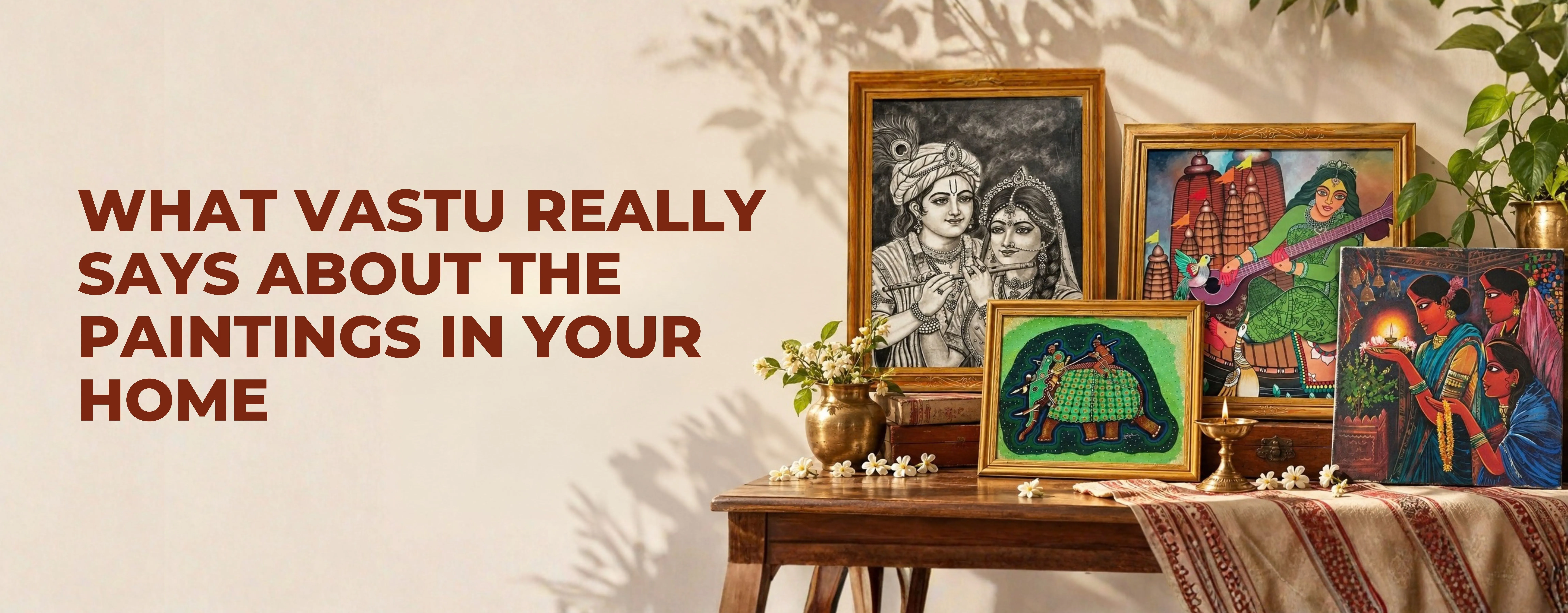
Vastu tells you a lot about the paintings in your home. It is time for you to look closely and make the right choice.

Rooftop
Author
If you have ever searched for "Vastu paintings," you have probably come across the same advice in slightly different forms. Seven horses should go here, waterfalls belong in this direction, Nataraja should not be kept in the living room, paintings of sunsets are supposedly inauspicious, while certain landscapes, animals and religious images are recommended for particular parts of the house. There are so many versions of these lists online that after a point it becomes difficult to tell where any of them actually came from, especially when the same rules keep appearing on different websites without much explanation beyond the fact that they are "according to Vastu."
The older material is considerably more interesting than that. There are classical Indian texts that discuss painting in considerable detail, including what makes an image beautiful, how colour and composition work, and perhaps most interestingly for anyone thinking about art at home, what kind of emotional response a painting is supposed to create. The Vishnudharmottara Purana, particularly its section on painting known as the Chitrasutra, discusses nine different emotional states or rasas in painting and then makes a distinction between the kinds of imagery that are appropriate for different spaces.
That changes the question slightly. Instead of asking only whether a particular painting belongs on the north wall or the east wall, we can also ask what the painting itself is doing. What kind of feeling does it create? What kind of room does that feeling belong in? And perhaps most importantly, what kind of imagery did the older texts actually consider suitable for a home?
The Three Moods a Painting Can Carry
Three Moods of a Painting
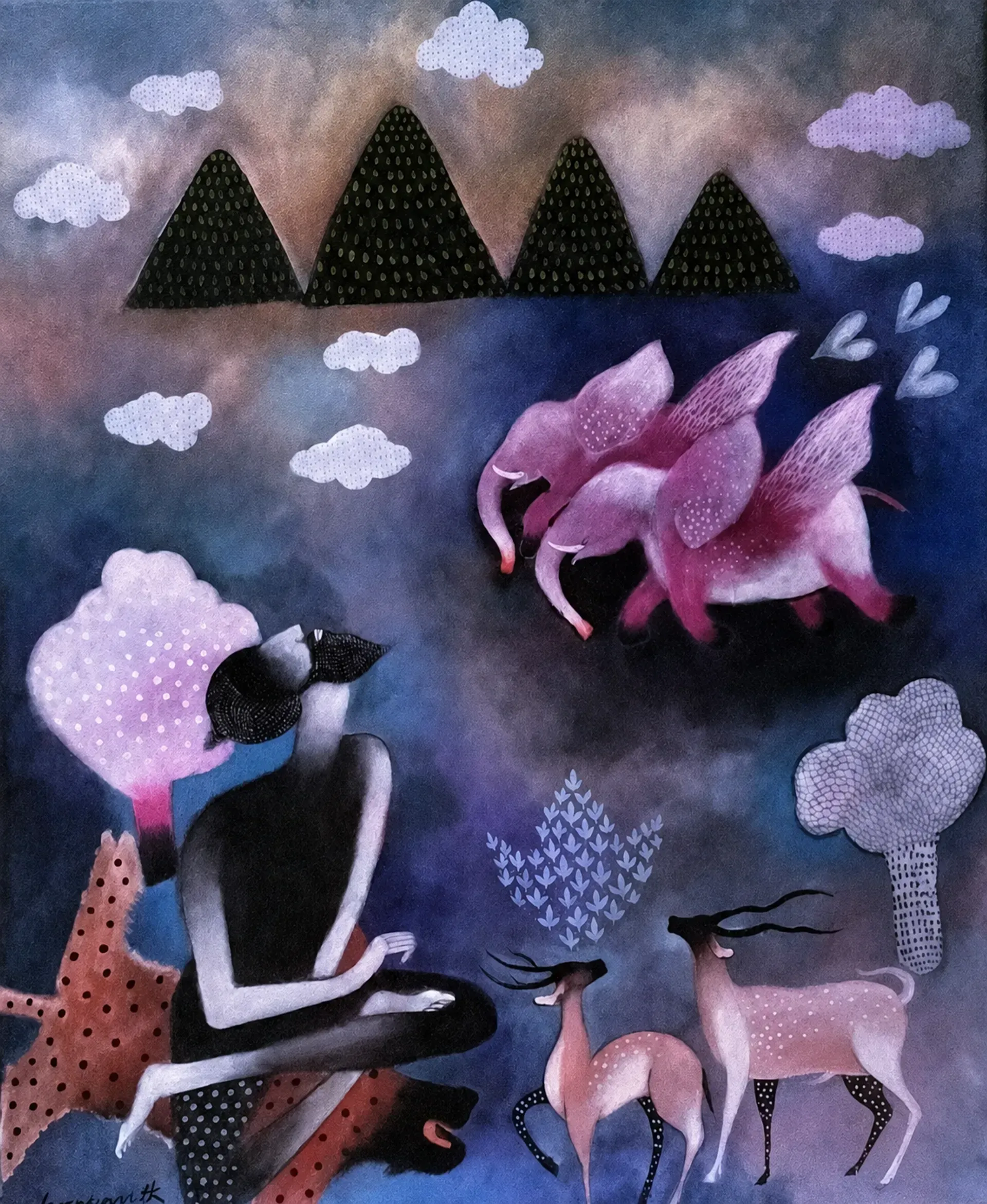
The word rasa is usually translated as something like "essence," "flavour" or "taste," although none of those translations quite explain what it means in Indian aesthetics. Broadly speaking, rasa refers to the emotional experience created by an artwork and received by the person looking at it. It is not simply whether a painting depicts a happy or sad subject, but the particular emotional atmosphere that the artist is trying to create through the subject, expressions, colours, composition and other elements of the work.
The Vishnudharmottara identifies nine rasas in painting: Shringara, Hasya, Karuna, Vira, Raudra, Bhayanaka, Bibhatsa, Adbhuta and Shanta. They cover a surprisingly wide range, from love, beauty and humour to heroism, anger, fear, disgust, wonder and peace. So the idea was never that paintings were supposed to make everyone feel calm and pleasant all the time. Indian painting theory recognised that frightening, violent, sorrowful or disturbing subjects could have their own artistic purpose. The interesting part comes when the text starts talking specifically about decorating a home.
For domestic spaces, it identifies Shringara, Hasya and Shanta as the appropriate rasas. Shringara is associated with love, beauty and sensuality, Hasya with humour and playfulness, while Shanta is concerned with peace and tranquillity. The other emotional states still have a place within painting, but the text does not treat all of them as equally suitable for an ordinary home. That is a considerably more specific idea than most of the modern advice around Vastu paintings, because it is asking you to think about the emotional character of the image rather than reducing it to a particular subject and direction.
Shringara, for example, is not simply a recommendation to put a romantic painting in your bedroom. In the older aesthetic system it has a much broader connection with beauty, attraction, adornment and pleasure, which can be expressed through people, clothing, flowers, colours and other forms of visual richness. Hasya is similarly broader than simply putting something "funny" on a wall. It concerns the comic and playful side of visual expression, which could make sense in a space that is meant to feel lively and informal. Shanta is probably the easiest one to connect with the modern idea of a peaceful home, since it is associated with quiet, contemplation and a sense of stillness.
The interesting thing here is that none of this begins with the compass. It begins with the experience of looking at the painting. The direction may come into the conversation later, but the image itself already has a character, and that character matters.
The Classical Texts Also Have Opinions About What Should Stay Outside
Specific place for the painting
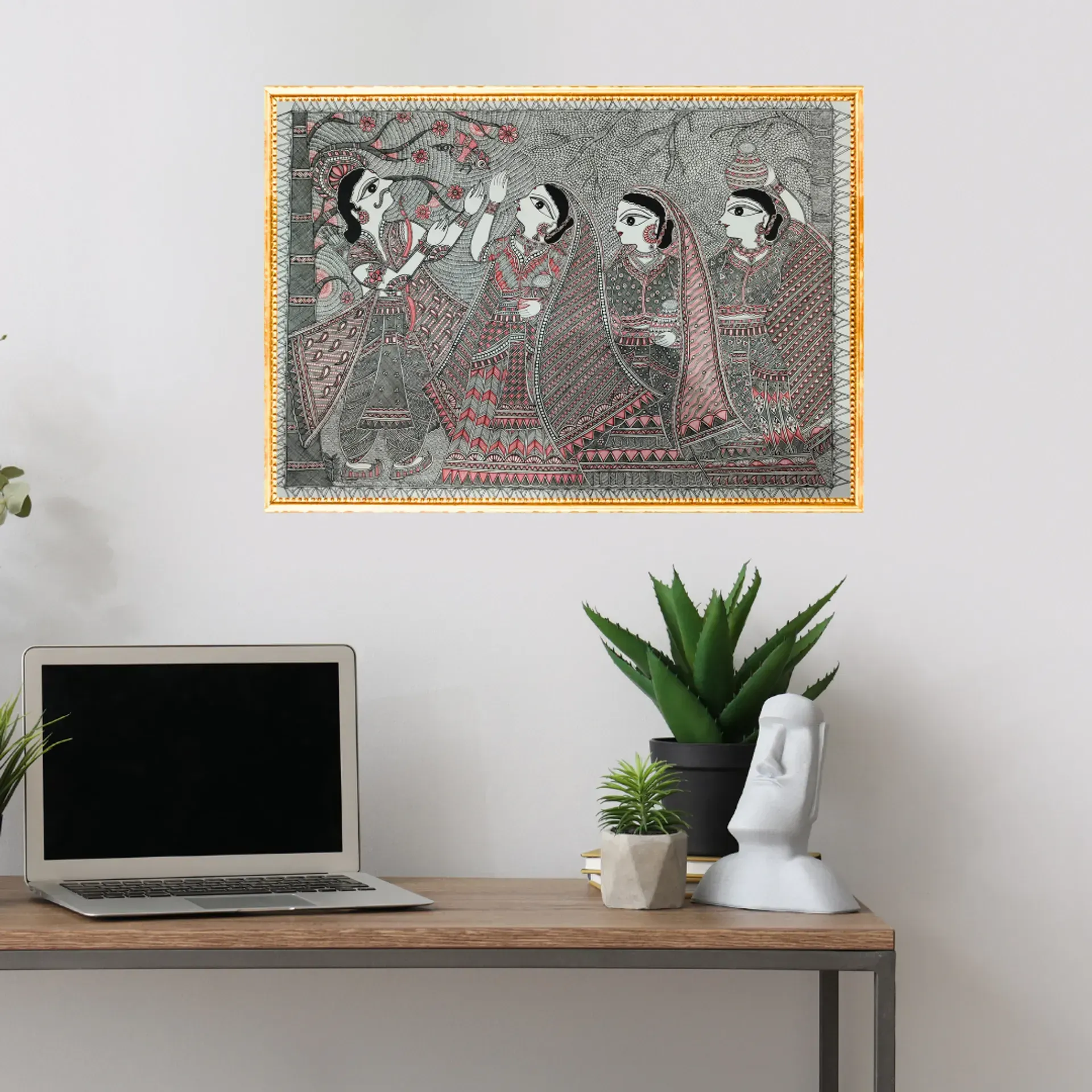
This is where the Vishnudharmottara gets particularly interesting, because after giving painting this very broad emotional vocabulary, it does not simply say that every kind of rasa is appropriate everywhere. The text distinguishes between different settings, and when it comes to houses, it specifically recommends the three rasas mentioned above rather than the full range of emotional subjects available to an artist.
The other rasas include imagery associated with sorrow, anger, violence, fear and disgust. Karuna deals with situations that evoke pity and suffering, while Raudra is associated with anger, conflict and destructive action. Bhayanaka deals with frightening subjects and Bibhatsa with things that are disturbing or repulsive. These were not considered meaningless or artistically inferior subjects. They were simply understood to create a very different emotional experience from the one considered appropriate for a domestic space.
This is an important distinction because modern Vastu advice often turns such ideas into much simpler statements about "negative paintings." The older discussion is more contextual than that. A battle scene is not a bad painting because it depicts a battle, and a painting of death is not somehow inferior to a painting of flowers. The question is whether that emotional experience belongs in a particular environment. The text even allows for a broader range of imagery in places such as temples and royal settings, which makes it clear that this was never a universal rule saying that certain subjects should never be painted.
It is also why you should be careful with the claim, often repeated online, that ancient Vastu texts contain a straightforward list of paintings that are "forbidden" in every home. There are certainly restrictions and recommendations in the classical material, but they are part of a much larger theory of art, architecture and the purpose of different spaces. Once you read the actual discussions, the system starts looking less like a list of superstitions and more like an attempt to understand how the visual environment of a place affects the people living in it.
So Where Did All the Direction Rules Come From?
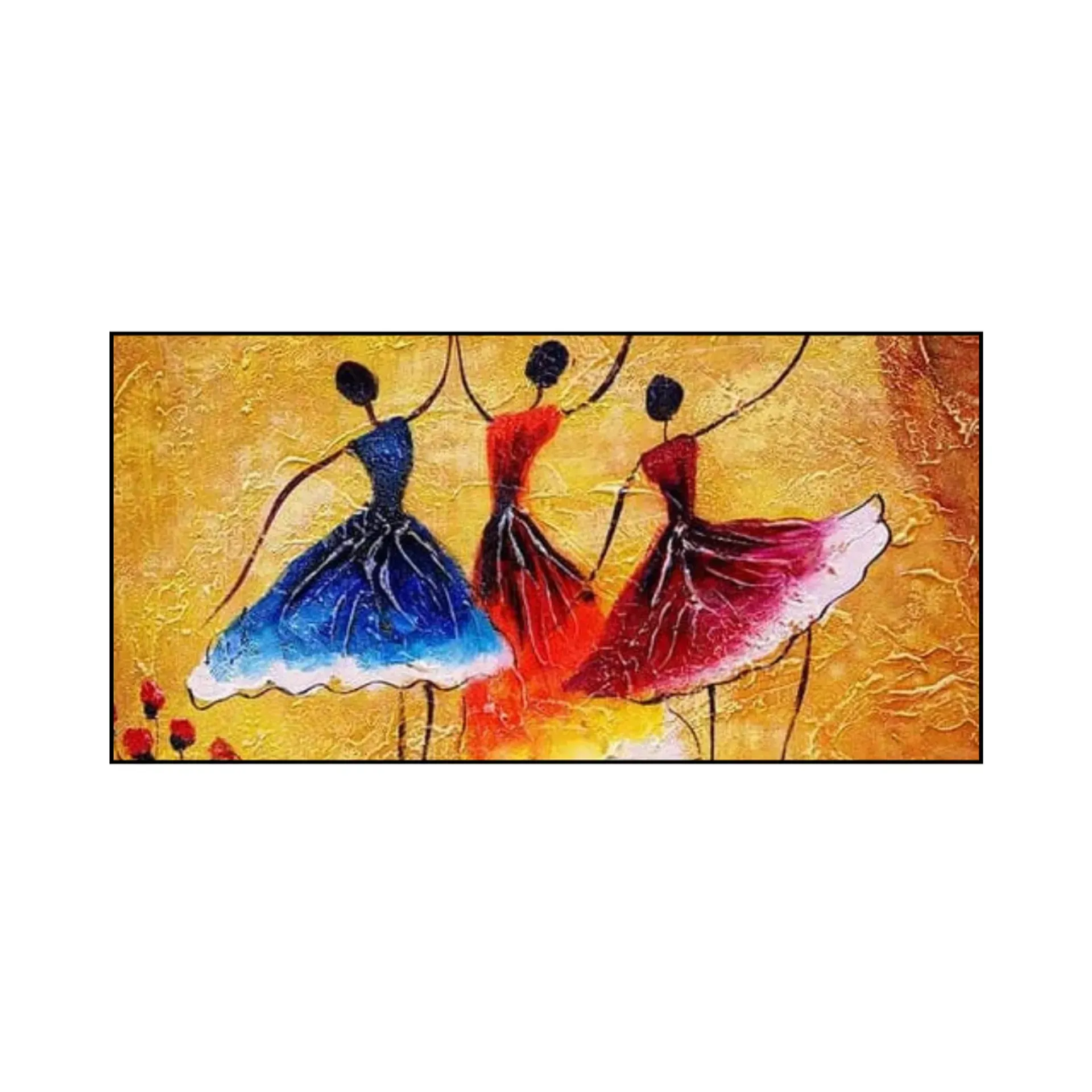
Vastu Direction Rules
This is where things become slightly messy, because there is a huge amount of modern Vastu advice about paintings and not all of it can be traced neatly back to one classical source. Directions are certainly important in Vastu. Texts such as Varahamihira's Brihat Samhita discuss the orientation and planning of houses in considerable detail, along with entrances, rooms, deities, trees and other elements of the built environment. But that is different from saying that the text contains the modern internet checklist of which painting should face which direction.
A lot of contemporary advice brings together different parts of Vastu, ideas about the five elements, later interpretations and modern interior-design practices. Some writers also connect particular subjects with particular directions and elements, which is how you end up with the familiar recommendations about water paintings, horses, rising suns and various animals. These ideas may have a history within later Vastu practice, but they should not automatically be presented as though every one of them appears in exactly the same form in an ancient Sanskrit text.
Juliet Pegrum's writing is a useful example of this more modern layer. In books such as The Vastu Home, she brings ideas about Vastu into contemporary interior design and discusses concepts including rasa, the three gunas, direction, colour, shape and the use of decorative objects. It is a much more practical approach because it is trying to translate an older system into the context of an actual modern house, where you are deciding what to put above a sofa or in a bedroom rather than designing a traditional palace.
That distinction is worth keeping in mind whenever you read about Vastu and art. There is the classical material, there are later interpretations of that material, and then there are modern practitioners adapting those ideas for contemporary homes. They can all be interesting, but they are not interchangeable, and treating them as one uninterrupted set of ancient rules makes the subject much more confusing than it needs to be.
Even the Shape of the Artwork Can Become Part of It
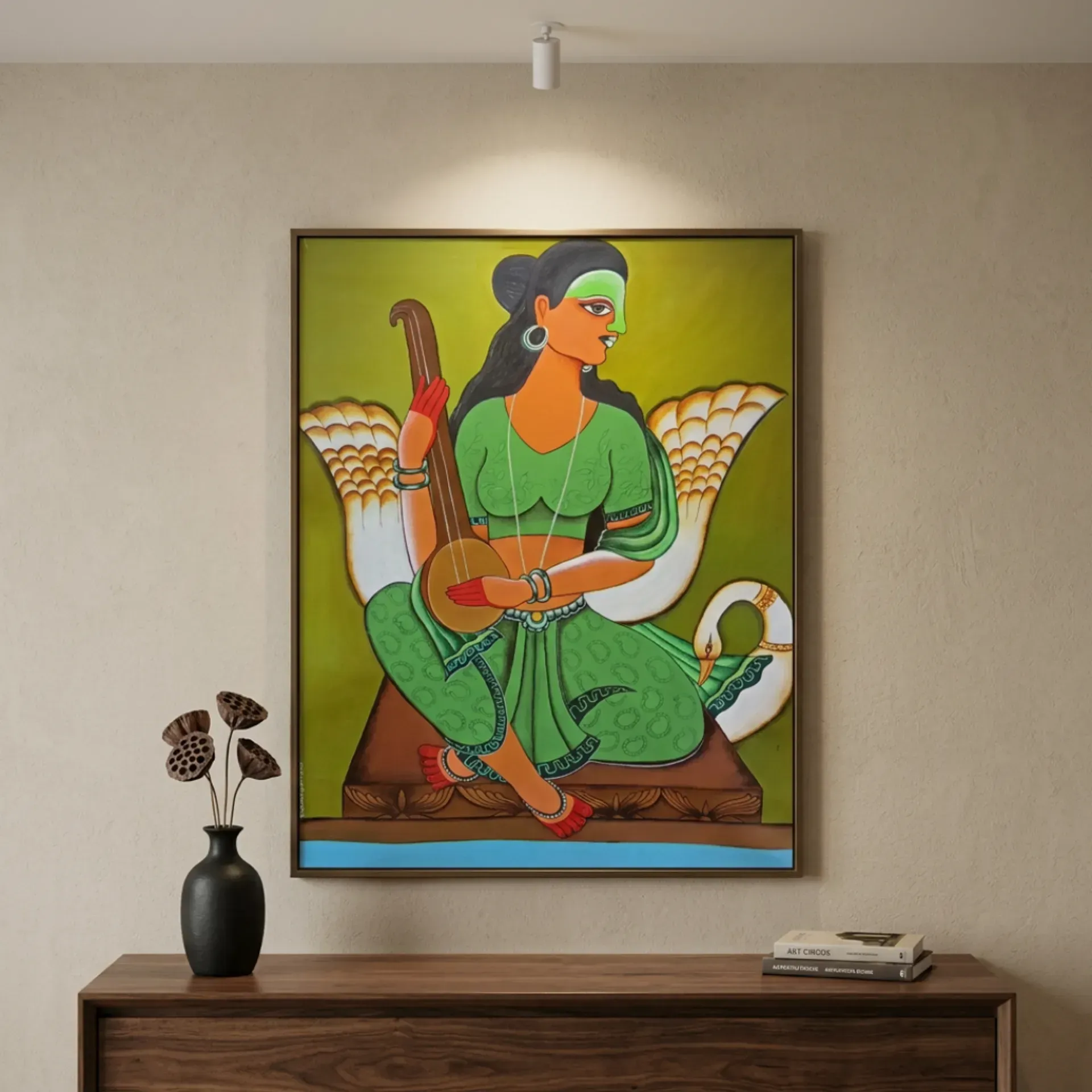
Painting Shape as per Vastu
There is another part of modern Vastu thinking that is worth mentioning here, although again, it would not be put in the same category as the classical rasa theory. Contemporary Vastu writers often associate different shapes with the five elements, with square forms connected to Earth, circular or fluid forms connected with Water or other elemental qualities depending on the particular system, triangles with Fire and other geometric forms with different energies.
The same kind of thinking is sometimes applied to paintings, sculptures and decorative objects. A large geometric artwork therefore does not necessarily get treated in the same way as a softly framed landscape simply because both happen to be paintings. The shape, scale and visual presence of the object become part of the way it is understood within the room.
Whether you accept those elemental associations literally is a separate question, but the broader point is still useful. We tend to talk about art almost entirely through its subject. We say this is a painting of Krishna, this is a landscape, this is an abstract work, this is a portrait, and then stop there. But when something is hanging on your wall for years, its size, colours, composition and overall visual weight are going to affect the room as much as the name of the subject.
That is also why the idea of rasa is interesting even if you are not particularly concerned with following Vastu. You can disagree with the spiritual explanation behind it and still recognise that different images create very different environments. A quiet landscape and a chaotic battle scene are going to feel different in the same room regardless of what direction the room faces.
Maybe the Better Question Is What You Want the Room to Feel Like
This is probably the part of the older thinking that you would find easiest to apply today. Before worrying about whether a particular painting is supposed to face north or east, look at the painting itself and think about the feeling it creates. Is it peaceful, romantic, playful, dramatic, devotional, energetic or melancholic? Does it make the room feel quieter or busier? Is that actually what you want from the space?
The answer will obviously depend on the room. A dining room does not have to create the same atmosphere as a bedroom, and a study where you spend several hours working does not necessarily need the same kind of artwork as an entrance hall. This is where the three rasas considered appropriate for the home become useful as a way of thinking rather than a strict decorating formula. You can look at a piece and ask whether it creates a sense of beauty, playfulness or peace, and then decide whether that feeling makes sense in the room where you want to place it.
The direction can come afterwards. If you follow Vastu, you can bring those principles into the decision as well. But starting with the direction and then trying to find a painting that fits the rule seems to miss something important about the artwork itself. The painting is not an inert object that becomes meaningful only after you put it on the "correct" wall. It already has a subject, a visual language, and an emotional character before it enters your house.
Your Walls Are Doing More Than Filling Empty Space
Most of us probably don't think about our walls very much once we have decorated a room. A painting goes up, you look at it for a few weeks, and eventually it becomes part of the background of your everyday life. You see it when you wake up, while you are eating, when friends come over and when you sit in the same room after a long day. It becomes part of the visual environment of the house even when you are no longer consciously looking at it.
That is probably why the older idea of thinking about the emotional quality of an image is more interesting to me than a list of lucky and unlucky paintings. You do not have to believe that a particular painting will change your fortune to recognise that the things you surround yourself with can affect how a room feels. The classical texts were working within a religious and philosophical worldview that is very different from ours, so there is no reason to pretend that their explanations can simply be translated into modern science. But the underlying question remains surprisingly relevant.
What are you choosing to look at every day?
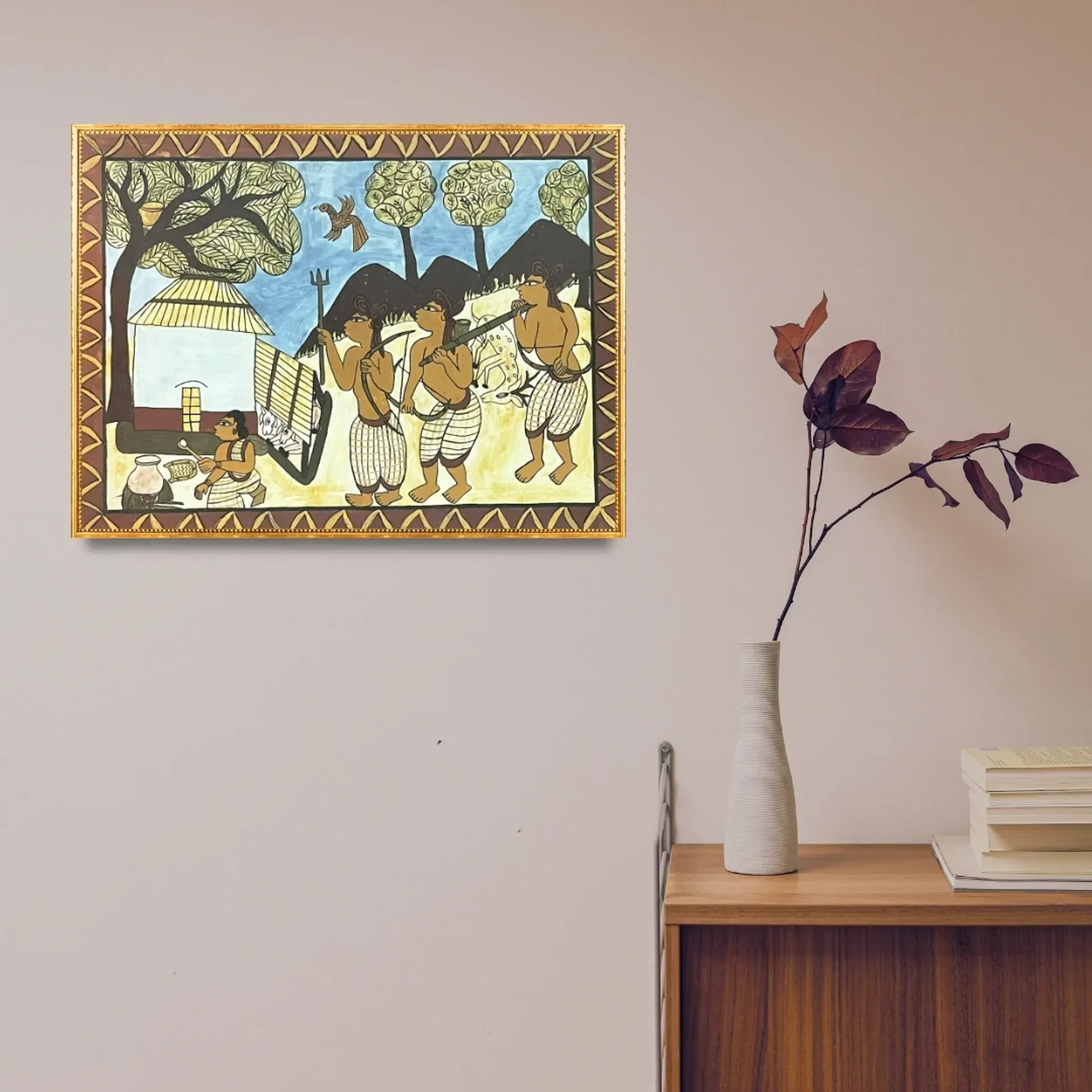
Right Place for a Painting
If you want to bring some of this thinking into your own home, you can start there. Look at the artwork before you look at the direction. Think about what the image depicts, how it makes you feel, what kind of atmosphere it creates and whether that atmosphere actually belongs in the room. Then, if Vastu is important to you, bring direction, placement and the other principles into the decision.
And this is also where traditional Indian art becomes particularly interesting. A Pichwai, a miniature painting, a Gond work or a folk painting is carrying much more visual information than a generic "Vastu painting" label suggests. There is a story, a tradition, a particular way of using colour and composition, and often a very deliberate emotional character behind the image.
Your walls are going to say something whether you think about them or not. The older Indian approach to art simply gives you a much more interesting way of asking what exactly you want them to say.