

What Is FATAC? How to Play the Indian Art Card Game Built for Slapping
What is FATAC? How to play Rooftop’s Indian art card game: Snap, Memory and Slap Dash rules, ages, where to play and why it suits the Diwali kids’ table.

Rooftop
Author
FATAC is the sound a palm makes when it lands on a pile of cards a split second before your brother’s. In Mumbai slang the word also means quick. Rooftop named the FATAC card game after both, which saves a lot of explaining at the start of every round.
Under the noise sits a deck of cards painted from six Indian art traditions, and three games you can learn before the chai goes cold.
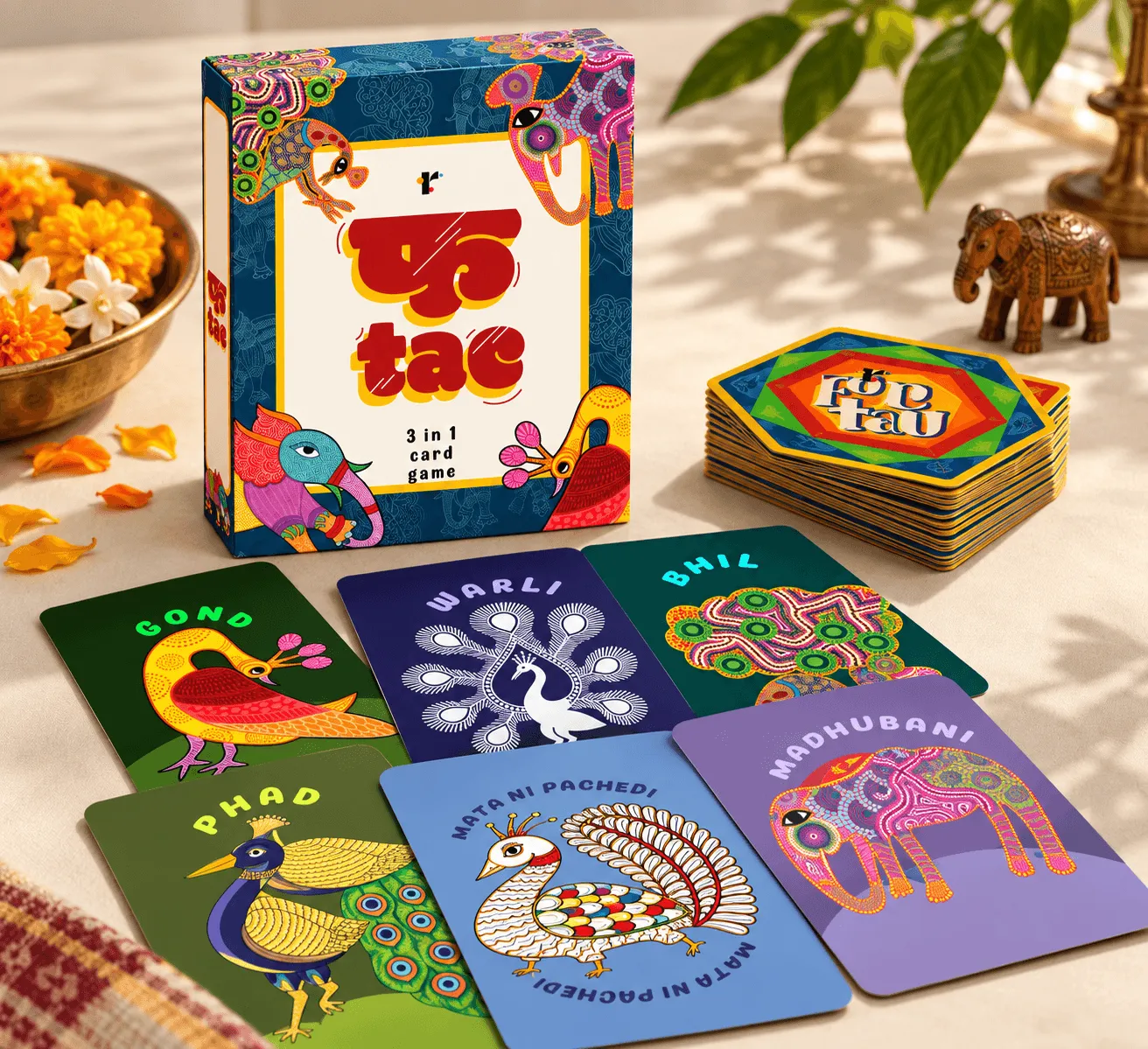
One FATAC deck, six art traditions, three games. The illustrations are the point, and the slapping is the bonus.
What is FATAC?
FATAC is a matching card game made by Rooftop. One deck plays three games: a snap game, a memory game and a slap game called Slap Dash. The cards are paper, 5 by 3.5 inches, and according to the product page the illustrations come from Bhil, Warli, Cheriyal, Mata ni Pachedi, Phad and Gond art.
The product page starts the age at three. That holds up for the memory game, where a three-year-old only has to remember where a card’s twin went. Slap Dash works better once hands are big enough to find the pile without finding somebody’s face first.
Six art forms in one deck
Every card is a small introduction to somebody’s tradition. Here is who is on them.
- Bhil painting, from western Madhya Pradesh, builds its animals and trees out of dense rows of coloured dots.
- Warli painting from Maharashtra is white on mud, with every person drawn as two triangles joined at the tip.
- Cheriyal scrolls from Telangana are painted on a red ground and were once unrolled by storytellers, one panel at a time.
- Mata ni Pachedi is the temple cloth of the mother goddess in Gujarat, traditionally worked in red and black with the goddess at the centre.
- Phad is Rajasthan’s scroll painting of the folk deities Pabuji and Devnarayan, carried around the villages by bhopa singers.
- Gond art from Madhya Pradesh fills trees and animals with lines, dots and dashes, and each artist signs with a pattern of their own.
Expect the eight-year-old to pronounce Mata ni Pachedi correctly before you do.
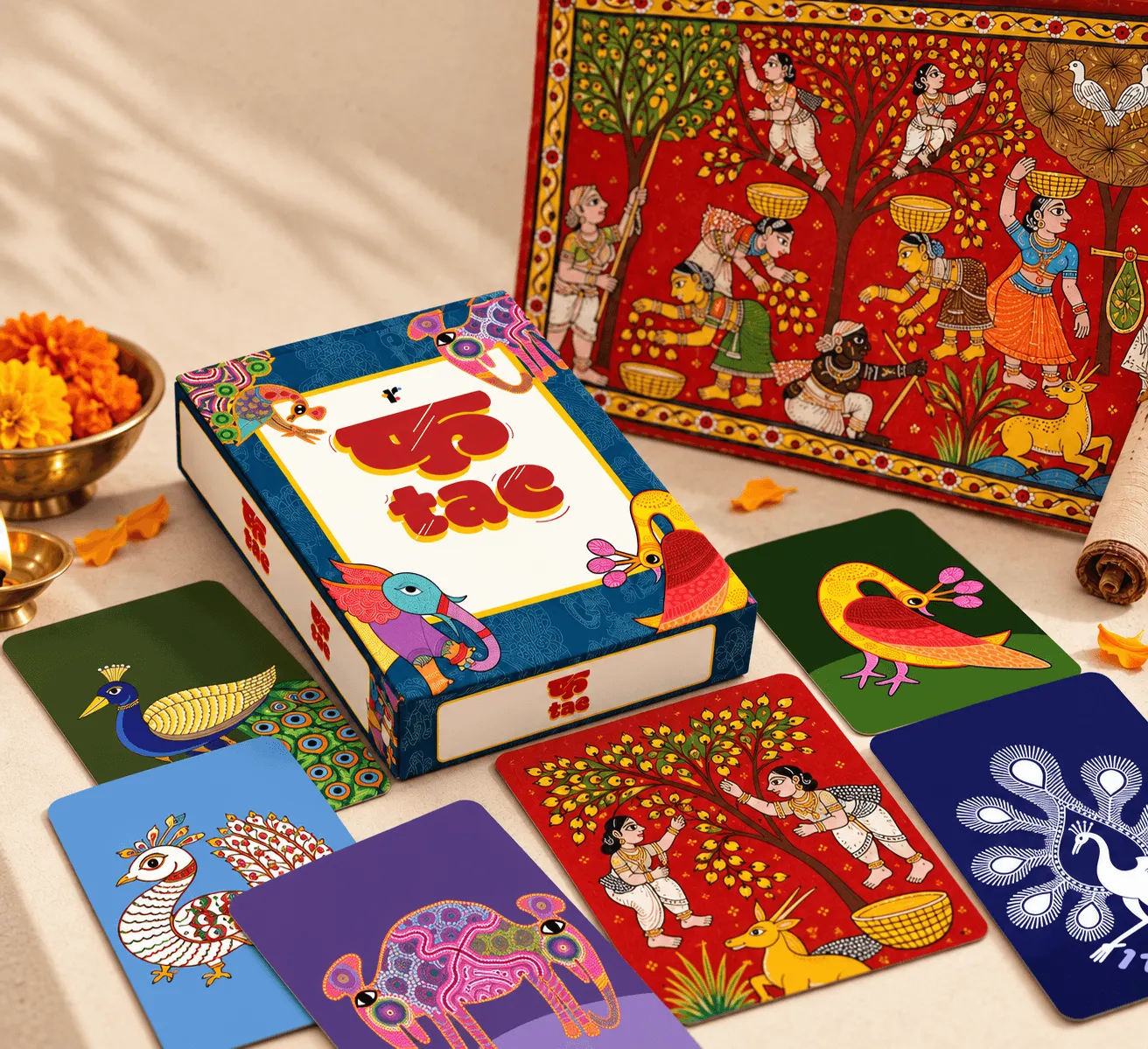
Cheriyal scrolls use a red ground and were read panel by panel. On a FATAC card the same style has to fit into a few square inches.
How to play FATAC: three games, one deck
Game 1: FATAC, the snap game
Deal the cards out. Players take turns flipping their top card onto a central pile. The moment two cards match, the first player to call it wins the whole pile. Run out of cards and you are out. The game goes on until one player is left holding everything.
The printed rules say to call snap. We would shout FATAC instead. Nobody is going to report you.
Game 2: Memory
Spread the cards face down. On your turn, flip two. A match is yours to keep, so remember where everything was, including the cards other people turned over. Decide before you start whether a pair earns another turn. The player with the most pairs at the end wins.
Memory is the quiet one. It rewards patience over reflexes, which is why it evens out a table that has a three-year-old and a seventy-three-year-old on it.
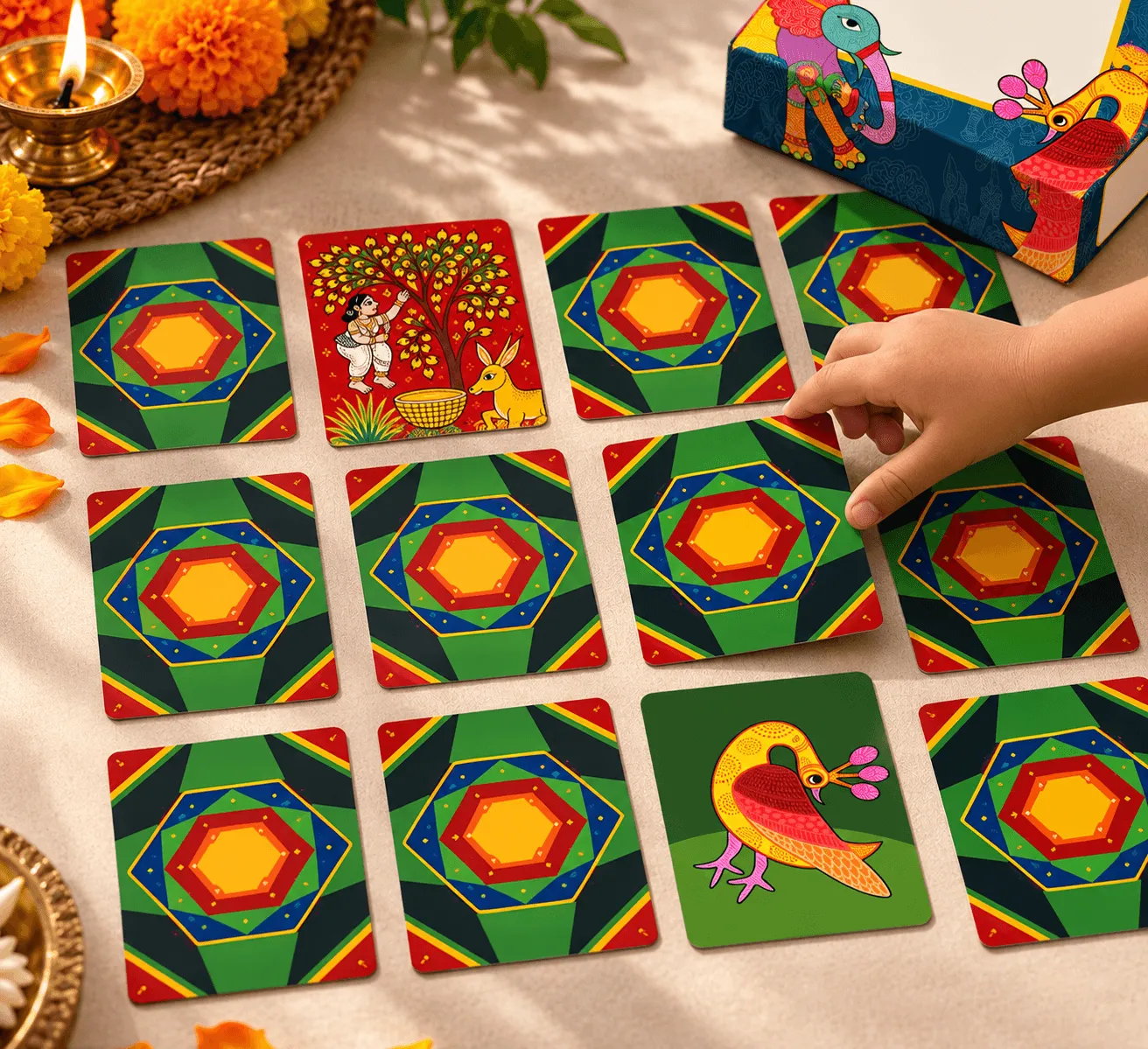
Memory mode suits the youngest players. Laying the cards in straight rows makes it easier for small children to remember positions.
Game 3: Slap Dash
Everyone flips onto the central pile. Spot a match and race to slap your hand on it. The last player to slap takes the whole pile, which is bad news, because the aim is to get rid of your cards first.
- Take off your rings. Move the chai. Warn the neighbours.
- House rules for the fights FATAC will cause
- These are our suggested house rules, not the printed ones. Read them out before the first round.
- Two hands land at once. The bottom hand touched first. In Snap, that player wins the pile. In Slap Dash, the top hand was last, so that player takes it.
- False alarm. Anyone who calls or slaps when there is no match puts one card from their own pile into the centre.
- The under-five clause. Players under five may shout instead of slapping. A shout counts as a slap.
- Peeking in Memory. A card lifted is a card turned. No take-backs, however small the player.
- The Nani exemption. Anyone over seventy may slap with a rolled-up newspaper. Nobody else may.
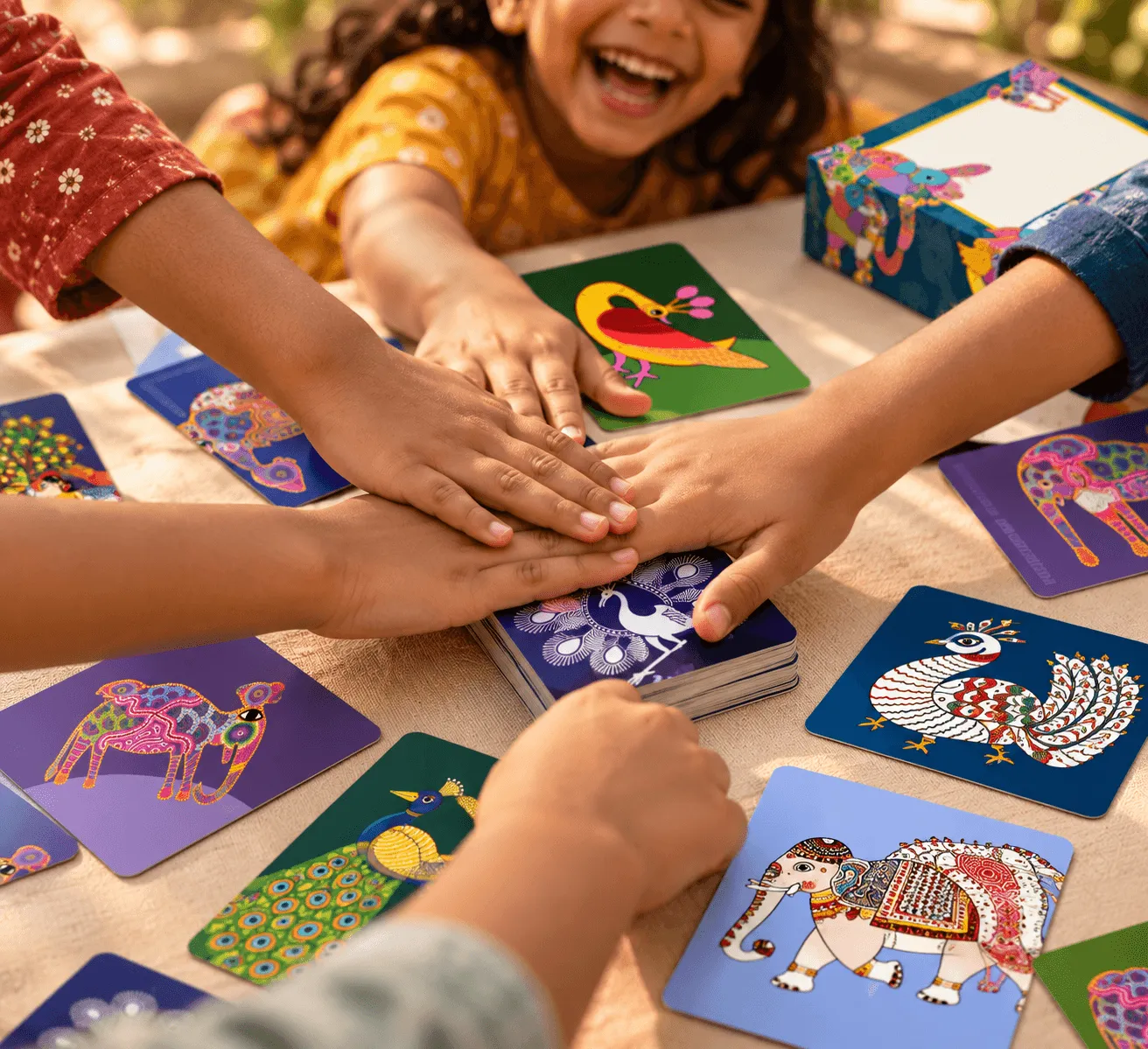
Slap Dash, a fraction of a second after a match. Ruling one exists for exactly this picture.
Where to play FATAC
You can play FATAC while travelling, outdoor and for game nights at home,even your classrooms. A few more places worth trying: the kids’ corner at a wedding, a train berth where Memory can be played lying down, and the last class before the Diwali break. One buyer wrote on the product page that they first played it at the Kala Ghoda festival, which is about as good a place to discover a folk art card game as Mumbai has.
The deck also turns up in Rooftop’s list of sustainable toys rooted in Indian craft, alongside wooden and clay toys, for parents trying to cut down on plastic.
FATAC for Diwali, Children’s Day and festival gifting
Diwali falls on Sunday, 8 November 2026. Every family gathering has a kids’ table that gets loud around the time the adults sit down to eat. FATAC is built for that table. Put Slap Dash in the middle and let the cousins sort it out among themselves.
Children’s Day follows on 14 November, which makes FATAC a sensible return gift for school parties. Christmas stockings are about six weeks after that. For a Diwali gift for kids that teaches them the difference between Warli and Gond without anyone calling it a lesson, this is the deck.
Once the kids are six and the adults want in, move up a level. Koku swaps pairs for 57 folk symbols on hexagonal cards, and every two cards share exactly one.
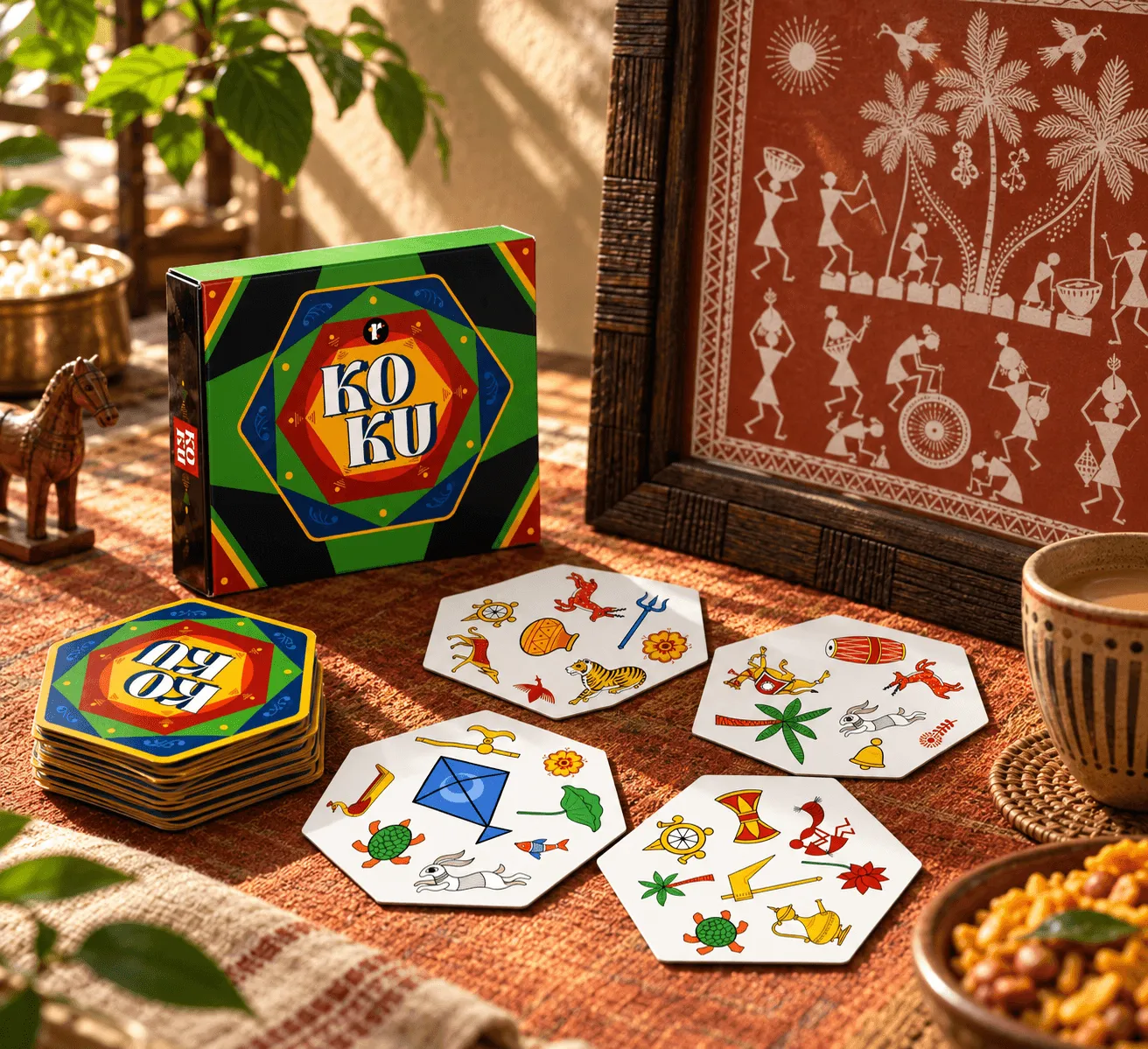
Koku: Symbol-matching card game, 3 game modes, 2 to 12 players, ages 6 and up
Who wins the argument
Around the fourth round of Slap Dash, a cousin will insist his hand was first. He will be wrong, and ruling one is there for him. The deck is on the FATAC card game page.