
12 Sustainable Toys for Kids That Are Rooted in Indian Craft Traditions
Discover handcrafted Indian toys rooted in centuries-old craft traditions. From clay figurines and wooden toys to art kits and card games, find sustainable, safe, and culturally rich alternatives to plastic.

Rooftop
Author
Walk into most toy stores today and you will see shelves filled with plastic. Bright colours, loud sounds, and packaging designed to catch attention. Many of these toys last only a few weeks before breaking or being forgotten. Over time, they end up in landfills where they remain for hundreds of years. India already generates more than 3.5 million tonnes of plastic waste every year, and toys are quietly contributing to that number. At the same time, parents are becoming more careful about safety. Questions around non-toxic materials, durability, and meaningful play are becoming more common.
Long before plastic toys became the default, Indian children grew up with toys made from clay, wood, cotton, yarn, and natural dyes. These toys were handcrafted, biodegradable, and rooted in local traditions. They were designed for imaginative play and built to last. Today, that legacy is returning. Families searching for sustainable toys for kids in India are rediscovering handcrafted toys that offer safety, durability, and cultural connection in a way plastic toys rarely can.
Here are 12 sustainable toys rooted in Indian craft traditions that combine creativity, learning, and meaningful play
1. Fabric Dolls Stitched from Handloom Textile
India’s handloom tradition naturally lends itself to soft toys. Cotton, khadi, mul, and chanderi fabrics are turned into dolls that feel warm and comforting in a child’s hands. These dolls are often filled with natural cotton or kapok and stitched by hand, making each piece unique.
Fabric dolls are especially suitable for younger children because they are soft, lightweight, and safe. Unlike synthetic toys, they are breathable and easy to wash. Over time, these dolls often become comfort companions, carried everywhere and kept for years.
Beyond comfort, these dolls introduce children to Indian textiles in a subtle way. Patterns, colours, and stitching styles reflect regional craft traditions. A simple toy becomes an introduction to heritage.
2. Soft Fabric Figurines Inspired by Folk Characters
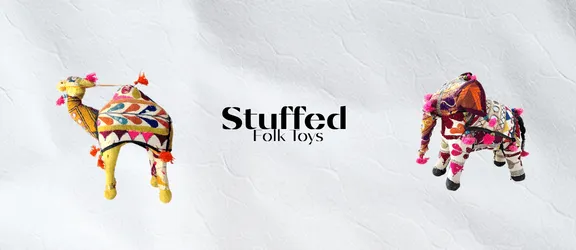
Soft figurines inspired by folk traditions bring storytelling into playtime. These toys often represent traditional characters, village scenes, or cultural motifs.
Because they are soft and flexible, they work well for toddlers and young children. These figurines encourage imaginative storytelling. Children create their own narratives and build emotional connections with characters.
Unlike mass-produced plastic toys, these figurines carry cultural context. They introduce children to Indian storytelling traditions in a gentle and playful way.
3. Hand-Painted Clay Animals
Clay toys have existed in India for thousands of years. From terracotta animals found in archaeological sites to colourful figurines sold at village fairs, clay remains one of the most natural materials for toy-making.
Hand-painted clay animals include elephants, horses, birds, and farm animals. Each one is shaped by hand and painted with water-based colours. These toys are biodegradable and non-toxic.
They may be more delicate than plastic toys, but that is part of their charm. Children learn to handle objects carefully and appreciate the craftsmanship behind them.
4. Terracotta Figurines for Imaginative Play
Terracotta figurines often come as sets depicting everyday life, festivals, or family scenes. These sets encourage imaginative play and storytelling.
Artisans in different parts of India create detailed figurines representing weddings, markets, and cultural celebrations. One such example is Traditional Bengali Couple Clay Dolls, which capture a wedding scene with intricate detailing and traditional attire.
These figurines serve both as toys and decorative objects. During festivals like Navaratri, they are also used in Golu displays, helping children learn about traditions through play.
5. Handmade Wooden Toys
Wooden toys remain one of the most durable sustainable toys for kids in India. Regions like Channapatna, Kondapalli, and Etikoppaka have long traditions of wooden toy making.
These toys include stacking rings, spinning tops, rattles, and pull-along animals. The wood is shaped and polished to create smooth edges, making them safe for children.
Natural dyes and lacquer finishes add bright colours without harmful chemicals. Wooden toys are long-lasting and often passed down between siblings.
6. Carved Wooden Animals and Figures
Carved wooden animals add movement and imagination to playtime. Pull-along elephants, horses, and birds encourage children to move while playing.
The texture and weight of wood create a sensory experience that plastic toys cannot match. These toys help develop motor skills and coordination.
Carved wooden figures also introduce children to craftsmanship. Each piece carries subtle variations that reflect the artisan’s hand.
7. Educational Toys Rooted in Indian Art
Educational toys inspired by Indian art traditions combine learning with play. These toys introduce children to Gond, Warli, Madhubani, and other art styles.
These may include puzzles, matching games, or pattern-based activities. Children learn symmetry, colour patterns, and storytelling.
Such toys help children develop creativity while learning about Indian art traditions.
8. Indian Art Card Games (FATAC)
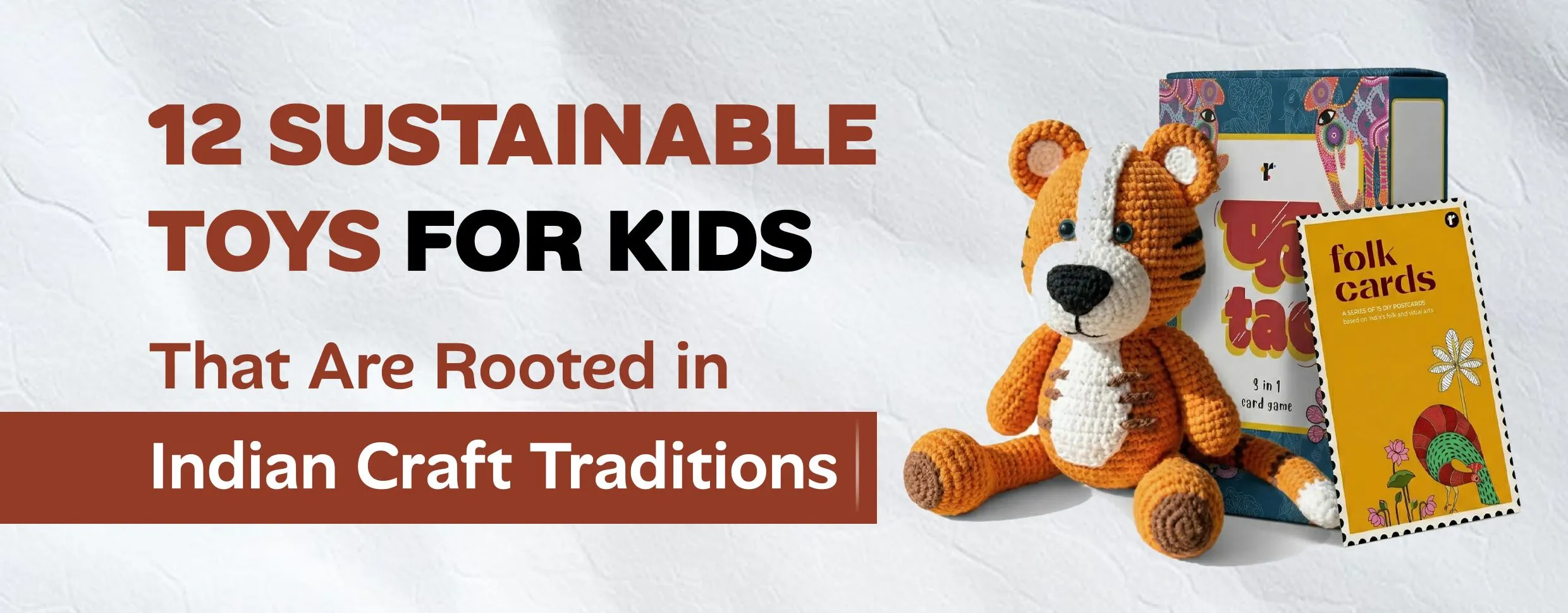
The FATAC Card Game introduces children to Indian tribal art in a playful way. Featuring Bhil, Warli, Cheriyal, Mata ni Pachedi, Phad, and Gond art styles, the game blends cultural learning with fun.
The game includes multiple modes, including memory games and reflex-based play. Children improve concentration while becoming familiar with traditional art forms.
Its compact design makes it ideal for travel, family gatherings, and classroom activities.
9. Activity Books for Young Artists (Artventures Series by Rooftop)
The Artventures series by Rooftop helps children explore Indian art traditions through guided activities. Each book focuses on a specific art form and introduces motifs, techniques, and storytelling elements.
These books are designed across difficulty levels, allowing children to progress gradually. They encourage creativity, patience, and observation.
Unlike typical colouring books, these activity books offer structured creative learning rooted in traditional art.
10. Art Kits as Creative Play Tools
Art kits encourage hands-on creativity. These kits typically include materials and instructions to create art independently.
One example is the DIY Origami Art Kit, which allows children to create shapes and figures using simple folding techniques. These kits build problem-solving skills and creativity.
Art kits also reduce screen time and promote independent learning.
11. Puppets and Storytelling Toys
Puppets rooted in Indian traditions encourage storytelling and imagination. Children create characters and perform stories.
These toys support language development and creative thinking. They also introduce children to Indian storytelling traditions.
12. Lac Toys and Natural Craft Play Objects
Lac toys made from natural resin are colourful and eco-friendly. These toys are lightweight and visually appealing.
They are often used as stacking toys, small figurines, or decorative play objects. Lac toys are safe and biodegradable.
Why Choosing Handmade Toys Supports Artisan Communities ?
Every handcrafted toy supports a real artisan. Regions like Channapatna and Krishnanagar depend on craft traditions for livelihood.
When you choose sustainable toys for kids in India, you help preserve these traditions.
Handmade toys support artisans, reduce plastic waste, and create meaningful play experiences.
A Small Shift That Makes a Big Difference
You do not need to replace everything at once. Start with one handcrafted toy.
Over time, these small choices create a meaningful collection that supports sustainability and culture.
Handcrafted toys last longer, tell stories, and connect children to Indian traditions.