
The Book That Changed How I Look at Hazaribagh
The Book That Changed How I Look at Hazaribagh
Birhor Songs & Folklore is a slim volume from a small press in Hazaribagh that completely changed my perspectives about a lot of things.

Kartik Gaggar
Author
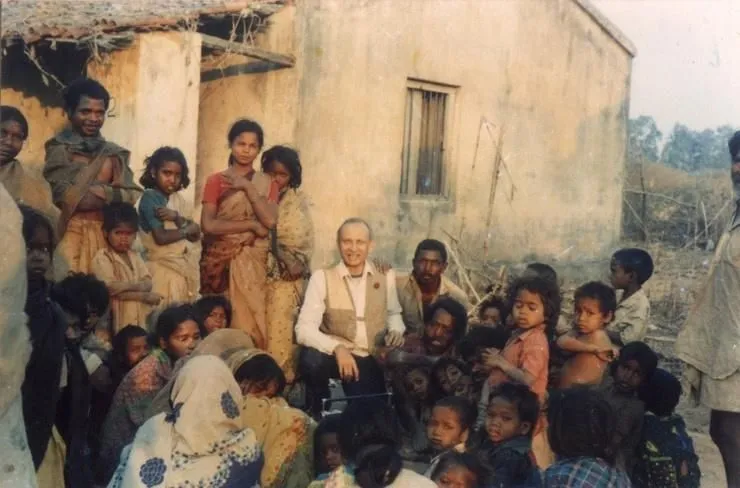
I read books and about books all the time, but every once in a while, the story behind a book impresses me as much as the book itself, and compels me to write such pieces. This recently happened when I came across “Birhor Songs & Folklore.” It's a slim volume from a small press in Hazaribagh, documenting the songs, stories and beliefs of the Birhor, one of Jharkhand's most forest-dependent communities. The book was put together by Bulu Imam, who spent decades living among the Birhor and recording their oral traditions, and later translated and edited the material with his son Gustav. What got me was how easily this book could have never existed.
These were stories that were being passed down orally, within small forest settlements, by people whose way of life has been changing rapidly. Imam simply spent years listening to them and writing them down. Reading the book, I kept thinking about how much of this would have disappeared if nobody had bothered to sit there and listen. And because I spend so much time looking at art and writing about the traditions of Hazaribagh, that made the book particularly interesting to me. If you've ever bought a Sohrai or Khovar painting from Hazaribagh, or even just spent some time looking into the region's art, Birhor Songs & Folklore takes you somewhere much further back.
The Birhor aren't painters, and their tradition isn't the same as Sohrai or Khovar. But their songs and stories give you a glimpse into another layer of the landscape, one that existed long before these traditions became something we could buy, hang on a wall and talk about. And honestly, some of what I found in this book is stranger and more fascinating than I expected.
Who the Birhor Actually Are
Who the Birhor Actually Are?
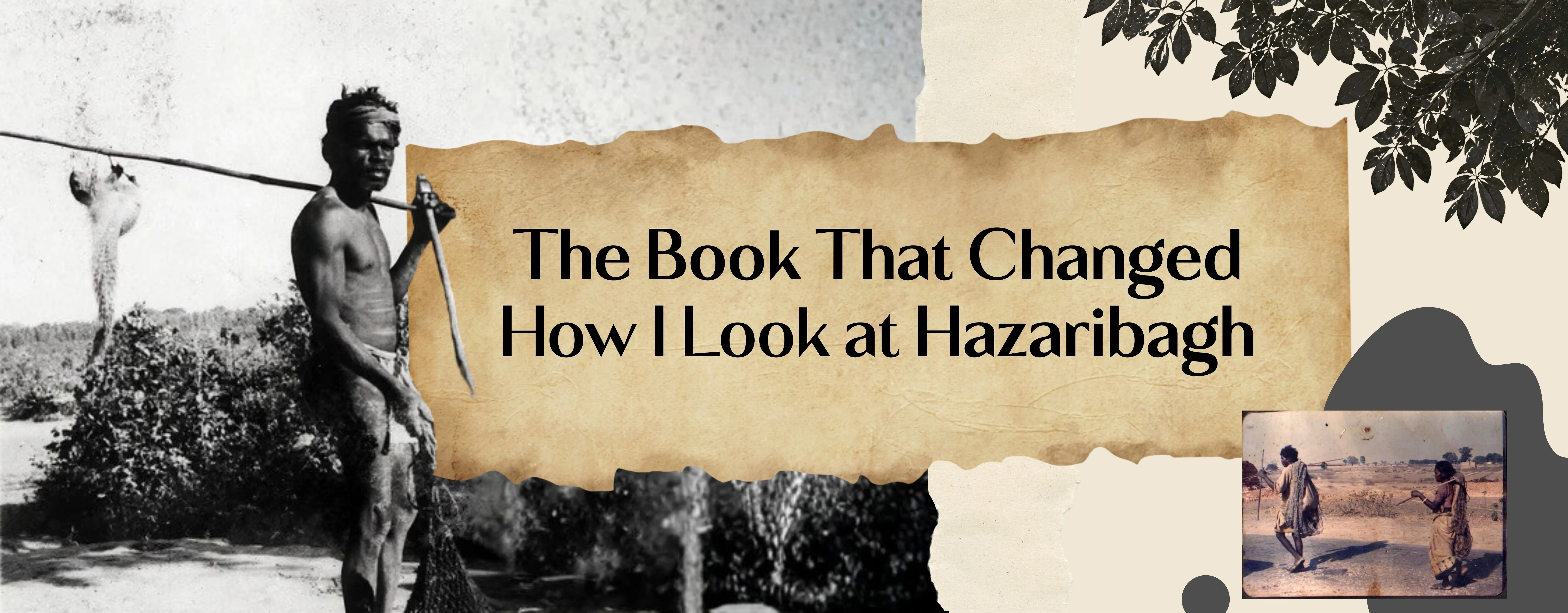
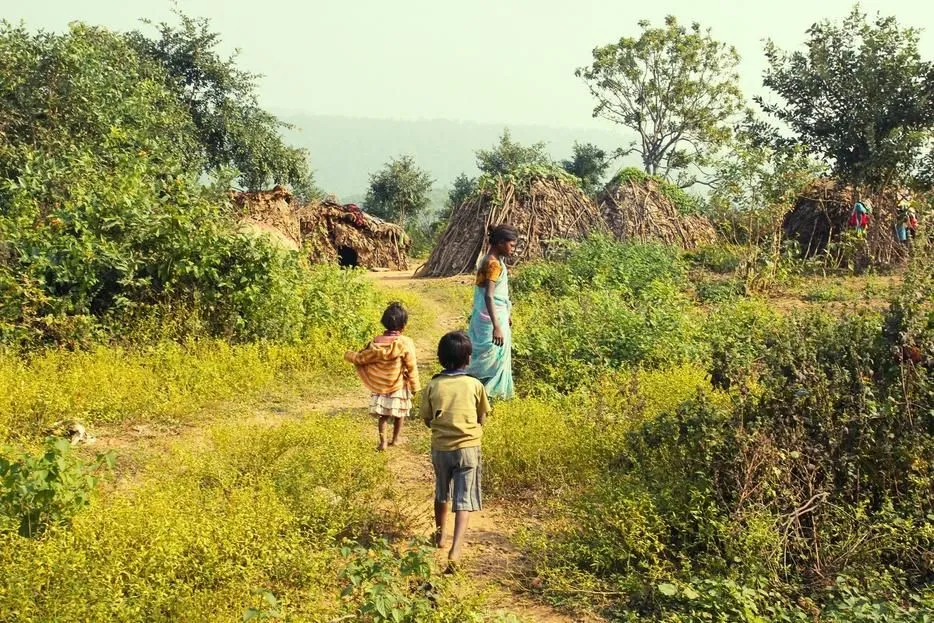
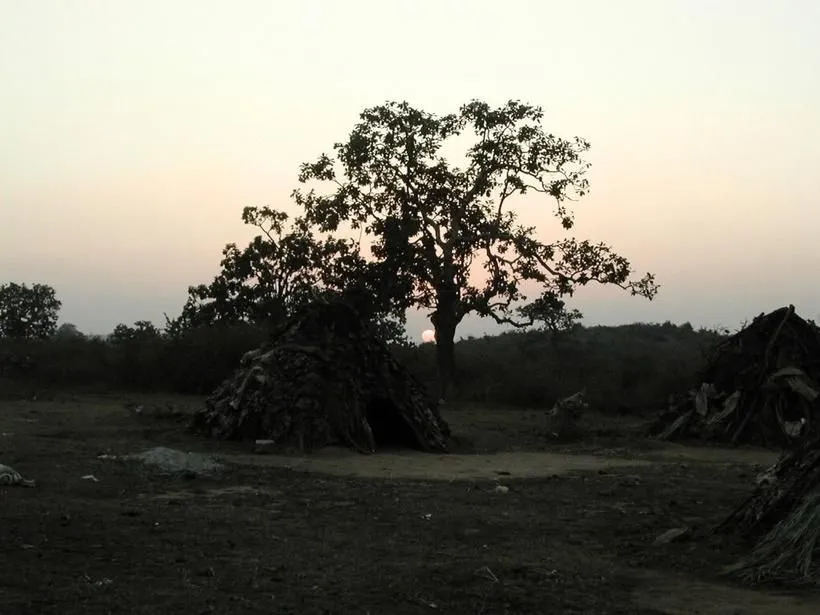
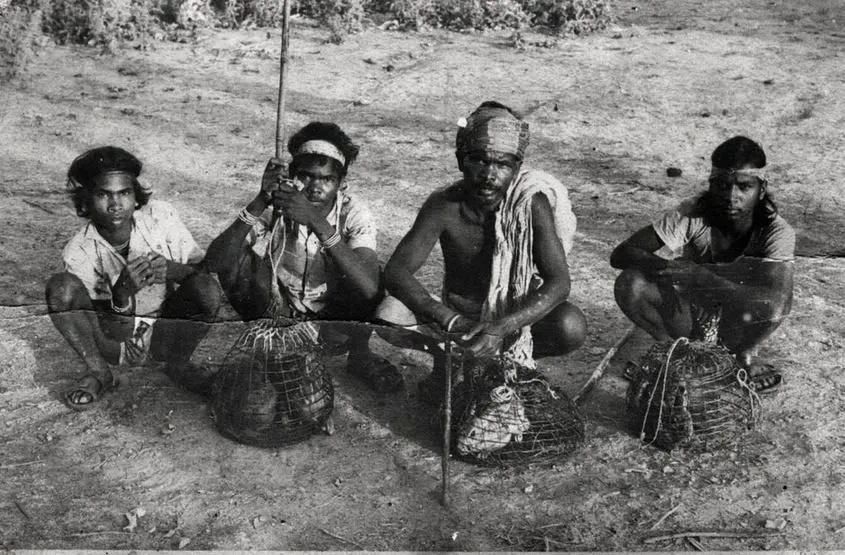
The Birhor are traditionally hunter-gatherers and among the most forest-dependent communities in eastern India. They have historically lived in small groups, moving between temporary settlements called Tanda, with each settlement generally consisting of around ten to twenty leaf huts known as Kumba. Their knowledge of the forest is incredibly specific. They hunt with hand-woven nets, track animals such as hares and barking deer, collect honey from the hills and gather other forest produce, which they trade with nearby agricultural communities. The book describes this relationship between the Birhor and settled farmers as a very old form of trade between agriculturists and nomads, potentially going back much further than written history.
There are references to the Birhor in nineteenth-century colonial records, including a survey of what was then referred to as the "Junglebury District." The Mughals apparently knew the region as Kukrah. What is much harder to find, however, is a record of the Birhor describing themselves and their own world. Their songs, beliefs and stories were largely part of an oral tradition, which meant that they could exist for generations without ever becoming part of a written archive. That is where Bulu Imam's work becomes particularly valuable. It is fascinating that he was spending time with people and recording what they themselves remembered and continued to sing.
The Songs Are About Almost Everything
Songs by the Community
I expected the songs in the collection to be heavily focused on hunting, and there are plenty of those. There are songs about going into the forest to cut the Chope creeper, which is used for making rope, hunting hares with a kulhai jhali net, catching jungle fowl with a khuji snare and smoking a porcupine out of its cave. One song practically takes you through an entire hunt, from building the smoke and driving the animal out to going after deer and wild boar. It has the practical quality of instructions that have been turned into something memorable enough to be carried from one generation to another.
What I didn't expect was how much of the collection would be about ordinary human relationships. There is a song about a daughter telling her parents that they are too old to take care of her and that she should therefore be married off. Another makes fun of a man trying to court somebody whose partner is still at home. There is also a verse about a young child and the question of marriage, essentially saying that the child is too young and that the family will only be able to think about marriage once they can earn enough. The setting is completely different from anything I have experienced, but that particular anxiety is surprisingly easy to recognise.
There is quite a bit of humour as well, particularly when animals enter the songs. The jackal seems to be a favourite target. He is mocked, punished, chained to a tree for stealing food and generally portrayed as the fool of the animal world. I actually liked these little details because they make the collection feel much less like a formal record of "tribal folklore" and more like a collection of things people genuinely found funny or useful enough to remember. There is gossip, teasing, work, family problems and jokes alongside the hunting songs.
The modern world also appears in places where you wouldn't necessarily expect it. One song describes an aeroplane arriving, and because it is so strange and unfamiliar, the people on board have no barber or washerman available when a child is born, so the baby's hair is cut with an axe. Another song describes a railway engine whose driver has grown old from constantly pressing the brakes because the engine simply refuses to stop. I found these especially interesting because they show the tradition responding to modernity in real time. The songs weren't preserved in some artificial version of an ancient past. In fact, new things entered the stories as the Birhor encountered them.
A Spirit World Tied to the Landscape
The Birhor Landscape
The part of the book that fascinated me most was the way Birhor beliefs are connected to actual geography. Their spiritual world isn't presented as something completely separate from the physical landscape around them. The hills, trees and rivers they know have names, associations and stories attached to them. Sinbonga is the sun god, understood as a universal mother on whom life depends, while Marang buru, or "Great Hill God", is associated with Lugu Hill on the edge of the Hazaribagh plateau and is worshipped before hunting. There is also a flat stone called Chandi, placed beneath a tree near each forest settlement, which represents the moon goddess and is believed to protect hunters.
The more I read about this, the more interesting the landscape around Hazaribagh started to feel. A hill isn't simply a hill if generations of people have a story explaining its name and its existence. The book records several such stories, but the most elaborate is the legend of Lugu Pahar. It involves the daughter of a hill god marrying the son of a neighbouring hill god, with the bride's father lending his new son-in-law a prized tiger with a golden collar. The tiger is supposedly meant to help with hunting, but the father has another intention: he wants it to kill villagers who have been cutting down his forest.
The woodcutters learn what is happening and kill the tiger. When the father-in-law discovers this, his grief and anger are said to have set the neighbouring hill on fire. According to the story, this is why the hill is still called Ranga, after the colour of the flames. The son-in-law and his father flee after their forest is destroyed, dropping bundles of cloth along the way. Those bundles are said to have turned into stone, creating a hillock known as Kapargadipahar, or "the hill of cloth bundles." I found myself thinking less about the supernatural part of the story and more about how much of it is really about family, land, loss and what happens when a forest is destroyed.
The Cave Where Two Brothers Are Still Crying
The Birhor Community
There is one much shorter story in the book that stayed with me more than any of the others. It is connected to the village of Isco, a place already known for its ancient rock art and for a nearby cave containing Middle Palaeolithic stone tools that have been dated to roughly 50,000 years ago. According to a local legend still told by Munda villagers, two Birhor brothers were once chasing a hare through the cave system when they found themselves trapped inside a narrow crack in the rock wall, right beside the ancient paintings.
Their family heard them crying and came looking for them, but there was no way to get the brothers out. Eventually, the trapped brothers told their family to leave them behind, continue hunting and forget about them. The book records that people still say you can sometimes hear the two brothers crying from inside that crack in the cave wall. There is something about the specificity of the story that really got to me. The fact that it is attached to a particular cave is very interesting. It is a particular crack and a particular place that people can still visit.
The Birhor themselves maintain that their ancestors were responsible for the ancient rock art in the area. Whether that claim can be conclusively established is another matter, but I found the belief fascinating regardless. If you live close to a landscape for generations, the past doesn't necessarily become something separate from your present. The people who lived there before you can remain part of the stories attached to the hills and caves around you. In this case, two brothers who supposedly disappeared into a cave thousands of years after the oldest paintings were made are still, according to the story, somewhere inside that landscape, still being remembered by the people who live around it.
Why Birhor Songs & Folklore Stayed With Me
The thing that ultimately made “Birhor Songs & Folklore” interesting to me wasn't any one particular story. It was the feeling of reading something that had been collected at a point when the world described in it was already changing. Many of the Tandas documented in the book have since been given government-built cement housing, and some of the leaf-hut settlements described in these accounts no longer exist in the same form. The songs therefore happen to preserve details of a way of life that has been gradually disappearing. Instead of just being descriptions of a culture that has remained unchanged they go much beyond.
That context changed the way I read the book. A song about cutting creepers, hunting animals or moving between forest settlements can seem like an interesting piece of folklore when read on its own, but knowing that some of the practices around those songs have changed makes the documentation feel much more important. Bulu Imam spent decades listening to people who had carried these stories through generations, and then made the effort to preserve them in a form that other people could actually encounter. I'm glad somebody thought it was worth doing, because otherwise a lot of these songs and stories would probably remain known only to the people who happened to inherit them.
I also think that's why this book makes an interesting companion to anyone who is curious about the art of Hazaribagh. It doesn't explain Sohrai or Khovar, and the Birhor have their own distinct history and traditions. But it gives you another way of looking at the same landscape, through people whose relationship with the forest has been expressed through songs, hunting practices, stories and the names given to hills. For me, that was the unexpected pleasure of reading it. I went looking for a book about a community I knew very little about and ended up thinking much more about the landscape itself, and about how many stories can exist in a place without ever becoming part of the version of that place that most of us get to see.