
Who is Venkat Raman Singh Shyam?
Meet Venkat Raman Singh Shyam: The Gond Artist Carrying His Family's Vision from Bhopal to the World
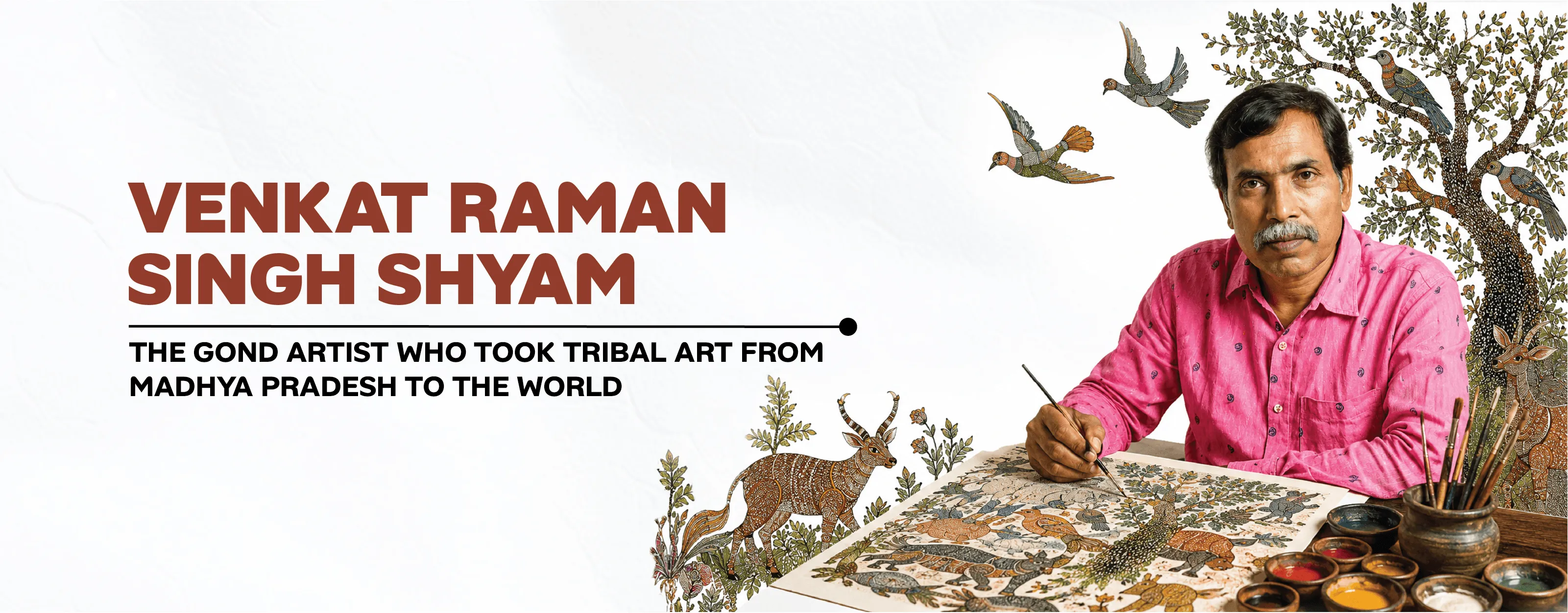
Venkat Raman Singh Shyam has taken Gond art to heights unheard of, and he is not the first person in his family to do so.

Rooftop
Author
In Bhopal, Madhya Pradesh, contemporary Gond artist Venkat Raman Singh Shyam carries a remarkable artistic legacy while continuing to build a distinct identity of his own. The city has played an important role in the development of contemporary Gond art, particularly through the work of his uncle, the celebrated artist Jangarh Singh Shyam, who helped bring Gond painting from its traditional settings to galleries, museums, and audiences around the world. Venkat grew up within this artistic tradition, beginning his training under Jangarh Singh Shyam at the age of 13.
Over the decades that followed, he developed his own approach to Gond art, drawing from its traditional visual language while experimenting with new themes, compositions, and mediums. His journey has taken him from learning a community-rooted art form as a young apprentice to becoming an accomplished artist whose work reflects both his heritage and his individual perspective.
Today, Venkat Raman Singh Shyam represents an important strand of contemporary Gond art. His work demonstrates how an artist can remain connected to a deeply rooted tradition while continuing to question, experiment, and evolve within it. His story is therefore as much about the changing possibilities of Gond art as it is about one artist's journey through its past, present, and future.
The Weight of the Name He Carries
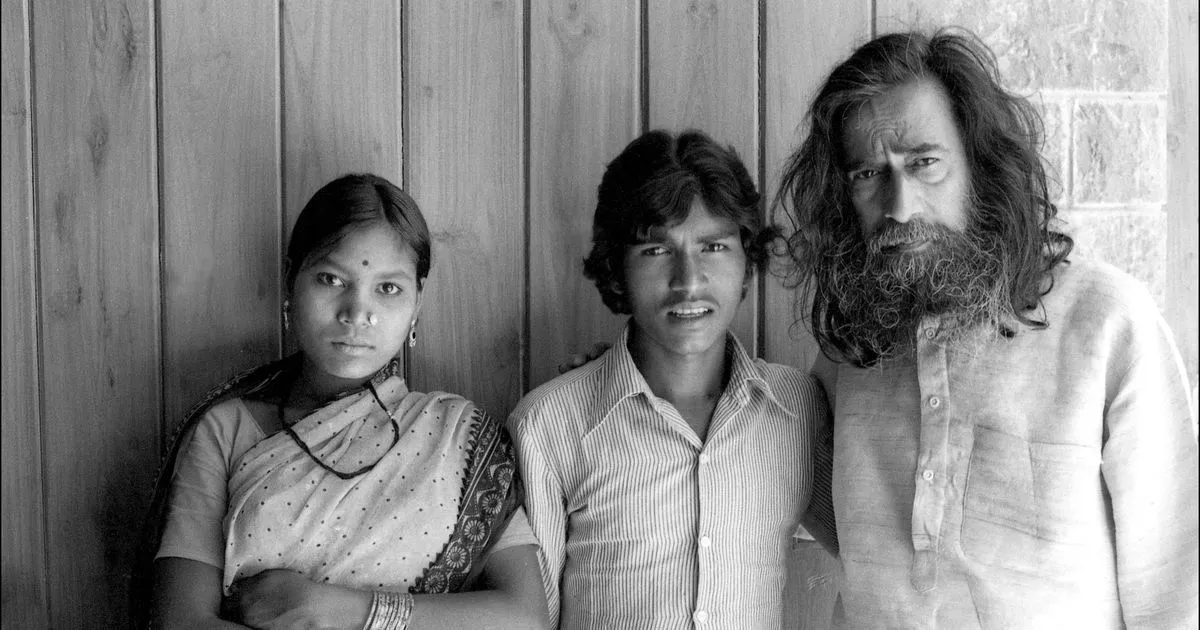
Venkat Raman Singh's Rich Family History Credits - scroll.in
Born in 1970 into a Pardhan Gond family in Sijhora, Madhya Pradesh, Venkat Raman Singh Shyam grew up surrounded by the oral traditions, music, and cultural practices of his community. His connection to Gond art began early, but it took a significant turn when his uncle, the celebrated artist Jangarh Singh Shyam, recognised his potential and encouraged him to move to Bhopal. Venkat eventually joined his uncle there, entering an apprenticeship that gave him an opportunity to learn the art form at close quarters.
During these formative years, Venkat learned more than the techniques of drawing and painting. He was introduced to the stories, symbols, patterns, and ways of seeing the natural world that form an important part of Gond artistic traditions. The experience gave him a strong foundation in the visual language of his community while also placing him close to one of the artists who had transformed the way Gond art was seen beyond its traditional context.
That connection came with its own expectations. Jangarh Singh Shyam had already established an influential artistic legacy, helping take Gond painting into the contemporary art world and inspiring a generation of artists. For Venkat, carrying that legacy meant learning from a celebrated figure while eventually finding his own direction. His journey would therefore involve both preserving the knowledge he inherited and developing an artistic language that could stand independently from his uncle's.
What Makes His Practice His Own?
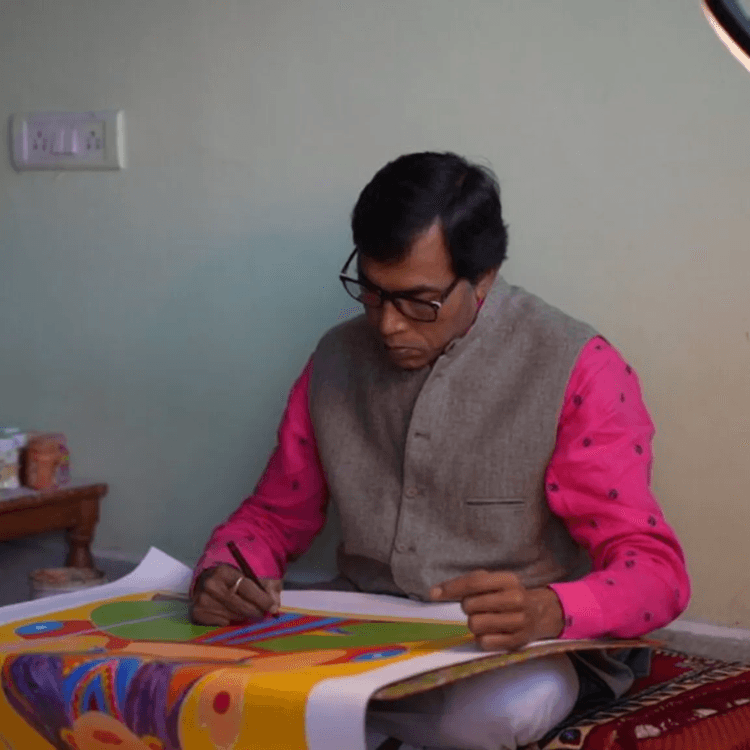
Gond Art Practice
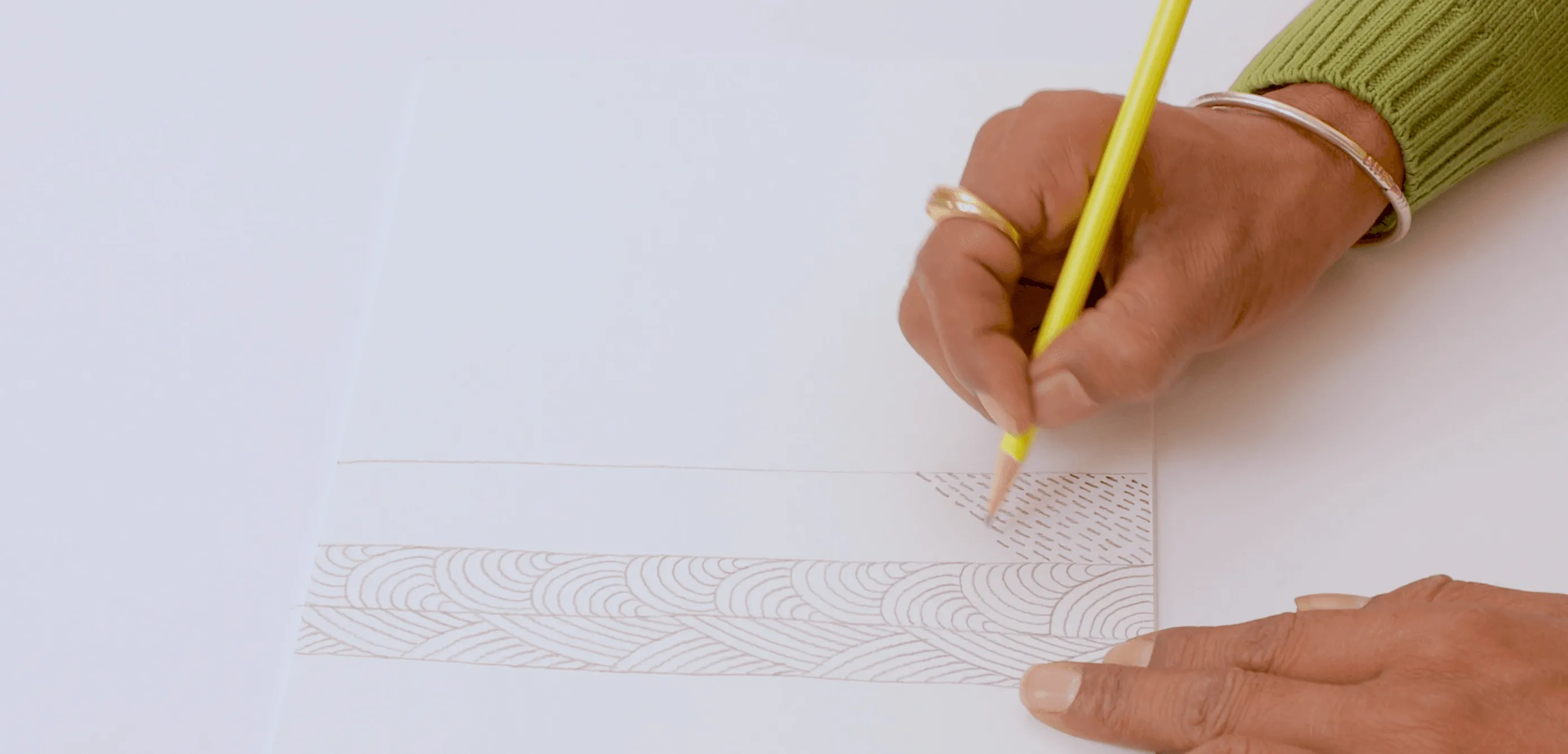
During his apprenticeship, Jangarh Singh Shyam gave Venkat an important piece of advice: do not copy me; find your own identity. That idea became central to Venkat’s development as an artist. His path was also shaped by the financial difficulties he faced in his early years. Before establishing himself as an artist, he worked a number of jobs in Bhopal and Delhi, including as a domestic helper, manual labourer, rickshaw puller, and signboard painter.
Some of these experiences eventually found their way into his paintings. His years as a signboard painter, for instance, exposed him to bright acrylic colours, bold forms, and graphic compositions. These elements became part of his visual vocabulary, giving his work a look that was different from the style associated with his uncle.
One of his distinctive approaches is the use of wavy lines, or lehers, as an infill pattern. These rhythmic lines, often set against black-and-white stripes, became an important feature of his work and offered a different way of creating texture within Gond compositions. His use of pattern also shows how he adapted the traditional visual language he had learned rather than simply reproducing it.
Venkat's choice of subjects further reflects this independence. While nature, animals, and community life remain important parts of Gond painting, his work has also responded to events and experiences beyond those traditional themes. He has explored urban life, personal experiences, and contemporary social and political events, while experimenting with materials such as charcoal and pencil alongside paint.
This approach can be seen in works such as “Aag (2010),” which responds to the volcanic ash cloud that disrupted air travel in Europe, and his 2009 works Attack, Signal, and Rescue, which deal with the 26/11 Mumbai attacks. For Venkat, Gond art became a way to respond to the world around him, while still drawing from the visual language he inherited.
The Images He Returns To
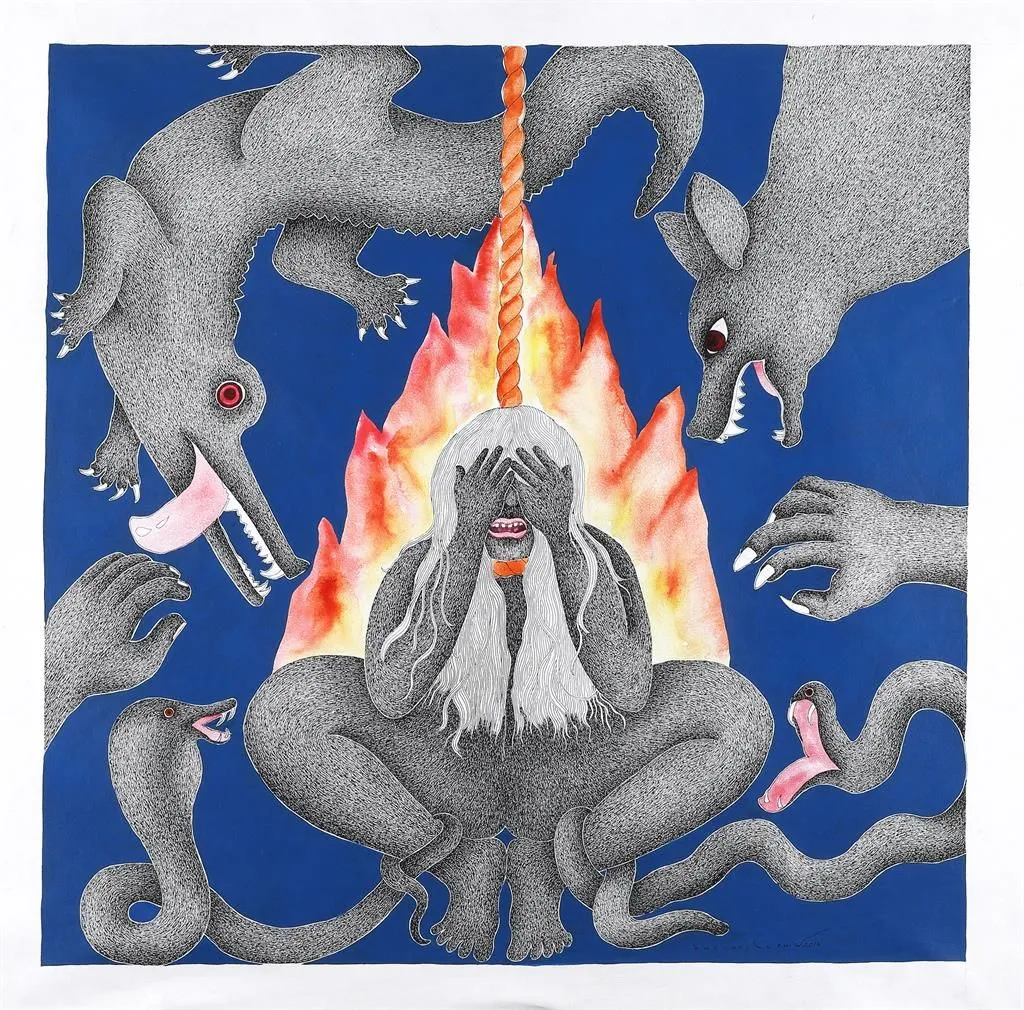
Aag 2010 Credits - Story LTD
Certain images appear repeatedly in Venkat’s work, drawn from both his lived experiences and the world around him. Trees, animals, people, vehicles, and buildings return in different forms, allowing him to explore familiar subjects through his own visual language.
Ecosystems of Coexistence
Trees, humans, and animals often share the same compositions, with no single element dominating the frame. They are given similar visual weight, reflecting the Gond understanding of nature as a living system in which humans exist alongside other forms of life.
The Rickshaw as Autobiography
The rickshaw carries a more personal meaning for Venkat. He worked as a rickshaw puller during his early years in Delhi, and the experience later became a recurring image in his work. In his hand-drawn graphic autobiography, Finding My Way, co-authored with S. Anand, Venkat portrays himself as a blindfolded rickshaw puller making his way through the streets of Delhi. The image draws directly from his own past while also reflecting his uncertainty and search for direction as a young artist.
The City through Forest Eyes
Venkat also brings the urban world into a visual language rooted in the forest. Crowded settlements, city structures, and modern architecture appear alongside the patterns and forms associated with Gond painting. His depiction of Antoni Gaudí’s Sagrada Família in Barcelona is one example of this approach, placing a distinctly modern architectural landmark within a visual vocabulary shaped by Gond traditions.
Recognition Beyond India
Gond Artists Global Recognition Credits - Touch the Gond
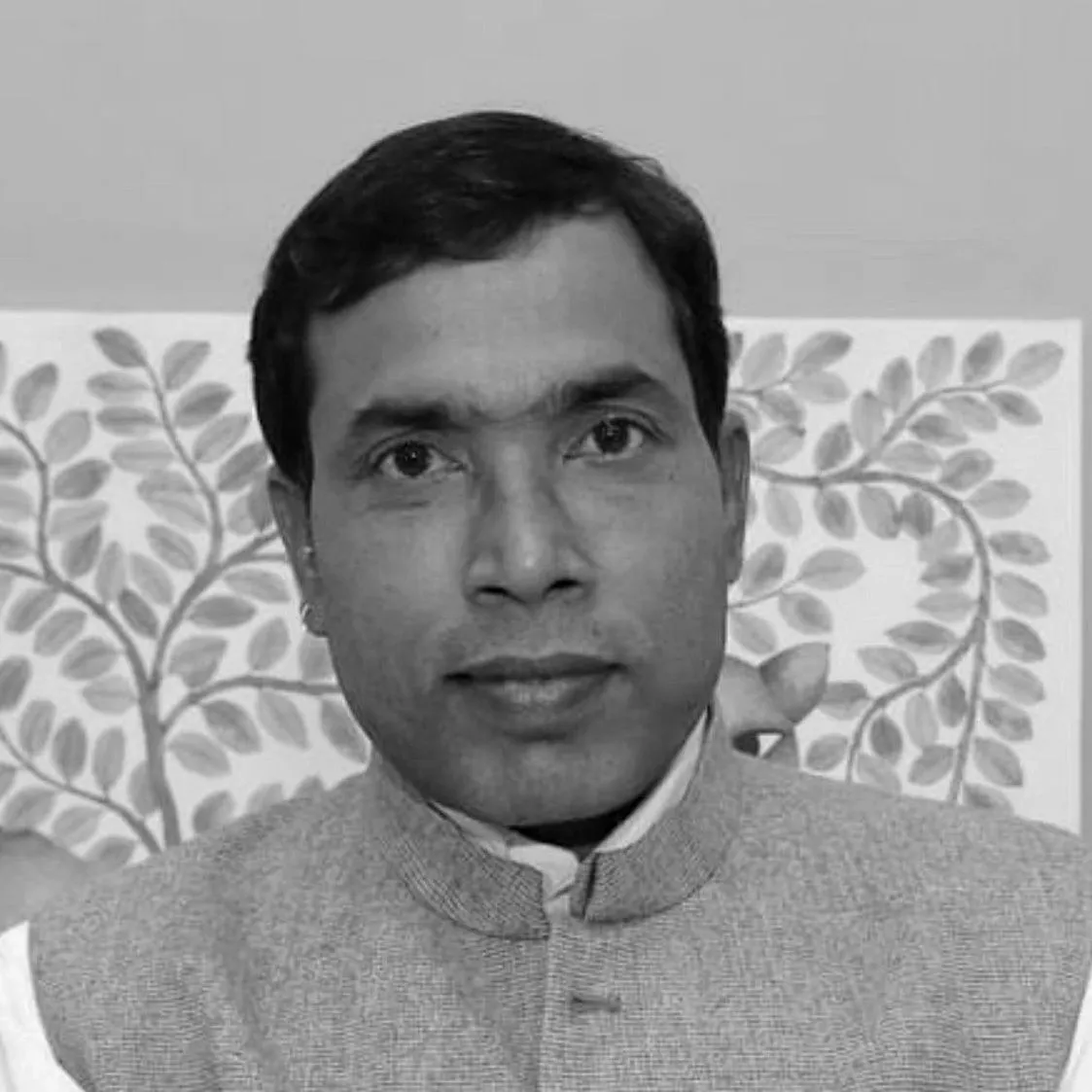
Venkat’s work has found an audience well beyond Madhya Pradesh, with his paintings entering major collections and appearing in exhibitions and projects outside India. His career reflects the growing international interest in contemporary Gond art, while also showing how distinctly personal his work has remained.
Global Collections
His original works are part of the permanent collections of institutions including the Los Angeles County Museum of Art (LACMA) in the United States, the National Gallery of Canada in Ottawa, and the Chhatrapati Shivaji Maharaj Vastu Sangrahalaya (CSMVS) in Mumbai.
International Exhibitions & Residencies
Venkat has participated in international exhibitions and projects, including the Asia Pacific Triennial of Contemporary Art at the Queensland Art Gallery in Australia. His work has also attracted attention from international writers and critics. Art critic and writer John Berger described his paintings as a “magic carpet” that could transport the viewer into another reality.
Award-Winning Career
In 2002, Venkat received the Rajya Hasta Shilpa Puraskar from the Government of Madhya Pradesh. He later received the Ojas Art Award in 2015, adding to the recognition his work has received over the course of his career.
What He Wants the Work to Do
Venkat Raman Singh Shyam doesn't want to limit himself
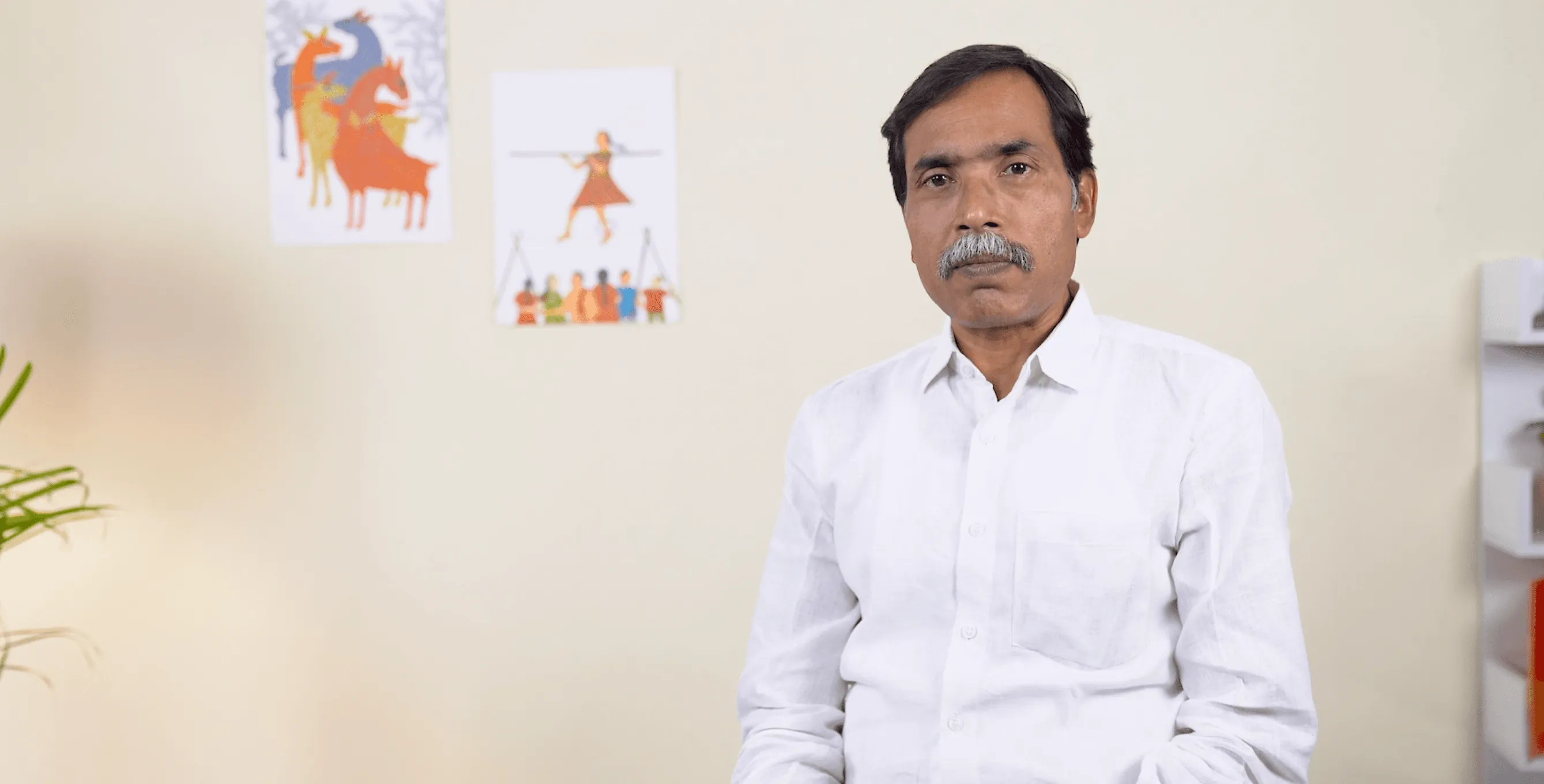
For Venkat, Gond painting belongs to the present as much as it belongs to the past. He does not treat the tradition as something that needs to be preserved unchanged. Instead, he uses its visual language to respond to the issues and experiences shaping the world around him. Environmental destruction, the exploitation of tribal communities and their lands, and the fading of indigenous stories all find a place in his work.
His paintings draw from the Gond understanding of nature as a living, interconnected world, while bringing that perspective into conversations about contemporary life. This is also why Venkat’s work continues to move beyond familiar depictions of forests, animals, and folklore. He uses Gond patterns and imagery to talk about the present, giving the tradition room to question, respond, and evolve. In his hands, Gond painting remains a living form of expression, capable of carrying the stories of its past while speaking directly to the concerns of today.
Venkat Raman Singh Shyam’s story shows how a traditional art form can keep changing without losing its roots. From learning under Jangarh Singh Shyam to developing his own patterns, subjects, and ways of working, he has spent more than four decades making Gond art his own. For anyone who wants to explore the form beyond simply viewing it, learning from the artist himself offers a different way to understand the details behind the work.
Through Rooftop’s Gond Art Course with Venkat Raman Singh Shyam, learners can explore Gond painting through 6 hours of lessons across 4 chapters and 28 lessons. The course covers the history and origins of Gond art, its patterns, brushes and colours, and the creative process behind a painting, before moving into beginner, intermediate, and advanced lessons. It gives you a chance to learn the techniques and visual principles that have shaped Venkat’s own practice, and then use them to develop your own interpretation of this living art tradition.