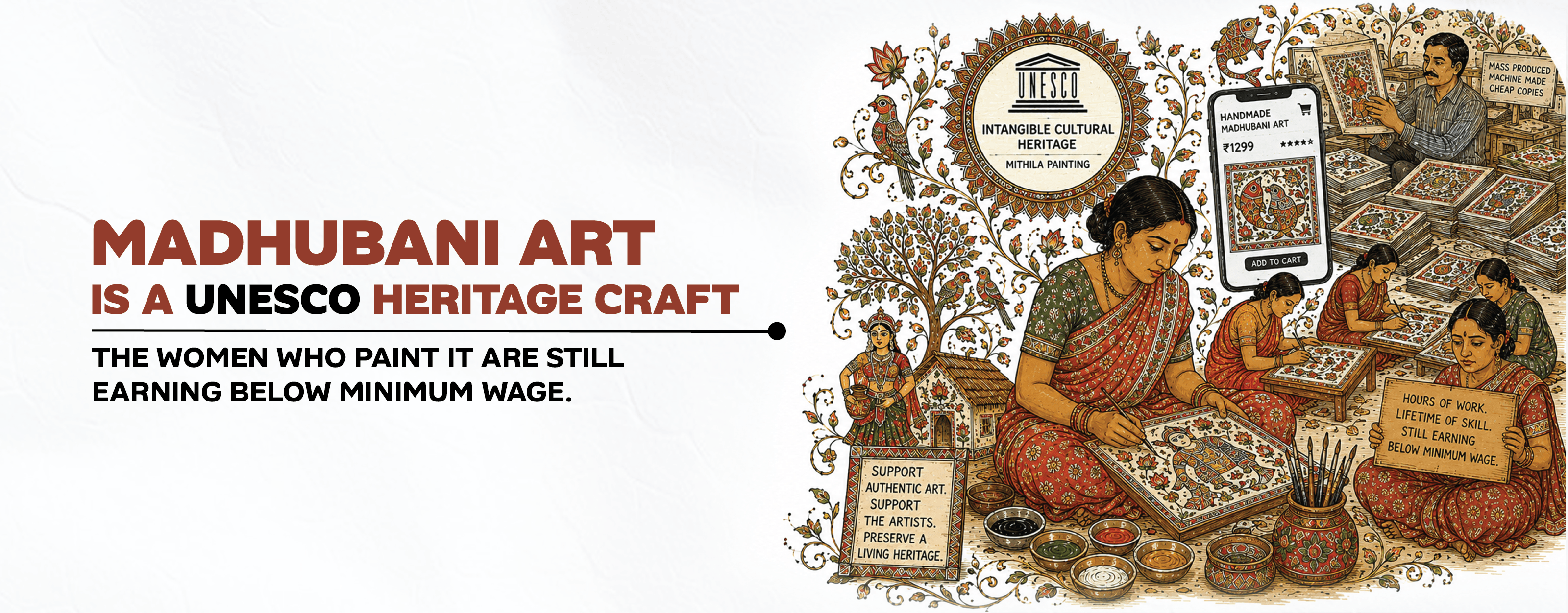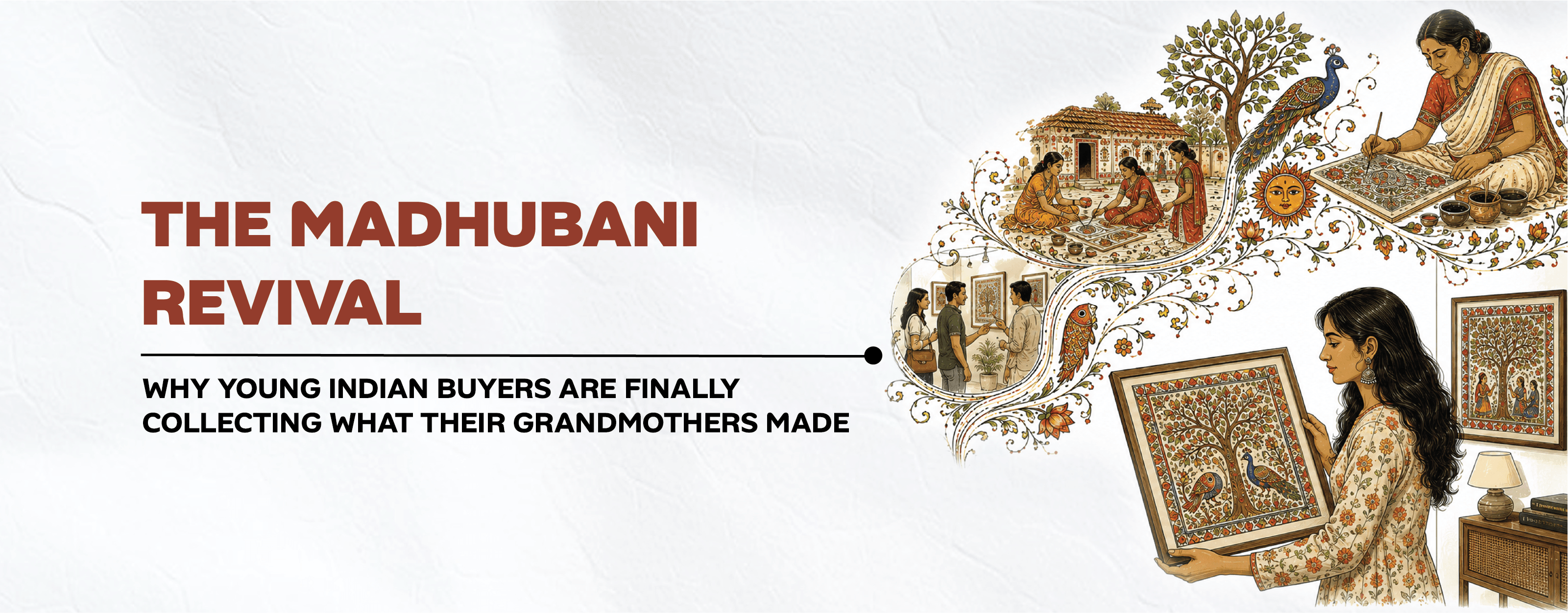

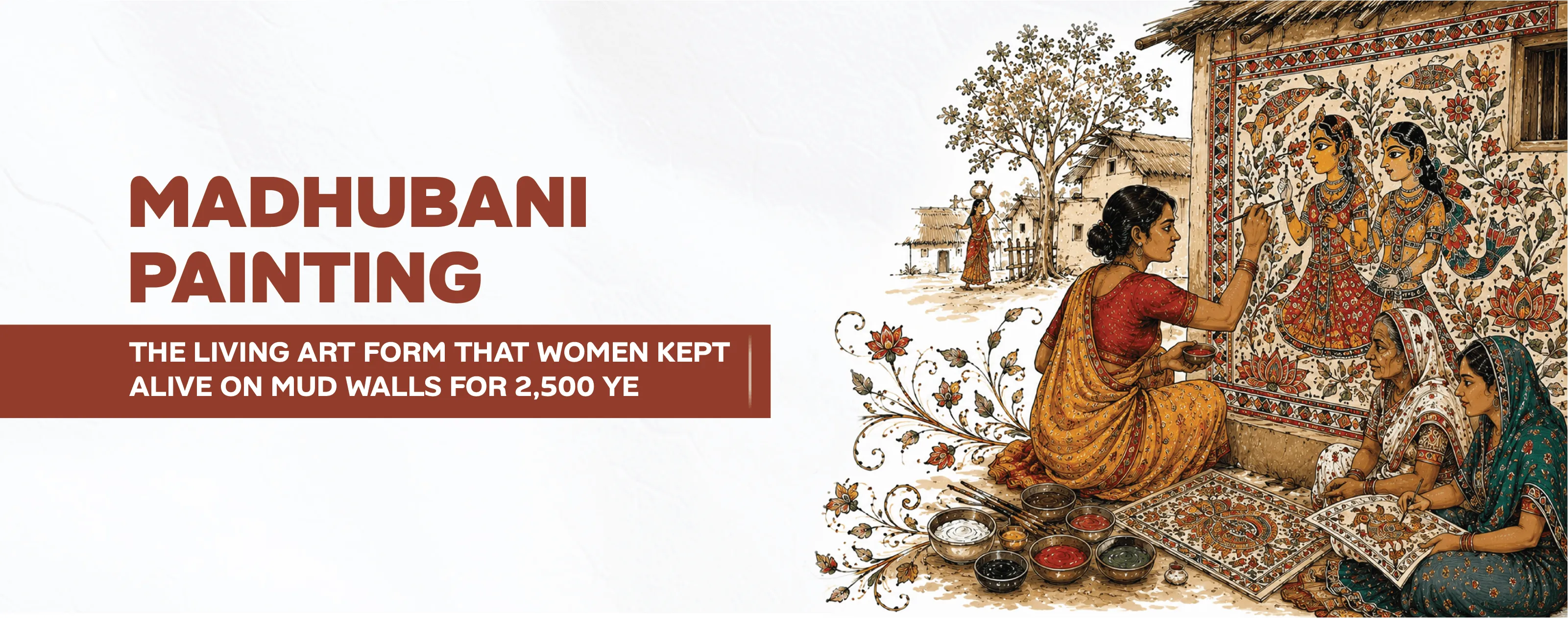

Long before Madhubani paintings found their way into galleries, museums, and art collections, they had a place inside the homes of Mithila. For generations, women across northern Bihar and parts of southern Nepal painted the walls of their homes with scenes from mythology, nature, and everyday life. These paintings were closely tied to weddings, festivals, and religious ceremonies. They were part of how families celebrated important occasions and expressed their beliefs, with techniques and motifs passed down from mothers to daughters.
For a long time, this tradition remained largely within the domestic world of Mithila. That began to change on January 15, 1934, when a devastating earthquake struck Bihar. During relief work in the affected villages, British colonial officer William G. Archer came across the painted walls of damaged homes. With sections of the mud walls broken open, the paintings that had once remained inside private homes were suddenly visible to the outside world.
Archer recognised the artistic significance of what he had found and began documenting the paintings. An unexpected discovery had brought wider attention to a tradition that women in Mithila had practised for generations. Madhubani painting would eventually travel far beyond the walls of those homes, gaining recognition across India and around the world.
The Paintings That Were Never Meant to Last
The Paintings That Were Never Meant to Last
The paintings William G. Archer discovered on the damaged walls of Mithila homes were part of a much older domestic tradition. Long before Madhubani appeared on paper, silk, or canvas, women painted directly on the walls and floors of their homes. These works were known as Bhitti-Chitra (wall paintings) and Aripan (floor designs). They were created for particular rituals and family celebrations, with each occasion bringing its own patterns, figures, and symbolism.
Much of what went into making these paintings came from the women's immediate surroundings. The process was simple in terms of materials, but it demanded considerable care and skill.
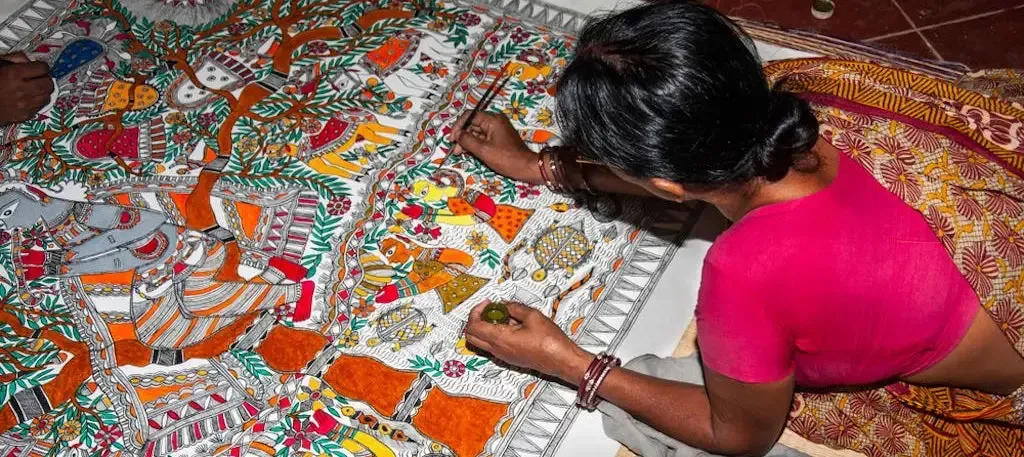
- Colours From Nature: Women prepared pigments using soil, leaves, soot, and mineral stones, binding them with natural tree gum. They applied these colours using bamboo twigs wrapped in cotton wool or tipped with human hair.
- Paintings for Important Occasions: The walls and courtyards were decorated for weddings, births, and sacred thread ceremonies (Upanayana). Festivals such as Chhath Puja, Durga Puja, and Devothan also called for particular paintings and floor designs.
- Art That Could Disappear: These paintings were never expected to last forever. Once a ceremony was over, or the monsoon arrived, rain and moisture could wash away the designs. Sometimes the walls were simply replastered with fresh clay and cow dung, ready to be painted again for the next occasion.
There was no expectation that these paintings would eventually find a place in a gallery or be preserved as family heirlooms. Their significance lay in the occasion for which they were made and the women who came together to create them. Painting was an expression of devotion, a way of marking important moments in family life, and a tradition passed from one generation of women to the next. This also explains why the discovery of Madhubani paintings on those damaged walls was so significant. What Archer encountered was not an art collection waiting to be found, but a living tradition that had existed within the everyday lives of Mithila's women for generations.
How Madhubani Found Its Way Beyond the Walls
How Madhubani Found Its Way Beyond the Walls
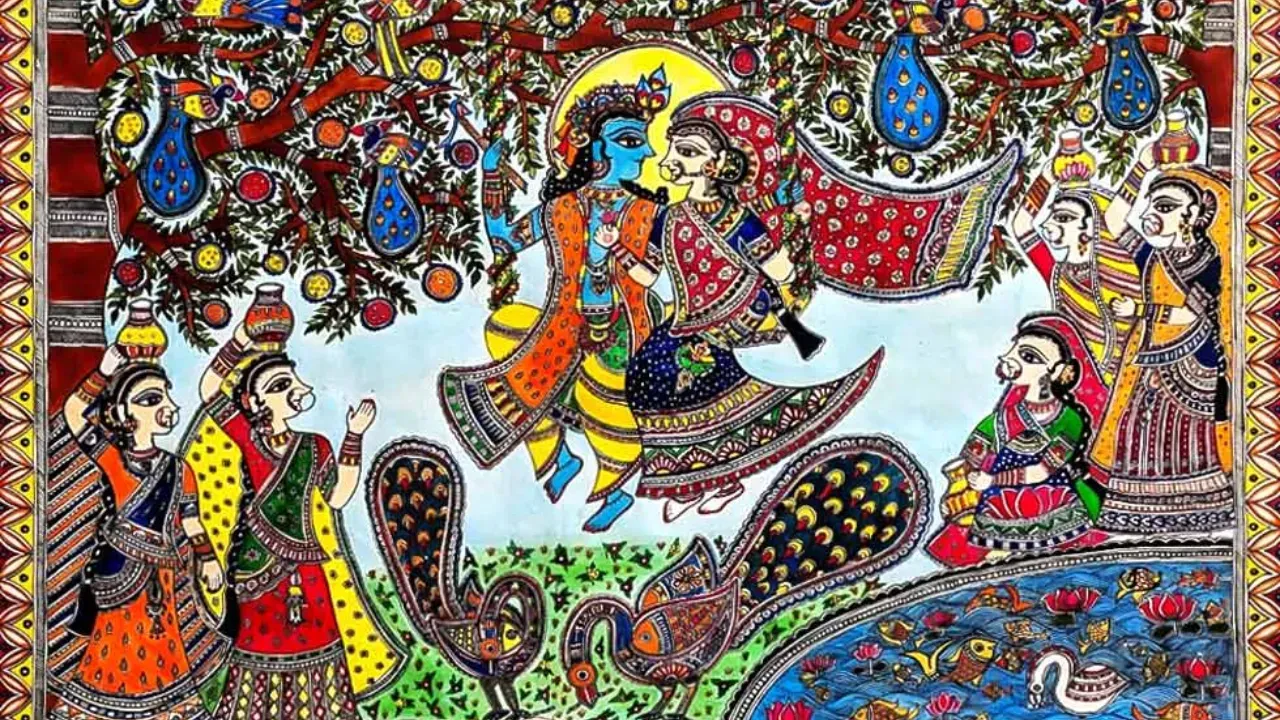
When William G. Archer visited the villages of Madhubani after the 1934 earthquake, he found himself looking at something far more remarkable than ordinary household decoration. The exposed walls carried intricate paintings made by local women, with bold figures, striking patterns, and a visual language that was unlike anything he had encountered in the region. Archer, who had a keen interest in art, was particularly struck by their use of colour, lines, and composition. He even drew comparisons with the work of modern European artists such as Paul Klee, Pablo Picasso, and Joan Miró.
Archer began photographing the paintings and speaking to the women who created them. He wanted to understand the techniques and visual traditions behind these compositions. His research eventually appeared in 1949 in Marg, an influential Indian art journal, under the title Maithil Painting. For the first time, Madhubani art was receiving serious attention from art historians and audiences beyond Mithila. But the next major change came under very different circumstances.
The 1960s and the Move to Paper
Between 1966 and 1968, a severe drought affected Bihar, leaving many rural families struggling to make ends meet. During this period, Pupul Jayakar, then chairperson of the All India Handicrafts Board, and artist Bhaskar Kulkarni visited Madhubani district. They saw an opportunity to help local women earn an income through a skill they had practised at home for generations. The suggestion was simple but transformative. What if the paintings traditionally made on walls could also be created on handmade paper and sold?
Women artists, including Ganga Devi, Baua Devi, Sita Devi, and Mahasundari Devi, began transferring their familiar motifs and compositions onto paper. The subjects remained rooted in their cultural and religious traditions, but the medium allowed the paintings to travel beyond the homes and villages where they had originated.
For the women of Mithila, this opened up an entirely new possibility. A practice once associated primarily with domestic rituals could now become a source of income and independent recognition. Their paintings began reaching exhibitions, collectors, and audiences around the world. The transition to paper did not erase Madhubani's connection to its roots. Instead, it gave the women who had preserved the tradition a way to share their work with a much wider audience.
Five Madhubani Styles That Tell Different Stories
Five Madhubani Styles That Tell Different Stories
As Madhubani paintings began reaching audiences beyond Mithila, people often encountered them under one broad name. But spend some time looking at the artwork, and the differences become apparent. Some paintings are filled with bold colours and mythological figures, while others rely on delicate lines, geometric patterns, or symbols drawn from local folk traditions. These differences come from five distinct styles, each shaped by the communities and cultural practices in which it developed.
- Bharni takes its name from bharna, meaning to fill. Traditionally associated with Brahmin and Kayastha women, this style is recognised by its vivid blocks of colour, often framed by thick double outlines. Gods and goddesses such as Durga, Kali, and Saraswati appear alongside scenes from the Ramayana and Krishna Leela. The figures are richly coloured, giving the compositions an immediate visual impact.
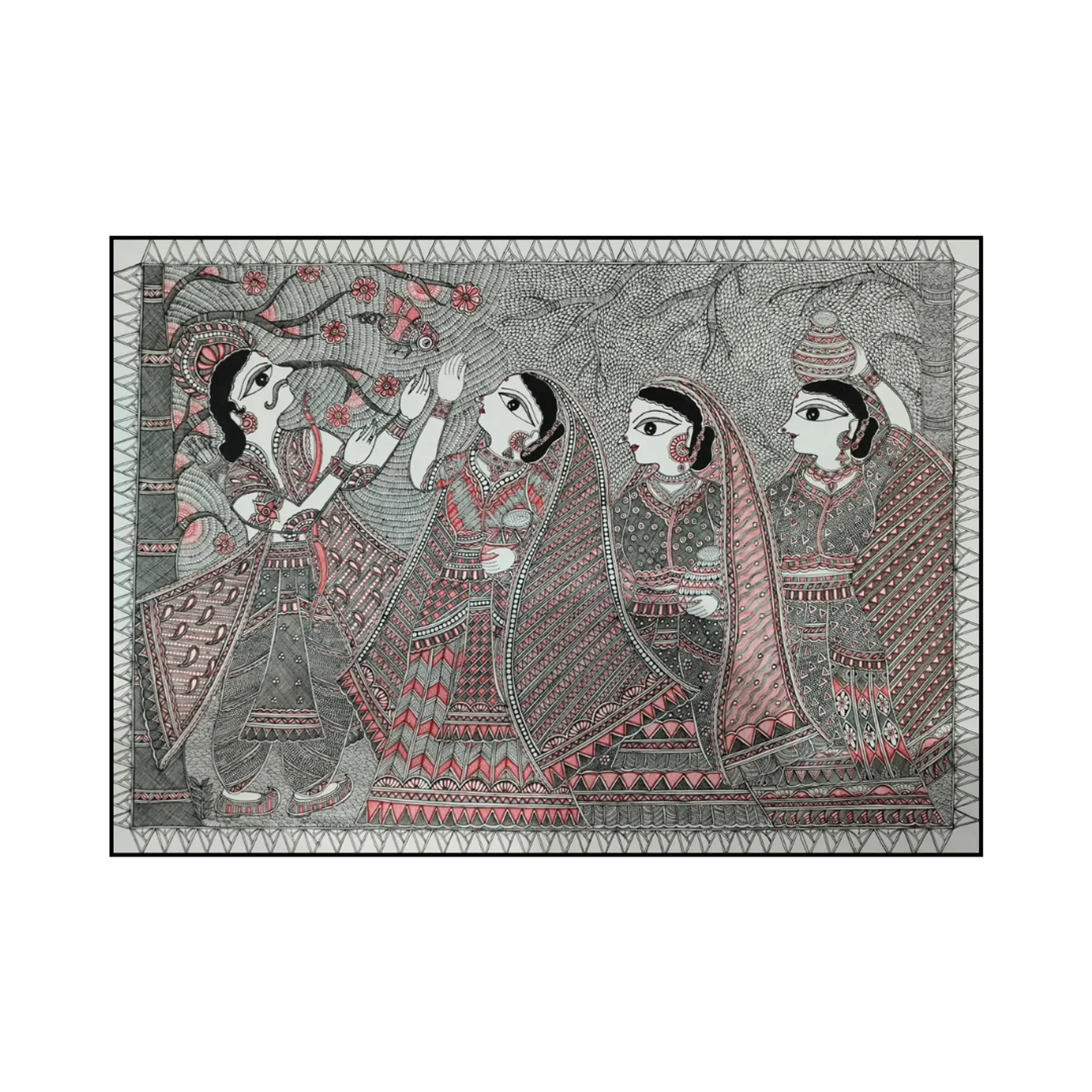
- Kachni places greater emphasis on line work. Traditionally practised by Kayastha families, it uses fine black and red lines to build up the composition. Instead of filling large areas with colour, artists rely on hatching, cross-hatching, and intricate patterns to give figures and backgrounds their detail. Mythological portraits, trees of life, and elaborate borders are common subjects.
- Tantrik draws from the spiritual traditions of Tantra. Its compositions often feature mandalas, yantras, sacred geometry, and representations of divine energy. The Mahavidyas, including goddesses such as Kali and Bhairavi, are among its recurring subjects. These paintings are closely connected to meditation, worship, and spiritual symbolism.
- Godna carries the visual language of traditional tattooing onto paper. Developed by Dalit women, particularly from communities such as the Dusadh, Paswan, and Chamar, the style uses repeating patterns, concentric circles, and motifs drawn from plants and animals. Artists such as Jamuna Devi and Chano Devi helped bring this tradition into wider recognition. Fine bamboo pens and dark pigments give Godna paintings their distinctive patterned appearance.
- Gobar and Qalam are associated with the work of Paswan community artists and their folk storytelling traditions. In this style, paper is sometimes coated with a cow-dung wash, giving it a warm, earthy surface. Figures are drawn with bold outlines and muted natural colours. Stories of regional heroes, particularly Raja Salhesh, feature prominently, bringing local legends and cultural memory into the paintings.
These styles reveal how much Madhubani holds beyond its recognisable colours and patterns. They also reflect the different communities that shaped the tradition. To understand why these distinctions survived across generations, it is important to look at the women who practised the art and how they passed their knowledge on.
The Women Who Kept Madhubani Alive
For generations, Madhubani was taught within the home rather than in formal art schools or workshops. Mothers, grandmothers, and aunts passed their knowledge to younger women through a tradition known as Mata-Beti Parampara, or the mother-to-daughter tradition. A girl grew up watching the women around her prepare colours, decorate walls, and paint for important family occasions. Over time, she learnt the skills herself.
This was a form of learning built through observation and practice. Younger women were taught how to:
- Identify plants and minerals that could be used to prepare natural colours and pigments.
- Make bamboo pens (kalam) and prepare the surfaces on which the paintings would be created.
- Draw intricate patterns, construct geometric compositions, and understand the symbolism behind motifs such as those found in Kohbar paintings, traditionally associated with marriage.
But this exchange involved more than learning how to paint. The women of Mithila were also preserving stories, beliefs, and ways of understanding the world. Their paintings gave them a space to express emotions, celebrate relationships, and engage with religious and social traditions. Motifs and compositions could carry meanings that were understood and discussed within the community.
In a society where women often had limited opportunities for public expression, the walls and courtyards of their homes became important creative spaces. They decided what to paint, how to decorate their homes for rituals, and which stories and symbols would find a place in those compositions. Their artistic knowledge gave them a distinct role in shaping the cultural life of their families and communities. The move to paper in the 1960s changed where Madhubani could be seen and who could earn from it. But the knowledge behind the paintings had been built through generations of women teaching one another. That inheritance remains central to understanding the art form today.
Taking the Story of Madhubani Forward
Madhubani painting has travelled a long way from the mud walls of Mithila. What began as a tradition practised within homes gradually found its way onto handmade paper, into galleries, and before audiences across the world. Yet, its journey has always depended on the women who carried its knowledge forward, taught its techniques to the next generation, and found new ways to keep the art alive.
Today, supporting Madhubani means recognising the people behind the paintings and the years of knowledge that go into creating them. Platforms like Rooftop help bring these artists and their work closer to wider audiences through original Madhubani artworks and courses led by practising artists. They also create opportunities for people to learn the art form directly from those who have grown up with its traditions.
The story of Madhubani is still unfolding. As more people discover the art, learn its techniques, and bring original works into their homes, they can help ensure that the tradition continues to thrive in the hands of the artists who know it best.