

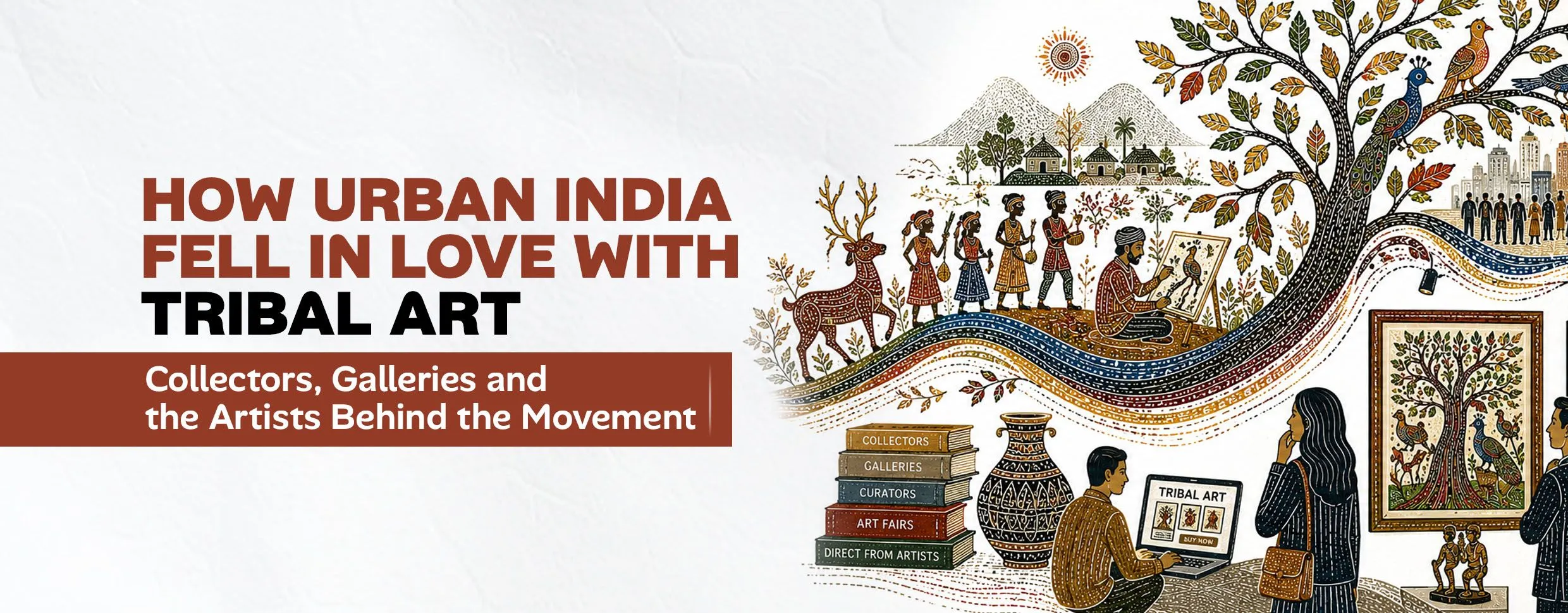
How Urban India Fell in Love With Tribal Art: Collectors, Galleries and the Artists Behind the Movement
Urban India's growing appetite for tribal art is a belated recognition of a sophistication mainstream institutions missed for decades. A deep look at the collectors, gallerists, and artists changing who gets to define Indian art.

Rooftop
Author
It happens often now in living rooms across Mumbai, Bengaluru, Delhi, Hyderabad, and Pune. A guest steps into the room, mid-conversation, and is stopped by something on the wall. The dense patterning of dotted lines and rhythmic geometric units does not look like anything they have seen at the usual gallery openings, and yet the work clearly takes itself seriously as art. They lean in. They study it. And then the question arrives: where did this come from, and who made it?
Ten years ago, that question would have been rare. Today, it is one of the most common openings in any conversation about a tribal painting in a private home or an art-conscious cafe. The shift is not subtle, and it is not a passing design trend. It is a belated recognition that India’s tribal art traditions carry a sophistication, depth, and worldview that mainstream art institutions spent decades failing to see, and that the collectors, gallerists, and artists driving this recognition are changing who gets to define Indian art.
How Urban Awareness of Tribal Art Began to Shift
For most of the twentieth century, the gap between urban India and tribal artistic traditions was almost total. Tribal art existed in textbooks under the category of folk craft. It appeared occasionally in government emporiums alongside handlooms. It was rarely treated as fine art. The shift began through a small number of institutions and individuals that, more or less independently, decided to take this work seriously.
The early bridges
- Government emporiums and state crafts boards gave urban audiences their first sustained exposure to tribal visual traditions, often presented in a craft frame rather than a fine art one.
- Cultural festivals like Surajkund Mela brought tribal artists into urban spaces and gave city audiences an introduction to the makers behind the work.
- Craft fairs and Dastkar bazaars established a small but devoted urban audience that began to look for individual makers rather than generic decorative items.
- Institutions like the Crafts Museum in Delhi and the Adivasi Academy in Tejgadh began documenting these traditions in ways that lent them legitimacy in the wider art world.
The single most consequential intervention came with the founding of Bharat Bhavan in Bhopal in 1982 and the curatorial leadership of J. Swaminathan. Bharat Bhavan rejected the divide between tribal and contemporary art entirely. It exhibited tribal painters alongside trained urban modernists, bought their work for its permanent collection, and took the position that tribal art was art, full stop, deserving the same critical attention as anything else in the Indian contemporary scene.
This decision changed everything that followed. Jangarh Singh Shyam, the Pardhan Gond artist whose discovery at Bharat Bhavan led to an entirely new contemporary tradition, became the first tribal artist to develop a recognisable individual signature in the urban art world. Jivya Soma Mashe did the same for Warli. Bhuri Bai and Lado Bai, both discovered at Bharat Bhavan, did the same for Bhil. By the 2010s, urban demand for these artists had grown into a recognisable market.
The Gallerists and Curators Who Built the Bridge
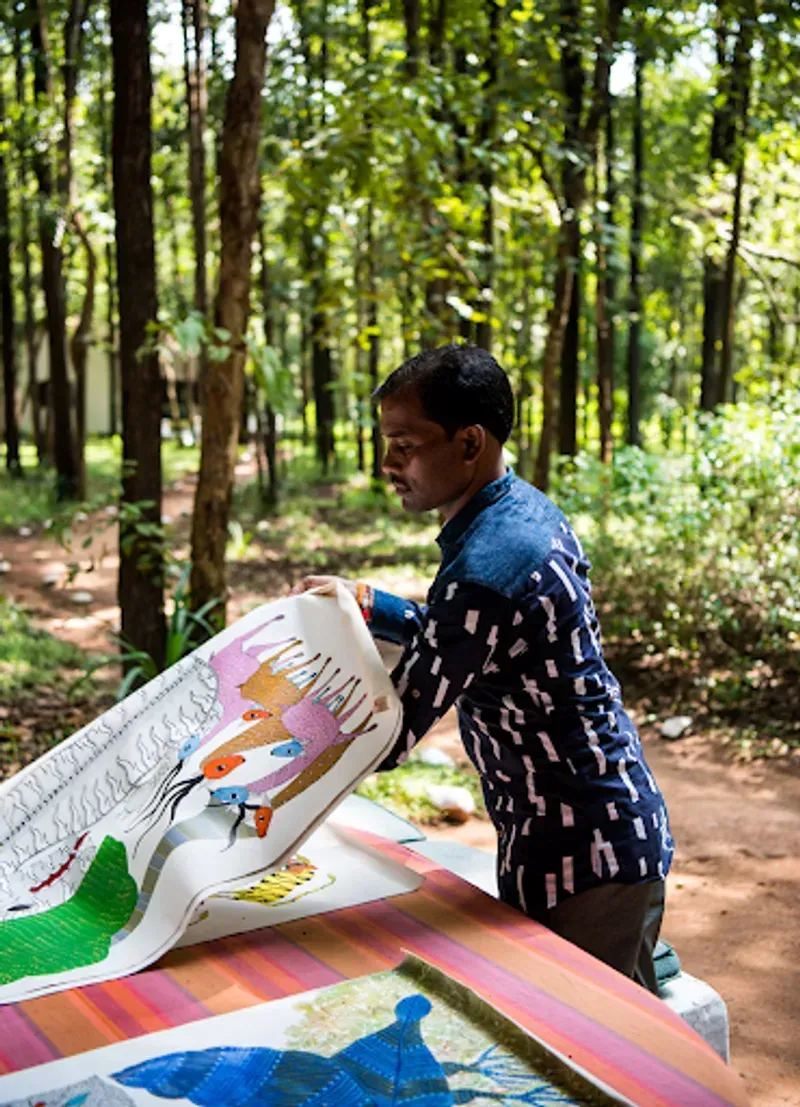
None of this would have translated into sustained urban awareness without a small but committed group of gallerists, curators, and independent advocates who insisted on showing tribal work in a fine art context rather than a craft or ethnographic one. A Gond painting hung at the same height and lighting as the contemporary urban work in the next room sends a very different message than the same painting displayed inside a glass case with an anthropological caption.
The curatorial debates that shaped the movement
- How to frame the work without flattening it: early gallery shows had to decide whether to lean into the cultural context or to let the visual work speak for itself, and the best curators learned to do both.
- How to price the work fairly: tribal art had historically been undervalued, and gallerists who wanted to support the artists had to set prices that respected the labour and skill involved.
- How to share authorship: for traditions where work was historically communal, presenting an individual artist as the named author required negotiating questions of authorship that the older tradition did not always demand.
- How to maintain provenance: as the market grew, the question of which work was actually made by which artist became increasingly important, and serious galleries began issuing certificates of authenticity tied to specific named artists.
The galleries leading this work, often in Mumbai, Delhi, and Bengaluru, were not always commercial galleries in the traditional sense. Some were dedicated to specific art forms. What they shared was a commitment to presenting the work in a way that did justice to both its visual quality and its cultural depth.
What Urban Collectors Are Actually Looking For
Talk to enough collectors of tribal art and a pattern emerges. The motivations driving people toward this work are more varied and more interesting than the cliches of cultural appreciation suggest.
The four main collector profiles
- The aesthetic collector: drawn primarily by the visual sophistication of the work. They want art that holds its own on a wall and rewards close looking.
- The cultural collector: interested in the story behind the work, the community it comes from, and the worldview it expresses. They want to know who painted it and what tradition it belongs to.
- The investment collector: tracking how the market for major tribal artists has appreciated over the past two decades. Auction results for Jangarh Singh Shyam, Jivya Soma Mashe, and Bhuri Bai have begun to validate this view.
- The ethical collector: motivated by a desire to support living artists and ensure purchases translate into income for the maker rather than for middlemen.
Most serious collectors carry some combination of all four. What distinguishes informed collectors from casual buyers is depth of engagement with individual artists. A casual buyer might pick a Gond painting because they like the look of dots and patterned animals. An informed collector will know that Venkat Singh Shyam is the nephew and student of Jangarh Singh Shyam, that he carries forward the Jangarh Kalam, and that his work continues a lineage of Pardhan Gond practice you can trace through the work on Rooftop’s Gond shelf.
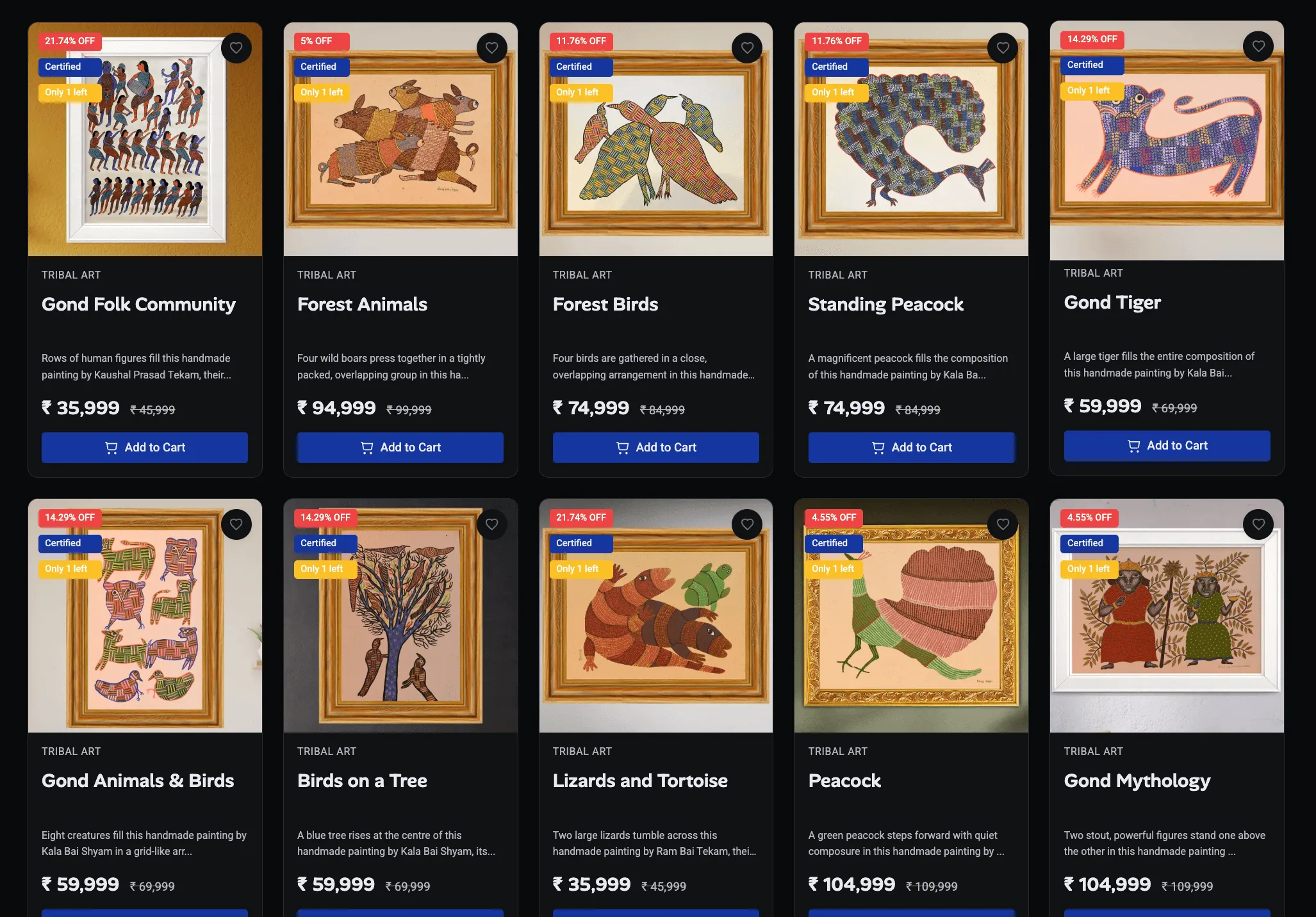
The maturing of the market is most visible in this shift, from buying a style to following an artist.
The Artists Who Crossed Over and What It Cost and Gained Them
For the artists who became names urban collectors began to seek out, the crossover changed everything. Lives, incomes, working conditions, and creative choices all shifted in response to the new visibility. The shift was mostly positive, but it was never simple.
What the crossover gave the artists
- Significantly higher incomes than any traditional patron system had ever provided, allowing many artists to build homes, educate their children, and invest in studios.
- Individual recognition and authorship, replacing the older anonymity that had defined community art for centuries.
- International exhibition opportunities at galleries and biennales in Paris, London, Tokyo, and New York.
- Awards including the Padma Shri, the Shilp Guru, and the National Award, which gave the tradition itself a new public status.
- Mentorship platforms through which established artists could train the next generation.
What it has cost or complicated
- Pressure to produce work that matches market demand, which sometimes pulls artists toward decorative subjects and away from the ritual themes that gave the work its original depth.
- Cultural appropriation of their visual language by designers, brands, and decor companies, often without credit, compensation, or accuracy.
- Internal community debates about what kind of adaptation preserves the tradition and what kind compromises it.
- Imbalances between the small number of artists who achieve major recognition and the many others working in the same traditions who remain economically vulnerable.
The artists carrying this conversation forward include Padma Shri Bhuri Bai, whose practice you can read about and buy from on Rooftop and who has collaborated with the platform on offline workshops at the Indian Art, Architecture and Design Biennale. Others include Bhajju Shyam, Durgabai Vyam, Venkat Singh Shyam, and Padma Shri Jodhaiya Bai Baiga, who began painting at the age of 69 and now exhibits internationally.
Many of these crossover stories share a structural detail. The artist found a wider audience only because a platform, curator, or institution chose to work with them directly. Rooftop’s provider programme plays a similar role for tribal and folk artists today, giving them a route to collectors that does not depend on geography, gallery connections, or middlemen taking the majority of the sale.
The Role of Online Platforms in Democratising Access
For a long time, serious tribal art collecting was effectively limited to people who could attend gallery openings in a handful of major cities. The internet has changed this completely. A collector in Coimbatore, Lucknow, or Guwahati can now discover, study, and buy work from artists they would never have encountered otherwise. This expansion of access has been one of the quieter but more important shifts of the past decade.
The challenge online platforms face is building trust. The buyer needs to know who painted the work, that it is authentic, and that the artist is being paid fairly. Platforms that have succeeded in this market have invested heavily in:
- Artist verification: ensuring the named artist actually painted the work, with documentation tracing provenance from studio to buyer.
- Editorial context: providing the cultural and biographical background that makes a tribal painting more than a decorative object.
- Direct artist relationships: working with artists in their communities rather than through chains of middlemen that erode both authenticity and artist income.
- Certificates of authenticity: signed documentation that verifies the work and protects the buyer’s investment.
Rooftop’s model is built around the four practices above. The platform works directly with over 3,000 verified artists across India, including masters of Gond, Bhil, Warli, Madhubani, Pichwai, Cheriyal, Mata ni Pachedi, and Phad. The Bhil shelf in particular is one of the few places online where the female practitioners carrying the form forward, Bhuri Bai and Lado Bai, appear together with full artist context attached to each work.
Where This Movement Is Headed
Tribal art is moving deeper into the mainstream Indian art market and onto international stages, with major works appearing at:
- Indian and international auctions, including Sotheby’s, Christie’s, AstaGuru, and Saffronart, where tribal works have begun appearing in serious modern and contemporary sales.
- Biennales and art fairs including the Kochi-Muziris Biennale, the India Art Fair, the Dhaka Art Summit, and the Indian Art, Architecture and Design Biennale.
- Museum collections in India and internationally, including significant holdings at the Museum of Modern Art in New York and the Musée du quai Branly in Paris.
- Public art commissions and biennale installations, often at scales that the original village-wall tradition could only have suggested.
The risks are real too. As demand grows, supply can outpace the community’s ability to sustain quality. Mass-produced reproductions in the style of well-known tribal artists circulate at low prices and undercut original work. The temptation toward decorative simplification is real.
Sustained, direct relationships between buyers and artists remain the most meaningful form of support.
This is what serious collectors and platforms can offer that mass distribution cannot. A buyer who knows the artist they bought from, who follows their work over time, who returns for new pieces and recommends the artist to friends, is doing far more for the tradition than any marketing campaign.
Move From Admiration Into Relationship
The next time you find yourself stopped by a tribal painting on a wall, take the conversation further. Ask who painted it. Look up the artist. Read about their tradition. Then, when you are ready, buy your first piece directly from a verified artist or a platform that supports them. Rooftop’s paintings shelf is one place to start, with the cultural context that turns a purchase into a relationship rather than a transaction.
That is what this whole shift is finally about. Not the design moment. Not the auction prices. Not the gallery openings. The simple fact that more people in urban India are choosing to know the name of the artist whose work hangs above the sofa, and that knowing matters.