


In Karnataka, art has long found its way into the spaces where people live, pray, work and celebrate. In the forest villages of the Malnad region, women turn the mud walls of their homes into intricate canvases, drawing patterns inspired by nature, everyday objects and the rhythms of community life. Hundreds of kilometres away, the royal courts of Mysore nurtured paintings filled with delicate figures, ornate details and the glow of gold. Further north, in Bidar, skilled craftspeople discovered how to make dark metal surfaces come alive with fine silver inlay.
These traditions may look worlds apart, but each carries a story about the people who created it and the world they lived in. Chittara, Mysore Traditional Painting and Bidriware reveal three very different sides of Karnataka's artistic heritage. One grew out of domestic rituals and community knowledge, another flourished under royal patronage, while the third became known for its remarkable command over metal and material.
Looking closely at these art forms also reveals the skill behind their beauty. Chittara uses natural materials and carefully balanced geometric patterns to transform ordinary walls. Mysore paintings are recognised for their fine brushwork, raised gesso details and gold leaf embellishments. Bidriware, meanwhile, involves engraving intricate designs into a dark metal alloy before setting them with silver or other metals. Together, these traditions offer a glimpse into Karnataka's history through the hands of its artists. Their stories are woven into village customs, royal workshops and generations of specialised craftsmanship, reminding us that the history of art is also a history of the people who keep it alive.
Chittara Art of Karnataka The Geometric Wall Paintings of the Deevaru Women
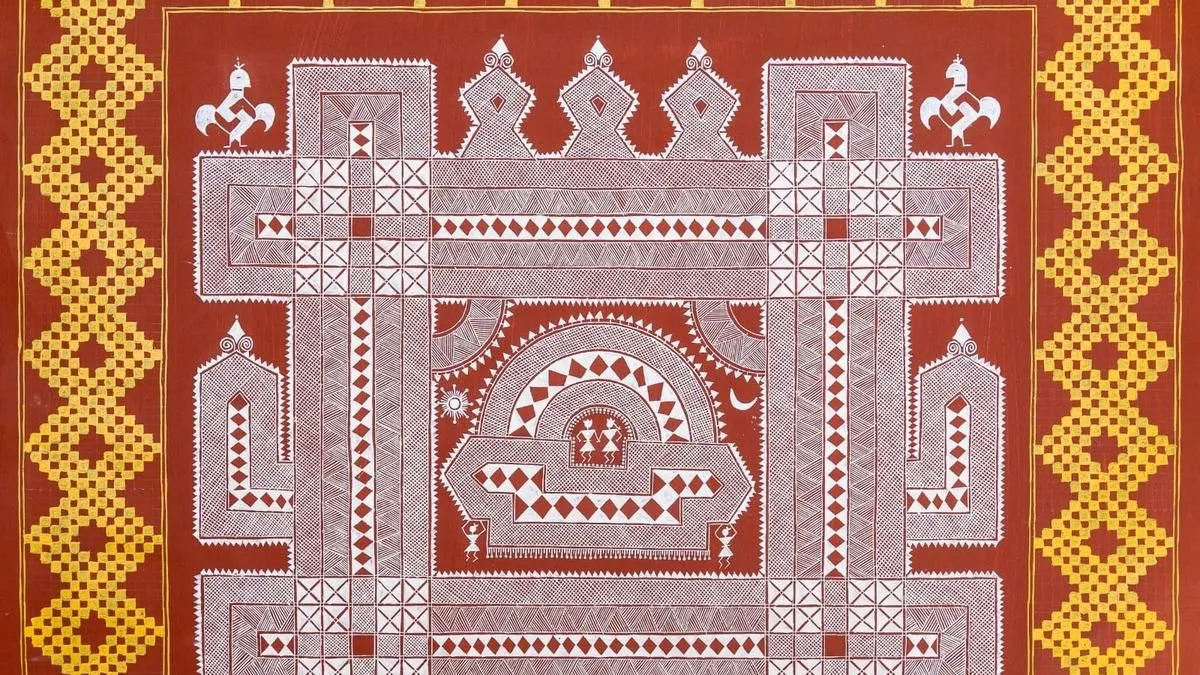
Chittara Art of Karnataka The Geometric Wall Paintings of the Deevaru Women. Source - The Hindu
In the Malnad region of Karnataka, the walls of a home can become a record of family life, rituals and community memory. Before a wedding, women of the Deevaru community transform these walls with intricate patterns drawn in natural colours. Fine lines form diamonds, triangles, grids and figures, each carefully placed to create a larger composition. This is Chittara, a traditional folk art practised primarily by Deevaru women in and around Sagara and the wider Shivamogga region of the Western Ghats.
Chittara is closely connected to domestic rituals and important moments in the community's life. Its designs draw inspiration from the surrounding landscape, agriculture, animals, household objects and auspicious occasions. Weddings hold a particularly important place in this tradition. The murals created for these ceremonies, often known as Hase Gode Chittara, depict the wedding space, the couple, the gathering of guests and the objects associated with the celebration.
The practice has traditionally been passed down through generations, with girls learning by watching their mothers and other women in the family. This knowledge involves more than remembering motifs. Artists learn to judge proportions, maintain the rhythm of parallel lines and build elaborate patterns freehand, often without measuring or sketching the design first. The result is an art form in which artistic skill and cultural memory are closely connected.
The Materials and Natural Colours Used in Chittara
Traditional Chittara artists prepare their colours using materials found in their surroundings. Rice, burnt husk, local earth and gurige seeds provide the characteristic palette of white, black, red and yellow. These pigments are prepared separately and mixed with water when needed.
| Element | Traditional Material | Use in the Artwork |
|---|---|---|
| Wall Surface | Mud wall coated with red earth | Creates the warm, terracotta-coloured background |
| White Pigment | Soaked and ground rice | Forms the main lines, geometric patterns and figures |
| Red Pigment | Local red earth or laterite soil | Adds colour to the composition and prepares the ground |
| Yellow Pigment | Powdered Gurige seeds | Creates yellow details and decorative sections |
| Black Pigment | Burnt or charred rice | Adds dark lines and contrasting details |
| Brush | Fine fibres of the local Pundi plant | Helps artists draw delicate, continuous lines |
The white pigment is made by soaking and grinding rice into a fine paste. Red comes from the earth found in the region, while the yellow pigment is prepared from gurige seeds. Black is traditionally obtained from burnt rice. The use of these locally available materials gives Chittara its distinctive appearance and connects the finished artwork to the landscape around the artist.
Artists also make their own brushes using Pundi Naaru, the fine fibres of a local plant. These simple tools allow them to create remarkably even lines and detailed patterns. Some accounts also describe the use of slender plant stalks as applicators. The technique relies on steady hands and careful control rather than elaborate equipment.
The Wedding Ritual and the Significance of Hase Chittara
Among the different occasions associated with Chittara, weddings are especially significant. The Hase Gode Chittara is a mural created on the walls of the room or space associated with the wedding ceremony. It represents the wedding setting through a carefully arranged composition featuring the bride and groom, the ceremonial pavilion, guests and objects connected with the occasion.
The mural is closely tied to the celebration itself. Its motifs reflect the community coming together for a major family event, while symbols associated with fertility, prosperity and domestic life express hopes for the couple's future. In this way, the painting becomes part of the ceremony rather than a decoration added after everything else is arranged.
Chittara is also associated with harvest celebrations, housewarming ceremonies and other auspicious occasions. Its imagery often reflects the community's relationship with agriculture and the natural world. Paddy, animals, plants, birds and familiar household objects appear alongside ritual symbols, bringing everyday life into the visual language of the mural.
Understanding the Geometric Patterns of Chittara
At first glance, Chittara may appear to be a collection of repeated lines and geometric shapes. A closer look reveals how carefully these elements are organised. Artists build compositions using straight lines, triangles, diamonds, circles, parallel bands and repeating borders. The patterns are drawn freehand, yet their proportions and spacing require considerable skill.
A few recurring features help explain how these compositions come together:
- Geometric grids and borders: Artists divide the surface into sections using straight lines and repeated patterns. Diamonds, triangles and parallel bands create a sense of order across the mural.
- Fine parallel lines and cross-hatching: Closely spaced lines fill larger shapes and give the composition its distinctive visual rhythm. These patterns can also recall familiar objects such as woven baskets, textiles and agricultural fields.
- Central ceremonial panels: In wedding murals, the central section often depicts the wedding pavilion and the couple, with guests and ritual objects arranged around them. The surrounding geometric patterns help frame the scene.
- Figures inspired by everyday life: Stylised representations of people, animals, plants, palanquins, lamps and grain bundles bring the community's surroundings and customs into the artwork.
The precision of Chittara is particularly striking because the designs are traditionally drawn from memory. Artists do not depend on elaborate preliminary sketches or measuring instruments to create their patterns. They rely on years of observation and practice, learning how each line fits into the larger design. This balance of memory, proportion and repetition gives Chittara its unmistakable visual character.
Mysore Traditional Painting The Royal Art of Karnataka's Wodeyar Dynasty
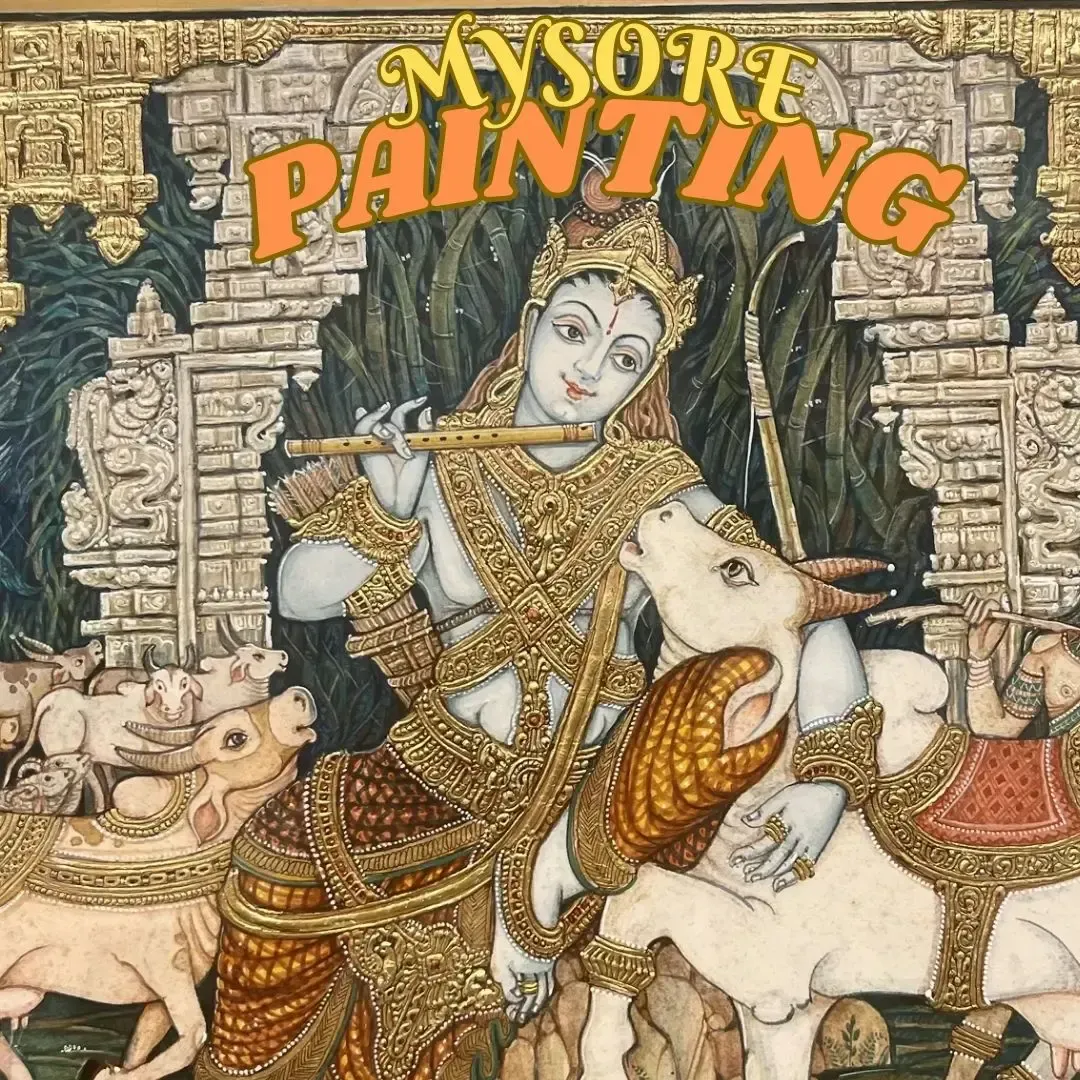
Mysore Traditional Painting The Royal Art of Karnataka's Wodeyar Dynasty. Source - The Exotic India Art
While Chittara grew out of the homes and rituals of the Malnad region, another artistic tradition was taking shape in the royal courts of Mysore. Here, painters worked on devotional images, mythological scenes and royal commissions, developing a style known for its delicate lines, graceful figures and carefully placed gold embellishments. This came to be known as Mysore Traditional Painting, one of the most recognised schools of classical South Indian painting.
The style traces its roots to the Vijayanagara school, which influenced several painting traditions across southern India. After the fall of the Vijayanagara Empire, artists and their practices found new centres of patronage. In Mysore, the Wodeyar rulers helped nurture the tradition, particularly during the reign of Mummadi Krishnaraja Wodeyar III (1799–1868). His court encouraged painting, literature and other art forms, allowing Mysore painting to develop its distinctive character during the nineteenth century.
Mysore paintings are especially admired for their restrained elegance. Figures are outlined with fine brushwork, colours are applied in soft, carefully balanced layers, and selected details such as jewellery, crowns and architectural elements are raised using a technique called gesso. These raised areas may then be covered with gold leaf, giving the painting a gentle sheen. The gold catches the light, but it rarely overwhelms the composition.
Mysore Painting vs Tanjore Painting Understanding the Difference
Mysore painting is often compared with Tanjore painting, also known as Thanjavur painting. Both traditions developed from the wider Vijayanagara artistic legacy, share an interest in religious subjects and use gesso and gold. However, the way these materials are handled gives each style a distinct appearance.
| Feature | Mysore Traditional Painting | Tanjore Painting |
|---|---|---|
| Historical Patronage | Wodeyar rulers of Mysore | Nayaka and Maratha rulers of Thanjavur |
| Gesso Work | Fine, intricate and generally low in relief | More prominent, with heavier raised sections |
| Gold Work | Selective use of delicate gold leaf | More extensive and visually prominent gold work |
| Embellishments | Relies primarily on painted detail, gesso and gold | May include glass pieces, stones and other embellishments |
| Overall Appearance | Subtle colours, fine lines and graceful detailing | Rich colours, pronounced relief and an ornate finish |
The difference becomes easier to notice when the two paintings are placed side by side. Mysore artists use gesso to highlight specific details, such as jewellery, garment borders and the arches surrounding a deity. Tanjore paintings tend to give these raised sections a more pronounced presence, often covering larger areas with gold. Neither style is less elaborate than the other; they simply approach ornamentation differently.
Popular Themes and Deities in Mysore Paintings
Devotional imagery forms the heart of Mysore painting. Hindu gods and goddesses appear in carefully composed settings, often surrounded by ornate pillars, decorative arches and details drawn from temple architecture. Vaishnava and Shaiva subjects are particularly common, with artists depicting familiar figures from Hindu mythology and religious literature.
Some recurring subjects include:
- Lord Rama: Often portrayed as Kodandarama, holding his bow and accompanied by figures from the Ramayana.
- Goddess Rajarajeshwari: Depicted in a richly detailed divine form, surrounded by ornamental elements.
- Gajalakshmi: The goddess Lakshmi appears with elephants, a symbol associated with prosperity and auspiciousness.
- Goddess Saraswati: Frequently shown holding the veena, representing knowledge, music and the arts.
- Lord Krishna: Appears in several forms, including Venugopala, playing the flute, and other episodes drawn from the Bhagavata Purana.
The tradition also includes scenes from the Ramayana and Mahabharata, along with episodes from the Puranas. Royal portraits and courtly subjects found their place in the repertoire as well. These paintings were created for palace interiors, places of worship and private homes, bringing devotional imagery into the spaces where people gathered.
How Mysore Traditional Paintings Are Made
A Mysore painting takes shape through several stages, each requiring patience and a steady hand. The artist first prepares the surface, develops the composition and then builds up the decorative details with gesso and gold. The final painting brings together drawing, colour, relief work and gilding.
1. Preparing the Surface (Pattanga)
The painting begins with a carefully prepared base. Traditionally, artists worked on paper, cloth or wooden surfaces. Paper could be mounted on cloth or wood, while the surface was treated with an adhesive mixture to make it suitable for painting. The prepared ground was smoothed so that the artist could draw fine lines and apply colour evenly.
2. Drawing the Composition (Charaketa)
Once the surface is ready, the artist sketches the main figures and the surrounding composition. Traditional accounts describe the use of charcoal made from tamarind twigs for the initial drawing. The outlines are then refined before the artist begins adding colour and decorative details. This stage is particularly important in devotional paintings, where the proportions, gestures and attributes of each deity follow established iconographic conventions.
3. Creating the Raised Details with Gesso (Gesso or Gachha)
One of the defining features of Mysore painting is its delicate gesso work. A paste is applied with a fine brush to raise selected parts of the composition, including jewellery, crowns, garment borders, thrones and architectural ornamentation. Traditional descriptions mention mixtures involving zinc oxide and a natural binder, although the precise recipe can vary. Unlike the heavier relief associated with Tanjore painting, Mysore gesso is usually kept relatively low and finely detailed. Once dry, it creates a subtle raised surface that gives the decorative elements more depth.
4. Applying Gold Leaf (Vark)
Gold leaf is placed over selected raised areas, particularly jewellery and ornamental details. The thin sheets are carefully laid onto the prepared surface using a suitable adhesive or binder. This requires considerable precision because the gold must follow the contours of the gesso work without obscuring the fine details beneath it. Gold is used selectively, allowing the painted colours and delicate linework to remain visible. Its restrained application is one of the features that gives Mysore paintings their characteristic elegance.
5. Adding Colours and Fine Outlines
The remaining sections of the painting are filled with colour. Traditional artists prepared pigments from minerals, plants, leaves and other natural sources. Reds, greens and yellows were common, while the palette was generally softer than the rich, saturated colours associated with some other South Indian painting traditions.
The artist then adds fine outlines, facial details, ornaments and finishing touches. The expressions, eyes and gestures of the figures receive particular attention, helping give the finished image its calm, devotional character.
The completed painting brings together several techniques that must work in harmony. The drawing establishes the composition, colour gives the figures life, gesso creates a sense of depth, and gold leaf draws attention to carefully chosen details. This combination of precision and restraint is what makes Mysore Traditional Painting so distinctive.
Bidriware The Intricate Silver Inlay Craft of Karnataka
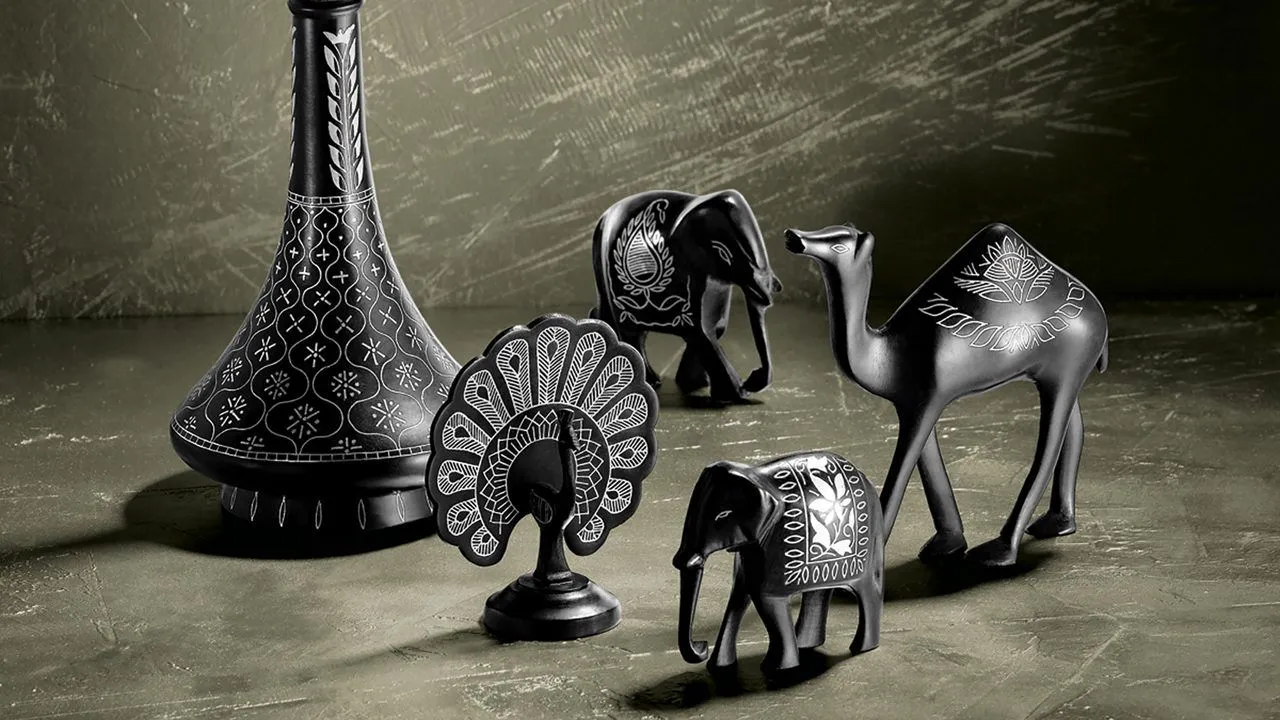
Bidriware The Intricate Silver Inlay Craft of Karnataka. Source - Incredible India
In Bidar, in northern Karnataka, some of the most striking works of metal craftsmanship begin with an unlikely combination: zinc, copper, silver and a little soil from the old fort. The finished objects have a dramatic appearance, with delicate silver patterns standing out against a deep black surface. This is Bidriware, a metal inlay tradition closely associated with the history of Bidar and its royal workshops.
The craft is generally traced to the period of the Bahmani Sultanate, which ruled parts of the Deccan during the fourteenth and fifteenth centuries. Its development is associated with Persian metalworking traditions, particularly the practice of decorating one metal surface with another. Over time, local artisans adapted these influences and developed techniques that gave Bidriware its distinctive identity.
The contrast between the dark metal and bright silver is what first catches the eye, but the real achievement lies in how it is made. Artisans cast objects from a zinc-rich alloy, engrave intricate patterns into the surface and carefully hammer silver wire or thin sheets into the grooves. The piece then undergoes a special blackening treatment using soil traditionally collected from the unlit portions of Bidar Fort. The treatment darkens the alloy while leaving the silver details bright.
Bidriware is made into a wide range of objects, including vases, bowls, trays, boxes, candle stands, jewellery and traditional hookah bases. Each piece brings together metal casting, engraving, inlay and surface treatment, making the craft as technically demanding as it is visually distinctive.
The Metal Behind Bidriware Understanding Its Zinc and Copper Alloy
Unlike crafts that rely on brass or bronze as their primary material, Bidriware uses an alloy in which zinc is the dominant metal, with copper added in a smaller proportion. Government craft documentation commonly gives the traditional ratio as approximately 16 parts zinc to 1 part copper, although the exact composition can vary between objects and workshops.
Zinc forms the main body of the object, while copper plays an important role in the alloy's behaviour during the final blackening process. Research on historical Bidri objects has found variations in copper content, with some samples also containing small amounts of other metals. This is one reason why a single fixed recipe should not be treated as universal.
The basic materials used in Bidriware include:
- Zinc and copper: The metals are combined to create the alloy used for casting.
- Pure silver: Fine wire or thin sheets are used to create the decorative inlay.
- Soil from Bidar Fort: Traditionally used during the final blackening process.
- Ammonium chloride (Navasadar): Mixed with the soil and water to prepare the treatment.
- Castor oil and resin: Used in preparing the moulding mixture./
- Vegetable oil: Applied during the finishing process to deepen the appearance of the black surface.
The alloy is particularly important because its zinc-rich surface responds to the chemical treatment used at the end. This selective darkening creates the contrast that defines Bidriware: a matte black background against which the silver patterns remain clearly visible.
How Bidriware Is Made The Craftsmanship Behind Its Eight Stages
A finished Bidri object passes through several stages before its characteristic black-and-silver appearance emerges. The process requires considerable precision, especially during engraving and silver inlay, where even a small mistake can affect the entire design.
1. Casting the Metal (Dhalai)
The process begins with preparing a mould using soil mixed with materials such as castor oil and resin. The zinc-copper alloy is melted and poured into the mould, which is broken or removed once the metal has cooled. This reveals the basic shape of the object, whether it is a vessel, plate, box or another decorative item.
2. Filing and Smoothing the Surface
The cast object is filed to remove rough edges and irregularities. Artisans may also use a lathe or other tools to achieve a smoother and more even surface. This preparation is essential because the intricate engraving that follows requires a stable, carefully finished base.
3. Temporary Blackening and Design Marking
Before engraving, artisans apply a solution of copper sulphate to the surface. This creates a temporary dark coating that makes the design easier to see while it is being worked out. The pattern is then marked freehand using a metal stylus, with the artist carefully planning the placement of each line and motif.
4. Engraving the Design (Jadkai)
The marked design is engraved using small steel chisels, known as Kalam, and a hammer. The artisan cuts fine grooves into the metal, following floral patterns, vines, geometric arrangements and other decorative motifs. Persian-inspired arabesques are common, although contemporary artisans also work with a wider range of designs. This stage demands a steady hand. The depth and width of each groove must be controlled so that the silver can be secured firmly without disturbing the surrounding surface.
5. Inlaying Silver (Tarkashi and Taihnishan)
Once the engraving is complete, the artist begins setting silver into the grooves. Fine silver wire is used in Tarkashi, while thin silver sheets are employed in sheet-inlay techniques commonly described as Taihnishan. The silver is carefully placed and hammered into the engraved channels until it fits securely. The contrast between the two metals begins to take shape here, although the object has not yet received its final black finish.
6. Filing and Buffing
After the silver has been fitted, the surface is filed and polished again. This removes excess metal and smooths the object so that the silver sits neatly within the engraved design. The temporary dark coating is also removed during this stage, leaving the metal surface ready for its final treatment.
7. The Final Blackening Using Bidar Fort Soil
This is the stage that gives Bidriware its unmistakable appearance. Artisans traditionally use a special type of soil collected from the unlit portions of Bidar Fort. The soil is mixed with water and ammonium chloride, locally known as Navasadar, and heated to prepare the blackening treatment. When the prepared mixture comes into contact with the zinc-copper alloy, it produces a dark surface layer. The silver inlay remains bright, creating the sharp contrast associated with the craft.
The chemistry behind this process is more complex than the idea that the soil simply contains a special blackening agent. Studies have identified alkali nitrates and chlorides among the substances involved in the reaction. The precise composition of the resulting black surface has also been the subject of scientific investigation. What makes the treatment particularly remarkable is its selective effect on the alloy, allowing the silver decoration to retain its brightness. The soil traditionally comes from protected, unlit areas within the fort, which is why it has become so closely associated with Bidriware. Access to this material has also become a conservation concern, as Bidar Fort is a protected heritage site and the traditional collection of soil is restricted.
8. Final Polishing and Oiling
The object is rinsed and finished with a light application of vegetable oil. This helps deepen the appearance of the black surface and brings out the brightness of the silver inlay. The finished piece is then ready to be used or displayed. From the first casting to the final polish, Bidriware requires several different skills. The artisan must understand how metal behaves under heat, how deeply to engrave a pattern and how to secure delicate silver details without damaging them. The final blackening treatment brings all these stages together, turning an ordinary-looking metal object into a striking piece of decorative art.
How to Identify and Appreciate Authentic Chittara, Mysore Paintings and Bidriware
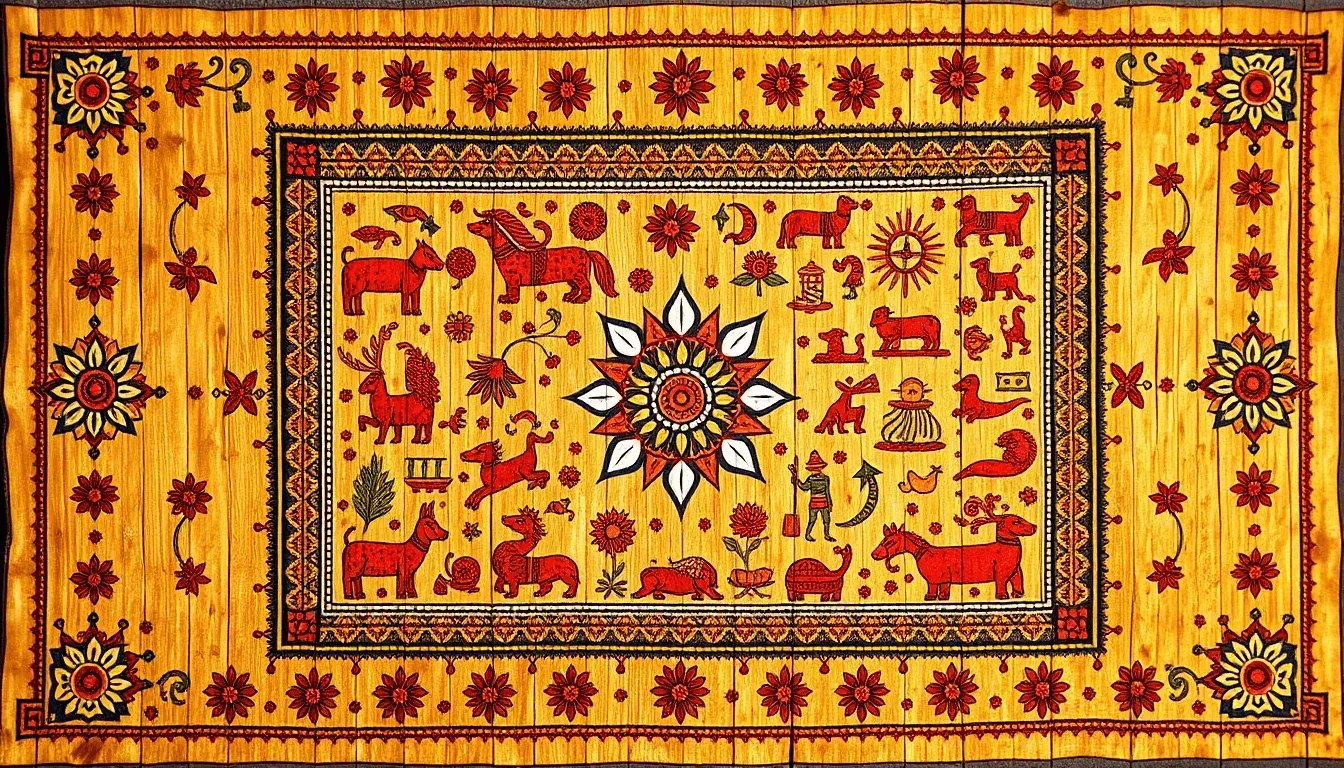
How to Identify and Appreciate Authentic Chittara, Mysore Paintings and Bidriware. Source - Art and Designer India
Traditional Indian art has found a much wider audience over the years, but this has also brought a growing number of machine-made reproductions, printed designs and imitation handicrafts into the market. For someone looking to collect Chittara, Mysore paintings or Bidriware, knowing what to look for can make a considerable difference.
Each of these art forms has its own materials, techniques and visual characteristics. Chittara relies on carefully drawn patterns and natural pigments, Mysore painting brings together fine brushwork, raised gesso and gold embellishments, while Bidriware is recognised for its silver inlay against a dark metal surface. Understanding how these details are created helps buyers look beyond the finished appearance and appreciate the craftsmanship involved.
1. How to Identify Genuine Bidriware
The most recognisable feature of Bidriware is the contrast between its blackened zinc-rich surface and the bright silver inlay. However, some commercially available imitations recreate this appearance through electroplating, surface decoration or painted patterns.
A few details can help buyers assess a piece:
- Look closely at the silver inlay: In traditional Bidriware, silver wire or sheet is physically set into engraved grooves. The design should appear integrated into the metal rather than simply printed or painted on its surface. A magnifying glass can help reveal the fine edges and details of the inlay.
- Examine the black finish: Genuine Bidriware has a distinctive deep, dark surface produced through a traditional chemical treatment. Look for an even finish and a clear contrast between the black alloy and silver decoration. A painted coating may have a different texture or show signs of peeling around edges.
- Check the quality of engraving: Traditional Bidriware often features intricate floral patterns, vines, geometric arrangements and fine detailing. Look at how consistently the lines have been engraved and how securely the silver follows the design.
- Ask about the maker and production process: A reliable seller should be able to explain where the piece was made, which materials were used and whether the silver decoration is genuine inlay. Information about the artisan or workshop adds useful context.
Weight alone cannot establish authenticity, since the size, shape and alloy composition of an object can vary. Similarly, buyers should avoid scratching the surface or using alcohol and other chemicals to test the black finish. Such methods can damage the piece without providing dependable proof.
2. How to Recognise Traditional Mysore Painting
Mysore painting is known for its delicate execution, restrained ornamentation and careful use of gold. Its raised gesso work and fine brush details are particularly useful features to examine when assessing a painting.
Examine the gesso work: Traditional Mysore paintings generally use fine, relatively low-relief gesso to highlight jewellery, crowns, garment borders and architectural details. The raised sections should feel integrated into the composition rather than appearing as heavy, separately attached embellishments.
- Look at the gold detailing: Gold leaf is an important part of the tradition. Observe how it has been applied to the raised areas and whether the decorative details retain their definition. Gold-coloured paint can imitate the appearance of gold leaf, so visual inspection alone cannot establish the material's purity.
- Study the brushwork and figures: Mysore paintings are recognised for their controlled outlines, carefully rendered faces and detailed ornaments. Look at the consistency of the linework and the attention given to the figures, clothing and surrounding architecture.
- Ask about the artist and materials: Information about the painter, workshop, pigments, surface preparation and use of gold leaf can help establish the work's background. Documentation and a credible seller are especially important when purchasing an expensive piece.
It is also worth understanding the difference between Mysore and Tanjore painting. Both traditions use gold and raised decorative details, but they have distinct approaches to composition and ornamentation. Tanjore paintings generally feature more prominent relief and extensive gold work, while Mysore paintings tend towards finer, more restrained detailing. A Tanjore painting is not an imitation of Mysore art; it belongs to a separate and equally established tradition.
3. What to Look for in Authentic Chittara Art
Chittara is traditionally created on walls using natural materials such as rice paste, red earth, burnt rice and other locally sourced pigments. Its geometric patterns are drawn by hand, with artists relying on memory, proportion and years of practice to create elaborate compositions. Contemporary artists also adapt Chittara motifs to paper, canvas and other surfaces. These works allow the tradition to reach new audiences, although their materials and methods may differ from those used in traditional wall paintings.
When assessing a Chittara artwork, look for:
- Hand-drawn patterns: Traditional Chittara designs feature repeated geometric forms, parallel lines, diamonds, triangles and carefully arranged borders. Small variations in line thickness and spacing can occur in hand-drawn work. However, irregularities alone do not prove authenticity.
- Pigment and surface quality: Traditional rice-paste designs have a characteristic matte appearance against an earthy background. On contemporary paper or canvas adaptations, the artist may use different materials, so the finish should be considered in relation to the medium.
- Composition and motifs: Familiar patterns inspired by agriculture, animals, plants, household objects and wedding rituals can help identify the visual language of Chittara. The way these elements are arranged is often as important as the individual motifs.
The artist's connection to the tradition: Ask who created the artwork, where they learnt the technique and whether they belong to a community that practises Chittara. This context is particularly valuable because the art form carries generations of knowledge and cultural memory.
Printed reproductions can reproduce the appearance of Chittara quite convincingly, but they do not involve the same handwork or material process. If you are purchasing an original, ask whether the design was drawn by hand and what materials were used.
Buying Traditional Art with a Better Understanding
Authenticating traditional Indian art requires more than looking for one particular colour, texture or decorative feature. Materials can change between artists, workshops and generations, while contemporary practitioners often adapt older techniques to new surfaces and formats. A genuine work does not always follow one fixed recipe. The best starting point is to understand how the art form is traditionally made, examine the quality of the craftsmanship and learn about the person who created it. Ask questions about the materials, techniques, cultural background and provenance before making a purchase.
Most importantly, buy from artists, established workshops or sellers who can explain the work honestly. Chittara, Mysore painting and Bidriware have survived because generations of craftspeople have continued to practise, teach and adapt their skills. Collecting these artworks is an opportunity to appreciate that knowledge and help sustain the people who carry it forward. The value of an original artwork lies in its materials and visual appeal, but also in the time, experience and cultural memory that have gone into making it.
Frequently Asked Questions
1. What are the famous traditional art forms of Karnataka?
Karnataka is known for several traditional art forms, including Chittara wall paintings, Mysore traditional paintings, Bidriware, Kasuti embroidery, and the leather puppetry of Togalu Gombeyaata. Each reflects the region's history, communities and artistic traditions.
2. What is Chittara art?
Chittara is a traditional wall-painting art practised primarily by women from the Deevaru community in Karnataka's Malnad region, particularly around Shivamogga. It features geometric patterns, symbolic motifs and natural materials, and is traditionally used to decorate homes during important occasions and ceremonies.
3. Which materials are traditionally used in Chittara paintings?
Traditional Chittara paintings use natural materials such as rice paste, burnt rice, red earth and other locally available pigments. Artists have also used fibres from the Pundi plant to make brushes. The exact materials can vary depending on the location and the artist.
4. What is Mysore painting famous for?
Mysore painting is known for its delicate brushwork, intricate detailing, religious subjects and selective use of gold leaf. Developed under the patronage of the Wodeyar rulers, this painting tradition is particularly recognised for its graceful depictions of Hindu deities and mythological scenes.
5. What is the difference between Mysore painting and Tanjore painting?
Both are South Indian painting traditions that often depict Hindu deities, but their techniques differ. Mysore paintings generally feature delicate lines, subtle relief work and restrained gold detailing. Tanjore paintings are known for their more prominent raised gesso work, decorative embellishments and extensive use of gold foil.
6. Who patronised Mysore painting?
The Wodeyar dynasty of Mysore played an important role in supporting this painting tradition. Mummadi Krishnaraja Wodeyar III, who ruled from 1799 to 1868, was particularly influential in encouraging artists and preserving traditional painting practices.
7. What is Bidriware?
Bidriware is a traditional metal craft associated with Bidar in Karnataka. It involves engraving intricate designs into a zinc-rich metal alloy and inlaying them with silver. The finished objects are known for their striking contrast between the dark metal surface and the bright silver patterns.
8. Why is Bidriware black?
The characteristic black finish of Bidriware comes from a traditional treatment using a special soil associated with the Bidar Fort area. This treatment darkens the alloy while leaving the silver inlay relatively unaffected, creating the craft's distinctive appearance.