
3 South Indian Painting Traditions
3 South Indian Painting Traditions and the Stories Behind Them
South Indian painting traditions offer more than visual beauty. Beneath their striking imagery lie stories that connect humanity, divinity, and the generations of artists who have kept these traditions alive.

Rooftop
Author
South India is home to painting traditions that have been nurtured across generations, each shaped by the beliefs, craftsmanship, and cultural life of the people who practise it. In Mysore painting, delicate brushwork, gentle colours, and fine gold detailing come together to create images that invite quiet reflection. Tanjore painting, with its rich colours, raised relief work, and gleaming gold foil, brings sacred figures to life with a striking sense of presence. Kerala murals, meanwhile, fill temple walls with expressive lines, earthy pigments, and vivid scenes drawn from Hindu mythology, turning sacred spaces into places where stories can be seen and remembered.
Though these traditions share a deep connection with Hindu beliefs and devotional imagery, each has developed its own artistic language. Behind the materials, techniques, and distinctive visual styles are generations of artists who have learned, refined, and passed on their craft. Understanding Mysore, Tanjore, and Kerala mural painting means looking beyond their differences to appreciate the knowledge, patience, and devotion that continue to shape them.
Mysore Painting and the Art of Fine Detail
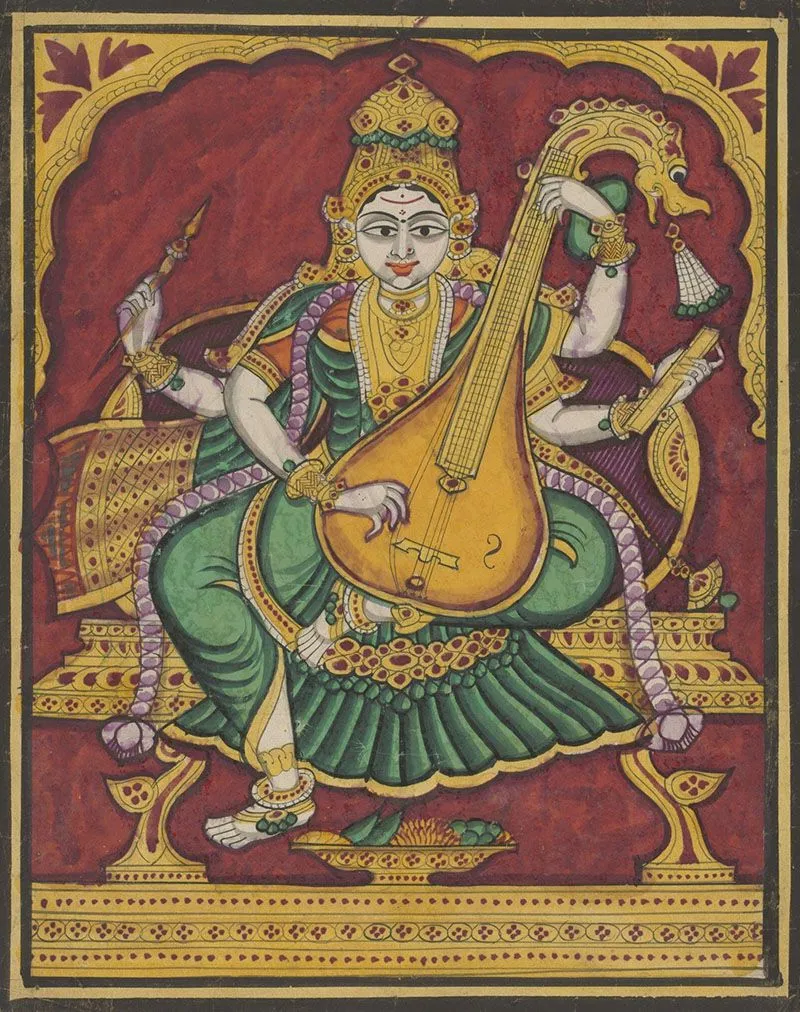
Mysore Painting Credits - Impart
Originating in Karnataka, Mysore painting flourished under the patronage of the Wodeyar dynasty, particularly during the reign of Maharaja Krishnaraja Wodeyar III in the 19th century. Created for temples, palace shrines, and the homes of royal and aristocratic families, these paintings brought together devotional imagery and meticulous craftsmanship. Their beauty lies in the care given to every detail, from the gentle expressions of the deities to the fine gold work that adorns their crowns, jewellery, and garments.
The Artistry Behind Mysore Painting
- Delicate gesso relief (gathi or makku): One of the defining features of Mysore painting is its subtle raised detailing. Artists apply a fine paste, traditionally made using materials such as chalk or zinc-based white pigment, gum, and paper pulp, to selected areas of the composition. This relief work highlights details such as jewellery, crowns, clothing borders, and halos. The result is an understated texture that rewards a closer look.
- Gold leaf (vark): Thin sheets of gold leaf are carefully applied over the raised details, lending the painting a gentle lustre. Rather than overwhelming the image, the gold draws attention to the ornaments and sacred elements, complementing the surrounding colours. Applying these delicate details calls for a steady hand and considerable patience, with each section contributing to the harmony of the finished work.
- Expressive figures and gentle colours: Mysore paintings are known for their softly rounded facial features, expressive eyes, and graceful postures. Artists often use earthy shades, muted greens, and gentle blues to create a balanced setting for the central figure. The colours and fine brushwork work together to give the composition a sense of calm, allowing the devotional subject to remain at the heart of the painting.
What makes Mysore art special is the thoughtfulness behind its details. The fine lines, carefully placed gold, and measured use of colour reflect a tradition in which technical skill serves a deeper devotional purpose. Each painting carries forward the knowledge of artists who have spent years learning how to bring reverence, beauty, and precision together on a single surface.
The Craft Behind Tanjore Painting
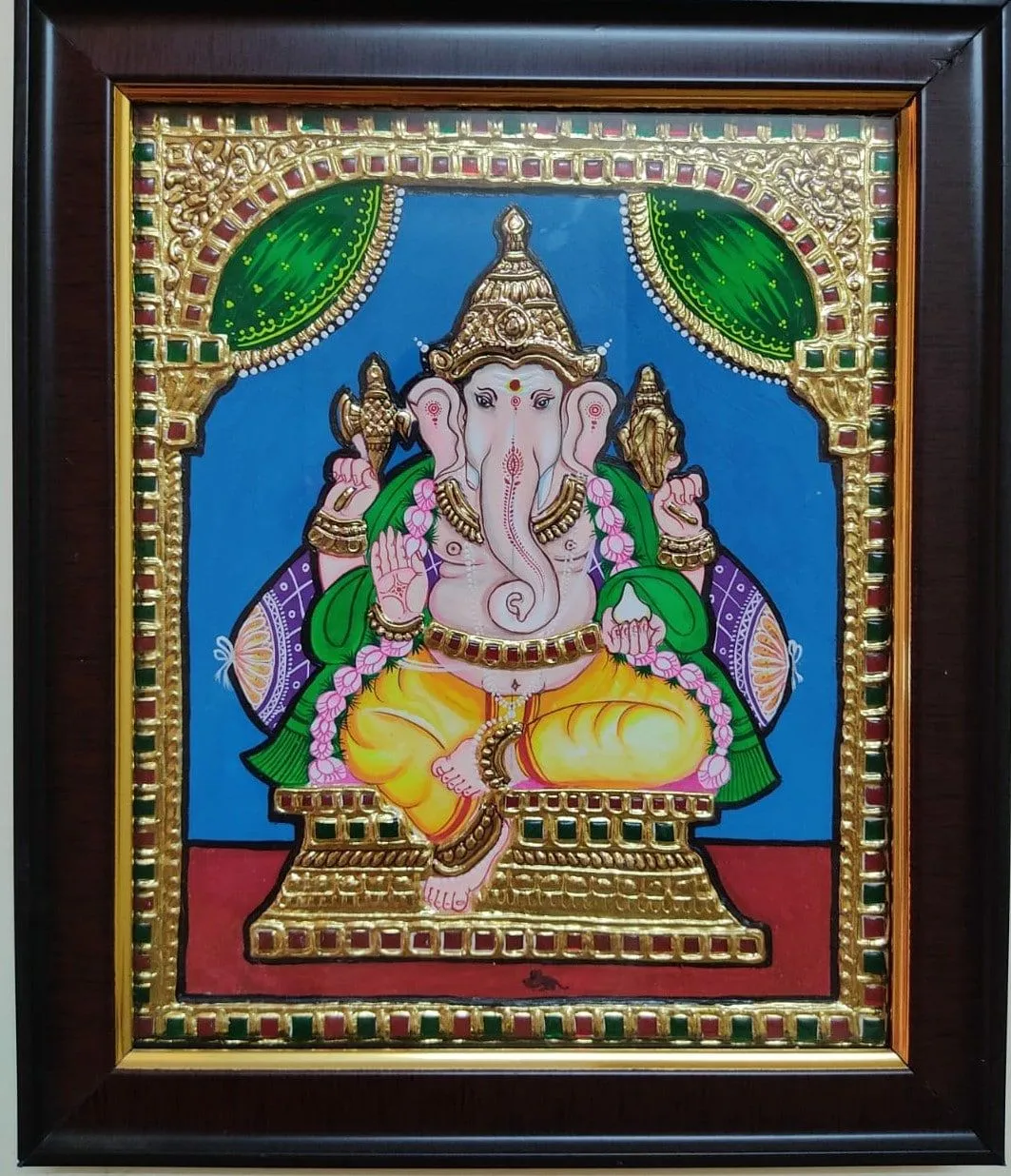
Tanjore Painting Credits - International Indian Folk Art Gallery
Tanjore painting comes from Thanjavur in Tamil Nadu, where artists have spent generations bringing their devotion to life through colour, gold, and intricate detail. The tradition grew under the Thanjavur Nayakas and later flourished under Maratha rulers, including Serfoji II. Look at a traditional Tanjore painting and your eyes are almost immediately drawn to the gold, the elaborate jewellery, and the deity at the centre. But spend a little longer with the painting, and there's so much more to notice than its shine. Every raised detail has to be built by hand, every ornament carefully placed, and every layer worked on with patience.
What Goes Into a Tanjore Painting?
- The raised details that give the painting its character: One of the things that makes Tanjore painting so distinctive is that parts of the image actually rise from the surface. Artists prepare a wooden panel, traditionally covered with cloth and a prepared ground, before building up details with a paste made from materials such as chalk and gum. Crowns, jewellery, arches, and thrones take shape through this painstaking process. It's easy to admire the finished painting and move on, but think of the patience it takes to create those details one by one, making sure each sits just right within the larger composition.
- The gold that catches your eye: Gold foil gives Tanjore painting much of its familiar glow. Artists apply it over the raised areas, sometimes adding glass pieces, beads, or stones to bring further detail to the ornaments. The gold catches the light, but its purpose goes beyond making the painting look grand. It draws your attention to the deity, the crown, and the jewellery, highlighting details that might otherwise go unnoticed. Bringing all these elements together takes a steady hand and an eye trained to notice even the smallest things.
- The deities who seem to look right at you: Krishna holding a ball of butter, known as Navaneetha Krishna, is among the beloved subjects of Tanjore painting. Deities are often shown facing forward, with large expressive eyes, rounded features, and elaborate ornaments. There's something intimate about this direct gaze. The figure seems to meet the viewer's eyes, inviting a moment of pause and reflection. For devotees, this can echo the experience of darshan, the act of beholding a deity and feeling a connection that goes beyond what is visible.
Tanjore painting becomes worth spending time with because of the care that goes into creating an image that, for many people, is also an object of faith. The gold may catch the eye first, but the hands behind it deserve attention too. Each raised detail, carefully placed ornament, and layer of colour reflects skills that take years to develop and pass on. Looking closely means appreciating not only the deity depicted, but also the artists whose patience and knowledge bring the image to life.
Kerala Mural Painting and the Stories on Temple Walls
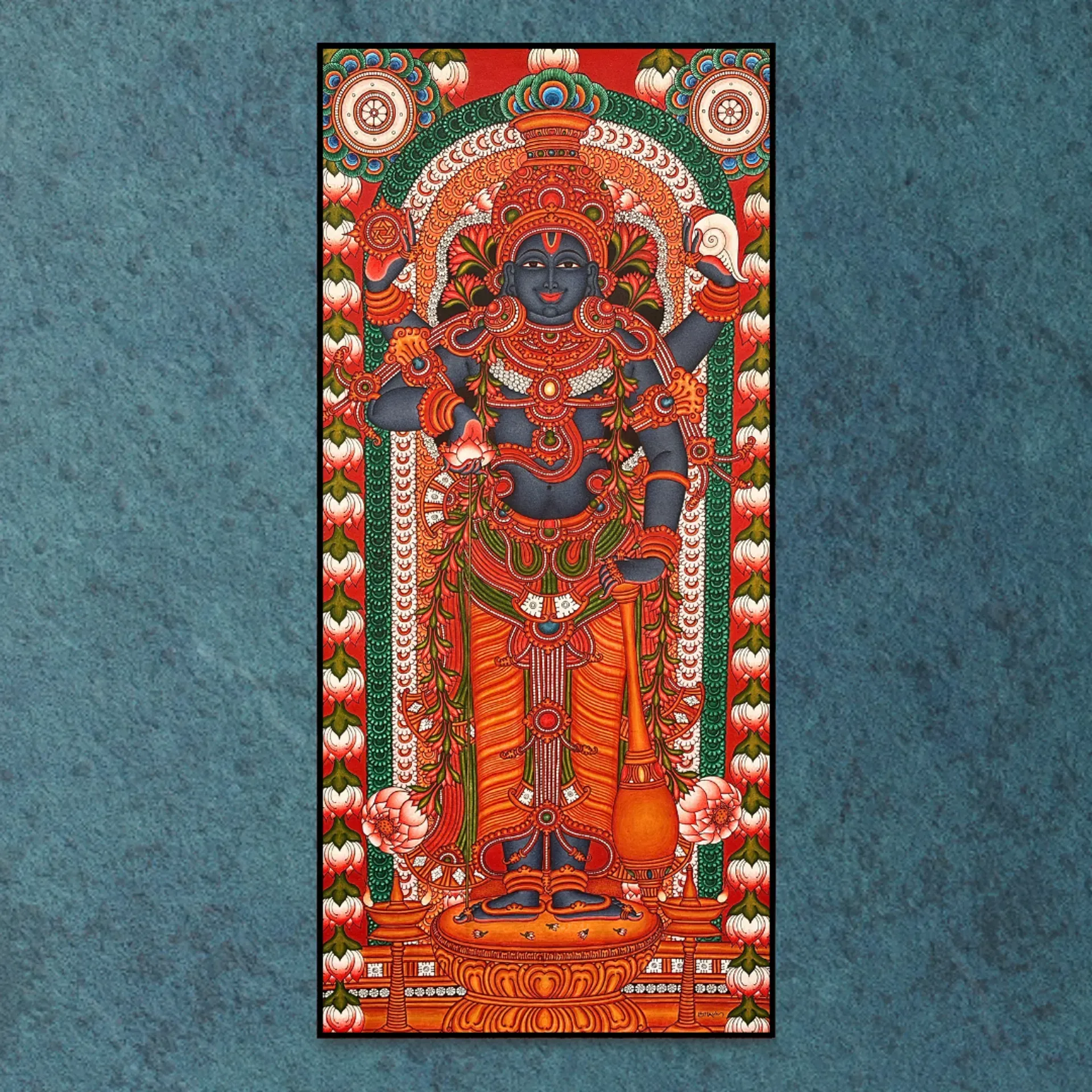
Kerala Mural Painting
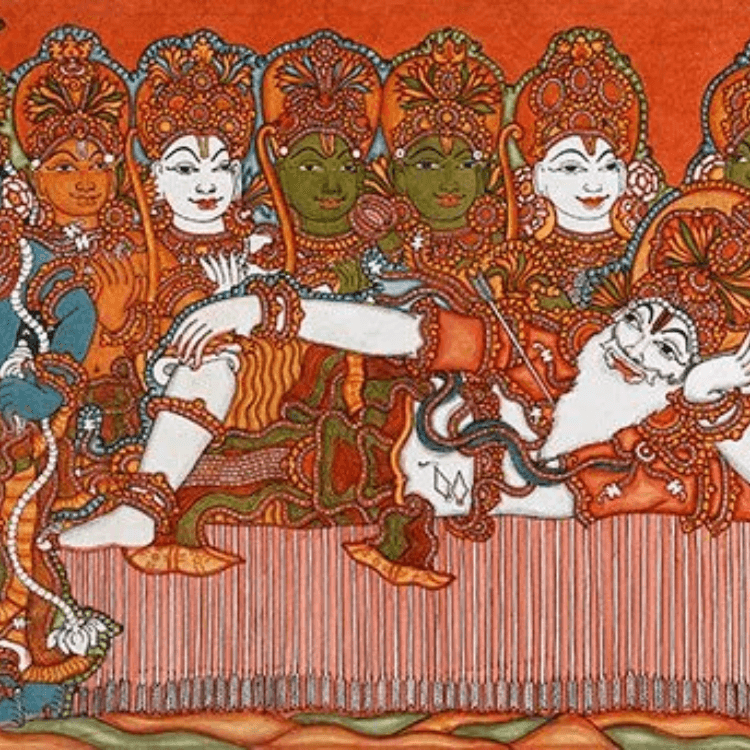
Kerala mural painting grew out of a tradition of painting directly onto the walls of temples and palaces across Kerala. Some of these works date back centuries, carrying stories of Hindu deities, episodes from mythology, and scenes shaped by the region's devotional life. Places such as Vadakkunnathan Temple in Thrissur and Mattancherry Palace are associated with this mural tradition. Unlike paintings made on panels that can be moved from one place to another, these murals belong to the spaces they were created for. They become part of the walls, inviting generations of people to stop, look, and find meaning in the stories depicted there.
What Makes Kerala Mural Painting Distinctive?
- Preparing the walls: Before a mural begins to take shape, the wall itself needs careful preparation. Artists work on a smooth, lime-plastered surface that provides the foundation for the painting. Preparing this surface is an important part of the process because the colours and fine outlines must sit well on the wall and remain clear over time. The finished mural may draw attention through its scale and colour, but the work begins long before the first figure is painted.
- The five traditional colours: Traditional Kerala murals are known for their use of five principal colours: yellow, red, green, black, and white. Historically, artists prepared pigments from natural sources, including minerals, plant materials, and soot. The white of the prepared wall also plays a role in the overall composition. These colours give the murals their distinctive character, helping artists define the figures, ornaments, expressions, and details that bring each scene to life. Working within this palette calls for a deep understanding of how colours interact and how each one contributes to the story.
- Figures shaped by dance and storytelling: Look closely at the figures in Kerala murals and their expressive faces, sweeping outlines, and carefully arranged postures begin to stand out. The region's classical performance traditions, including Kathakali and Koodiyattam, offer useful points of comparison for understanding this emphasis on expression and gesture. Traditional mural painting also follows established principles of proportion and composition, allowing artists to arrange figures across large wall surfaces without losing the balance of the scene. These choices help turn mythological stories into images that feel full of movement and meaning, even on a still wall.
There is something special about art that remains in the place for which it was made. Kerala murals have survived through changing generations, and the artists who continue to practise this tradition carry forward knowledge that goes well beyond mixing colours or drawing figures. They learn how to prepare a surface, understand the language of traditional forms, and give shape to stories that people have returned to for centuries. Taking the time to appreciate these murals also means recognising the skill and dedication it takes to keep such a demanding art form alive.
What Connects Mysore, Tanjore, and Kerala Mural Painting?
Mysore, Tanjore, and Kerala mural painting may look different at first glance, but each carries stories that have been passed down through generations. Their artists have drawn inspiration from Hindu mythology, sacred texts, temple traditions, and the beliefs of the communities around them. Royal courts and religious institutions played an important role in supporting these art forms, giving artists opportunities to develop their skills and create works that continue to be admired centuries later. Behind the finished paintings lies years of learning, practice, and knowledge passed from one generation to the next.
But traditions like these survive because people continue to practise them, teach them, and find meaning in them. The artists who carry this knowledge forward deserve to be recognised for more than the beauty of their finished work. Their understanding of materials, their patience with intricate techniques, and the stories they bring to life are all part of what makes these art forms worth preserving.
This is where platforms like Rooftop can help make a difference by bringing Indian art closer to people who might otherwise never have the chance to learn about it or obtain it. Through courses led by practising artists and opportunities to explore traditional art forms, learners can discover the thought, skill, and cultural knowledge behind each painting. Moreover, through its wide range of products that promote handcraft work by real artists, people can embrace the actual art that is inaccessible to them elsewhere.
Mysore painting, Tanjore painting, and Kerala murals are more than styles to admire or techniques to study. They carry the memories, beliefs, and creative knowledge of the people who have kept them alive. The more we learn about these traditions and the artists behind them, the better we can appreciate their place in our lives today. Preserving Indian art means making room for its future, too, and ensuring that the people who continue to create it are never left out of the story.