
Cherial Scroll Painting
Cheriyal Painting of Telangana and the Story Behind Its Traditional Scroll Art
Discover Cheriyal painting of Telangana, from its vibrant red scrolls and traditional techniques to the Nakashi artists preserving this unique Indian folk art.

Rooftop
Author
Long before television and films became part of everyday life, painted scrolls helped bring stories to audiences across Telangana. A storyteller would unroll a long, colourful canvas, pointing to its painted scenes while narrating tales of gods, legendary heroes, and local folklore. The pictures gave the audience something to follow as the story unfolded, turning the scroll into an important part of a shared storytelling experience.
This is the tradition of Cheriyal scroll painting, also known as Cheriyal Patam. Created by artists from the Nakashi community, these scrolls are known for their vivid red backgrounds, bold figures, and expressive details. Each panel carries a part of a larger story, helping audiences follow the events as the narrator moves through the scroll.
Cheriyal painting was never meant to be viewed only as a finished picture hanging on a wall. It was closely connected to oral storytelling and community life, with painted scenes helping pass down mythology, folklore, and stories associated with different communities. Understanding this original purpose makes Cheriyal more than a striking visual tradition. It shows how art could bring people together, make stories easier to follow, and keep them alive across generations.
The Nakashi Artists Behind Cheriyal Painting
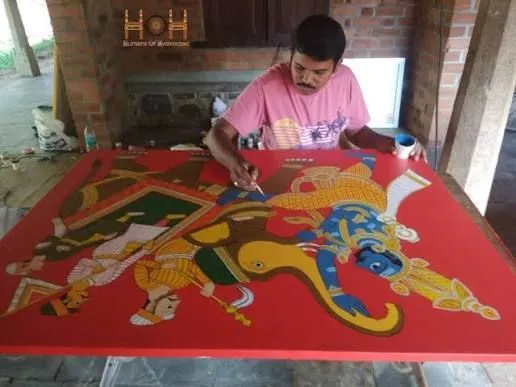
The Nakashi Artists Behind Cheriyal Painting Source - Humans of Hyderabad
Cheriyal painting grew out of a close relationship between artists and storytellers. The Nakashi community, whose hereditary craft included painting and making traditional scrolls, developed this art form in parts of present-day Telangana, particularly around Warangal, Siddipet, Medak, and Cheriyal village. Their work was closely connected to the storytellers who travelled between villages, sharing tales of gods, heroes, local histories, and community traditions.
These performances often served particular communities, including farmers, weavers, fishermen, and blacksmiths. Storytellers such as the Kaki Padagollu, Kunamukkulu, and Markandeya performers carried these narratives from one village to another. The painted scroll helped audiences follow the story, giving them a visual account of the characters and events as the narrator brought each scene to life.
The Nakashi artists understood that their paintings had a purpose beyond looking beautiful. A scene had to work alongside the storyteller's voice, music, and timing. The expressions, colours, and arrangement of figures helped make the narrative clear to the audience. This close connection between painter and performer shaped Cheriyal painting into an art form where the images were part of the storytelling itself, rather than separate works meant only to be admired.
How to Read a Cheriyal Scroll
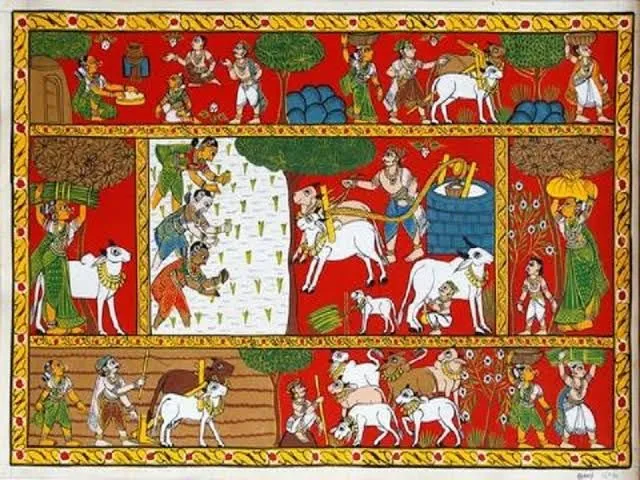
How to Read a Cheriyal Scroll Source - International Indian Folk Art Gallery
Imagine standing in a village gathering as a storyteller unrolls a painted canvas several feet long. There is no page to turn and no screen to follow. Instead, the story unfolds one scene at a time, with the narrator guiding the audience through the scroll. Some scrolls are only a few feet long, while others can stretch to 40 or 50 feet, carrying dozens of scenes within a single painting.
A traditional Cheriyal scroll is usually read from top to bottom. Each section leads into the next, helping the audience follow the story as the narrator moves along the canvas. A few details make this possible:
- The opening scene: The scroll often begins with a deity such as Ganesha, Saraswati, or Shiva and Parvati, invoking blessings before the main story begins.
- The scene dividers: Horizontal bands called hashiya separate individual scenes. Decorated with floral vines and geometric patterns, they give each episode its own space while keeping the larger composition connected.
- The size of the figures: Important deities and leading characters are painted larger than secondary figures. This visual hierarchy helps viewers recognise who matters most in a scene without needing every detail explained.
The expressions matter just as much as the arrangement. Cheriyal figures often have bold facial features and wide, lotus-petal-shaped eyes that make their emotions easy to read. This was especially useful when performances took place outdoors, sometimes lit by oil lamps or torches. The paintings needed to be clear enough for a crowd to follow from a distance, even as the storyteller's voice and music brought the scenes to life.
Once you know what to look for, a Cheriyal scroll becomes easier to read. The borders signal a change in the story, the larger figures draw your attention, and the faces offer clues about what is happening. Every element helps guide the audience through the narrative, turning a long painted canvas into a story that people could experience together.
What Makes Cheriyal Painting Unique, and How Is It Made?
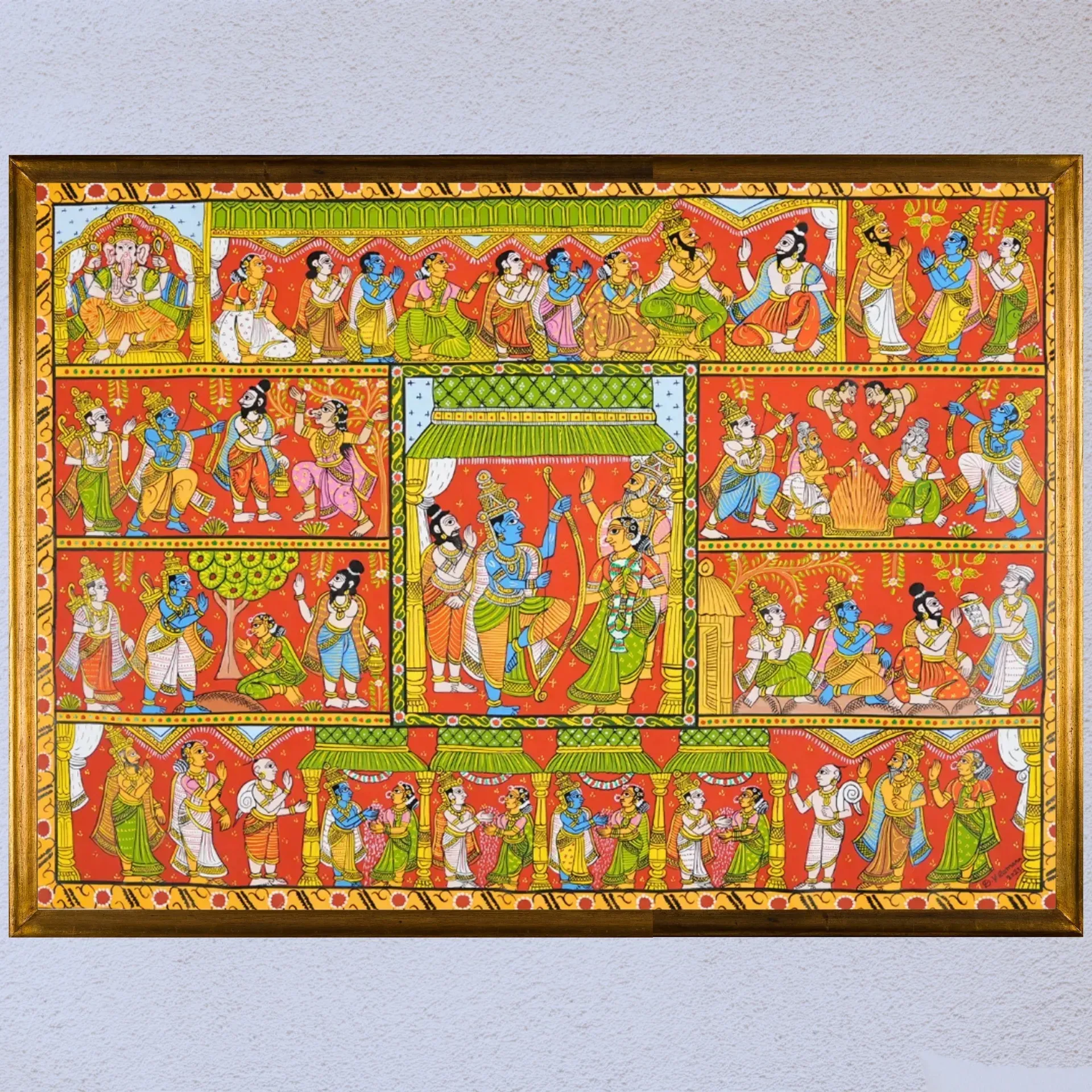
What Makes Cheriyal Painting Unique
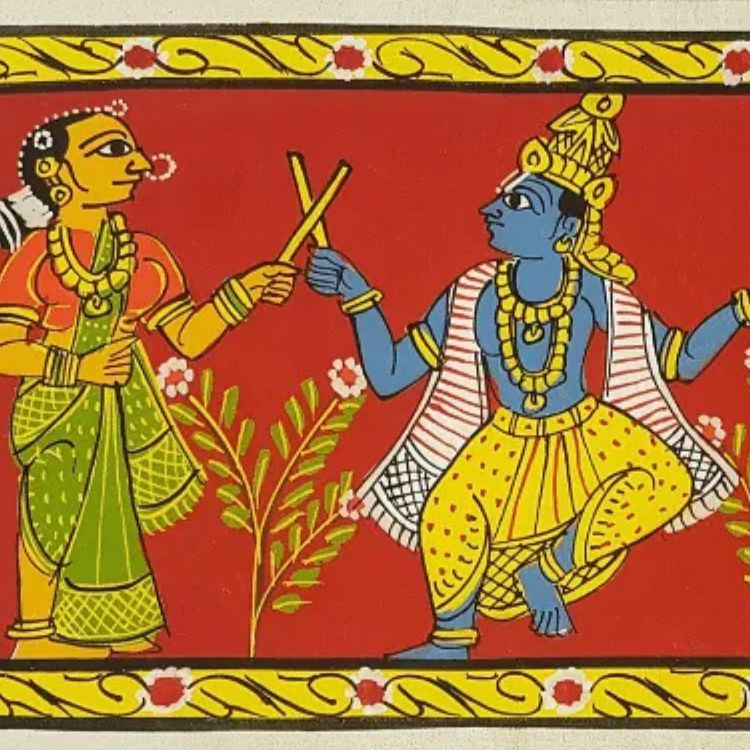
The first thing you notice in a Cheriyal scroll is often its red background. Against this vivid ground, colourful figures, elaborate costumes, and expressive faces stand out clearly. The style is bold and deliberately uncomplicated, allowing viewers to follow the story even when the scroll is stretched out before a crowd. But look a little closer, and you'll notice how much character the artists bring to each figure.
The signature red background: The strong red ground gives Cheriyal scrolls their distinctive appearance. It creates a consistent backdrop for the scenes, making the figures and their colours stand out. Expressive figures and detailed costumes: Characters are often shown in profile or three-quarter view, with pointed noses, prominent eyes, ornate crowns known as mukutas, and detailed jewellery and clothing. Their stylised features help communicate who they are and what is happening in the story. Colours that help tell the story: Traditional depictions often use particular colours to distinguish characters. Rama and Krishna, for instance, may appear in shades of blue, while other divine or heroic figures are shown in yellow or flesh tones. Demons and antagonists can appear in darker shades, including deep blue, green, or black. These conventions can vary between paintings and subjects.
The colours and figures are only part of what makes a Cheriyal scroll special. Traditionally, artists also prepared the canvas and pigments by hand, using materials drawn from their surroundings. Making a scroll required patience, as each stage had to be completed carefully before the next could begin.
How a Cheriyal Scroll Takes Shape
1. Preparing the cloth
Artists traditionally use unbleached cotton cloth, often called kora cloth, as the base. They coat it with a prepared paste made from ingredients such as tamarind seed powder, tree gum, and white clay or chalk. Traditional recipes can also include cow dung. The coating is applied in layers and dried in the sun before being smoothed and burnished with a stone. This creates a firm yet flexible surface that can withstand being rolled and unrolled.
2. Drawing the figures
Once the surface is ready, the artist sketches the composition, traditionally using charcoal made from burnt twigs. This stage establishes the arrangement of characters, the sequence of scenes, and the smaller details that will bring the story to life. Since a scroll can contain many episodes, planning the composition is as important as drawing the individual figures.
3. Applying the colours
The artist then fills the outlined shapes with colour. Traditional palettes draw on mineral, plant-based, and other natural sources, although materials and methods can vary. Red ochre, yellow mineral pigments, white clay, lampblack, and indigo are among the materials associated with traditional painting practices. Each colour helps distinguish the figures and gives the scroll its recognisable visual character.
4. Adding the final details
The final outlines sharpen the entire composition. Using a fine brush and black pigment, the artist defines the eyes, facial features, jewellery, clothing, and other details. These dark lines bring the figures into focus and give the finished scroll its clarity and expressive quality.
The process reveals why Cheriyal painting is more than a collection of colourful scenes. The artist has to prepare a surface that can be rolled without losing its integrity, arrange the story so it remains easy to follow, and use colour and line to make every figure recognisable. When the scroll is finally unrolled, all these decisions come together to support the storyteller and the audience.
How Cheriyal Painting Has Found a Place in the Modern World
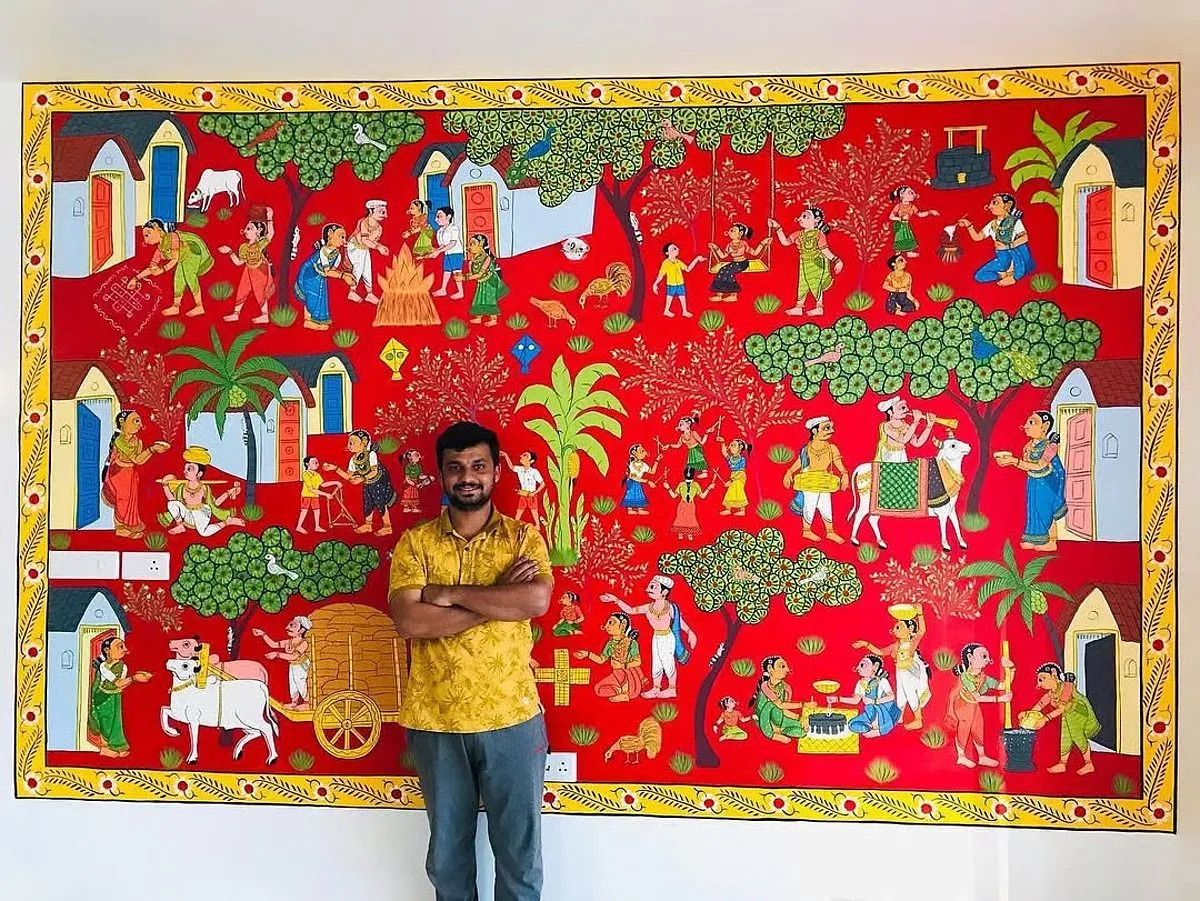
Cheriyal Painting in the Modern World Source - Outlook Traveller
For generations, Cheriyal scrolls travelled alongside storytellers who performed in villages across Telangana. But as television and other forms of entertainment changed how people encountered stories, the demand for long narrative scrolls began to decline. The artists faced a difficult question: how could they keep their tradition alive when the occasions it was created for were becoming less common?
The Nakashi community responded by adapting the art to new settings. Instead of working exclusively on long scrolls, artists began creating smaller paintings that could be displayed in homes and contemporary spaces. A single panel depicting a deity, village festival, or wedding scene could preserve the familiar colours and figures of Cheriyal painting while reaching people who might never encounter a traditional storytelling performance.
Artists also expanded their work beyond two-dimensional paintings. Cheriyal masks, made using materials such as wood and papier-mâché, brought familiar folk characters into three-dimensional form. Craft exhibitions and cultural platforms gave artisans further opportunities to introduce their work to new audiences and buyers.
These changes have helped Cheriyal painting find a place beyond its original setting, but the traditional scroll remains central to the art form. Creating a long narrative composition calls for an understanding of the stories, characters, visual conventions, and painstaking techniques that define the tradition. For artists who continue to practise it, preserving this knowledge matters just as much as finding new ways to make a living from their craft.
The Artists Keeping Cheriyal Alive
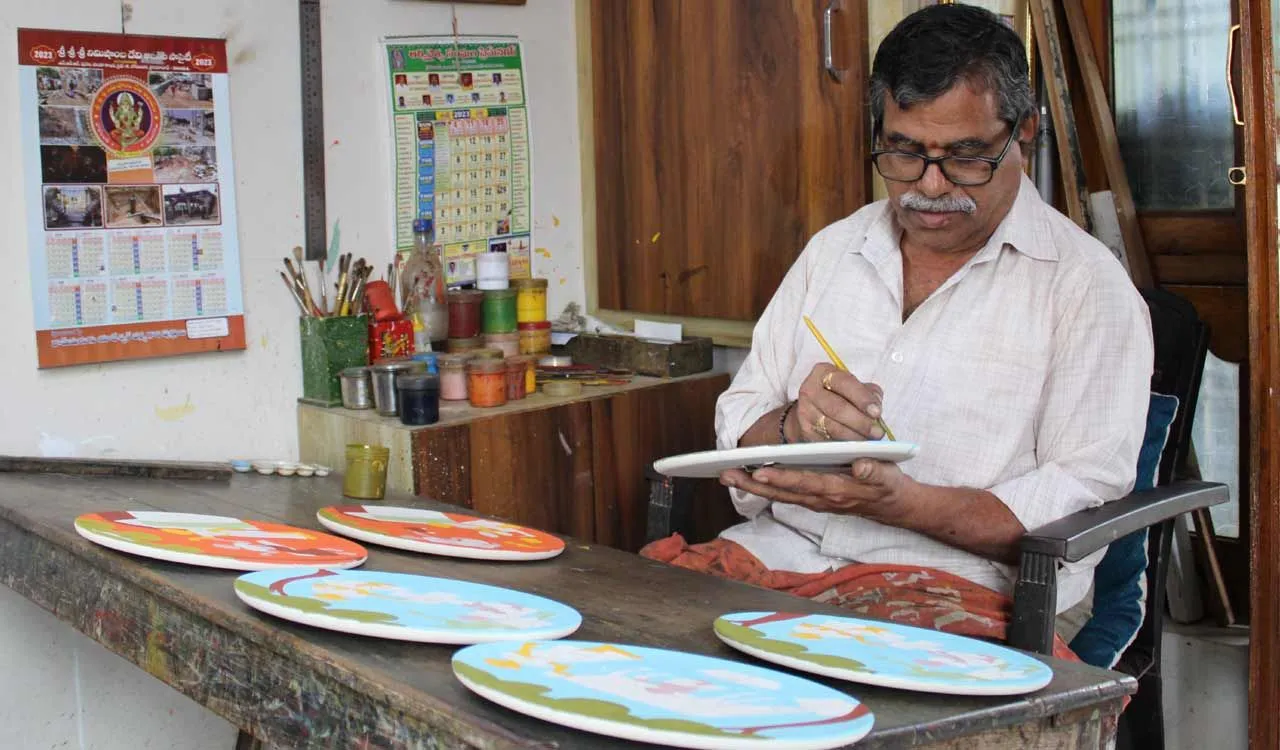
Chriyal Artist Source - Telangana Today
In 2007, Cheriyal scroll painting received a Geographical Indication (GI) tag, recognising its regional identity and helping protect the tradition associated with Telangana's Nakashi artists. The recognition was an important milestone, but the continuity of the art form ultimately depends on the people who practise it and pass their knowledge on.
Among the artists associated with Cheriyal painting is National Award recipient D. Vaikuntam Nakash. The Dhanalakota family, including D. Rakesh, D. Nageshwar, and Sai Kiran Dhanalakota, is also involved in carrying the tradition forward. Through their work and teaching, artists and families preserve the skills involved in preparing the canvas, working with pigments, drawing expressive figures, and arranging scenes into a coherent narrative.
That knowledge is difficult to preserve through finished paintings alone. It also lives in the techniques artists learn through practice, the stories they become familiar with, and the decisions they make while composing a scroll. As younger generations explore new formats and audiences, the challenge is to make room for change without losing the knowledge that gives Cheriyal painting its identity.
Keeping Cheriyal Painting in the Picture
Traditions like Cheriyal painting survive when the people who practise them have opportunities to share their knowledge and reach new audiences. Today, that means finding ways for the art to travel beyond the villages where it developed, without losing the stories, techniques, and cultural knowledge that make it distinctive.
Platforms like Rooftop are helping create new opportunities for Cheriyal and other handcrafted art forms by connecting traditional artists with people who may never have encountered their work otherwise. Through artist-led learning experiences and digital access to traditional practices, this knowledge can reach beyond its original setting and become part of how a new generation discovers and engages with Indian art. The aim is not to replace the ways these traditions have been passed down, but to create more avenues for them to be seen, understood, and practised.
For Cheriyal painting, that wider reach matters. Every opportunity to learn about the Nakashi artists, understand how a scroll is made, or appreciate the stories behind its figures helps bring attention to a tradition that deserves to remain part of India's cultural life.