


Best paintings under ₹10K on Rooftop: buy your first artwork
Seven original paintings under ₹10,000 on Rooftop, including Warli on cow dung Majarpat and Paitkar village scenes from Jharkhand. Start your collection here.

Rooftop
Author
Your first original painting does not need a big wall or a big budget. The best paintings under ₹10K on Rooftop are small works, painted by hand, mostly by artists who learned the craft at home. Three of them sit on a ground of cow dung. Two come from Amadubi in Jharkhand, a village of scroll painters. This list brings together seven of them and sorts them by size, smallest first, so you can start with the wall you already have.
What ₹10,000 buys in Indian art
At this budget you are buying a real original. Rooftop's listings state that every artwork on the platform is painted by hand by a verified artist, and that each one ships with a certificate of authenticity. The artist also earns a royalty on every sale.
What changes as the price drops is size and surface. Large canvases by senior masters cost many times more. Under ₹10,000, you will mostly find paper, small canvas and Majarpat, the cow dung ground that Warli painters use. Nothing in this list is longer than 25 inches on any side.
Small is a good place to start. You can hold a small painting close and see where the brush slowed down. It fits a rented flat. And it leaves money for a frame, which none of these works include.
How this list is ordered
The paintings are listed by area, smallest first. Read the list as a walk through your home. The first two suit a desk or a shelf. The middle three suit a bedroom or a reading corner. The last two can hold a wall on their own.
The paintings
1. Tribal Lifestyle XIII by Kishor Gayen
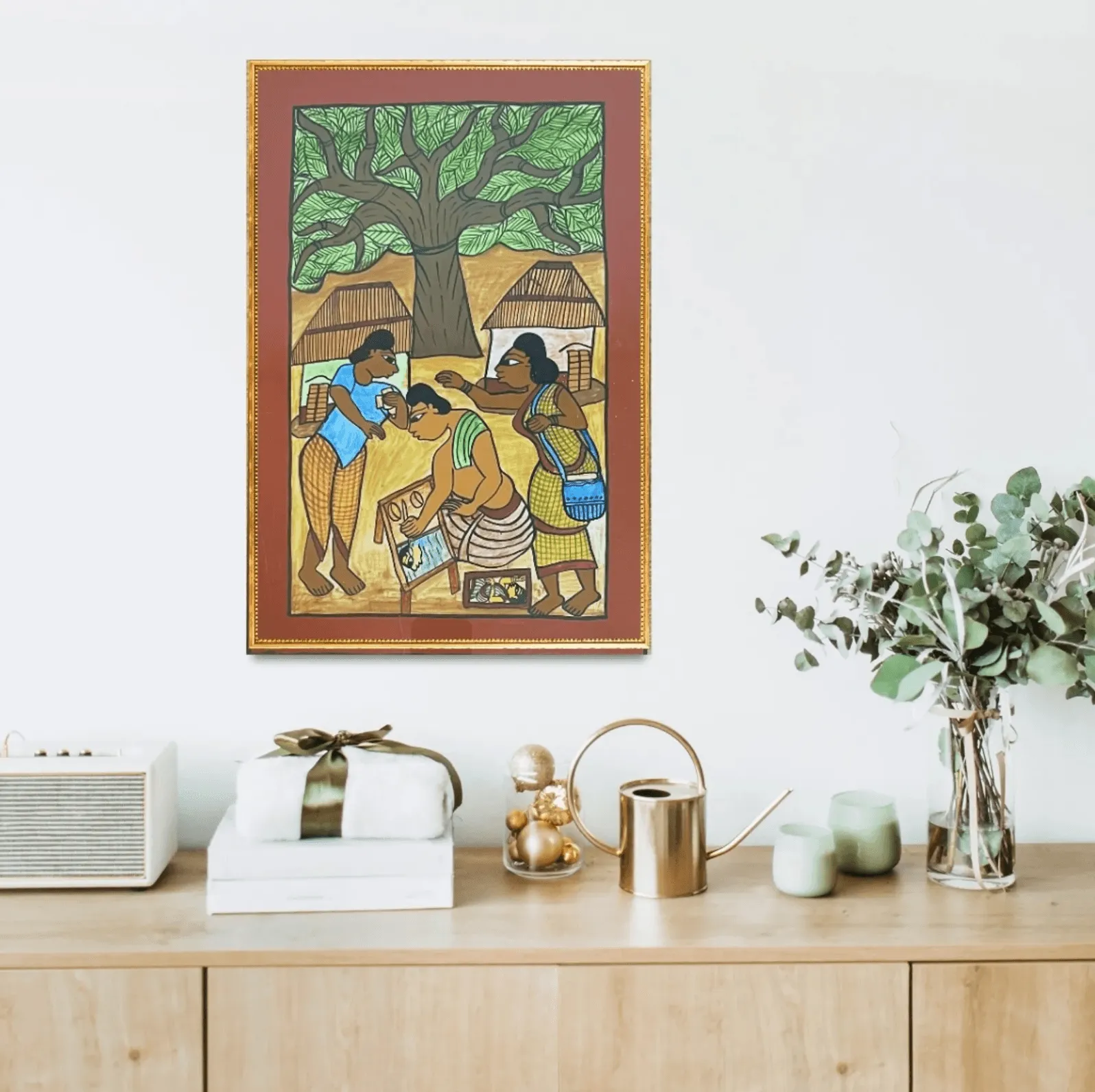
Tribal Lifestyle XIII · Kishor Gayen · 10 x 15 in · Natural colours on paper
Paitkar painters once told whole stories on long scrolls, unrolled one frame at a time. Kishor Gayen packs several moments of village life into one small sheet instead. People work and walk side by side, so the eye reads the painting left to right, like a scroll laid flat. The colours sit in flat blocks of vermilion, yellow, blue and green. Patterned clothes repeat from figure to figure and pull you along the line.
Paitkar painting uses colours taken from the land. Red comes from red hematite, called gerua patthar. Yellow comes from ochre stone or turmeric, orange from the palash flower, and black from burnt rice or lamp soot. Gayen belongs to the younger generation in Amadubi who both paint the form and teach it.
At 10 x 15 inches, this is the smallest work here. Prop it on a desk easel or a bookshelf.
2. Paitkar Tribals IV by Kishor Gayen
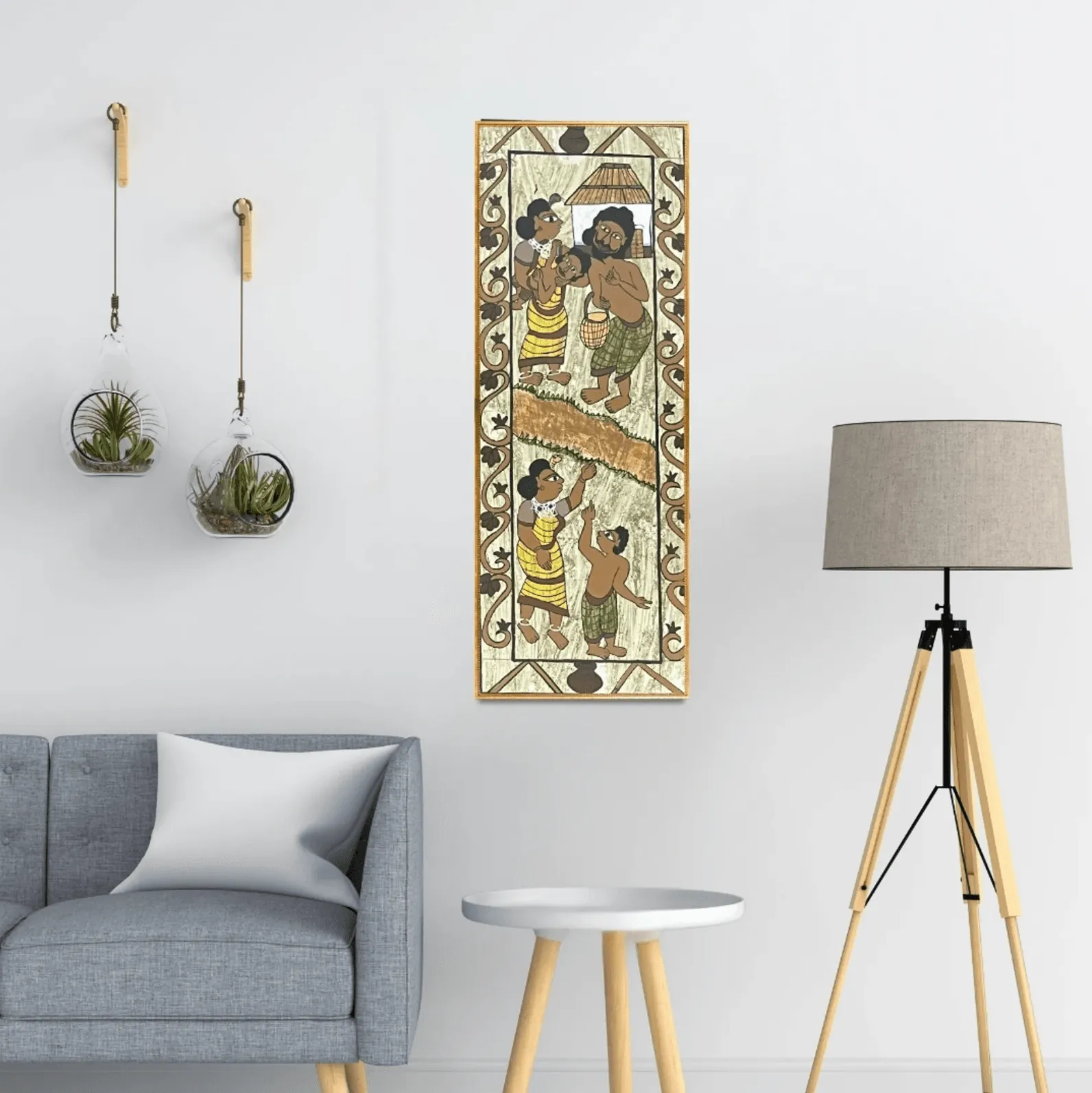
Paitkar Tribals IV · Kishor Gayen · 8 x 19.5 in · Natural colours on paper
Look at the shape first. This sheet is more than twice as wide as it is tall, which makes it the closest thing on this list to a real scroll. Gayen fills the strip with village figures in patterned clothes, one after another, in reds, yellows, blues and greens laid down flat.
A long, low painting solves a common problem. It sits well above a desk, a doorframe or a narrow console, spots where a square painting looks cramped. Hang it at eye level and let it run.
3. Seashore painting
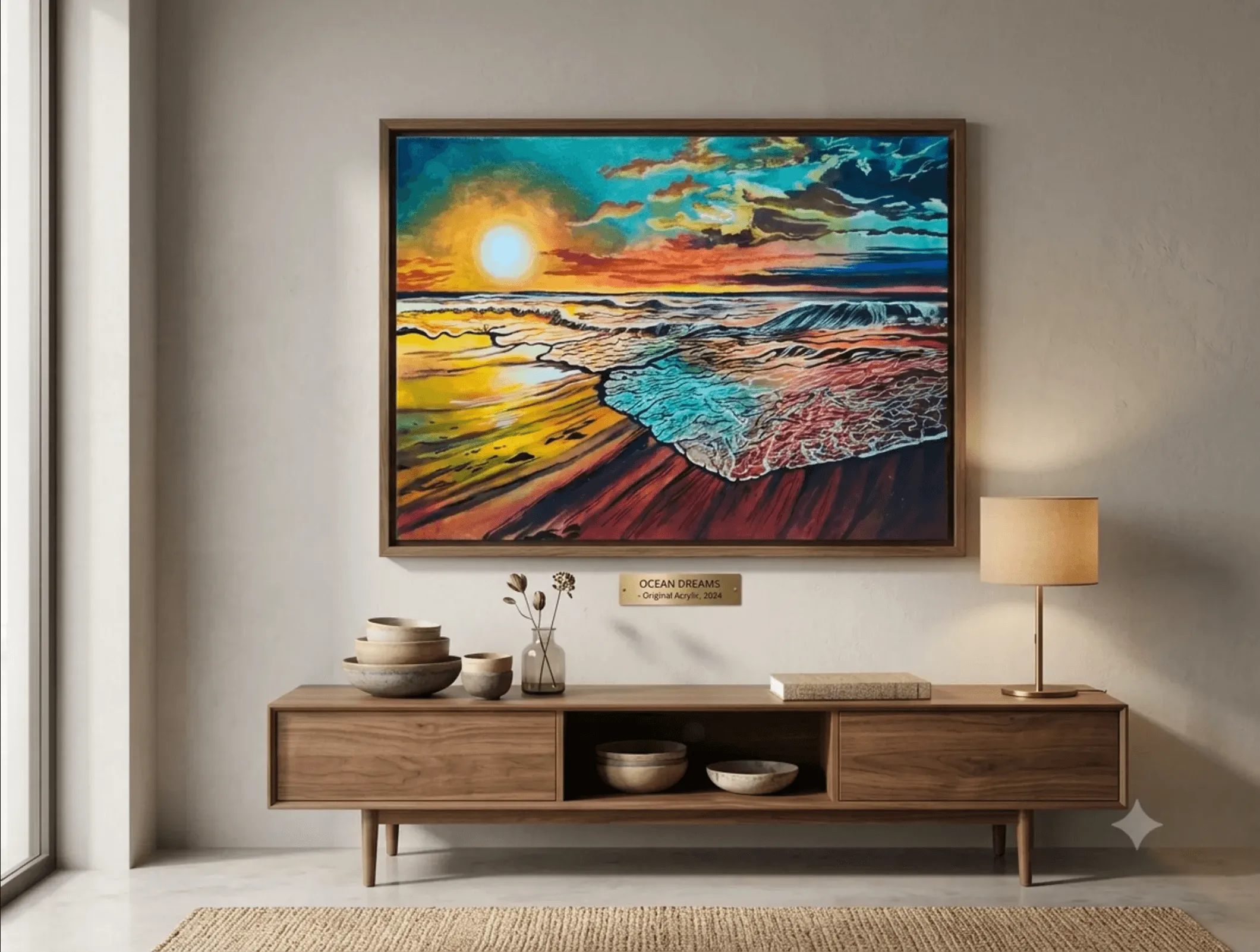
Seashore painting · Sold by Shivangi Samir Patel · 12 x 16 in
Not every first painting has to be folk art. This seascape shows the sun going down over a rough sea. The sky swings between orange and deep teal, and the waves break into white foam. The wet sand picks up the sky's colours in streaks of amber and rust.
The seller's care note says you can wipe it with a damp cloth. That makes it the easiest of the seven to keep clean, which counts if it hangs near a dining table.
4. The Tulip Gardens of Kashmir Painting
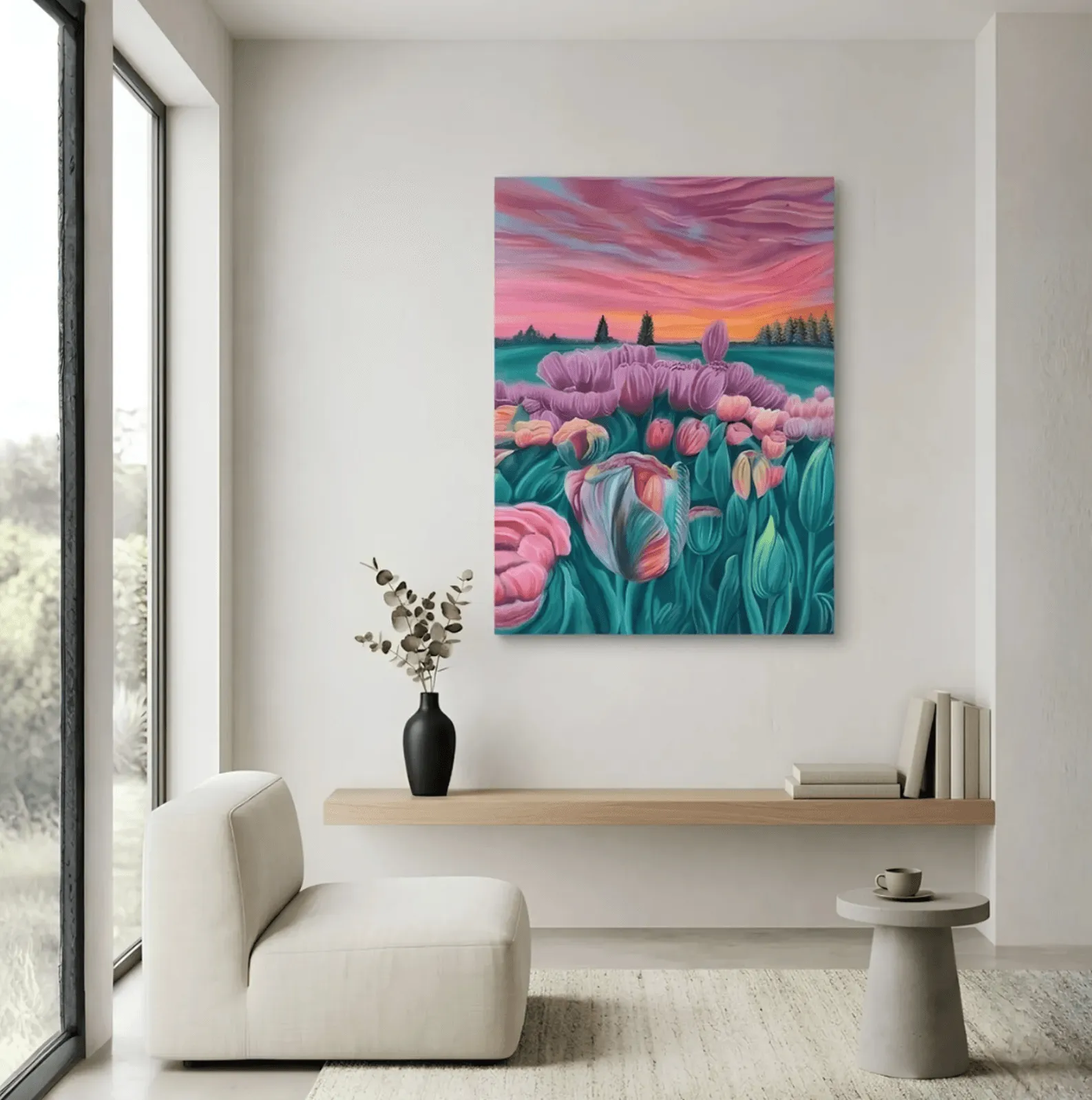
The Tulip Gardens of Kashmir Painting · 12 x 16 in · Acrylic on canvas
The tulip fields of Kashmir bloom each spring, and this painting catches them at sunset. The sky runs pink, lavender, coral and gold. Below it, tulips in blush, peach, crimson and soft purple rise against deep turquoise-green leaves. The brushwork is loose and quick, so the flowers seem to sway.
Here is a practical idea. This canvas and the seashore share one size, 12 x 16 inches. Hung side by side, they make a matched pair, one sea and one field, both lit by the same low sun.
5. The Warli Tree of Life by Pravin Mhase
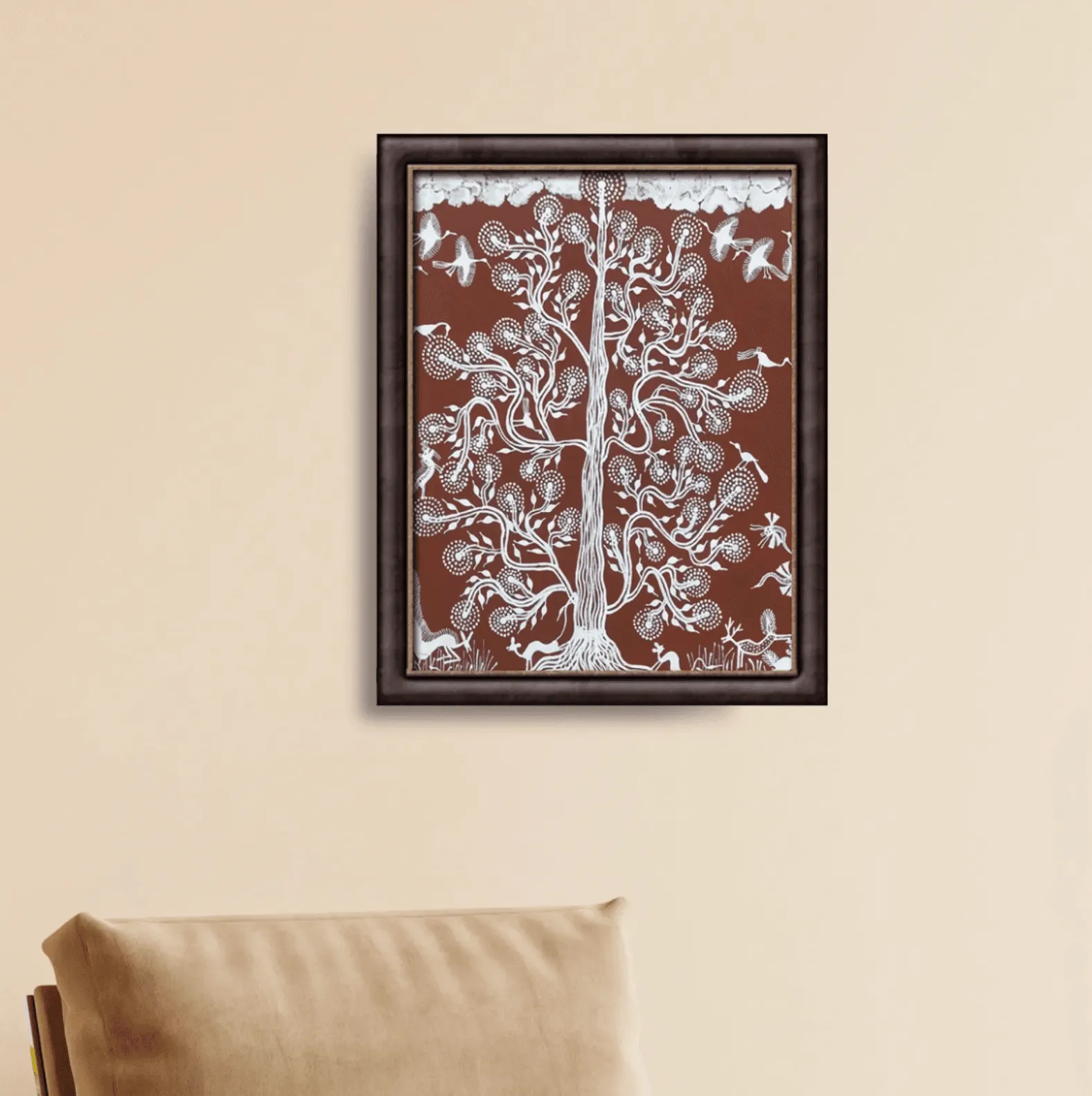
The Warli Tree of Life · Pravin Mhase · 15.2 x 16.4 in · Cow dung base, acrylic and poster colours on Majarpat
Start with the brown. That ground is cow dung, the same earth Warli families use to plaster the walls of their homes. On Majarpat it becomes portable, and the painting keeps the warm, uneven feel of a village wall.
A tall tree stands at the centre, and animals gather all around it. Warli figures are built from circles, triangles and lines, so the tree reads as a meeting place, full of small moving shapes.
Pravin Mhase is a grandson of Padma Shri Jivya Soma Mhase, the painter whose family is most closely tied to the revival of Warli painting. The near-square format suits a bedroom wall.
6. The Enchanting Peacock Dance by Pravin Mhase
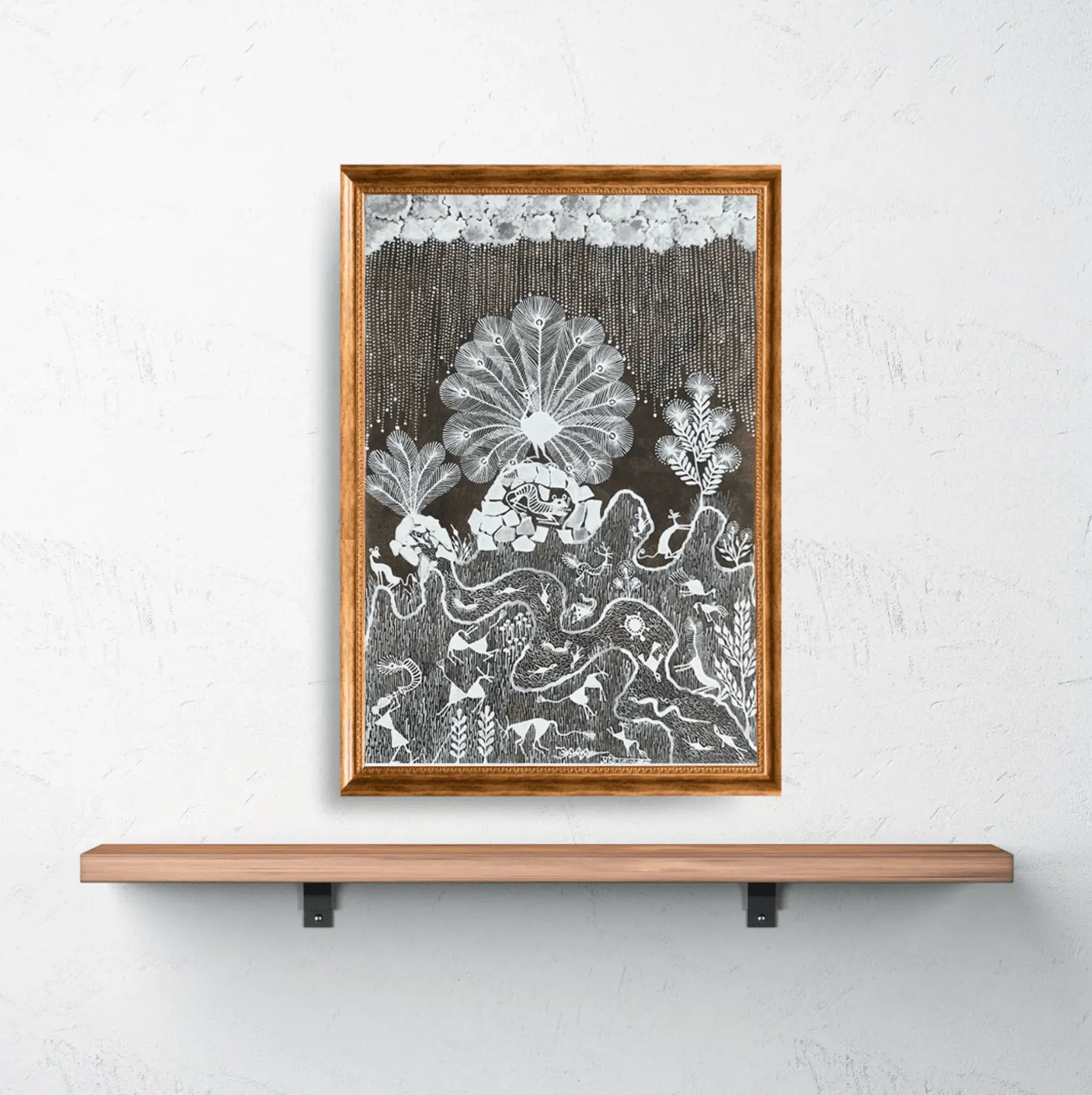
The Enchanting Peacock Dance · Pravin Mhase · 15 x 19.3 in · Cow dung base, acrylic and poster colours on Majarpat
The monsoon has arrived. A peacock spreads its tail and dances, and the animals around it join in. Mhase uses the same cow dung ground as his tree of life, but the mood has changed. The tree stood still. The peacock moves.
With so few shapes to work with, a Warli painter shows joy through rhythm and spacing. Count how many times the tail feathers repeat. That repeat is the dance.
This one suits an entrance or a living room corner, where people pass it often and catch it out of the corner of their eye.
7. The Delicate Web of Life by Pravin Mhase
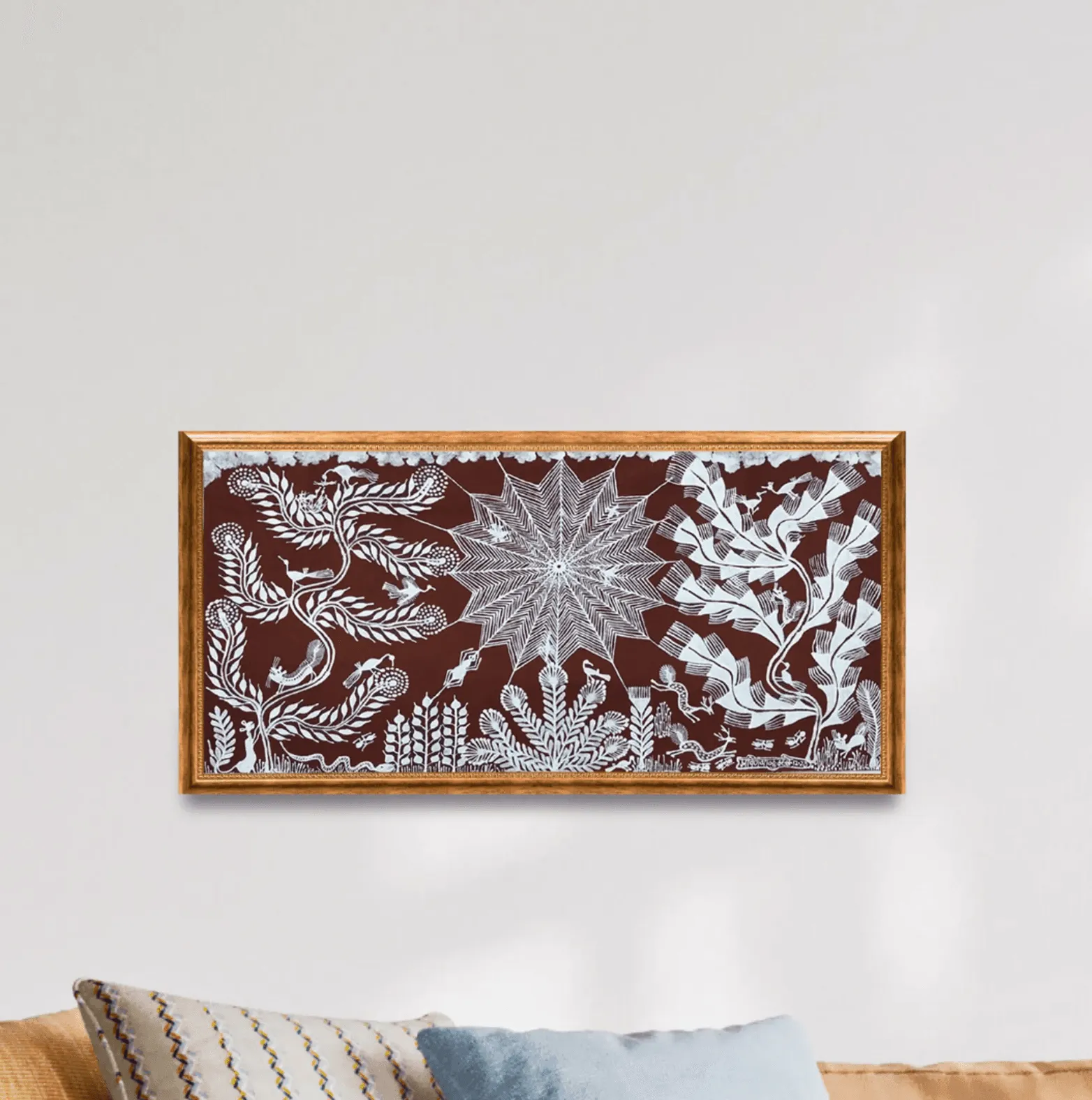
The Delicate Web of Life · Pravin Mhase · 25 x 15 in · Cow dung base, acrylic and poster colours on Majarpat
Most Warli paintings are about people. They show harvests, dances and weddings, crowds of figures doing things together. This one is about a spider. Mhase strings its web between leafy plants, the lines kept fine against the earthen ground. A quiet subject in a form known for crowds makes you look twice.
It is also the largest work on this list. At 25 inches wide, it can hold the wall above a bed or a low cabinet by itself.
One Mhase or three?
Three of these seven paintings come from one painter, on one ground, at close sizes. Bought together, they form a small series: a tree, a dance and a web. Bought one at a time, they let you start small and add later. If we were starting from zero, we would buy the peacock first and add the web the following year. When you are ready to go bigger, Pravin's Worship of Nature, After Harvesting Crops is the natural next step.
How to choose your first painting
Start with the wall, not the painting. Measure it, then cut a sheet of newspaper to the painting's size and tape it up for a day. You will know quickly whether it feels too small.
Next, check the light. Natural pigments and cow dung grounds do not like direct sun. A wall that catches afternoon light through a window is a better home for a canvas than for paper.
Then think about the surface. Paper and Majarpat need a frame with glass. Canvas can hang without one.
Finally, budget for framing. All seven works ship unframed. A plain wooden frame and a simple off-white mount suit both Warli and Paitkar. Skip heavy gold frames. They fight the earth tones.
Buying on Rooftop
Each of these works is a single original, and each listing shows one piece in stock, so once it sells it is gone. Orders cannot be cancelled and items cannot be returned, so check the size against your wall before you buy. Rooftop ships with insurance and lists delivery within India in about three days. Every artwork comes with a certificate of authenticity. Prices on the site can change, so confirm the current price on the listing before you order.
Caring for paper, Majarpat and canvas
Paitkar works on paper need to stay flat and dry. Frame them under glass and never wipe the surface, because natural colours can lift with moisture.
For Warli on Majarpat, Rooftop's Warli listings advise keeping the painting out of direct sunlight, dusting it gently with a soft cloth and keeping water and cleaning products away from it. A frame with glass protects it for the long run.
For the two canvases, follow the seller's note for the seashore and use a lightly damp cloth. Keep both away from direct sun.
Learn the forms behind the paintings
The Warli course by the Mhase family is taught by Sadashiv Mhase, elder son of Jivya Soma Mhase, and walks through the circle, triangle and line that build every Warli figure. For Paitkar, the Paitkar painting experience near Jamshedpur runs for three hours and covers natural pigments, outlining and how a Paitkar story is laid out. Rooftop's Paitkar Art Wiki lists every pigment and where it comes from. When you want to see more, browse all paintings on Rooftop or the nature-inspired collection.
Three of the paintings on this list sit on the same cow dung that plasters a Warli home. For under ₹10,000, you can hang a piece of that wall in yours.