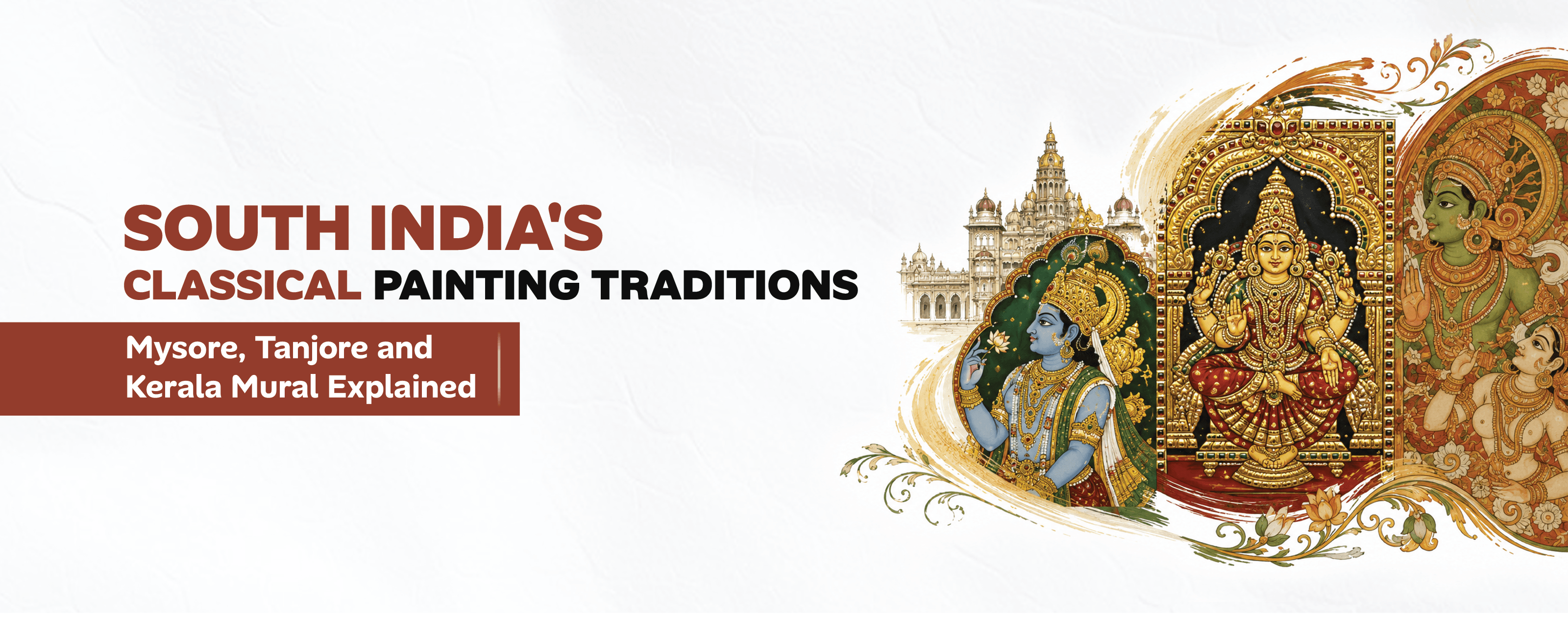



During major festivals in Bengal, the courtyards and entrances of traditional homes often come alive with delicate white patterns. Known as Alpona or Alpana, this traditional Bengali floor art is commonly created during Lakshmi Puja, Durga Puja and various seasonal brata (vow and ritual) observances. Made with liquid rice paste, its flowing lines, floral patterns and symbolic footprints turn ordinary household spaces into places of worship.
Alpona is much more than a decorative art form. Drawing these patterns is a way of preparing the home for an auspicious occasion, welcoming deities and expressing hopes for prosperity, good health and family well-being. During Lakshmi Puja, for instance, the artist may draw small footprints associated with Goddess Lakshmi, symbolically inviting her into the house. Other designs reflect nature, fertility and the agricultural life of Bengal.
The word Alpana is often traced to the Sanskrit alimpana, associated with coating or smearing a surface. This connection is reflected in the traditional technique itself. Unlike many floor-art traditions that use dry coloured powders, Alpona is generally drawn with a liquid mixture of rice flour and water. The artist applies it directly to the floor using her fingers, allowing the paste to flow into curves, dots, leaves and intricate patterns.
Traditionally, women have played a central role in preserving this practice. The designs and techniques were passed from mothers and grandmothers to younger generations through observation and practice, often as part of preparations for festivals and household rituals. Although the tradition continues to evolve, this intergenerational knowledge remains an important part of Alpona's cultural identity.
Every pattern carries an intention. A lotus may suggest purity and auspiciousness, while footprints can represent the arrival of a deity. Lines, circles and floral forms help transform the threshold or courtyard into a sacred space. Through a simple mixture of rice and water, Alpona brings together artistic expression, religious belief and everyday life in Bengal.
How Alpona Differs from Rangoli, Kolam and Mandana
How Alpona Differs from Rangoli, Kolam and Mandana
Across India, the entrance of a home often becomes a canvas during festivals and important household rituals. In Maharashtra, coloured powders take the shape of Rangoli. In Tamil Nadu, rice flour is arranged into intricate Kolam patterns, while in Rajasthan, white designs stand out against reddish earthen floors in the form of Mandana. Bengal has its own tradition: Alpona, where liquid rice paste flows across the floor to create delicate, interconnected patterns.
All four art forms share a connection with auspicious occasions and the belief that a carefully decorated threshold can welcome prosperity and positive energy. However, the way each one is made gives it a distinct visual character. The biggest difference lies in the medium. Alpona is traditionally drawn with a wet mixture of rice flour and water, while many forms of Rangoli, Kolam and Mandana rely on dry powders or contrasting materials applied to the floor.
| Feature | Bengal Alpona | Maharashtra Rangoli | Tamil Nadu Kolam | Rajasthan Mandana |
|---|---|---|---|---|
| Traditional Medium | Liquid rice paste, often called pithali | Dry white or coloured powders | Rice flour or other fine powders; some variations use wet materials | White pigment such as khariya against a red clay or geru base |
| Application | Fingers or a small cloth swab dipped in rice paste | Powder released between the fingers | Powder placed or released through the fingertips | Fingers, cloth swabs or other simple applicators |
| Design Approach | Flowing curves, loops, floral forms and freehand patterns | Geometric, floral and decorative patterns, sometimes built around dots | Dot-based arrangements and looping lines, especially in pulli Kolam | Geometric shapes, repeated patterns and symbolic motifs |
| Common Appearance | Predominantly white designs on the floor | Often colourful, with regional variations | Traditionally white, sometimes accented with red kavi | White patterns against an earthy red background |
| Occasions | Lakshmi Puja, Durga Puja, brata rituals and other auspicious occasions | Festivals, weddings and daily household observances | Often drawn outside homes every morning, as well as during festivals | Festivals, weddings, births and other household celebrations |
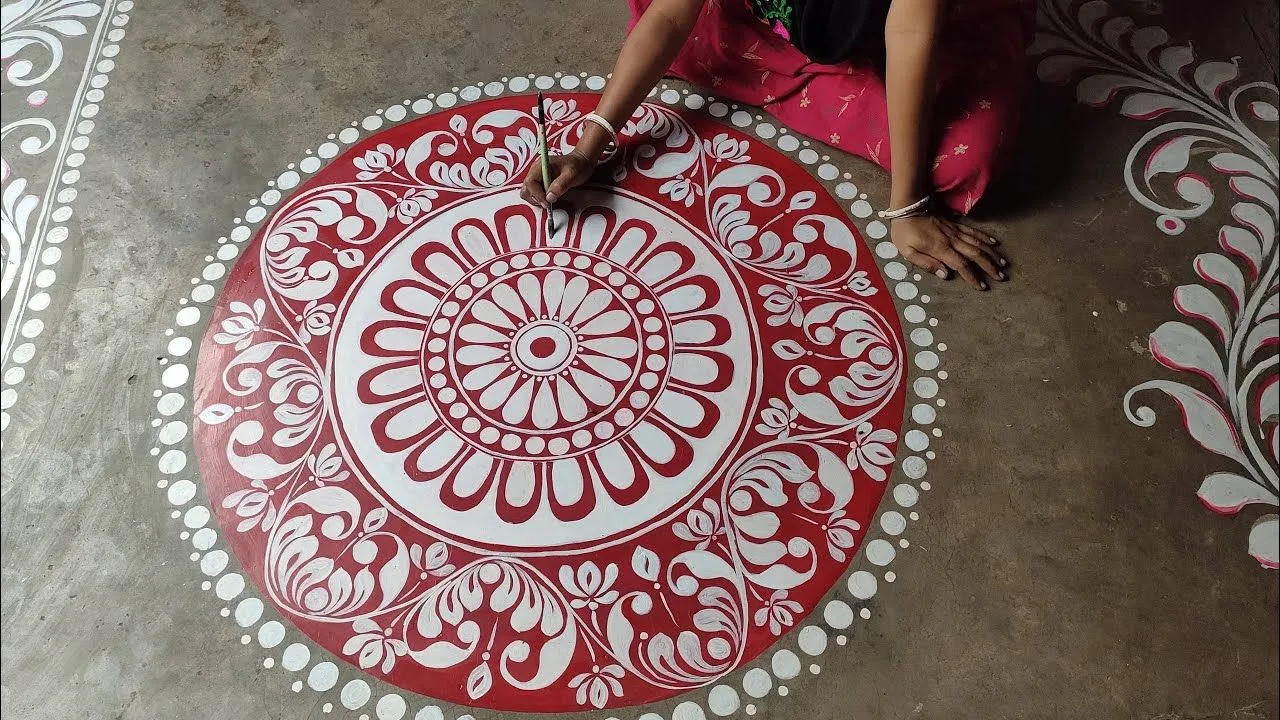
The difference becomes especially clear when you watch someone make an Alpona. Instead of releasing dry powder from between the fingers, the artist dips her fingertips or a small piece of cloth into the rice-paste mixture and draws directly onto the floor. The paste leaves a continuous white trail, allowing her to create curves, spirals, leaves and other motifs with varying line thickness.
This is what gives traditional Alpona its distinctive, almost calligraphic quality. The lines can flow into one another, forming larger compositions without making the design look rigid or overly symmetrical. The artist may begin with a central motif and gradually extend the pattern around it, adapting the design to the available space.
Kolam, on the other hand, is particularly known for its dot-based construction. In many pulli Kolam designs, a carefully arranged grid of dots acts as the foundation, with continuous lines woven around them. Rangoli offers considerable variety in its use of colours and patterns, while Mandana is recognised for its strong geometric compositions and striking contrast between white pigment and earthen surfaces.
These distinctions are useful, but the traditions are not governed by rigid boundaries. Each has regional variations, and artists often adapt materials and methods to suit their surroundings. What makes Alpona distinctive is the relationship between its liquid medium and the flowing patterns it produces. It is an art form in which the movement of the hand is visible in almost every line.
How to Make Alpona The Traditional Rice Paste and Tools Used
How to Make Alpona The Traditional Rice Paste and Tools Used
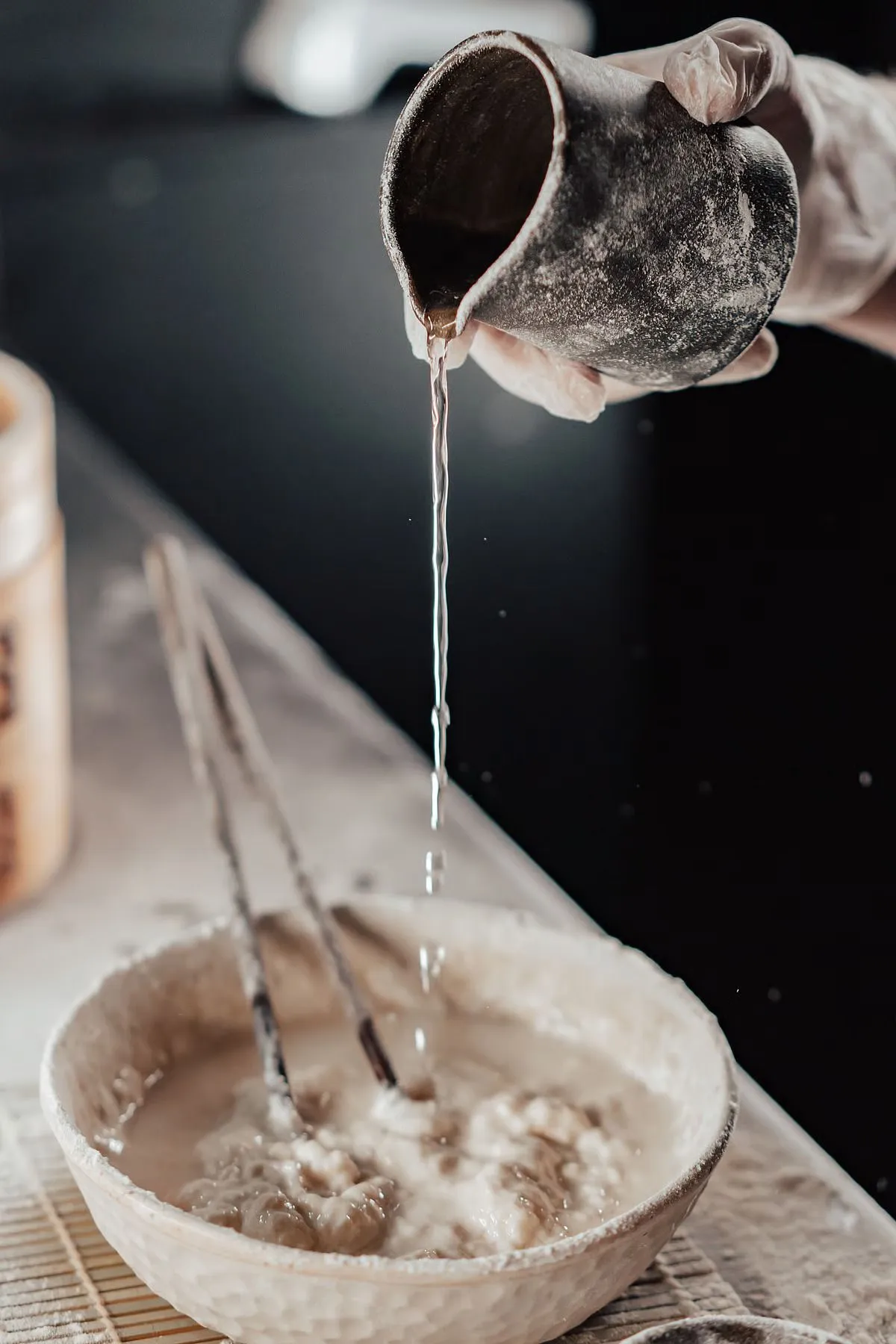
The delicate white lines of Alpona come from a surprisingly simple material: rice. Traditionally, artists prepare a liquid rice paste known as Pithali, which gives the designs their characteristic white finish. The process begins with raw, unboiled rice, locally known as Atop Chal. The grains are soaked in water until soft and then ground into a smooth paste, traditionally using a stone slab and roller called Shil-Nora. The paste is mixed with water until it becomes thin enough to flow easily but thick enough to leave a visible white line on the floor. This balance is important. If the mixture is too watery, the lines become faint and spread across the surface. If it is too thick, the paste becomes difficult to apply smoothly.
One of the most interesting parts of traditional Alpona is the tool used to draw it. Instead of a conventional paintbrush, artists often use a small piece of cotton cloth or raw cotton, known as a Kuchi in some descriptions of the practice. Wrapped around the fingertips and dipped into the rice paste, it holds enough liquid to release a continuous line as the hand moves across the floor. The artist controls the thickness and movement of the line by adjusting the pressure of her fingers. This simple technique is what gives Alpona much of its flowing character. With a little practice, the artist can move from a small dot to a long curve, creating flowers, leaves, footprints and intricate patterns without changing tools.
Trying Alpona at Home
Fresh rice paste and a traditional cotton applicator offer the closest experience of making Alpona in its traditional form. However, beginners can experiment with simpler materials, particularly when practising on paper, boards or other surfaces.
- White poster colour or gouache: Diluted slightly with water to create a consistency similar to rice paste.
- A small round brush: Useful for practising curves, dots and finer details before trying the traditional cotton applicator.
- A cotton swab or folded cloth: A simple alternative for experimenting with thicker, flowing lines.
For the most authentic experience, try preparing a small quantity of rice paste and drawing directly with your fingertips or a cotton wad. Start with simple curves and floral patterns before attempting a larger composition. The aim is to get comfortable with the movement of the paste rather than make every line perfectly uniform.
5 Traditional Alpona Motifs and Their Meaning in Bengali Culture
Alpona designs draw from a familiar collection of motifs associated with Bengal's religious beliefs, agricultural life and household traditions. A footprint, a lotus or a cluster of rice grains may look like a simple decorative element, but each carries an intention. These patterns often appear during Lakshmi Puja and other auspicious occasions, turning the floor into a visual expression of prayers for prosperity, protection and well-being. Some motifs are especially closely associated with Goddess Lakshmi, while others reflect Bengal's dependence on rice cultivation and the natural world. Here are five important elements found in traditional Alpona designs.
1. Lokkhi Pa The Sacred Footprints of Goddess Lakshmi
Lokkhi Pa The Sacred Footprints of Goddess Lakshmi
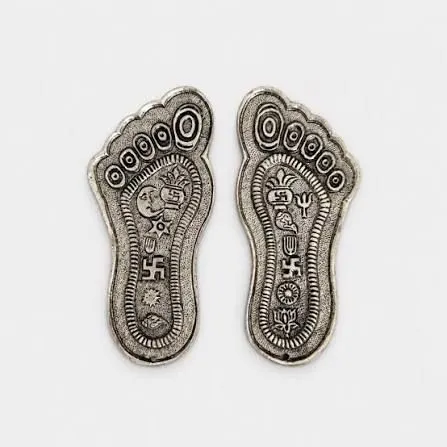
One of the most recognisable elements of Alpona is Lokkhi Pa, the small footprints associated with Goddess Lakshmi. They are particularly common during Lakshmi Puja, when households prepare their entrances and prayer spaces to welcome the goddess. The footprints are usually drawn as a pair, with toes and heels represented through simple marks or curved lines. In many households, they are arranged to suggest Lakshmi entering the home, leading from the threshold towards the place of worship. This direction gives the design its ritual meaning: the family is symbolically inviting prosperity and good fortune inside.
2. Dhaner Chhiri Paddy Sheaves and Rice Grains
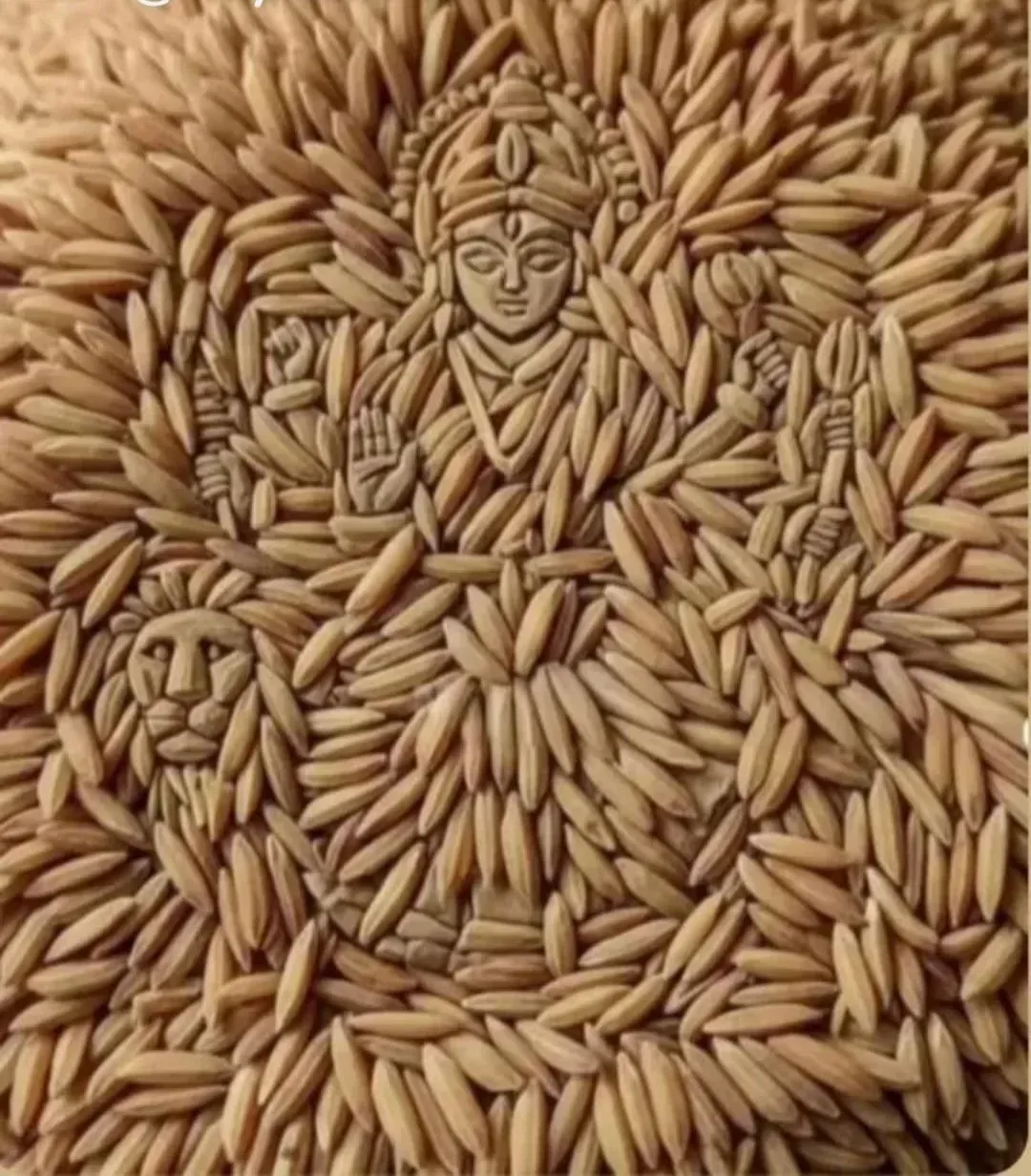
Dhaner Chhiri Paddy Sheaves and Rice Grains
Rice has shaped Bengal's food, festivals and everyday life for generations, so it is hardly surprising that paddy appears frequently in Alpona. Motifs made of rice grains, stalks and sheaves reflect the importance of a good harvest and the hope for a household that never lacks food. These patterns may take the form of curved stems with small oval shapes arranged along them, resembling grains of paddy. They are particularly meaningful during harvest-related observances and rituals connected with prosperity. In a region where rice has long been central to agricultural life, the motif becomes a simple expression of gratitude for the land and its produce.
3. Padma The Sacred Lotus
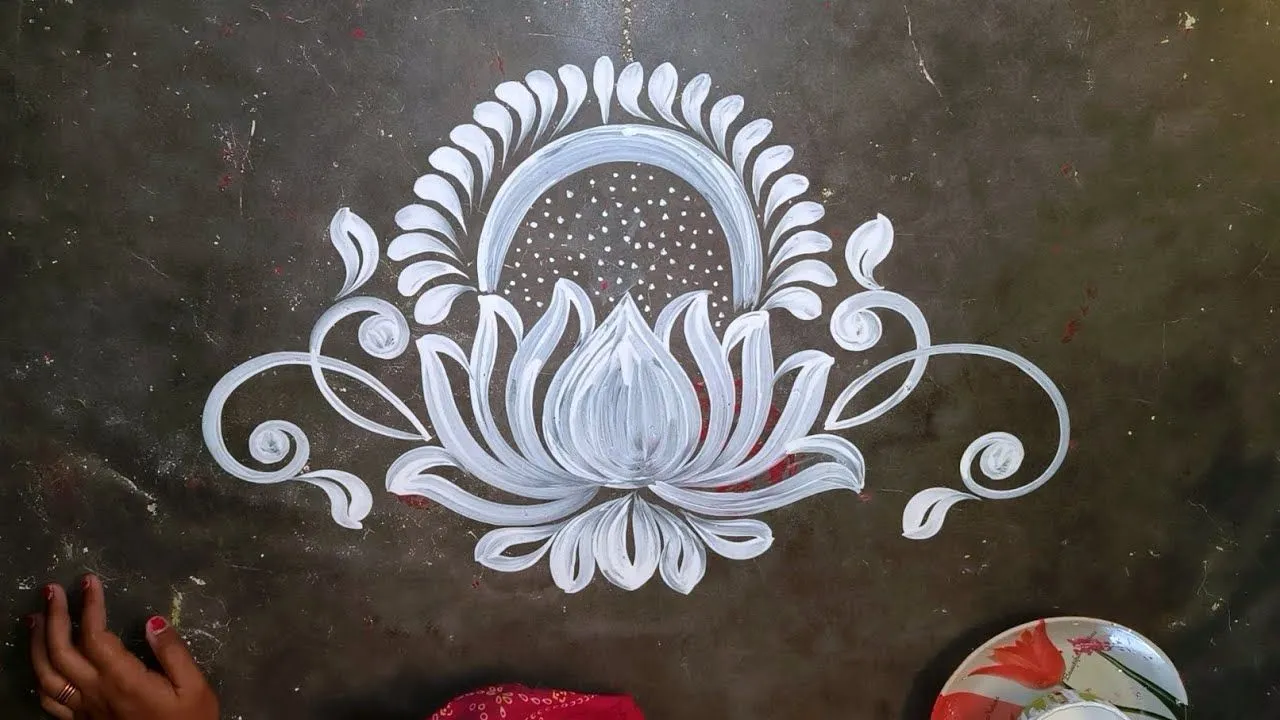
Padma The Sacred Lotus
The Padma, or lotus, is another familiar motif in Bengali Alpona. Its rounded or pointed petals are arranged around a central point, creating a symmetrical floral design that can be small and simple or spread across a large section of the floor. The lotus has strong associations with purity and auspiciousness in Hindu traditions. It is also closely connected with Goddess Lakshmi, who is often depicted seated on a lotus. In Alpona, the flower may therefore serve as a symbolic seat for the goddess or as an offering in its own right. Its ability to bloom in muddy water also gives it a wider association with purity and spiritual growth.
4. Kalka The Curving Paisley Motif
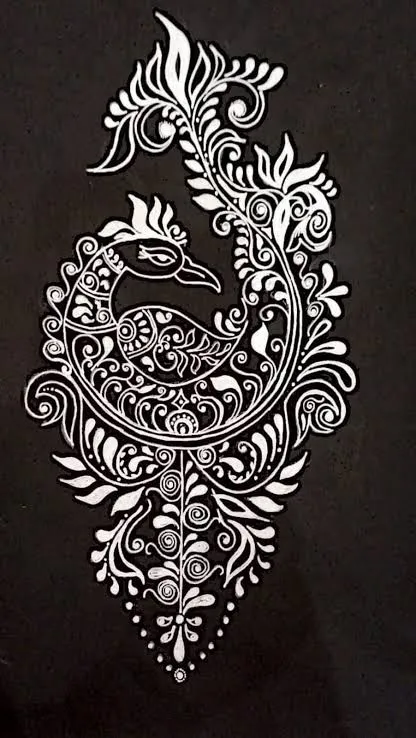
Kalka The Curving Paisley Motif
Kalka is a curved, teardrop-shaped motif with a pointed or curled end, resembling the paisley pattern familiar from Indian textiles. Similar forms appear in Bengali weaving and embroidery, including Jamdani textiles and Kantha work. In Alpona, the motif can be drawn on its own or incorporated into larger floral and decorative arrangements. Its curved shape makes it particularly suited to the flowing lines of rice-paste painting. While interpretations differ, such forms are often associated with fertility, growth and abundance in Indian decorative traditions.
5. Sankha The Sacred Conch Shell
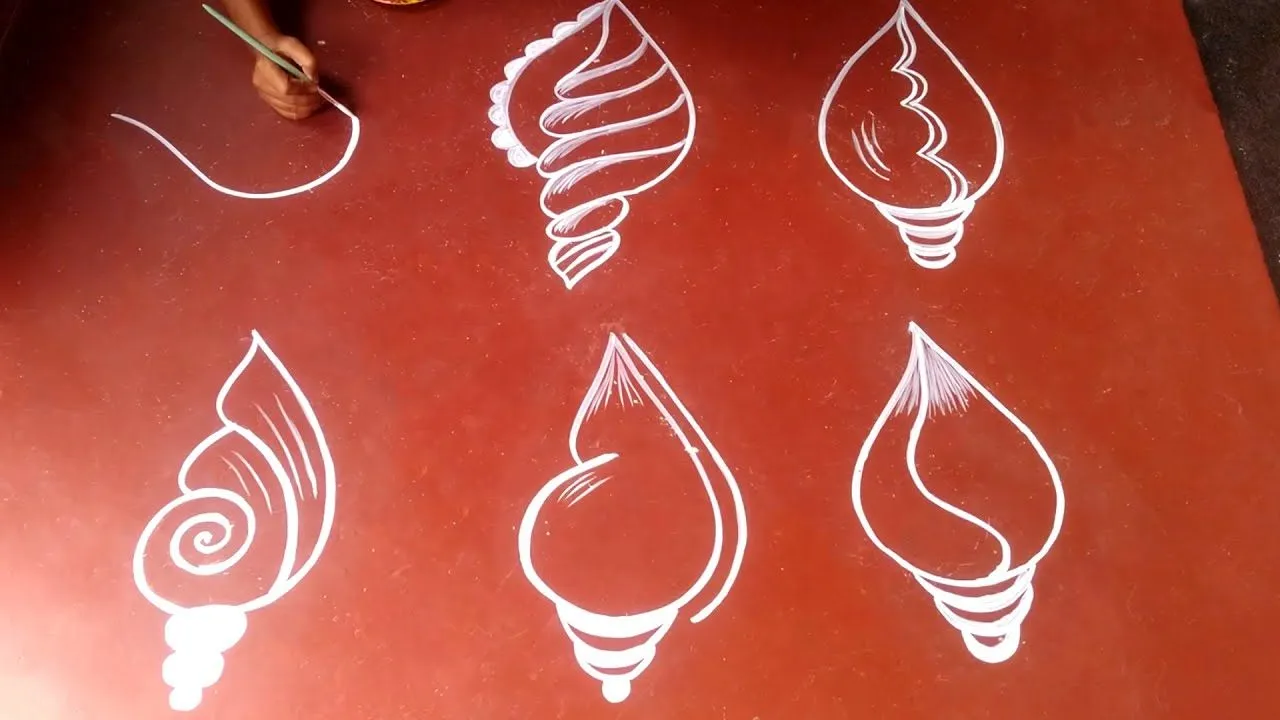
Sankha The Sacred Conch Shell
The Sankha, or conch shell, is an important symbol in Hindu worship and is frequently associated with Vishnu. Its sound is used during religious ceremonies and is believed to mark an auspicious beginning. In Bengali households, the conch also has a familiar place in everyday ritual life, particularly during pujas and other ceremonies. When included in Alpona, the conch is usually represented through a simplified outline that captures its curved shell and tapering form. It may appear as an individual motif or as part of a larger composition. Its presence brings associations of auspiciousness, worship and divine protection into the design.
Together, these motifs show how Alpona brings the religious and everyday worlds of Bengal onto the same surface. The footprints welcome a goddess, the paddy recalls the harvest, and flowers and conch shells connect the household to familiar symbols of worship. Their meanings may shift with the occasion and the person drawing them, but each gives the design a purpose beyond decoration.
8 Alpona Designs You Can Draw at Home Step by Step
Alpona Designs You Can Draw at Home Step by Step
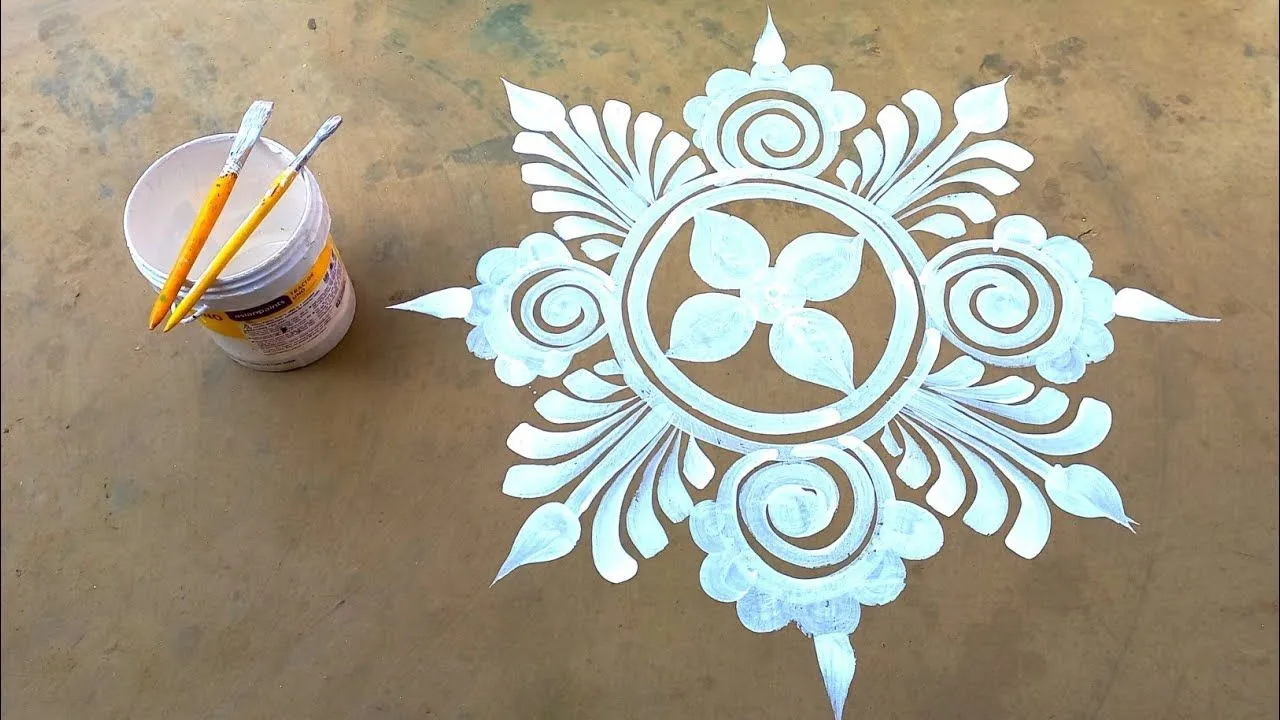
One of the best ways to understand Alpona is to try drawing its patterns yourself. Most designs begin with a few simple elements such as dots, curves, petals and flowing lines. These can be combined to create everything from a small decorative border to a detailed composition for the centre of a courtyard.
The eight designs below include familiar motifs such as Lokkhi Pa, Padma and Kalka, along with floral and geometric patterns inspired by traditional Bengali floor art. Start with the simpler shapes and gradually move towards the more detailed arrangements. You can use a traditional rice-paste mixture or diluted white paint on paper or a practice surface.
Pattern 1 - Lokkhi Pa Sacred Footprints
The footprints of Goddess Lakshmi are among the most familiar Alpona motifs, particularly during Lakshmi Puja. They are often arranged to suggest the goddess entering the home.
- Begin by drawing a small oval to represent the sole of one foot.
- Add a gentle curve along one side to give the shape a more natural outline.
- Draw five small dots at one end for the toes. Make the big toe slightly larger than the others.
- Repeat the same steps to create the second footprint, keeping both feet close together.
- Add a few small leaf or paddy-inspired strokes around the pair if you want to make the design more decorative.
You can repeat the footprints in a line from the entrance towards your prayer space to create the traditional welcoming effect.
Pattern 2 - Dhaner Chhiri Paddy Sheaf Border
Inspired by the grains and stalks of rice, this pattern brings an agricultural element into your Alpona. It works particularly well along the edges of a doorway or courtyard.
- Draw a long, gently curving line along the edge of your chosen surface.
- Add small oval shapes on either side of the line to represent rice grains.
- Arrange the grains in little clusters, following the direction of the curve.
- Add a few smaller dots or leaf-like strokes between the clusters to fill the gaps.
Keep the spacing relatively even, but allow the line to flow naturally. The repeated grain shapes will give the border its distinctive paddy-inspired appearance.
Pattern 3 - Padma The Eight-Petal Lotus
The lotus is closely associated with Goddess Lakshmi and is a popular choice for the centre of a larger Alpona composition. Its symmetrical arrangement also makes it a good design for beginners learning to balance a pattern.
- Draw a small circle at the centre of your composition.
- Add four petals extending towards the top, bottom, left and right.
- Fill the gaps between these petals with four more petals, creating an eight-petal arrangement.
- Draw a second, finer outline around the petals to give them more definition.
- Place a small dot or curved detail inside each petal to complete the design.
You can surround the lotus with small dots, leaves or additional circular patterns to create a larger central arrangement.
Pattern 4 - Kalka The Paisley Motif
Kalka is a curved, paisley-like shape that appears in several Indian decorative traditions. Its flowing outline makes it particularly suited to the freehand style of Alpona.
- Begin with a curved line that forms a rounded, teardrop-like body.
- Extend one end into a narrow, curling tip.
- Draw a second line alongside the first to complete the outline.
- Fill the inside with small leaves, dots or curved strokes.
Try drawing a few Kalka motifs facing different directions. They can be arranged individually or connected through small vines to form a decorative border.
Pattern 5 - Sankha The Conch Shell
The conch is an auspicious symbol in Hindu worship and can be used as a decorative element in Alpona compositions. Its spiral shape makes it slightly more challenging, but the design can be broken down into simple curves.
- Draw a small spiral near one end of your composition.
- Extend a curved outline from the spiral, gradually widening it to create the body of the conch.
- Complete the outer shape with a second curved line.
- Add two or three short curved strokes across the body to suggest the ridges of the shell.
- Repeat the motif along a line if you want to create a continuous border.
Keep the spiral and outer curves simple. A few well-placed lines are enough to make the shell recognisable.
Pattern 6 - Duari Alpona A Decorative Threshold Design
The entrance is an important space in traditional Alpona practice. This simple geometric design takes inspiration from the repeated lines and patterns used to decorate household thresholds.
- Draw two long, parallel lines across the width of your doorway or practice surface.
- Fill the space between them with repeating diagonal lines, crossing them to form diamond shapes.
- Place a small dot inside each diamond.
- Add curved arches, tiny leaves or paddy-inspired details along the outer edge to complete the border.
You can adjust the length and spacing of the pattern according to the size of your entrance.
Pattern 7 - Jol-Torongo Flowing Water-Inspired Border
Jol-Torongo means waves of water. This decorative pattern uses repeated curves to create a sense of movement and works well along the edges of a larger Alpona design.
- Draw a continuous wavy line across your surface.
- Add a second wavy line below it, following the same rhythm while leaving some space between the two.
- Place small dots or clusters of three dots inside the wider loops.
- Add tiny curls or spiral details at selected points to give the border a more elaborate finish.
The key is to maintain a steady rhythm between the curves. You can make the waves broader or tighter depending on the space available.
Pattern 8 - Pata Bel A Garland of Leaves and Tendrils
Floral vines and leafy patterns are a natural fit for Alpona's flowing style. Pata Bel is a simple decorative interpretation that can be used around the edges of a central motif or as a standalone border.
- Draw a gently curving line to form the main stem.
- Add pairs of almond-shaped leaves branching out from either side.
- Draw a fine line through the centre of each leaf to suggest its vein.
- Add small curling tendrils between the leaves to give the vine a more natural appearance.
Repeat the pattern along the edge of your surface, allowing the stem to bend and curve rather than keeping it perfectly straight.
Once you have practised these designs individually, try combining two or three motifs into a larger composition. A central lotus surrounded by paddy patterns, for instance, can create a beautiful arrangement for Lakshmi Puja. The beauty of Alpona lies in how simple shapes come together through the movement of the hand, so don't worry about making every curve identical. Let the design develop as you draw.
Tips for Creating Clean Alpona Designs and Getting the Rice Paste Technique Right
Tips for Creating Clean Alpona Designs and Getting the Rice Paste Technique Right
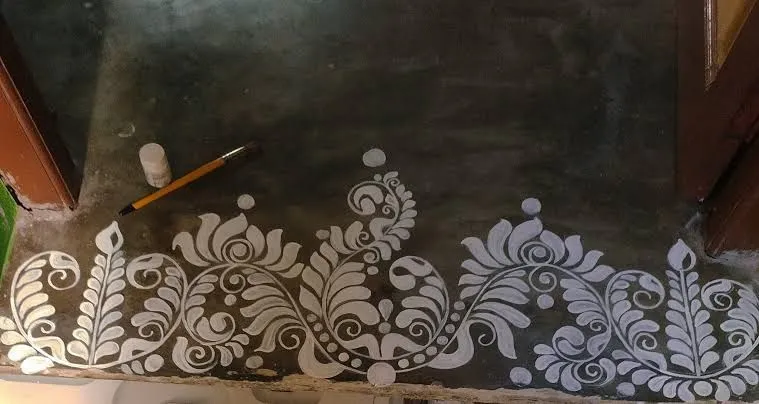
Drawing Alpona may look simple, but getting smooth, continuous lines takes a little practice. The rice paste needs to flow at the right speed, the surface should be properly prepared, and the artist must learn to control the pressure applied through the cotton applicator. A few small adjustments can make a noticeable difference to the final design.
1. Prepare the Surface Before Drawing
Traditionally, Alpona is drawn on earthen floors that may be coated with a mixture of red clay, cow dung and water. Once dry, this creates an earthy background against which the white rice paste stands out. If you are practising on a modern floor, sweep and wipe the surface to remove dust, oil and dirt. Allow it to dry completely before beginning. A clean surface helps the rice paste settle more evenly and prevents unwanted gaps or smudges.
2. Get the Rice Paste Consistency Right
The consistency of Pithali has a direct effect on the lines you create. Ideally, it should be smooth and fluid enough to move easily through the cotton applicator, while remaining thick enough to hold its shape on the floor. If the paste is too thick: It may clog the cotton and produce broken or uneven strokes. Add a little water and mix until it flows smoothly. If the paste is too thin: It may spread across the floor, making the lines appear blurred. Add a little more rice flour or concentrated paste to thicken it. Always test a small stroke before starting the main design.
3. Practise Controlling the Kuchi
Hold the cotton applicator comfortably between your fingers and dip it into the rice paste. Let any excess liquid drip back into the bowl before bringing it to the floor. As you draw, apply gentle and consistent pressure to release the paste. Avoid squeezing too hard, as this can create thick blobs. Move your hand steadily and allow the line to follow the natural movement of your fingers. Start with simple curves and dots before attempting longer, interconnected patterns.
4. Correct Mistakes While the Paste Is Wet
Keep a damp cotton cloth nearby while drawing. If a line goes astray or too much paste collects in one place, gently wipe the area before it dries and redraw that section. Trying to correct dried rice paste can be more difficult, so it helps to deal with small mistakes as they happen.
Keeping the Alpona Tradition Alive
Alpona has survived through generations because it has always been closely connected to everyday life in Bengal. Women have drawn these patterns while preparing for festivals, welcoming deities, marking important family occasions and expressing hopes for prosperity. The designs may be temporary, but the knowledge behind them continues to pass from one generation to another.
Today, changing homes and flooring materials have altered the spaces in which traditional Alpona is created. Yet the practice continues to find new expressions on paper, cloth, wooden surfaces and contemporary decorative pieces. Beginners can learn the patterns with simple materials, but understanding their cultural significance makes the experience more meaningful.
At its heart, Alpona is an art of intention and movement. A handful of rice, a little water and a steady hand are enough to turn an ordinary floor into something beautiful. And when the festival ends and the designs gradually fade, the tradition remains alive in the people who draw them, teach them and make space for them in their homes.
Frequently Asked Questions
1. What is Alpona art?
Alpona is a traditional Bengali folk art practised by drawing decorative patterns on floors, courtyards and thresholds. Traditionally made using a paste of ground rice and water, these designs are associated with festivals, religious ceremonies and auspicious occasions.
2. Why is Alpona made with rice paste?
Rice is considered an auspicious material in many Bengali rituals. Traditionally, ground rice mixed with water creates a smooth white paste that can be applied to the floor using fingers or a piece of cloth. Its white colour also makes the patterns stand out against the surface.
3. What are the common motifs used in Alpona designs?
Traditional Alpona designs feature flowers, lotus petals, leaves, vines, circles, geometric shapes, footprints and symbolic figures. The lotus, in particular, is a popular motif associated with purity and auspiciousness.
4. On which occasions is Alpona made?
Alpona is commonly drawn during Bengali festivals and religious occasions such as Lakshmi Puja, Durga Puja, Saraswati Puja, weddings and other household ceremonies. The designs and motifs often reflect the significance of the occasion.
5. What is the difference between Alpona and Rangoli?
Both are traditional Indian floor art forms, but they differ in their materials and regional practices. Alpona is associated with Bengal and traditionally uses white rice paste, while Rangoli is practised in several parts of India and often uses coloured powders, flowers, rice and other materials.
6. How do you make rice paste for Alpona?
Soak rice in water and grind it into a smooth paste. Add a little water if needed to achieve a consistency that is easy to apply without becoming too runny. Traditionally, this paste is used to draw white patterns directly on the floor.
7. Can beginners make Alpona designs at home?
Yes. Beginners can start with simple circles, dots, petals, leaves and repeating geometric patterns. Once comfortable with these basic shapes, they can combine them to create more elaborate designs. Practising with rice paste on a clean, flat surface also helps improve control.
8. What is the significance of the lotus in Alpona?
The lotus is a recurring motif in Bengali Alpona designs. It is associated with purity, prosperity and auspiciousness, making it particularly popular in religious and festive patterns.