15% OFF
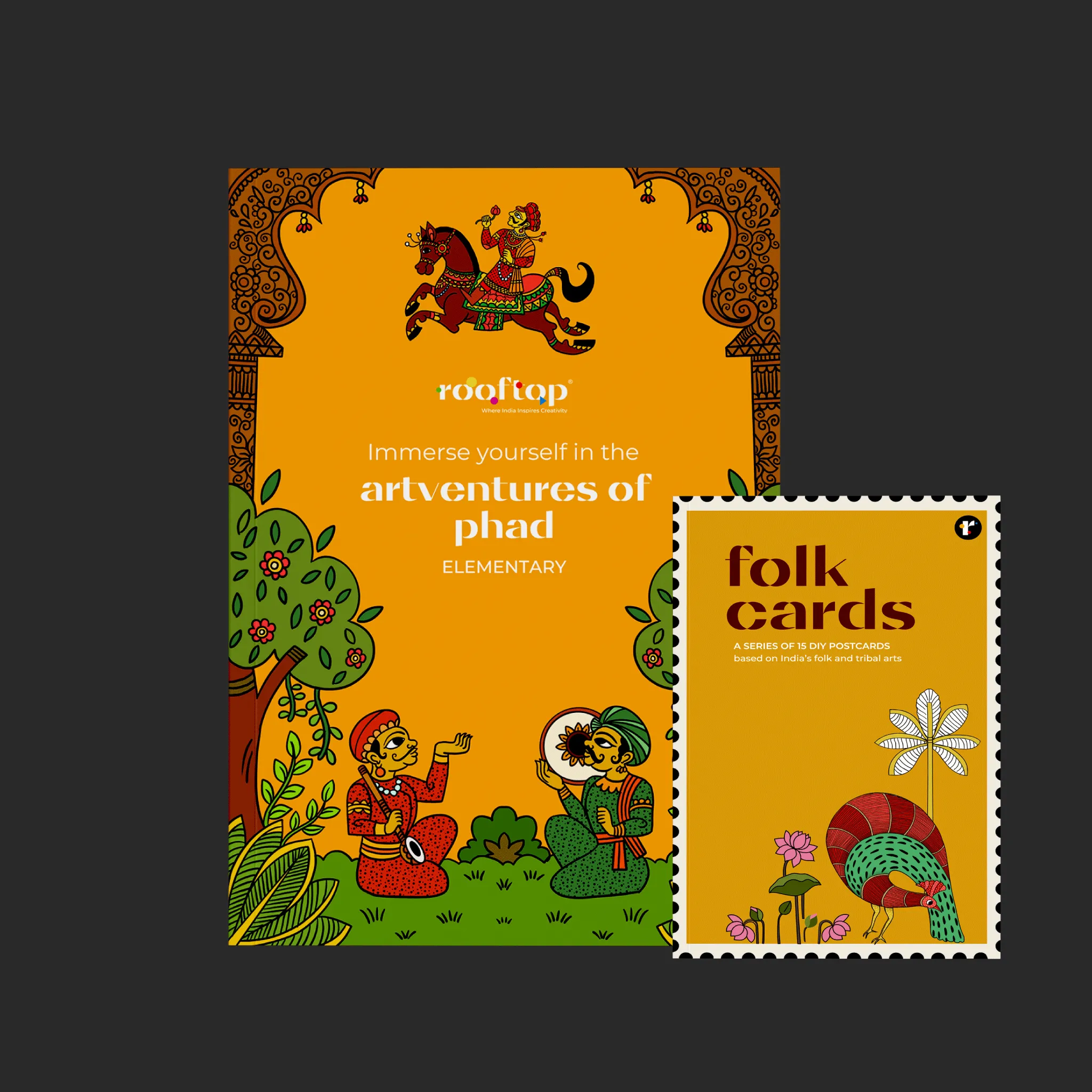
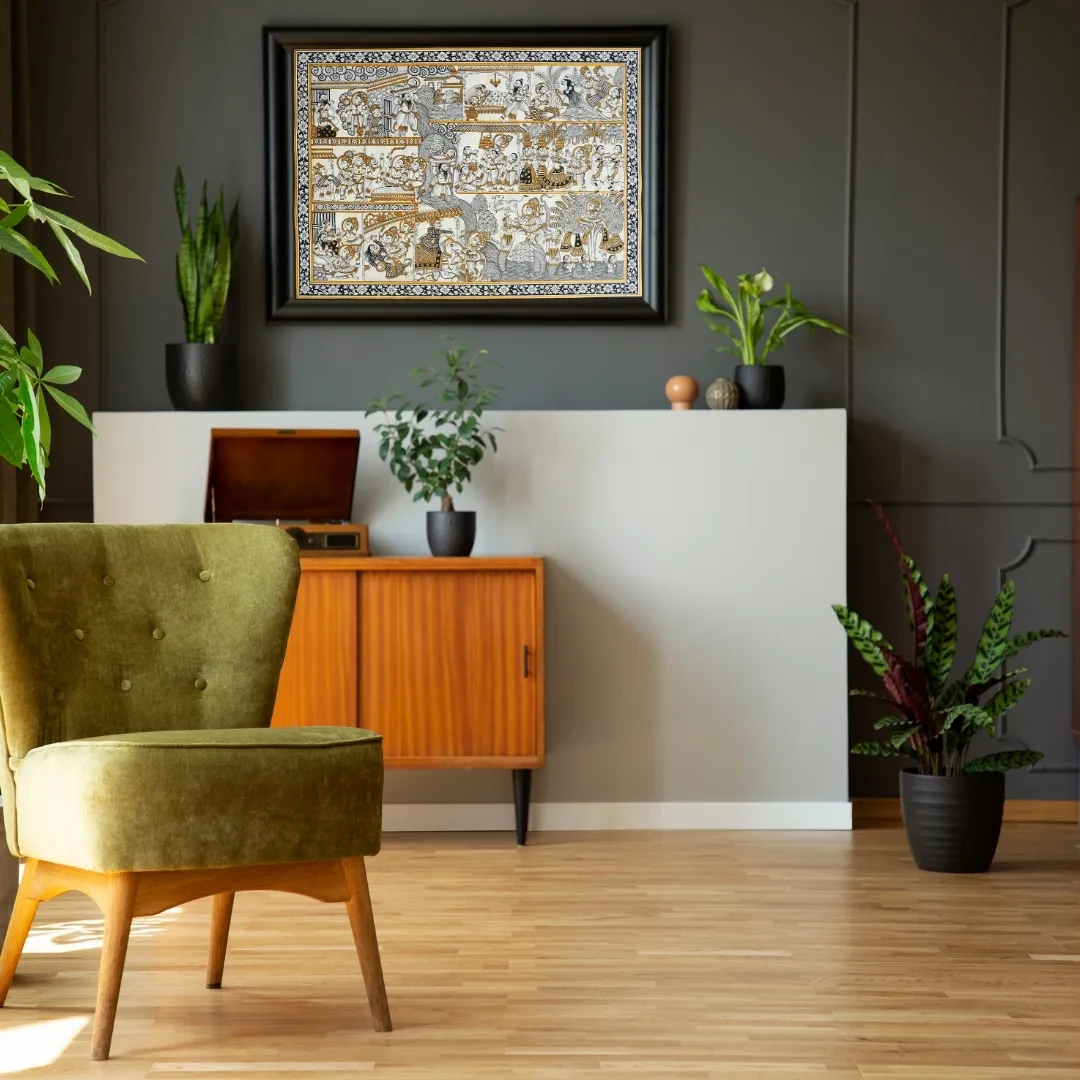
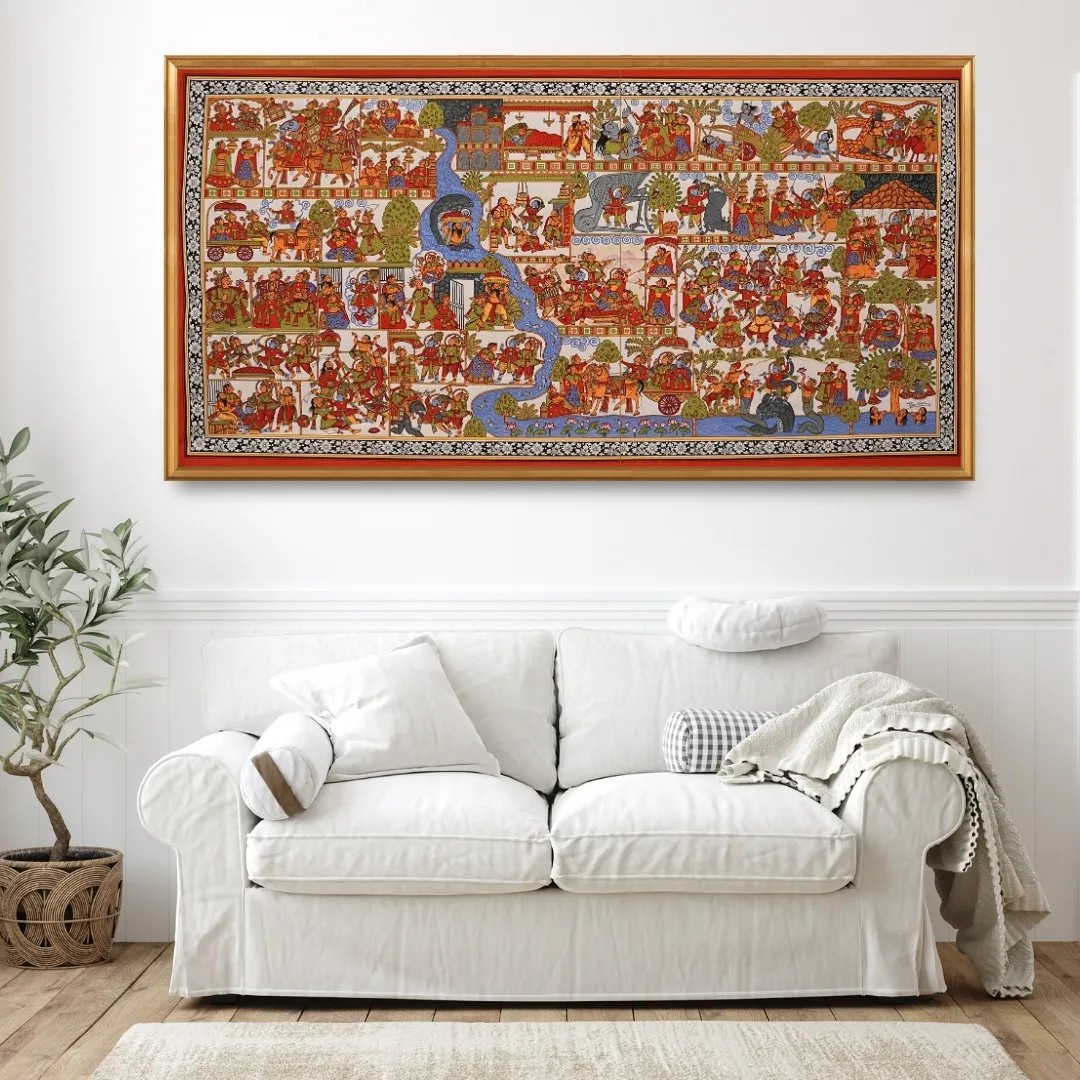
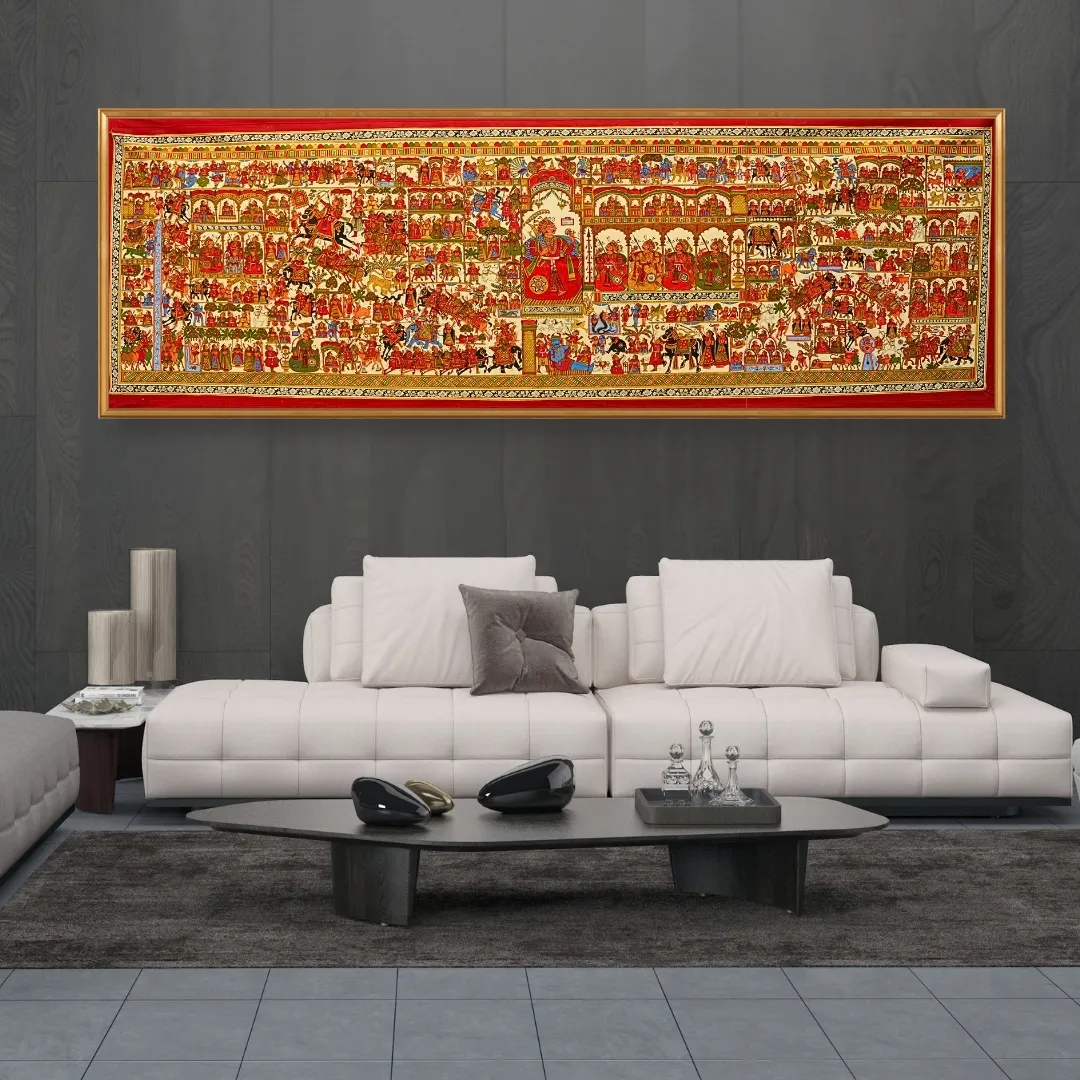
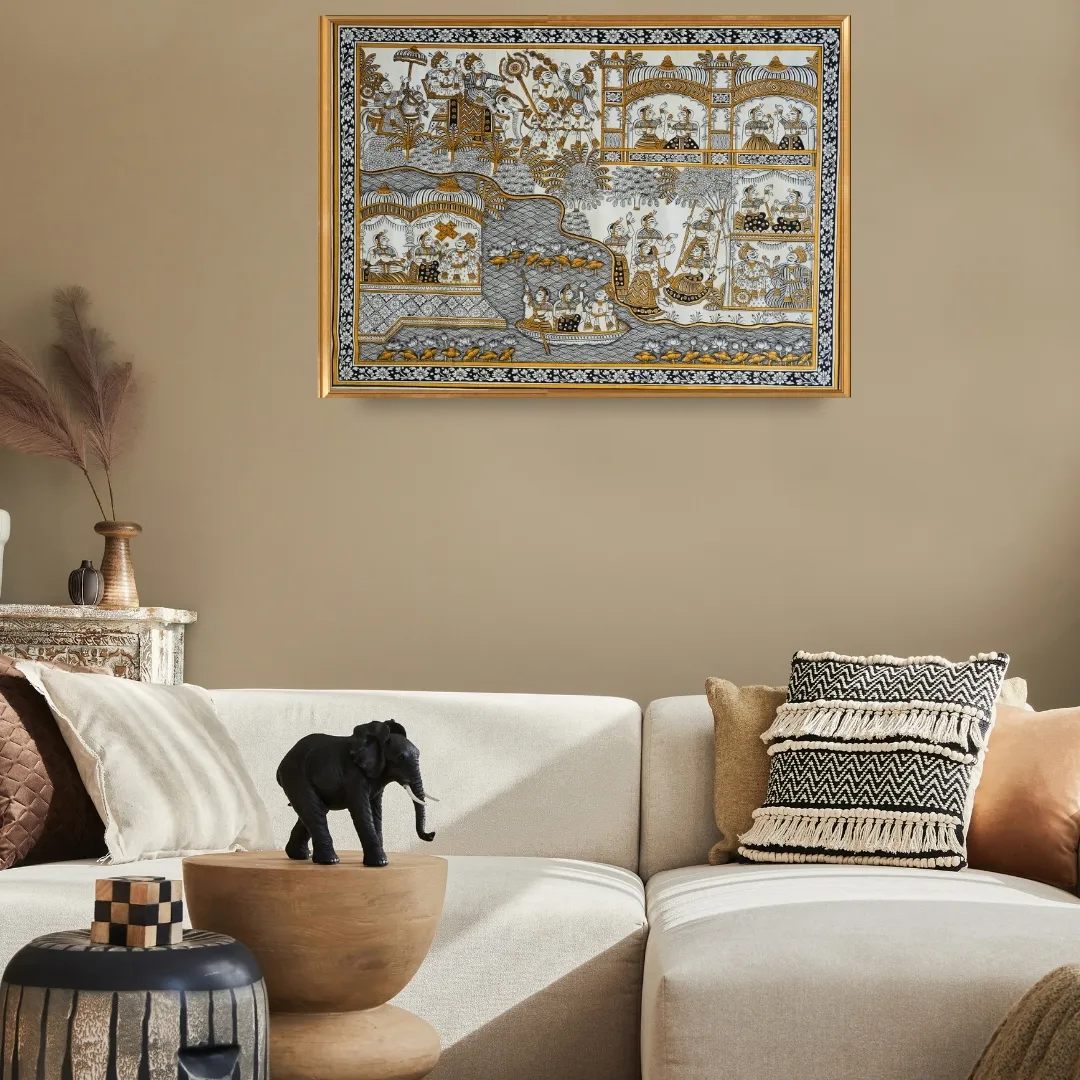
Artventures of Phad: Paint, Play & Preserve the Tradition (Set of 3)
$ 69$ 79


Explore the 700-year-old scroll painting tradition of Rajasthan.
Along the desert roads of western Rajasthan, a 700-year-old storytelling tradition still travels from village to village, painted onto cloth. Phad painting, also known as phad art, is a large-format scroll art form from the Bhilwara district of Rajasthan, created to serve as a mobile temple and narrative backdrop for the priest-singers who carry it. These scrolls depict the legendary deeds of local folk heroes and deities, performing a function that is as much devotional ritual as it is visual art. Today, Phad painting stands as one of the most distinctive and structurally complex traditions in all of Indian folk art.
What Is Phad Painting?
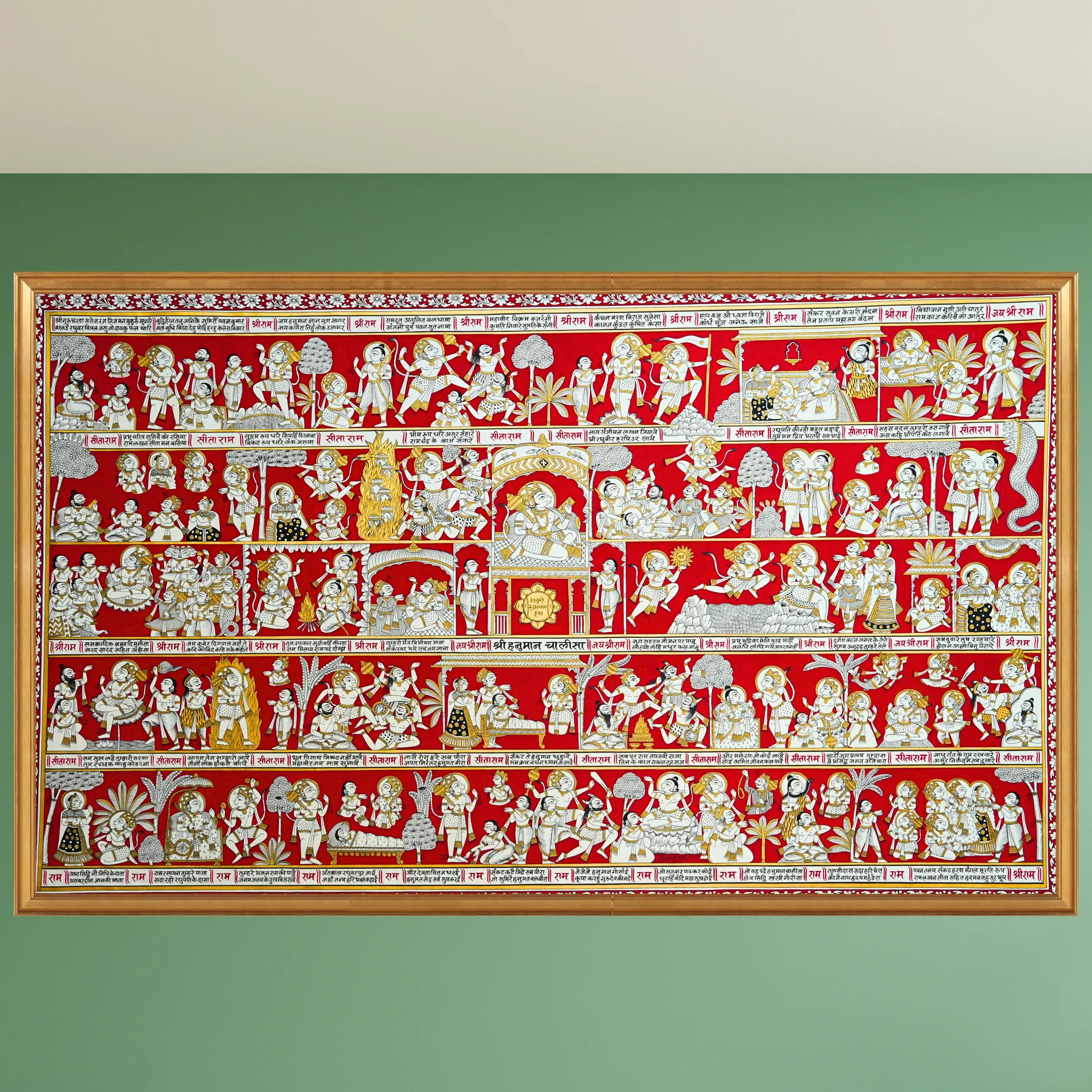
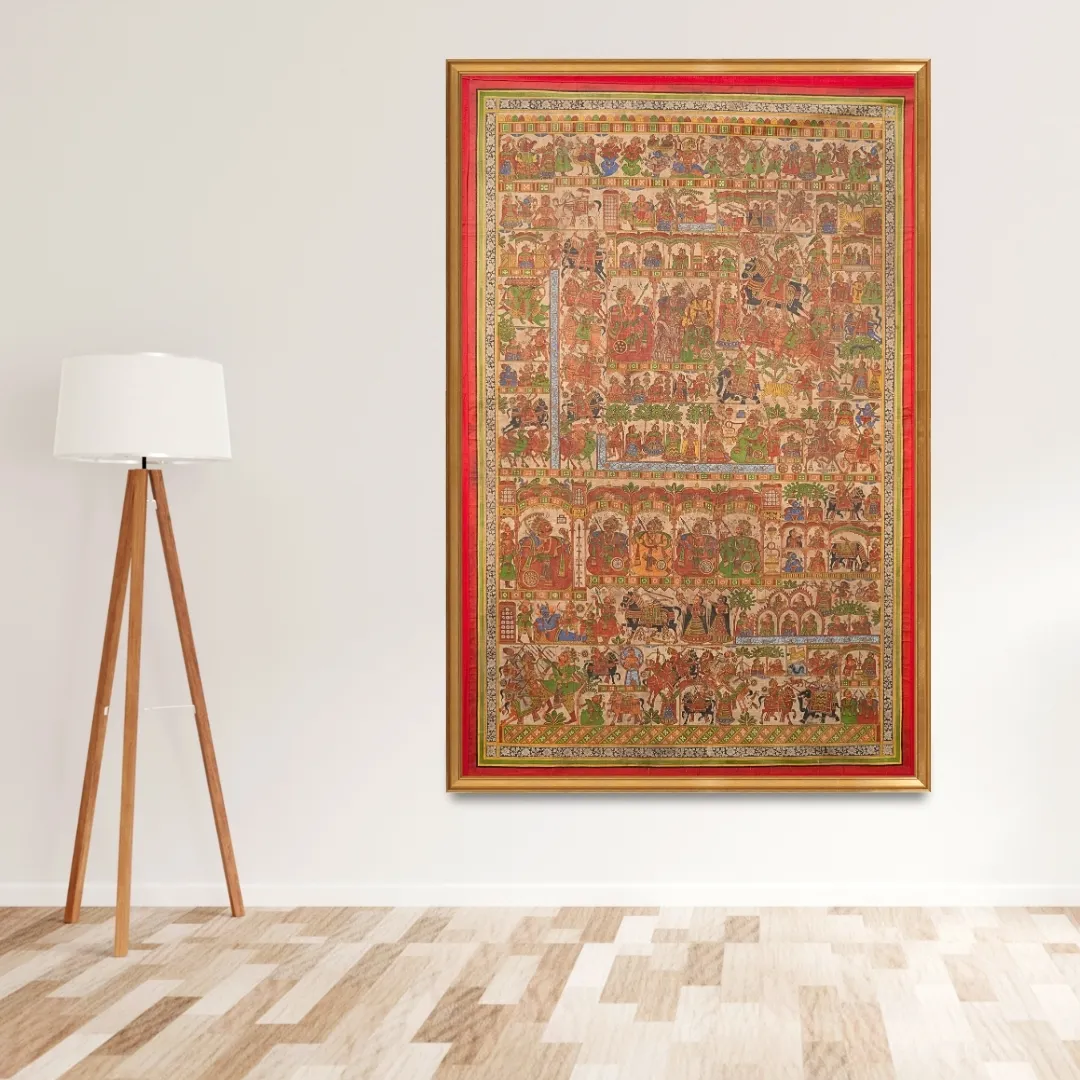
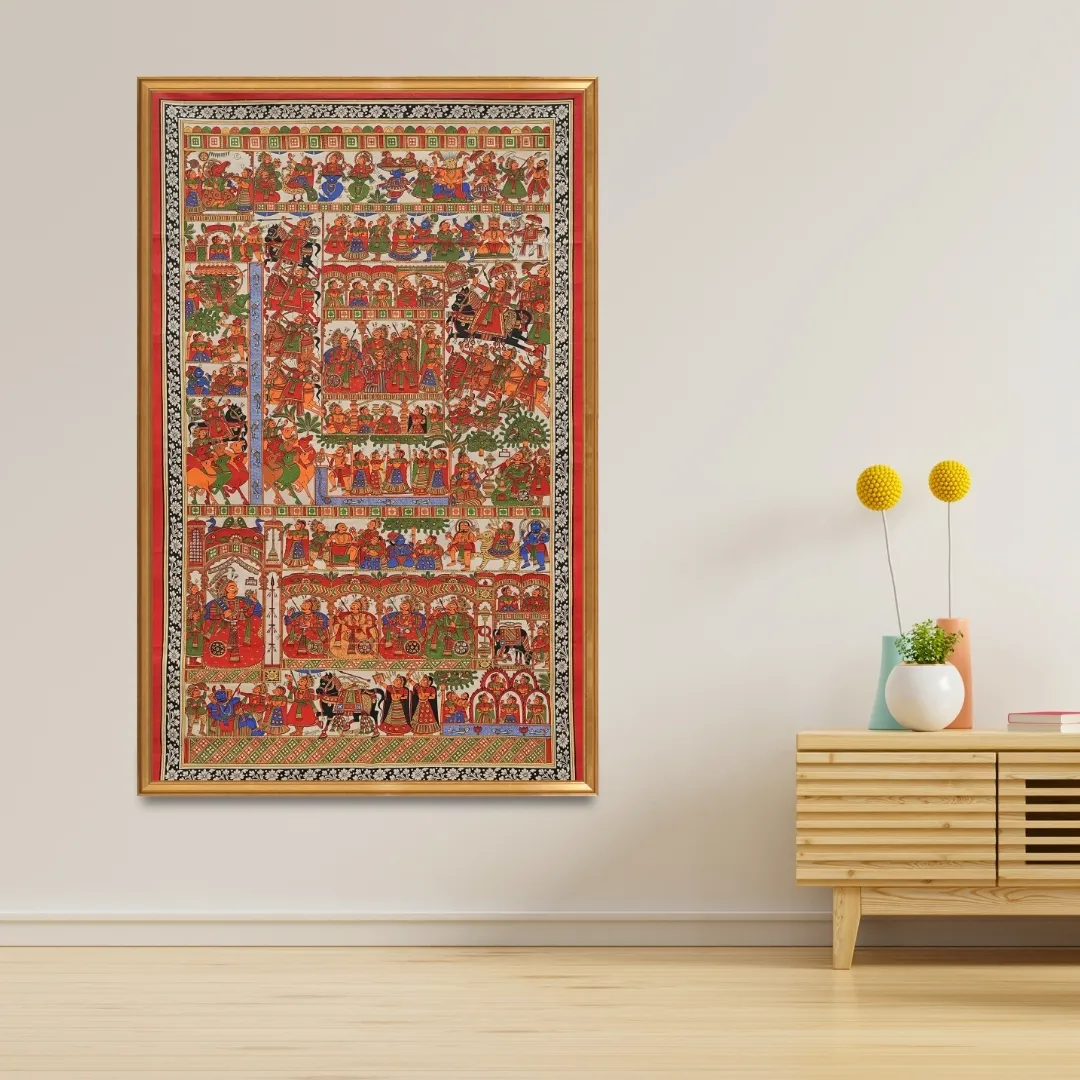
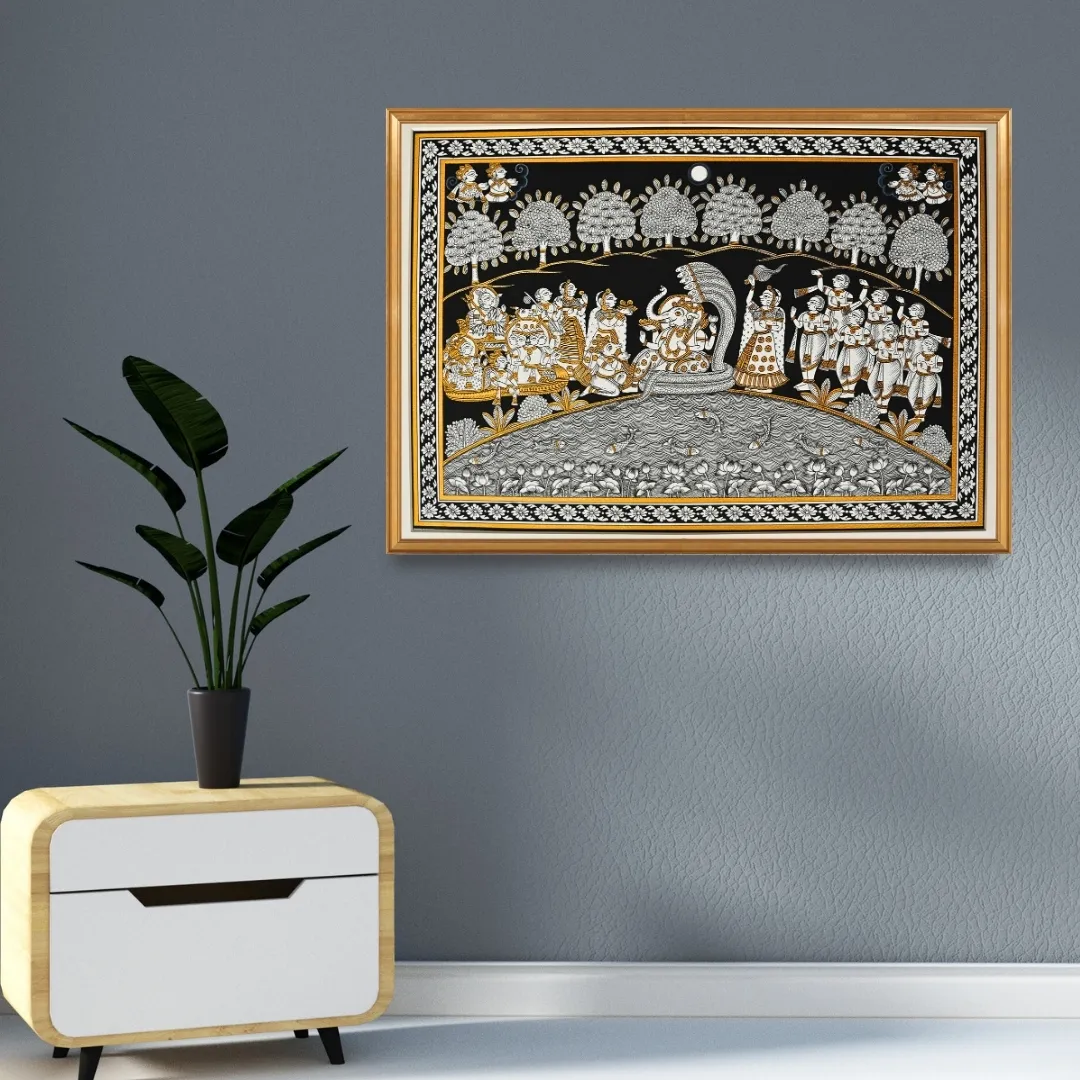
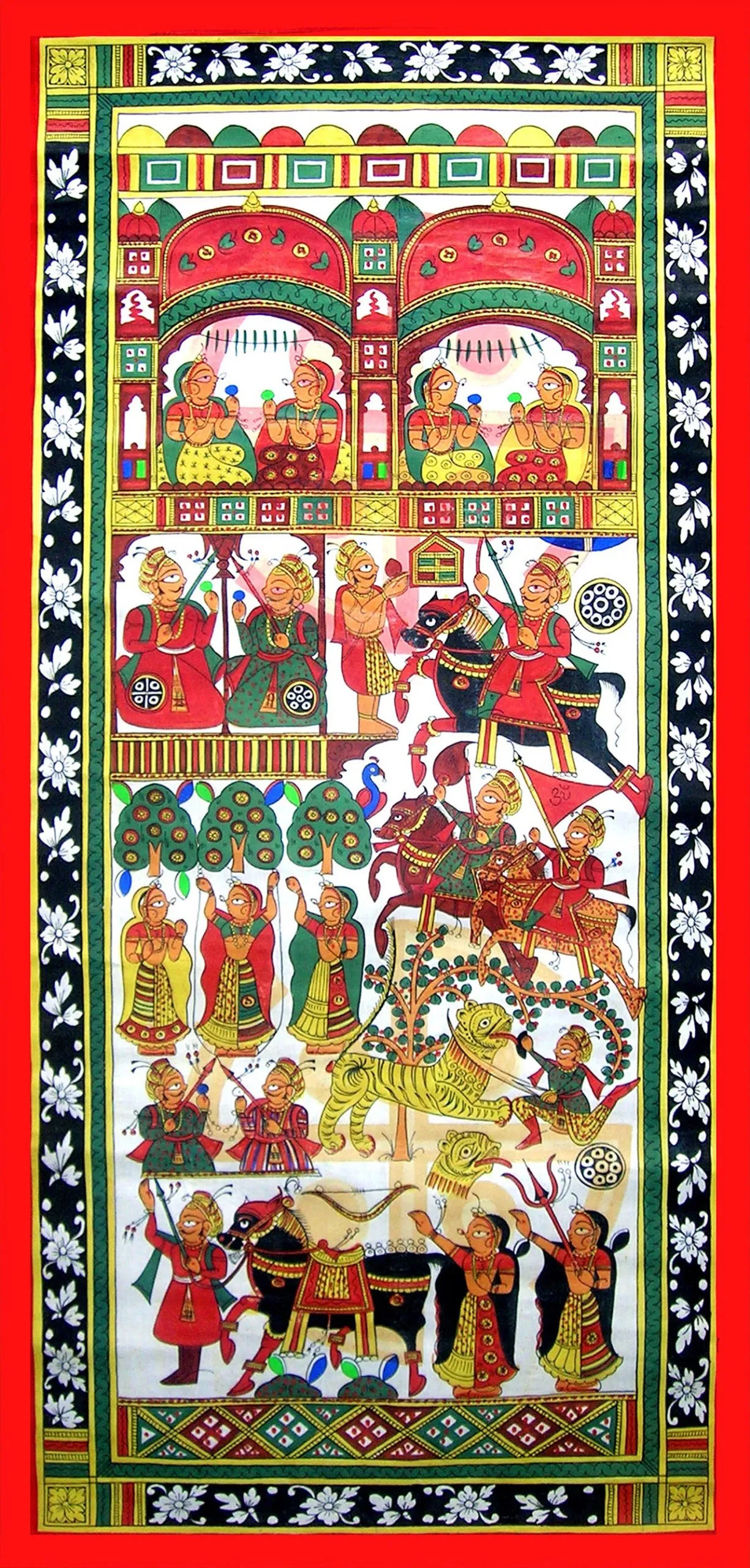
Phad painting is a religious narrative scroll art form that originated in the Bhilwara district of Rajasthan, specifically in the town of Shahpur. The word 'Phad' comes from the local Rajasthani dialect and means 'to fold' - it also refers to the cloth canvas on which the painting is made. These scrolls are traditionally thirty feet long and five feet wide, painted in vegetable dyes extracted from plants, flowers, soil, and semi-precious stones, on cotton fabric prepared and stiffened with starch. The paintings depict stories from Hindu epics and the lives of regional folk deities - primarily Pabuji, a local hero whose story is depicted in Pabuji Ki Phad scrolls, and Devnarayanji, whose story is depicted in Devnarayan Ki Phad scrolls and who is believed locally to be a reincarnation of Vishnu. Phad scrolls function as visual aids for live performances by the Bhopa and Bhopi - the male and female priest-singers of the nomadic Rabari community - who travel with the scroll as a kind of portable temple, singing and enacting the stories depicted on it.
History and Origin
Phad painting, also called phad chitrakari, has been practised for approximately 700 years, with roots in the Bhilwara district of Rajasthan. The tradition emerged from the devotional practices of the Rabari tribe, a pastoral nomadic community of western India. The scrolls were commissioned by Bhopas - travelling priest-performers - from the Joshi family of the Chipa community, who were the traditional painters of Phad scrolls. This relationship between the commissioner and the painter community has been central to the art form's continuity across generations.
Historically, the Bhopa and his wife the Bhopi would travel from village to village across western India carrying two things: their Phad scroll and a two-stringed folk instrument called the Ravanhatta. Together they performed dramatic renditions of stories from the Ramayana, the Hanuman Chalisa, and other mythological narratives. The scrolls were used in these performances as visual aids - the Bhopa would illuminate sections of the scroll with a lamp while narrating the corresponding episode, making the performance feel like an act of worship. In the late twentieth century, master artist Kalyan Joshi adapted the format to suit modern homes by reducing scroll sizes to 2, 4, or 6 feet and incorporating written text into the compositions, a departure from classical tradition that helped the art form survive in contemporary spaces.
Key Features and Visual Style
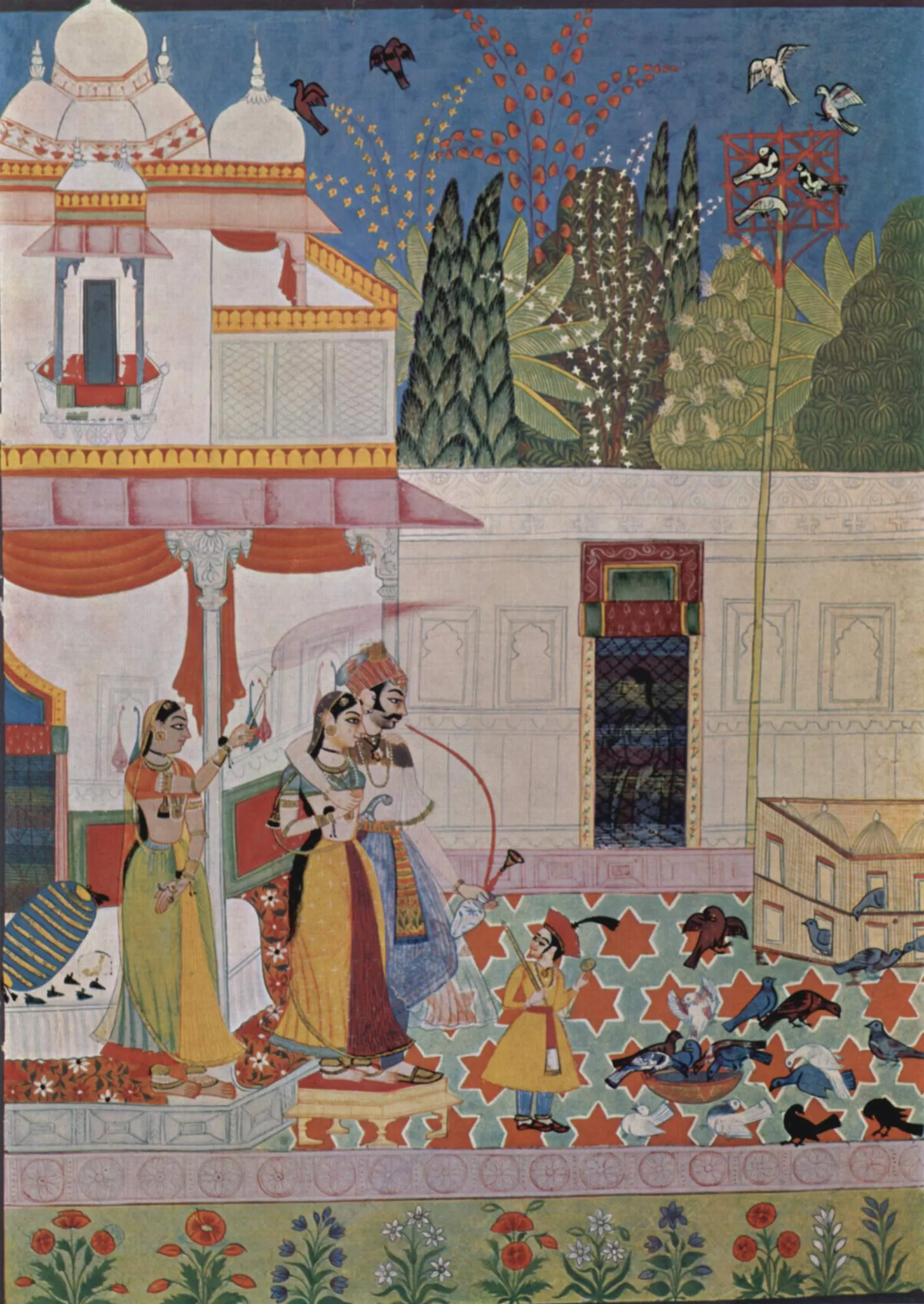
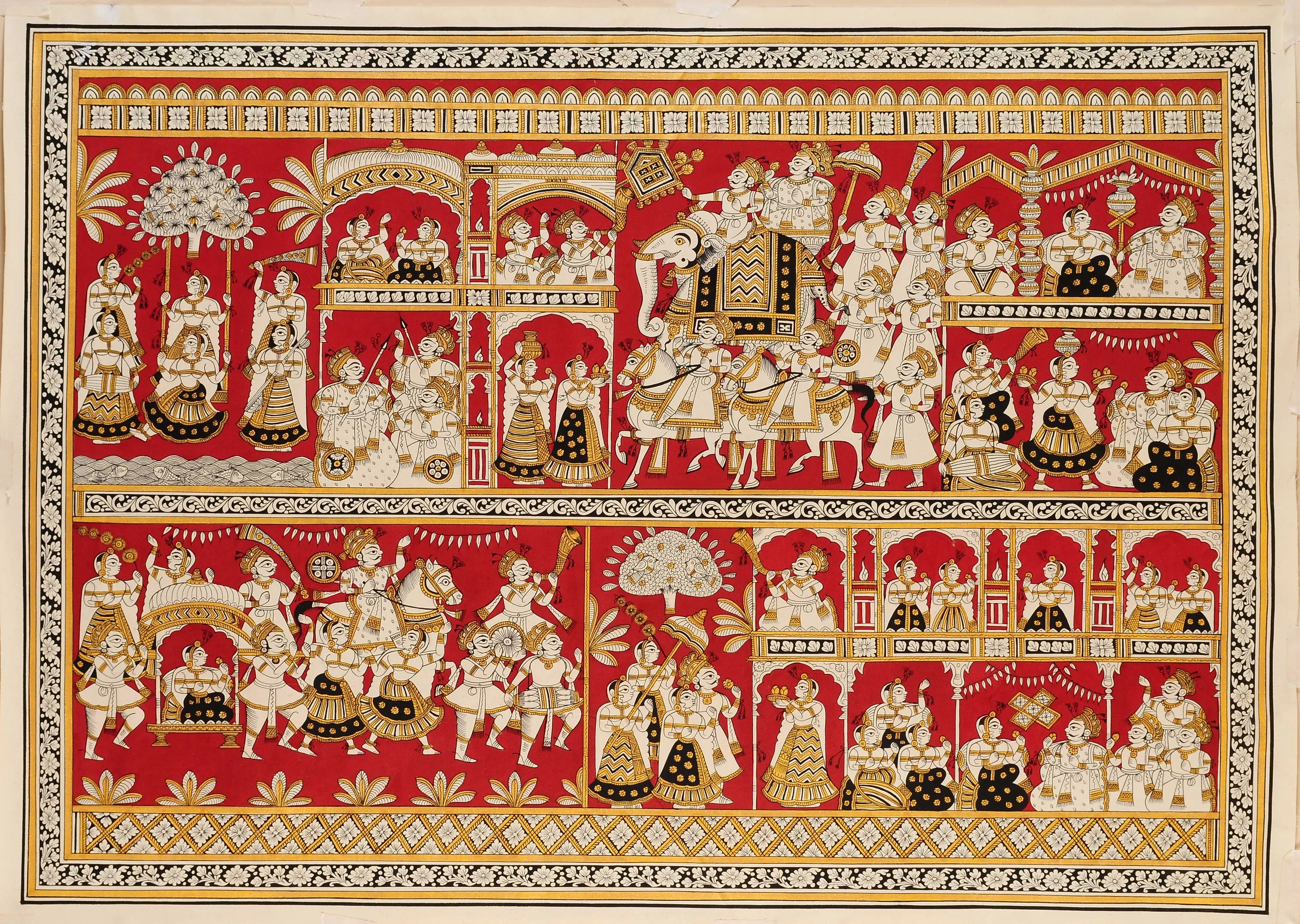
Phad painting is immediately recognisable for its large horizontal format, densely packed narrative scenes, and distinctive human figures. The visual grammar of the art form has remained consistent across centuries.
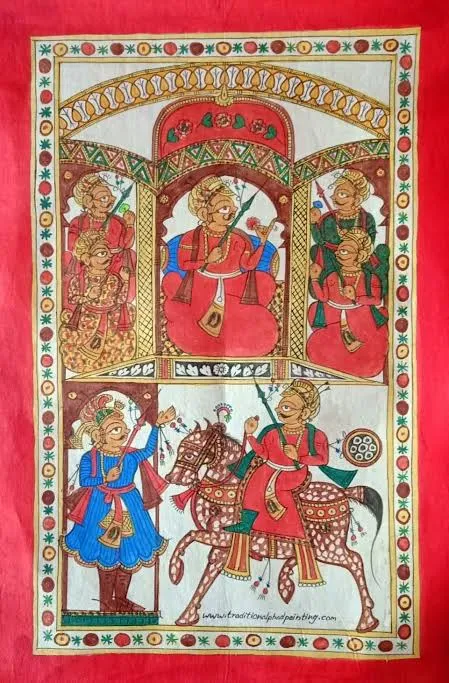
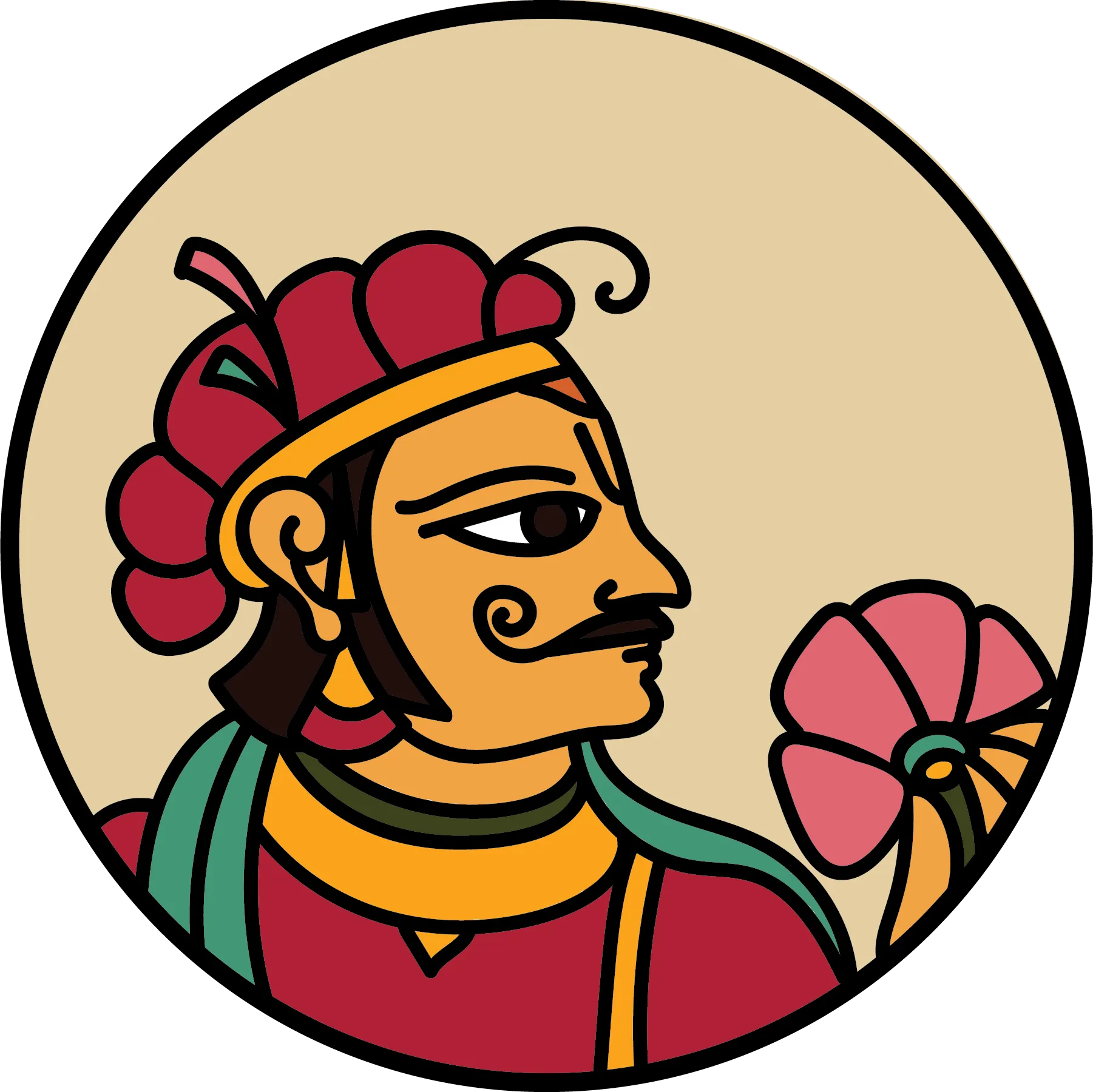
Human figures are depicted with lotus-shaped bulbous eyes, a round nose, plump bodies, and traditional Rajasthani outfits with headgear - stylised and stout rather than naturalistic.
A defining feature is the placement of figures facing each other side by side rather than toward the viewer, giving the compositions an unusual lateral dynamism.
The dominant motifs in battle scenes include elephants, horses, guards, kings, queens, flags, and kadam trees; the borders feature either floral patterns, bold red and yellow bands, or geometrically drawn shapes.
Phad scrolls also feature ornate arches within their compositions, dividing the narrative into episodes much like panels in a visual story.
Colours are made from vegetable dyes derived from plants, flowers, soil, and semi-precious stones; the cotton cloth is soaked overnight, starched, sun-dried, and smoothed with a moonstone before painting begins.
The five-step painting process moves from preparing the canvas to mixing powder-based colours with water and gum, painting the figures, adding the borders, and finally drawing black outlines to complete the scroll.
Famous Artists of Phad Painting
The artists of Phad painting come predominantly from the Joshi family of the Chipa community in Shahpur, Bhilwara. Their work has been central to keeping this tradition alive and bringing it to national and international attention.
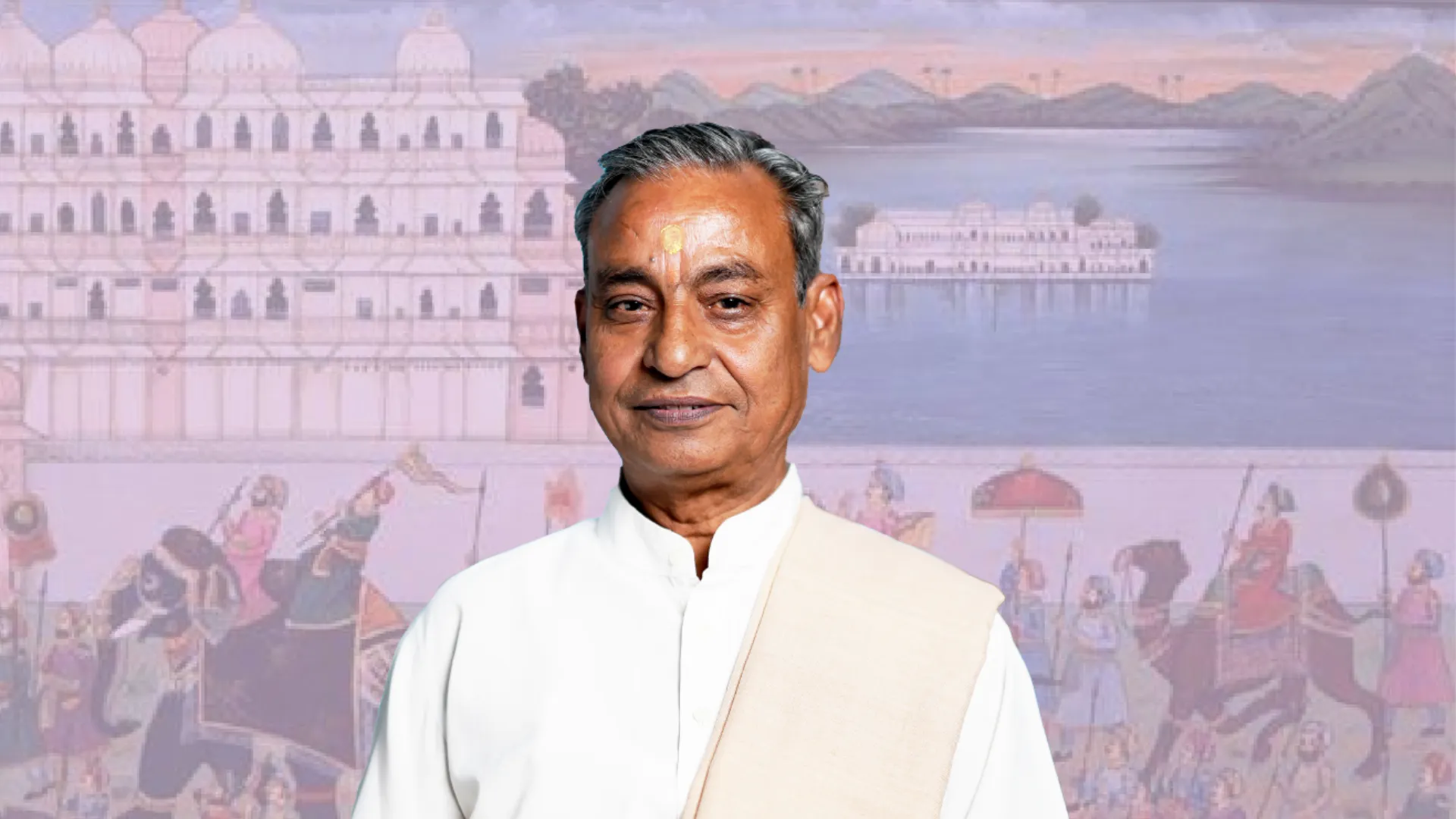
Kalyan Joshi (Bhilwara, Rajasthan) is the most celebrated living master of Phad painting. He is credited with adapting the traditional large-format scroll into smaller, home-friendly sizes of 2, 4, and 6 feet, and with introducing written text into the compositions. He has also condensed the episodic story structures into self-contained mini-narratives, making the work accessible to contemporary collectors and learners. His Phad painting course on Rooftop brings this direct lineage knowledge to students across India.
Shanti Lal Joshi (Bhilwara, Rajasthan) was a pioneering master from the same Joshi family who worked to document and promote the Phad tradition and is credited with training younger generations within the community.
Prakash Joshi (Bhilwara, Rajasthan) represents the next generation of the Joshi lineage, continuing the classical Phad tradition while also working with scholars and cultural institutions to preserve the oral and visual knowledge embedded in each scroll.
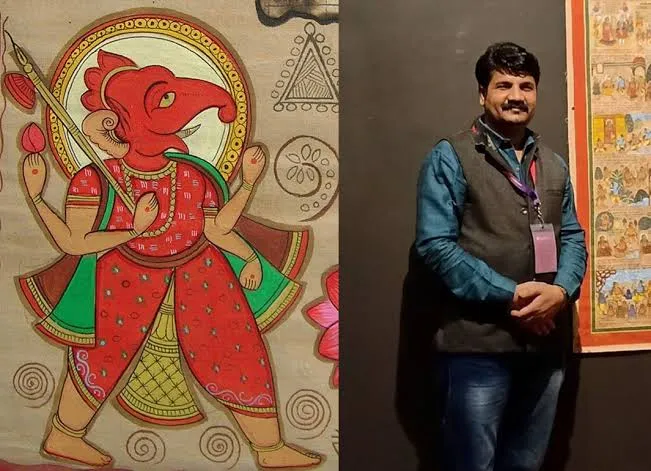
If you want to learn Phad painting, the most direct path is to study with a master from the Joshi family tradition. Rooftop offers a structured Phad painting course taught by Kalyan Joshi himself - the master artist who adapted the scroll format for contemporary practice. The course covers the full process: preparing the cotton canvas, mixing vegetable-based colours, drawing figures in the classical Phad style, and completing the borders. It is taught in a format suited to learners at home, with no prior experience required. You can browse all available Indian folk art courses on Rooftop to find the right entry point.
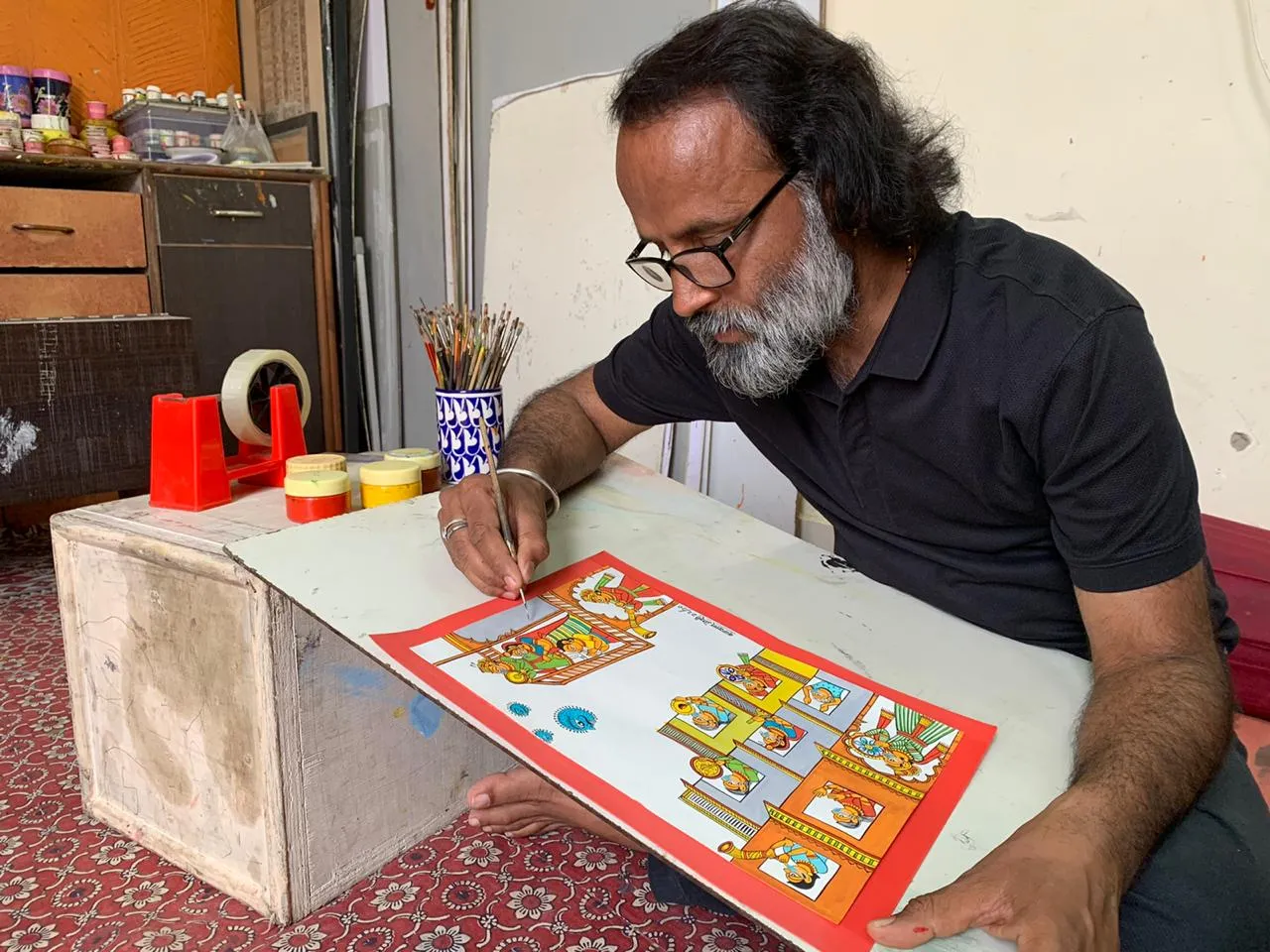
Phad paintings can be seen in their original cultural context in Shahpur, Bhilwara district, Rajasthan, where the Joshi family has practised and exhibited this art for generations. While phad painting images are widely shared online, nothing compares to viewing the original in person. The National Museum in New Delhi and several state museums in Rajasthan hold significant Phad collections. In terms of live performance, Phad scrolls are still used in festival settings and by Bhopa communities during ceremonial occasions across western Rajasthan. For those who want to own an original Phad work as phad painting wall decor, Rooftop's art shop carries authenticated folk art pieces. You can also explore the broader landscape of traditional Indian art on the Rooftop Art Wiki.
What is Phad painting and where does it come from?
Phad painting is a large-format narrative scroll art form from the Bhilwara district of Rajasthan, India. It has been practised for approximately 700 years and depicts the legendary stories of folk deities such as Pabuji and Devnarayanji. The word 'Phad' means both 'to fold' and 'cloth' in the local Rajasthani dialect, referring to the cotton canvas on which these scrolls are made. The art form originates specifically from the town of Shahpur in Bhilwara and has been sustained by the Joshi family of the Chipa community.
Which community practises Phad painting in Rajasthan?
Phad painting is created by the Joshi family of the Chipa community in Shahpur, Bhilwara. The scrolls were traditionally commissioned by Bhopas - the priest-singers of the nomadic Rabari tribe - who used them as visual props for their performances. The Bhopa and Bhopi would travel across western India with the Phad scroll and a two-stringed Ravanhatta, performing stories from the Ramayana and other mythologies before village audiences.
Who are the most famous Phad painting artists in India?
Kalyan Joshi of Bhilwara is the most celebrated contemporary master of Phad painting, known for adapting the scroll format to modern sizes and introducing written text into the compositions. Shanti Lal Joshi and Prakash Joshi are other prominent artists from the same Joshi family lineage. All of them come from Shahpur in the Bhilwara district, the traditional centre of Phad painting in Rajasthan.
What materials and colours are used in Phad painting?
Phad paintings are made on cotton cloth that is soaked overnight, starched to stiffen it, sun-dried, and then smoothed with a moonstone before painting begins. The colours used are vegetable dyes extracted from plants, flowers, soil, and semi-precious stones. These pigments are originally powder-based and are mixed with water and gum before being applied to the cloth. Black outlines drawn at the final stage complete the figures and bring the scroll to its finished state.
Can I learn Phad painting online in India?
Yes, you can learn Phad painting online through Rooftop's course taught by Kalyan Joshi, the master artist who has done the most to adapt this tradition for contemporary learners. The course covers canvas preparation, colour mixing, the classical Phad figure style, and border techniques. No prior experience is needed, and the course is designed for students who want to engage seriously with this Rajasthani folk art tradition from home.
Where can I buy authentic Phad paintings in India?
Authentic Phad paintings can be purchased directly from artist families in Shahpur, Bhilwara, or from reputable folk art platforms. Rooftop's online shop carries original folk art works that are sourced from traditional artists. Museums and craft fairs in Rajasthan - particularly in Jaipur and Bhilwara - are also reliable places to find and purchase genuine Phad scrolls. When buying, look for work that uses hand-mixed vegetable dyes on cotton cloth and carries the artist's name and community attribution.
Phad painting carries within it an entire world - the journeys of nomadic priest-singers, the devotion of desert communities, and the visual intelligence of an art form that has told its stories for seven centuries. Whether you are drawn to its narrative depth, its distinctive visual style, or its living ritual context, there is much to discover here. Explore Phad painting courses on Rooftop and begin learning this tradition directly from the artists who carry it forward.
Sources
Bharucha, R. (2003) Rajasthan An Oral History. New Delhi: Penguin Books India.
Dalrymple, W. (2009) Nine lives. New Delhi: Bloomsbury Publishing.
Image Sources
"A Journey into the Rich Shades of Bhilwara: Exploring the World of Phad Art with Kalyan Joshi." Catterfly, https://www.catterfly.art/blog-detail/a-journey-into-the-rich-shades-of-bhilwara-exploring-the-world-of-phad-art-with-kalyan-joshi. Accessed 16 July 2026.
"Indischer Maler von 1662 001." Wikimedia Commons, https://commons.wikimedia.org/wiki/File:Indischer_Maler_von_1662_001.jpg. Accessed 16 July 2026.
"Kingdom #2 – Phad Painting (12 × 18 in.)." International Indian Folk Art Gallery, https://indianfolkart.org/product/kingdom-2-phad-painting-12-x-18/. Accessed 16 July 2026.
"Phad Paintings of Rajasthan." Artisera, https://www.artisera.com/blogs/expressions/phad-paintings-of-rajasthan. Accessed 16 July 2026.
"Phad Paintings – Lively, Ancient Folk Art Form of Rajasthan." Caleidoscope, https://caleidoscope.in/art-culture/phad-paintings. Accessed 16 July 2026.
"Vijay Joshi: A Traditional Phad Artist with Tints of Modernity." Caleidoscope, https://caleidoscope.in/art-culture/vijay-joshi-a-traditional-phad-artist-with-tints-of-modernity. Accessed 16 July 2026.