
Malwa Painting: Rajput Miniature Art from Central India
Let's learn about the Malwa Miniatures paintings!
Introduction and Origin
Malwa painting is one of the earliest and most distinctive schools of Rajput miniature art, rooted in the heartland of Central India. Developed across the Malwa region, which spans the western districts of Madhya Pradesh and the southeastern edge of Rajasthan, these miniatures are celebrated for their bold flat colour, simplified human forms, and deeply emotional Ragamala compositions. Long patronised by the Datia rulers and shaped by the cultural currents of both Rajasthani and Maratha traditions, Malwa painting offers a window into the spiritual and courtly life of Hindu Rajput courts.
What Is Malwa Painting?
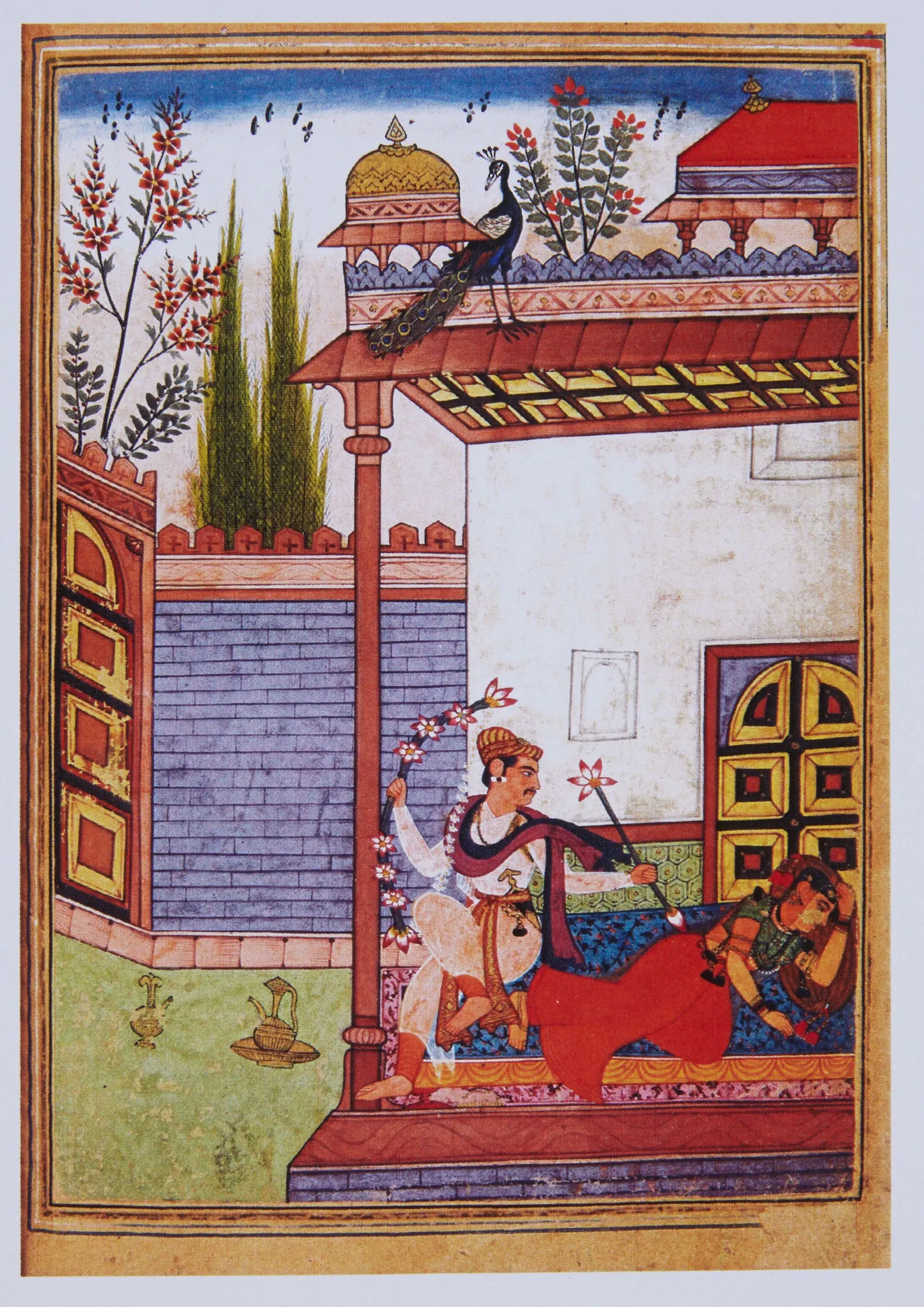
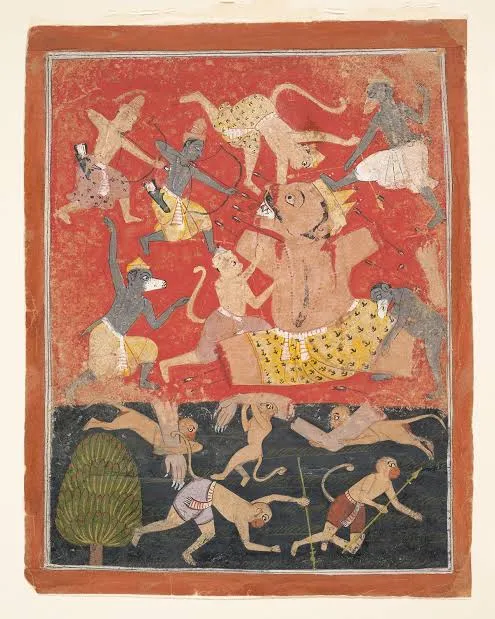
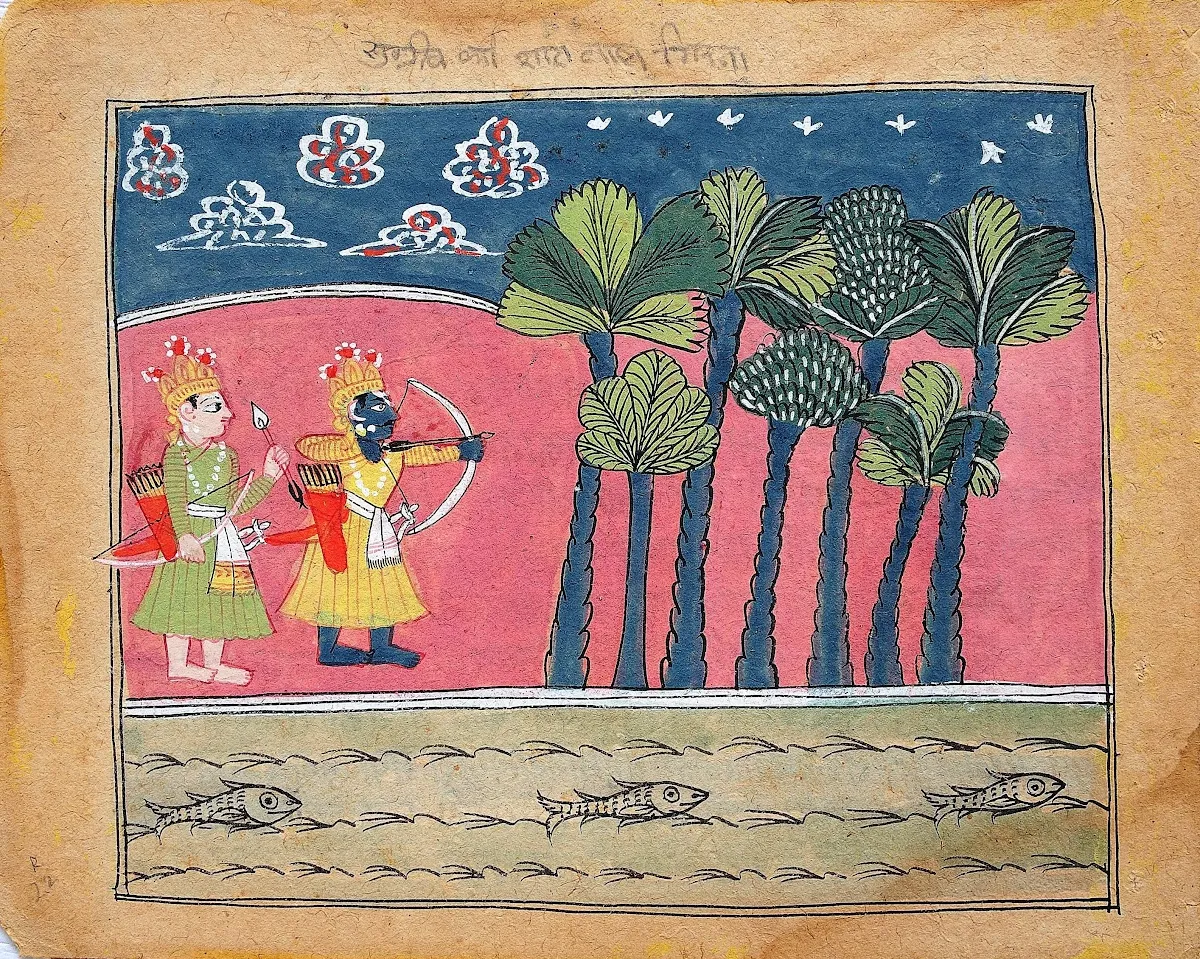
Malwa painting is a school of Indian miniature art that flourished across Central India, particularly in the Malwa region covering western Madhya Pradesh and southeastern Rajasthan. These are two-dimensional paintings characterised by simplistic yet expressive human and animal forms, large protruding eyes, angular facial features, and earthy pigments applied in solid colour blocks. The art form was traditionally painted on wasli - a handmade layered paper reinforced with natural gum - using brushes made from squirrel or camel hair. Pigments were derived from semi-precious stones, vegetables, and minerals. The paintings were created largely under the patronage of the Datia rulers and represent the aesthetic and religious sensibilities of Hindu Rajput courts, depicting scenes from the Ramayana, the Bhagavata Purana, Ragamala series, and the love-lore of the Amru-Shataka.
History and Origin
The Malwa region has been a meeting point of cultures for centuries, having passed through the rule of the Avanti kingdom, the Mauryans, the Malavas, Guptas, Paramaras, Delhi Sultanate, Malwa Sultanate, the Mughals, Marathas, and finally the British. This succession of rulers brought together Rajasthani and Maratha cultural influences, both of which are visible in the visual language of Malwa painting. The art form developed prominently around the 17th century and is closely associated with the Datia rulers, who maintained travelling artists under their patronage.
Traces of Malwa miniatures have been found in places such as Mandu, Nusratgarh, and Narsyang Sahar. A significant number of Malwani miniatures were unearthed from the Datia Palace in Madhya Pradesh, and the tradition also has links to the Bundelkhand region. The name itself comes from the Malwa region where this style took root, and the paintings remain one of the clearest expressions of pre-Mughal Rajput visual sensibility in Central India. The region's folk culture - including traditional music called lavani, a dance called sawag, and the floor-painting folk art of mandana - further shaped the artistic environment from which this miniature tradition grew.
Key Features and Famous Artists
Key Features and Visual Style
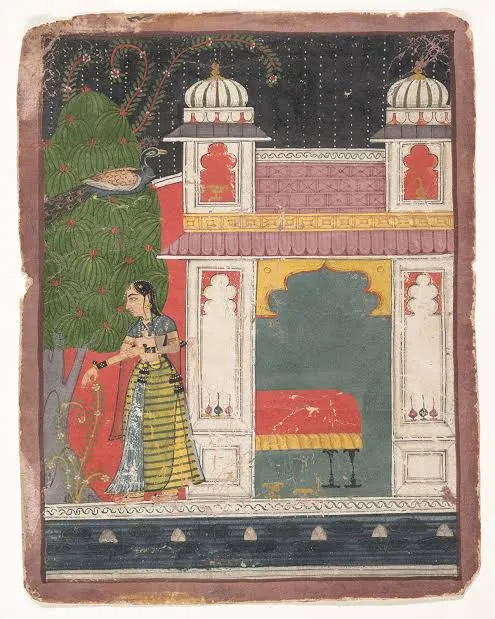
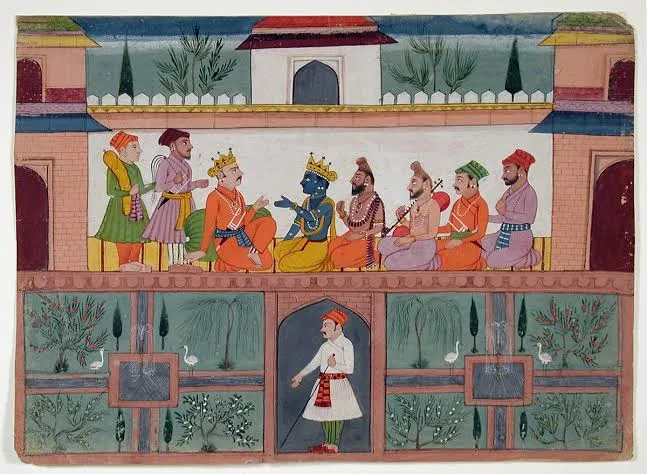
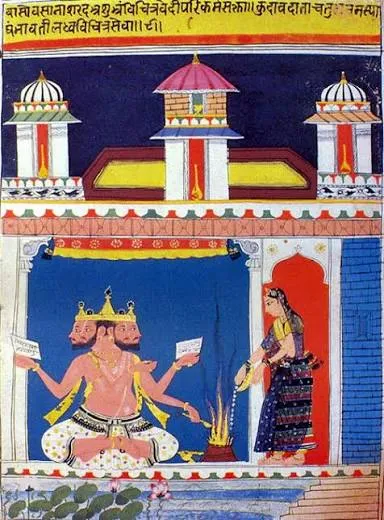
Malwa paintings are immediately recognisable by their bold, flat application of colour and their strongly simplified figures. Unlike the refined naturalism of Mughal miniatures, the Malwa school favours expressive distortion - figures are stylised, architecture is sparse and geometric, and compositions are dense with narrative meaning. The paintings often feature a dark or richly coloured background against which figures and flora stand out with striking clarity.
Colour palette : Earthy tones of red, blue, green, and yellow dominate, applied as solid colour blocks using the technique of colour blocking with pigments from semi-precious stones, vegetables, and minerals.
Motifs and themes : Scenes from the Ramayana, Bhagavata Purana, and Ragamala series are central, alongside love-lore from the Amru-Shataka, and images of animals such as peacocks and deer.
Human and animal forms : Figures have large protruding eyes, angular facial features, and are rendered in a two-dimensional, simplistic style with minimal modelling or shading.
Architecture and setting : Indo-Islamic architectural elements appear throughout, giving the paintings structural composition, while dense lush greenery and sparse animal figures fill the background.
Borders and calligraphy : The header of the painting is sometimes adorned with sombre calligraphy, and borders are either boldly painted in a block colour or decorated with vines and other flora.
Canvas preparation : The wasli paper canvas was layered three to five sheets thick, sometimes with added fabric, and sealed with natural gum before a light wash of opaque pigment was applied as a ground.
Famous Artists of Malwa Painting
Malwa painting does not have a single celebrated master in the way some court miniature schools do, but several artist lineages and institutional collections preserve its legacy. The tradition was sustained by court-employed travelling artists working under the Datia rulers, and their work survives in major museum collections.
The National Museum, New Delhi holds the most significant public collection of Malwa miniatures in India, and is the primary institutional home of this tradition. The Chhatrapati Shivaji Maharaj Vastu Sangrahalaya, Mumbai holds ninety-one illustrations from the Amru-Shataka series, a celebrated set of Malwa miniatures illustrating classical Sanskrit love poetry. Contemporary artists who practise traditional Indian miniature painting in the broader Rajput tradition, such as Khush Narayan Jangid of Rajasthan, carry forward techniques and visual conventions related to the Malwa school. Artists working in the Kota-Bundi miniature tradition such as Mohammed Luqman of Rajasthan similarly share the Central Indian Rajput visual lineage that connects to Malwa painting.
How to Learn Malwa Painting
If you want to learn the techniques behind Rajput miniature traditions like Malwa painting, Rooftop offers online courses in miniature painting taught by practising master artists. You can also explore courses in closely related traditions such as the Kota-Bundi miniature course by Mohammed Luqman or the Kishangarh miniature course by Khush Narayan Jangid, both of which share visual and technical roots with the Malwa school. These courses let you learn directly from artists trained in living Rajput miniature traditions, from wasli preparation to colour blocking.
Where to See and Buy Malwa Painting
The largest collections of Malwa miniatures in India are held at the National Museum in New Delhi and the Chhatrapati Shivaji Maharaj Vastu Sangrahalaya in Mumbai, which displays ninety-one Amru-Shataka illustrations from the tradition. For those interested in related Madhya Pradesh folk art, the Datia Palace in Madhya Pradesh is historically linked to the original patronage of this style. Authentic works in the broader Rajput miniature tradition, including pieces connected to the Central Indian school, are available through Rooftop's online shop. You can also browse the Art Wiki to explore other related traditions from the same region.
Learn Malwa Miniature

Frequently Asked Questions
What is Malwa painting and where does it come from? Malwa painting is a school of Rajput miniature art that developed in Central India, primarily across the Malwa region spanning western Madhya Pradesh and southeastern Rajasthan. It is characterised by bold flat colour, simplified human figures, and themes drawn from Hindu religious texts and Ragamala compositions. The tradition flourished under the patronage of the Datia rulers and their travelling court artists around the 17th century. It is one of the earliest distinct regional styles within the broader Rajput miniature tradition of India. Which state or community in India practises Malwa painting? Malwa painting has no single community of origin but was developed in the Malwa region, which covers the western part of Madhya Pradesh and the southeastern part of Rajasthan. The style was patronised by the Datia rulers of Central India and drew on both Rajasthani and Maratha cultural influences. Many of the original miniatures associated with this style were unearthed from the Datia Palace in Madhya Pradesh. As a court tradition rather than a folk practice, it was sustained by professional artists employed under royal patronage. What are the key themes and motifs in Malwa miniature paintings? The most prominent themes in Malwa painting are drawn from Hindu religious and literary sources, particularly the Ramayana, the Bhagavata Purana, and the Ragamala series. Love poetry, especially from the Amru-Shataka, is another major subject, with ninety-one illustrations from this text held at the Chhatrapati Shivaji Maharaj Vastu Sangrahalaya in Mumbai. Natural imagery such as peacocks, deer, and dense greenery appears frequently in the backgrounds. Indo-Islamic architectural forms provide structural framing to many compositions. What materials and colours are used in Malwa painting? Malwa paintings were created on wasli, a handmade paper made by layering three to five sheets with natural gum, sometimes reinforced with a layer or two of fabric. Pigments came from semi-precious stones, vegetables, and minerals, ground and mixed to produce colours including red, blue, green, and yellow. Brushes were made from squirrel or camel hair. The painting process began with a light wash of opaque pigment on the prepared canvas, followed by a sketch and then colour blocking, with final details added using a darker hue of the dominant colour. Can I learn Malwa painting or related miniature traditions online? While no dedicated Malwa painting course currently exists, you can learn closely related Rajput miniature techniques through Rooftop's courses. Courses such as the Kota-Bundi miniature course teach wasli preparation, natural pigments, and the compositional conventions of Central Indian miniature painting. These traditions share direct visual and technical roots with the Malwa school and give learners a solid grounding in the broader Rajput miniature heritage. Where can I see authentic Malwa paintings in India? The National Museum in New Delhi holds the primary public collection of Malwa miniatures and is the best place in India to study the tradition in person. The Chhatrapati Shivaji Maharaj Vastu Sangrahalaya in Mumbai displays ninety-one Amru-Shataka illustrations in the Malwa style. Historically, the Datia Palace in Madhya Pradesh was the original home of many of these works. Regional museums in Madhya Pradesh, particularly in Mandu and Gwalior, also hold works connected to the tradition.
Malwa painting stands as one of Central India's most compelling contributions to the Rajput miniature tradition, its bold colours and narrative depth reflecting centuries of royal patronage and cultural exchange across Madhya Pradesh and Rajasthan. Whether you are drawn to its visual drama or its stories from the Ramayana and Ragamala, there is much to discover. Explore miniature painting courses on Rooftop and begin your journey into one of India's most enduring traditional art forms.
Bibliography
Sources
- Chaitanya, Krishna. A History of Indian Painting: Rajasthani Traditions. Abhinav Publications, 1982.
Image Sources
"Malwa School of Painting." Impart Encyclopedia of Art, https://imp-art.org/articles/malwa-school-of-painting/. Accessed 16 July 2026.
"Malwa School of Painting." Impart Encyclopedia of Art, https://imp-art.org/articles/malwa-school-of-painting/. Accessed 16 July 2026.
"Seventeenth-Century Malwa Paintings." Google Arts & Culture, https://artsandculture.google.com/story/splendid-malwa-paintings-salar-jung-museum/3gVBauwj1LhUcQ?hl=en. Accessed 16 July 2026.
"Splendour of Malwa Paintings." Caleidoscope, https://caleidoscope.in/art-culture/malwa-paintings. Accessed 16 July 2026.
"The Greatness of Malwa Paintings." HareKrsna.com, https://www.harekrsna.com/sun/features/07-23/features4903.htm. Accessed 16 July 2026.
Seitz Collection: Orchha and Malwa Paintings. Seitz Collection, https://www.seitz-orchha-malwa.com/. Accessed 16 July 2026.