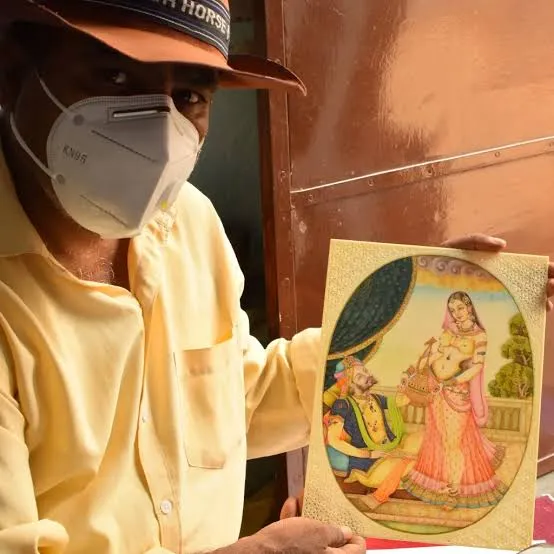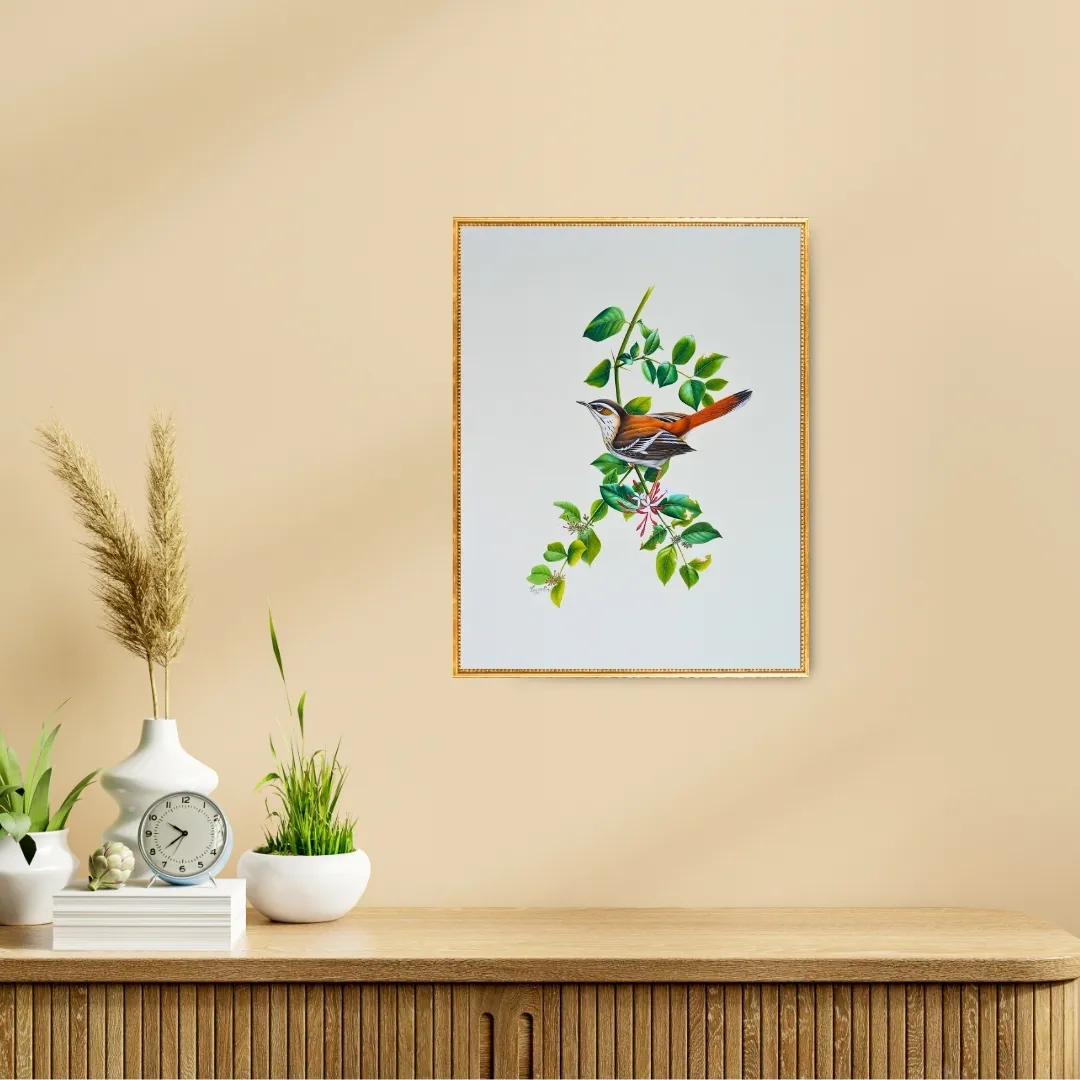
Rustleaf Whisper
$ 2,719



Explore Rajasthani miniatures- Jaipur miniature school.
Rajasthan has always been a land where art and royalty were inseparable, and nowhere is this more evident than in Jaipur. The Jaipur school of painting emerged from the courts of Amber and flourished in the Pink City as one of India's most refined miniature traditions. Alongside it, Blue Pottery Jaipur developed as a distinctly Persian-influenced craft that became a symbol of the city itself. Together, these two traditions represent the depth and diversity of traditional Indian art rooted in one of Rajasthan's greatest cultural centres.
What Is the Jaipur School of Painting?
The Jaipur school of painting is a style of Indian miniature painting that originated in Amber City in the state of Rajasthan and later shifted its centre to Jaipur around the 18th century. The art form takes its name directly from its place of origin, following the convention of many Rajasthani miniature traditions. The Alwar and Tonk districts of Jaipur city eventually became important hubs for this style. These paintings are characterised by opaque watercolour pigments sourced from natural materials including semi-precious stones, minerals, soils, clay, leaves, flowers, seeds, and vegetables. The subjects range from royal portraits and architectural depictions to scenes from Hindu mythology, with a special focus on the costumes and jewellery of the figures depicted. The art form sits within the broader Jaipur-Rajpur style and reflects the deep influence of both Rajasthani and Rajput cultures on the city of Jaipur.
Blue Pottery Jaipur is a separate but equally celebrated craft from the same city. It uses a Persian-inspired technique in which objects are made from a dough of powdered quartz stone, powdered glass, Multani mitti (Fuller's earth), borax, and gum. The finished pieces are glazed with a distinctive cobalt blue and turquoise palette derived from copper oxide and are fired at low temperatures. Blue pottery is used decoratively and functionally, appearing on tiles, vases, bowls, and trays.
History and Origin
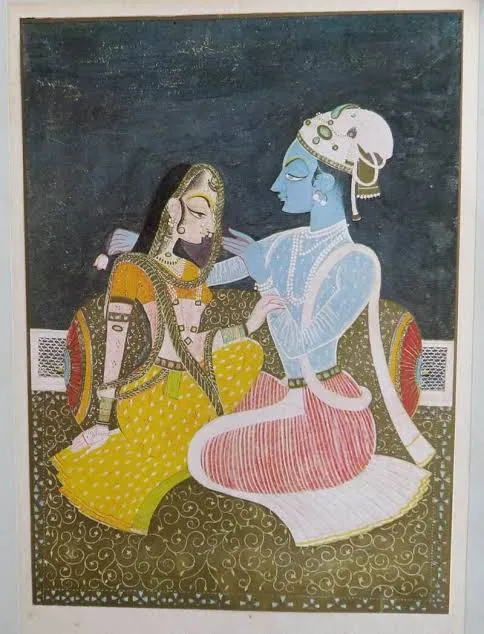
The miniature painting tradition in what is now Jaipur began in Amber City under the patronage of the Rajput rulers. Amber had close ties with the Mughal court, and this relationship introduced Mughal artistic sensibilities into the local tradition. As a result, the early Jaipur paintings show strong Mughal influence in their compositional approach and attention to courtly subject matter. The Vaishnavite sect played a significant role in shaping the tradition's religious themes: Sawai Jai Singh commissioned numerous works featuring Radha and Krishna, including sets based on the Rasikapriya, Gita Govinda, Baramasa, and Ragamala. In paintings from his reign, the king's own resemblance is said to be visible in the features of the hero figures.
The art hub shifted to Jaipur around the 18th century, after which the Jaipur school developed in two phases. The first was heavily influenced by the Mughal style, with the subject given priority and the background rendered in a neutral solid colour. The second phase was more distinctly Jaipur in its character, balancing subject and background equally and introducing elaborate outdoor or architectural scenes. Under Maharaja Sawai Madho Singh, the artist Sahib Ram introduced an innovative technique of pasting and fixing wood pieces of various sizes and shapes onto paintings, creating three-dimensional decorative effects that looked like real ornaments. Sawai Raja Pratap Singh (1778-1803) further refined the tradition, bringing a more delicate, soft, and detailed quality to the Krishna-themed compositions produced during his patronage.
Key Features and Visual Style
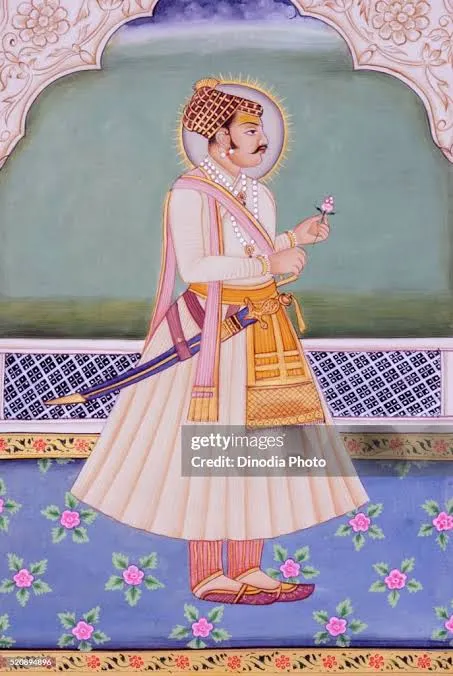
The Jaipur school of painting is immediately recognisable through its use of rich natural pigments, its depiction of royal and mythological figures in anatomical correctness, and its layered compositional approach. The art form draws equally from Mughal, Rajput, and Vaishnavite traditions, producing a distinctive visual language that is both detailed and opulent.
Pigments are derived entirely from natural sources: semi-precious stones, minerals, soils, clay, leaves, flowers, seeds, and vegetables, creating deep and lasting colours without synthetic dyes.
The mounter used to prepare the framework is called Wasilgarh, and the primary sketch is done in light colours before white paint is applied to create the figures' outlines.
After the outline is completed, a polish is applied using a polished stone slab known as Aqiq, giving the surface its characteristic smooth finish.
Inscriptions and calligraphic writings visible above and below the paintings are executed by specialist scribes called Khasnabis.
Motifs include royal portraits, architectural depictions of Jaipur's infrastructure, mythological characters from Hindu scripture, and scenes featuring the costumes and jewellery of the Rajput court.
Blue Pottery Jaipur uses a Persian-derived technique with powdered quartz, glass, Multani mitti, borax, and gum, fired at low temperatures and finished with cobalt and turquoise glazes from copper oxide.
Famous Artists of the Jaipur School of Painting
Sahib Ram was a master artist who worked under the patronage of Maharaja Sawai Madho Singh in Jaipur, Rajasthan. He is particularly noted for introducing the technique of affixing pieces of wood in various shapes directly onto the painting surface, creating three-dimensional ornamental effects that were so convincing they resembled real decorations.
Shammi Bannu Sharma is a contemporary practitioner of Jaipur miniature painting based in Rajasthan. She carries forward the Jaipur-Rajpur tradition and teaches the art form to students seeking to learn from a practising master. Her Jaipur miniature painting course on Rooftop offers guided instruction in this classical style.
Mohammed Luqman is a Rajasthan-based miniature painter who specialises in the Kota-Bundi miniature tradition, which is closely related to the Jaipur school. His work reflects the shared visual vocabulary of Rajasthani court painting, with detailed natural and hunting scenes. His Kota-Bundi miniature course on Rooftop is a valuable resource for students of Rajasthani miniature painting broadly.
Bhanwar Lal Kumawat is a Rajasthan-based artist specialising in Mewar miniature painting, another major school within the Rajasthani tradition. His work documents the sophisticated compositional language shared across Rajasthani court art, and his Mewar miniature course on Rooftop covers this closely related tradition in depth.
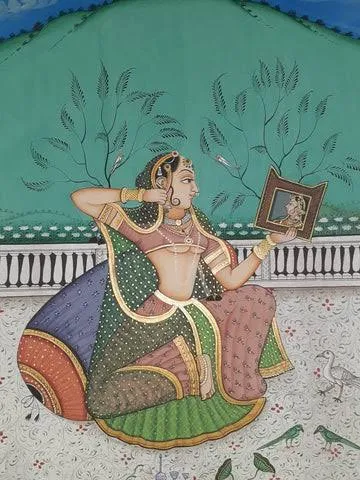
If you want to learn the Jaipur school of painting, the most direct route is to study under a practising artist from the tradition. Rooftop offers an online Jaipur miniature painting course taught by Shammi Bannu Sharma, a master based in Rajasthan who teaches the authentic Jaipur-Rajpur method. You can also explore related Rajasthani miniature courses on the platform, including Kota-Bundi, Mewar, and Bikaner styles, to understand the full breadth of this tradition.
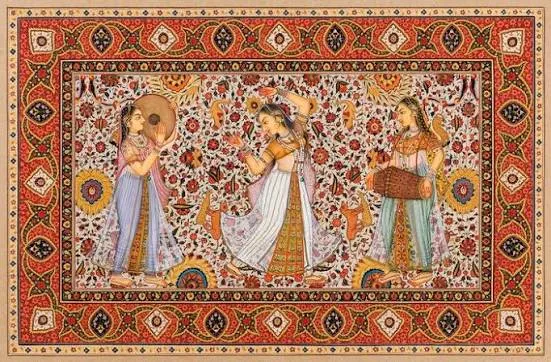
Authentic Jaipur miniature paintings and Blue Pottery can be found at galleries and craft bazaars in Jaipur's old city, particularly around Johari Bazaar and the area surrounding the City Palace. The Albert Hall Museum in Jaipur holds an important collection of Rajasthani miniature paintings. For Blue Pottery Jaipur, the Kripal Kumbh gallery in Jaipur is one of the most reputed sources. You can also explore original artworks and products inspired by these traditions through Rooftop's shop, which carries authentic works by Indian folk and traditional artists. The Jaipur City Walk experience on Rooftop is another way to engage with these art forms in person.
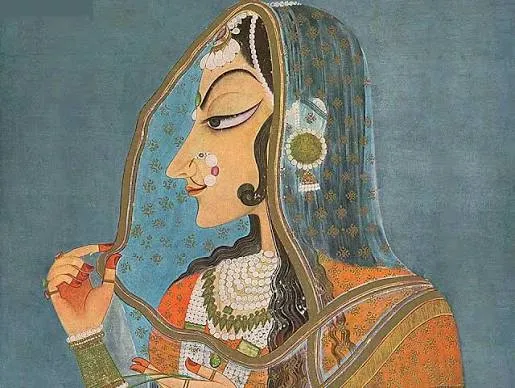
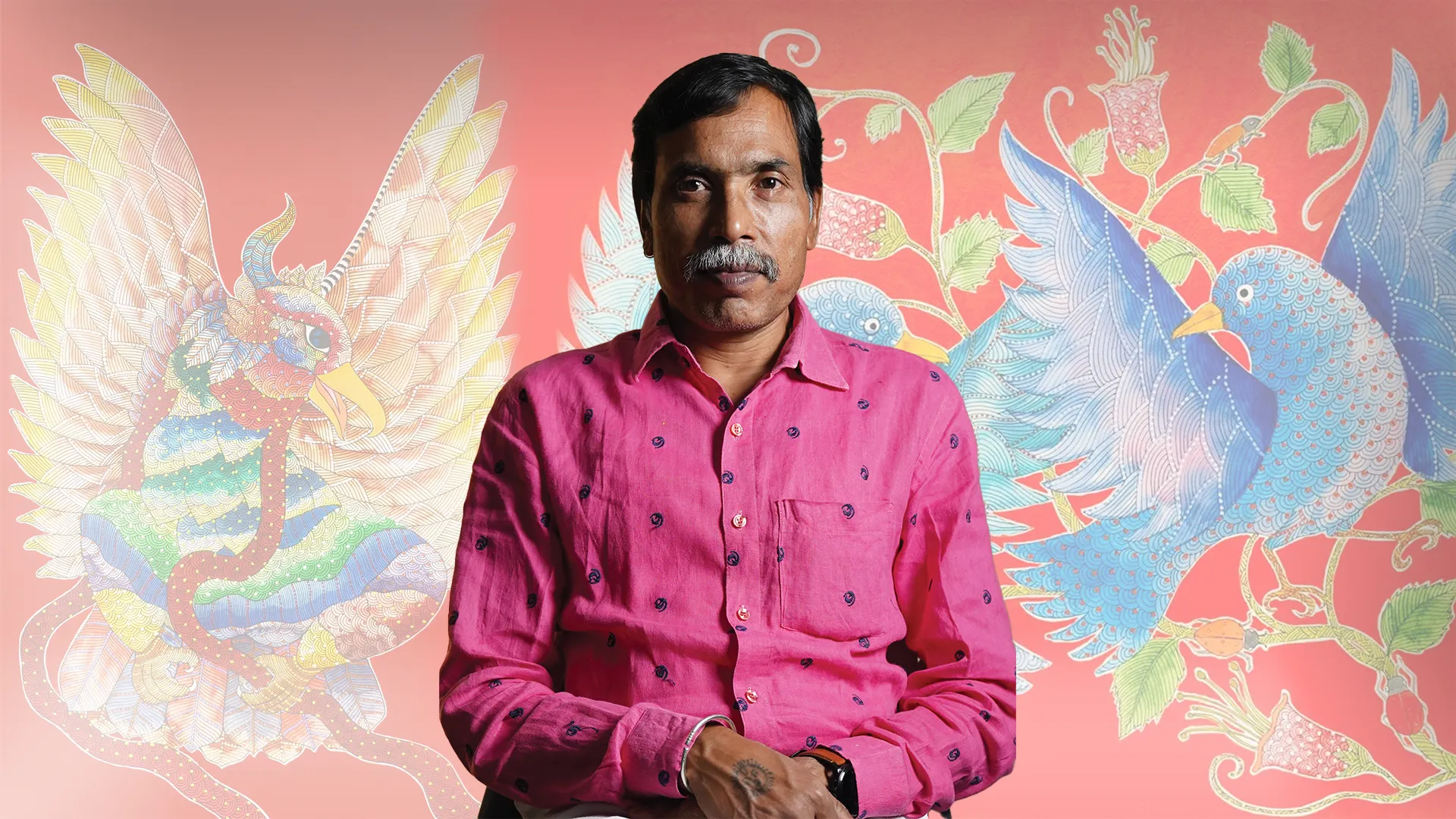
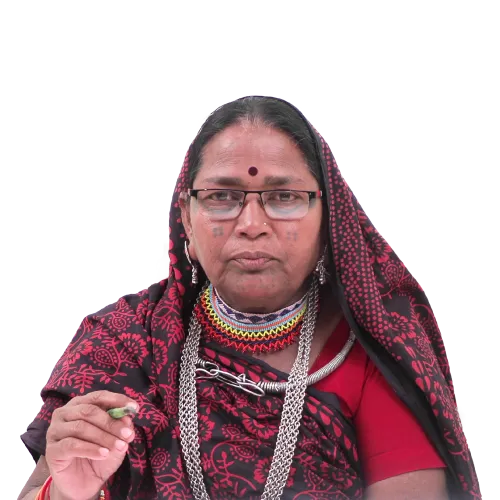
What is the Jaipur school of painting and where does it come from?
The Jaipur school of painting is a style of Indian miniature painting that originated in Amber City in Rajasthan and later moved its centre to Jaipur around the 18th century. It is part of the broader Jaipur-Rajpur tradition and developed under the patronage of Rajput rulers who had close ties with the Mughal court. The art uses opaque watercolours made from natural pigments and depicts royal portraits, Hindu mythological scenes, and elaborate court settings.
What is Blue Pottery Jaipur and how is it made?
Blue Pottery Jaipur is a Persian-inspired ceramic craft produced in Jaipur, Rajasthan, that is distinctive for its cobalt blue and turquoise glazes. Unlike conventional pottery, it is made from a mixture of powdered quartz stone, powdered glass, Multani mitti (Fuller's earth), borax, and gum rather than clay. The pieces are fired at low temperatures, which gives the glaze its characteristic translucent quality. It is used to make tiles, vases, bowls, and decorative plates.
Who are the most famous artists of the Jaipur school of painting?
Sahib Ram is one of the most celebrated historical artists of the Jaipur school, known for his innovative three-dimensional wood-inlay technique developed under Maharaja Sawai Madho Singh. Sawai Jai Singh's court also produced significant works in the Vaishnavite tradition, including Ragamala and Gita Govinda series. Among contemporary practitioners, Shammi Bannu Sharma is a Jaipur-based artist who continues the tradition and teaches it actively.
What materials and pigments are used in Jaipur miniature paintings?
Jaipur miniature paintings use opaque watercolour pigments sourced entirely from natural materials, including semi-precious stones, minerals, soils, clay, leaves, flowers, seeds, and vegetables. The painting framework is prepared on a support called Wasilgarh, and after the outline is applied in white paint, the colours are filled in with tiny strokes. The finished surface is polished with a smooth stone slab called Aqiq. Elephant teeth were historically used to make stencils for certain designs, though a synthetic alternative with comparable texture is now used in their place.
Can I learn Jaipur miniature painting online?
Yes, you can learn Jaipur miniature painting online through Rooftop's course taught by Shammi Bannu Sharma, a practising master based in Rajasthan. The course covers the authentic Jaipur-Rajpur method, from preparing the base and laying primary sketches to applying natural pigments and finishing with the Aqiq polish. Related Rajasthani miniature traditions such as Kota-Bundi, Mewar, and Bikaner painting are also available as separate courses on Rooftop.
Where can I buy authentic Jaipur Blue Pottery and Jaipur miniature paintings? Authentic Blue Pottery Jaipur and Jaipur miniature paintings are available from galleries and craft markets in Jaipur's old city, including areas around Johari Bazaar and the City Palace. The Kripal Kumbh gallery in Jaipur is a well-known source for Blue Pottery. For original works and art-inspired products from Indian traditional artists, Rooftop's shop carries a curated selection. Additionally, the Jaipur government supports local artisans through a scheme in which artists receive stamp paper in exchange for miniature paintings, helping sustain the tradition commercially.
The Jaipur school of painting and the craft of Blue Pottery represent two of Rajasthan's most enduring artistic achievements, shaped over centuries by royal patronage, cross-cultural exchange, and the skill of dedicated artists. Both traditions remain alive today, practised by master artists who pass their knowledge on to the next generation. Explore Jaipur miniature painting courses on Rooftop and take your first steps into one of India's most celebrated traditional art forms.
Sources
Image Sources
"Indian Miniature Painting." The Cultural Me, https://thecultural.me/articles/indian-miniature-painting-334162. Accessed 21 July 2026.
"Indian Miniature Painting, Jaipur, Rajasthan, India." MyLoview, https://myloview.com/canvas-print-indian-miniature-painting-jaipur-rajasthan-india-no-4B62A. Accessed 21 July 2026.
"Miniature Painting of Mirza Raja Jai Singh." Getty Images, https://www.gettyimages.com/detail/photo/miniature-painting-of-mirza-raja-jai-singh-jaipur-royalty-free-image/520894896. Accessed 21 July 2026.
"Radha and Krishna Seated on Terrace at Night: Jaipur Miniature." BidCurios, https://www.bidcurios.com/product/radha-and-krishna-seatwd-on-terrace-at-night-jaipur-miniature-mid-20th-century-vintage-art-print-low-cost-ready-to-frame-wall-decor-reproduction-from-original-classic-indian-paintings-as-narrett/. Accessed 21 July 2026.
"Rajasthani Miniature Painting Experience with Asharam Meghwal." Rajasthan Studio, https://rajasthanstudio.com/experiences/art-experiences/rajasthani-miniature-painting-experience-with-asharam-meghwal/. Accessed 21 July 2026.
"The Love of Bundi Miniature Paintings." Kaisori, https://kaisori.com/blogs/kaisori-discovers/the-love-of-bundi-miniature-paintings. Accessed 21 July 2026.