
Chamba Painting: Himachal's Pahari Art and Rumal Embroidery
Let's learn about the miniature paintings from Chamba!
Introduction and Origin
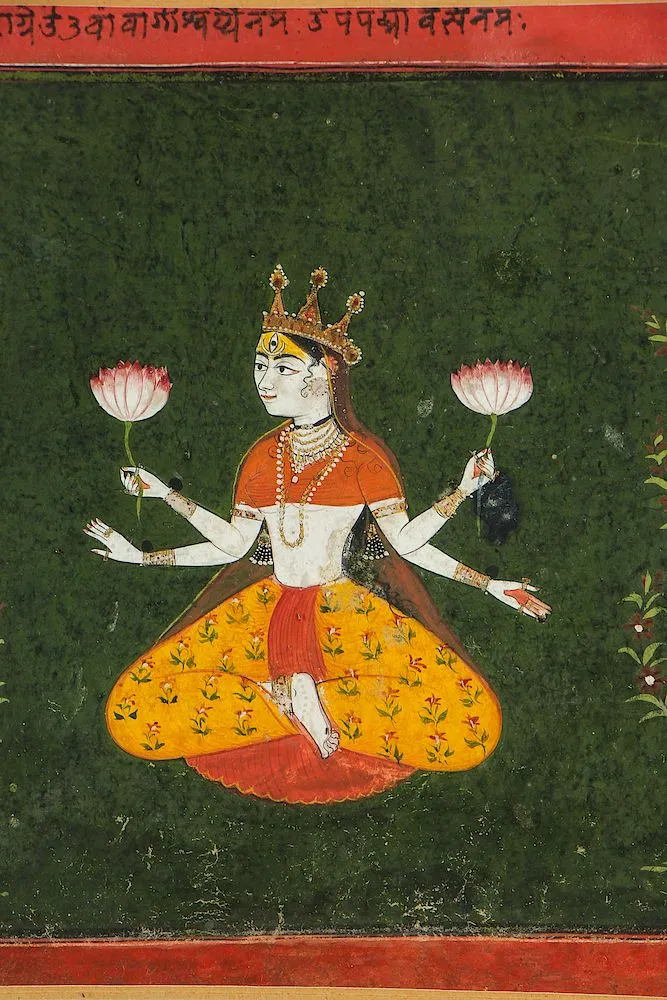
Chamba painting is one of the most refined expressions of the Pahari school of painting, born in the hills of what is today Himachal Pradesh. Produced in the Chamba Valley along the banks of the Ravi River, these miniature paintings blend Mughal sophistication with the mountain sensitivity of their surroundings, resulting in works of delicate line, subtle colour, and deeply human emotion. Alongside this painting tradition, the region also gave rise to the famous Chamba Rumal embroidery, whose thread-work mirrors the visual world of the miniatures. Together, these two art forms make Chamba a unique destination in the history of Indian folk art.
What Is Chamba Painting?
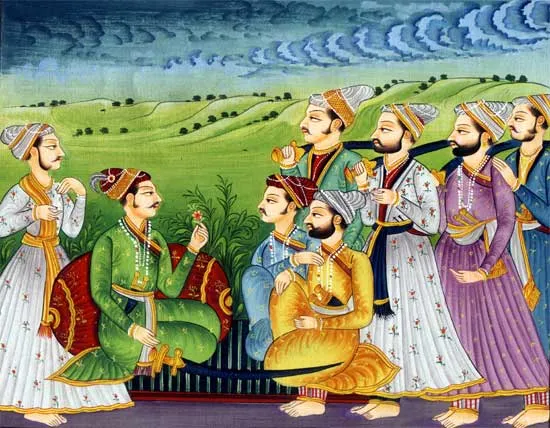
Chamba painting is a style of miniature painting that developed in the Chamba region of Himachal Pradesh from around the 17th century. It belongs to the Pahari school of painting, a broad group of hill-state miniature traditions that flourished across northern India. Chamba paintings are known for their refined portraiture of royals and courtly figures, tender depictions of the hero-heroine (nayak-nayika) relationship, and landscapes that reflect the scenic beauty of the outer Himalayas. The art uses handmade papers traditionally sourced from Sialkot (in present-day Pakistan), fine brushes made from the hair of mongooses, goats, calves, or squirrels, and colours derived from natural minerals, vegetable dyes, organic gums, and metallic pigments including gold and silver. Historically, it served as a form of court patronage art, recording royal life and religious themes for the rulers of Chamba.
History and Origin
The name Chamba itself carries layered history. According to local tradition, the village was named in the 9th century after Princess Champavati, daughter of King Sahilavarman. The name is also linked to the champaka tree with its fragrant golden blossoms, or to a local hill called Chamba. By the 17th century, a new style of painting had emerged in this region, growing out of the earlier Basohli painting tradition and absorbing influence from Mughal court artists. Chamba maintained close ties with the Mughal empire, and skilled professionals from Mughal courts likely contributed to the development of the local painting style. The art flourished under successive rulers: Raja Jit Singh (1794-1808 CE), Raja Shri Singh (1844-1875 CE), and Raja Bhuri Singh (1904-1919 CE), each of whom brought fresh influences from the Mughals, the Sikhs, and neighbouring Pahari hill schools. Over time, Chamba painting absorbed elements from all of these while developing its own signature: distinctively elegant female figures with refined facial features, and a strong connection to the landscape of the Himalayas.
Key Features and Famous Artists
Key Features and Visual Style
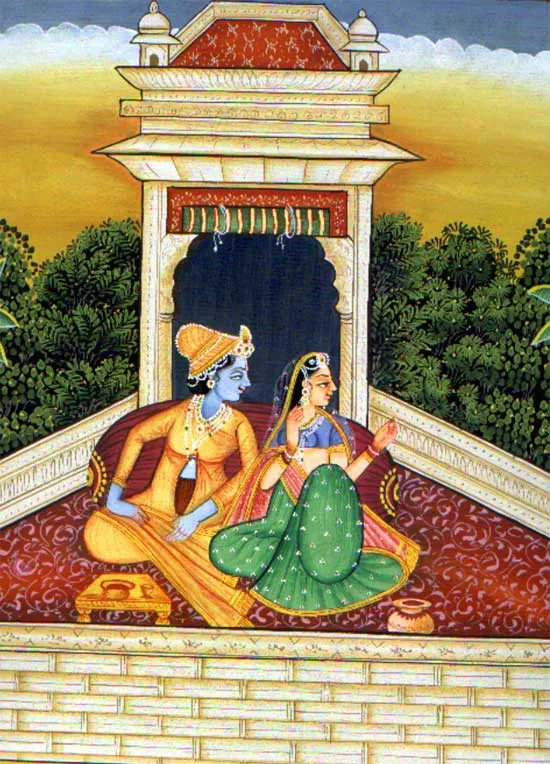
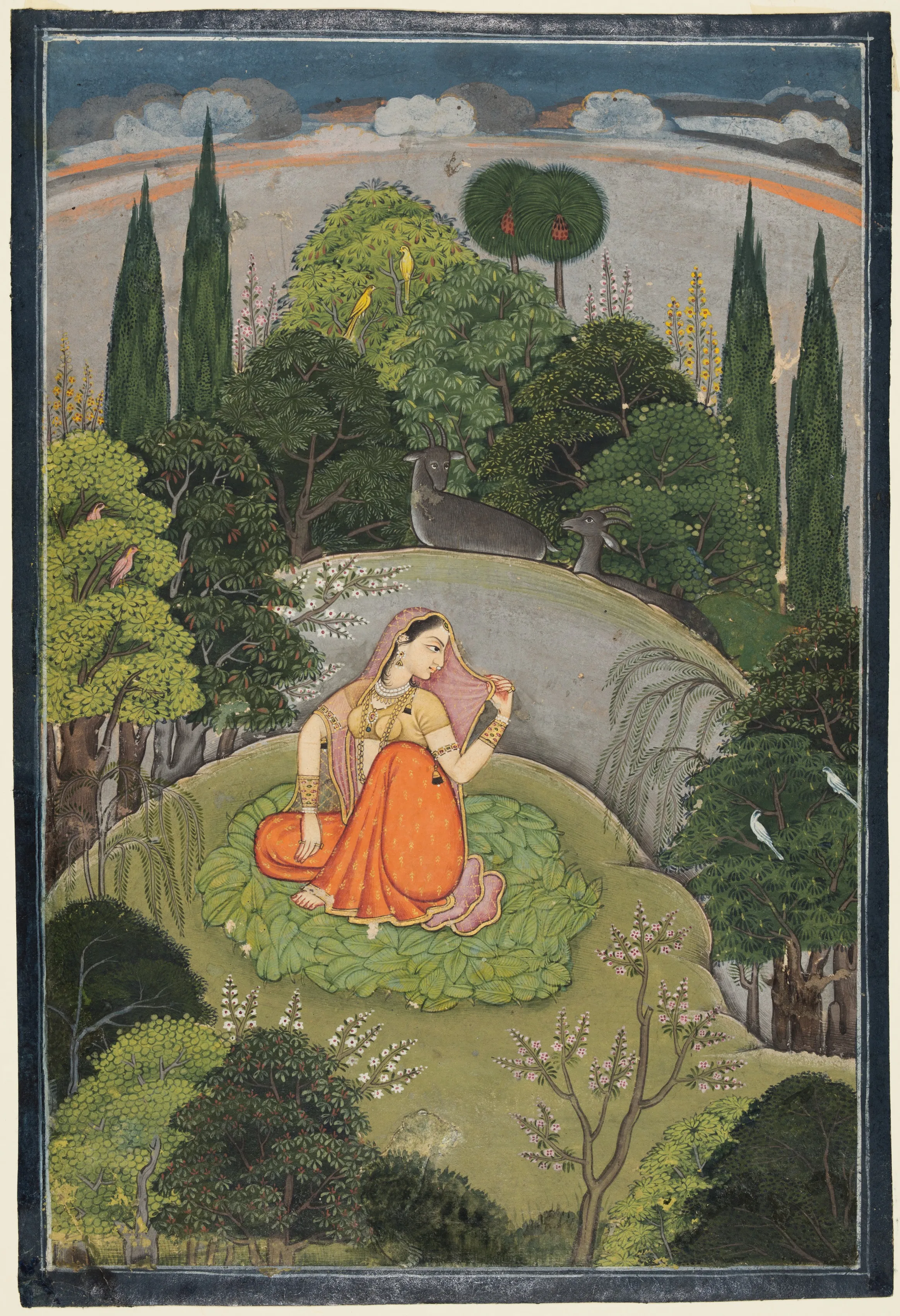
Chamba paintings are immediately recognisable for their fine craftsmanship, delicate line elegance, and attention to the human form, particularly the depiction of women. As part of the Pahari school, they blend Mughal compositional influence with a distinct mountain sensitivity.
Portraiture and ethnography: The paintings focus on portraits of royals, hero-heroine (nayak-nayika) compositions, and landscapes drawn from Himalayan surroundings.
Distinctive female figures: Chamba painting is especially noted for its graceful and elegant depictions of women, considered among the most refined in the Pahari tradition.
Natural and metallic colours: Colours are made from natural minerals, vegetable dyes, and organic gums such as gum arabic and babool ka gond (gum of acacia nilotica), with gold and silver metallic pigments used for embellishment.
Handmade Sialkoti paper: The traditional painting surface is handmade paper from Sialkot, worked with fine brushes crafted from mongoose, goat, calf, and squirrel hair for intricate detail.
Burnishing and lacquer finishing: After colours are applied and final outlines drawn, the painting is burnished with a polished stone and then coated with lacquer to give it a characteristic sheen and long-lasting durability.
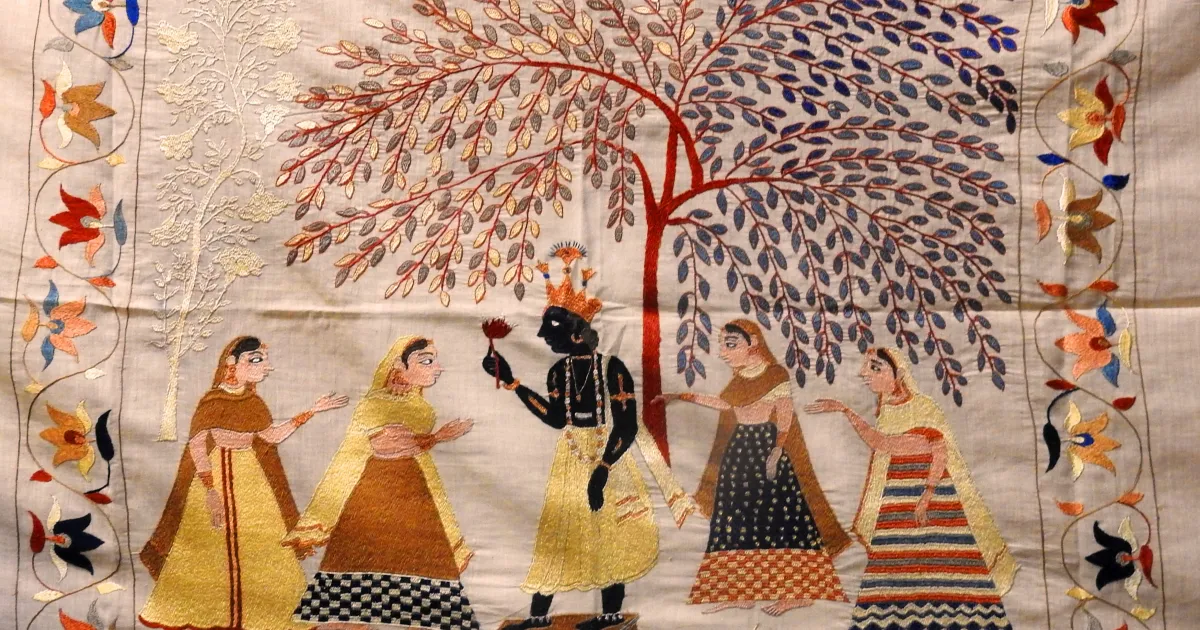
Chamba Rumal embroidery connection: The visual language of these paintings is closely echoed in Chamba Rumal embroidery, where the same figures and compositions are rendered in thread on fabric rather than painted on paper.
Famous Artists of Chamba Painting
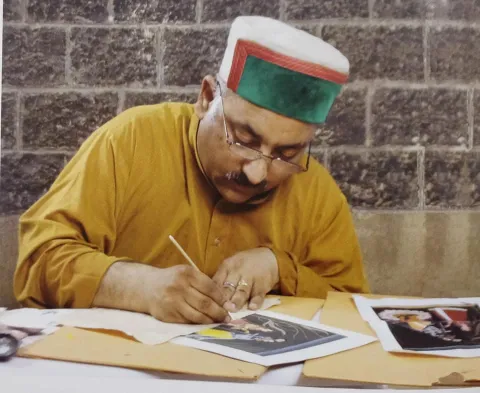
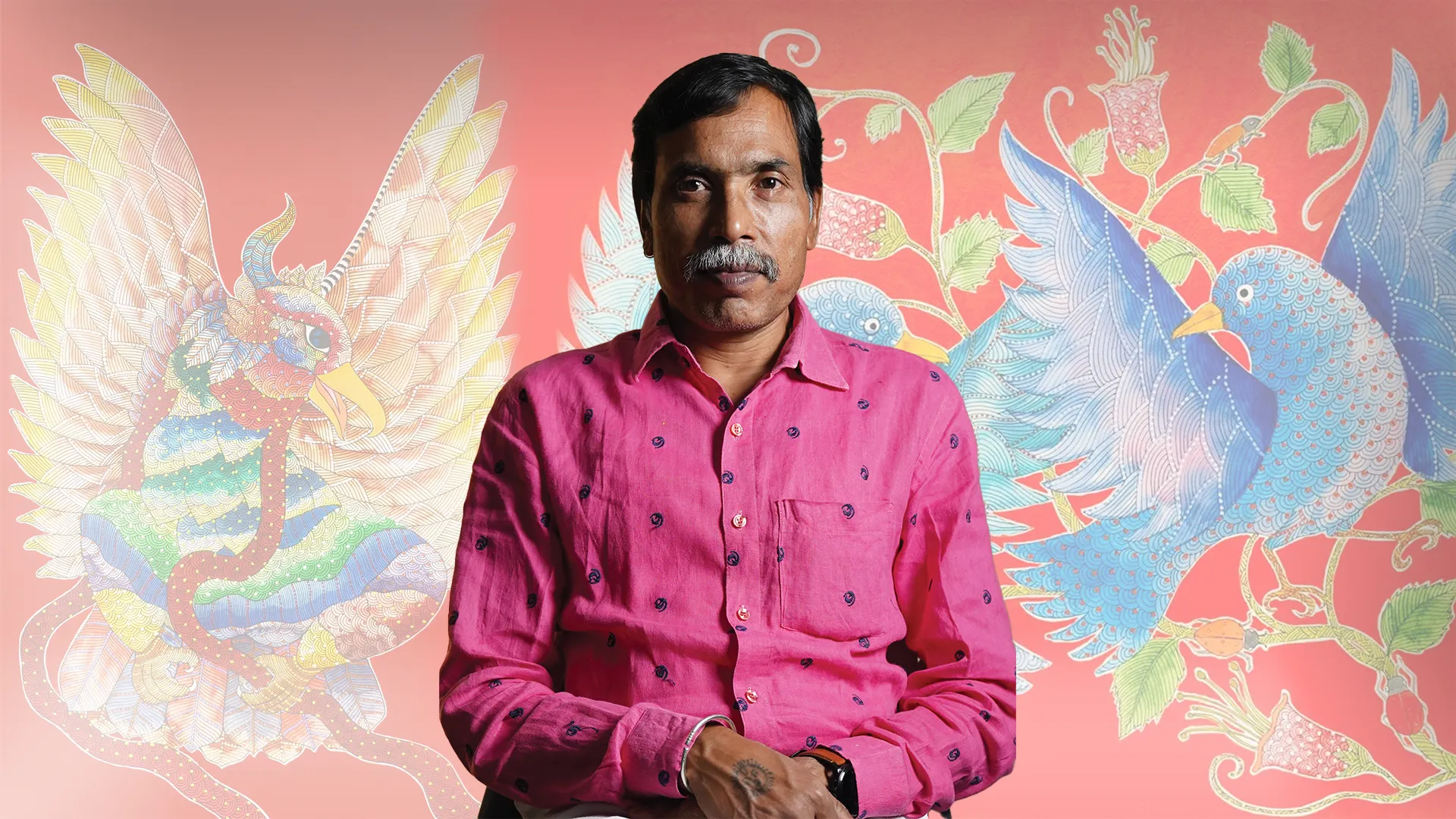
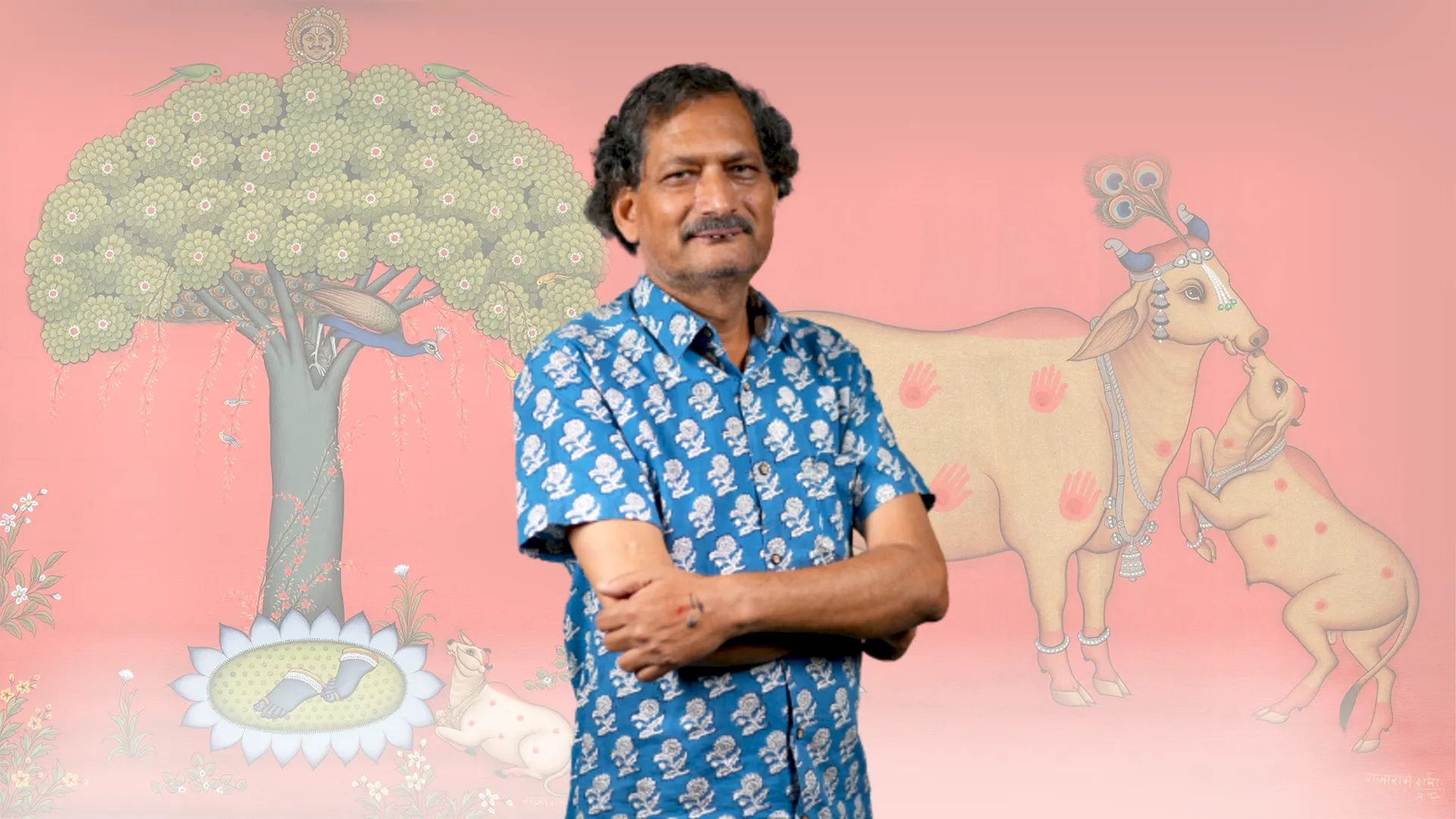
The Pahari painting tradition of Chamba and its neighbouring hill states has been carried forward by a lineage of skilled artists. The most widely recognised contemporary practitioner working in this tradition is Vijay Sharma from Himachal Pradesh, who has spent decades mastering all sub-styles of Pahari miniature painting including the Chamba school. Sharma is regarded not only for preserving a 300-year-old tradition but also for innovating within it. He founded Shilpa Parishad, an NGO dedicated to promoting and encouraging miniature painting in the Pahari tradition, and was honoured with the Padma Shri award in 2012. His work demonstrates how the Chamba style continues to evolve in contemporary hands. Other notable practitioners include Rang Lal of Chamba district, known for his reproduction of classical court scenes, and Roshan Lal of the Kangra-Chamba belt, recognised for his atmospheric use of Himalayan landscape in compositions. The Pahari painting experience tradition overall continues to find representation through the broader network of hill artists.
How to Learn Chamba Painting
If you are wondering how to learn Chamba painting or explore the Pahari miniature tradition it belongs to, the most direct route is to learn from artists who are themselves rooted in this tradition. Rooftop offers a Pahari painting experience led by practising artists, covering the techniques, materials, and visual grammar that define this school. For learners interested in exploring related miniature styles, Rooftop's courses page includes instruction in several connected Pahari and Rajput miniature traditions taught by master artists.
Where to See and Buy Chamba Painting
The best place to experience Chamba painting in its original context is Chamba town in Himachal Pradesh, where the Bhuri Singh Museum holds a significant collection of original miniatures and related textiles including Chamba Rumals. The National Museum in New Delhi and the Victoria and Albert Museum in London also hold important works from the Pahari school. For those looking to buy authentic pieces, Rooftop's shop features original works from Indian folk and traditional art traditions. Chamba Rumal embroidery pieces are also available from government emporiums in Himachal Pradesh and at state crafts fairs.
Learn Chamba Miniature

Frequently Asked Questions
What is Chamba painting and where does it come from?
Chamba painting is a miniature painting tradition from the Chamba valley in Himachal Pradesh, belonging to the broader Pahari school of painting. It developed from the 17th century onward, drawing from the earlier Basohli style and absorbing Mughal court influences. The style is known for its elegant portraiture, refined female figures, and use of natural pigments on handmade paper.
Which state and community in India practises Chamba painting?
Chamba painting comes from Himachal Pradesh in northern India, specifically from the Chamba Valley along the banks of the Ravi River. Historically, the art was produced by skilled court artists under the patronage of Chamba's rulers, some of whom were likely trained professionals from Mughal courts. Today, individual artists from the Pahari hill region continue the tradition.
What is Chamba Rumal art and how is it related to Chamba painting?
Chamba Rumal art refers to a tradition of hand embroidery produced in the Chamba region, where figures, scenes, and motifs drawn directly from Chamba miniature paintings are stitched onto fabric using coloured thread. The embroidery mirrors the visual language of the paintings so closely that both are considered related traditions. Chamba Rumal holds great significance for the Pahadi community and is one of Himachal Pradesh's most recognised craft forms.
What materials and colours are used in Chamba painting?
Traditional Chamba paintings are made on handmade Sialkoti paper using fine brushes crafted from the hair of mongooses, goats, calves, and squirrels. Colours are derived from natural minerals, vegetable dyes, and organic gums including gum arabic and babool ka gond (gum of acacia nilotica). Gold and silver metallic pigments are also used for decorative accents, and the finished painting is burnished with a polished stone and sealed with lacquer for a lasting sheen.
Who are the most notable artists working in the Chamba painting tradition?
The most widely recognised contemporary practitioner of Pahari miniature painting, which encompasses the Chamba style, is Vijay Sharma from Himachal Pradesh, a Padma Shri awardee who founded the NGO Shilpa Parishad to promote miniature painting. Other noted artists from the Chamba-Kangra belt include Rang Lal and Roshan Lal, both known for their work within the classical Pahari school. The tradition is documented in reference works including B.N. Goswamy and Eberhard Fischer's Pahari Masters and C. Singh's Centres of Pahari Painting.
Can I learn Chamba painting or Pahari miniature painting online in India?
Yes, it is possible to learn Pahari miniature painting, the tradition that includes the Chamba school, through structured courses and experiences offered by Rooftop. The Pahari painting experience on Rooftop is led by practising artists and covers the techniques, materials, and visual principles of this tradition. Related miniature painting courses are also available on Rooftop's courses page.
Chamba painting, with its centuries of royal patronage and its deep roots in the Pahari hills, remains one of India's most refined miniature traditions. Whether you are drawn to the luminous painted miniatures or to the intricate thread-work of the Chamba Rumal, this tradition rewards careful attention. Explore Pahari painting experiences and courses on Rooftop and begin your journey with one of Himachal Pradesh's most enduring art forms.
Bibliography
Image Sources
"Chamba Style of Hilly Area Paintings." Art of Legend India, https://artoflegendindia.blogspot.com/2010/12/chamba-style-of-hilly-area-paintings.html. Accessed 14 July 2026.
"In Conversation with Dr. Vijay Sharma: Murals of Devi Kothi Temple, Chamba." Sahapedia, http://www.sahapedia.org/conversation-dr-vijay-sharma-murals-devi-kothi-temple-chamba. Accessed 14 July 2026.
"Chamba Rumal: The Embroidery Art of Himachal Pradesh." Sahapedia, http://www.sahapedia.org/chamba-rumal-embroidery-art-himachal-pradesh. Accessed 14 July 2026.
"Chamba Style of Hilly Area Paintings." Art of Legend India, https://artoflegendindia.blogspot.com/2010/12/chamba-style-of-hilly-area-paintings.html. Accessed 14 July 2026.
"Indian, Himachal Pradesh, Chamba Region – Utka Nayika." Wikimedia Commons, https://commons.wikimedia.org/wiki/File:Indian,_Himachal_Pradesh,Chamba_region-Utka_Nayika-2018.114-_Cleveland_Museum_of_Art.jpg. Accessed 14 July 2026.
"Indian Chamba School, 17th–18th c. Painting." Bidsquare, https://www.bidsquare.com/online-auctions/material-culture/indian-chamba-school-17-18th-c-painting-1306205. Accessed 14 July 2026.