

Hover to zoom
Folk Art
Women Worshipping Srinathji
Description
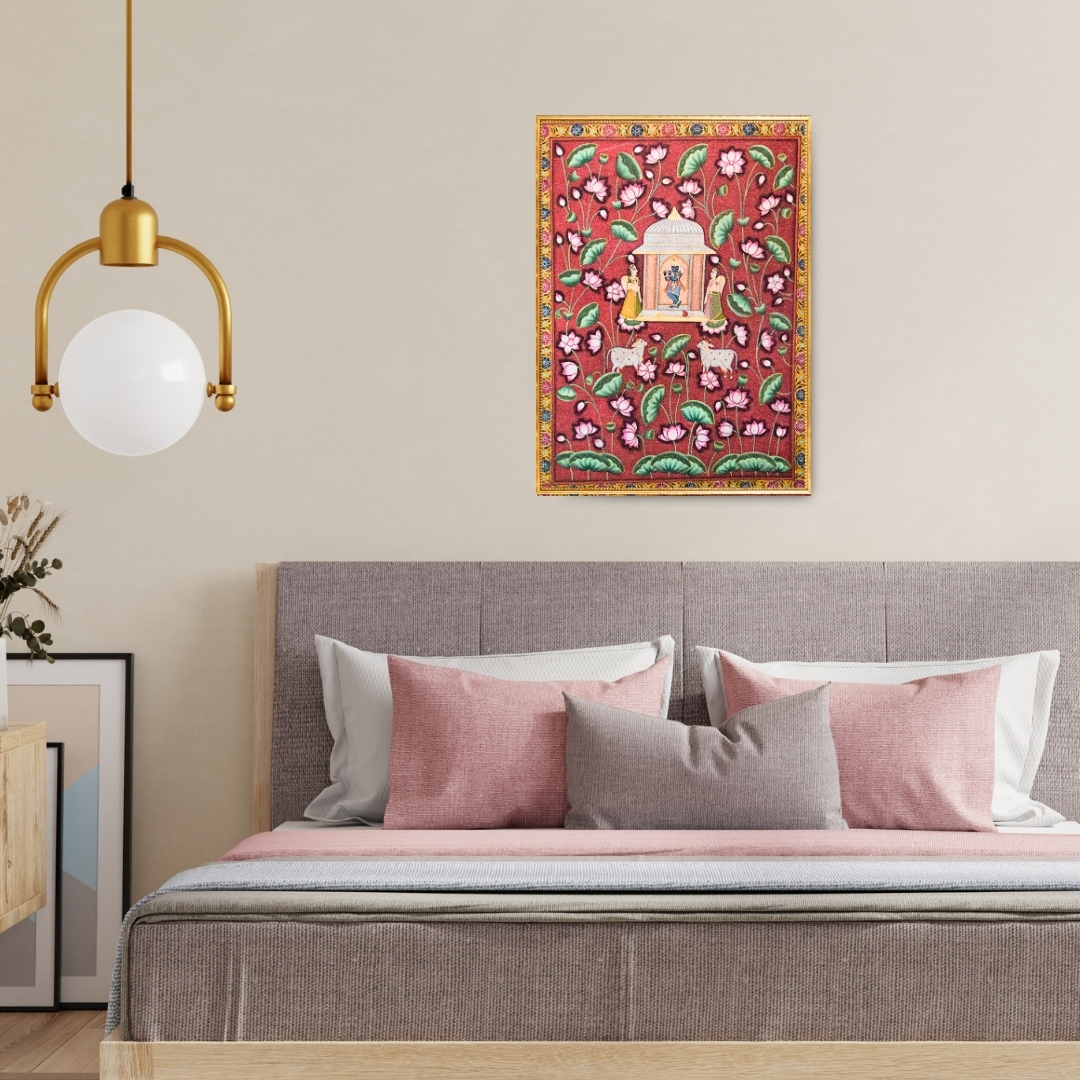
Pichwai Painting – Women Worshipping Shrinathji captures a quiet moment of devotion. Two women stand before Shrinathji, offering their reverence while surrounded by blooming lotuses that fill the artwork with movement and colour. The warm red backdrop feels rich yet calming, and delicate floral motifs frame the central shrine beautifully. The presence of sacred cows at the base adds a gentle sense of grounding, making the scene feel complete and harmonious.
Hand-painted using traditional techniques, the piece carries the clarity and precision that define authentic Nathdwara Pichwai art. Fine brushwork, a balanced composition, and devotional depth come together to create a painting that feels both culturally rooted and visually inviting.
Why This Artwork Stands Out
- Lotus-filled backdrop gives the painting a vibrant and uplifting energy
- Central shrine composition naturally draws the eye to Shrinathji
- Gentle pastel detailing keeps the figures expressive without overpowering the frame
- Traditional pigments enhance texture and depth
Custom Made to Order
Request for details