

Hover to zoom
Tribal Art
Mahua Ka Ped
Created by Pinju Tahed
Sold by Rooftop Collections
Description
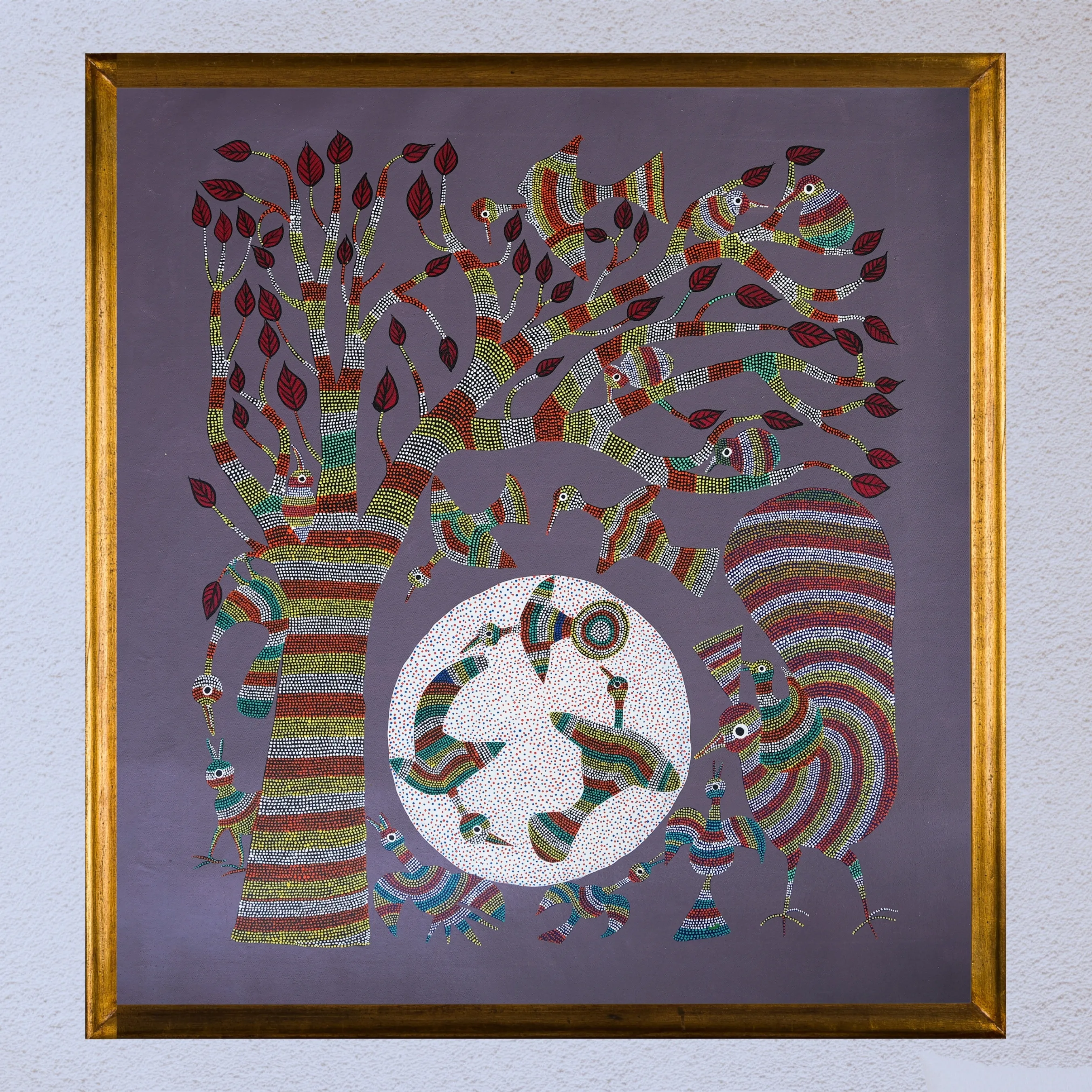
The majestic Mahua tree stands at the heart of Pinju Tahed’s "Mahua Ka Ped," its sprawling branches adorned with deep red leaves and intricate patterns. Peacocks gracefully perch around the tree, adding a sense of elegance and movement to the scene. At the center, a circular motif symbolizes unity and the cycle of life, drawing attention to nature’s rhythm. Through earthy tones, precise dot work, and vivid detailing, the artist skillfully captures the harmony between the tree, its surroundings, and the stories of the Bhil community.
Non-cancellable
This product cannot be cancelled once the order is placed. This item is non-returnable.
Custom Made to Order
Request for details
What is Bhil art?
Bhil art is a traditional folk art form from the Bhil community in India, known for its vibrant colors, intricate patterns, and storytelling elements. It often depicts themes from nature, mythology, and daily life.
Who is Lado Bai ?
Lado Bai is a renowned artist from the Bhil community, celebrated for her unique style that blends traditional techniques with contemporary themes. She has gained recognition for her contributions to Indian art and has showcased her work nationally and internationally.
What materials are used in Lado Bai paintings?
Lado Bai typically uses natural pigments derived from minerals and plants, along with handmade paper or cloth as her canvas. This commitment to traditional materials adds authenticity to her artwork.
How can I care for my Lado Bai painting?
To preserve your painting, keep it in a cool, dry place away from direct sunlight. Avoid using harsh chemicals for cleaning; a soft, dry cloth is usually sufficient for dusting.
Are Lado Bai paintings suitable for gifting?
Absolutely! Lado Bai paintings make thoughtful and unique gifts for art lovers and those interested in cultural heritage. Each piece tells a story, making it a meaningful present for any occasion.

Pinju Tahed
Hailing from the Bhil community, Pinju Tahed was always surrounded by art and his journey as a celebrated artist literally found itself. Son of legendary Bhi artist, Lado bai, Pinju ji has managed to carve a niche for himself. He is known for bold, minimalist depiction of tribal themes. Pinju Tahed’s standout works feature themes like wildlife, tribal community, nature, local deities and festivals - distilling the Bhil’s vibrant tradition into clean, powerful silhouettes. Though details of his early life remain private, minimalistic visual drama speaks of cultural narrative and fearless design.
Pinju absorbed the rhythms and symbols of the Bhil community, rhythms that pulse through every artwork he creates with unwavering clarity. Bhil art paintings by Pinju Tahed are steeped in tradition yet have refreshingly contemporary designs, where emotion plays the loudest role. Each art work is a canvas of tribal storytelling with the drama of India’s folk and tribal traditional art - bold, uncompromising, unforgettable.
Pinju Tahed is a Bhil artist whose art stands out not for intricate color work, but for visual storytelling at its purest. Every dot, every line, every shadow echoes tribal history. His work invites you to pause, feel, and connect across time and tradition.
Unique Practice
Minimalist yet intense portrayal of tribal motifs