

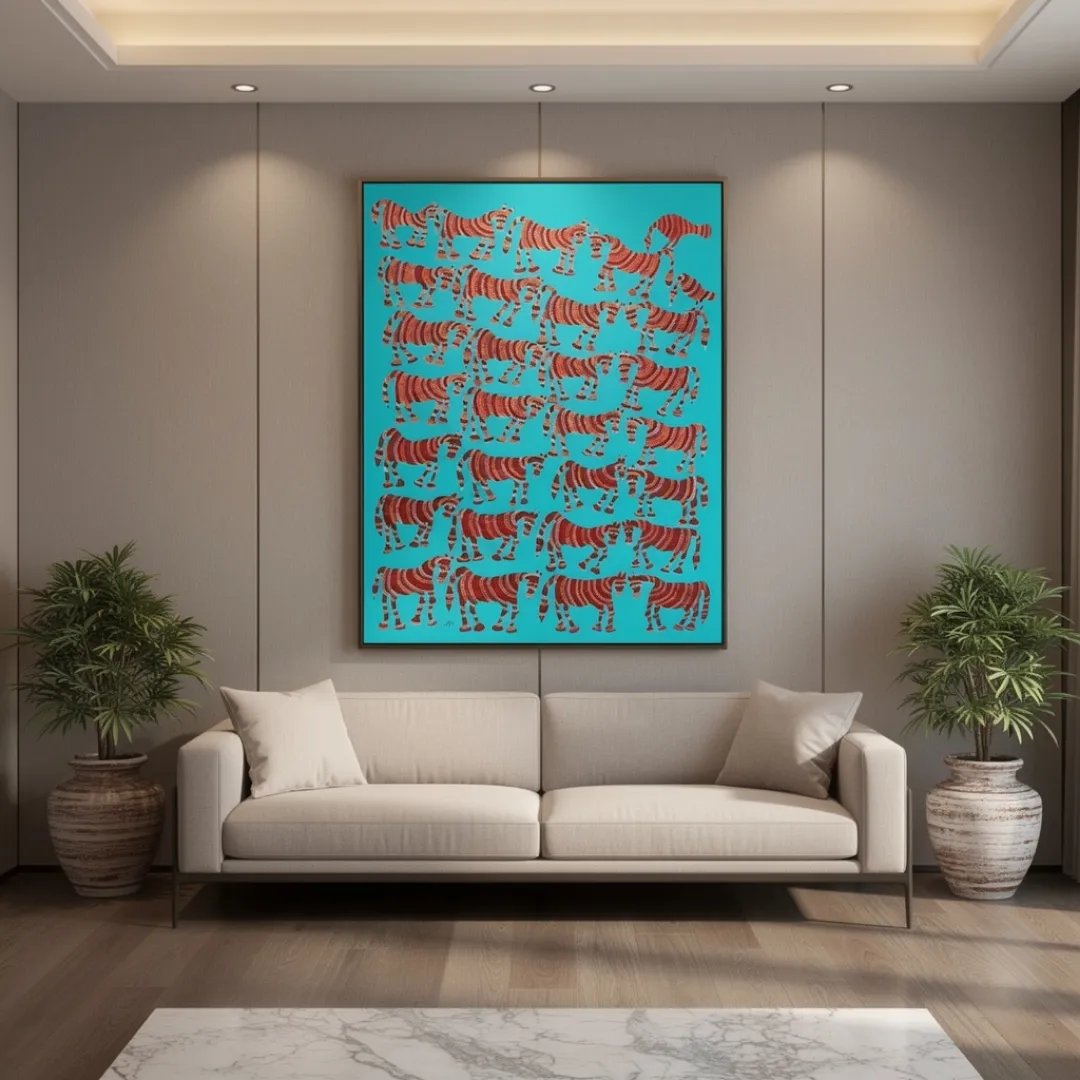
Pithora Horses
Description
Across a field of electric turquoise, horses move in every direction at once — grazing, turning, nuzzling, standing still. There are dozens of them, filling the canvas from edge to edge without a single gap of empty ground, yet the composition never feels crowded. Each animal carries its own inner world of colour: bands of deep crimson, burnt orange, rose and gold ring the body in concentric stripes, as though the horses themselves are made of accumulated ritual energy. Their eyes are wide and watchful, their legs planted with a quiet, grounded confidence.
This is Pithora, the ceremonial painting tradition of the Bhil and Rathwa communities of central India, in which horses are not merely depicted but invoked. Lado Bai works in acrylic on canvas, translating a practice rooted in sacred wall painting into a format that holds the same living charge. The repetitive dotwork and banded patterning that fill each form are not decorative choices — they are the visual grammar of the tradition itself, a language of marks that animates the creature from within. The turquoise ground, luminous and steady, gives the herd a stage that feels neither earth nor sky but somewhere between the two: a space where the sacred and the everyday meet without announcement.
Why This Artwork Stands Out
The all-over composition creates a sense of abundance and ceremonial abundance rooted in Bhil cosmology. Each horse is individually patterned, giving the collective energy of the herd an intimate, handcrafted character. The turquoise and crimson palette carries a visual intensity that feels both ancient and strikingly contemporary. Lado Bai's work belongs to a living oral-visual tradition, making this painting a cultural document as much as a work of art.
Non-cancellable
This product cannot be cancelled once the order is placed. This item is non-returnable.
Is this painting handmade?
Does the painting come with a certificate of authenticity?
How will the painting be shipped?
Can I return or exchange the artwork?
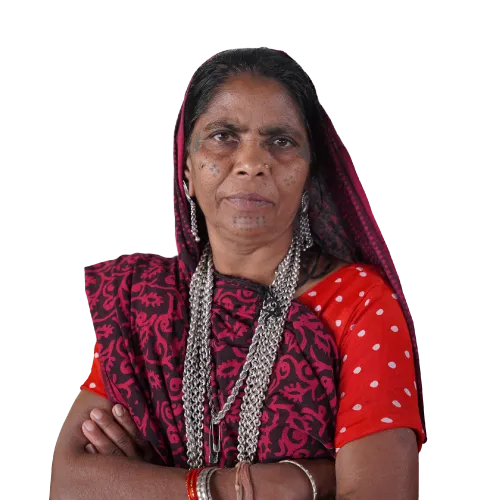
Lado Bai
Bhil Artist || Community Icon || Pioneer