

Hover to zoom
Folk Art
Daan Leela
Created by Mukut Joshi
Sold byRooftop Collections
Description
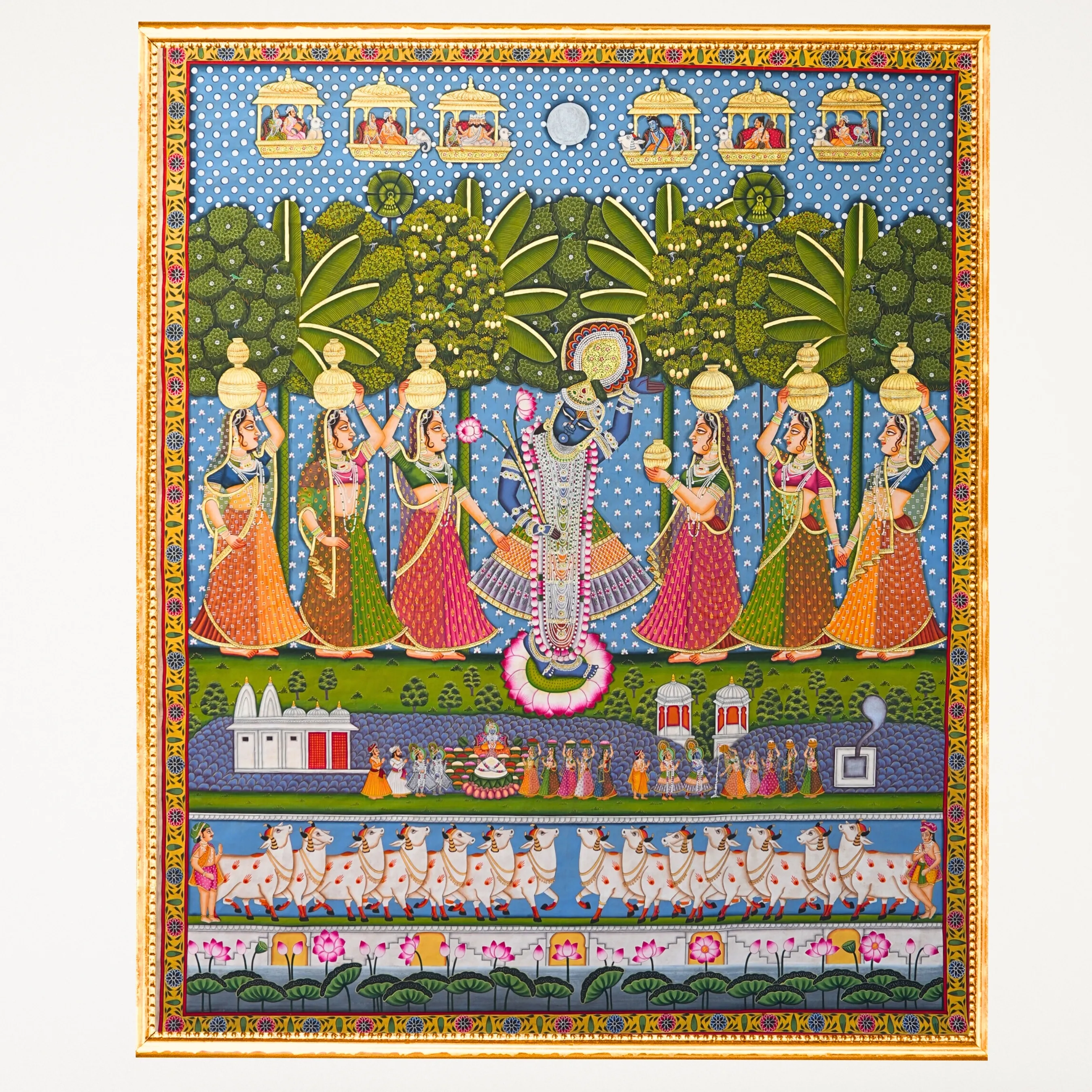
The artist’s vision for this painting is to showcase one of the many revered forms of Lord Shrinathji as they are worshipped in different locations, such as Govind Devji in Jaipur and Shrinathji in Nathdwara. This specific piece focuses on the Bankey Bihariji form, characterized by a distinctive tribhanga posture where the neck, one leg and knees are bent. This "bent" or "Bankey" stance is a central theme of the artwork. To complement this divine figure, the artist has placed three Gopis on either side, each carrying traditional offerings like butter, buttermilk, curd, and milk, creating a scene of vibrant devotion and communal worship.
Non-cancellable
This product cannot be cancelled once the order is placed. This item is non-returnable.
$ 5,229
In Stock
Is this painting handmade?
Yes. Nathdwara and Pichwai artworks on Rooftop, including Daan Leela (Vertical), are hand-painted by master artists using traditional temple painting techniques.
Does the painting come with a certificate of authenticity?
Yes. Each Rooftop artwork includes a certificate verifying the authenticity, medium and identity of the artist.
How will the painting be shipped?
All artworks including Daan Leela (Vertical) are securely packaged with protective materials and shipped worldwide with tracking information.
Can I return or exchange the artwork?
Since Daan Leela (Vertical) is an original handmade artwork, returns or exchanges are not accepted unless the painting arrives damaged.
Mukut Joshi
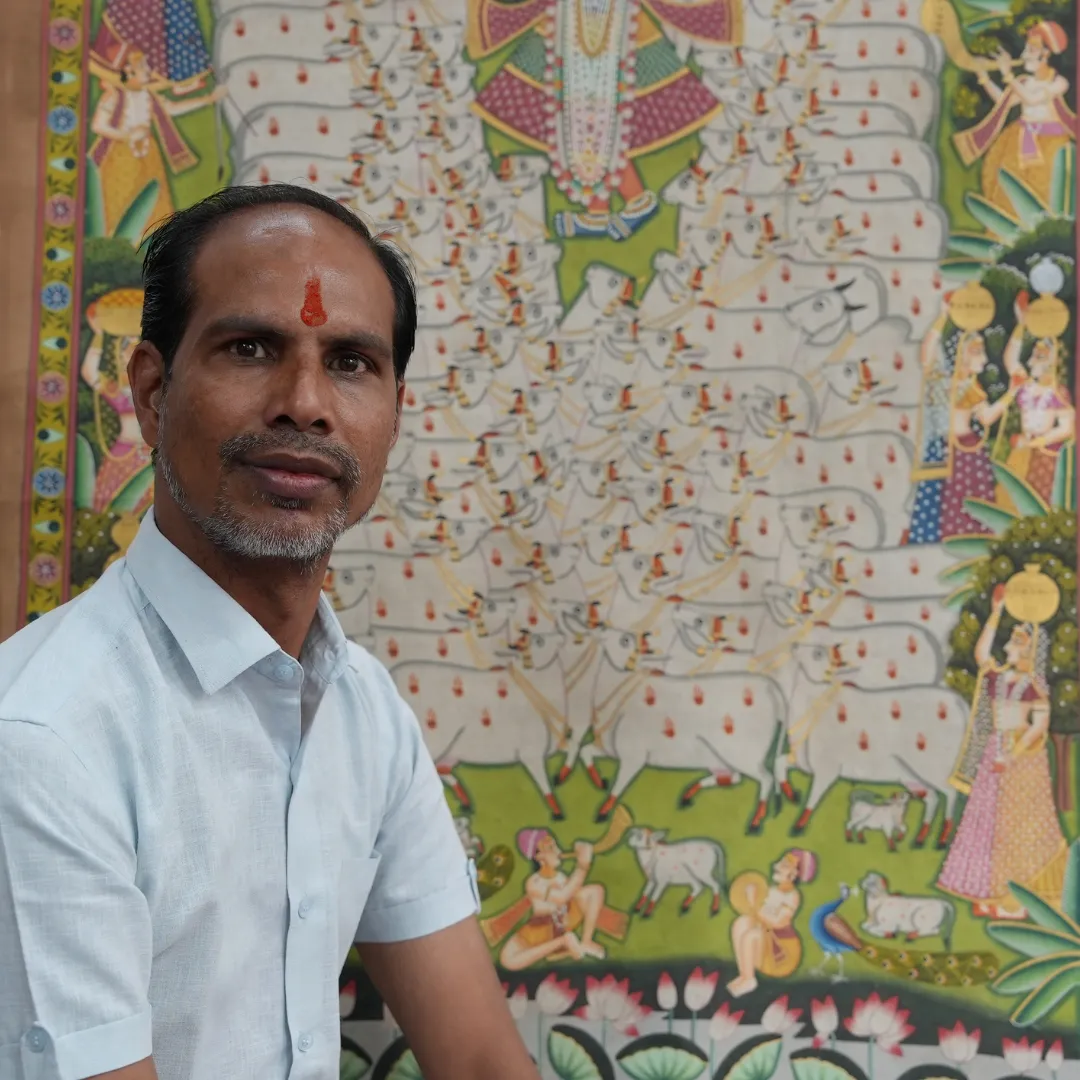
Mukut Joshi is a dedicated Pichwai artist whose work is deeply rooted in tradition yet shaped by years of personal exploration and devotion to the craft. Born into a family with a long-standing association with this art form, Mukut was introduced to painting at an early age under the guidance of his elder brother and mentor, Dr. Prakash Joshi. Growing up in an environment immersed in artistic practice, he developed a strong foundation in the techniques, stories, and philosophy behind Pichwai painting.
While his early training followed his family’s traditional style, Mukut gradually found a profound connection with Pichwai art and chose to specialize in it. In 2014, he committed himself fully to this intricate and spiritually rich practice.
His works draw inspiration from the classical origins of Pichwai, which emerged around 400 years ago in Nathdwara, Rajasthan, as devotional paintings placed behind the idol of Shrinathji in temple sanctums. Staying true to this legacy, Mukut’s paintings often depict scenes from Lord Krishna’s life, festivals like Janmashtami, Annakut, and Holi, as well as elements of nature such as lotus flowers, cows, and peacocks.
Working on handwoven cotton fabric, he uses natural pigments, gold, and fine detailing techniques that define the traditional Pichwai style. His art is recognized for its rich color palette, intricate compositions, and expressive detailing.
Beyond his studio practice, Mukut Joshi has actively contributed to the promotion of Pichwai art by conducting workshops at universities and museums, and participating in exhibitions across India. His works are part of several private collections and are appreciated by art enthusiasts and collectors alike.
Through his journey, Mukut continues to preserve and carry forward the legacy of Pichwai painting while sharing its cultural and spiritual depth with a wider audience.