

Two Rajasthani Art Forms, Two New Books: Rooftop and Jawahar Kala Kendra Bring Phad and Pichhavai to the World
Some art forms live in museums. Others live in temples, in the hands of itinerant singers, in the folds of a haveli's textile hangings — passed down not through galleries but through devotion, memory, and craft.

Rooftop
Author
Some art forms live in museums. Others live in temples, in the hands of itinerant singers, in the folds of a haveli's textile hangings — passed down not through galleries but through devotion, memory, and craft. Phad and Pichhavai are two such traditions, and they have just found a beautiful new home: in print.
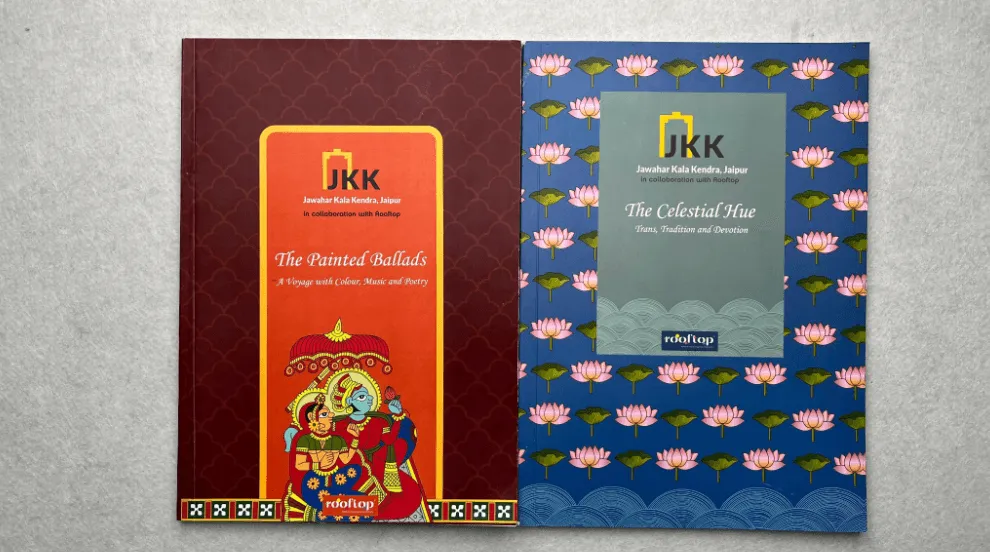
Rooftop, India's marketplace for folk and tribal art, has partnered with Jawahar Kala Kendra (JKK), Jaipur — the state's premier centre for visual arts, performing arts, and literature — to publish two collector's editions celebrating these iconic Rajasthani painting traditions:
- The Painted Ballads: A Voyage with Colour, Music and Poetry — on the art of Phad
- The Celestial Hue: Trans, Tradition and Devotion — on the art of Pichhavai
The books were released as part of JKK's "Virasat Se Vikas" (Heritage to Development) initiative, at a launch held at JKK on Saturday, 17th August 2024.
The Launch
The books were unveiled by Gayatri Rathore, IAS, Principal Secretary, Department of Art, Literature, Culture & Archaeology, and Director General of JKK. She was joined by JKK's Additional Director General Priyanka Jodhawat, Senior Accounts Officer Chetan Kumar Sharma, Assistant Director Abdul Lateef Usta, and Rooftop's Founder Kartik Gaggar along with his team.
Speaking at the event, Gayatri Rathore said that for people to truly know the culture of the state, authentic written literature needs to be available, and that JKK's work in publishing such books is commendable — adding that a book like this doesn't just inform, it teaches a great deal while acting like a friend to the reader.
Priyanka Jodhawat framed the project within JKK's broader "Virasat Se Vikas" goal: the state's folk arts are our heritage, she said, and their real development will only happen once they reach the younger generation.
The launch was covered by several Jaipur publications, including Patrika, Kala Sansar, News Jyoti, Bedhadak, and Navjyoti.
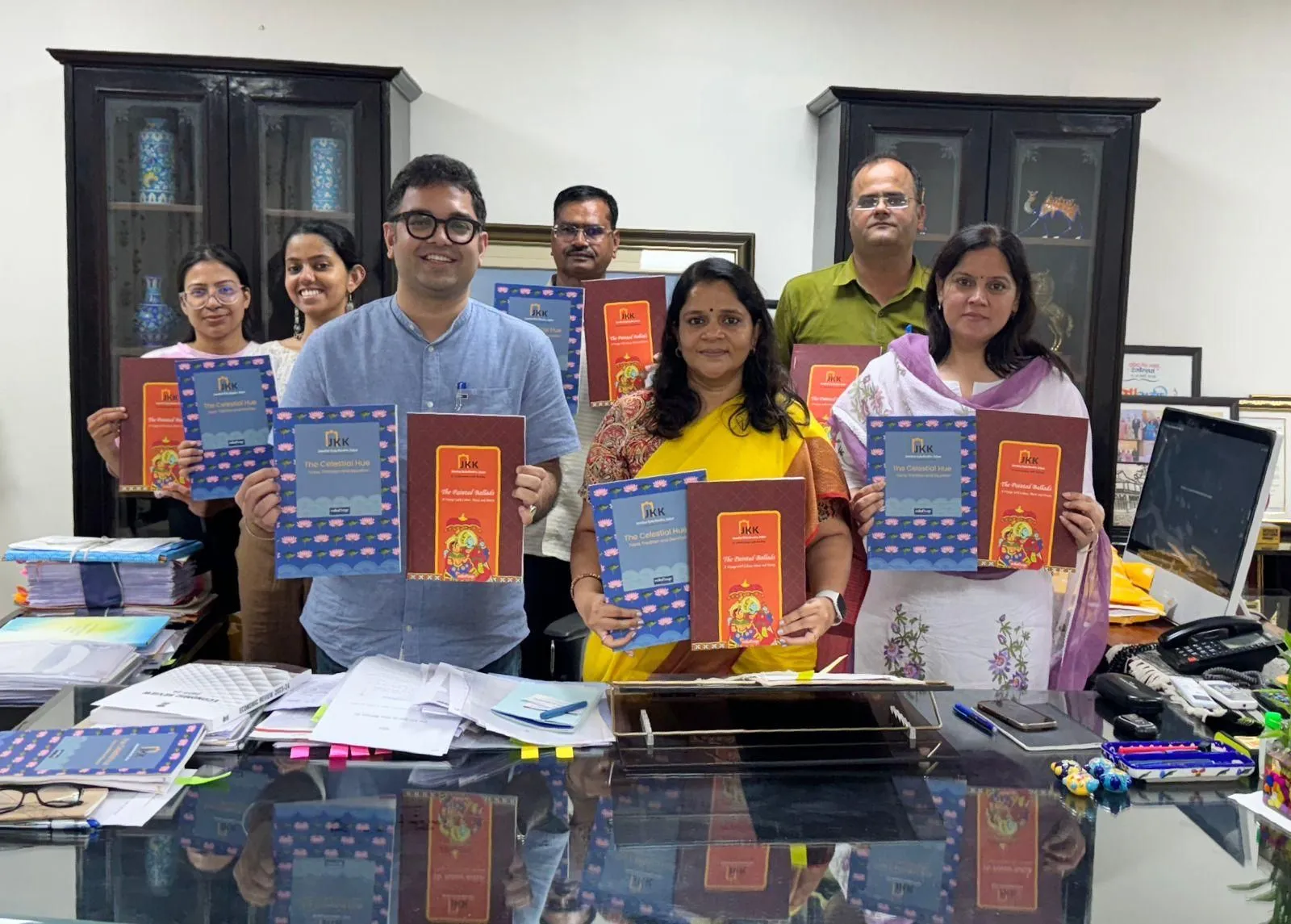
JKK launchs Pichhavai and Phad books with Rooftop
From Idea to Institution
The collaboration grew out of Rooftop's Artventures series — layered learning books on Indian art forms across three levels (Elementary, Essentials, Expert). When Rooftop brought this work to JKK, the idea evolved into something bigger: a single, definitive volume on each art form, designed for JKK's own gifting and promotional use.
Over June–August 2024, the two teams built the books together — Rooftop leading design, content, and artwork commissioning; JKK contributing theory and cultural context through Priyanka Jodhawat (project oversight) and Abdul Lateef Usta (design and content coordination), with the project championed by Gayatri Rathore, IAS at JKK and Kartik Gaggar at Rooftop.
The Painted Ballads: Phad's Mobile Temples
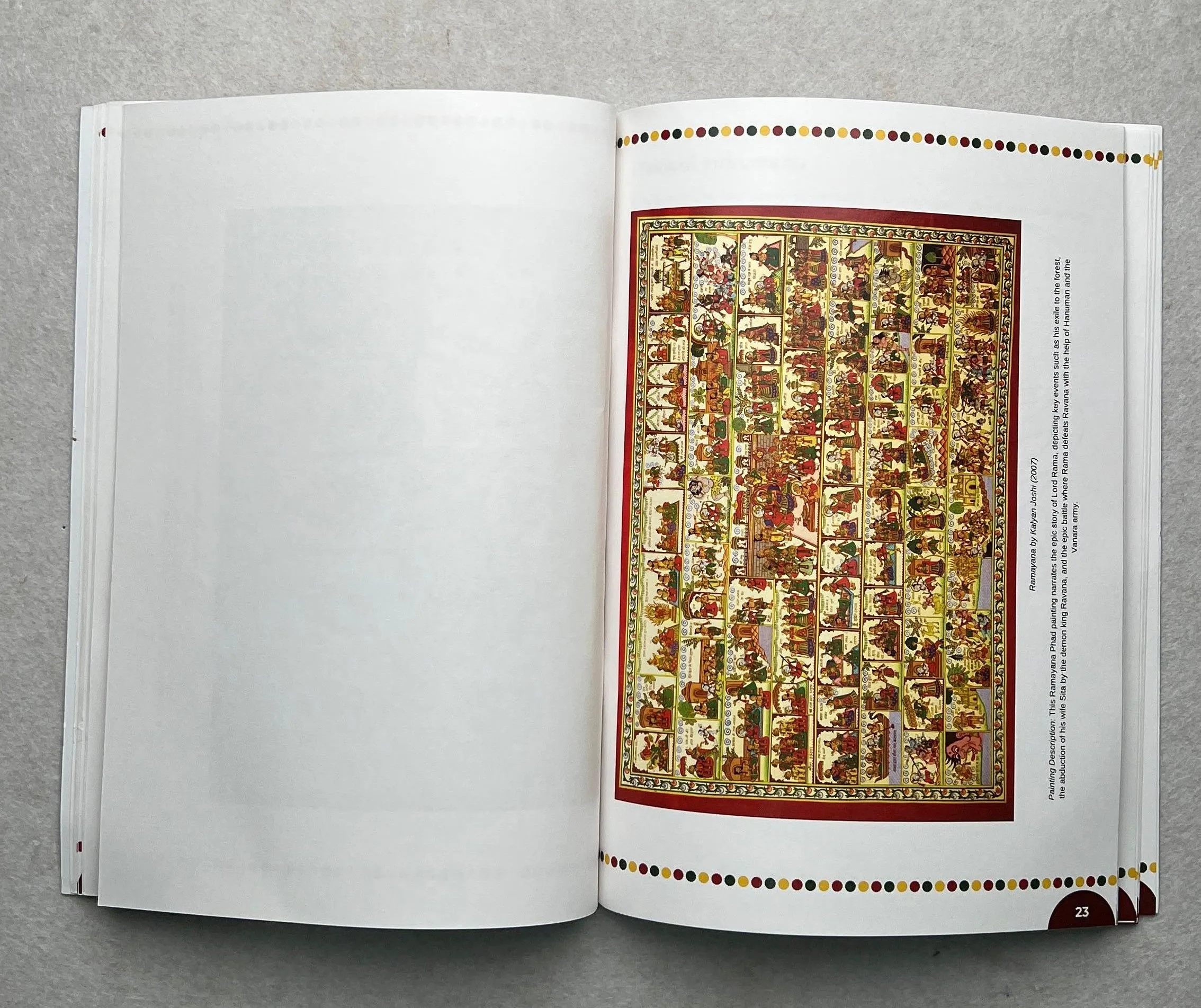
Phad painting — a scroll tradition dating back to the 7th century, centred in Shahpura, Bhilwara — turns cloth into a travelling shrine. Bhopa and Bhopi, the priest-singer duo, perform the epics of folk deities like Devnarayanji and Pabuji against the backdrop of these scrolls, accompanied by instruments like the jantar and rāvanhattha.
The Painted Ballads traces this history — from the Joshi clan of Shahpura who have carried the tradition for generations, to the natural stone-and-plant pigments and hand-burnished cotton cloth that give Phad its distinctive palette of red, yellow, orange, green, brown, and black. The book is illustrated throughout with original works by celebrated Phad artist Kalyan Joshi, including his renderings of the Pabuji legend, the Raas Leela, the Narasimha and Dashavatara, and a sprawling Ramayana scroll — each accompanied by a short description that decodes the scene for a first-time viewer.
The Celestial Hue: The Living Backdrop of Shrinathji
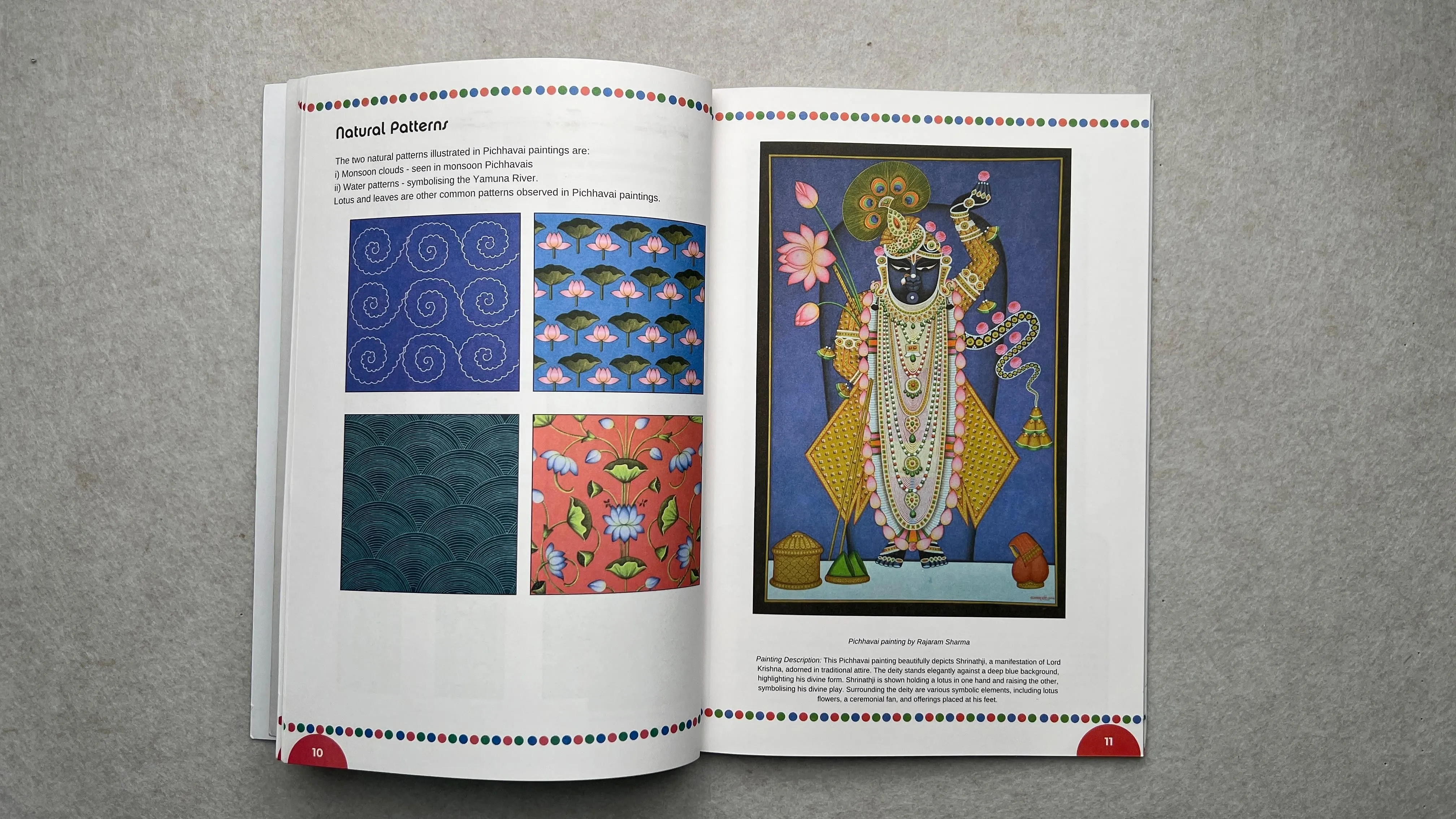
Pichhavai painting comes from Nathdwara, nestled in the Aravalli hills — home to Shrinathji, the child form of Krishna worshipped since the 15th century. Far from decorative backdrops, Pichhavais are integral to the seva (devotional service) performed daily in the haveli, changing with season, festival, and the mood of worship itself.
The Celestial Hue situates the art form within the theology and history of the Pushtimarg tradition established by Vallabhacharya, before moving into the techniques, motifs, and visual vocabulary that define Pichhavai — its vines, lotuses, cows, and monsoon skies. The book's paintings are the work of Nathdwara-based artist Rajaram Sharma, whose Pichhavais of Shrinathji — set against Sharad Utsav starlit skies, Gopashtami's herds, and lotus-filled waters of the Yamuna — bring the festival calendar of the haveli vividly to life on the page.
What Each Book Offers
Both volumes are built to work as reference, gift, and learning tool at once. Across roughly 40 pages, each book carries:
- A layered introduction to the art form — origin, history, regional lineage, and the community of artists who have sustained it, written jointly by JKK's theory contributors and Rooftop's research team.
- A dedicated Tools & Techniques section — covering traditional materials (natural pigments, brushes made of animal hair, hand-prepared cloth) alongside the paper, canvas, acrylic, and ink used by artists today.
- Borders and pattern libraries — Phad's geometric and floral border designs, and Pichhavai's vine verges, lotus motifs, and monsoon-cloud and river patterns — presented as visual reference sheets.
- A gallery of commissioned paintings — full-page works by Kalyan Joshi and Rajaram Sharma respectively, each with a short description that helps a new reader place the iconography, characters, and festival context.
- Practice pages — line drawings, half-finished compositions, and blank templates that let a reader trace, colour, and eventually attempt an original composition, moving from observer to practitioner within the same book.
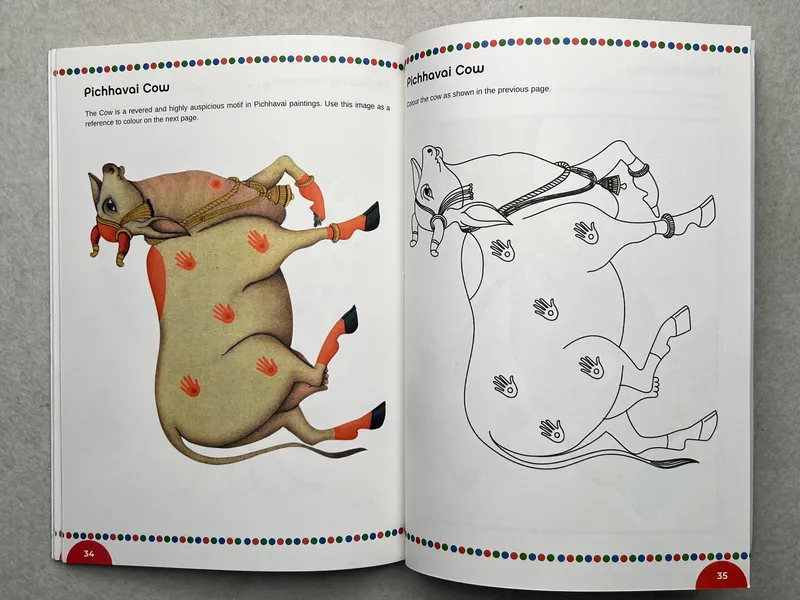
DIY practice pages from The Celestial Hue: Trans, Tradition and Devotion — on the art of Pichhavai
This structure means the books double as an entry point for casual readers and a working sketchbook for anyone who wants to actually try the art form — making them equally suited to a coffee table, a classroom, or a gifting occasion.
Why This Collaboration Matters
For JKK, the books are a concrete expression of "Virasat Se Vikas" — the belief that heritage becomes development only when it is actively passed on, not preserved behind glass. For Rooftop, it marks a significant step in its mission to build search and cultural authority around India's folk and tribal art ecosystem — working not just with individual artists, but with the institutions that safeguard these traditions at a state level.
Together, The Painted Ballads and The Celestial Hue are more than art books. They are an attempt — as JKK's foreword puts it — to ensure these forms remain something that "lives and breathes in our body and soul," rather than only something displayed in a museum.