
The Pichwai Moment
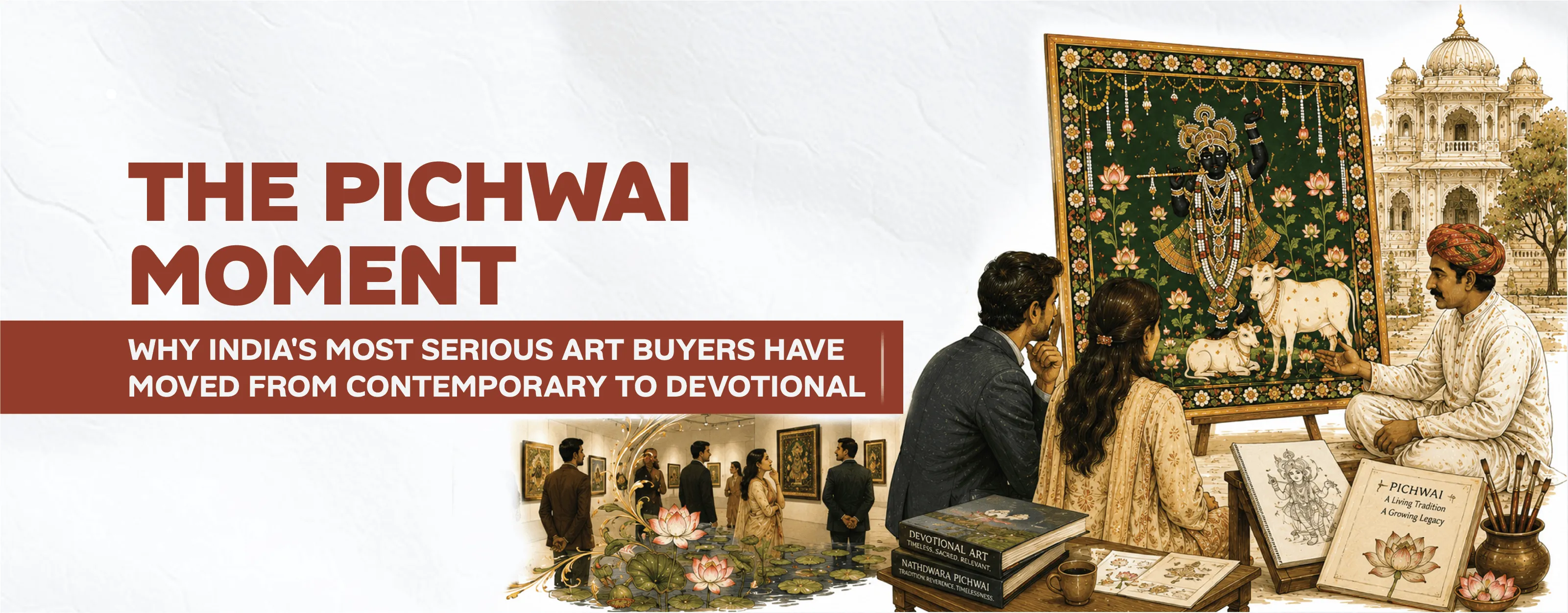
The Pichwai Moment: Why India's Most Serious Art Buyers Have Moved from Contemporary to Devotional
Discover the beauty and spiritual significance of Pichwai paintings, their growing appeal among art collectors, and why supporting the artists behind this centuries-old Nathdwara tradition matters.

Rooftop
Author
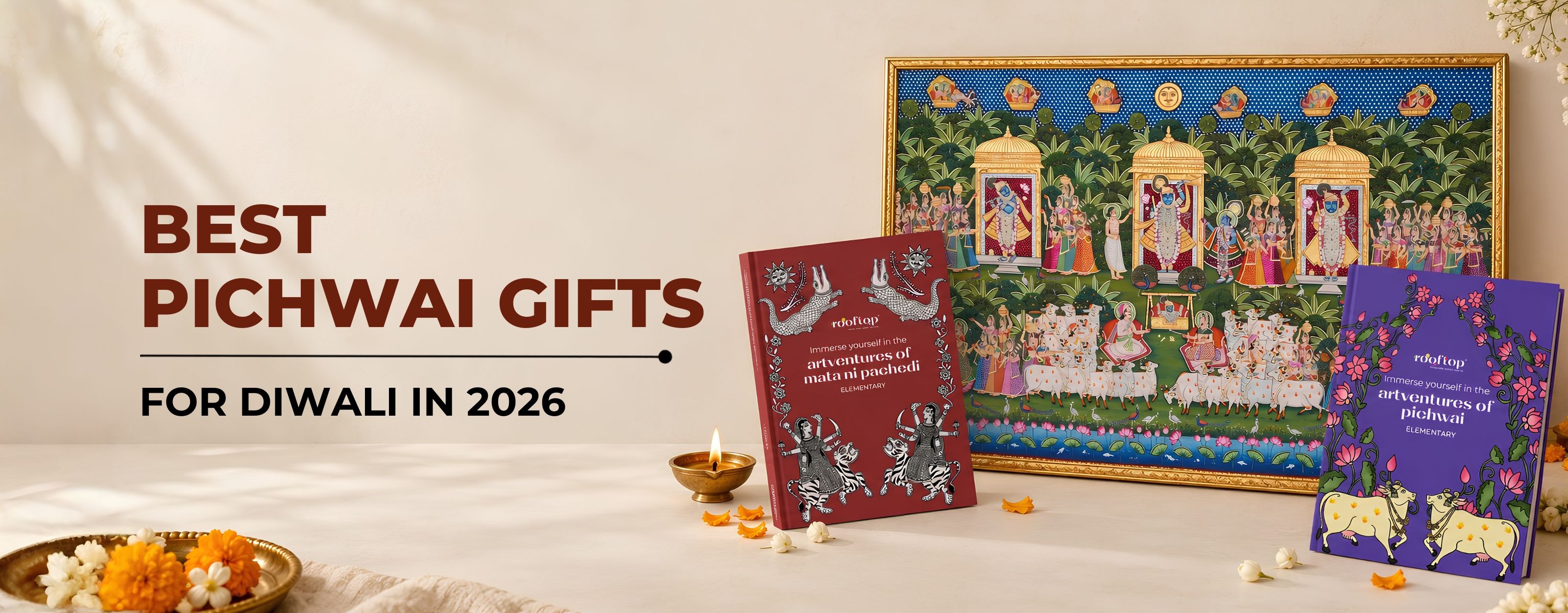
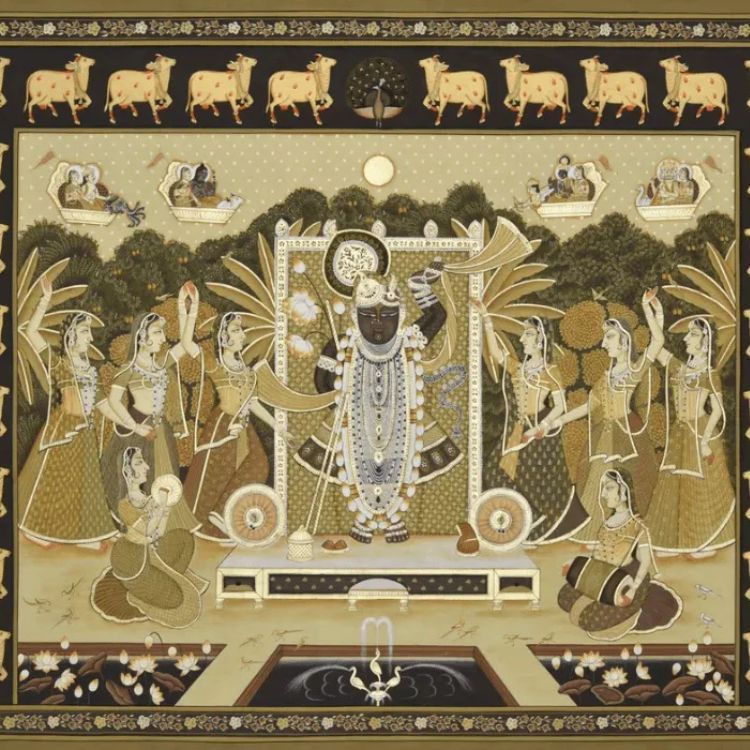
Imagine a painting that was created centuries ago to adorn a temple, telling stories of Lord Krishna through intricate lotus patterns, sacred cows, and vivid colours. Today, that same art form is finding its way into private art collections and the homes of people who want something more meaningful on their walls than a conventional painting. This is the growing appeal of Pichwai. Originating in Nathdwara, Rajasthan, Pichwai paintings were traditionally made to celebrate Shrinathji, a form of Lord Krishna.
Every element, from the lotus-filled landscape to the cows surrounding the deity, carries a religious or symbolic meaning. Creating these paintings requires patience, precision, and a deep understanding of the tradition behind them. Their growing presence in contemporary interiors and the art market brings up an interesting question. How did paintings rooted in temple worship become objects of interest for modern collectors? To understand that shift, it helps to look beyond their visual appeal and explore the stories, craftsmanship, and devotion that make Pichwai distinctive.
What Makes Pichwai Stand Out to Art Collectors?
Why Pichwai Stands Out
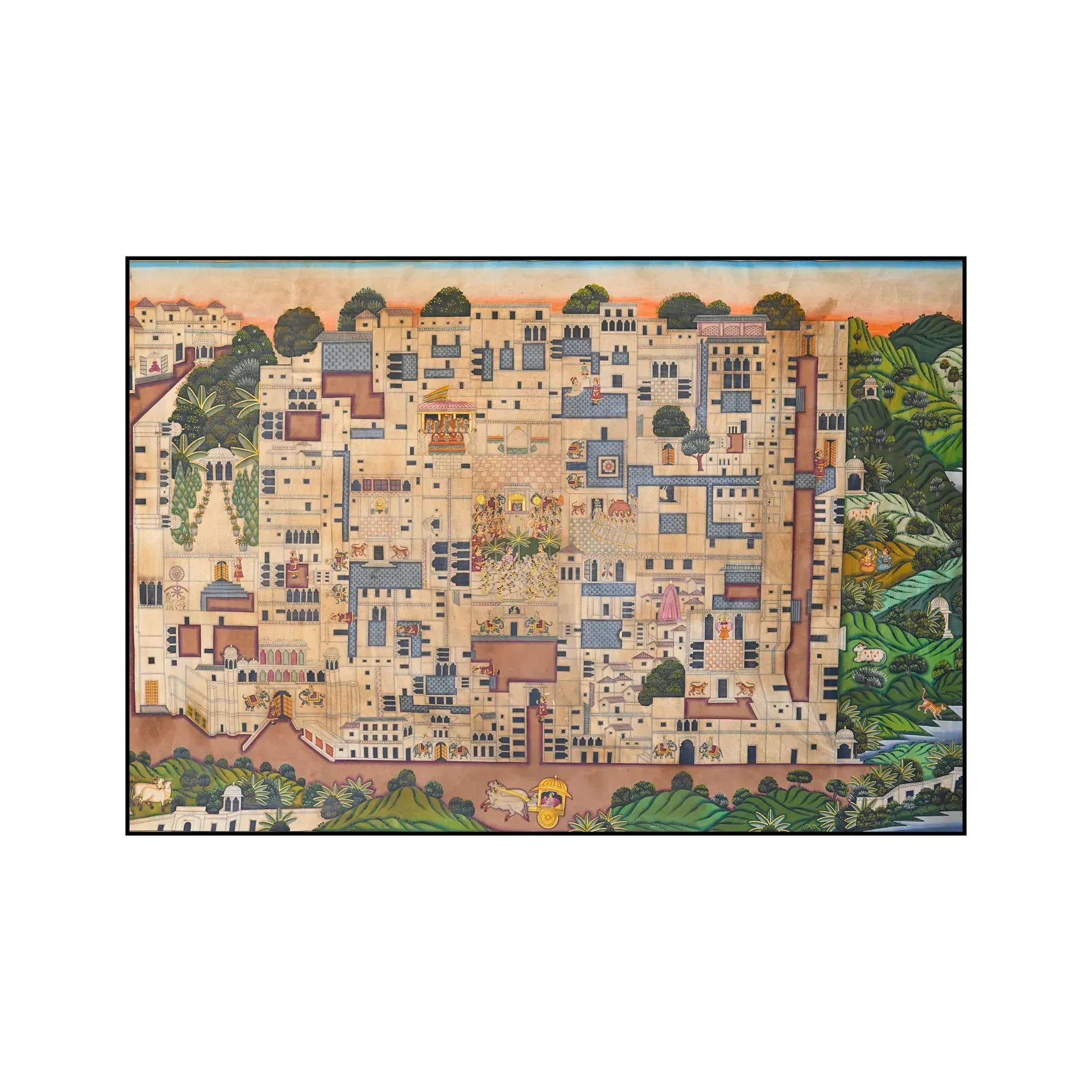
For collectors who have spent years building collections of modern and contemporary art, Pichwai offers something different. Its appeal goes beyond the colours, intricate patterns, or the impact a large painting can have in a room. Each work carries centuries of religious tradition, symbolism, and artistic knowledge passed down through generations. There is a story behind the imagery, and understanding it adds another layer to the experience of looking at the painting.
Pichwai developed around the worship of Shrinathji in Nathdwara, Rajasthan, and its visual language remains closely tied to this devotional tradition. The lotus flowers, cows, and scenes associated with Lord Krishna are not simply decorative details. They have meanings rooted in faith and ritual, while the process of painting them demands patience and considerable skill.
For collectors interested in the history and ideas behind an artwork, this combination of craftsmanship, cultural significance, and devotion offers plenty to explore. As interest in Pichwai grows, it also brings attention to the artists who have preserved these techniques over generations. Appreciating the work means looking beyond its appearance to understand the knowledge, discipline, and tradition that went into creating it.
The Meaning and Devotion Behind Pichwai Art
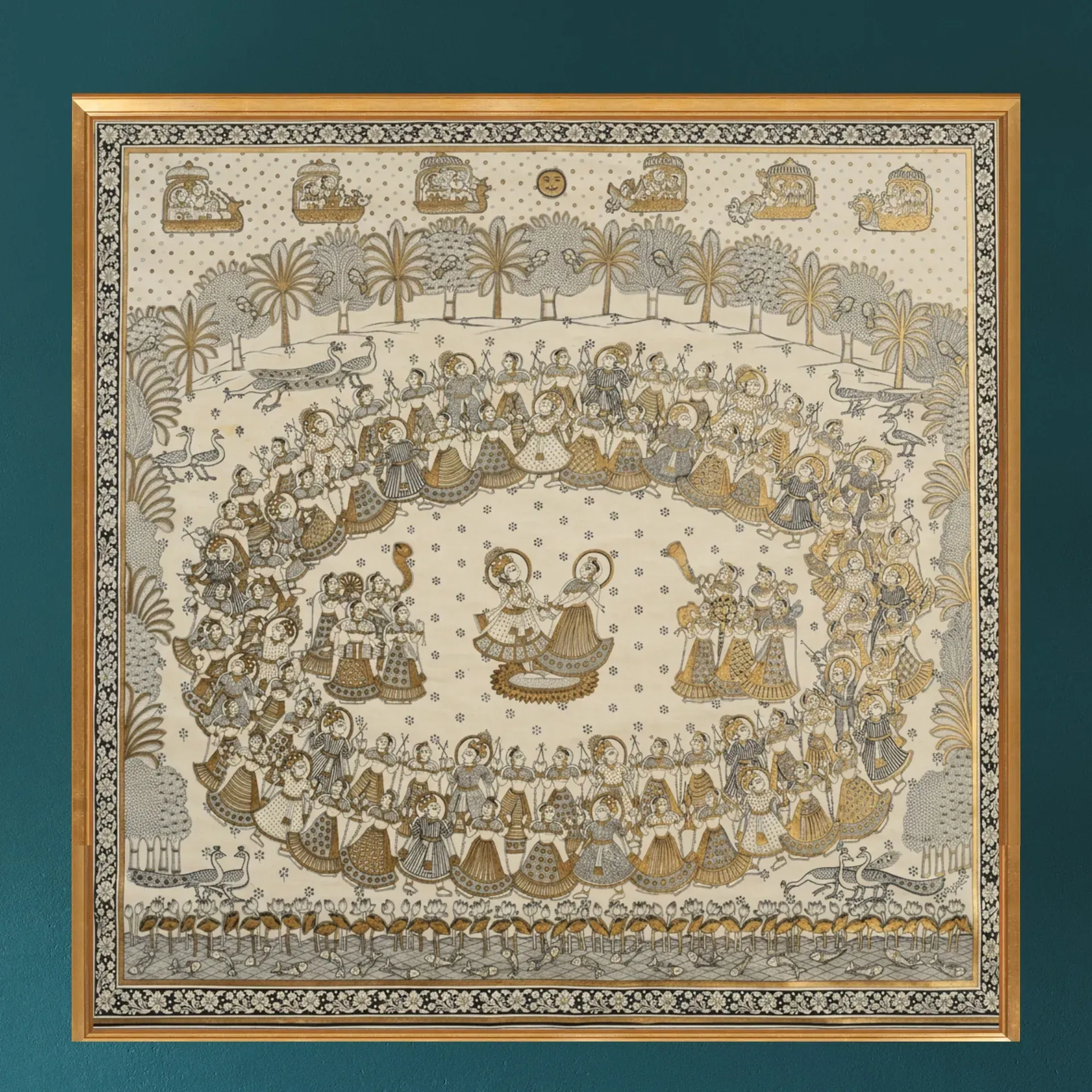
The Meaning Behind Pichwai Art
Part of Pichwai’s appeal lies in the feeling it brings into a space. A large painting filled with lotus flowers, cows, and images associated with Shrinathji can change the atmosphere of a room. But for those familiar with the tradition, these details carry meanings that go well beyond their visual appeal. Pichwai is rooted in bhava, the feeling of devotion, and the belief that beauty can be a way of expressing love for the divine. This connection may be one reason the art form continues to resonate with people looking for something more personal in the art they live with.
There is also a growing appreciation for the skill and knowledge behind traditional Indian painting. For a long time, the distinction between fine art and craft was shaped by hierarchies that gave greater prominence to European painting traditions. Pichwai challenges that narrow view. Its detailed brushwork, carefully balanced compositions, and understanding of colour have been developed and refined by generations of artists. Looking closely at a Pichwai means recognising the artistic knowledge held within a tradition that has often been understood only through its religious or decorative function.
To understand why beauty holds such an important place in Pichwai, it helps to look at Pushtimarg, the devotional tradition associated with its origins. Founded by Shri Vallabhacharya in the 16th century, Pushtimarg follows the Path of Grace and places loving service to Lord Krishna at the heart of worship. This service, known as seva, can involve preparing beautiful clothes, offering food, arranging flowers, and adorning the deity according to the season and occasion. Art and beauty become ways of expressing devotion, rather than simply things to admire.
Pichwai grew within this world of worship, where the setting around Shrinathji was carefully prepared as an offering. The paintings reflect that sensibility through their colours, motifs, and attention to detail. Even when they are displayed in contemporary homes today, understanding their devotional roots reveals another dimension to their beauty. What appears at first to be an elaborate painting is also part of a tradition in which art has long been a way of expressing faith.
Where Pichwai Art Is Finding a Place Today
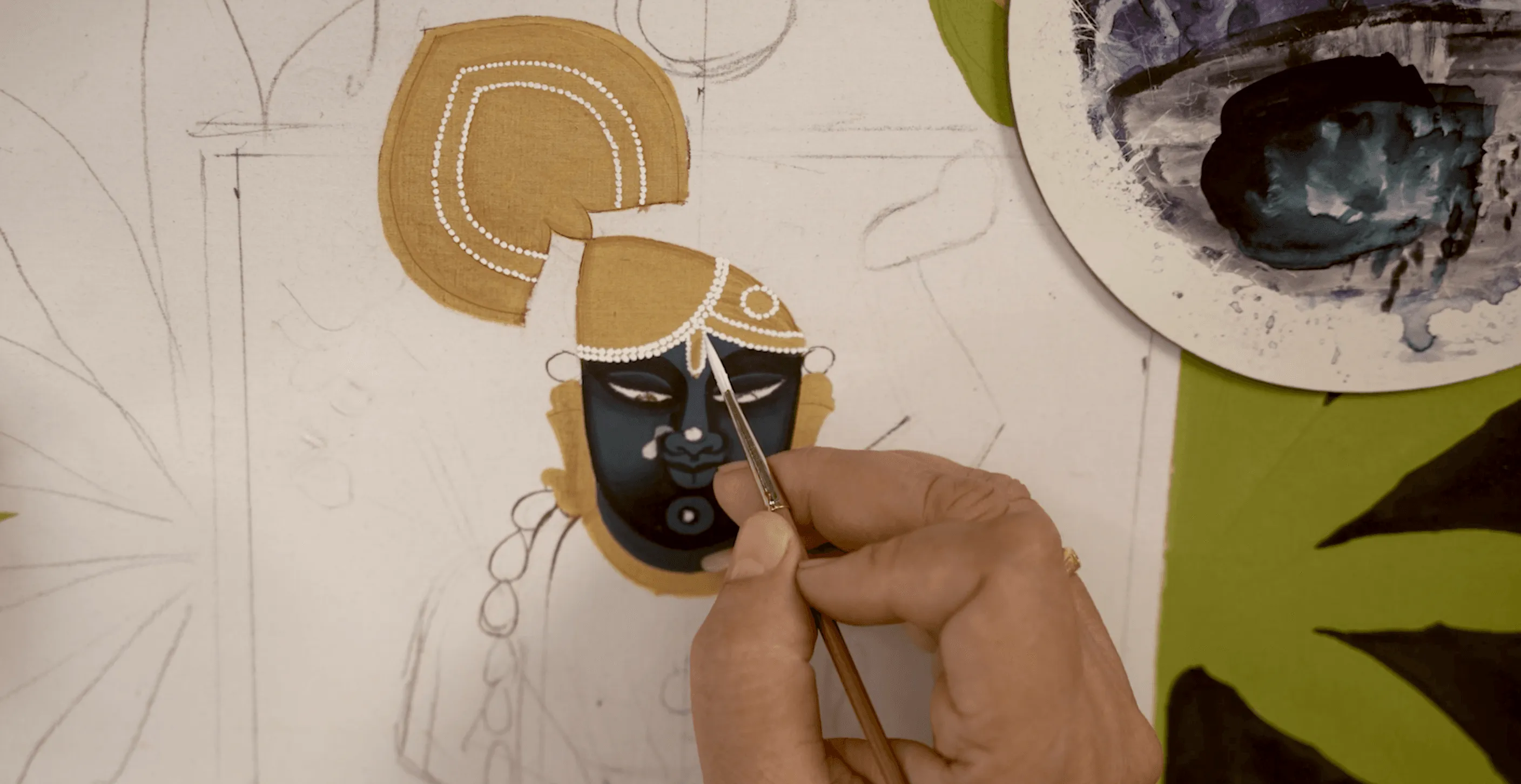
Pichwai's Place in the World Today
Walk into a home with a Pichwai painting as its centrepiece and it is hard to miss the effect. A field of lotuses, a gathering of sacred cows, or an elaborate depiction of Shrinathji can draw the eye across an entire wall. This is one reason the art form has found a place in contemporary interiors, from private prayer rooms to larger living spaces where people want their surroundings to reflect their cultural roots. Its scale and detail make it striking, but knowing the stories behind its imagery gives the painting a meaning that goes beyond interior decoration.
Pichwai’s visual language has also found its way into conversations around Indian fashion and textile design. The lotus-filled landscapes, cow motifs, and imagery associated with Shrinathji offer designers a vocabulary shaped by centuries of artistic practice. When these motifs are adapted thoughtfully, they bring attention to the traditions they come from. It is worth looking at whether such adaptations also acknowledge the artists and communities who have preserved the original forms.
The interest extends to hotels and other public spaces, where traditional Indian art can shape the character of an entire setting. A large Pichwai can introduce visitors to Nathdwara’s artistic heritage before they know anything about its history. For those who encounter the painting this way, it can be an invitation to look closer: to notice the patterns, understand the symbolism, and discover why these works were originally created for worship.
Pichwai’s presence in modern spaces raises an important question about how traditional art is appreciated today. Can a painting move from a temple setting into a home, hotel, or fashion collection without losing the meaning that shaped it? Understanding its devotional origins helps us appreciate both its visual beauty and the cultural knowledge it carries.
Why the Artists Behind Pichwai Deserve Recognition
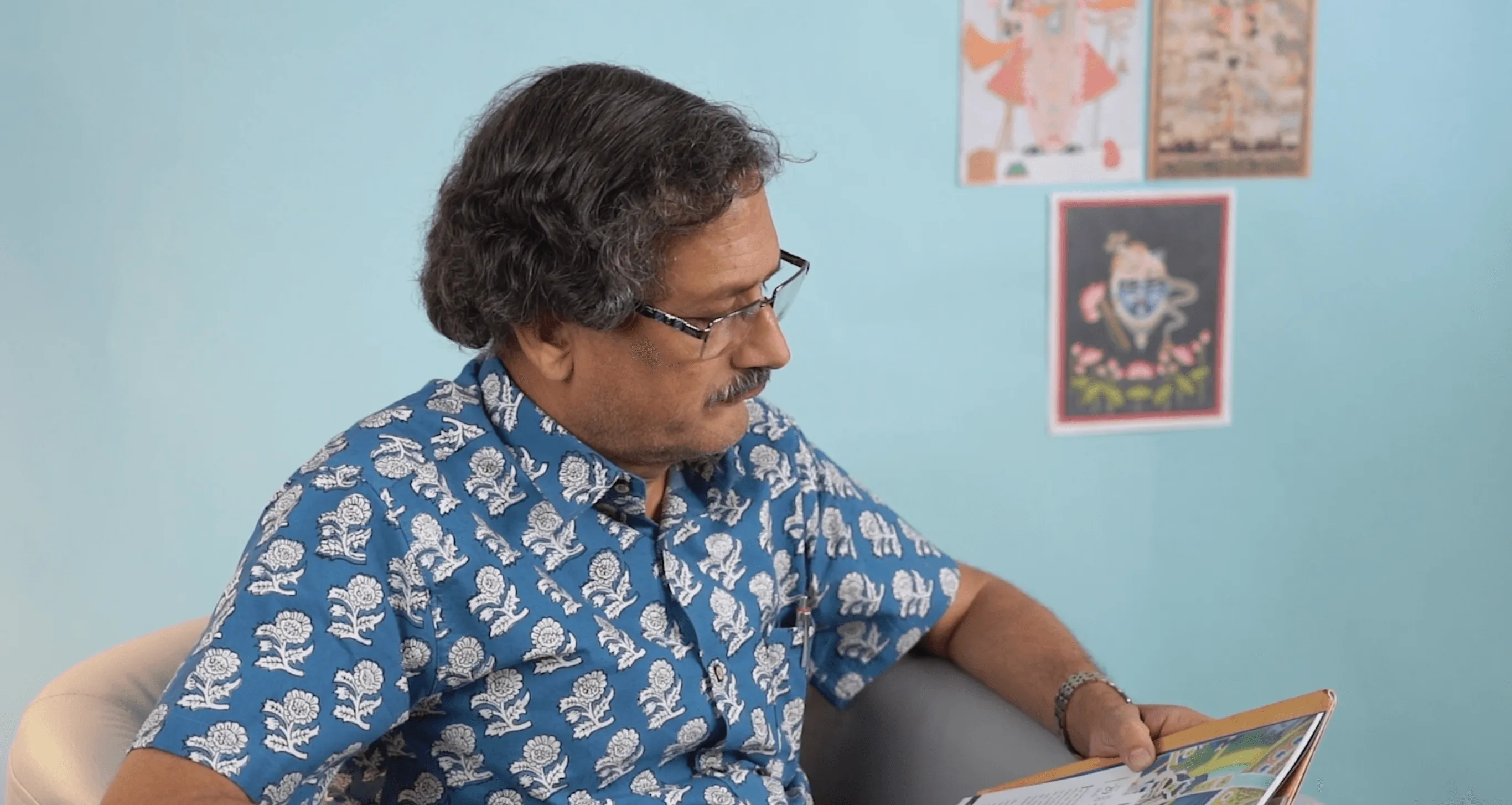
The Artists Behind Pichwai
Behind every Pichwai painting is an artist who has spent years learning to work with fine brushes, intricate patterns, and compositions shaped by generations of practice. In Nathdwara, Rajasthan, this knowledge has been passed down through families and artistic lineages. As more collectors discover Pichwai, there is an opportunity for these artists to receive the recognition and financial security their skill deserves. A painting that takes weeks or even months to complete should be valued for the time, patience, and experience that go into making it.
However, growing demand does not automatically mean better opportunities for the artists. When a traditional art form becomes fashionable, reproductions can easily be sold alongside hand-painted originals, sometimes without buyers understanding the difference. A factory-printed image may borrow the appearance of Pichwai, but it does not involve the same process or preserve the same body of artistic knowledge. If collectors focus only on the name or look of the art form, the people responsible for keeping it alive risk being left out of the benefits.
This is why the way a Pichwai painting is bought matters. Asking who made the work, learning about the artist's practice, and checking whether the piece is hand-painted are useful first steps. Buyers should also look for clear artist attribution and pricing that reflects the work involved, rather than relying on a seller's claims alone. When collectors recognise the person behind the painting, their appreciation becomes more meaningful. Fair patronage can help artists sustain their livelihoods, continue practising their craft, and pass their knowledge on to the next generation. Preserving Pichwai means caring about more than the survival of its visual style. It means ensuring that the artists who give the tradition its life can continue to make it.
Passing Pichwai on to the Next Generation
An art form survives when its knowledge is passed on. Behind Pichwai's intricate patterns and devotional imagery lies years of practice, observation, and learning, much of it shared from one generation of artists to the next. Preserving this tradition means making sure that the people who hold this knowledge have the opportunity to share it with others who want to understand and practise the art.
This is also where platforms like Rooftop have a role to play. Rooftop helps artists share their skills beyond their immediate communities and gives curious learners a way to engage with these traditions. And it does so by bringing traditional Indian art forms into curated learning experiences. Such initiatives can create space for artistic knowledge to travel further while recognising the expertise of the people who keep these forms alive.
The future of Pichwai will depend on the artists who continue to practise it, the families who pass it down, and the new generations willing to learn. Appreciation may bring a painting into a collector's home, but understanding the tradition behind it is what helps its stories and techniques endure.