

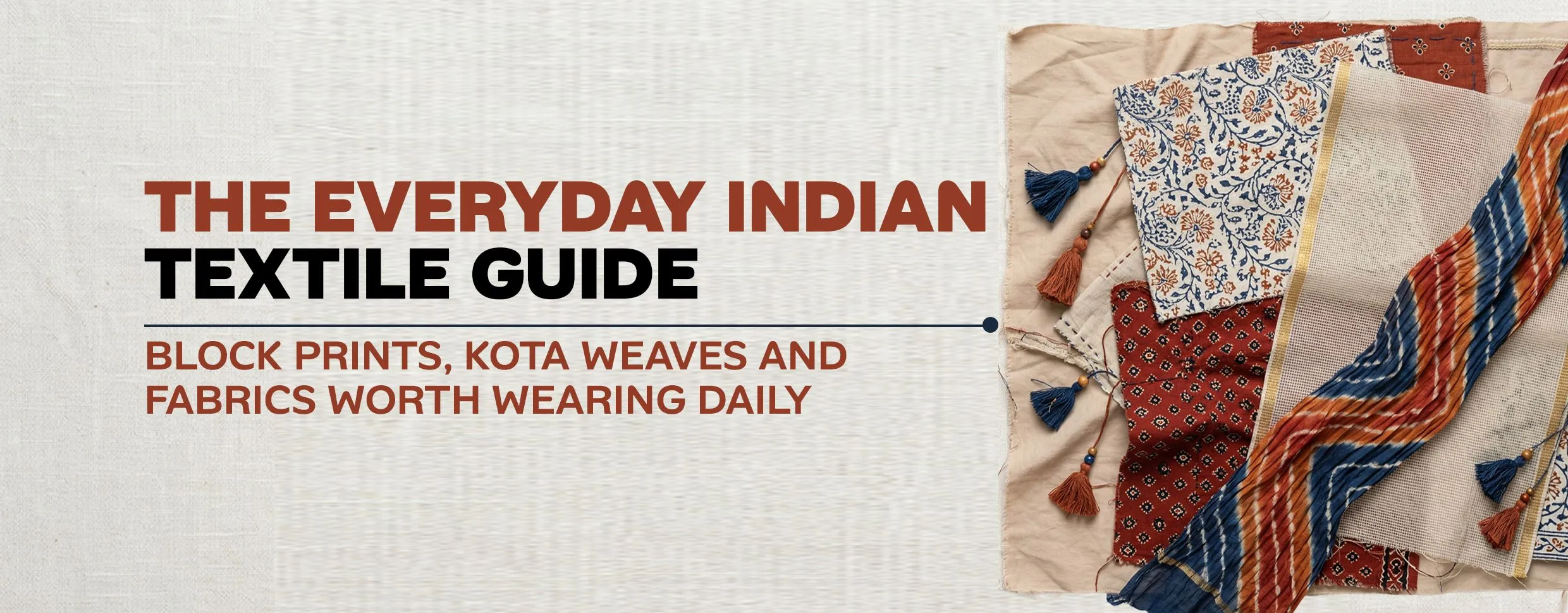
The Everyday Indian Textile Guide: Block Prints, Kota Weaves and Fabrics Worth Wearing Daily
Indian handcrafted textiles are not just for festivals. Discover why hand block-printed cotton, Kota Doriya dupattas, and leheriya fabrics are better for daily wear than synthetics. Primary Keyword: everyday Indian textiles

Rooftop
Author
Somewhere along the way, Indian handcrafted textiles got promoted to "special occasion only." The block printed kurta was saved for festivals. The Kota dupatta stayed folded for weddings. The embroidered cotton was worn twice a year and then tucked away like it belonged to another life.
Meanwhile, everyday wardrobes quietly filled with polyester blends and synthetic prints. Fabrics that trap heat in summer. Colours that fade after a few washes. Clothes that look good for a moment and then slowly lose shape, softness, and comfort.
This is the wrong way around.
The everyday Indian textiles your grandmother wore were never meant for special occasions. Hand block printed cottons, Kota Doriya weaves, naturally dyed fabrics, and breathable handloom textiles were designed for daily life. They were practical before they were beautiful. They kept you cool, softened over time, and lasted for years.
This guide walks through handcrafted Indian textiles that deserve a place in your everyday wardrobe. Not because they are traditional, but because they are genuinely better to wear daily.
Hand Block Printed Mal Cotton: The Everyday Fabric That Improves with Time
Mal cotton sits in a comfortable middle ground. It is lightweight but not flimsy. Breathable but not sheer. Soft but structured enough to hold a print clearly. That balance makes it one of the most practical fabrics for Indian weather.
When hand block printed, mal cotton becomes even more versatile. The dye absorbs into the fibres instead of sitting on top. That means the pattern holds up over time. It does not crack, peel, or fade unevenly the way screen prints often do.
This Block Printed Mal Cotton Fabric in Blue Floral Motif shows how wearable this fabric can be. A Sanganeri-style floral sits lightly on breathable cotton, making it ideal for kurtas, shirts, dresses, or coordinated sets. It is the kind of fabric that works quietly. Comfortable in summer. Easy to layer. Soft enough for daily wear.
One of the strengths of mal cotton is variety. Florals, geometrics, paisleys, botanical motifs. Each one is printed by hand, which means slight variations in every metre. Over time, the cotton softens further and the print settles into the fabric. The result is clothing that improves with use instead of wearing out.
This is what everyday fabric should do.
Sanganeri vs. Bagru Printing: The Artisan Story Behind the Prints
If you explore hand block printed fabrics in Rajasthan, two names appear again and again. Sanganeri and Bagru. Both are traditional block printing styles. Both use hand-carved wooden blocks. Yet they feel completely different.
Sanganeri printing comes from Sanganer near Jaipur. It is known for delicacy. Tiny florals, thin vines, and symmetrical repeats on a white or off-white base. The palette leans soft. Pinks, blues, gentle greens. Sanganeri prints feel clean and airy. They work well for everyday kurtas, shirts, and lightweight summer outfits.
Bagru printing comes from a village outside Jaipur. The mood changes here. The palette is deeper. Reds, blacks, mustard, and indigo dominate. The motifs are bolder and often use the dabu resist technique. This creates slightly textured prints with a matte finish.
A Sanganeri kurta feels light and cool. A Bagru dupatta adds grounding and depth. Neither is better. They simply serve different moods.
The beauty is that both are made slowly, stamped by hand, and designed for everyday use. These are fabrics meant to be worn, not stored.
Kota Doriya Dupattas: Why This Weave Deserves a Place in Your Daily Rotation
Kota Doriya comes from Kota in Rajasthan. The weave is instantly recognisable. Tiny checks formed by alternating thick and thin threads create a fabric that is airy, lightweight, and structured at the same time.
In Indian summers, this matters. Kota Doriya does not cling. It breathes naturally. It drapes without becoming heavy.
When combined with block printing, the result becomes even more wearable. This [Hand Block Printed Kota Doriya Dupatta in Soft Pink Floral Motif](Hand Block Printed Kota Doriya Dupatta in Soft Pink Floral Pattern ) layers Sanganeri-style florals over the signature checkered weave. The dupatta feels light but visually rich.
For a quieter palette, this Hand Block Printed Kota Doriya Fabric in Grey Floral Pattern on Rooftop offers an understated alternative. It works easily with cotton kurtas, linen sets, or even western outfits.
Kota Doriya dupattas are easy to wear daily. They add colour and craft without adding weight. Once you start using them regularly, they become hard to replace.
Leheriya: The Wave-Dyeing Tradition of Rajasthan
Leheriya is not block printing, but it belongs to the same family of handcrafted Indian textiles. The technique involves rolling fabric diagonally, tying it, and dipping it into dye. The result is a series of flowing wave patterns.
Traditional leheriya uses vibrant colours like saffron, pink, red, and yellow. These shades are associated with festivals and celebrations. But modern leheriya also appears in softer tones. Muted greens, indigo, dusty rose.
A leheriya dupatta transforms a simple outfit instantly. Pair it with a plain kurta or linen shirt and the pattern does all the work. It is one of the easiest ways to introduce handcrafted textiles into everyday wear.
Leheriya is lightweight, breathable, and visually striking. It proves that everyday fabrics can still carry personality.
Embroidered Garments for Everyday Wear
Embroidery often gets pushed into the occasion category. Heavy zardozi and elaborate mirror work naturally belong there. But India has many embroidery traditions suited for daily wear.
Chikankari from Lucknow is a good example. White thread on cotton creates subtle texture without adding weight. Similarly, light Kutchi embroidery adds colour and detail without overwhelming the fabric.
The key is choosing breathable base fabrics. Cotton and linen work best. Light embroidery enhances the garment without making it heavy.
Embroidered everyday wear offers a balance. It feels thoughtful but still practical. It brings craftsmanship into daily life without feeling overdressed.
Accessories as the Easiest Entry Point
If switching your entire wardrobe feels like a big step, start with accessories. They require less commitment and instantly introduce handcrafted textiles.
The range of block printed cushion covers on Rooftop are a good example. Made from south cotton and hand stitched, they add character to everyday spaces. A sofa or chair changes instantly with handcrafted textiles.
Dupattas and stoles are another easy entry point. No stitching required or sizing needed. A Kota Doriya dupatta or a leheriya stole adds colour and texture to simple outfits.
Accessories make handcrafted textiles part of everyday life without effort.
How to Wash and Maintain Handcrafted Textiles
Handcrafted textiles are easier to care for than most people expect. The key is gentle handling.
Wash block printed fabrics separately for the first few washes. Some colour bleed is normal.
- Use cold water and mild detergent.
- Avoid bleach.
- Dry in shade to preserve natural dyes.
- Iron on reverse side.
Kota Doriya requires gentle washing due to its weave. Embroidered garments should be turned inside out before washing.
Most handcrafted textiles improve with time. Cotton softens. Colours settle. The fabric becomes more comfortable with use.
Wear It More, Not Less!
The biggest mistake people make with handcrafted textiles is saving them. These fabrics were designed for daily life. They breathe better, last longer, and become softer with time.
Wear the block printed kurta to work. Use the Kota dupatta daily. Spread the hand block printed bedsheet on your bed.
Handcrafted Indian textiles were never meant to sit in cupboards. They were meant to live with you.
Explore hand block printed fabrics, Kota Doriya dupattas, cushion covers, and more on Rooftop. Every piece is handmade. Every purchase supports artisans.