

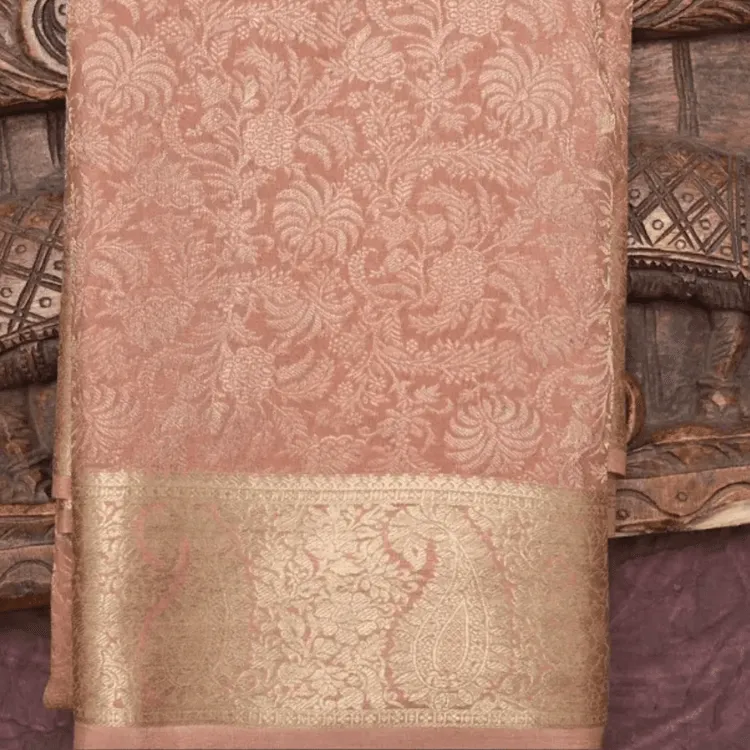

A Mysore silk saree weighs far less than a Kanjivaram and falls closer to the body, because its yarn is twisted about 2,200 times per metre into crepe. The name is a Geographical Indication held by the Karnataka Silk Industries Corporation (KSIC). KSIC runs the factory the Maharaja of Mysore opened in 1912. This guide covers how the fabric is made, how its history actually runs, and what to check before you buy one.
What makes Mysore silk different
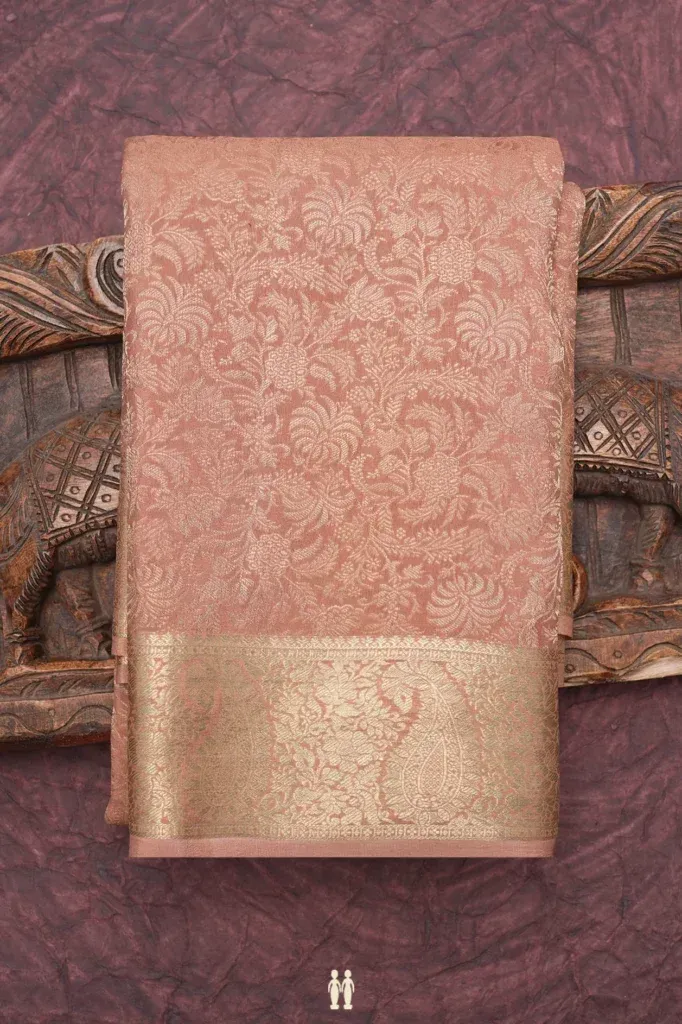
Brocade Design Brown Mysore Silk Saree (image source: Sundari Silks)
Three things set it apart:
- It is 100% mulberry silk woven as high-twist crepe, so it is light and matt-lustred, with a fluid drape.
- The body is a single solid colour with no woven pattern.
- All the decoration sits in the zari border and pallu. KSIC's zari is about 65% silver and 0.65% gold.
If a saree sold as Mysore silk has an all-over woven design or a heavy, stiff hand, it is something else.
History: from Tipu Sultan to KSIC
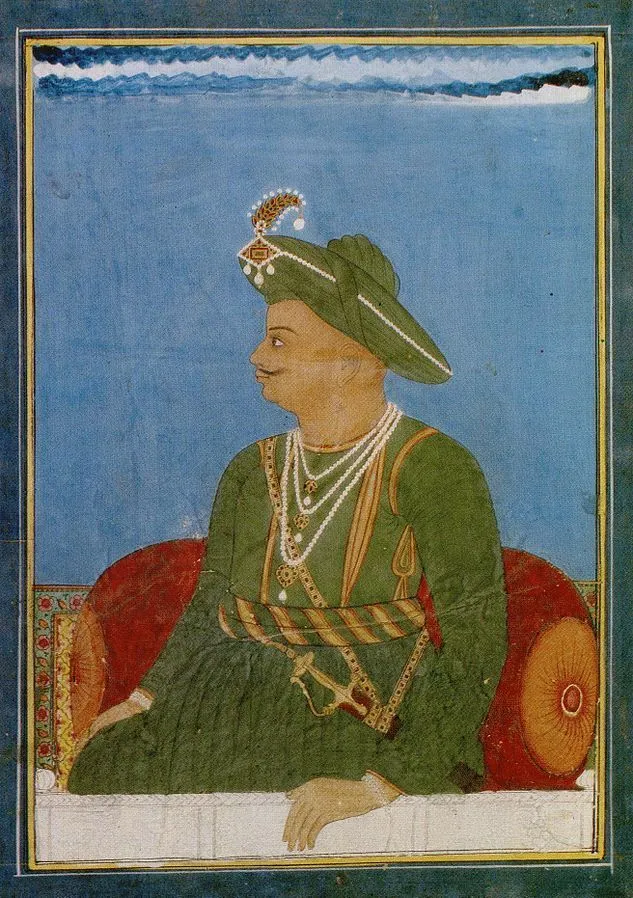
Portrait of Tipu Sultan (image source: Wikipedia)
After independence, this 17-acre silk factory went under the control of the Government's Sericulture Department and continues to operate today as one of India’s oldest silk manufacturing units, managed by the Karnataka Silk Industries Corporation (KSIC).
The making of Mysore Silk
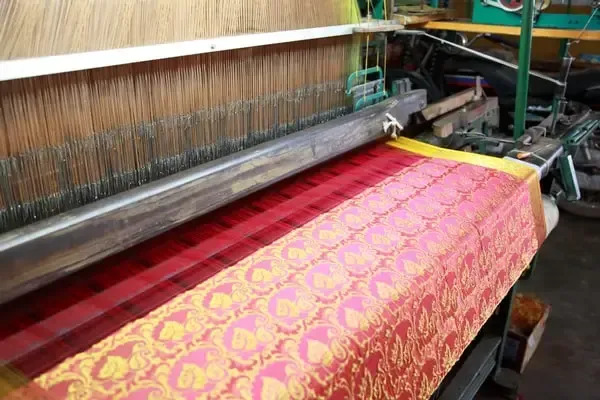
Making of Mysore Silk (image source: Mysuru Live)
Karnataka is India's largest producer of mulberry silk. Making it is slow work that starts from the cocoon and ends at the loom. The process starts with local sericulture farmers supplying the silk yarn. It is then sorted for quality. After sorting, the yarns are processed through semi-automatic machines to produce fine threads. The threads are twisted about 2,200 times per metre to achieve the crepe texture. The weaving process is carried out using Dobby or Jacquard looms by skilled artisans.
How to spot a genuine Mysore silk saree
- Look for the KSIC hologram and unique code on every saree.
- Check the body. It should be one solid colour, with the design only in the border and pallu.
- Check the weight and feel. It should be light and supple, with a fine crepe grain you can feel with a fingertip.
- Do a burn test on a loose thread from the edge. Silk smells of burnt hair and leaves soft ash that crushes; polyester melts into a hard bead.
- Buy from a KSIC showroom or the factory outlet in Mysuru. Online, ask for the code before paying.
What a Mysore silk saree costs
Recent reports from KSIC showrooms put prices from about ₹18,500 to around ₹4 lakh. Prices move with gold because the zari carries real gold. Demand often runs ahead of supply. Some showrooms limit buyers to one saree per visit, so go early. A saree sold as genuine Mysore silk far below this range is a red flag.
Caring for Mysore silk
- Dry clean the first wash.
- After that, if you must, hand-wash in cold water with a mild shampoo and dry flat in shade.
- Iron on the reverse at low heat.
- Store it wrapped in muslin, never plastic, and refold along new lines every few months so the zari does not crack at the creases.
- Keep perfume off the border.
Visiting the KSIC factory
The KSIC factory in Mysuru is open to visitors, who can watch raw silk become cloth. Pair it with the Mysore Palace, built by the same royal family that founded the factory.