

Raksha Bandhan Gifts for Art Lovers: A Guide to Handmade Indian Art
Looking for rakhi gifts for art lovers? A guide to buying genuine Madhubani, Warli and Gond work under Rs 3,000, and how to spot a print from an original.

Rooftop
Author
Dulari Devi learned to paint by watching someone else do it. She was born in Ranti, a village near Madhubani in Bihar, into a Mallah fisherfolk family. For years she worked as a domestic helper in the home of Mahasundari Devi, one of the great Mithila painters. She swept the floors and washed the vessels, and in the gaps she watched the brush move. Nobody was teaching her. She learned anyway. She now holds the Padma Shri.
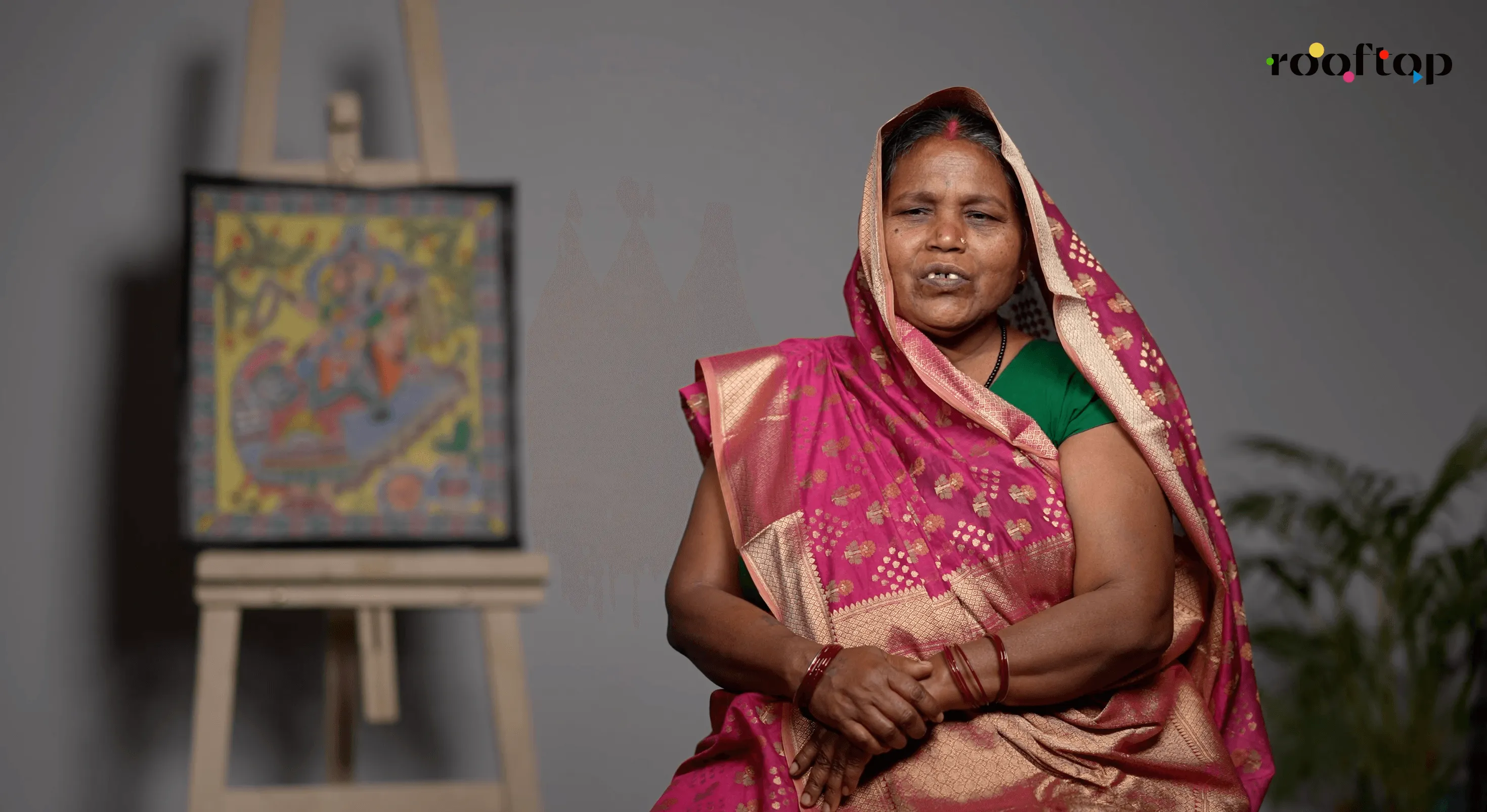
Dulari Devi learned Madhubani by observation while employed as a domestic helper, and now teaches the form herself on Rooftop.
That is the kind of story sitting behind most good rakhi gifts for art lovers, and it is the reason this category is worth more thought than a scented candle. You are not buying a decorative object. You are buying a piece of somebody's inherited knowledge, priced at a level that keeps that knowledge alive for another year.
The question most people ask first is how much to spend. It is the wrong first question. The right one is what you are looking at when you look at the surface.
Why rakhi gifts for art lovers are harder than they look
An art lover is a difficult person to buy for, because they already have taste. They have opinions about what goes on a wall. They have probably rejected three things you would have liked. The usual escape route is to go safe and generic, which is how so many raksha bandhan gifts online end up being the same brass diya set with a different ribbon.
The other trap is going too big. A painting is a commitment. It has to fit a wall, a light source, a colour scheme and a mood, and you are guessing at all four. The best rakhi gifts for art lovers avoid both traps.
The way through is to buy something that carries the maker's hand without demanding a permanent place on the wall.
This is where handmade rakhi gifts have an advantage that mass-produced gifting does not. A hand-painted wooden box, a Madhubani-motif art kit, a set of block-printed napkins or a small unframed work on paper all carry the same craft lineage as a large canvas. They just ask less of the person receiving them. They can sit on a desk, live in a drawer, or get used.
The second advantage is specificity. When you give someone a Warli piece, you can tell them it comes from the Sahyadri hills, that the figures are built from two triangles meeting at a point, and that the white is rice paste. That is a conversation. A scented candle is not a conversation.
What you are actually paying for, and how to tell a real one
Indian folk art spans a very wide range, and the range is not arbitrary. It tracks three things: who made it, how long it took, and what it is made on. At the entry level you are looking at smaller works on paper, usually unframed, often by artists early in their careers or by senior artists working at a scale they can complete quickly. That is not a lesser product. Works on paper are the historical norm in Mithila and Gond practice. Canvas came later, and it came from the market rather than from the tradition.
The middle of the range brings size, framing, and a named artist with a documented body of work. The top brings signed pieces by national award and Padma Shri holders, gold-leaf Tanjore work, and full-size Phad scrolls that take weeks. Across the 1,204 paintings currently listed on Rooftop, all three bands are represented, and the gap between the ends of that range is genuinely large.
What matters more than the number is whether the thing is real. Here is what to check, in the order that matters:
- Look for irregularity in the line work, because a hand-drawn Madhubani double outline wavers slightly and a printed one does not.
- Ask whether the piece is on handmade paper or machine paper, since the first has a soft deckled edge and the second is cut clean.
- Check whether the seller names the individual artist, not just the art form, because "Madhubani painting" with no name attached usually means workshop-produced or printed.
- Confirm the pigment, as natural pigment sits into the paper with a matte finish while acrylic sits on top with a slight sheen.
- Treat any listing offering unlimited stock of an identical image as a reproduction, whatever the description says.
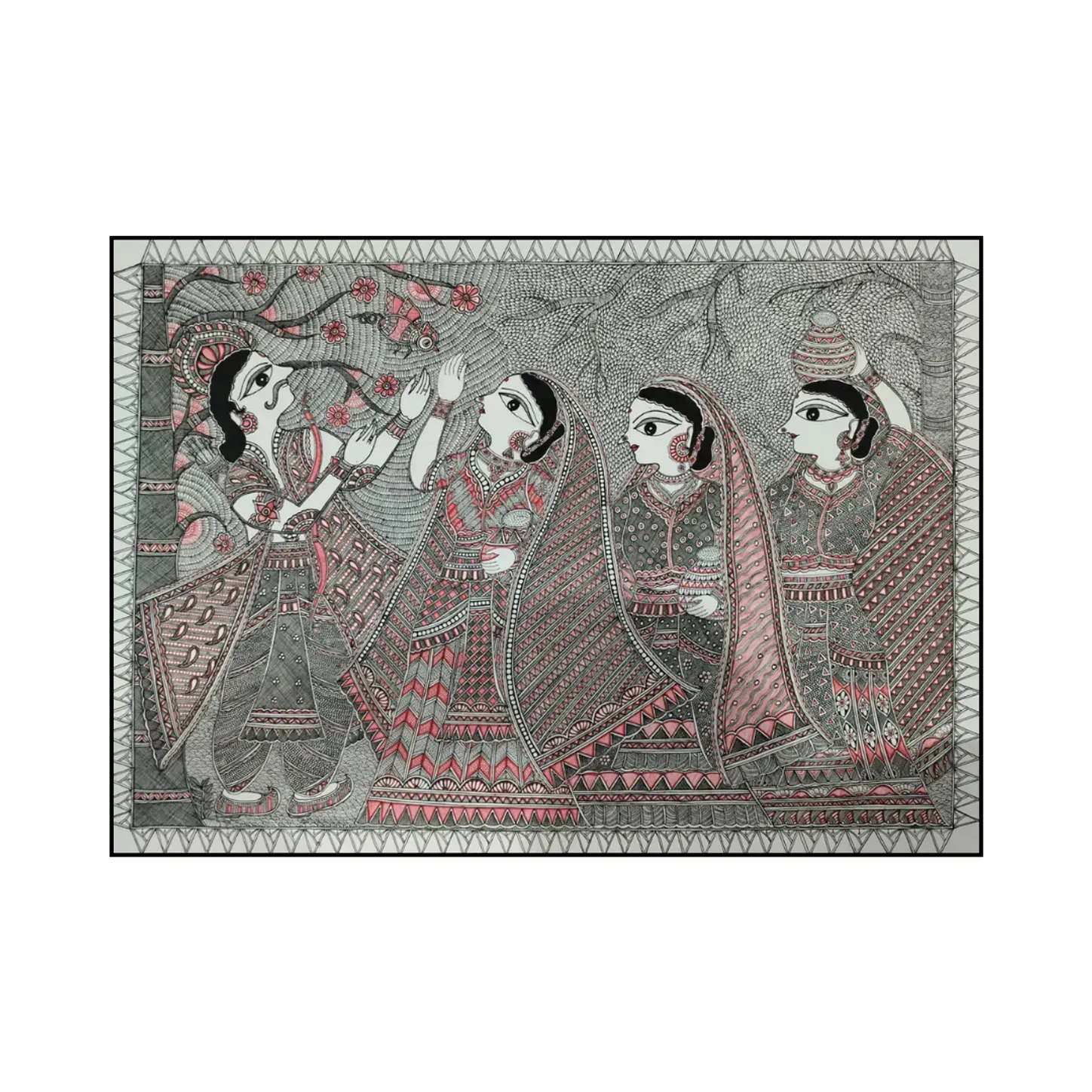
The Madhubani double outline, drawn as two parallel lines with the gap filled by hand. Printed reproductions flatten this into a single stroke.
That last point catches most of the fakes. A hand-painted work exists once.
The honest sellers tend to be explicit about all five, because their whole proposition depends on it. The ones who are vague about the artist's name are usually vague for a reason.
Three traditions worth knowing before you choose
You do not need to know twenty art forms. Knowing three properly will make you a much better buyer than knowing twenty vaguely. Rooftop's indigenous art holdings run to over 801 works, and the following three account for a large share of them.
Madhubani, and what the double line means
Madhubani painting comes from the Mithila region of north Bihar, and it was a wall art before it was anything else. Women painted ritual diagrams onto freshly plastered mud walls for weddings and festivals. The work was meant to be temporary. It got repainted every year.
It moved onto paper in the 1960s, when drought and famine pushed the Bihar government to look for household income, and outsiders arrived asking whether the women would paint on sheets they could carry away. That shift is the whole reason you can buy one now.
In 2007 the Directorate of Industries, Bihar, secured a Geographical Indication tag for Madhubani painting, covering the wall, line and Godna formats. A GI tag protects the name and ties it to the region. It does not stop anyone printing the motif on a coaster, which is worth remembering when you shop.
The technical detail that separates real Madhubani work from imitation is the double outline. Figures are drawn with two parallel lines, and the gap between them is filled with fine cross-hatching or dashes. Doing that by hand across a whole composition is slow, and it is the first thing a shortcut removes. Dulari Devi's ten-hour course spends a large part of its running time on exactly this, which tells you how much of the tradition sits in that one gesture.
Warli, and the two triangles
Warli painting belongs to the Warli community of the Sahyadri range in Maharashtra, and it uses one of the most restricted visual vocabularies in Indian art. There is a circle, a triangle and a square. That is close to the whole system.
A human figure is two triangles meeting at their tips, with a circle for the head. It has no facial features and no gender markers unless the composition requires them. The effect is that a Warli painting reads as a crowd rather than a portrait, which suits its subjects, since most compositions are about harvest, marriage and the tarpa dance rather than about individuals.
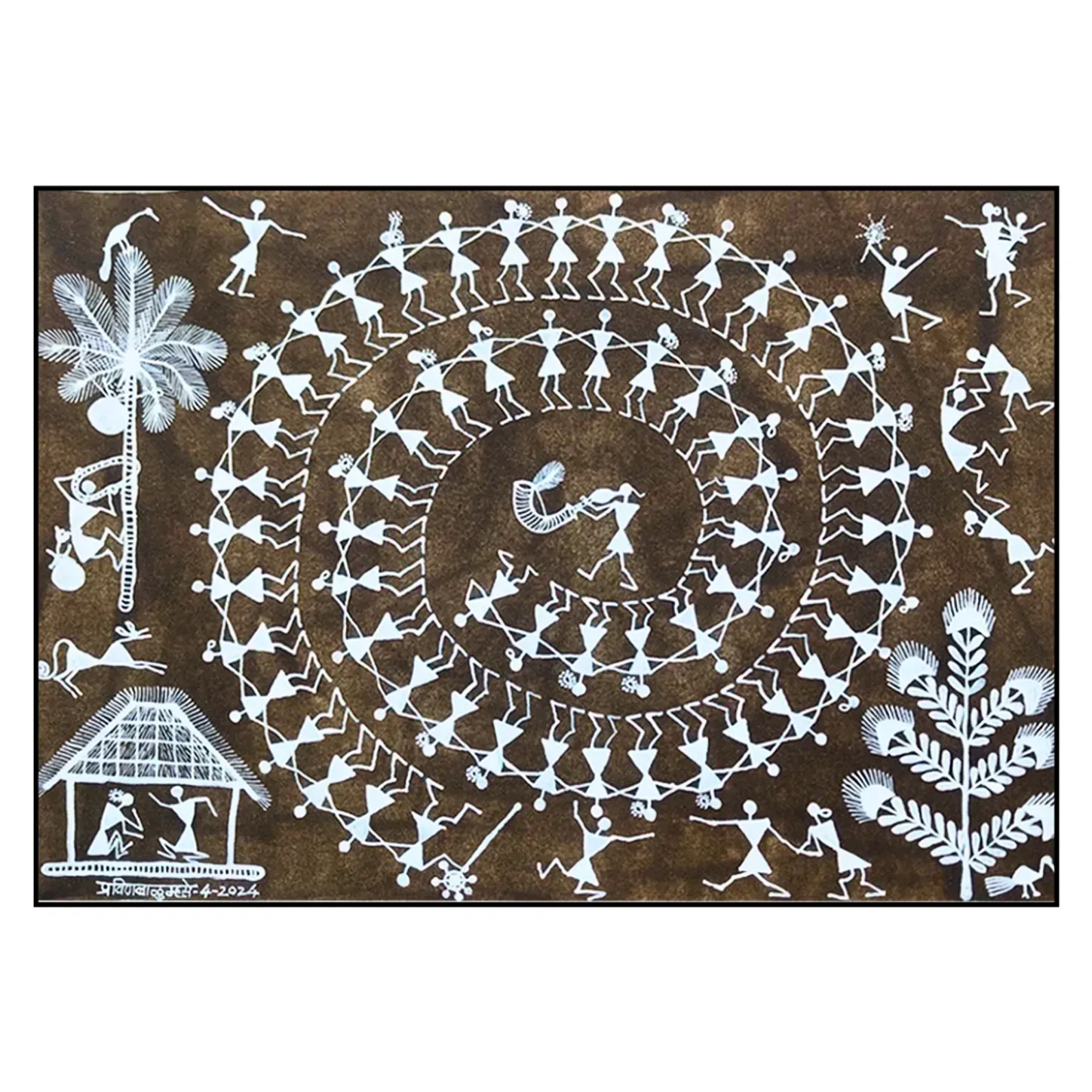
Warli figures are built from two triangles meeting at a point. The rice-paste line is applied with a chewed bamboo stick, which is why it breaks rather than flows.
Traditionally the ground is cow dung and mud, coloured with geru, and the paint is rice paste applied with a chewed bamboo stick. The stick matters. It produces a slightly dry, broken line that a nylon brush cannot reproduce.
Jivya Soma Mashe is generally credited with moving the form onto portable surfaces in the 1970s, which made it collectable outside the community. The Mhase family of Ganjad, who teach the eleven and a half hour Warli course, work in that same post-Mashe line while keeping the ritual compositions intact.
Warli is one of the more forgiving traditions to start collecting, partly because the form does not need scale to work. A small piece loses nothing.
Gond, and the fill
Gond art comes from the Gond community across Madhya Pradesh and central India, and it is the most immediately seductive of the three, which is why it is also the most copied.
The signature is not the subject. It is the fill. Every surface inside an outline is packed with a repeated mark, and each artist family uses a different one. Some use dots. Some use short dashes. Some use commas, fish scales or seed shapes. The mark is close to a signature, and a serious Gond artist keeps theirs consistent across a lifetime of work.
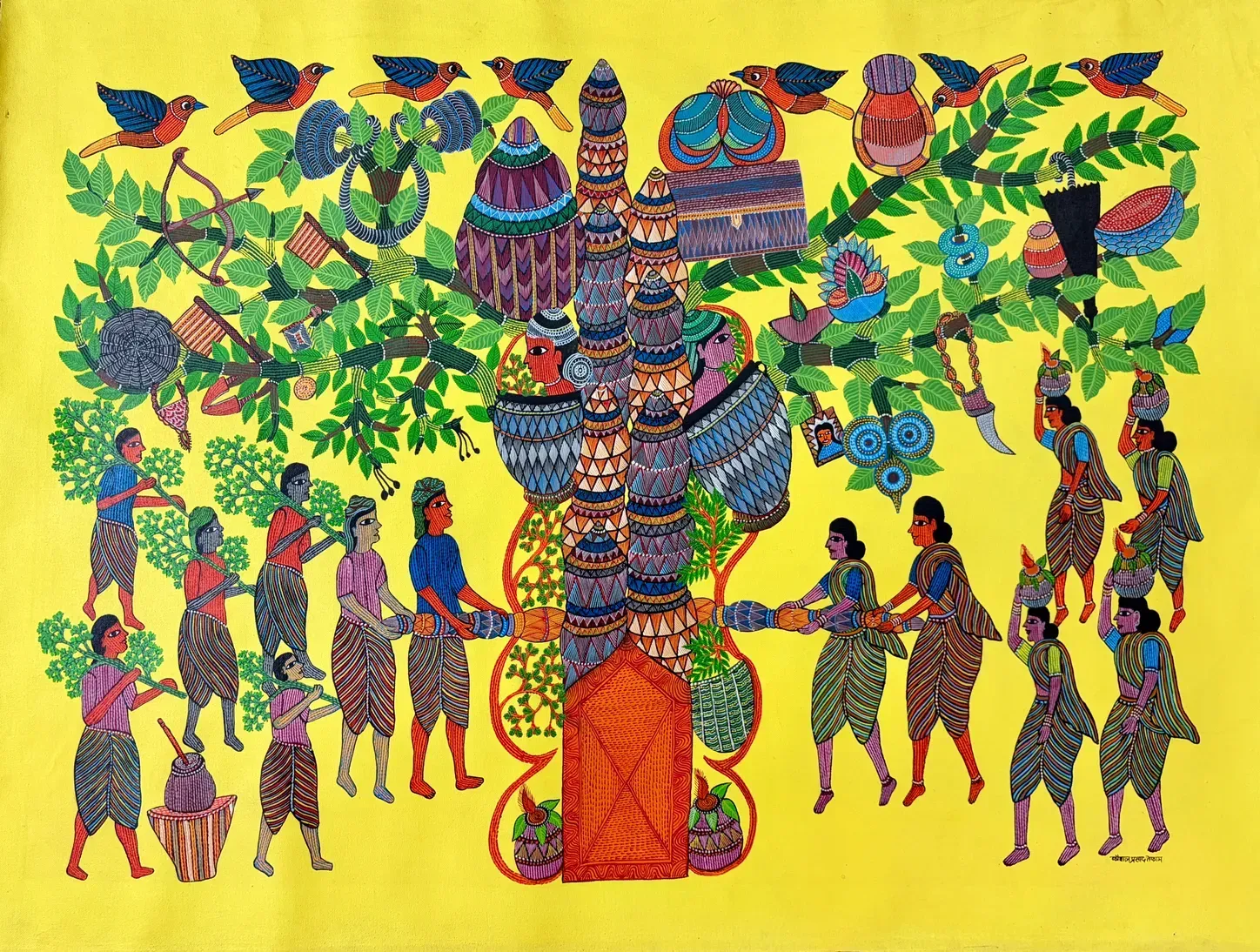
The fill pattern inside a Gond outline works almost as a signature. Individual artist families keep to dots, dashes, commas or fish scales across a lifetime of work.
Building a rakhi gift hamper that is not just a basket of things
Most rakhi gift hamper ideas fail in the same way, and the failure is worth naming because it is where good rakhi gifts for art lovers usually go wrong. They assemble five unrelated objects, wrap them in cellophane, and hope volume substitutes for thought.
A better structure is one object to keep and one to use.
The object to keep is the piece of art. The object to use is something from the same tradition that enters daily life, which is where the wider handicraft categories earn their place. Rooftop's vast range of miniature products ranges, from a hand-painted serving piece or a set of folk-motif coasters that does the work of connecting the art to a Tuesday morning rather than only to a wall. The broader home decorselection, additional products, covering the same ground at more scale.
For a raksha bandhan gift for sister specifically, the combination that tends to land is a small original work paired with something wearable.
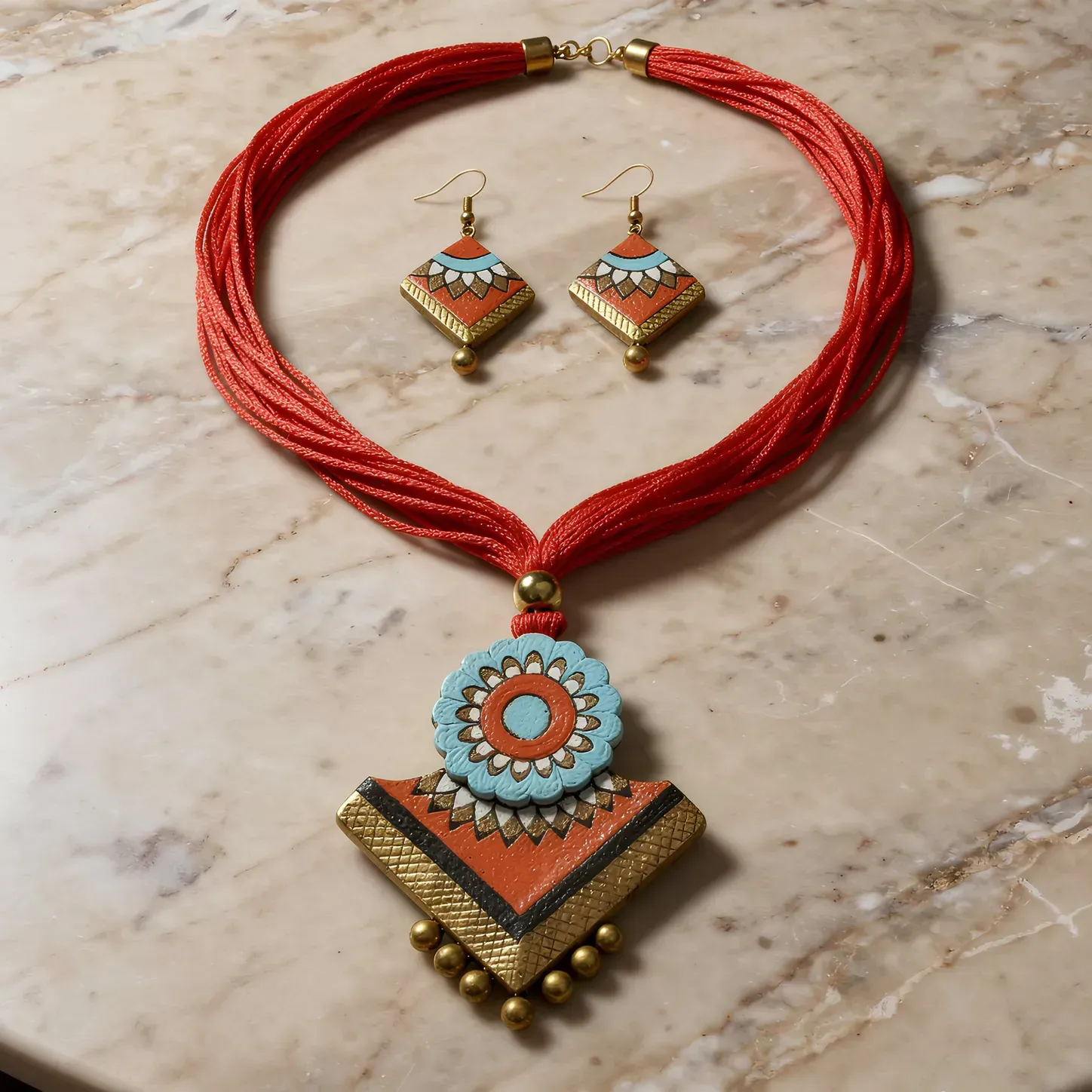
Hand-worked pieces from Rooftop's jewellery and accessories range
If you are buying for a household with children, the activity books and the toys and games category shift the register usefully. A folk art activity book is a genuinely unusual thing to receive, and it is one of the few gifts a nine-year-old and their mother will both open.
There is a small set of pre-assembled combinations if you would rather not build one yourself, though the selection is narrow and worth checking for stock before you plan around it.
For unique rakhi return gifts, where you need several of the same thing at a consistent price, the stationery and paper goods category is the more sensible hunting ground than paintings. It runs to over hundreds products and includes postcard sets, notebooks and small art books that hold up as a considered gift without needing individual selection.
For a sister who makes things rather than only owns them
Some people do not want another object. They want to be taught something.
This is where traditional indian rakhi gifts stop being about purchase and start being about transfer. Rooftop's maestro courses are taught by the artists themselves, and the format is unusually generous with time. The Madhubani course with Dulari Devi runs ten hours. Pattachitra with Bijay Kumar and Rabindra Behera runs twenty-four. These are not thirty-minute demonstrations.
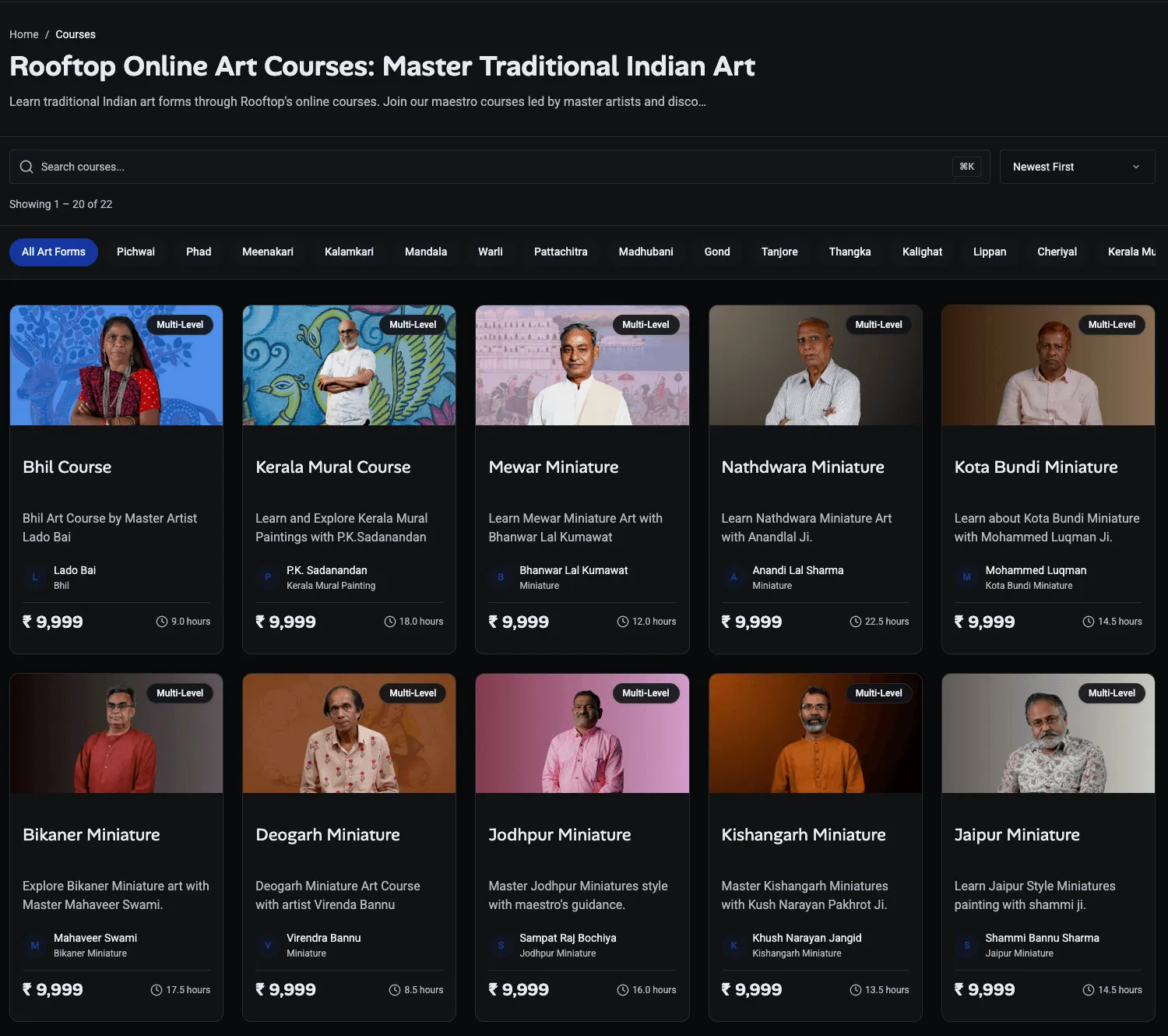
Nobody forgets who gave them a skill. That is the argument for this category, and it holds up better a year later than most objects do.
If a full course is more than you want to commit to, the[ art books and art kits] (https://rooftopapp.com/shop/art-stationery-art-design-books) sit in the same intention. A Warli or Madhubani kit contains the actual materials and a structured sequence, and it turns a gift into an afternoon.
There is also the option of giving something that happens rather than something that arrives. Artist-led art experiences puts your sibling in a room with a practitioner, and for someone who already owns enough things, that tends to outlast a parcel.
The practical point is timing. Raksha Bandhan falls on 28 August in 2026, and anything involving a physical dispatch needs ordering with at least a week of margin. Courses and experiences do not have that problem, which is worth knowing if you have left this late.
The thing that separates a folk art gift from a decorative one is that somebody's name is attached to it and that person is still alive and still working.
When Dulari Devi paints a kohbar, she is painting a wedding chamber diagram that women in Mithila have painted for centuries, and she is painting it having learned it without being taught, in a house where she was employed to clean. That biography is not a premium added to the price. It is simply in the object.
Whatever you spend, the outcome worth aiming for is the same. One genuine hand-painted work, from a tradition with a name, made by a person with a name.
Buy the real one. Ask who made it.