

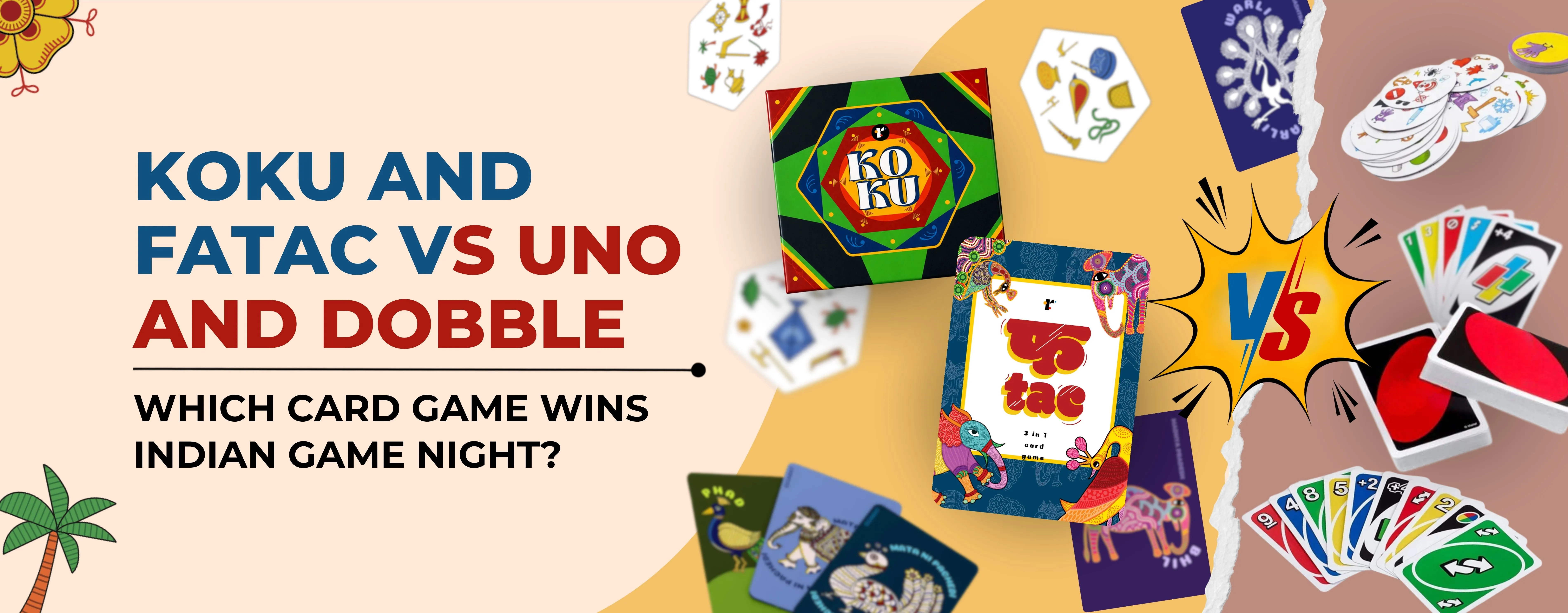
Koku and FATAC vs UNO and Dobble: Which Card Game Wins Indian Game Night?
Koku and FATAC vs UNO and Dobble, scored over six rounds: learning time, group size, age, strategy and art. The honest pick for Diwali and family game night.

Rooftop
Author
UNO was invented in 1971 by a barber in Ohio to settle an argument with his son about the rules of Crazy Eights. It has been starting arguments in Indian living rooms ever since.
Dobble came later and quieter, out of a French maths hobbyist’s box of insect cards. Between them, these two own the family game night shelf. Google’s Keyword Planner shows about 135,000 searches a month in India for UNO card game and about 6,600 for Dobble. That is the competition.
So here is a fair fight. Two Indian decks from Rooftop, Koku and FATAC, against the two games everyone already owns, scored over six rounds. We make one side of this fight, so we will show our working.
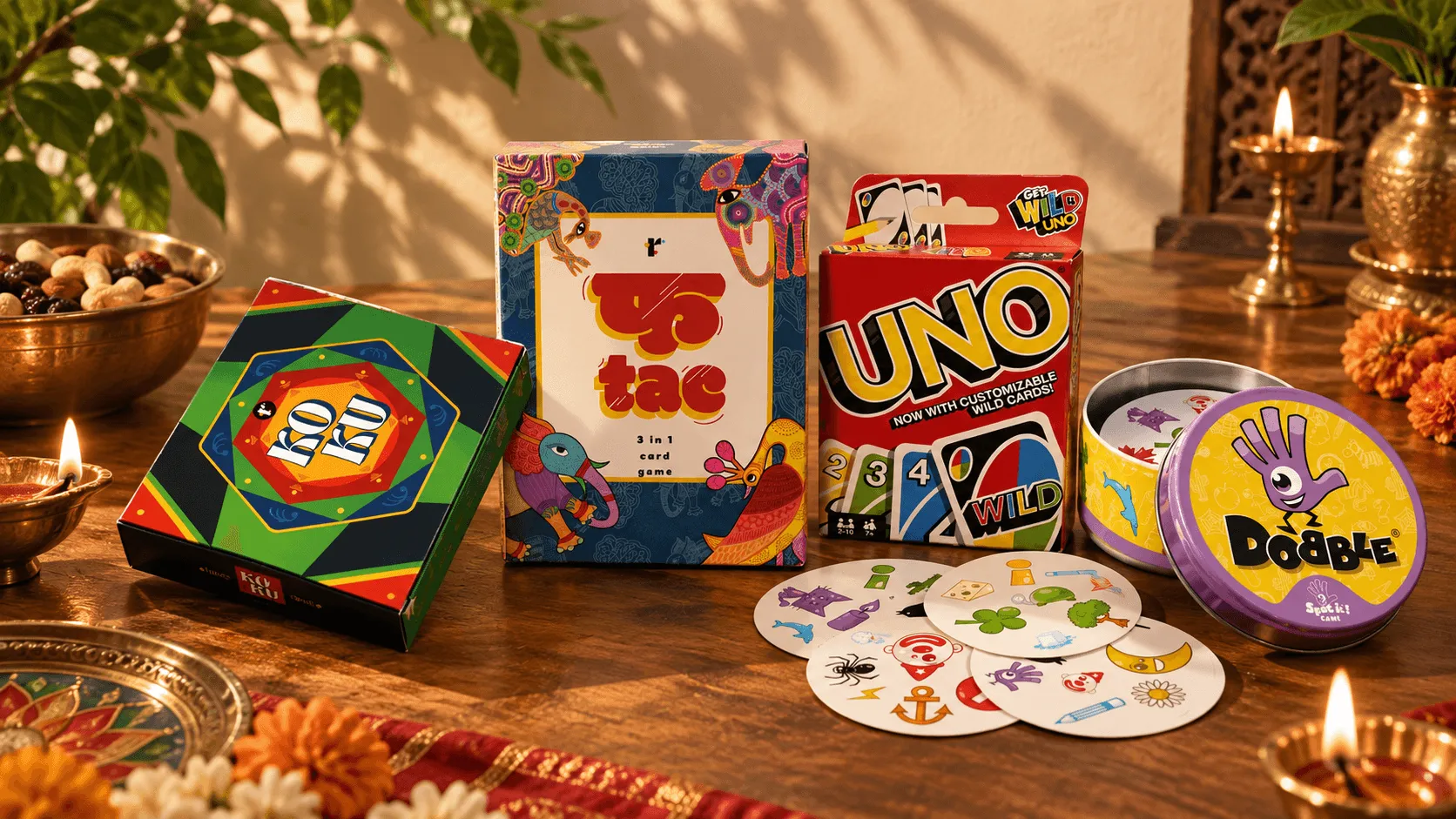
The line-up. Two decks that were made for Indian homes, and two that moved in and never left.
Meet the four decks
UNO
108 cards in four colours, numbered zero to nine, plus action cards that skip a player, reverse the direction or make the next person draw. You win a hand by emptying yours first. Mattel has owned the game since 1992, and it plays 2 to 10.
Dobble
55 round cards with 8 symbols each, drawn from 57 symbols in all, and any two cards share exactly one. The maths allows 57 cards. The usual explanation for the missing two is that the deck was sized for machines built to print standard playing cards. It sells as Spot It in North America, plays 2 to 8, and ships with five mini-games. Its symbol list includes an igloo, a snowman and a maple leaf.
Koku
The same maths as Dobble: 57 symbols, 8 per card, one match between any two. The difference is what is drawn on them. Koku uses a supda, a tarpa, a shankh, a Warli bird and 53 more from Indian folk life, printed on hexagons, with three game modes for 2 to 12 players.
FATAC
A snap, memory and slap deck illustrated from Bhil, Warli, Cheriyal, Mata ni Pachedi, Phad and Gond art. Paper cards, 5 by 3.5 inches, three games, and an age of three and up on the product page.
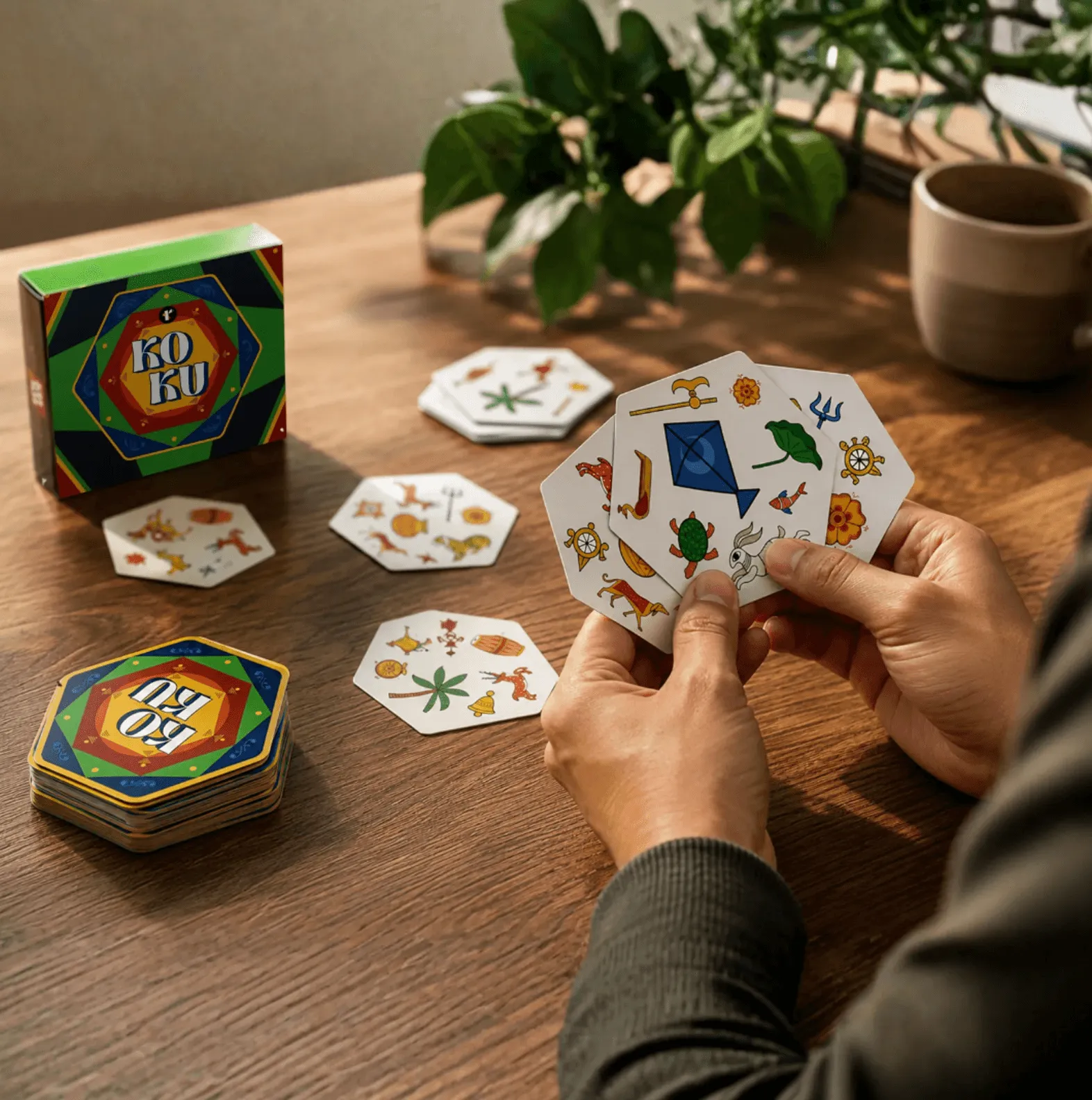
Same maths, different kitchen. Koku and Dobble both put eight symbols on a card from a pool of 57.
Build a mini Koku deck in two minutes
The one-match trick sounds like magic until you build a small one. Take seven symbols and make seven cards of three. Draw them on scraps of paper while the dal is on the stove.
- Card 1: dholak, camel, shankh
- Card 2: dholak, supda, tarpa
- Card 3: dholak, rangoli, peacock feather
- Card 4: camel, supda, rangoli
- Card 5: camel, tarpa, peacock feather
- Card 6: shankh, supda, peacock feather
- Card 7: shankh, tarpa, rangoli
Pick any two cards. They share exactly one symbol, every time. Mathematicians call this shape the Fano plane. Scale it up to eight symbols a card and you get Koku and Dobble. It is also a decent way to keep a nine-year-old busy for an hour.
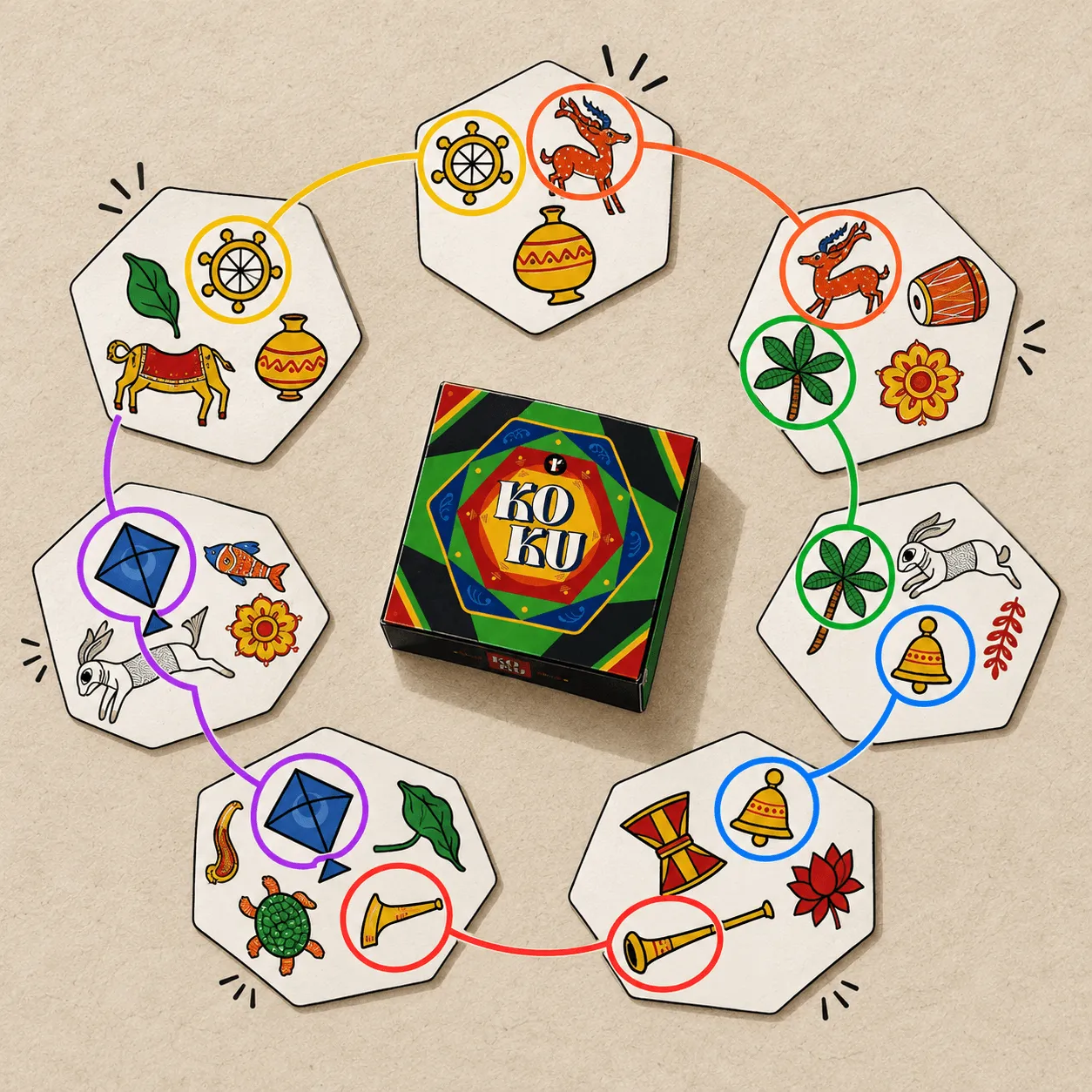
The seven-card mini deck above, drawn out. Every pair of cards is joined by exactly one symbol.
Six rounds, scored
We scored the two pairs on six things that matter at a family table.
- Time to learn goes to Koku and FATAC. FATAC Snap needs no explanation at all, and Koku takes about thirty seconds. Dobble is just as quick, but UNO needs someone to explain the action cards, after which the room splits on whether you can stack a Draw Two.
- Group size goes to Koku and FATAC. Koku plays 2 to 12 and stretches further in tower mode. UNO tops out at 10 and Dobble at 8.
- The youngest player goes to Koku and FATAC. FATAC Memory starts at three. Dobble starts at six, and UNO asks a small child to track colours, numbers and action cards all at once.
- Strategy goes to UNO and Dobble, or really to UNO. Koku and FATAC are about eyes and reflexes, while holding a Wild Draw Four until your neighbour has one card left is a small art form.
- What is printed on the cards goes to Koku and FATAC. A tarpa, a supda, a Phad deity and a Gond tree can start a conversation with a grandparent. Nobody has ever asked where Dobble’s igloo came from.
- Variety goes to UNO and Dobble. Koku and FATAC give you six games across two decks, but Dobble has been printed in more than 100 themed editions and UNO Flip alone draws about 27,100 searches a month in India.
Final score: Koku and FATAC 4, UNO and Dobble 2. We make Koku and FATAC, so weigh that result with a pinch of salt. Notice which rounds UNO won, though. Strategy and variety are what teenagers care about at one in the morning, and for that crowd UNO is still the right call.
Which deck for which night
- Diwali night, 8 November 2026, mixed ages, right after the puja: Koku. The eight-year-old and the grandparent play the same game.
- The kids’ table at the same party: FATAC, in Slap Dash mode.
- The teenagers who have moved to the terrace: UNO. Let them have it.
- An office Diwali party of twelve: Koku, since Dobble stops at eight and UNO at ten.
- New Year’s Eve with friends: open with Koku while people arrive, then switch to UNO once the group settles.
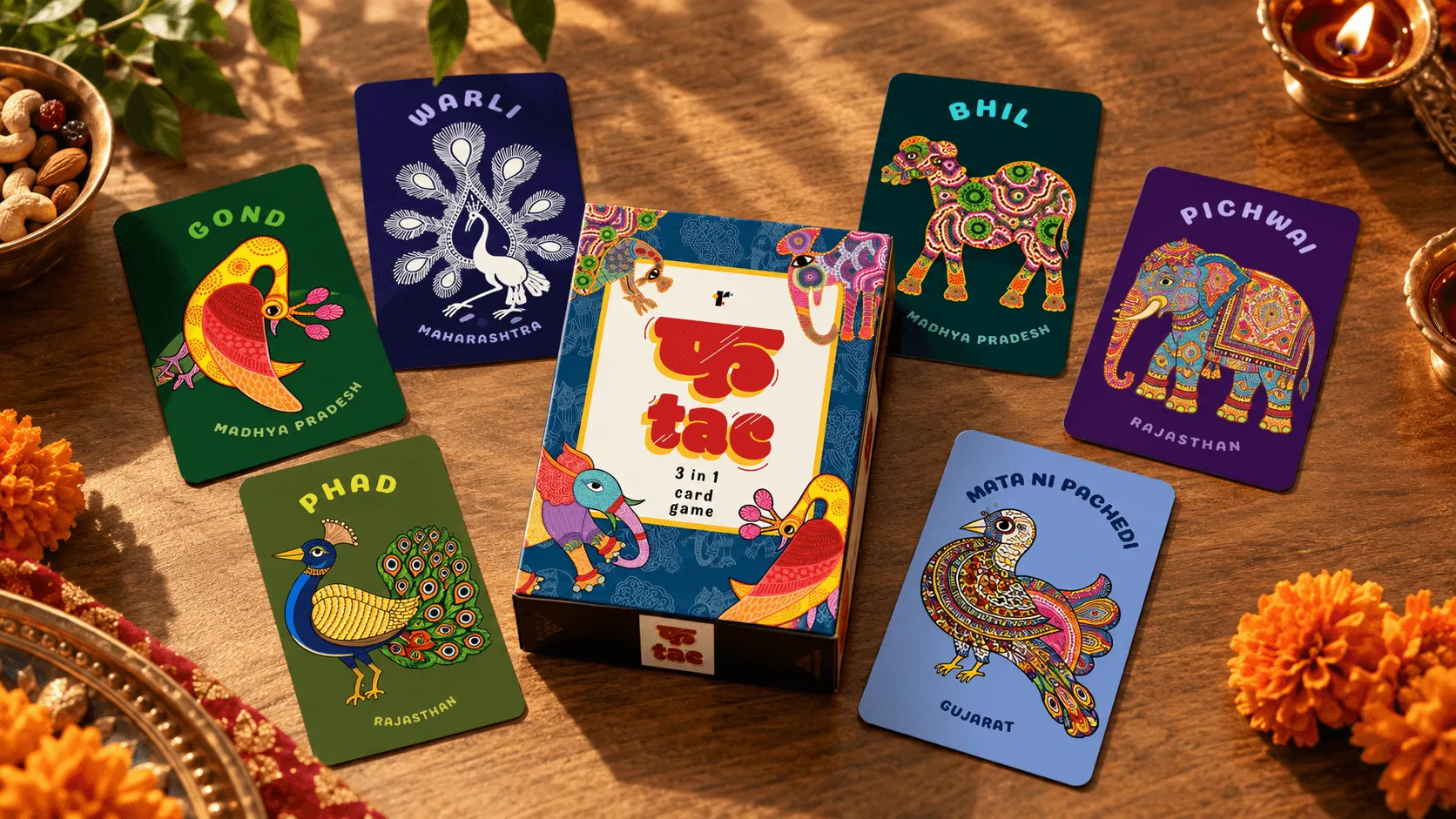
FATAC wins the youngest-player round outright. Its Memory game starts at three, the lowest age of the four decks.
If you are buying one Indian card game this Diwali to sit next to the UNO box, make it the deck that seats the whole family.
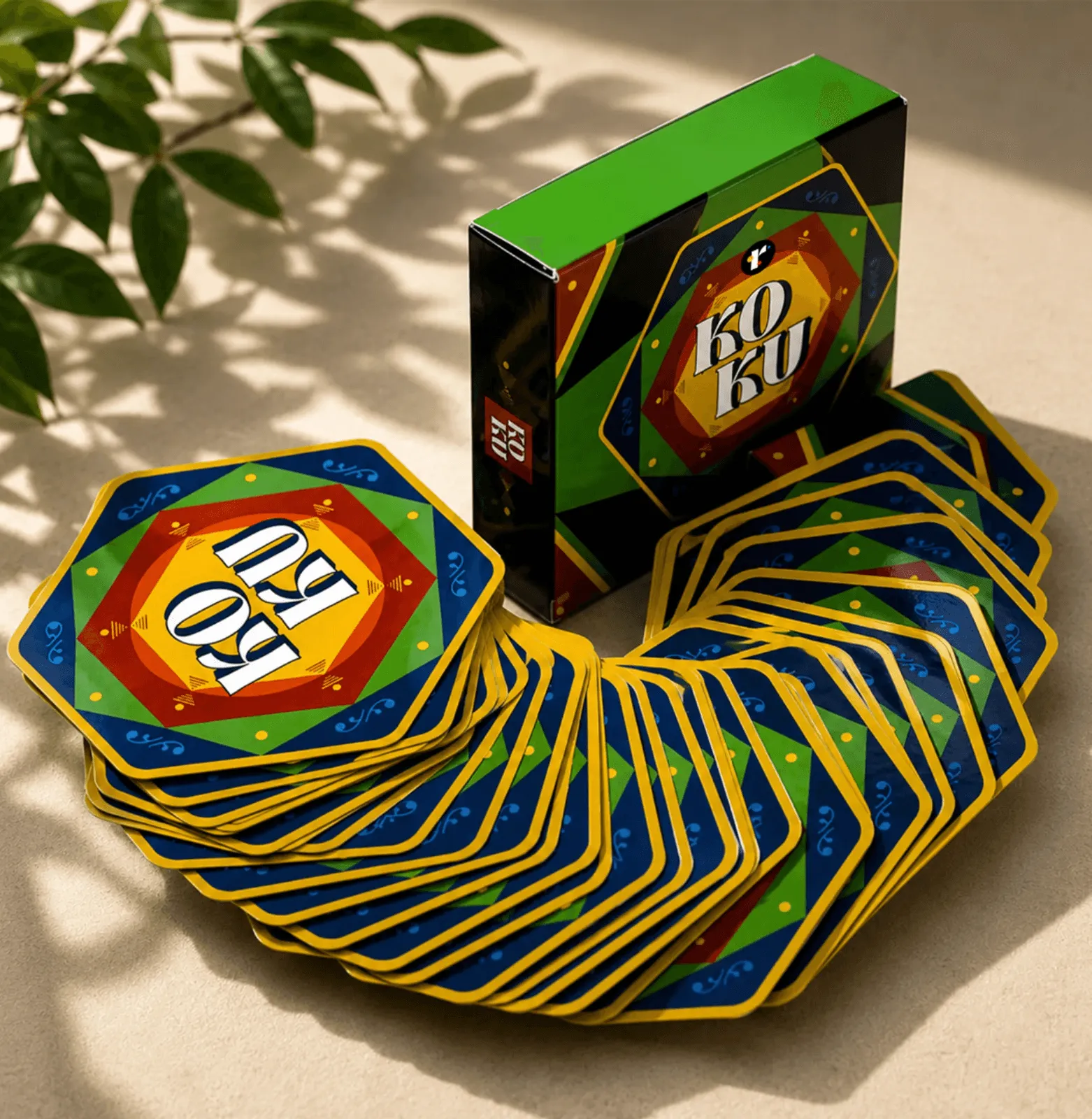
Symbol-matching card game, 57 Indian folk motifs, 3 modes, 2 to 12 players, ages 6 and up
If the house has children under six, add the second deck.
Keep the UNO box!!
Seriously, keep it. Just put a Koku and Fatac deck on top of it, so that it is the first thing that comes out when Nani sits down. Both decks, and the rest of Rooftop’s games and puzzles, are in one place.