

Jhoti Chita: Odisha Rice Paste Art, Motifs and How to Draw It | Rooftop
Jhoti Chita is the white rice paste art Odia women draw on floors and walls for Lakshmi. What each motif means, when it is drawn, and how to make one at home.

Rooftop
Author
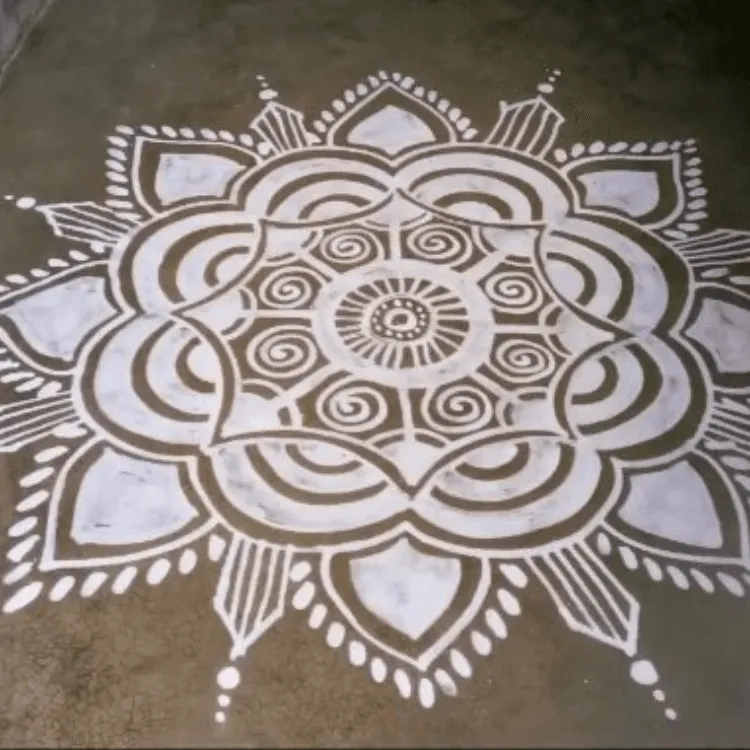
Jhoti Chita is drawn with one material: pithau, a semi-liquid paste of ground rice and water. Odia women dip their fingers in it and pull white lines across a floor or wall washed with red earth. The design is meant to last only until the next festival.
When the same patterns are laid down as dry powder, Odisha calls them muruja. Rangoli is the comparison most readers reach for, but rangoli is coloured powder, while Jhoti is a white paste that dries into the surface. The paste comes out through the year:
- for Lakshmi on the Thursdays of Margasira
- for Durga Puja
- through the month of Kartika
- on earthen pots and thresholds at weddings
This guide covers what the motifs mean, when each is drawn, and a method you can try at home.
What Jhoti Chita is made of
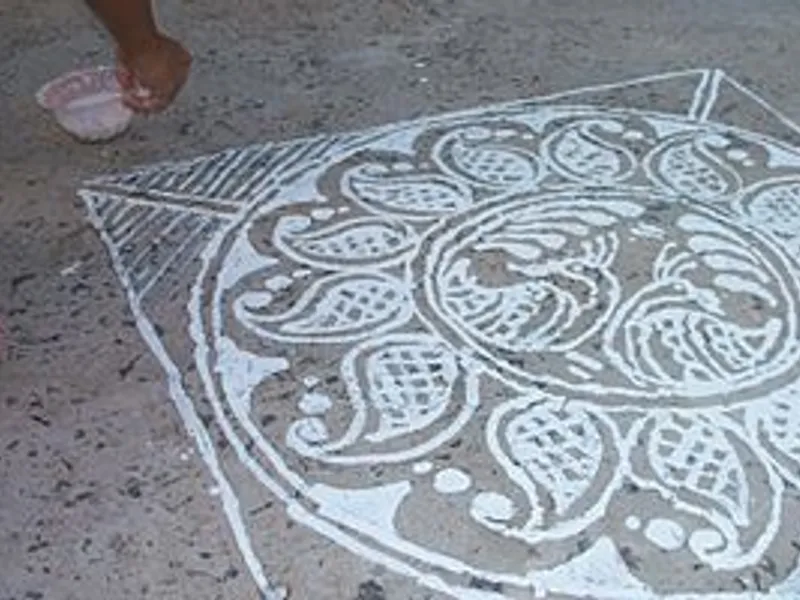
Jhoti Chita on Floor (image source: Wikimedia)Jhoti Chita on Wall (image source: Abhijna- emuseum)
Women draw Jhoti with bare fingers, dipping them into the paste and pulling long lines across the floor or wall. Sometimes a brush is made from a twig with a small piece of cloth tied to one end. The paste is sometimes sprinkled onto walls in swirls. Jhoti Chita can be seen on grain bins, small pavilions for household deities and the thresholds of homes. The background, known as dhau, is an earthy red smeared on walls or floors before the designs go on.
On walls, Jhoti is commonly found on the outer walls of huts or homes, often featuring triangular forms representing dhana sisa, heaps of paddy after winnowing. These are drawn by swirling the wrist to make long lines, with dots pressed by the fingertips.
How to draw Jhoti Chita, step by step
You need half a cup of raw rice, water, a bowl, red earth or geru (or matte terracotta paint for indoor practice), a cotton rag and a thin twig.
- Make the paste. Soak the rice for a few hours, overnight if you can. Grind it with a little water into a smooth paste, then thin it until it runs off a finger like cream. This is pithau.
- Prepare the ground. Wipe the floor or a board with dhau and let it dry. On a tiled city floor, brown kraft paper or a painted board works for practice.
- Start at the centre. Most floor designs grow outward from a lotus or from the mana, the paddy measure. Draw a small circle with your middle finger.
- Pull the petals. Place two fingers at the circle's edge and drag outward while turning your wrist. Dip again after every stroke so the line does not break.
- Add the border. Use a running chain of loops or a row of paddy-stack triangles, and finish with dots pressed by the fingertip.
- Add footprints if you like. A quick way to draw Lakshmi pada is to press the side of a closed fist into the paste for the sole, then dot five toes. Point the feet inward from the door.
- Let it dry untouched. When the time comes, wipe it away with a wet cloth instead of sweeping it.
For children, a cotton bud dipped in the paste on black chart paper works well.
What the motifs mean
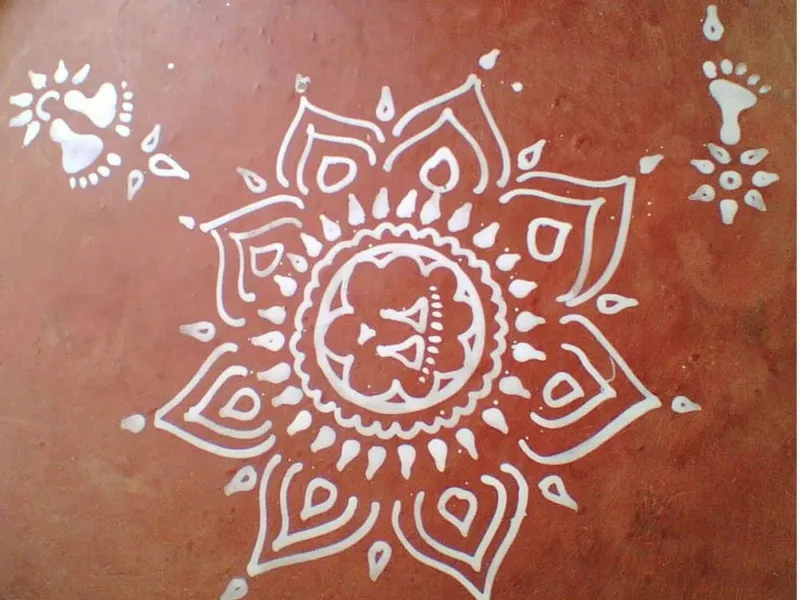
Lakshmi footprint motifs (image source: MAP Academy)Durga pooja Jhoti Chita (image source: Pinterest)Swapna Pada Chita (image source: Pinterest)
Each occasion has its own motif. During Lakshmi Puja, a pyramid-shaped stack of paddy or rice sheaves is drawn on the walls, with footprints to signify the presence of Goddess Lakshmi. For Durga Puja, white dots overlaid with red are painted, the colour pair standing for Shiva and Shakti. Symbols of Lord Jagannath and Lord Vishnu, such as the lotus, wheel, conch and mace (gada), are also common. Elephants, the kumbha and fish, familiar from Pattachitra, appear in this freehand style too. The largest motif is the Swapna Padma Chita, a circular lotus design. Because these designs represent deities, they are never swept away but carefully wiped with a wet cloth.
Jhoti Chita through the Odia year
| Month / Occasion | What is drawn |
|---|---|
| Ashwin (Sep–Oct): Durga Puja | Red-over-white dots for Shiva and Shakti |
| Kartika (Oct–Nov): Month-long vrata | Coloured muruja around the tulsi plant |
| Margasira (Nov–Dec): Manabasa Gurubara, every Thursday | Lakshmi pada, paddy stacks, lotus around the mana |
| Wedding season: Bahaghara | Chita on thresholds and on the earthen pots used in the ceremony |
Manabasa Gurubara: the Thursdays Jhoti is drawn for Lakshmi
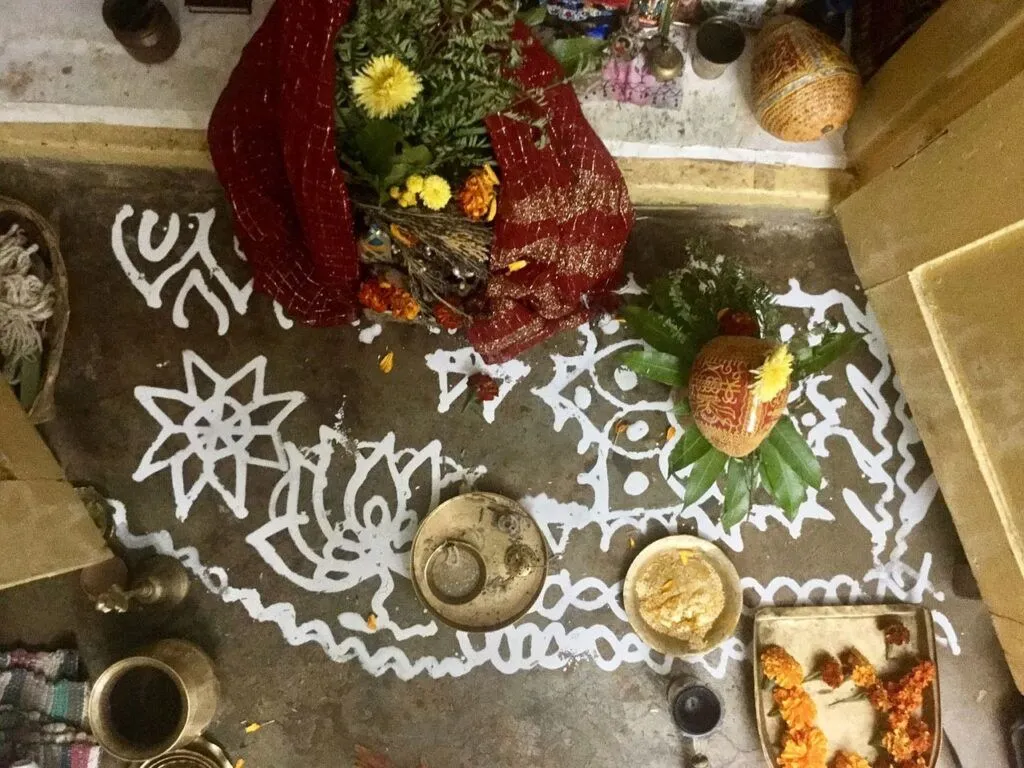
Jhoti Chita in Manabasa Gurubara (image source: Caleidoscope)
In the Lakshmi Purana, written by the Odia poet Balarama Dasa, Lakshmi visits the home of Shriya, a sweeper woman who has kept her house clean and her vow faithfully. Balabhadra, Jagannath's elder brother, decides the goddess has been polluted, and she is turned out of the temple. Without her, both Jagannath and Balabhadra faced severe hardship, going without food and water. Eventually they realised their mistake and begged for her return. Lakshmi agreed to come back only on the condition that caste-based discrimination would be abolished.
Muruja
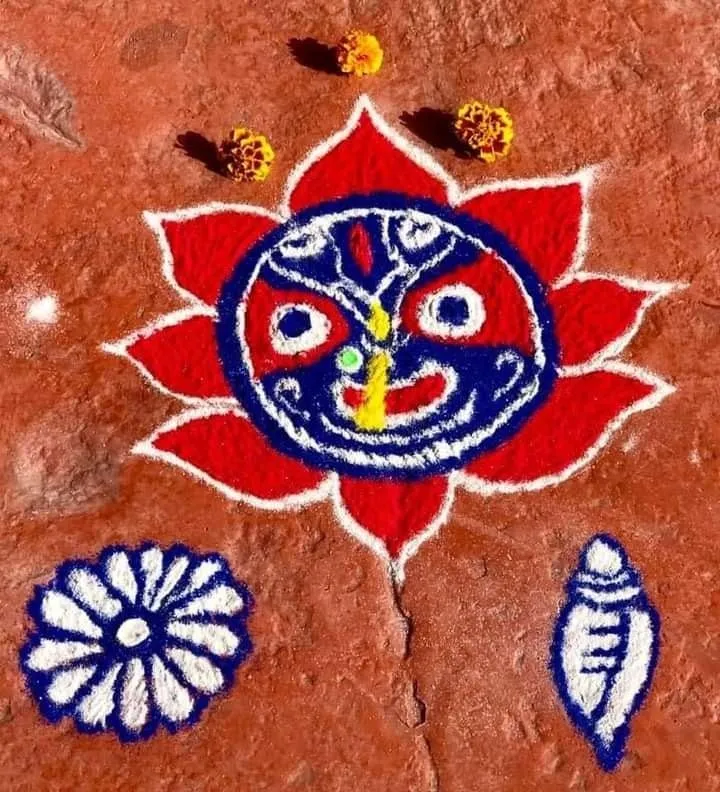
Muruja in kartik month (image source: Medium)
Unlike Jhoti Chita, which is usually white, Muruja uses colours made from natural sources women observe penance and draw. Muruja patterns near the tulsi plant… allowing it to fall to form lines and patterns. Bengal's alpona is the closest cousin, and Rooftop's guide to Indian floor art sets Jhoti beside kolam, mandana and sanjhi.
Who draws Jhoti
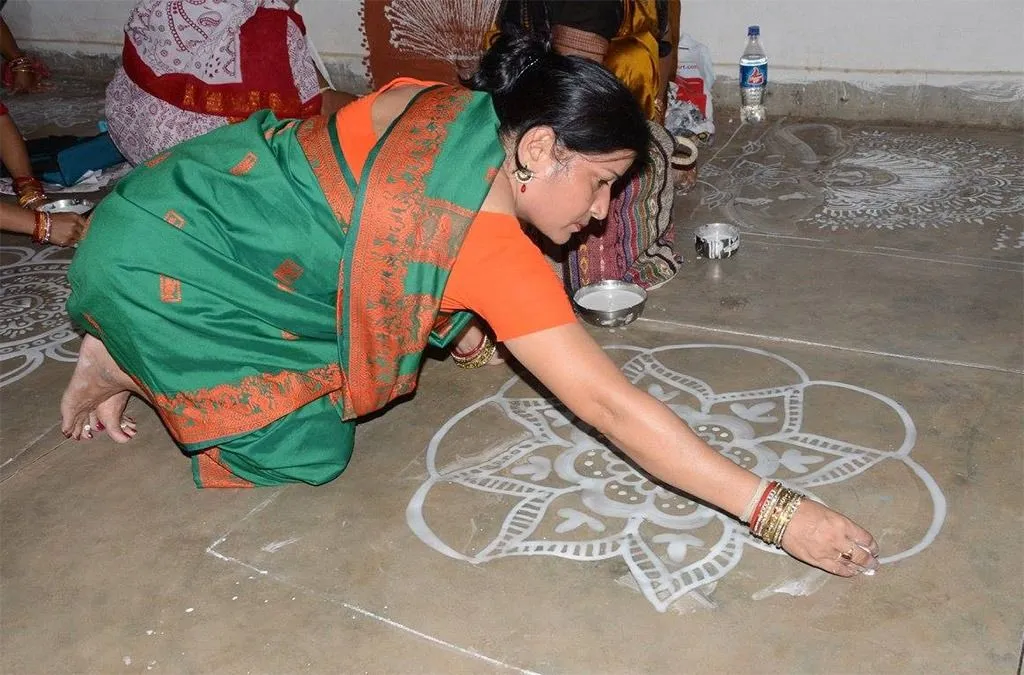
women making jhoti chita (image source: Caleidoscope)
Jhoti is women's work, and mostly the work of married women, who draw it as part of the Lakshmi vrata. Girls learn by filling in borders their mothers have started.
Jhoti Chita today
In modern times, Jhoti Chita and similar folk arts are practised more regularly by rural women, while urban women often engage with these traditions during festivals or rangoli competitions. In cities, traditional rice paste is replaced by white chalk powder. To preserve and promote this fading art, cultural organisations like the Odisha chapter of Sanskar Bharati frequently conduct rangoli festivals in Bhubaneswar, the state capital. Similar initiatives in Cuttack, where local organisations adorned walls with Chita art, have brought new cultural pride to the city.
Questions people ask
Is Jhoti Chita the same as rangoli? No. Rangoli uses dry coloured powder, while Jhoti is a white rice paste drawn wet.
Can I make it on a tiled floor? Yes. It wipes off tile with water, but practise on paper first.
How long does it last? Until the occasion ends, when it is wiped away with a wet cloth.