

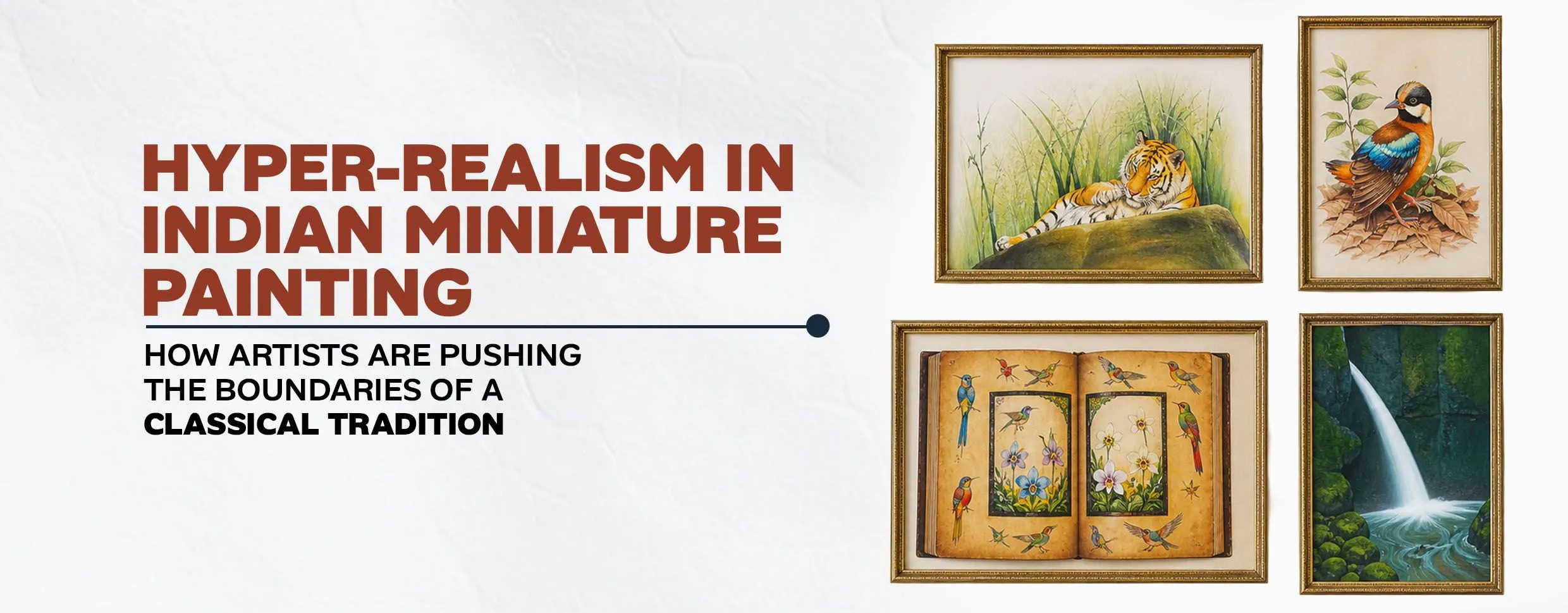
Hyper-Realism in Indian Miniature Painting: How Artists Are Pushing the Boundaries of a Classical Tradition
Hyper-realism in Indian miniature painting demands every classical discipline before it can break new ground. A close look at the artists, materials, and patience behind the most precise miniatures being made today.

Rooftop
Author
The first time you encounter a hyper-realist miniature up close, the question that arrives is unavoidable. You step nearer expecting the precision to break down, the way a photograph reveals its grain at arm’s length. Instead, the precision deepens. The eye of a kingfisher resolves into individual reflections caught on the wet curve of the pupil. The texture of a horse’s coat reveals itself as thousands of brushstrokes laid one against the next. Somewhere in this slow process of looking closer, a small unmistakable signal appears: the trace of a single human hand.
This is what contemporary hyper-realist miniature painting is built around. What looks at first glance like a photograph turns out to be the product of a painter trained for decades inside one of the most rigorous classical traditions in the world, choosing to push that tradition into a register the original courts never imagined.
The Classical Foundations That Make Hyper-Realism Possible
To understand why hyper-realism in miniature painting is so technically demanding, you need to understand what the tradition asks of an artist before they ever attempt it. Indian miniature painting is not a single style but a constellation of regional schools that emerged across roughly six centuries. Read the Rooftop overview for a fuller chronology.
The major schools that shaped the tradition include:
- Mughal miniature painting, which emerged in the imperial ateliers of Akbar, Jahangir, and Shah Jahan, absorbing Persian techniques while developing a distinctly Indian sensibility for portraiture and naturalistic detail.
- Rajput and Rajasthani schools, including Mewar, Bundi, Kota, Jaipur, Kishangarh, Marwar, and Bikaner, each with its own colour palette and motifs, often built around devotional themes of Krishna and Radha.
- Pahari painting, developed in the Himalayan kingdoms of Basohli, Guler, Kangra, and Garhwal, combining late Mughal training with lyrical interpretations of Vaishnavite themes.
- Deccan miniatures, produced from the sixteenth to the nineteenth century in the courts of Bijapur, Golconda, and Ahmednagar, with particular attention to atmospheric backgrounds and refined facial work.
Inside every one of these schools, an artist absorbed a long apprenticeship before producing independent work. The disciplines they had to master form the bedrock of the tradition itself.
The technical disciplines a classical miniature artist had to master
- Fine brushwork: lines so thin they read as single hairs, often using brushes hand-tied from squirrel, otter, or cat hair, sometimes reduced to a single hair for the finest detail.
- Layered pigment application: building tone through multiple thin washes, which gives classical miniatures their characteristic luminous depth.
- Burnishing: polishing the painted surface with a smooth agate or shell between layers to flatten the pigment and prepare each section for the next pass.
- Wasli preparation: the slow craft of pasting handmade paper into the dense, smooth surface miniature painting requires.
- Pigment preparation: grinding minerals, plant materials, and shells into hand-mixed colours, including lapis lazuli for blue, malachite for green, and ground gold and silver for highlights.
Without all of these, hyper-realism in the miniature register cannot be attempted. The classical tradition is not training wheels artists outgrow. It is the foundation that makes the most demanding work possible.
What Hyper-Realism Means Within a Miniature Practice?
Classical Indian miniature painting was, for most of its history, an art of idealisation. A king was painted as a king should look. A goddess was rendered with the proportions appropriate to her station. The point was harmonious expression of an idea within tightly defined visual conventions, not optical accuracy. Light fell across compositions according to compositional logic rather than physical observation.
Hyper-realism in contemporary miniature practice changes this orientation. The artist working in a hyper-realist register pursues optical exactness and emotional specificity at the same time.
What hyper-realism asks of the painter?
- Light and shadow rendered the way the eye sees them, with attention to how soft-edged shadows fall across curved surfaces and how rim light wraps around a turned head.
- Texture made visible at every scale, from moisture caught in the corner of an animal’s eye to feather barbs stacked along the leading edge of a wing.
- Anatomical precision worked out from observation, so that a horse’s shoulder, a bird’s tendon, or a butterfly’s wing carries the weight of a particular living body.
- Psychological specificity, where the gaze of a portrait subject or the alertness of a wild creature is rendered with enough nuance that the viewer feels seen back.
The challenge is reconciling all of this with the formal constraints of the miniature tradition. The compositions remain small. The pigments remain layered and burnished. The brushes remain microscopically fine. Hyper-realism does not abandon any of these constraints. It works inside them.
Materials, Surface, and Scale: The Technical Demands of the Form
The materials of hyper-realist miniature painting are largely the same as the classical tradition, with a few adaptations. The discipline of using them has been intensified to a degree older court painters would recognise but rarely attempted.
The surface
The traditional surface for serious miniature work is wasli, a paper made by pasting together multiple thin sheets of handmade paper, then burnishing the result into a dense, smooth ground. Hyper-realist miniaturists often prepare their wasli over several days before painting, building up enough layers to support the dozens of pigment passes the work requires. Some artists also work on prepared ivory alternatives or bone china for the most detailed passages.
The pigments
Pigment work in this tradition draws on:
- Mineral colours, including lapis lazuli for ultramarine, malachite for green, and ochre and red earth for warm tones, ground by hand and bound with natural gum.
- Plant-based dyes, including indigo and lac, used to layer transparent washes that give shadows their characteristic depth.
- Pure gold and silver leaf or ink, applied for halos, jewellery, and the most luminous highlights, often burnished to a soft sheen rather than left bright.
- Natural binders, particularly gum arabic, which keep the paint workable through multiple slow layers.
Hyper-realist artists push these materials to the limits of what they can describe. A single feather might require seven or eight layers of pigment, each laid with a different brush, each burnished gently before the next pass.
The scale and the brush
Working at miniature scale amplifies every technical challenge. A line that would read cleanly at twelve inches becomes a problem of millimetres at three inches. Miniature artists make their own brushes, often using:
- Hair from squirrel tails, set into a goose or kingfisher quill for the finest classical work.
- Cat hair and otter hair for slightly heavier strokes.
- In the most extreme cases, a brush tied from a single hair, used for catching the gleam in an eye or the edge of a feather barb.
Jaggu Prasad, the Jaipur-trained miniaturist who has become one of the most recognisable voices in the contemporary hyper-realist movement, is known to use a brush made from a single otter hair for the finest detail in his work.
The Artists Defining Hyper-Realism in Contemporary Miniature Practice
Most artists at the frontier of hyper-realist miniature painting trace their training to Rajasthan, particularly the workshops clustered around Jaipur, Bikaner, and Udaipur. The reason is structural. Rajasthan retained its court patronage system longer than most other regions, which kept the traditional ateliers alive into the modern period. The multigenerational families descended from those ateliers are the people most equipped to attempt this work today.
Jaggu Prasad
Born in 1963, Jaggu Prasad began painting at the age of six and trained under Padma Shri Kirpal Singh Shekhawat, a key figure in the post-independence revival of Jaipur miniature painting. His work has been exhibited in galleries across Singapore, the United Kingdom, Germany, France, and the United States. His painting Eyes Like Midnight on Rooftop shows the depth of his command: a wildlife portrait rendered with microscopic attention to fur, light, and gaze.
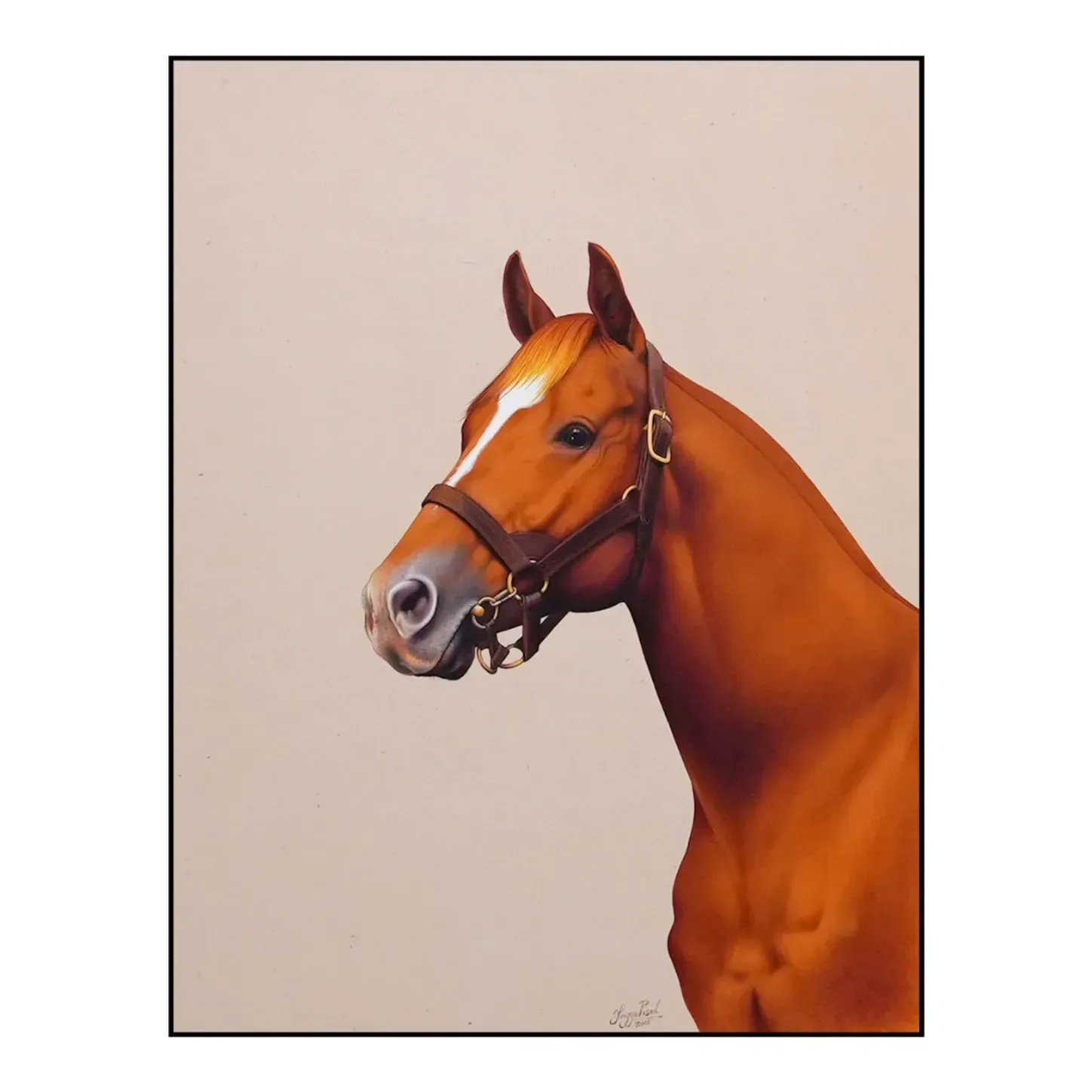
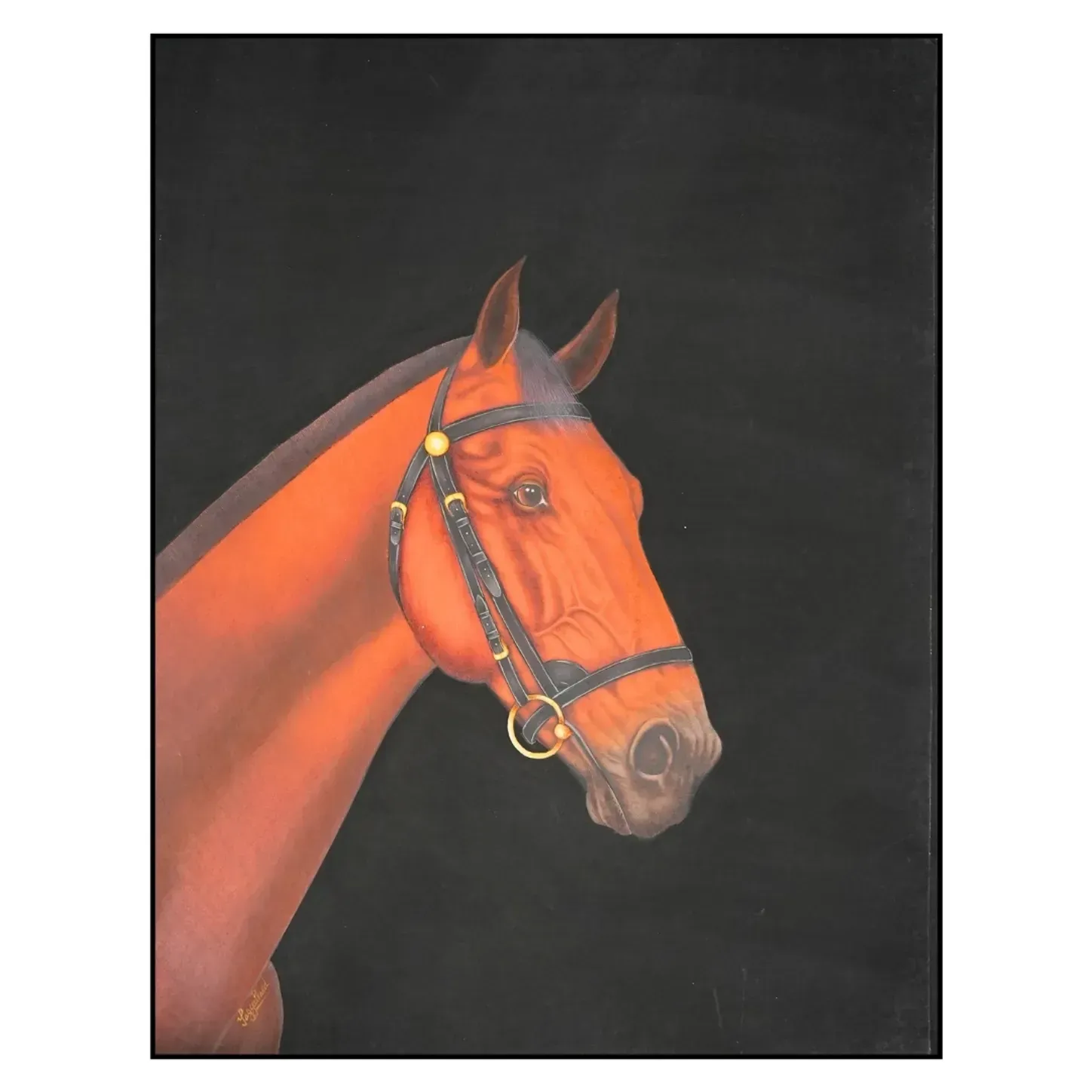
Prasad uses techniques like trompe l’oeil to give his work a hyper-real effect, with subjects drawn primarily from nature. Equine Legacy shows his approach to animal portraiture, where the dark background lets the warm tones of the horse’s coat carry the entire composition.
Mahaveer Swami
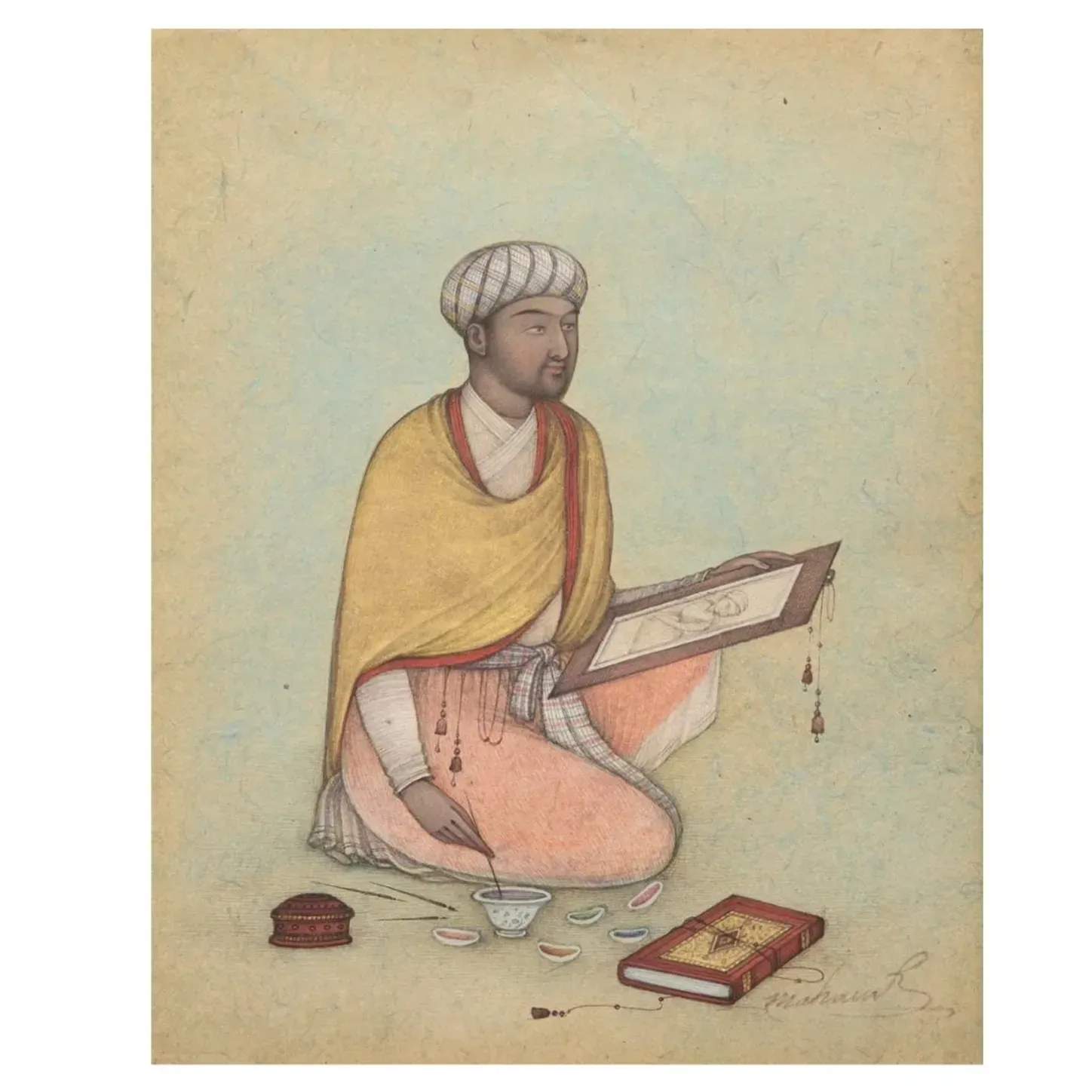
Mahaveer Swami descends from a family of traditional Bikaner painters and is widely credited with reviving the Bikaner School. His subjects often draw from ascetic life, the daily rhythms of Indian women, and Hindu mythology, with work exhibited in Paris and Washington. Whispers of Kabir on Rooftop demonstrates his attention to facial shading, halo work in pure gold ink, and textural detail of robes and prayer beads.
Shammi Bannu Sharma and the Jaipur lineage
A seventh-generation miniature artist from Jaipur, Shammi Bannu Sharma comes from a family of esteemed miniature painters and learned the tradition by silently observing his father at work. He has demonstrated his techniques at the Victoria and Albert Museum in London and received the National Award in 2014. His work shows how Jaipur’s emphasis on portraiture and anatomical correctness can be carried into a register of much greater photographic precision without losing the underlying classical structure.
What sets these artists apart
A few qualities distinguish contemporary Indian hyper-realist miniaturists from their classical predecessors and from Western photorealists.
- They operate inside a continuous tradition, in conversation with centuries of accumulated technique rather than developed from scratch.
- They tend to choose subjects that carry cultural and spiritual weight, including saints, deities, sacred animals, and devotional natural subjects, rather than the consumer-culture imagery that dominates Western photorealism.
- They work at a scale that intensifies rather than relaxes the demands of the form, with much of the most extraordinary work measuring under a foot in any direction.
The Conversation Between Tradition and Innovation
There is an ongoing debate within the miniature painting community about what hyper-realism should mean for the tradition. Traditional patrons sometimes argue that hyper-realist work strays too far from the idealised visual logic of the courts. Contemporary art collectors often respond most strongly to precisely this innovation, reading the technical extremity of hyper-realist work as evidence the tradition is alive.
This tension between fidelity and evolution is not a sign of crisis. It is what every living tradition does.
The artists themselves are relaxed about the debate. They are doing the work, drawing on what their teachers taught them, applying that grammar to subjects the older masters did not pursue. The proof is that you cannot do hyper-realist miniature work without first mastering every classical discipline. The new is built directly on top of the old.
Where Hyper-Realist Miniatures Sit in the Indian Art Market Today
Collector interest in technically exceptional miniature work has grown steadily over the past two decades, in India and internationally.
- Aesthetic appeal: hyper-realist miniatures reward sustained looking. They invite the viewer to come close, to take their time, to discover detail not visible at first glance.
- Cultural depth: the work sits inside a recognisable tradition with centuries of context behind it.
- Technical scarcity: the number of artists capable of producing this level of work is small and shrinking, giving the work both rarity value and a sense of urgency for collectors.
- Investment performance: miniature work by recognised contemporary masters has appreciated significantly, with auction interest from Sotheby’s and Christie’s for the best pieces.
Hyper-realist miniatures now appear in galleries and art fairs alongside experimental contemporary work, where their technical extremity often functions as a counterweight. Browse the classical realism and hyperrealism collection on Rooftop to see original work by Jaggu Prasad and other leading miniaturists.

Browse the classical realism and hyperrealism collection on Rooftop
Rooftop also offers in-depth courses on Rajasthani miniature painting taught by master artists across seven schools. Explore our courses section if you want to study the foundations yourself.
A Tradition That Never Stopped Evolving
Hyper-realism in Indian miniature painting is best understood as proof of one quiet but important fact about classical traditions. In skilled hands, they never stop evolving. The court painters of seventeenth-century Bikaner, eighteenth-century Kangra, and nineteenth-century Jaipur passed down a discipline the artists working today are still extending. The work being made now is the continuation of that lineage.
The next time you stand in front of a hyper-realist miniature, give it the time it asks for. Step closer, then closer again. The painting will reward you the way only this tradition can: by revealing, in microscopic detail, the labour, patience, and quiet brilliance of a hand trained over decades to do exactly this. Explore original miniature paintings on Rooftop’s paintings collection.
If you are a miniature artist looking to reach collectors directly, register as a provider on Rooftop.