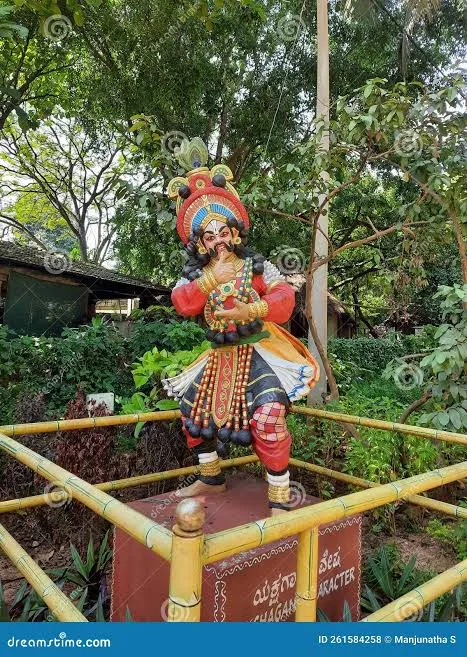

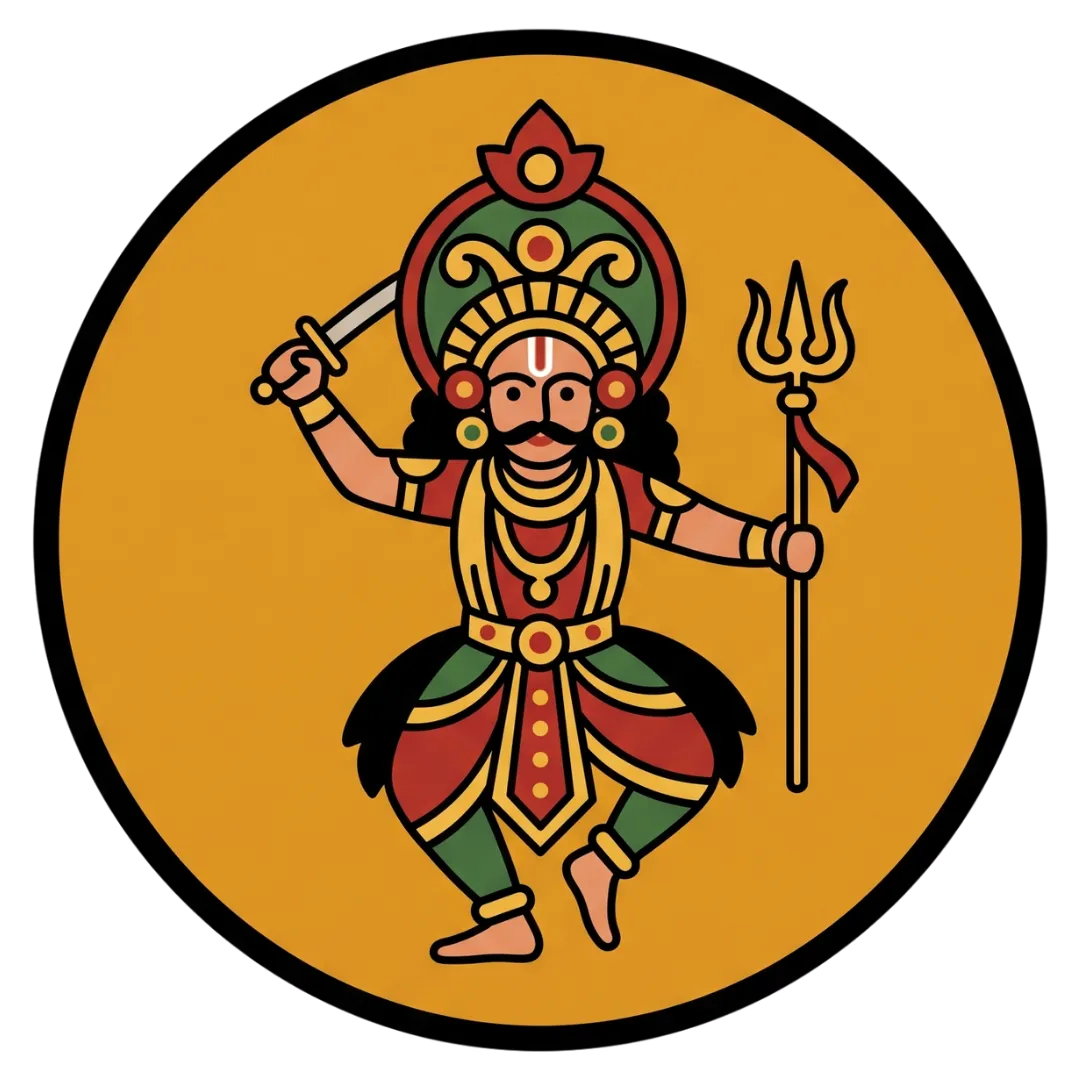
Veeragase - The Folk Dance Tradition of Karnataka
Familiarize yourself with Veeragase, a vigorous devotional folk dance of Karnataka, enacting the story of Veerabhadra, fierce form of Lord Shiva...
Introduction
Veeragase is a vigorous devotional folk dance of Karnataka, performed by members of the Veerashaiva (Lingayat) community, specifically by Jangama people (Maheshwaras, who are the priestly and devotional specialists of the Lingayat tradition). The dance enacts the story of Veerabhadra, a fierce form of Shiva created from a lock of Shiva's hair to avenge the insult done to Shiva's consort Sati at Daksha's yajna (sacrificial ceremony). The name derives from the Kannada words 'veera,' meaning warrior or brave, and 'gase,' meaning dance. The form is also known as Guggla and is characterized by acrobatic, gymnastic movements, the carrying of wooden plaques of Veerabhadra and swords, and specific devotional costume elements associated with the Shaivite tradition.
Etymology
The name 'Veeragase' combines 'veera' (Kannada: warrior, brave) and 'gase' (Kannada: dance), giving the meaning 'warrior dance' or 'brave man's dance.' The alternate name 'Guggla' may derive from the guggul (resin incense) associated with Shaivite devotional practice, though this derivation has not been confirmed in available academic sources. The name 'Veeragase' directly encodes the martial theme of the dance's narrative content, centering on Veerabhadra as the wrathful warrior form of Shiva.
Origin
Veeragase is rooted in the Veerashaiva (Lingayat) devotional tradition of Karnataka, which was systematized by the philosopher-saint Basavanna in the twelfth century, though the tradition has pre-Basavanna antecedents in the broader Shaivite culture of the region. The dance's specific narrative content, drawing on the story of Veerabhadra's destruction of Daksha's yajna as recorded in the Shiva Purana and in the Kannada Basava Purana and Chennabasava Purana, places it within the textual and devotional corpus of the Lingayat tradition.
Location
Veeragase is practiced across Karnataka, with concentrations in the districts where Lingayat (Veerashaiva) communities are significant: the districts of the northern Karnataka plateau and the Mysore region. It is performed at the Mysuru Dasara procession and at festivals including Karthika and Shravana masa. The form is also found in the adjoining Lingayat-dominated areas of Andhra Pradesh and Telangana.
Community
Veeragase is performed by Jangama people, the devotional specialists and itinerant preachers of the Lingayat tradition, who are considered the living representatives of Shiva in the community's religious structure. The Jangama's role as performers of Veeragase integrates the dance into the institutional religious life of the Lingayat community. The dance is part of the Jangama's broader repertoire of devotional expression and community service.
Relevance
Veeragase is a medium-visibility tradition that is actively practiced and thriving within the Lingayat community of Karnataka. Its presence in the Mysuru Dasara procession, one of India's most prominent state-level cultural events, gives it significant annual visibility. The form represents the convergence of martial aesthetics, devotional narrative, and community religious identity that is characteristic of the Lingayat cultural tradition.
History
Background
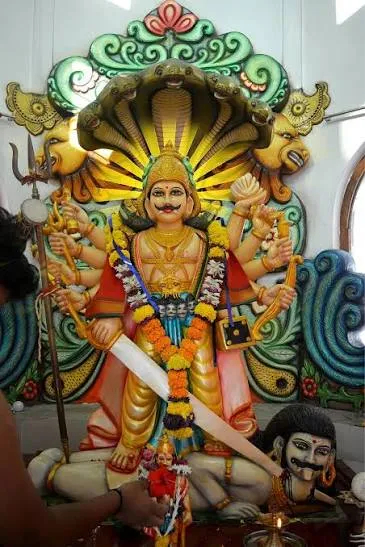
The story of Veerabhadra, which is the narrative core of Veeragase, is documented in the Shiva Purana, the Linga Purana, and in the Kannada devotional texts of the Lingayat tradition including the Basava Purana and the Chennabasava Purana. The Basava Purana is a medieval Kannada text narrating the life of Basavanna and the theology of the Lingayat community. Veeragase as a performance tradition is tied to the broader Veerashaiva devotional culture that spread through Karnataka from the twelfth century onward through the activity of Jangama teachers and performers.
Culture and Societies
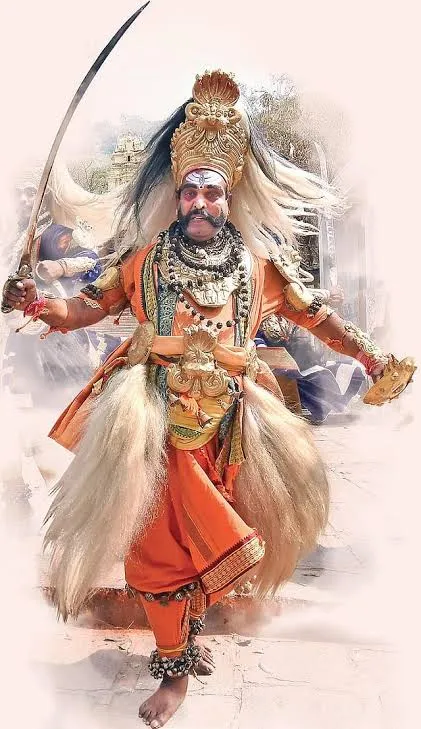
Veeragase is performed by Jangama performers at community festivals, in the Dasara procession, and at temple celebrations. The performance involves acrobatic and gymnastic movements that require physical training and stamina. The Jangama performers smear vibhooti (sacred ash) on their forehead, ears, and eyebrows before performing, marking themselves as devotees and representatives of Shiva. The performance is understood as an act of devotional expression on behalf of the community and as a re-enactment of Veerabhadra's warrior action.
Religious Significance
Veeragase has direct and primary religious significance as an act of devotion to Shiva in the form of Veerabhadra. The narrative it enacts, Veerabhadra's destruction of Daksha's yajna to avenge Sati's death, is one of the central narratives of Shaivite devotional literature. The performance of Veeragase by Jangama practitioners is understood as the embodiment of the deity's warrior energy in the human body, a concept central to the Lingayat understanding of the relationship between the devotee and Shiva. The vibhooti smearing and the carrying of Veerabhadra's image are specific devotional acts within the Shaivite ritual tradition.
Understanding the Art
Style
Veeragase is an intensely physical dance characterized by acrobatic and gymnastic movements. The dancer holds a wooden plaque depicting Lord Veerabhadra in the left hand and a sword in the right. The dance includes jumps, spins, and physically demanding sequences that express the warrior energy of Veerabhadra. The tempo is energetic and sustained. Drums and cymbals provide the rhythmic accompaniment.
Central Motifs and Their Significance
The central motifs are the figure of Veerabhadra as the destroyer of adharma (unrighteousness) and the Jangama as the human representative of that divine energy. The sword carried in the right hand represents Veerabhadra's weapon; the wooden plaque with the deity's image in the left hand makes the dancer a mobile shrine. The vibhooti on the body marks the performer as Shiva's devotee. The acrobatic intensity of the movements expresses the fierce, unlimited energy of Veerabhadra's action.
Process
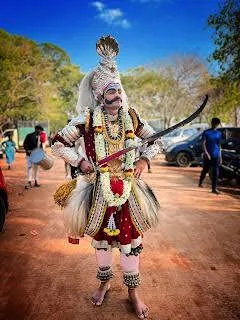
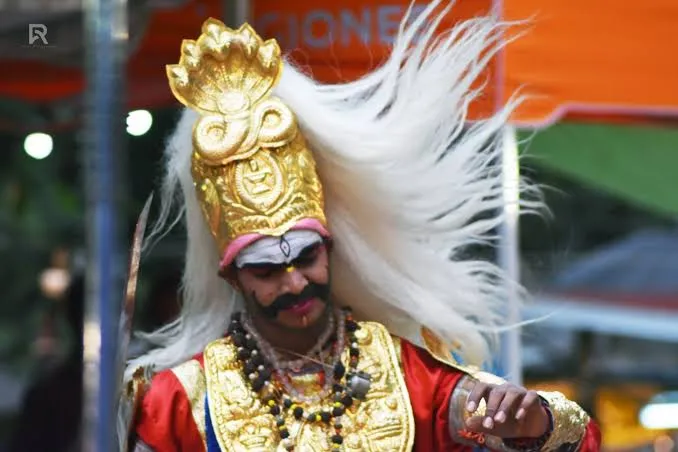
Veeragase performers prepare for the dance by applying vibhooti to the forehead, ears, and eyebrows, wearing the Rudraksha bead necklace, the rudra muke hip-belt, and the Nagabharana (serpent ornament), and taking up the Veerabhadra plaque and sword. The performer wears a white headgear (Chhanak) and a red dress, with anklets. The drum and cymbal players establish the tempo, and the dance begins with controlled energy that escalates through the performance, incorporating acrobatic elements and sustained rhythmic movement.
Mediums Used
The defining implements are the wooden plaque depicting Lord Veerabhadra (carried in the left hand) and the sword (carried in the right hand). The costume includes white headgear (Chhanak), red dress, Rudraksha bead necklace, rudra muke hip-belt, Nagabharana (serpent ornament on the body), and anklets. Vibhooti is applied to the forehead, ears, and eyebrows. Musical instruments include drums and cymbals.
New Outlook
Veeragase is a thriving tradition within the Lingayat community of Karnataka and has medium visibility at the state and national level. The Mysuru Dasara procession provides annual high-profile presentation. The Karnataka Janapada Akademi and state cultural bodies document and support the form. The community's continued religious identification with the Lingayat tradition and the institutional role of the Jangama within that tradition provide structural support for the form's continuation. Academic documentation is available in Kannada-language scholarship and is represented in surveys of Karnataka folk tradition.
Learn Veeragase
Bibliography
Sources
Basava Purana. Various editions, medieval Kannada devotional text of the Lingayat tradition.
Chennabasava Purana. Various editions, Kannada Lingayat devotional text.
Karnataka Janapada Akademi. Documentation of Karnataka Folk Dances. Karnataka Janapada Akademi, various years.
Kothari, Sunil. Folk Dances of India. Marg Publications, 1994.
Sangeet Natak Akademi. Karnataka Folk Traditions. Sangeet Natak Akademi, various years.
Image Sources
"Veeragase." Wikipedia, Wikimedia Foundation, https://en.wikipedia.org/wiki/Veeragase. Accessed 22 July 2026.
"Veeragase: The Fierce Folk Dance of Karnataka." Orchids International School, https://www.orchidsinternationalschool.com/blog/folk-dance-of-karnataka. Accessed 22 July 2026.
"The Veeragase Veera of Mysuru." The New Indian Express, 26 July 2020, https://www.newindianexpress.com/states/karnataka/2020/Jul/26/the-veeragase-veera-of-mysuru-2174931.html. Accessed 22 July 2026.
"Veeragase Gets a Remake." Shehari Safarnama, 2 Sept. 2019, https://sheharisafarnama.home.blog/2019/09/02/veeragase-gets-a-remake/. Accessed 22 July 2026.
"Veeragase Stock Photos." Dreamstime, https://www.dreamstime.com/photos-images/veeragase.html. Accessed 22 July 2026.