
Vedic Chanting - The Music Tradition of Pan-India
Explore about Vedic Chanting, one of the oldest continuous unbroken oral tradition, aiming to preserve the 4 vedas in Vedic Sanskrit...
Introduction
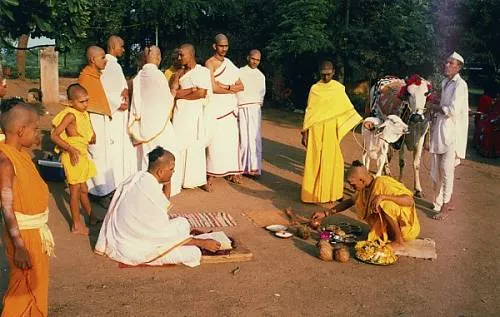
Vedic chanting is the oral recitation of the Vedas, the foundational religious texts of Hinduism, through a precisely codified system of tonal inflection, rhythmic organization, and phonological articulation that has been maintained as a continuous oral tradition for approximately 3,500 years. It is considered one of the oldest unbroken oral traditions in the world. The four Vedas, the Rigveda, Samaveda, Yajurveda, and Atharvaveda, were composed in Vedic Sanskrit and have been preserved through systematic oral transmission that predates and overlaps with the earliest written manuscripts. UNESCO proclaimed Vedic chanting a Masterpiece of the Oral and Intangible Heritage of Humanity in 2003 and inscribed it on the Representative List in 2008. The tradition is not a single uniform practice but a collection of multiple recitation schools (shakas or branches), each associated with a specific family lineage (gotra) and a specific Veda or sub-division thereof. Each shaka maintains its own textual recension, melodic pattern, and stylistic conventions, producing a degree of variation across the tradition that is itself a subject of musicological and linguistic study.
Etymology
The Vedas (singular Veda) derive their name from the Sanskrit root vid, meaning to know, yielding Veda as that which is known or knowledge. The Vedas are classified as shruti (that which is heard), distinguishing them from smriti (that which is remembered), the latter category encompassing secondary religious literature. The designation shruti reflects the tradition's own account of the Vedic texts as having been directly heard by the ancient seers (rishis) from the divine, rather than composed by human intelligence. This epistemological claim is foundational to the tradition's understanding of the transmission's authority.
Origin
The date of composition of the Vedic texts is a subject of scholarly discussion. The consensus among Western Indologists and most contemporary historians places the composition of the Rigveda, the oldest of the four Vedas, in the period approximately 1500 to 1200 BCE, during the late Bronze Age. The fixation of the texts in their present form is generally associated with the Iron Age period, approximately 800 BCE, comparable in chronological terms to the Homeric tradition in ancient Greece. However, the oral tradition may preserve material older than the textual fixation, and some scholars have argued for earlier dates. These chronological debates do not affect the tradition's own continuous practice.
The system of tonal markers and recitation styles was developed as an explicit preservation mechanism. The Vedic phonological tradition recognizes four tonal levels: udatta (raised), anudatta (lowered), svarita (combined high), and deergha svarita (extended high), each marked with distinct diacritical notations in manuscript traditions. The development of the eleven recitation styles (pathas), each imposing progressively more complex transformations on the text, was specifically designed to preserve the exact phonological form of the text through the redundancy of multiple encoding systems.
Location
Vedic chanting is maintained by Brahmin scholarly communities across India, with regional concentrations in Maharashtra, Tamil Nadu, Andhra Pradesh, Karnataka, Kerala, Odisha, and Uttar Pradesh. Each of these regions maintains distinct recitation traditions associated with specific Vedas and shakas. UNESCO's documentation specifically identified four schools as particularly at risk: those in Maharashtra, Kerala, Karnataka, and Orissa. Kerala maintains the tradition of Nambudiri Brahmin Vedic recitation in a particularly conservative form, with several features that musicologists have identified as representing archaic aspects of Vedic performance not fully preserved elsewhere.
Community
Vedic chanting is maintained by the Brahmin varna communities of India, specifically by families whose hereditary occupational identity involves the priestly and scholarly functions associated with Vedic recitation and ritual. The system of gotra (patrilineal clan identification) and shaka (Vedic school affiliation) determines the specific textual and melodic tradition a practitioner inherits. The transmission is through male lineages in the traditional context, though contemporary institutions also train women in Vedic chanting. The Vedic schools are associated with specific performance roles in Hindu ritual life: Hotri priests (Rigveda), Udganti priests (Samaveda), Adhvaryu priests (Yajurveda), and Brahman priests (Atharvaveda).
Relevance
Vedic chanting is recognized globally as a cultural artifact of exceptional antiquity and as a linguistic document of unique importance for the study of ancient Indo-European languages. The phonological precision required for Vedic chanting and the elaborate mnemonic systems developed to preserve it have attracted attention from linguists, musicologists, and cognitive scientists interested in the capacity of human memory systems to maintain complex information over millennia. The UNESCO inscription reflects international recognition of the tradition's significance.
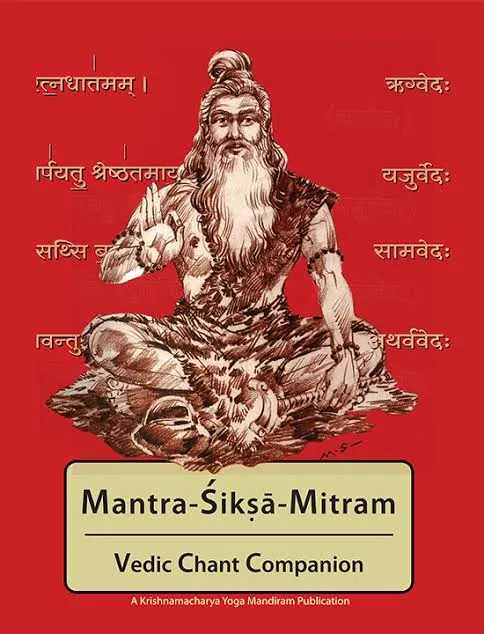
The Vedic Heritage Portal (vedicheritage.gov.in), developed by the Indira Gandhi National Centre for the Arts in collaboration with the Ministry of Culture, Government of India, constitutes a significant documentation initiative, making recordings of various Vedic recitation traditions publicly accessible in digital form.
History
Background
The internal evidence of the Vedic texts provides documentation of the ancient understanding of the recitation tradition. The Pratishakhya texts, a class of ancillary Vedic literature devoted to phonetics and recitation rules, constitute detailed technical manuals for each Vedic shaka, specifying the exact phonological properties of each syllable and the rules governing tonal inflection. These texts, estimated to date from approximately 800 to 300 BCE, represent the earliest systematic documentation of the recitation tradition. The Rigveda Pratishakhya, the Taittiriya Pratishakhya (associated with the Krishna Yajurveda), and the Atharvaveda Pratishakhya are among the most studied examples.
The development of the eleven recitation styles (pathas) represents the most elaborate mnemonic encoding system known in any oral tradition. The simplest form, samhita patha, recites the text in its natural spoken form. Pada patha separates each word. Krama patha combines words in overlapping pairs. The more complex forms, Jata, Maalaa, Sikha, Rekha, Dhwaja, Danda, Ratha, and Ghana, impose progressively complex combinatorial transformations on the text, so that each word or group of words is recited in multiple sequence permutations. Ghana patha, the most complex form, requires a text segment to be recited forward, backward, and in additional permutations. This system ensures that any corruption in one form of recitation can be identified by comparison with others.
Culture and Societies
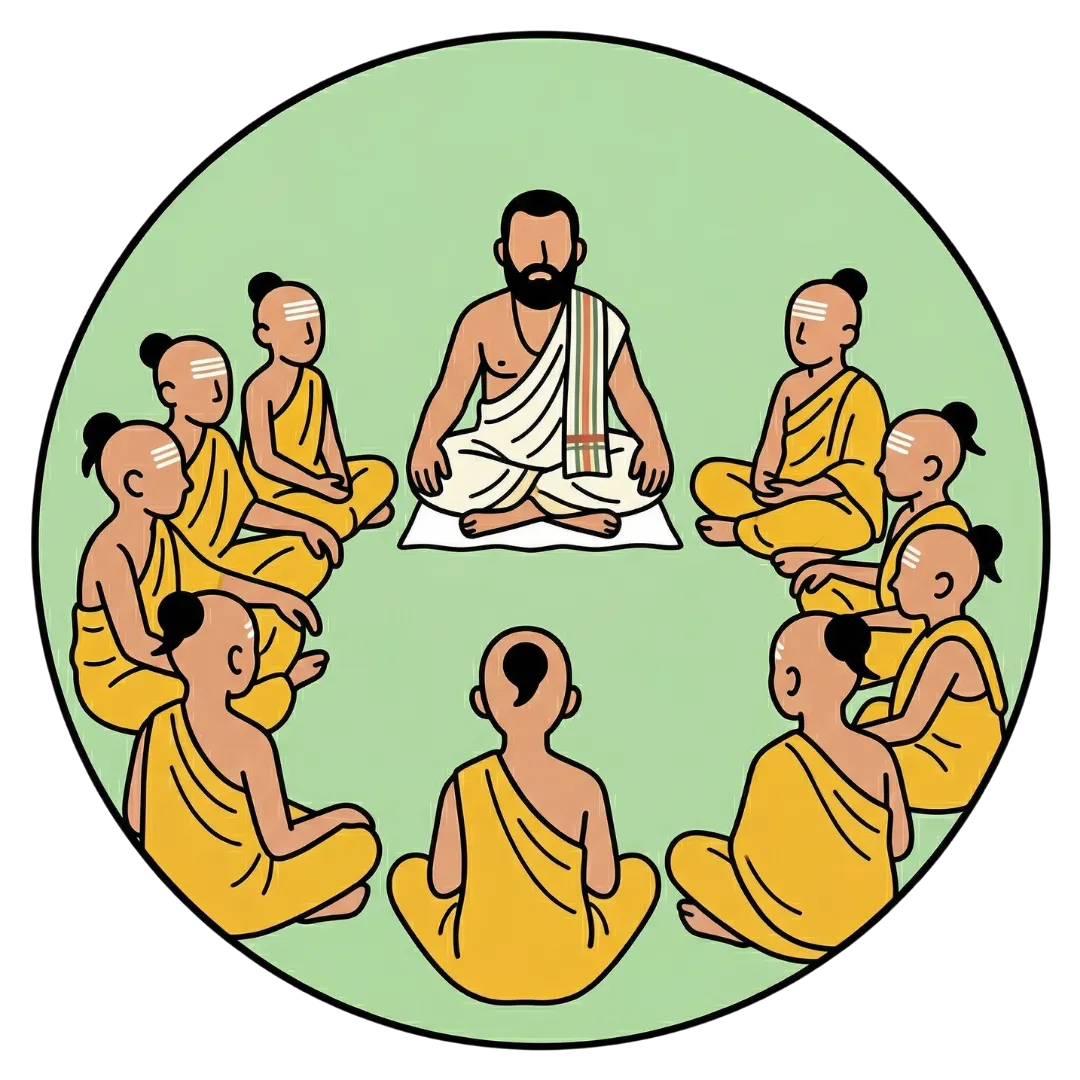
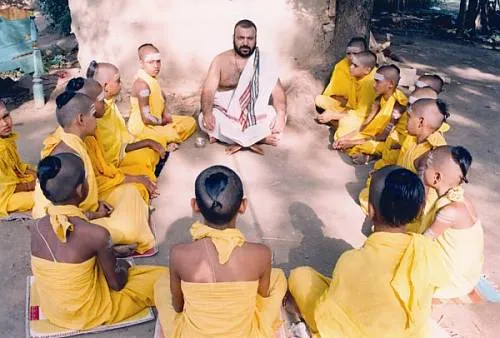
The social institution within which Vedic chanting has been historically maintained is the gurukula (teacher's household school), in which students resided with the teacher from childhood and received comprehensive training in Vedic recitation, grammar, and ritual procedure. The curriculum of a traditional Vedic education was structured around the six Vedangas (ancillary disciplines): Shiksha (phonetics), Chandas (meter), Vyakarana (grammar), Nirukta (etymology), Kalpa (ritual procedure), and Jyotisha (astronomy). Proficiency in all these disciplines was considered prerequisite to authoritative Vedic chanting.
Religious Significance
Vedic chanting is foundational to Hindu religious practice. The Vedic texts are regarded as the eternal word of Brahman (the ultimate reality), preserved in the memory of the rishis and transmitted through the recitation tradition. The chanting itself, in the correct manner with proper tonal inflection, is held to constitute a form of yajna (sacred offering), with the sound-vibrations of the Sanskrit syllables understood as inherently efficacious. This understanding, based on the Mimamsa philosophical school's theory of shabda (word), holds that the Vedic sound possesses inherent power independent of the meaning conveyed.
Vedic recitation serves as the liturgical backbone of Hindu ritual practice. Yajnas (Vedic fire offerings), samskara (life-cycle rituals including naming, sacred thread, and marriage ceremonies), and daily temple rituals employ Vedic chanting as essential components. The recitation of the Vedic Sandhyavandanam (morning, midday, and evening prayers) is an obligatory daily practice for initiated Brahmin males in the traditional system.
Understanding the Art
Style
The musical character of Vedic chanting is determined by the specific Veda and the shaka to which the practitioner belongs. The Samaveda tradition is the most elaborately musical, with the samans (melodies) representing a systematic transformation of the Rigvedic hymns into sung compositions with ascending and descending melodic contours. The Samaveda has been described as the oldest continuous melodic tradition in human history. The Rigveda and Yajurveda recitation styles are tonal rather than melodic in the modern sense, using the three primary tone levels (udatta, anudatta, svarita) within a narrow pitch range. The Atharvaveda has a somewhat distinct tonal system from the other three.
Central Motifs and Their Significance
The content of the Vedic texts encompasses hymns to natural forces and deities (Rigveda), musical arrangements of Rigvedic hymns for use in the soma ritual (Samaveda), prose and verse formulas for sacrificial rituals (Yajurveda), and incantations, healing spells, and philosophical speculations (Atharvaveda). The Rigveda contains 1,028 hymns in ten books (mandalas) addressed to deities including Agni (fire), Indra (storm and warrior deity), Varuna (cosmic law), Soma (the ritual drink), and many others. The Purusha Sukta (Rigveda 10.90), the Nasadiya Sukta (Rigveda 10.129, the hymn of creation), and the Gayatri Mantra (Rigveda 3.62.10) are among the most cited and most widely known texts.
Process
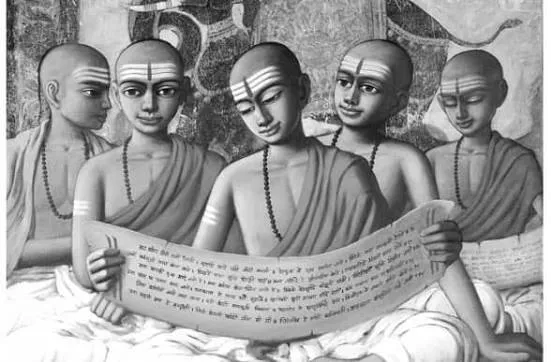
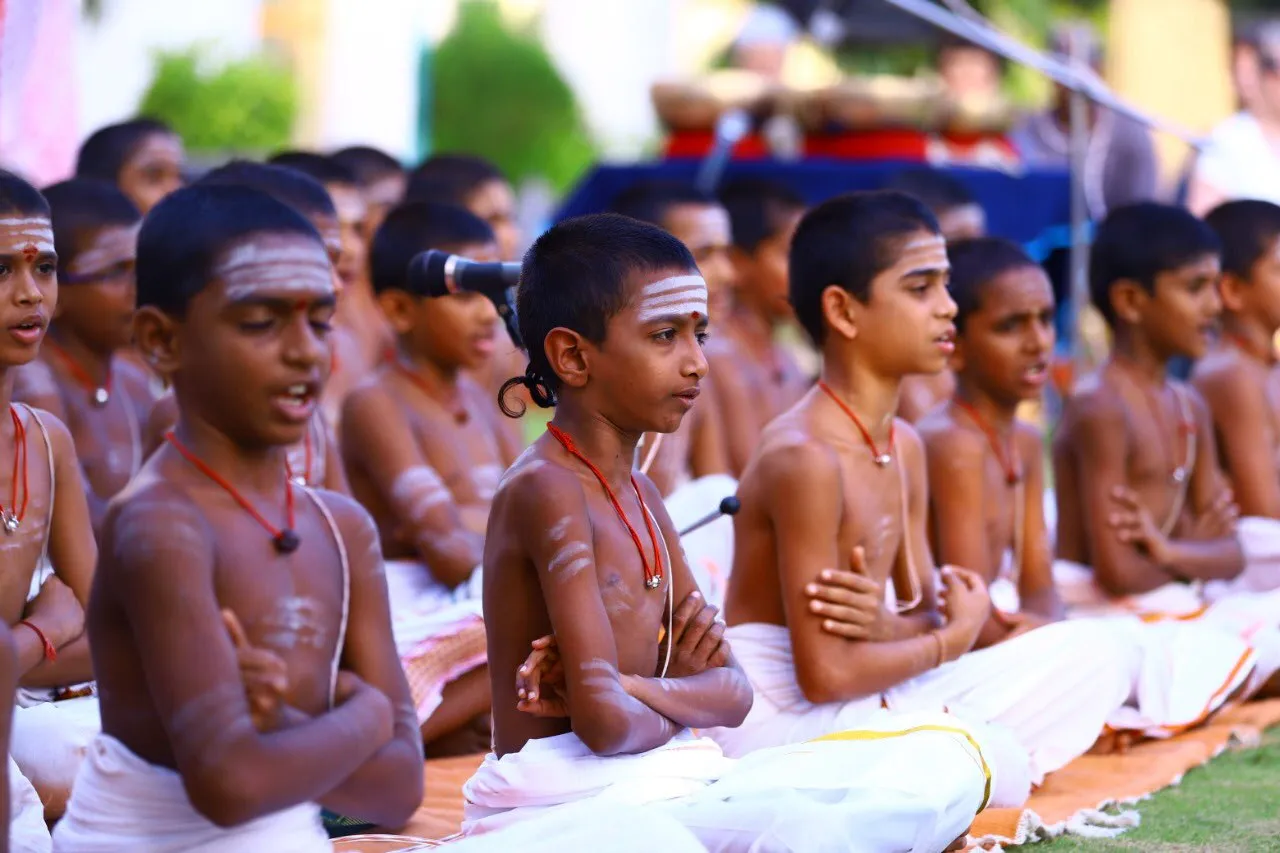
Traditional transmission of Vedic chanting requires the student to memorize the entire text of the relevant Veda in multiple recitation styles. The process typically begins in childhood, between the ages of five and twelve, and requires years of intensive daily practice. The memory capacity required for complete mastery of a single shaka in multiple pathas is substantial: the Rigveda alone contains approximately 153,826 words, and memorization of the complete text in even the samhita and pada forms represents an extraordinary mnemonic achievement. Institutions in Maharashtra (Pune in particular), Tamil Nadu, and Andhra Pradesh that maintain the gurukula tradition for Vedic study have been partially supported by government cultural programs.
Mediums Used
Vedic chanting is an exclusively vocal tradition that does not employ musical instruments. The human voice, trained to produce precise tonal inflections within specific phonological parameters, is the sole medium. The tradition emphasizes accurate production of the Sanskrit phonological inventory, which includes several sounds not present in modern Indian languages. Correct pronunciation requires specific training of the vocal apparatus. In the Samaveda tradition, the saman melodies are sung and certain hand gestures (hastamudras) are used to indicate tonal levels during recitation.
New Outlook
UNESCO's documentation identified the declining number of practitioners of several Vedic recitation schools as a significant concern. Of the over 1,000 shakhas that are historically attested, only 13 survive in active practice. The Indira Gandhi National Centre for the Arts and the Ministry of Culture prepared a five-year action plan following the 2003 UNESCO proclamation to provide financial support to gurukulas and individual practitioners. The Vedic Heritage Portal represents the most comprehensive public digital archive of Vedic recitation traditions.
Contemporary institutional support for Vedic education includes government-funded Vedic pathshalas (schools), stipends for Vedic scholars, and university programs in Vedic studies. Several organizations including the Maharshi Sandipani Rashtriya Veda Vidya Pratisthan, established under the Ministry of Culture in Ujjain, provide institutional frameworks for preserving the tradition.
Learn Vedic Chanting

Bibliography
Sources
Staal, Frits. Agni: The Vedic Ritual of the Fire Altar. Asian Humanities Press, 1983.
Witzel, Michael. The Vedas. Harvard Oriental Series, 2001.
Howard, Wayne. Veda Recitation in Varanasi. Motilal Banarsidass, 1986.
Jamison, Stephanie W., and Joel P. Brereton. The Rigveda: The Earliest Religious Poetry of India. Oxford University Press, 2014.
Proclamation of Masterpieces of the Oral and Intangible Heritage of Humanity. UNESCO, 2003.
Image Sources
Mantra Sikṣa Mitram: Vedic Chant Companion. Krishnamacharya Yoga Mandiram, https://www.kym.org/product/mantra-sik%E1%B9%A3a-mitram-vedic-chant-companion/. Accessed 10 July 2026.
"Significance of Vedic Chanting." Akhand Gyan, https://www.magzter.com/stories/Religious-Spiritual/Akhand-Gyan-English/Significance-Of-Vedic-Chanting?srsltid=AfmBOoq0GytgTLnhj1ttFvuxzgY57kI9-lmenEs9H9nysE7YVTcUhozu. Accessed 10 July 2026.
"Tradition of Vedic Chanting." UNESCO Intangible Cultural Heritage, https://ich.unesco.org/en/RL/tradition-of-vedic-chanting-00062. Accessed 10 July 2026.
"Vedic Chanting." Arya Samaj Kerala, https://aryasamajkerala.org.in/vedic-chanting/. Accessed 10 July 2026.
"Tradition of Vedic Chanting." UNESCO Intangible Cultural Heritage, https://ich.unesco.org/en/RL/tradition-of-vedic-chanting-00062. Accessed 10 July 2026.