
Tanjore Painting: South India's Glittering Classical Art
Let's explore the traditional paintings from Tanjore!
Introduction and Origin
Tanjore painting is one of India's most distinctive classical art forms, originating in the city of Thanjavur in Tamil Nadu. Known for its lavish gold foil work, glittering jewel embellishments, and richly adorned deity figures, this tradition has decorated temples, palaces, and homes across South India for over four centuries. Today, Tanjore painting stands as a living symbol of devotional artistry, connecting the spiritual world of Hindu mythology with extraordinary craft skill - and its appeal continues to grow among collectors, art lovers, and learners across India and beyond.
What Is Tanjore Painting?
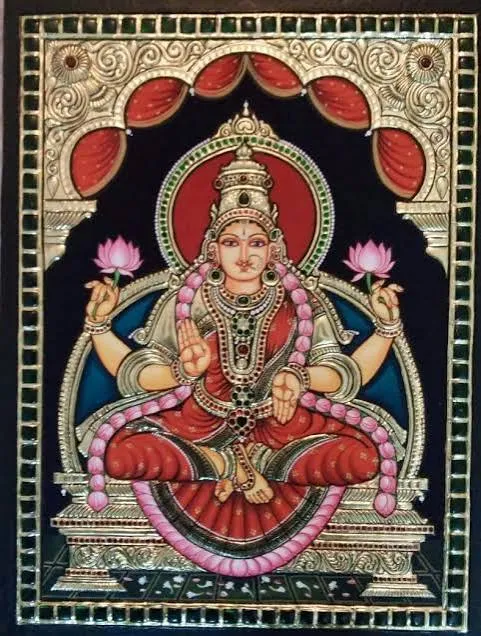
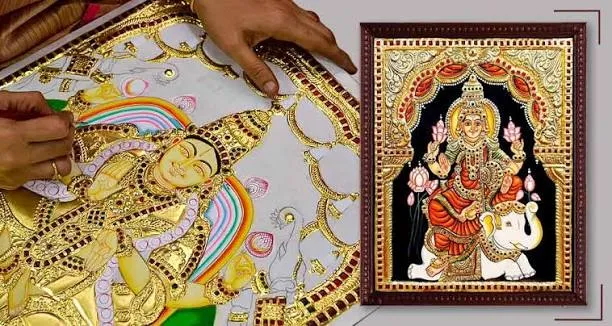
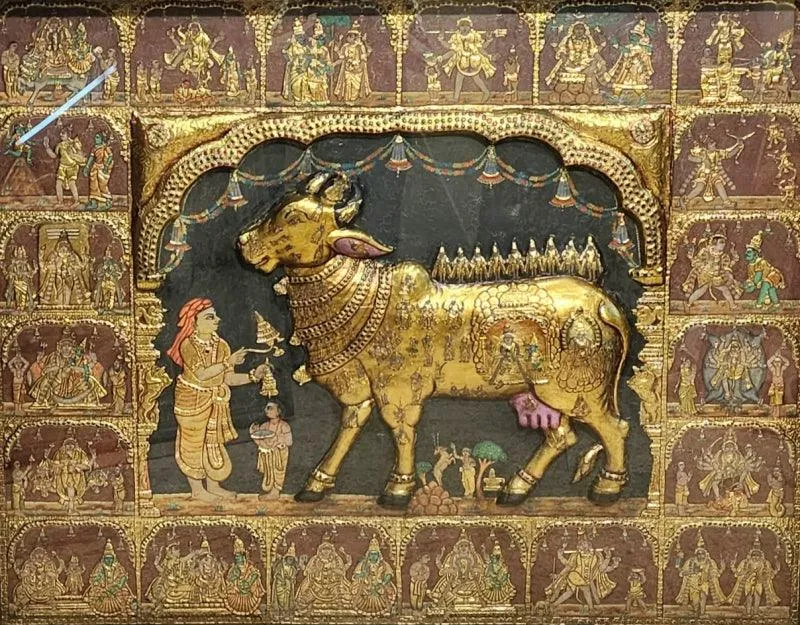
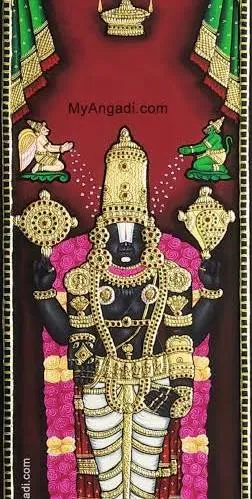
Tanjore painting is a classical South Indian art form that originates from Thanjavur (also called Tanjore) in Tamil Nadu. These paintings are also known as Palagai Padam, a Tamil phrase that translates to 'picture on a wooden plank.' The art form is immediately recognisable by its central deity figure - typically depicted in full face with large, round protruding eyes and a well-structured body - set against a richly decorated background of gold leaf and semi-precious stones.
Traditionally, the figures are supported by curtains, pillars, or architectural arches, and the compositions are embellished with cut-coloured glass pieces, glass beads, pearls, and semi-precious stones. The colours are dense and bright, applied in heavy pigments over a surface prepared from raw lime powder and tamarind seed paste on teak or jackfruit wood boards. Tanjore painting has historically served as devotional art - decorating inner walls and ceilings of temples, homes, and palaces - and was once considered a symbol of affluence and social status.
History and Origin
The origins of Tanjore painting trace back to the Nayaka dynasty of Madurai, who began patronising the art form around the 16th century. At this stage, the art drew inspiration from classical dances and literature. As Nayaka rule extended across the region, themes shifted toward Hindu epics, temples, and religious iconography.
The art form reached its full classical height during Maratha rule between the 17th and 19th centuries. The Thanjavur style we recognise today was developed under the patronage of King Serfoji II, and the Marathas also introduced reverse glass painting to Tanjore artisans. The painting tradition thrived across communities including the Marathas, the Raju community of Tanjore and Trichi (also called Jinigara and Chitragara), the Naidus of Madurai, and the Chettiar community. These were largely Telugu-speaking communities that settled in Tamil Nadu after the fall of the Vijayanagara Empire in the 17th century. After Maratha rule, the Chettiar community continued patronage; as Shaivites, they produced an abundance of paintings depicting Lord Shiva. The final look of Tanjore paintings as we see them today was established in the 17th century. Since then, the art form has remained aesthetically consistent, though rare portraits of cultural personalities and political figures have emerged in more recent decades as a new wave of subjects.
Key Features and Famous Artists
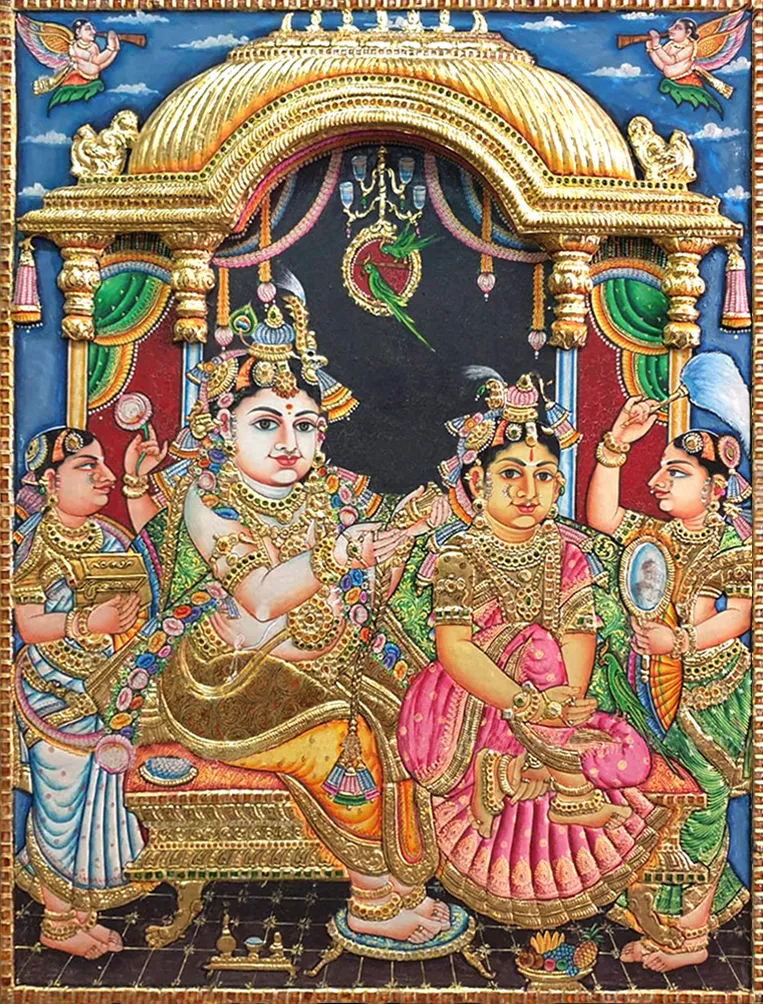
Key Features and Visual Style What sets Tanjore painting apart from other Indian folk art traditions is its unmistakable combination of lustrous gold surfaces, jewel-encrusted figures, and deeply devotional subject matter. The compositions are formal and frontal, with a single deity or divine figure placed at the centre. Every element of the visual style has a specific craft logic behind it.
The central motifs are Hindu deities, particularly Bal Krishna, Lord Rama, Goddess Lakshmi, and Lord Shiva - these were the most painted subjects both on portable panels and on temple walls and stone pillars.
The base is traditionally made of teak wood or boards from the jackfruit tree, cut to size and prepared with a paste of tamarind seeds mixed with raw lime powder to create white gesso, which is then polished smooth with sandpaper.
Gold leaf is applied to the raised, embossed sections of the composition, which are built up using gesso modelled over the sketch contours - a technique that gives the paintings their characteristic three-dimensional quality.
The palette uses dense, bright pigments; historically, these came from vegetable and natural mineral dyes, and the final painting is embellished with semi-precious stones, pearls, cut-coloured glass pieces, and glass beads.
Figures are singularly depicted, facing forward, with full face, round protruding eyes, and a well-structured body - often framed by architectural elements such as curtains, pillars, or arches.
The finished painting is framed to protect the surface from dust and damage, keeping the gold leaf and stone work undisturbed over time.
Famous Artists of Tanjore Painting
While Tanjore painting has historically been practised by hereditary artisan communities rather than individual celebrated masters, several artists have become well known for keeping this traditional Indian art alive in modern times.
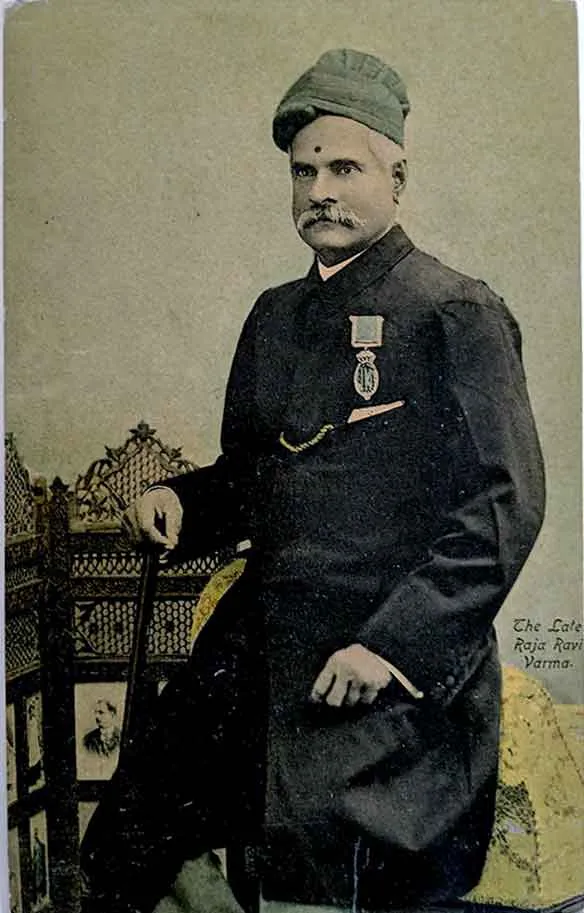
Raja Ravi Varma (1848-1906), though primarily a Kerala-born oil painter, significantly influenced the iconography used in Tanjore painting through his widely printed calendar art depicting Hindu deities. His depictions of Lakshmi, Saraswati, and Bal Krishna became reference images for generations of Tanjore artists across Tamil Nadu.
S. Elayaraja, based in Thanjavur, Tamil Nadu, is a contemporary Tanjore artist recognised for reviving classical compositions using traditional teak board preparation and natural colour techniques. He has worked to document the step-by-step process to ensure younger artisans understand the full craft method.
T. Vijayalakshmi, also from Thanjavur, is among the female artists who have carried the tradition forward, specialising in large-format deity compositions with intricate gold foil work. Her pieces are held in private collections across India and abroad.
K. Shanmugam, from the Kumbakonam district of Tamil Nadu, represents the artisan community lineage of Tanjore painting. He follows the complete traditional process from board preparation through gesso modelling, gold leaf application, painting, and stone setting - preserving the multi-step craft precisely as it was practised under Maratha patronage.
How to Learn Tanjore Painting
If you want to learn Tanjore painting online, Rooftop offers a practical way to start. The platform connects students directly with traditional artists who teach the actual techniques - from board preparation and gesso application to gold foil work and the final stone embellishment. You can explore available Tanjore art courses on Rooftop and learn at your own pace from masters who have practised this art their whole lives. Rooftop also features courses in related South Indian traditional Indian art forms if you want to explore more of the region's artistic traditions.
Where to See and Buy Tanjore Painting
The best place to see original Tanjore painting in its historical context is Thanjavur itself - the Thanjavur Palace and the Saraswathi Mahal Library hold significant collections. The Government Museum in Chennai also has notable examples. Across Tamil Nadu, Karnataka, and Andhra Pradesh, many temples still display classical Tanjore works on their inner walls and ceilings. For buying authentic pieces, Thanjavur's artisan workshops and the government-run Poompuhar outlets across Tamil Nadu are reliable sources. You can also browse and buy original Tanjore painting works through Rooftop's shop, which carries handcrafted pieces sourced directly from traditional artists. For a broader look at South Indian art, the Rooftop Art Wiki covers related art forms such as Mysore painting and Kerala mural.
Learn Tanjore
Frequently Asked Questions
What is Tanjore painting and where does it come from?
Tanjore painting is a classical South Indian devotional art form originating from the city of Thanjavur in Tamil Nadu. Also called Palagai Padam, meaning 'picture on a wooden plank', the art is known for its gold leaf surfaces, semi-precious stone embellishments, and central deity compositions. It developed under the patronage of the Nayaka dynasty around the 16th century and reached its classical peak during Maratha rule in the 17th to 19th centuries.
Which communities traditionally practised Tanjore painting?
Tanjore painting was historically practised by several Telugu-speaking communities that settled in Tamil Nadu after the decline of the Vijayanagara Empire. These included the Raju community of Tanjore and Trichi (also known as Jinigara and Chitragara), the Naidus of Madurai, and the Chettiar community. The Marathas and the Nayaka dynasty of Madurai were the primary royal patrons who shaped the art's themes and expansion across South India.
What materials are used to make a Tanjore painting?
A traditional Tanjore painting begins with a base of teak or jackfruit wood board. The surface is prepared using a mixture of raw lime powder and tamarind seed paste to create white gesso. The artist sketches the composition, then models raised sections with additional gesso before applying gold leaf to those areas. The painting uses dense natural pigments - historically from vegetables and mineral dyes - and the completed work is decorated with semi-precious stones, pearls, glass beads, and cut-coloured glass pieces.
Who are some well-known artists associated with Tanjore art?
Contemporary Tanjore artists working in the classical tradition include S. Elayaraja and T. Vijayalakshmi from Thanjavur, and K. Shanmugam from the Kumbakonam district of Tamil Nadu. Raja Ravi Varma, the 19th-century Kerala-born painter, also had a significant influence on the iconography used in Tanjore painting, particularly in depictions of Lakshmi, Saraswati, and Bal Krishna that Tanjore artisans referenced widely.
Can I learn Tanjore painting online in India?
Yes, you can learn Tanjore painting online through Rooftop, which offers courses taught by master artists trained in the traditional method. The courses cover the full process from board and surface preparation through sketch, gold leaf work, painting, and stone embellishment. Visit Rooftop's courses page to see current offerings and start learning from an authentic practitioner of this South Indian art tradition.
Where can I buy authentic Tanjore paintings in India?
Authentic Tanjore paintings can be bought from artisan workshops in Thanjavur, Tamil Nadu, and from government-run Poompuhar outlets across the state. Online, Rooftop's shop offers original works sourced directly from traditional artists. When buying, look for paintings on wood boards with genuine gold leaf and stone work rather than printed replicas on canvas, which are widely available but lack the craft value of the authentic tradition.
Tanjore painting carries over four centuries of devotional craft in every gold-embellished panel. Whether you are drawn to its spiritual significance, its extraordinary technique, or its deep roots in South Indian court culture, this art form offers a genuinely absorbing world to explore. Discover Tanjore painting courses and artworks on Rooftop and take your first step into one of India's most glittering classical traditions.
Bibliography
Sources
Iyer, V. K. (2013) 7 Steps to the Art of Tanjore Painting. United States: Partridge Publishing.
Sastry, C. (2013) The Tanjore Painting. United States: Partridge Publishing.
Yadav, S.S. (2010) The Royal Art of Tanjore Painting. India: English Edition.
Image Sources
"Art of Tanjore Painting." Cottage9, https://www.cottage9.com/art-technique/art-of-tanjore-painting/. Accessed 21 July 2026.
"Lord Balaji Vertical Size Tanjore Painting." MyAngadi, https://www.myangadi.com/ma7tp327-lord-balaji-vertical-szie-tanjore-painting. Accessed 21 July 2026.
"Lakshmi Tanjore Painting (15 × 18)." Indian Folk Art, https://indianfolkart.org/product/lakshmi-tanjore-painting-15-x-18/. Accessed 21 July 2026.
"Raja Ravi Varma's Portrait Photo, 1906 Postcard." Past India, https://www.past-india.com/photos-items/raja-ravi-varmas-portrait-photo-1906-postcard/. Accessed 21 July 2026.
"Tanjore Paintings." ArtZolo, https://www.artzolo.com/collections/tanjore-paintings. Accessed 21 July 2026.
"Traditional Antique Style Tanjore Paintings." Cottage9, https://www.cottage9.com/traditional-antique-style-tanjore-paintings/. Accessed 21 July 2026.