
Sufi Qawwali - The Music Tradition of Uttar Pradesh
Dive deep into Sufi Qawwali, Indian melodic and textual traditions presented into a devotional musical form....
Introduction
Sufi Qawwali is a form of devotional music central to the practice of Sufism in South Asia, specifically associated with the Chishti order of Islam. Qawwali is performed at the shrines (dargahs) of Sufi saints, at devotional gatherings called mehfil-e-sama or simply sama, and in concert settings. The tradition is credited to Amir Khusrau (1253 to 1325), a poet, musician, and disciple of the Chishti master Nizamuddin Auliya in Delhi, who synthesized Persian, Arabic, Turkic, and Indian melodic and textual traditions into a new devotional musical form.
The word sama (listening, from the Arabic root sama'a) refers to the practice of listening to music as a path to mystical experience within Sufism. Within the Chishti order, sama was institutionalized as a central devotional practice, distinguishing it from many other Sufi orders that did not endorse or actively discouraged musical performance in religious contexts. Qawwali is the principal musical form of the Chishti sama tradition and has been practiced continuously at Chishti dargahs in North India for approximately 700 years.
Etymology
The word Qawwali derives from the Arabic qawwal, meaning one who utters a saying or one who sings statements. The root is qaul, meaning utterance, saying, or dictum. In the context of Sufism, the qaul that gives qawwali its name is specifically the saying attributed to the Prophet Muhammad regarding Ali ibn Abi Talib: Man Kunto Maula, Fa Ali-un Maula (Whoever regards me as master, Ali is his master). Amir Khusrau is credited with composing a musical setting of this saying, which is referred to as the Qaul and is traditionally performed first in qawwali mehfils to this day.
Origin
The institutional origin of qawwali is associated with the Chishti Silsilah (order) established in India by Khwaja Moinuddin Chishti (approximately 1142 to 1236), who arrived in Ajmer in the last decade of the 12th century. Khwaja Moinuddin Chishti made sama a central practice of the order, and subsequent Chishti masters including Qutbuddin Bakhtiyar Kaki (died 1235) in Delhi and Fariduddin Ganjshakar (approximately 1173 to 1266) in Punjab continued this practice. Nizamuddin Auliya (1238 to 1325), the most influential Chishti master in Delhi, established the khanqah (Sufi hospice) in what is now the Nizamuddin neighborhood of Delhi as the principal center of Chishti activity, and it was here that Amir Khusrau developed and formalized qawwali.
Amir Khusrau was born in Patiyali in the present-day Etah district of Uttar Pradesh and was a multilingual poet, musician, and scholar active at the Delhi Sultanate court under multiple rulers. He became a disciple of Nizamuddin Auliya in 1310. Khusrau composed in Persian, Arabic, Braj Bhasha, Hindavi (an early form of what became Hindi-Urdu), and Punjabi. He is credited with synthesizing these linguistic and musical traditions into what became qawwali, with the specific contribution of introducing Indian melodic material (raga-based melodies) into the Persian poetic and Islamic devotional framework of sama. He is also credited with developing the tarana form of instrumental composition and with contributions to the development of the khayal form of Hindustani classical music, though the latter attribution is debated.
Location
Qawwali is primarily associated with the dargahs and khanqahs of the Chishti order across North India and Pakistan. The principal center is the dargah of Nizamuddin Auliya in Delhi, where qawwali has been performed continuously for approximately 700 years and where Thursday evening mehfils remain an active tradition. Other significant centers include the dargah of Khwaja Moinuddin Chishti in Ajmer (Rajasthan), the dargah of Fariduddin Ganjshakar in Pakpattan (Pakistan), the dargah of Nizamuddin Auliya's disciple Amir Khusrau (whose tomb is within the Nizamuddin complex), and numerous smaller dargahs across Uttar Pradesh, Rajasthan, Gujarat, Maharashtra, and Punjab.
Community
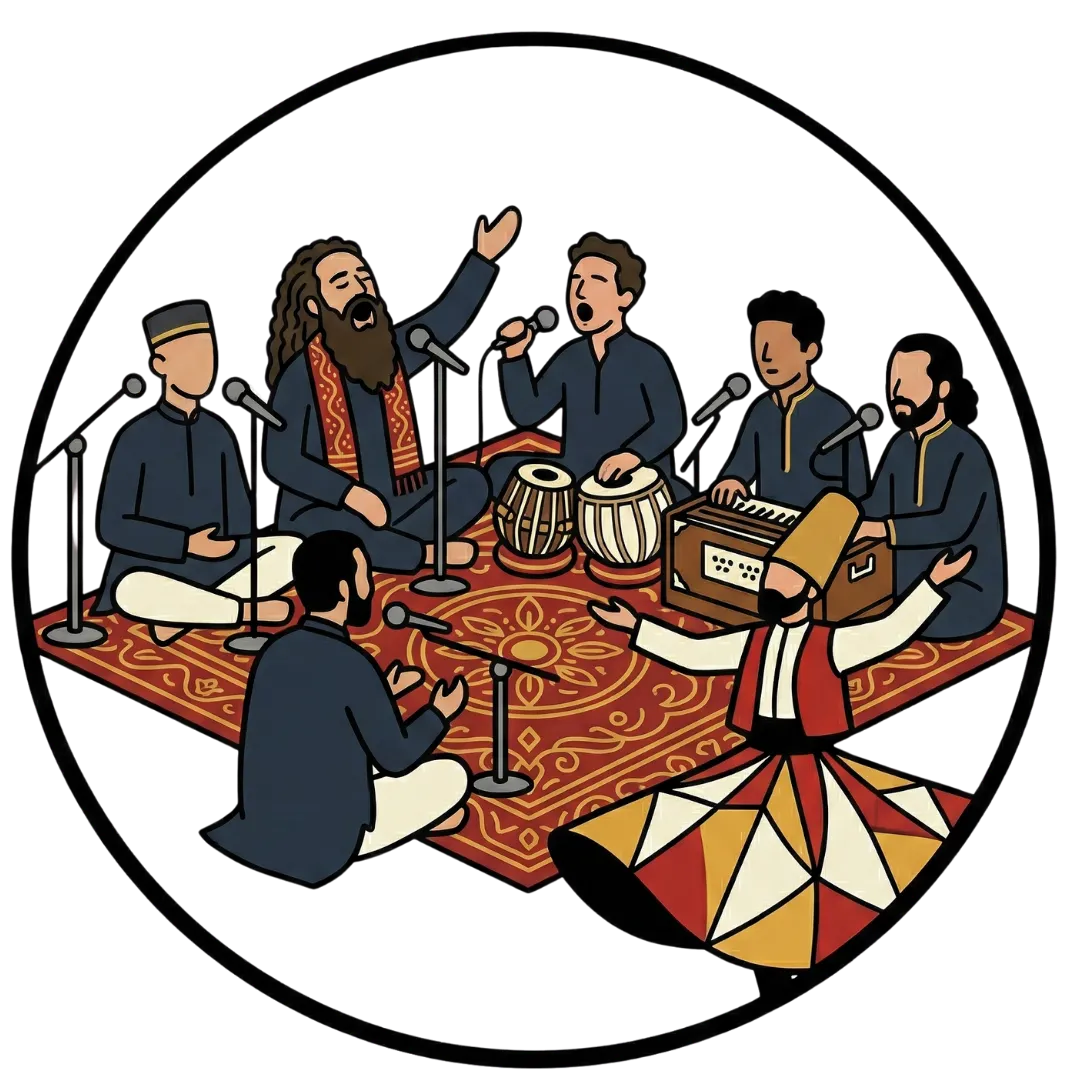
Qawwali is performed by qawwals, hereditary musicians belonging to the qawwal bacha (qawwali singer) community. The tradition of hereditary qawwali performance is associated with several family lineages, many of which trace their musical ancestry to the time of Amir Khusrau. The Sabri family (associated with the Sabri Brothers, the most internationally recognized qawwali group of the 20th century), the Warsi family, and the Faridi family are among the most prominent hereditary qawwali lineages. The ensemble typically consists of a lead singer, one or more secondary singers who provide harmony and counterpoint, a harmonium player, a tabla player, and additional musicians who clap rhythmically and contribute to the vocal chorus.
Relevance
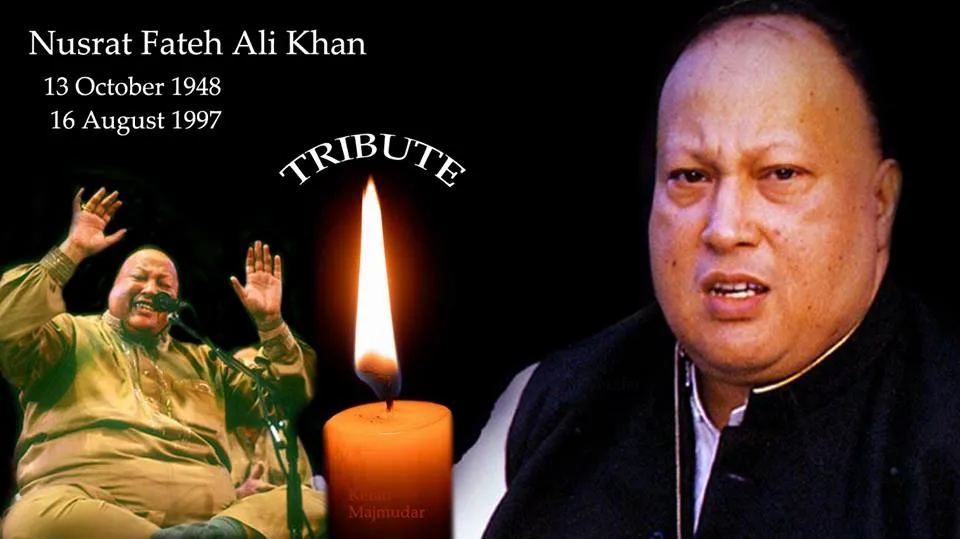
Qawwali holds high cultural relevance as both a living religious practice and as a major form of South Asian music. Within the Chishti order, it remains an active component of religious life at dargahs across India and Pakistan. Its international visibility was significantly advanced by Nusrat Fateh Ali Khan (1948 to 1997), a Pakistani qawwal from the Qureshi family lineage, whose recordings and international performances from the 1970s onward brought qawwali to global audiences. Nusrat Fateh Ali Khan collaborated with western producers including Peter Gabriel and performed at WOMAD and other international festivals, producing recordings that were distributed globally. His death in 1997 was recognized internationally as a significant loss.
History
Background
The practice of sama in Islamic contexts predates the Chishti development of qawwali, with debates about the permissibility of music in Islam having been conducted since the early centuries of Islamic scholarship. The position of the Chishti order was that sama, conducted in appropriate conditions with the correct devotional intention, was not only permissible but spiritually beneficial as a means of inducing the hal (spiritual state) and wajd (ecstasy) that constitute peak mystical experience. Theological defenses of sama within Sufism include the texts of Imam Al-Ghazali (1058 to 1111), particularly the Ihya Ulum al-Din, which devotes a substantial section to the legitimacy and conditions of sama.
Amir Khusrau's systematization of qawwali is documented in his own writings and in later accounts of the Chishti tradition. The specific compositions attributed to him, including the Qaul (Man Kunto Maula), the Rang (Aaj rang hai), and the qawwali Nami danam (Do not ask), are maintained in the active repertoire and are performed at the beginning of mehfils in observance of the tradition he established. The dargah tradition requires that every mehfil begin with the Qaul attributed to Khusrau.
Culture and Societies
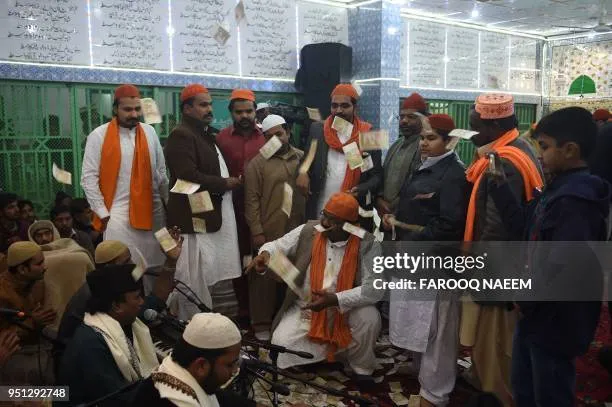
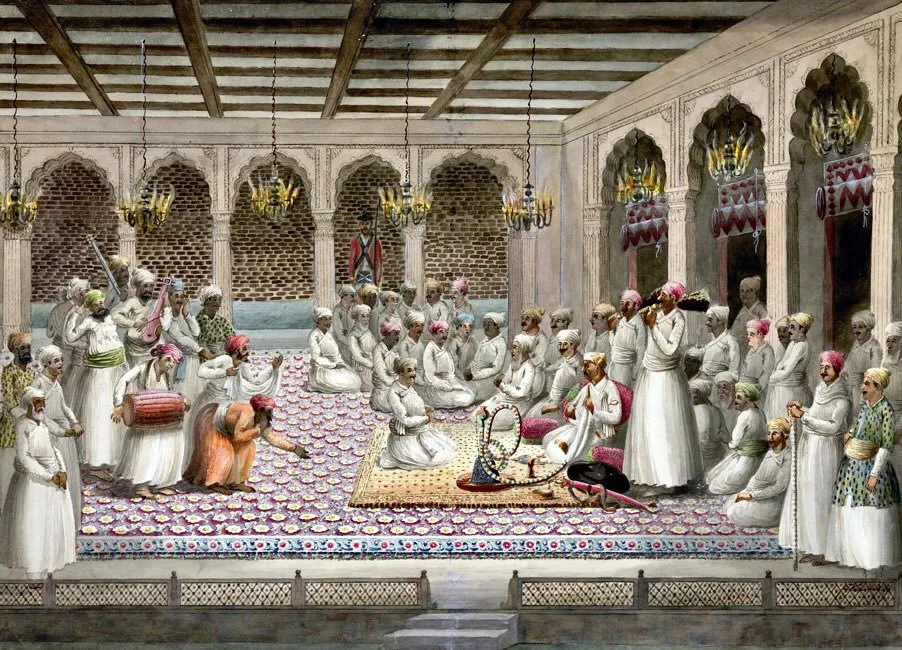
Qawwali mehfils at dargahs operate according to specific protocols. The audience, consisting of devotees who may include both Muslims and Hindus (who have historically visited Chishti dargahs as a syncretic practice), sits on the ground around the qawwals. The performance is understood as an offering to the spirit of the saint in whose honor the mehfil is held. Listeners who enter a devotional state may rise and sway or gesture, and monetary offerings are made to the qawwals by those moved by the performance. This practice of giving money (nazrana) to the qawwals at the dargah is the traditional form of their remuneration.
The concert performance of qawwali, distinct from the dargah context, became established in the 20th century. Public concerts and recorded albums introduced qawwali to audiences who did not visit dargahs, and several qawwals achieved popular music status. The Sabri Brothers and Nusrat Fateh Ali Khan are the most prominent examples of qawwals who achieved wide audiences through recorded and concert performances.
Religious Significance
Qawwali is constitutively religious within the Chishti devotional framework. Its function is to induce the spiritual states of hal and wajd in the listener, facilitating a direct experience of proximity to the divine through music. The texts performed in qawwali are drawn from Sufi poetry in Persian (Rumi, Hafiz, Sa'di, Amir Khusrau), Urdu (Ghalib, Mir, Iqbal), Punjabi (Bulleh Shah, Sultan Bahu), and Braj Bhasha (Khusrau's Hindavi compositions). These texts use the metaphors of intoxication, love, and the lover-beloved relationship as vehicles for articulating the devotee's longing for divine union. The practice of dzikr (remembrance of God through repetitive invocation), which is central to Sufi discipline, is integrated into qawwali performance through the repetition of divine names and Quranic phrases within compositions. The full performance follows a prescribed sequence: Hamd (praise of God), Naat (praise of the Prophet), Manaqabat (praise of Sufi saints), and Ghazal or Kafis (devotional poetry using romantic metaphors for the divine).
Understanding the Art
Style
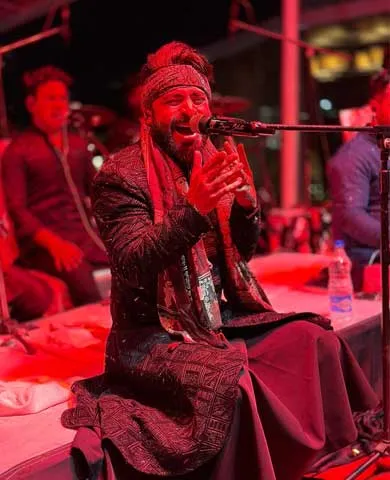
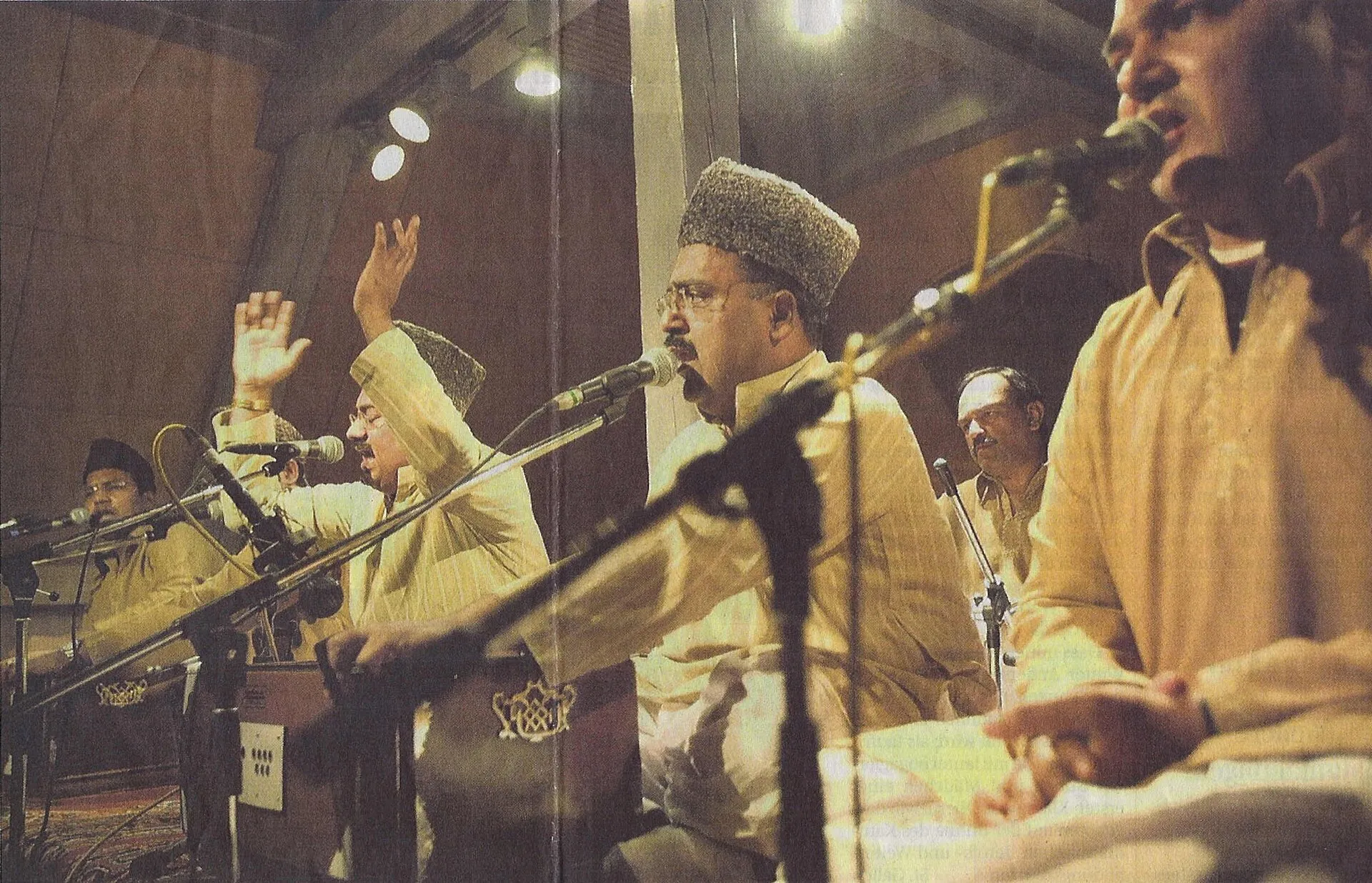
Qawwali performance is characterized by several distinctive musical features. The lead vocalist (qawwal) performs both composed verses and improvised repetitions and elaborations of key phrases. The call-and-response between the lead singer and the accompanying chorus is a central structural feature. Rhythmic hand-clapping by the ensemble provides both rhythmic support and visual reinforcement of the communal nature of the performance. The use of the harmonium as the primary melodic instrument, with tabla providing the rhythmic framework, is standard in the contemporary tradition, though earlier forms used instruments including the rabab.
The performance may shift between metered compositions and unmetered (free-rhythm) sections called dohas or couplets, which allow extended melodic improvisation. The gradual intensification of tempo and emotional energy over the course of a performance is a characteristic feature; mehfils that extend over multiple hours frequently begin with slow, measured compositions and accelerate as the evening progresses.
Central Motifs and Their Significance
The dominant metaphor of qawwali poetry is the relationship between the lover (ashiq) and the beloved (mashooq), which functions as a transparent theological metaphor for the soul's relationship to God. The wine and the tavern are standard Sufi metaphors for divine love and the space of mystical experience respectively. The moth and the flame figure the annihilation of the self in divine love. The Sufi concept of fana (self-annihilation in the divine) and baqa (subsistence in the divine after fana) are theological concepts underlying many of the major compositions in the qawwali repertoire.
Process
Qawwali is transmitted through hereditary lineage in the traditional context. The head of a qawwali group (ustad) is typically the son or nephew of the previous ustad, and training begins in childhood. Knowledge of the specific compositions associated with particular dargahs, the protocols of mehfil performance, and the relationship with shrine custodians (sajjada nashins) are all transmitted within the family. In the contemporary concert context, training is sometimes supplemented by study with ustads outside the family and by exposure to recorded performances.
Mediums Used
The standard qawwali ensemble uses harmonium (melodic accompaniment and sustained chord support), tabla (principal percussion), dholak (in some regional variants), and the assembled singers who also clap rhythmically. The harmonium was introduced into the tradition in the late 19th century and has fully replaced earlier melodic instruments. A standard qawwali party consists of approximately 11 members, including the lead singer (or two lead singers), secondary vocalists, the harmonium player, the tabla player, and the clapping chorus.
New Outlook
The death of Nusrat Fateh Ali Khan in 1997 left a significant gap in the international profile of qawwali, and subsequent performers including his nephew Rahat Fateh Ali Khan have continued to maintain international visibility for the tradition. In India, the Sabri Brothers' recordings continue to be widely circulated, and the dargah tradition at Nizamuddin has attracted increasing attention from both domestic and international audiences and from documentary filmmakers. The dargah at Nizamuddin was the subject of the documentary film In the Name of God (1992) and has been featured in numerous subsequent productions. Concerns about the commercialization of qawwali and the decontextualization of the tradition from its religious and dargah context are expressed by practitioners and scholars. The use of qawwali compositions in Bollywood cinema, beginning with the films of the 1940s and continuing to the present, has produced a popular qawwali entertainment genre that is distinct from the dargah tradition. Several scholars including Regula Qureshi have examined this distinction in academic literature.
Learn Sufi Qawwali

Bibliography
Sources
Qureshi, Regula Burckhardt. Sufi Music of India and Pakistan: Sound, Context and Meaning in Qawwali. University of Chicago Press, 1995.
Ernst, Carl W. The Shambhala Guide to Sufism. Shambhala Publications, 1997.
Nizami, Khaliq Ahmad. Some Aspects of Religion and Politics in India During the Thirteenth Century. Muslim University, 1961.
Sharma, Prem Lata. Sangeet Ratnakara of Sarngadeva. Indira Gandhi National Centre for the Arts, 1996.
Touma, Habib Hassan. The Music of the Arabs. Amadeus Press, 1996.
Image Sources
"ITCH Studio." ITCH Studio, https://www.itch-studio.com/?q=11307093021340. Accessed 10 July 2026.
"The Art of Qawwali." Bayt Al Fann, https://www.baytalfann.com/post/the-art-of-qawwali. Accessed 10 July 2026.
"Qawwali (PAK)." Wikimedia Commons, https://commons.wikimedia.org/wiki/File:Qawwali_%28PAK%29.jpg. Accessed 10 July 2026.
"Nusrat Fateh Ali Khan." Swapnil Sansar, https://swapnilsansar.org/2017/08/nusrat/. Accessed 10 July 2026.
"Qawwali Devotional Sufi." Getty Images, https://www.gettyimages.com/photos/qawwali-devotional-sufi. Accessed 10 July 2026.