A Symphony of Tress's Life
$ 199


## Let's explore the art of Indian tribes-Saura Art ##
Deep in the forests and hills of southern Odisha, the Saura art tradition has been alive for centuries. Created by the Saura tribe - one of India's oldest tribal communities - these striking paintings cover the mud walls of homes and serve as a direct line of communication between the living, their gods, and their ancestors. Rooted in ritual and community life, Saura paintings are now recognised as one of India's most remarkable forms of tribal visual expression.
What Is Saura Art?
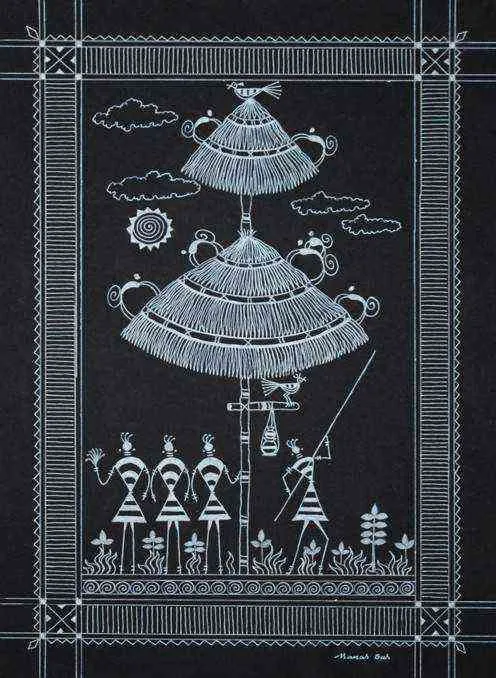
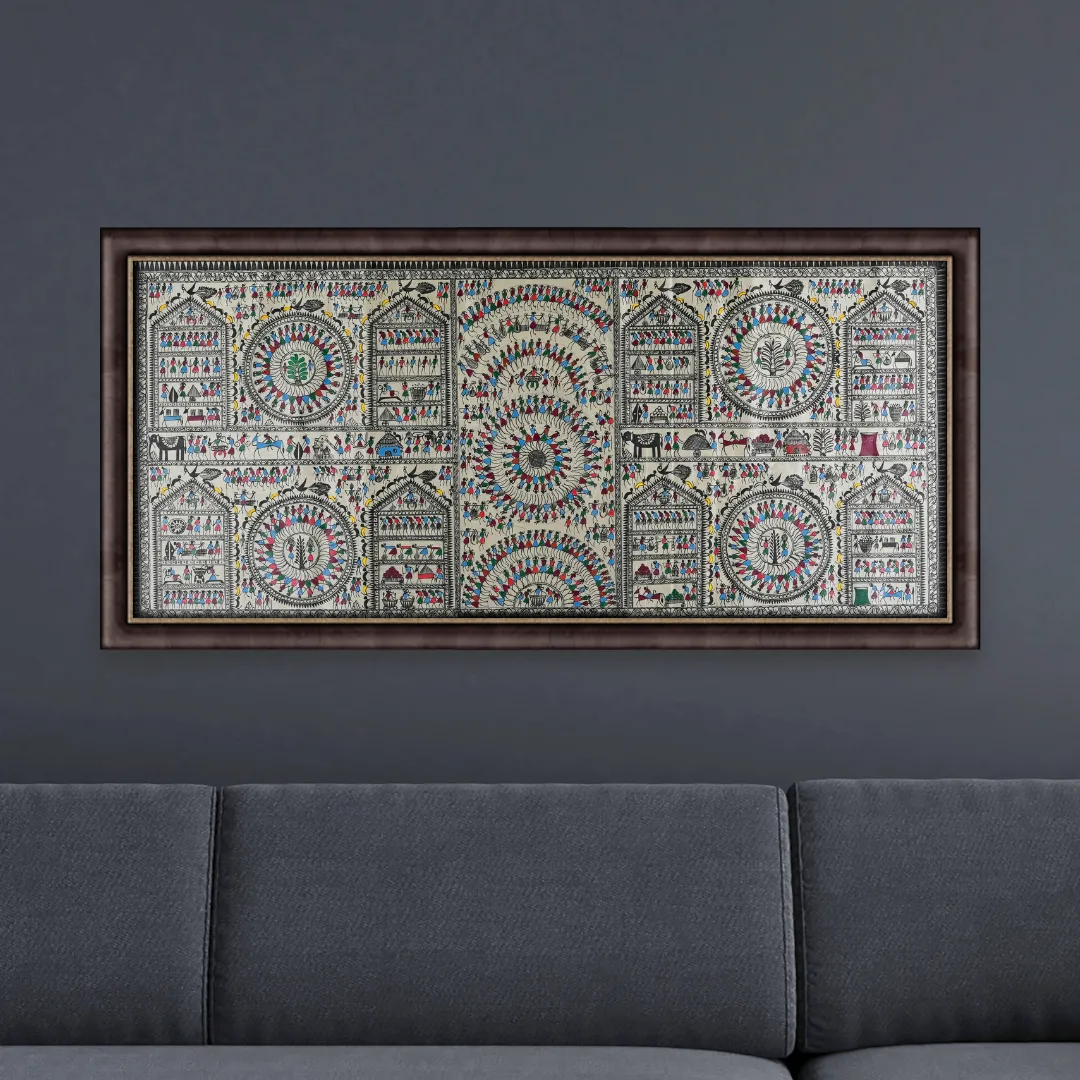
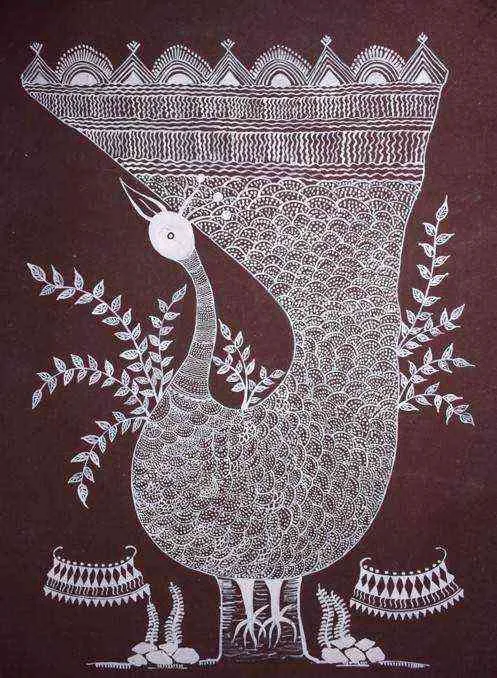
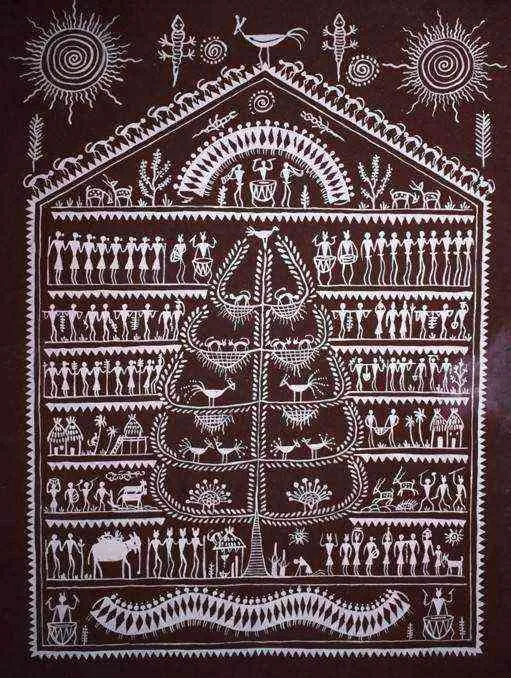
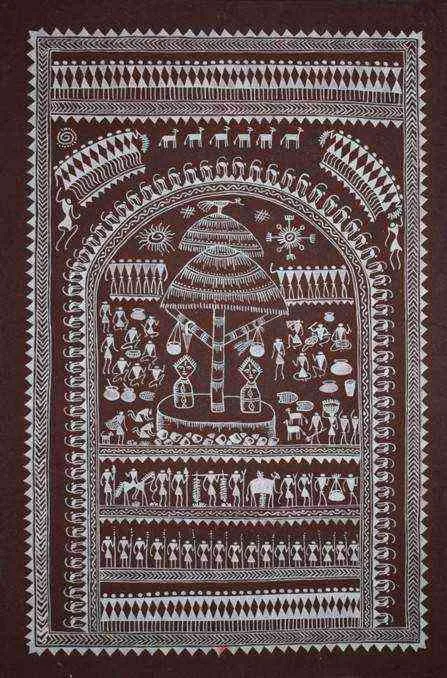
Saura art, also called Ikons or Idital in the Saura language, is a form of tribal mural and wall painting practised by the Saura community of Odisha, eastern India. These paintings are found in the southern Odisha districts of Rayagada, Ganjam, Gajapati, and Koraput. The Saura people use them during important occasions such as childbirth, marriage, harvests, and the construction of new houses - every significant event in community life is marked by a fresh painting on the wall. Visually, Saura paintings are unmistakable. White figures and patterns are painted over a dark background of red and yellow ochre, creating a bold contrast. Human figures, horses, elephants, the sun, the moon, and the Tree of Life appear repeatedly. The geometric anatomy of the figures bears a close resemblance to Warli paintings from Maharashtra, though Saura art carries its own distinct tribal iconography. Traditionally painted on the walls of mud huts, Saura designs are today also found on paper, cloth, and home decor items.
History and Origin
The Saura tribe is considered one of the oldest tribal communities in India, with references to them appearing in Hindu epics. The Ramayana and Mahabharata mention them as Savaras, placing their history firmly within the oldest layers of Indian civilization. The Sauras have long lived along riverbanks and around water bodies in the hills of Odisha, working as farmers, harvesters, and fishermen - and the landscape and daily life they inhabited has always shaped what they paint. Traditionally, Saura paintings were made by the Kudangs, the priestly class within the Saura community. The Kudangs held the symbolic and ritual knowledge required to create these images correctly, since the paintings were originally meant to appease gods and ancestors. A specific set of prayers was recited while making each painting. Over time, the Kudangs have been replaced by local artists who execute the work in a more contemporary iconographic manner, though the ritual purpose of the art has remained largely intact across generations.
Key Features and Visual Style
Saura paintings are instantly recognisable for their stark white-on-dark compositions and their repetitive geometric figures. Every element in the image carries symbolic meaning drawn from tribal lore, local mythology, and the rhythms of agricultural life.
Background colours are red and yellow ochre, applied using a natural brush made from a tender bamboo shoot or a chewed khejur palm twig.
White pigment is obtained by grinding white stone or rice paste, and red comes from red clay or a mud called geru; tamarind seeds and various flowers and leaves contribute additional colours.
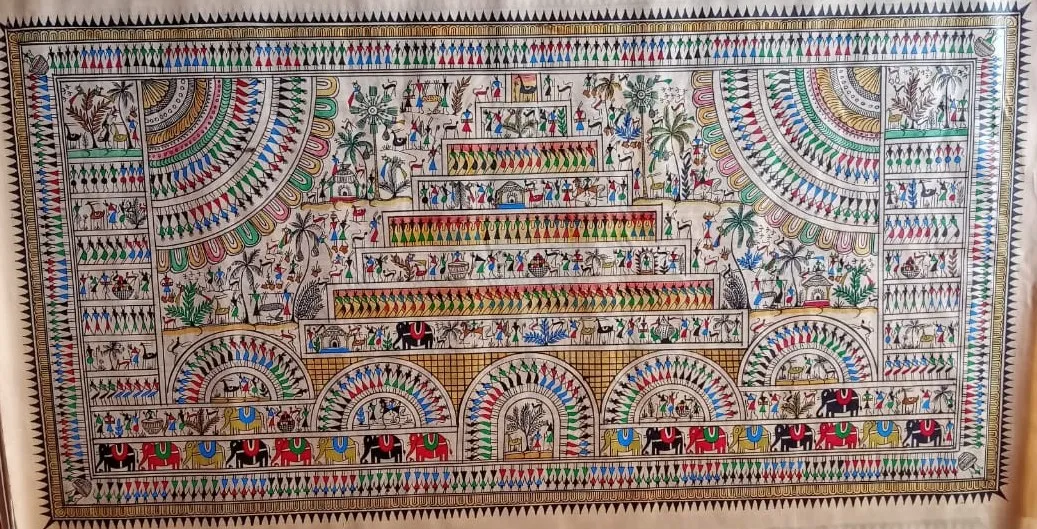
Figures follow a monochromatic scheme dominated by white, though chrome yellow, ultramarine blue, red, and black are also used frequently alongside the primary pigments.
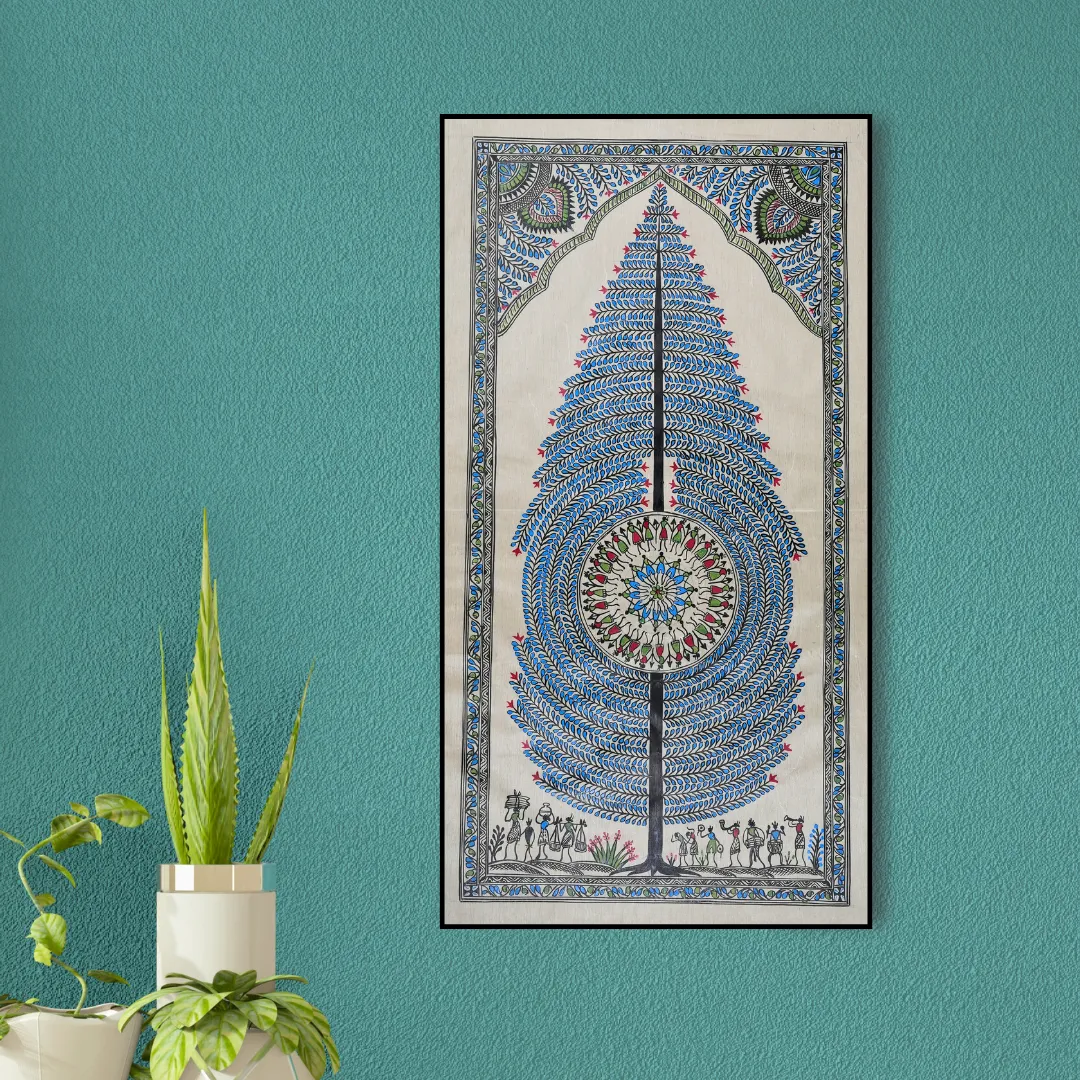
Common motifs include humans, horses, elephants, the sun, the moon, and the Tree of Life, all drawn with geometric anatomy and very little negative space.
Wall preparation involves cleaning the mud surface and applying a coat of geru mixed with water, which is smeared on with a cloth before painting begins.
Subjects have evolved over time from purely religious imagery to social scenes, with modern icons such as buses, cars, and televisions now appearing alongside traditional motifs.
Famous Artists of Saura Art
Several artists from the Saura community have brought this tradition to national and international attention, working to keep it alive while adapting it to new surfaces and formats.
Jadu Ssaura, from Rayagada district in Odisha, is one of the most celebrated names in Saura painting. He is widely credited with moving the art form from mud walls onto paper and canvas, making it accessible to collectors and galleries while preserving its ritual grammar.
Sikkoka Ssaura, also from Rayagada, is known for large-format works that depict ceremonial life and agricultural cycles with exceptional detail. His paintings have been exhibited at craft fairs and cultural festivals across India.
Sukra Ssaura, from Gajapati district in southern Odisha, has been recognised by the government for his contribution to preserving this tribal tradition. He works in both the traditional wall-painting format and on paper, maintaining the classic white-on-ochre visual language of the Saura people. These artists, working within the broader landscape of Indian folk art, represent a generation committed to carrying forward a tradition documented as far back as the era of ancient Indian epics.
If you want to learn Saura art, the most direct route is through a structured course taught by a practising traditional artist. Rooftop offers online courses in tribal and folk art traditions taught by master artists from across India. You can explore the full range of available art courses on Rooftop to find one that brings you into this tradition. Learning Saura art teaches you not just technique but the symbolic language that makes every image meaningful within its community context.
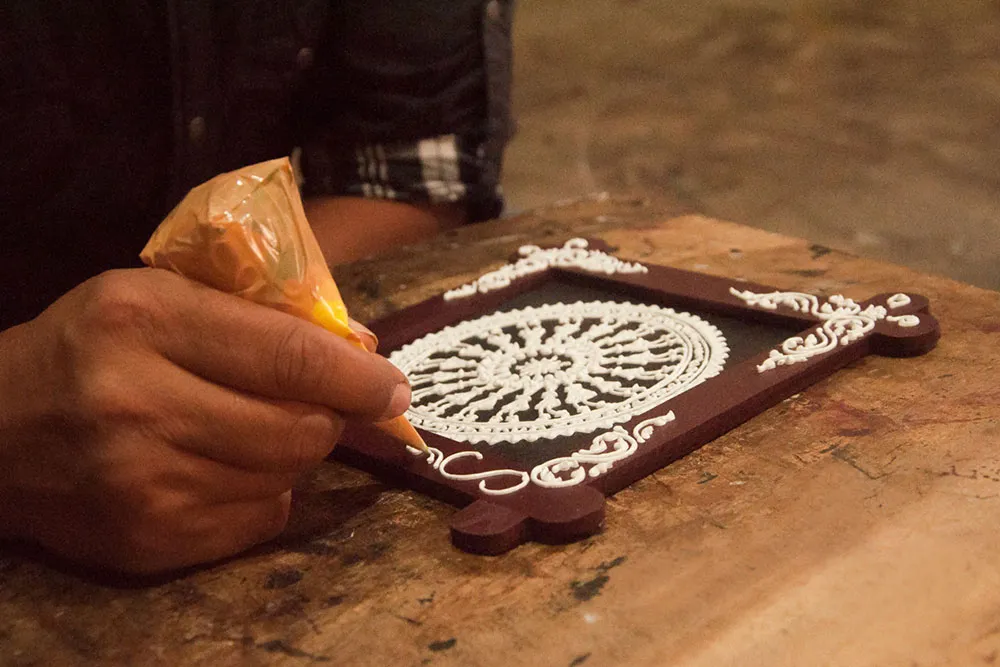
Saura paintings in their original form are found on the walls of homes in the Rayagada, Ganjam, Gajapati, and Koraput districts of southern Odisha. The Shilpagram crafts village in Bhubaneswar and Odisha state crafts fairs regularly feature Saura artists demonstrating their work. National museums, including the Tribal Museum in Bhubaneswar, hold significant collections of this Odisha tribal art. To buy authentic pieces, the Rooftop shop carries original works by Indian folk and tribal artists. Purchasing directly through platforms like Rooftop ensures the work reaches you from a verified source and that artists are fairly compensated. Saura designs are today also available on apparel, home decor items, and handlooms, taking this ancient tradition into everyday Indian life.

What is Saura art and where does it come from?
Saura art is a form of tribal wall painting practised by the Saura community of southern Odisha, concentrated in the districts of Rayagada, Ganjam, Gajapati, and Koraput. The paintings are created on the mud walls of homes during important life events such as marriages, births, harvests, and housebuilding ceremonies. The tradition is named after the Saura tribe, one of the oldest indigenous communities in India.
Which community in India practises Saura painting?
Saura painting is practised by the Saura tribe, an indigenous community living in the mountainous and forested regions of eastern India, primarily in southern Odisha. Historically, the Kudangs, who are the priestly class within the Saura community, were exclusively responsible for creating these paintings because of their ritual and symbolic knowledge. Today, local artists have taken on the practice and continue the tradition in both its ceremonial and commercial forms.
What materials and colours are used in Saura paintings?
Saura paintings use natural pigments sourced from the local environment. The background is painted with red and yellow ochre, applied with brushes made from bamboo shoots or chewed khejur palm twigs. White pigment comes from ground white stone or rice paste, while red is extracted from a clay called geru. Tamarind seeds, flowers, and leaves also contribute to the colour palette, and all colours are mixed with a binding agent before use.
How do Saura paintings differ from Warli paintings?
Both Saura and Warli paintings share a strong geometric composition and feature simplified human figures, which often leads people to compare them. However, Saura paintings are from Odisha while Warli paintings originate in Maharashtra. Saura art uses a dark ochre background with white figures, whereas Warli paintings are typically done in white on a terracotta-toned background. The motifs also differ - Saura iconography draws heavily from tribal religious beliefs involving gods and ancestors, while Warli focuses more on community and nature scenes.
Can I learn Saura art online in India?
Yes, you can learn Saura art and related tribal painting traditions through online courses on Rooftop, where master folk and tribal artists teach directly. Rooftop's platform is designed for Indian learners who want authentic instruction from practitioners of these traditions. Courses are structured so that beginners can follow along and understand both the technique and the cultural meaning behind the work.
Where can I buy authentic Saura art paintings?
Authentic Saura paintings are available through government craft emporia in Odisha, state craft fairs, and online platforms that work directly with tribal artists. The Rooftop shop is a reliable source for original Indian folk and tribal artworks, including pieces from Odisha. When buying Saura art, it is worth checking that the work comes from a verified source so that the artists receive fair payment and the tradition continues to be supported.
Saura art is more than a painting style - it is a living record of one community's relationship with the sacred, the natural world, and the cycles of everyday life. As this tradition moves from mud walls to paper and canvas, it carries with it an unbroken thread of meaning that goes back thousands of years. Explore Indian folk and tribal art courses on Rooftop and connect with the artists and traditions that continue to shape India's visual culture.
Sources
Image Sources
"Hidden Gems of Indian Art: Saura Painting." MagicDecor, https://magicdecor.in/blog/hidden-gems-of-indian-art-saura-painting/. Accessed 16 July 2026.
"Saura Painting #12 (21 × 41 in.)." International Indian Folk Art Gallery, https://indianfolkart.org/product/saura-painting-12-21-x-41/. Accessed 16 July 2026.
"Saura Painting." Mojarto, https://www.mojarto.com/artworks/painting/unknown-artist/saura-painting/MA225808. Accessed 16 July 2026.
"Saura Painting." Mojarto, https://www.mojarto.com/artworks/folk-art/unknown-artist/saura-painting/MA225811. Accessed 16 July 2026.
"Saura Painting." Mojarto, https://www.mojarto.com/artworks/folk-art/unknown-artist/saura-painting/MA225816. Accessed 16 July 2026.
"Saura Painting." Mojarto, https://www.mojarto.com/artworks/folk-art/unknown-artist/saura-painting/MA225874. Accessed 16 July 2026.