
Rouf - The Folk Dance Tradition of Jammu & Kashmir
Familiarize yourself with the Rouf, traditional women's folk dance of Kashmir Valley, performed by the Muslim communities during Eid and Ramzan...
Introduction
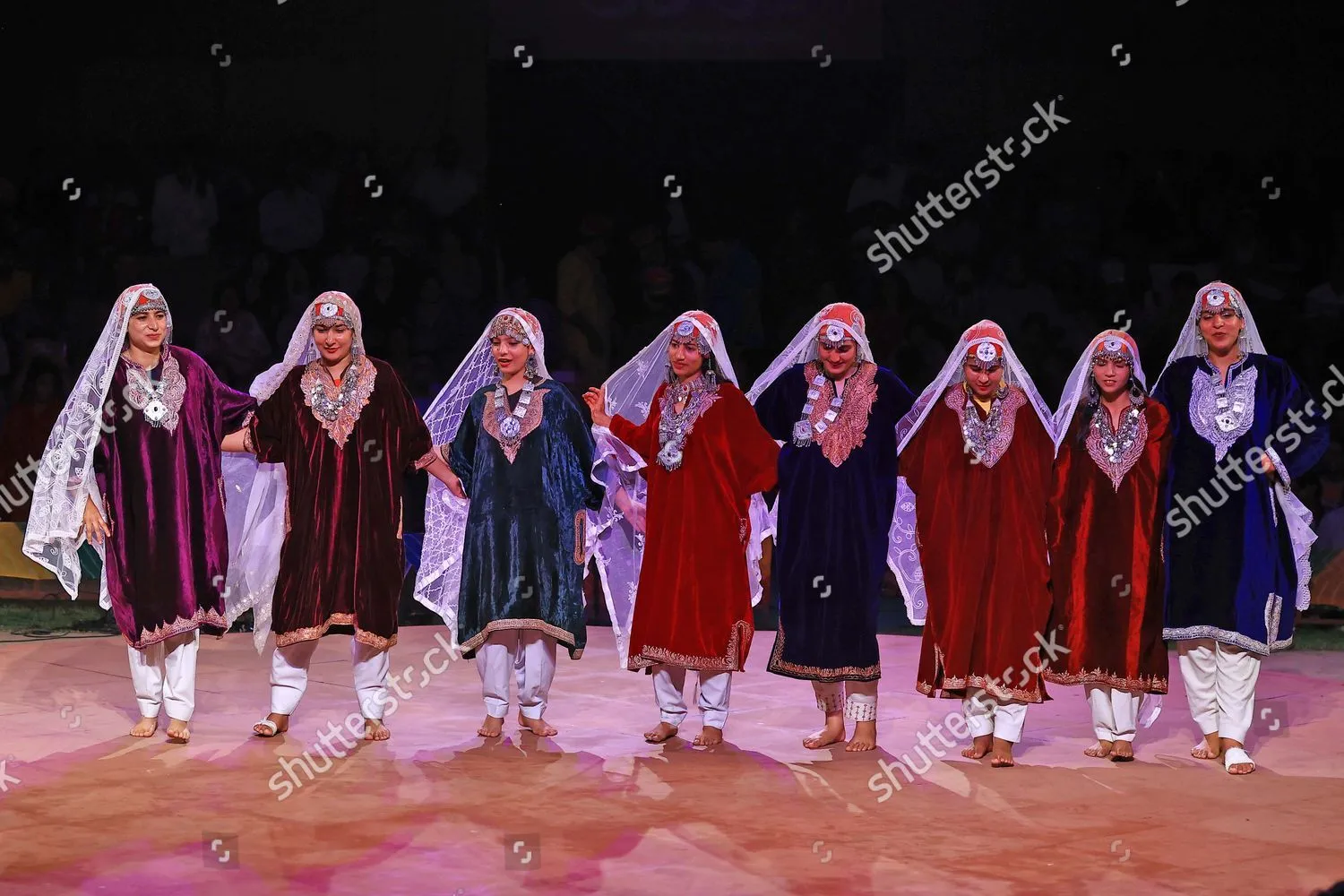
Rouf is a traditional women's folk dance of the Kashmir Valley, performed during the festivals of Eid and Ramzan and during the spring season. It is performed by groups of women who stand in facing rows and execute movements characterized by intricate and precise footwork, which is considered the distinguishing feature of the form. Rouf is integral to the festival culture of Kashmiri Muslim communities and serves as one of the primary expressive dance forms through which women participate in public celebration within the Valley's cultural tradition. The pronunciation of the name varies by community: it is pronounced 'ruf' in village settings and 'row' in urban Kashmiri usage.
Etymology
The name 'Rouf' does not have an established Sanskrit or Arabic Etymology documented in available academic literature. It is a Kashmiri term specific to this dance tradition. The variant pronunciation between rural and urban settings ('ruf' versus 'row') suggests the name may have undergone phonological change across different social contexts within the Valley over time, though no documented history of this variation has been identified.
Origin
Rouf is indigenous to the Kashmir Valley and is part of the women's festival culture of the Valley's Muslim communities. Its specific origin is not documented in historical texts; it is an oral tradition transmitted between generations of women in Kashmiri households. The dance is described in available sources as integral to Kashmiri culture and as a dance of the spring season, suggesting connections to the broader regional tradition of spring celebration dances documented across the northern Indian hills. The association with Eid and Ramzan places its primary performance context within the Islamic festival calendar of the Valley.
Location
Rouf is practiced across the Kashmir Valley, in both rural and urban settings, by women of the Kashmiri Muslim community. It is performed in domestic courtyards, village open spaces, and at festival gatherings. As with other Kashmiri women's traditions, its practice is concentrated within the community celebration contexts of Eid and Ramzan.
Community
Rouf is a women's dance of the Kashmiri Muslim community. It is performed in a social context specific to women's celebration within the festival culture of the Valley. The form does not appear to have a caste, tribal, or occupational specificity beyond its general association with Kashmiri Muslim women's festival participation. It is transmitted between women within families and communities.
Relevance
Rouf represents a significant dimension of Kashmiri women's cultural life and serves as a marker of Kashmiri Muslim women's participation in festival celebration through dance. As a medium-visibility tradition, it is practiced actively but has not received the same level of institutional documentation and promotion as the better-known Kashmiri folk forms. Its classification as vulnerable reflects the pressures on traditional women's festival dance practices in contexts of social change.
History
Background
Rouf's history has not been documented in detail in the available academic literature. As a women's festival dance transmitted orally within the Kashmiri Muslim community, it belongs to a category of folk tradition that is frequently underdocumented in formal historical records. The form is associated with the spring season, and the Kashmiri spring festival tradition has connections to the broader Nowruz (Persian New Year) cultural sphere, which influenced the Valley's cultural life during the periods of Persian cultural dominance. Whether Rouf has specific connections to this wider cultural sphere has not been established in available scholarship.
Culture and Societies
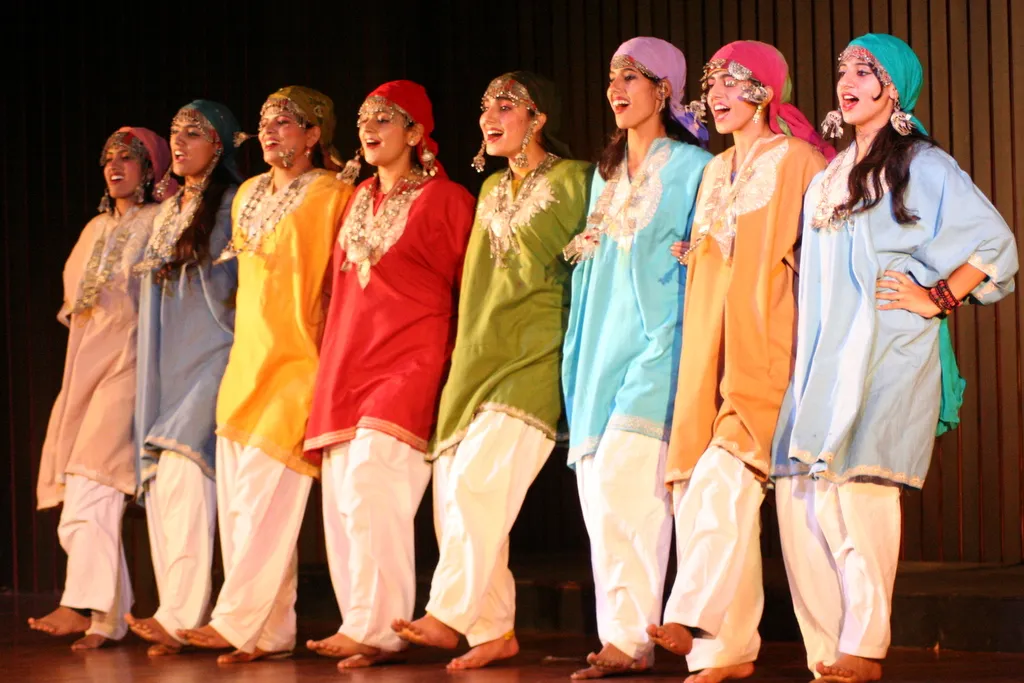
Rouf is performed at Eid celebrations and during the fasting month of Ramzan, particularly in the evenings following the breaking of the fast (iftar). Women gather in groups, arrange themselves in facing rows, and perform the dance in the open spaces of their communities. The footwork patterns of Rouf are recognized as complex and require practice; women who are skilled at the specific footwork techniques are valued within their communities. Songs sung during Rouf are in Kashmiri and address themes of spring, beauty, and celebration appropriate to the festival contexts.
Religious Significance
Rouf is performed during Islamic festival occasions (Eid and Ramzan), giving it a cultural association with the Islamic festival calendar. However, the dance itself is not a religious act in the sense of being a form of worship or devotion directed to a deity or saint. It is a social celebration performed in the context of religious festivals rather than a devotional practice. The form reflects the cultural tradition of women's communal celebration that is part of the Kashmiri Muslim social fabric during major festivals.
Understanding the Art
Style
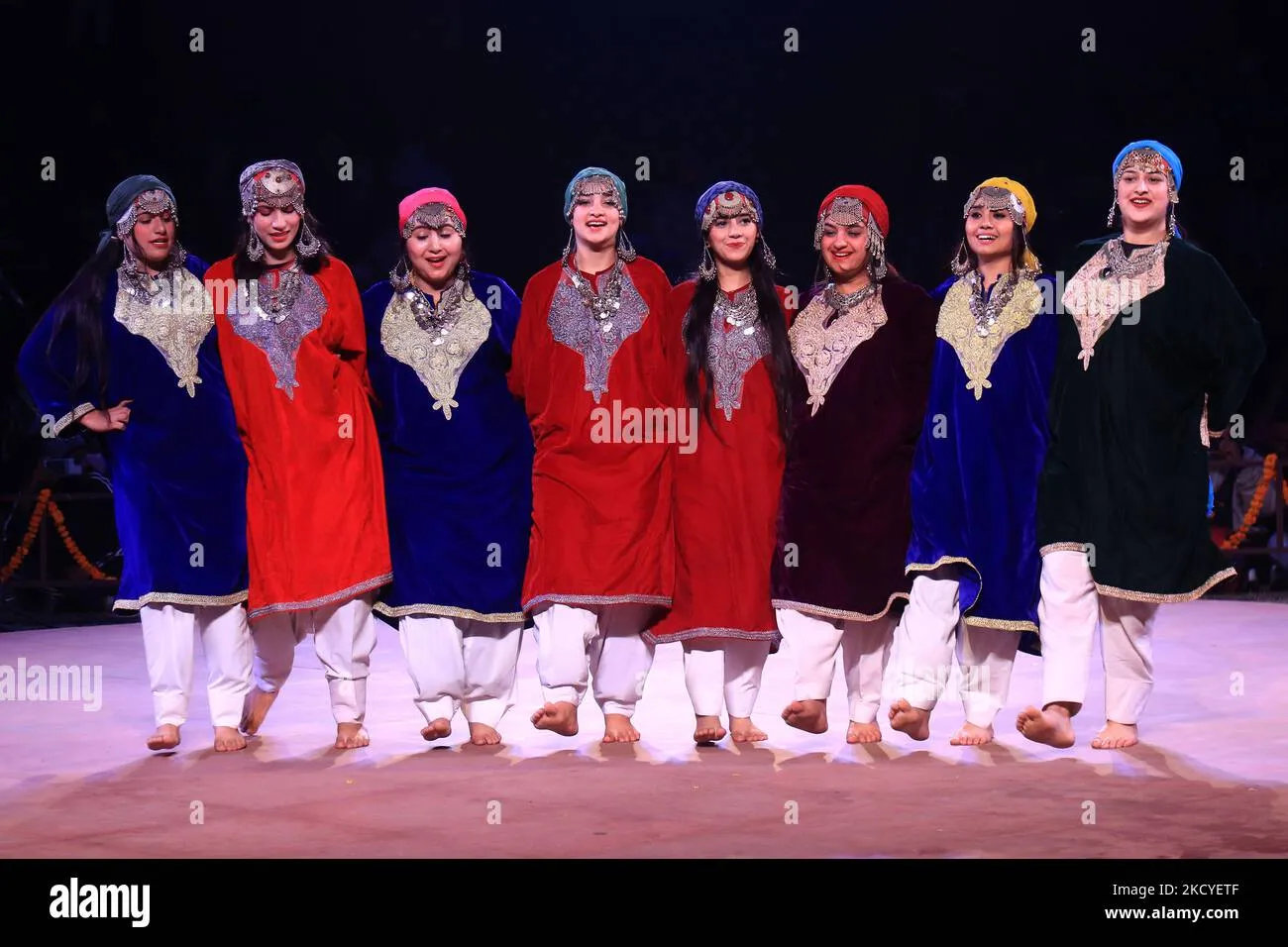
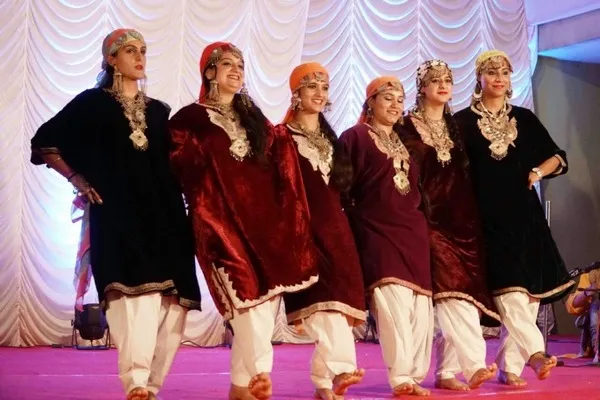
The defining stylistic feature of Rouf is its footwork. Participants stand in facing rows and perform intricate foot patterns that are considered the primary aesthetic and technical challenge of the form. The upper body is relatively still while the feet execute complex stepping patterns with precision and speed. The facing-row formation creates a visual and rhythmic dialogue between the two groups of performers. Songs are sung by the performers as they dance.
Central Motifs and Their Significance
The central motif of Rouf is the facing-row formation and the intricate footwork, which encode a competitive and dialogic aesthetic: the two rows of women face each other and respond to each other's movements. The spring season context of the dance associates it with themes of renewal and abundance. The songs, sung in Kashmiri, preserve the lyrical tradition of women's festival song specific to the Valley.
Process
Rouf is performed in the open spaces of Kashmiri villages and neighborhoods during festival celebrations. Women arrange themselves in two facing rows. A lead singer or the group together begins the song. The footwork begins with the song's rhythm and continues through each verse and refrain. The dance requires no musical instruments beyond the voices of the performers, though in some contexts percussion accompaniment is added.
Mediums Used
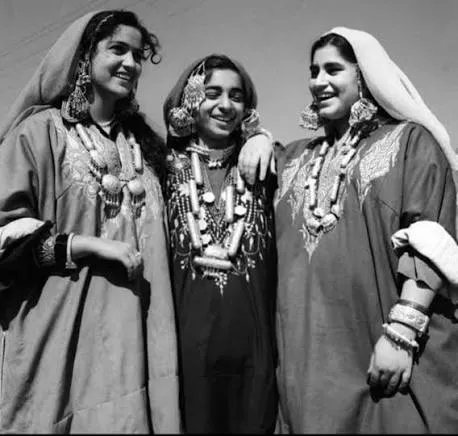
Rouf requires no instruments in its most traditional form; the voices of the performers provide the musical content. In some contexts, percussion accompaniment by dhol or other instruments may be added. Women wear traditional Kashmiri festival dress: the pheran (a long loose garment distinctive to Kashmiri dress) in festival colors, with traditional Kashmiri jewelry including the djuj (traditional earrings) and other ornaments.
New Outlook
Rouf is a medium-visibility, vulnerable tradition. It is practiced actively within the Kashmiri Muslim community at festival occasions but has received limited formal documentation and no sustained institutional preservation program. The form's women-only character and its festival-specific context have historically limited its visibility in state and national cultural programming, which tends to favor more easily presentable mixed-gender public performances. Documentation of Rouf has been undertaken by researchers of Kashmiri folk culture, but comprehensive academic treatment of the form is not available in the English-language literature.
Learn Rouf
Bibliography
Sources
Bazaz, Prem Nath. The History of the Struggle for Freedom in Kashmir. Gulshan Publishers, 1954.
Kalla, Krishan Lal. The Literary Heritage of Kashmir. Mittal Publications, 1985.
Khan, M. I. History of Srinagar. Aamir Publications, 1978.
Sangeet Natak Akademi. Documentation of Kashmiri Folk Forms. Sangeet Natak Akademi, various years.
Image Sources
"Rouf Dance." Wikimedia Commons, https://commons.wikimedia.org/wiki/File:Rouf_Dance.jpg. Accessed 21 July 2026.
"Kashmiri Rouf." Kashmir Old Pics, Facebook, https://www.facebook.com/kashmiroldpics/photos/kashmiri-rouf-apart-from-its-scenery-and-beautiful-valleys-kashmir-is-also-known/269652421447256/. Accessed 21 July 2026.
"Traditional Rouf Dance." Alamy, https://www.alamy.com/stock-photo/traditional-rouf-dance.html. Accessed 21 July 2026.
"Explore Splendid Folk Dances of Kashmir." Kashmir Online, https://www.kashmironline.com/culture/dances/. Accessed 21 July 2026.
"Kashmir Artists Perform Traditional 'Rouf Dance' During …" Shutterstock Editorial, https://www.shutterstock.com/editorial/image-editorial/kashmir-artists-perform-traditional-%27rouf-dance%27-during-14839886n. Accessed 21 July 2026.