
Poikkal Kuthirai Aattam - The Folk Dance Tradition of Tamil Nadu
Explore Poikkal Kuthirai Aattam also called Dummy Horse Dance, a traditional folk dance of Tamil Nadu
Introduction
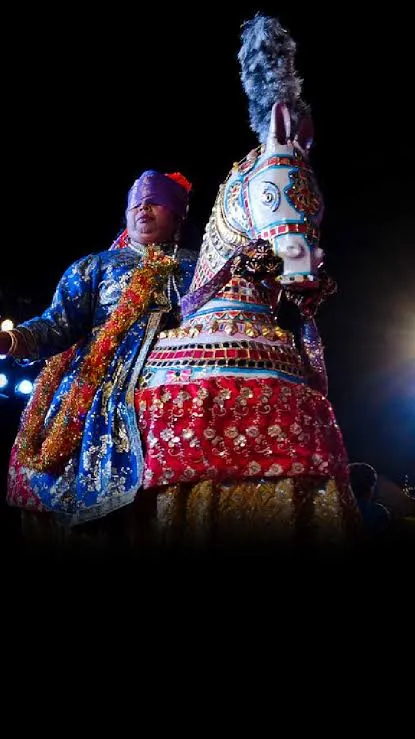
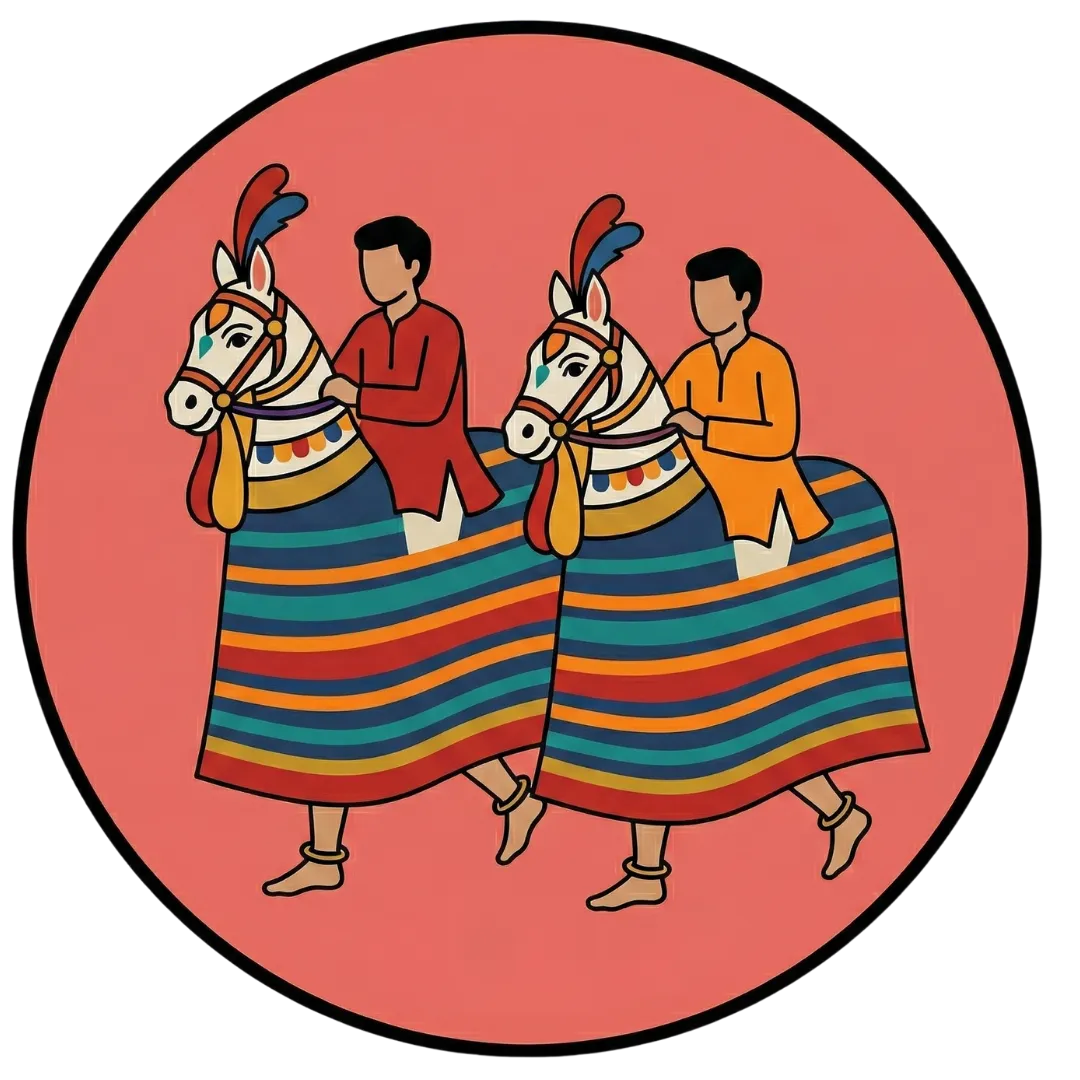
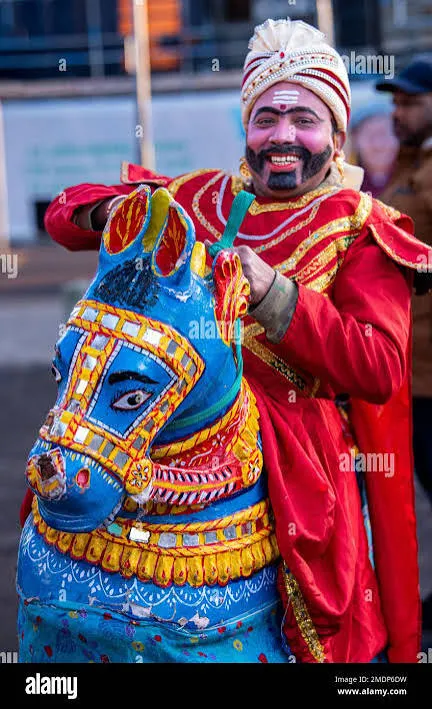
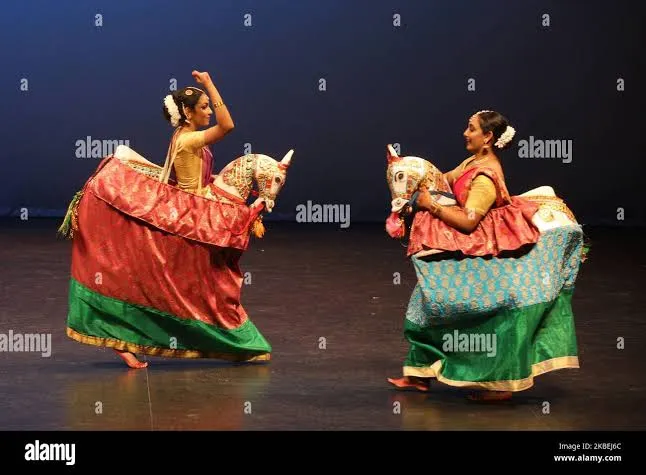
Poikkal Kuthirai Aattam (Tamil: பொய்க்கால் குதிரை ஆட்டம்), also called Puravi Aattam or Dummy Horse Dance, is a traditional folk dance of Tamil Nadu, India, in which performers carry a lightweight dummy horse frame around their waist and dance with wooden leg extensions strapped to their feet. The term Poikkal Kuthirai translates from Tamil as false leg horse: poi meaning false, kaal meaning leg, and kuthirai meaning horse. The dancer fits inside the hollow horse structure at the hip and waist, so that the dummy horse appears to surround them from the outside, creating the illusion of a rider on horseback. The wooden extensions at the feet produce a sound resembling horse hooves when struck against the ground. The dance is performed both as entertainment at festivals and as a devotional act in ceremonies honoring the village deity Ayyanar.
References to a comparable dance form appear in the Silappadikaram (approximately 2nd century CE), one of the classical Tamil epics, where it is described among the dances performed by Madhavi. A reference also appears in the Tolkappiyam, an early Tamil grammatical text, in a narrative involving a character who wears a maple-leaf horse structure as a form of social protest, suggesting the form's cultural currency in early Tamil society. Contemporary scholarship noted in the Wikipedia article on Poikkal Kuthirai Aattam disputes the historically common attribution of the dance's origin to the Maratha period, citing recent research that challenges the assumption that this art is ancient and of Maratha origin.
Etymology
The name Poikkal Kuthirai Aattam derives from three Tamil words: poi (false), kaal (leg), and kuthirai (horse), combined with aattam (dance). The name references the artificial legs used by the dancer, which are wooden extensions strapped to the feet to simulate horse hooves and to raise the dancer's apparent height. The dance is also called Puravi Naatiyam (horse dance), Poi Kuthirai (false horse), and Marakkaladal (wooden leg dancing). In other Indian states, equivalent forms are found under different names: Saithikoda in Odisha, Theelu Gurram in Andhra Pradesh, Kachikoti in Rajasthan, and Kuthikali in Kerala.
Origin
The question of origin for Poikkal Kuthirai Aattam involves conflicting accounts. One documented tradition, reported in People's Archive of Rural India (PARI) and other sources, holds that the contemporary form practiced in Thanjavur is of Maratha origin, introduced to Tamil Nadu when the Marathas established control over Thanjavur in the late 17th century (the Maratha Thanjavur kingdom, 1674-1855). In this account, the Poikkal Kuthirai community in Thanjavur is of Maratha descent, speaks Marathi at home, and worships Tuljabhavani, a Maharashtrian goddess. The dance is accompanied by Kundala vadhyam or Gondal drums native to Maharashtra. The alternative account, supported by references in the Silappadikaram and Tolkappiyam, places the dance form within the ancient Tamil literary record and suggests a pre-Maratha Tamil origin. The Wikipedia article's statement that recent research has dispelled the myth that this art is ancient and of Maratha origin appears to contradict the PARI account, which emphasizes the Maratha identity of the current Thanjavur practitioners. The likely resolution is that related forms existed in Tamil Nadu in earlier periods (as evidenced by the literary references), while the specific community currently practicing the dance in Thanjavur is Maratha-descended, and their version of the form arrived with the Maratha rulers. Established documentation supports both positions without resolving the question definitively.
Location
Poikkal Kuthirai Aattam is practiced primarily in Thanjavur district, Tamil Nadu, where the dance has its most prominent living practitioners. The dance is also known in other parts of Tamil Nadu, including areas historically influenced by the Maratha cultural sphere. As a form performed at village festivals across Tamil Nadu, it has broader geographic distribution, though the Thanjavur practitioners are the most documented in academic and journalistic sources. Kalaimamani T. A. R. Nadi Rao of Thanjavur, documented by PARI, is identified as one of the greatest living exponents of the form.
Community
The primary practitioners documented in Thanjavur are Maratha-descended families, as reported by PARI (People's Archive of Rural India) and The Wire (2016). These families identify as Maratha, speak Marathi at home, and worship Tuljabhavani. Historically, the dance was performed in the royal courts of Thanjavur and in temple processions. In contemporary Thanjavur, the dance is no longer economically viable as a full-time occupation: PARI's documentation of Nadi Rao (age 74 at time of reporting) and his wife Kamachi (age 67) notes that the family also farms to supplement their income. The art form is described as being in decline, with diminishing demand and an aging pool of practitioners.
Relevance
Poikkal Kuthirai Aattam is classified as a low-relevance, vulnerable form in contemporary surveys of Tamil folk performance arts. PARI's documentation provides ground-level evidence for the art's precarious economic status. The dance continues to be performed at weddings and official functions in its region, but has ceased to be economically sustainable for practitioners. Cultural bodies in Tamil Nadu have documented the form but systematic efforts to train new practitioners or to provide sustained economic support to existing artists have been limited. The literary references in the Silappadikaram and Tolkappiyam give the form historical prestige, but this prestige has not translated into institutional protection.
History
Background
The Thanjavur cultural sphere, historically one of the most productive artistic centers in South India under the Chola dynasty (9th-13th centuries CE) and subsequently under Vijayanagara and Maratha patronage, provides the historical setting for Poikkal Kuthirai Aattam. The Maratha Thanjavur kingdom (1674-1855), established when Venkoji (Ekoji), a half-brother of Chhatrapati Shivaji, captured Thanjavur, brought Maharashtrian cultural practices to the Tamil Nadu setting. The PARI account of Poikkal Kuthirai Aattam practitioners in Thanjavur being Maratha-descended and retaining Marathi language and Maharashtrian religious practice is consistent with the broader historical pattern of Maratha cultural transplantation in Thanjavur. The dance's traditional role in royal courts and temple processions in Thanjavur is also consistent with the court arts patronage model of the Maratha period.
Culture and Societies
The Poikkal Kuthirai Aattam performance traditionally takes the form of a duo interaction (jugalbandi): two performers enter and interact through the movements of their respective dummy horses, asking and answering questions through gestural dialogue, expressing emotions (anger, love, humor) through the horses' movements. This theatrical interaction format distinguishes the dance from solo performance forms and reflects the entertainment function of the dance in court and festival settings. The heavy facial expressions and exaggerated character interaction documented in accounts of the dance are consistent with the traditions of Tamil folk theater and street performance.
Religious Significance
Poikkal Kuthirai Aattam has documented religious associations with Ayyanar, the village guardian deity widely worshipped in Tamil Nadu and Karnataka. The dance is performed in honor of Ayyanar particularly in the Thanjavur region. A popular legend documents a connection between the dance and the goddess Durga: the legend holds that Durga, while dancing, tied wood around her legs to protect herself from enemies disguised as venomous creatures, and the heavy dance steps crushed the creatures. This gave the dance the name Marakkaladal (wooden leg dancing). However, most contemporary accounts of the dance's performance context identify it primarily as entertainment at weddings, festivals, and official functions rather than as a temple ritual, placing its religious dimension in its ceremonial origin story rather than in current devotional practice.
Understanding the Art
Style
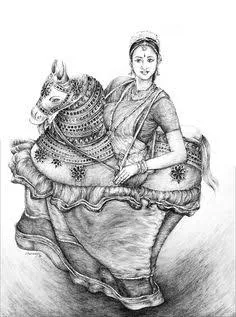
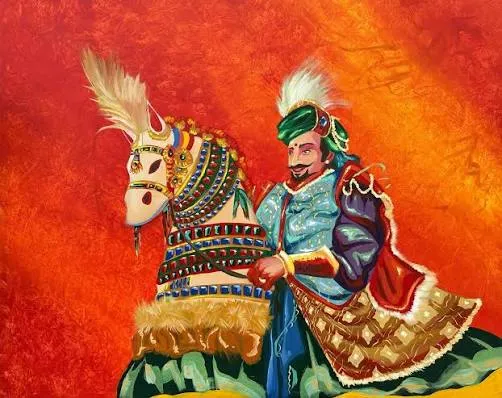
The performance involves a performer wearing the hollow dummy horse frame around their waist and hip, with wooden leg extensions (kaal maram) strapped to their feet to simulate hooves. The dummy horse structure is made of lightweight materials including jute, cardboard, and paper, decorated with colored fabric skirts that swing on either side of the dancer's legs, creating the illusion that the dancer is a rider on horseback. The performer balances on the wooden legs, which produce a clopping sound when struck against the ground. Movements include prancing steps, turns, rearing (lifting the front of the horse frame), and interactive sequences with a partner. Performers may carry a sword or whip in one hand. The dance requires extensive balance and physical coordination.
Central Motifs and Their Significance
The horse is a symbol of power, nobility, and royalty in South Asian cultural traditions, and its presence in folk dance reflects the cultural memory of royal courts where horses were central to military and ceremonial life. In the Tamil context, the horse is associated with warrior deities and with Ayyanar, the village guardian deity who is iconographically depicted as a mounted figure. The Poikkal Kuthirai performance re-enacts mounted dignity and martial presence within the folk festival context, bringing the symbolism of royal and divine power into the community celebration space.
Process
The performance is typically conducted by two performers in an interactive duo format, though solo performances also occur. The musical accompaniment is provided by Naiyandi Melam ensemble (nadaswaram, thavil, and related instruments) or, in the Thanjavur Maratha tradition, by the Kundala vadhyam or Gondal drums. Performances occur at village festivals, marriage ceremonies, and community functions. In the traditional Thanjavur royal court context, Poikkal Kuthirai dancers preceded local deities during temple processions, as documented by PARI.
Mediums Used
The dummy horse frame is constructed from jute, cardboard, paper, and glass (for light-reflective decoration), supported by an internal skeleton of lightweight material. The cloth skirts attached to the sides of the frame swing with the dancer's movement. Wooden leg extensions are the other defining material element, typically constructed from solid wood and strapped firmly to the dancer's feet and calves. The entire horse structure, including the extensions, is reported to weigh a significant amount, requiring physical conditioning to manage during performance.
New Outlook
Poikkal Kuthirai Aattam faces serious sustainability challenges. PARI's 2016 documentation of the Thanjavur practitioners reports the art form to be in decline, no longer viable as a full-time occupation. The arts organization PARI includes the dance in its archive of vanishing livelihoods of rural Tamil Nadu. Kalaimamani T. A. R. Nadi Rao's receipt of the Kalaimamani award (a state cultural honor) acknowledges his contribution to the form, but such recognition has not been accompanied by structural economic support sufficient to sustain the tradition. The form's Maratha cultural heritage in Tamil Nadu represents a unique case of cultural syncretism, and its loss would remove not only a performing art but a living example of the Maratha-Tamil cultural exchange in Thanjavur's history.
Learn Poikkal Kuthirai Aattam
Bibliography
Sources
Devi, Ragini. Dance Dialects of India. Rev. ed., Motilal Banarsidass, 1990.
Karthikeyan, Aparna. “The Dance of the False-Legged Horse.” People's Archive of Rural India (PARI), 2016, ruralindiaonline.org.
Krishnadas, Priya. Folk Performing Arts: Tamilnadu. Madras Craft Foundation, 2008.
Image Sources
“7 Popular Folk Dances of Tamil Nadu.” News24, https://news24online.com/web-stories/7-popular-folk-dance-of-tamil-nadu/. Accessed 4 July 2026.
“Poikkal Kuthirai Aattam – Dancing in Reverence.” Native Krea, https://nativekrea.com/products/poikkal-kuthirai-aattam-dancing-in-reverence?srsltid=AfmBOoo_e9arn-YyBhGVzRvBbsn5Q958s-v4uDu7eHMVZWA22upqQZnu. Accessed 4 July 2026.
“Poikkal Kuthirai Aattam of Tamil Nadu – This Folk Dance Needs Revival!!” Navrang, https://navrang1.rssing.com/chan-58541628/article1934.html. Accessed 4 July 2026. (Navrang India)
“Poikkal Kuthirai Aattam.” Alamy, https://www.alamy.com/stock-photo/kuthirai-aattam.html. Accessed 4 July 2026.
“Poikkal Kuthirai Aattam.” Alamy, https://www.alamy.com/stock-photo/kuthirai-aattam.html. Accessed 4 July 2026.