

Padhar Dance - The Folk Dance Tradition of Gujarat
Let us learn about Padhar dance from Gujarat!
Introduction
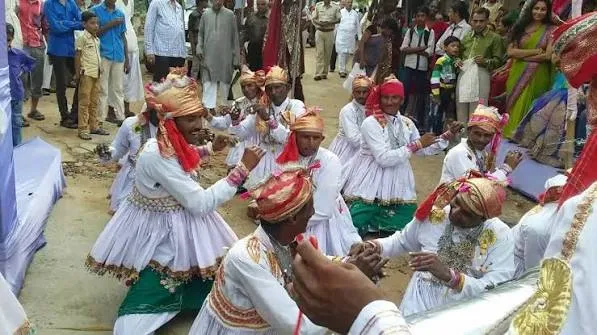
Padhar Dance is a folk dance of the Padhar community, a Scheduled Tribe of Gujarat whose settlements are concentrated in the villages surrounding Nal Sarovar, a large natural lake in Surendranagar and Ahmedabad districts. The dance is performed by men and enacts the daily activities of seafarers and fishermen: the rowing of boats, the movement of waves, and the rhythms of life near the water. Padhar Dance is identified by its characteristic seated and reclined positions in which dancers simulate rowing while striking manjira (small cymbals) to maintain rhythm. The form is documented as a uniquely choreographed representation of the Padhar community's relationship with Nal Sarovar and its aquatic environment.
Etymology
The dance takes its name directly from the Padhar community who perform it. 'Padhar' is the name of the tribal community, which is classified as one of the five major adivasi groups of Gujarat. The community name is also the name of the dance, which does not have a separate formal title in available documentation. The Sahapedia resource on Raas Traditions of Gujarat uses the term 'Padhar Raas' to describe the dance within the broader context of Gujarati raas traditions, indicating that the form is understood as a variant of the raas (circular dance) genre specific to the Padhar community.
Origin
The Padhar community has lived in the villages around Nal Sarovar for generations. According to Sahapedia's documentation, the Padhar settlements are located in twelve villages around the lake, in what was formerly the princely state of Limdi in present-day Surendranagar district and in Ahmedabad district. The communities of Sahiyal, Shahpur, Dharji, Anandpur, Devadthal, Ranagadh, Ralal, Parnala, and neighboring villages comprise the geographic core of the tradition. The specific choreographic development of Padhar Dance is linked to a teacher named Ragha Mastar, a schoolteacher in Limdi who was associated with Mahatma Gandhi's visits to the Nal Sarovar area in the 1940s and who worked with the Padhar community to organize and formalize their dance performance for public presentation. The Padhar Raas Mandali of Ranagadh became the primary performance group associated with the form, with Rambhai Padhar serving as a documented troupe leader.
Location
Padhar Dance is practiced in the villages of the Padhar community around Nal Sarovar in Surendranagar and Ahmedabad districts of Gujarat. It is performed at state cultural events when the Padhar Raas Mandali is invited to perform, but the tradition remains geographically confined to this specific community and region.
Community
Padhar Dance is performed exclusively by men of the Padhar community, who are classified as a Scheduled Tribe of Gujarat. The Padhar are primarily fishermen and agricultural laborers, and some sources describe them as a migratory community with possible historical roots in Sindh. They are Hindus who worship Goddess Durga in multiple forms, and a folk narrative documented in several sources attributes the origin of the community's settlement at Nal Sarovar to Hinglaj Mata (a form of Durga), who is said to have tossed fish and aquatic plants into the lake, providing sustenance for the Padhars.
Relevance
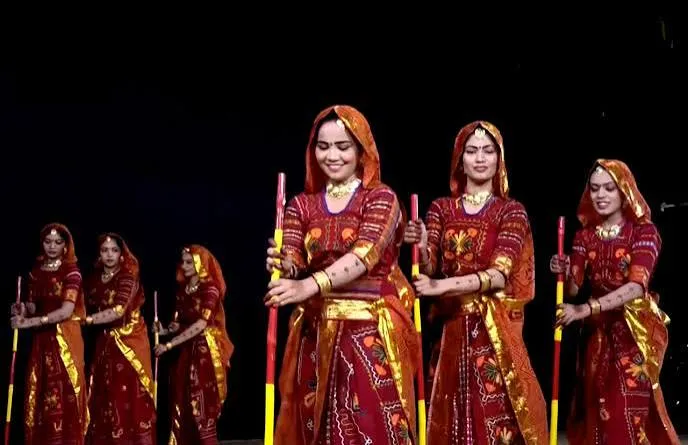
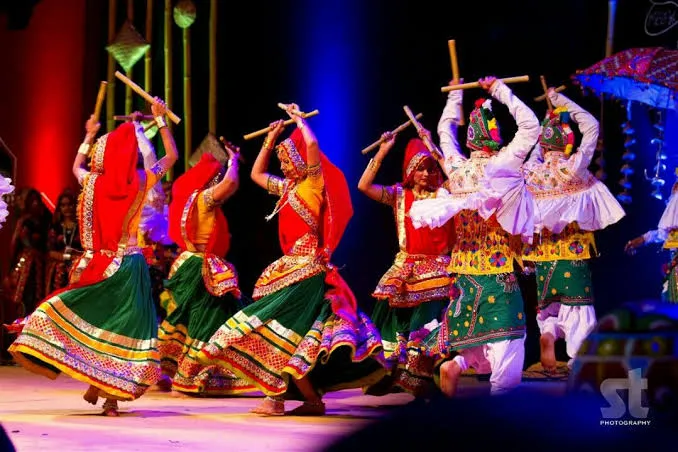
Padhar Dance is a rare example of an occupational folk dance that directly and specifically represents the physical actions of fishing and boating. The Sahapedia documentation identifies it as a culturally distinctive performance within Gujarat's diverse raas tradition, noting that the Padhar are the only community in the Saurashtra region who do not use dandiya sticks in their raas performance, relying instead on manjira to mark time. The form is classified as low-visibility and vulnerable, with Sahapedia noting that the younger generation of Padhars shows limited interest in continuing the tradition.
History
Background
The Padhar Raas Mandali gained public recognition in the 1940s through the work of Ragha Mastar, who organized their performance and introduced it to the Limdi Durbar and to audiences at Gandhi's gatherings in the region. In the 1940s, the Mandali composed and performed a song about Gandhi's activities, which became popular. With the establishment of the State of Gujarat in 1960, the Padhar Raas Mandali received invitations to perform at government functions and state cultural events. The form was documented by Sahapedia researchers who interviewed Rambhai Padhar and Fuljibhai Padhar (singer), providing primary testimony about the tradition's practices and context.
Culture and Societies
The Padhar community's social and economic life is organized around Nal Sarovar and its resources. The dance reflects this relationship: the movements imitate rowing, the visual imagery of the dance evokes waves rising and falling, and the songs address both devotional themes (doha couplets addressed to Krishna) and the experiences of the seafaring life. The voices of Padhar singers are documented by Sahapedia as distinctive: characterized by a quality different from the full-throated Kathiawadi vocal style, providing a unique sonic identity to the form. Performances outside the community context are organized by the Padhar Raas Mandali, which travels to state festivals when invited.
Religious Significance
The Padhar community is Hindu and worships Goddess Durga and her manifestation as Hinglaj Mata as primary deities. The folk mythology of the community, as documented in multiple sources, attributes the Padhar settlement at Nal Sarovar to divine intervention by Hinglaj Mata. The songs performed during Padhar Dance include both devotional content addressed to Krishna (doha and raas geet) and secular narrative content about the seafaring life. The dance itself is performed at community festivals and social events rather than as a specific ritual act, but its devotional songs give it a religious dimension.
Understanding the Art
Style
The most distinctive choreographic feature of Padhar Dance, as documented by Sahapedia, is the seated and reclined position in which dancers simulate rowing. Performers sit in a circle on the ground playing manjira, bending their upper torsos forward and swiftly pulling back to create the visual image of boatmen rowing. In other sequences, dancers lie down on the floor in a circle and move their arms in unison from side to side, creating the image of waves. The performance progresses in gusto and speed, but unlike other raas traditions of Saurashtra, Padhar dancers do not lift their legs or slide in the manner of other regional raas styles.
Central Motifs and Their Significance
The central motifs of Padhar Dance are water, the boat, and the movement of waves. These motifs encode the community's identity as lake-dwellers and fishermen. The visual image created by the dancers, moving in coordinated forward-backward rhythmic action, is specifically designed to evoke a boat swinging in waves and boatmen rowing vigorously. This mimetic relationship between dance movement and occupational action is the defining characteristic of the form and distinguishes it from the devotional and narrative raas traditions of other Gujarat communities.
Process
Padhar Dance is performed by a group of men who gather in a circle or rows. They play manjira throughout the performance, maintaining the rhythm without any other string or wind instruments in the most traditional version. The Sahapedia documentation notes that the primary instruments are manjira, zanz (larger cymbals), and tabla. Singers perform the doha and raas geet. The performance can be organized in several sections, moving from the circle formation to the lying-down wave sequence and back.
Mediums Used
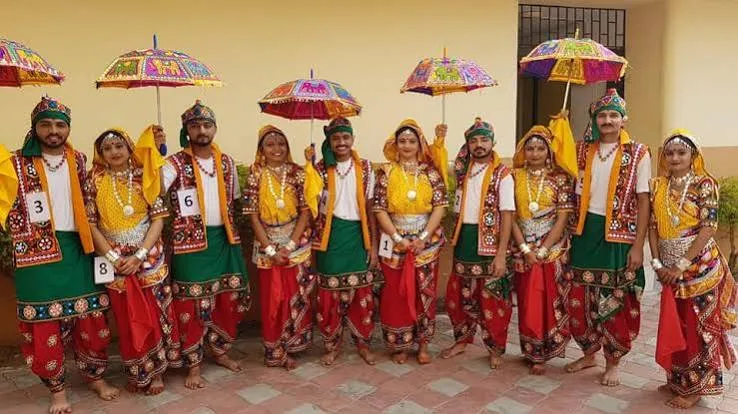
The primary instruments are manjira and zanz (cymbals) and tabla. Costume consists of choyani (a type of bhati or surval garment for the lower body), a shining full-sleeve shirt with jacket (kalacho or pehran), and a colorful cloth (fento or mel) wrapped on the head. The Sahapedia documentation specifically notes that Padhar dress reflects 'total lack of fineries' compared to other Saurashtra communities: the costume is functional and simple, with no fine embroideries or embellishments.
New Outlook
Padhar Dance is at serious risk of discontinuation. The Sahapedia documentation, based on direct interviews with troupe members, states that the younger generation of Padhars shows little interest in continuing the tradition, and that the Padhar Raas Mandali may become 'another dying art form of Gujarat' within a few decades. No formal preservation program, government support mechanism, or institutional training program for the form has been identified in available sources. The form's survival appears to depend on the continued commitment of the existing troupe members and the occasional invitations to perform at state cultural events.
Learn Padhar
Bibliography
Sources
Doshi, Saryu, editor. Dances of Gujarat. Marg Publications, 1971.
Kothari, Sunil. Folk Dances of India. Marg Publications, 1994.
Sahapedia. "Raas Traditions of Gujarat." Sahapedia, https://www.sahapedia.org/raas-traditions-gujarat.
Image Sources
"Folk Dances of Gujarat." Caleidoscope, https://caleidoscope.in/art-culture/folk-dances-of-gujarat. Accessed 21 July 2026.
"Padhar Dance." Wikimedia Commons, https://commons.wikimedia.org/wiki/File:Padhar_dance.jpg. Accessed 21 July 2026.
