

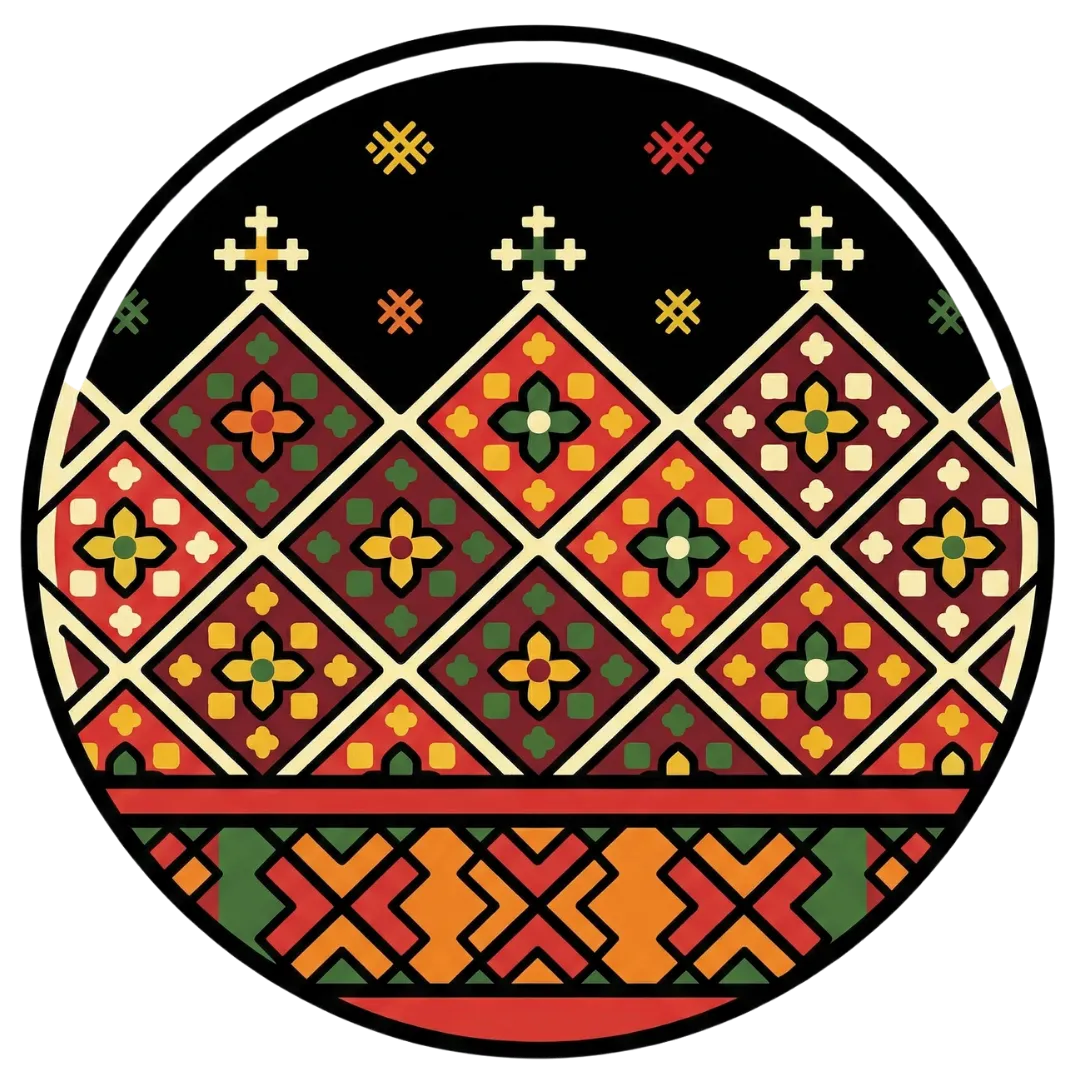
Mishing Painting - The Painting Tradition of Assam
Discover Mishing Weaves, a textile-based visual art tradition with characteristic geometric patterning of Assam...
Introduction
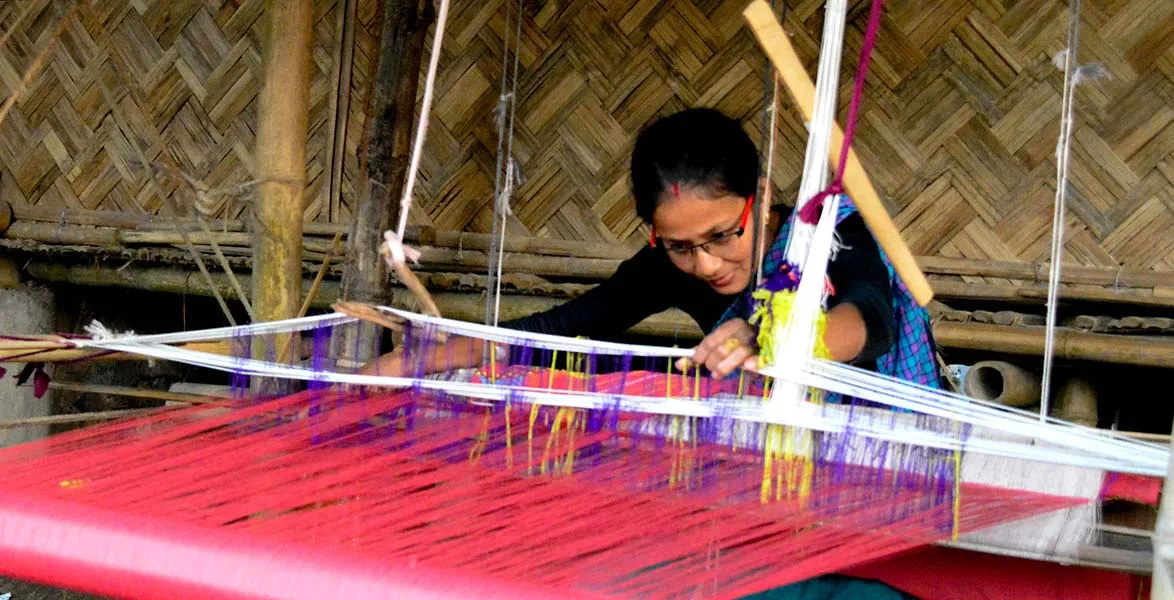
The Mishing people, also referred to as the Miri, are one of the larger indigenous communities of Assam, concentrated primarily along the banks of the Brahmaputra and Subansiri rivers in the plains and foothills of the state. They constitute a significant Tibeto-Burman language-speaking group and maintain a distinct material culture. However, formal academic documentation of a specific tradition called Mishing painting, as a distinct visual art form with codified motifs, techniques, and ritual functions, is limited in available published literature. Available evidence establishes that the Mishing community's primary documented visual art tradition is textile-based, specifically the weaving of eri silk and cotton fabrics with characteristic geometric patterning, rather than a freestanding painting tradition.
This article documents the broader context of Mishing visual culture and Assam's painting traditions, clearly distinguishing between what is established in published academic or institutional sources and what remains underdocumented.
Etymology
The term Mishing (also spelled Mising or Miri) is the self-designation of the community, derived from their own language. The word is generally understood to mean people of the river plain, reflecting the community's historic settlement pattern along the Brahmaputra floodplain. In colonial administrative records and in early ethnographic literature, the designation Miri was more commonly used; the community itself has increasingly asserted the name Mishing as the preferred term. The broader category of Assam's visual art traditions, including manuscript painting and folk painting, has no specific Mishing-language compound that corresponds to the Hindi-English term painting.
Origin
The documented visual art traditions of Assam have their earliest recorded history in the 7th century CE, when the Chinese Buddhist pilgrim Xuanzang (Hiuen Tsang) visited the kingdom of Pragjyotishpura (modern Guwahati area) under King Bhaskaravarman, who is recorded as having gifted painted objects to the Harsha king at Kanauj. This reference constitutes the earliest textual evidence for a painting tradition in the Assam region, though it cannot be attributed to any specific community within the broader Assam cultural sphere.
The medieval period saw the development of manuscript painting traditions associated with Vaishnava religious establishments (sattras) founded by the reformer Sankardev (1449 to 1568). The Sattriya painting tradition produced illustrated manuscripts on bark paper (sancipat) and cloth, with a characteristic style combining local visual conventions with influences from Mughal and Bengal Sultanate painting. These traditions are documented in published scholarship but are not specifically Mishing in community origin; they represent the broader Vaishnava cultural tradition of Assam's Brahmaputra valley.
Location
The Mishing community is primarily located in the districts of Dhemaji, Lakhimpur, Dibrugarh, and Majuli in upper Assam. Majuli, the large river island in the Brahmaputra, is significant as a center of Sattriya culture and is home to multiple sattras, but its painting tradition is associated with the Vaishnava sattra community rather than specifically with Mishing cultural practice.
Community
The Mishing community numbers approximately 650,000 persons according to census estimates. They are primarily agriculturalists and maintain a distinctive cultural identity through language, textile traditions, festival practices, and oral literature. The Mishing language belongs to the Tibeto-Burman family within the Sino-Tibetan phylum. Their primary visual art traditions as documented in published literature are weaving (eri silk, mekhela chadar with geometric patterns), basket-making, and traditional architecture. The specific documentation of a Mishing painting tradition as a distinct art form with trained practitioners and codified practices is not established in currently available academic sources reviewed for this article.
Relevance
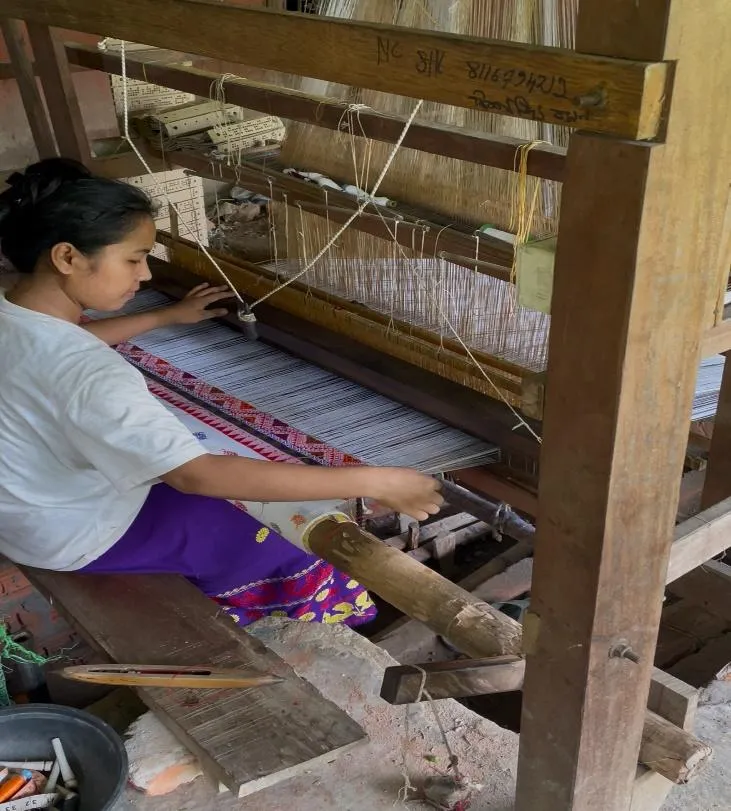
The endangered status designation applied to Mishing painting reflects the limited documentation and potential fragility of any folk painting traditions that may exist within the community. Given the limited available documentation specific to a Mishing painting tradition, a definitive assessment of its cultural relevance as a painting tradition distinct from Mishing textile art is not possible from current sources. What can be stated is that the Mishing community's textile traditions are at risk due to the availability of machine-made alternatives and the migration of younger community members to urban economies.
History
Background
The broader history of folk painting in Assam encompasses several regional traditions, including the pith painting tradition of lower Assam associated with the Kamrup and Goalpara districts, which depicts deities and narrative scenes associated with the Manasa cult and other folk religious traditions. This tradition uses pith (the soft inner material of plants) as a surface for tempera painting. The practitioners of this tradition are not specifically Mishing. The Ahom court painting tradition, associated with the Ahom kingdom that ruled Assam from the 13th to the 19th centuries, developed a style of manuscript and mural painting that drew on Assamese, Mughal, and Burmese conventions. Ahom painting is documented but is not a Mishing tradition.
Culture and Societies
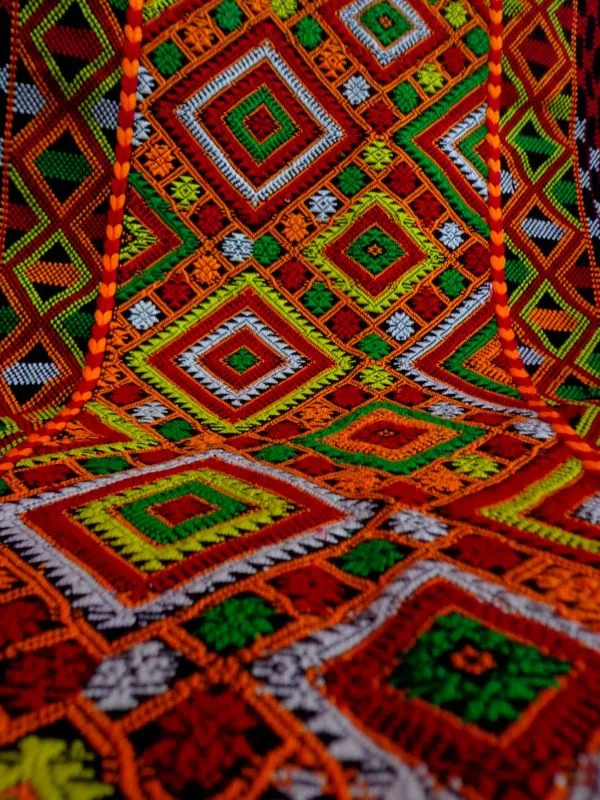
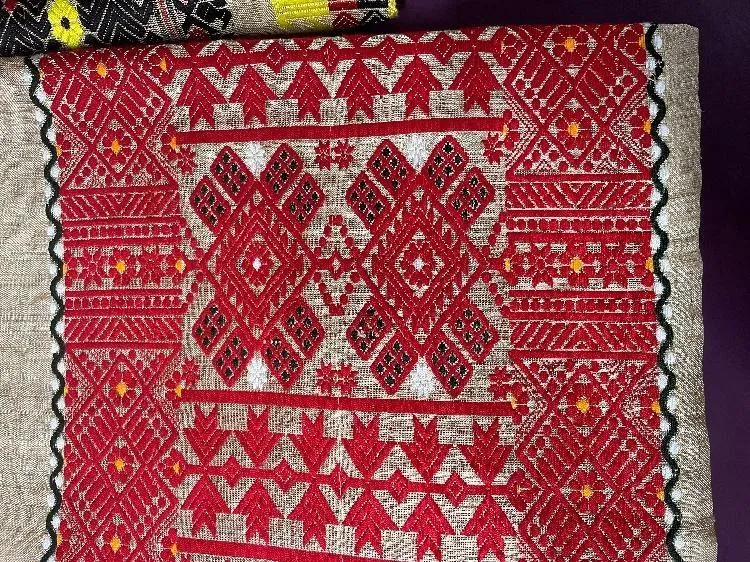
Mishing material culture is expressed most visibly through textiles. The ege rasson, a distinctive woven skirt worn by Mishing women, features characteristic geometric patterns including zigzag motifs and stylized animal and plant forms woven into the fabric. These woven patterns constitute a significant visual art tradition, but weaving is categorized as a textile tradition distinct from painting. The Ali-Aye-Ligang festival, the principal Mishing harvest festival celebrated in February, involves the display of traditional textiles and crafts and provides the primary public context for Mishing material culture. Wall decorations, if any, associated with this festival or other ceremonies, have not been systematically documented in available sources.
Religious Significance
The Mishing community maintains the Donyi-Polo belief system, an indigenous animistic religion centered on the worship of Donyi (the Sun) and Polo (the Moon) as principal deities. Material culture associated with Donyi-Polo ritual practice includes specific textile patterns and ceremonial objects, but published documentation of a visual painting tradition specifically associated with Donyi-Polo ritual contexts is not available in the sources reviewed for this article.
Understanding the Art
Style
In the absence of specific published documentation of a Mishing painting tradition as a distinct art form, the stylistic description provided here is restricted to what can be inferred from the documented textile tradition and from the broader Assam folk visual tradition. The Mishing textile tradition is characterized by geometric abstraction, bilateral symmetry, and the use of natural dye colors on hand-woven cotton or eri silk. These design conventions, if translated into any associated painting practice, would likely share these geometric and symmetric features.
Central Motifs and Their Significance
The documented motifs of Mishing weaving include zigzag patterns (zig lines symbolizing water and the river), stylized bird forms (particularly the hornbill, which has significance in Mishing oral tradition), and geometric abstraction of plant and animal forms. These motifs carry cultural significance related to Mishing cosmology and natural environment but have not been documented in a published context as the basis for a separate painting tradition.
Process
Limited documentation is available for the process of any distinct Mishing painting tradition. For context, the Assam pith painting tradition uses natural pigments on pith surfaces with brushes made from plant fibers. Any Mishing painting tradition that may exist would be expected to use locally available natural materials, but specific documentation of materials and process associated with a Mishing painting tradition is not available in the academic literature reviewed.
Mediums Used
As noted above, specific documentation of the medium used in any distinct Mishing painting tradition is not available. The broader Assam folk painting tradition uses natural pigments derived from plants, minerals, and earth, applied to surfaces including cloth, bark paper (sancipat), and in some traditions the walls of domestic structures.
New Outlook
The recognition of endangered status for Mishing painting reflects a broader concern for the continuity of indigenous visual traditions in northeastern India. Government programs under the Ministry of Culture and the North East Zone Cultural Centre (NEZCC) have supported documentation and promotion of the arts of indigenous communities in the northeast. The Mishing Autonomous Council in Assam has initiated cultural preservation programs that include documentation of traditional arts and crafts, though comprehensive published outputs from these programs are not yet fully available in the academic domain.
Given the limitations of current documentation, this entry recommends further field-based research by ethnographers and art historians with specific focus on the Mishing community's visual art practices. Any substantive future documentation should be incorporated into revised versions of this article.
Learn Mishing Weaves
Bibliography
Sources
Bezbaroa, Lakshminath. Assamese Literature and Art. Assam Publication Board, 1972.
Das, Jogesh. Folklore of Assam. National Book Trust, 1972.
Goswami, Praphulladatta. The Tribes of Assam. Omsons Publications, 1966.
Nag, Sajal. Eating with Hope: Food and the Making of Northeast India. Sage Publications, 2021.
Image Sources
"Weaving Identity: Mising Weavers Use Skills and Enterprise to Protect Their Traditional Textiles." NEZine, https://www.nezine.com/info/Ri9jamozQTdiRTVhdDFaY3JPKzVSdz09/weaving-identity:-mising-weavers-use-skills-and-enterprise-to-protect-their-traditional-textiles.html. Accessed 10 July 2026.
"Weaving Identity: Mising Weavers Use Skills and Enterprise to Protect Their Traditional Textiles." NEZine, https://www.nezine.com/info/Ri9jamozQTdiRTVhdDFaY3JPKzVSdz09/weaving-identity:-mising-weavers-use-skills-and-enterprise-to-protect-their-traditional-textiles.html. Accessed 10 July 2026.
"Mishing Weaves." Pinterest, https://in.pinterest.com/kohuaclothing/mishing-weaves/. Accessed 10 July 2026.
"The Last Keepers of India's Tribal Crafts." The Voice of Fashion, https://www.thevoiceoffashion.com/fabric-of-india/features/The-Last-Keepers-of-Indias-Tribal-Crafts-6633. Accessed 10 July 2026.