
Langa Music - The Music Tradition of Rajasthan
Explore the hereditary tradition of Langa Sangeet, performed by the Langa community of Barmer and Jalore districts of western Rajasthan...
Introduction
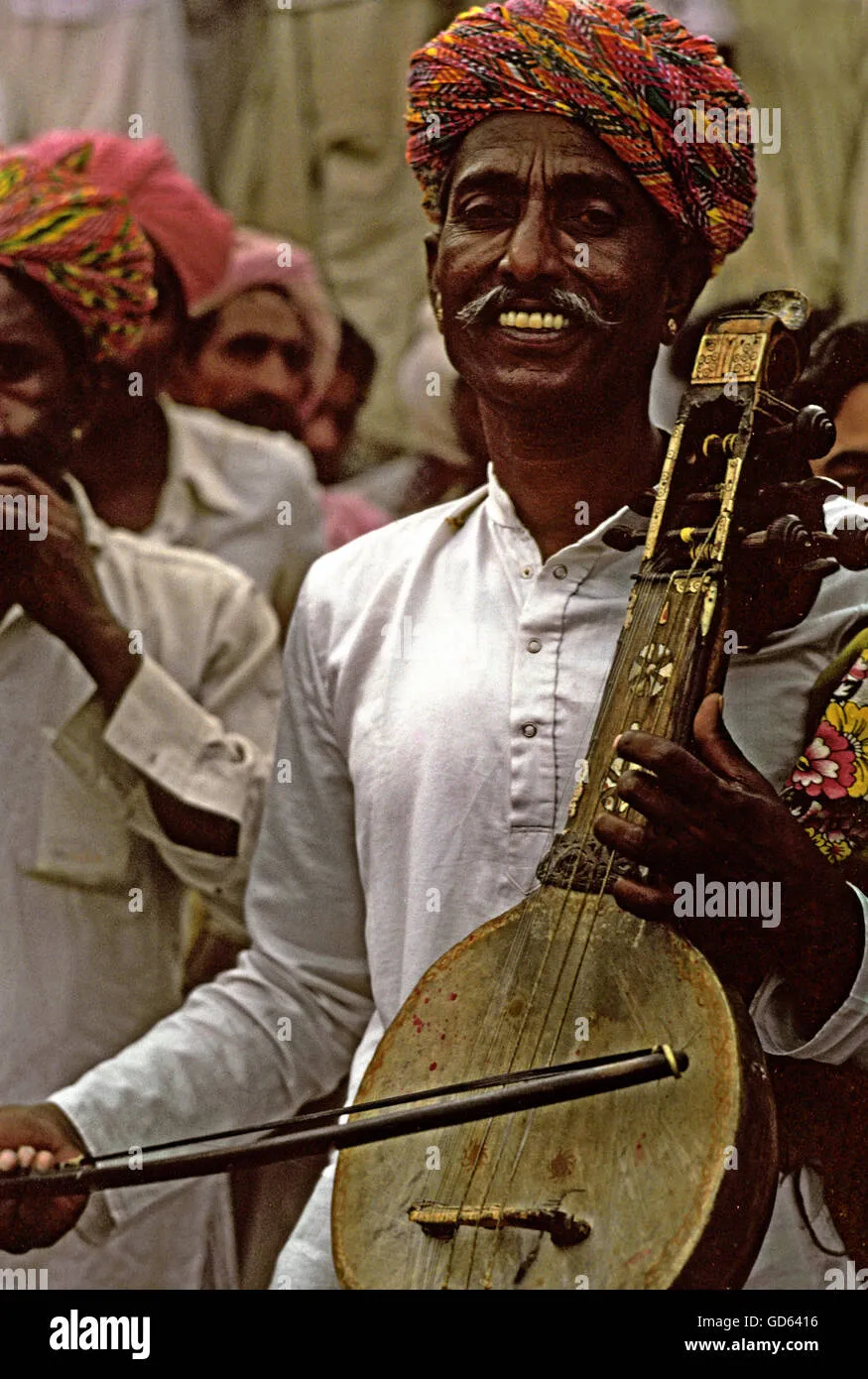
Langa music is a hereditary tradition of professional musicians from the Barmer and Jalore districts of western Rajasthan, practiced by the Langa community, a Muslim group whose musical lineage spans several centuries. The Langas are court and community musicians who historically served specific patron castes through the jajmani system, a hereditary occupational relationship in which musical services were provided at births, weddings, and seasonal festivals in exchange for remuneration in grain, land use, or cash. Langa music is characterized by its distinctive use of the Sindhi Sarangi, a bowed string instrument with a complex resonance system, and the Algoza, a paired wooden flute played with circular breathing.
The tradition is internally divided into two distinct sub-groups: the Sarangiya Langas, who specialize in string instruments and are also vocalists, and the Surnaiya Langas, who specialize in wind instruments and do not sing. This functional division is maintained strictly within the community and has shaped the transmission of musical knowledge across generations. Langa music is recognized as a significant element of the intangible cultural heritage of Rajasthan and has received attention from ethnomusicologists, festival organizers, and recording institutions.
Etymology
The term Langa derives from the Rajasthani word for song-giver or singer. The community name thus reflects their primary social function as hereditary musicians. The Langas themselves use the term Langa as both a community identifier and a designation for their musical tradition. In regional ethnographic literature, the community is also referred to as Langa Kalakar (Langa artist), distinguishing them from other Muslim musician communities of Rajasthan such as the Manganiyars.
Origin
The precise historical origin of the Langa community is subject to oral tradition rather than documented historical record. Community oral accounts state that the Langas were originally Hindu musicians who converted to Islam approximately in the 17th century. The process and circumstances of this conversion are narrated differently within the community and have not been independently corroborated by external historical documentation. The geographic heartland of the Langa tradition is Barmer district in western Rajasthan, a region historically part of the Thar Desert zone with cultural continuities extending into the Sindh province of present-day Pakistan.
The development of the Sindhi Sarangi within the Langa tradition reflects the geographic and cultural connections between the Barmer region and Sindh. The instrument's name itself references this Sindhi origin, and musicological analysis of its construction and tuning systems suggests influence from both North Indian classical and Sindhi regional traditions. The jajmani relationships of the Langas were historically established with cattle-breeding and farming communities of the Barmer region, particularly the Jat, Bishnoi, Meghwal, and Rabari communities.
Location
Langa musicians are primarily concentrated in Barmer and Jalore districts of western Rajasthan. The main village clusters associated with the tradition include areas around the towns of Barmer, Sheo, and Siwana. A smaller population of Langa musicians also exists in the Jodhpur district. The community has historically maintained seasonal migration patterns related to the jajmani system, traveling to patron villages for ceremonies and festivals. In recent decades, urban migration has brought Langa musicians to Jodhpur and Jaipur, where several families have established residence while continuing to perform.
Community
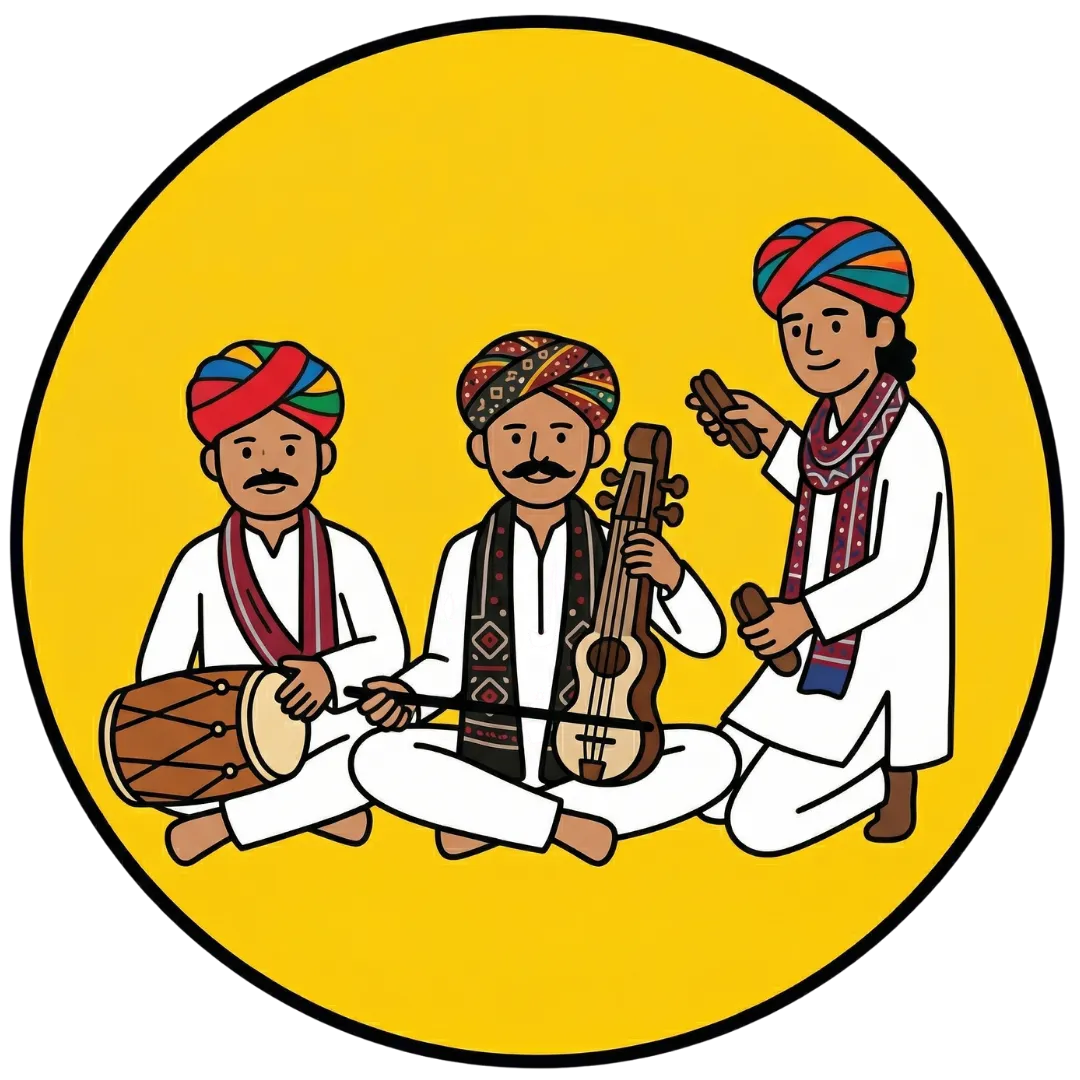
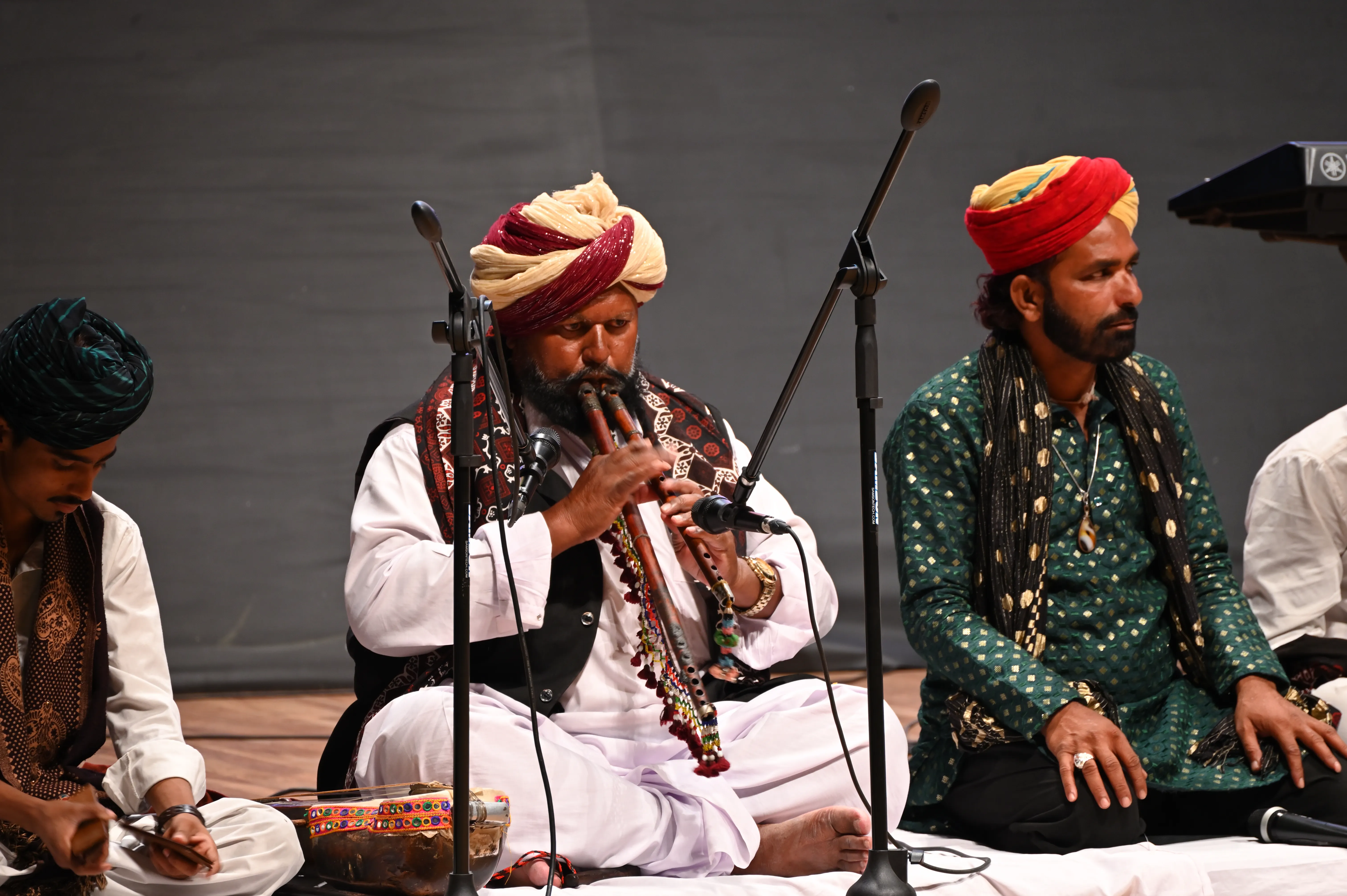
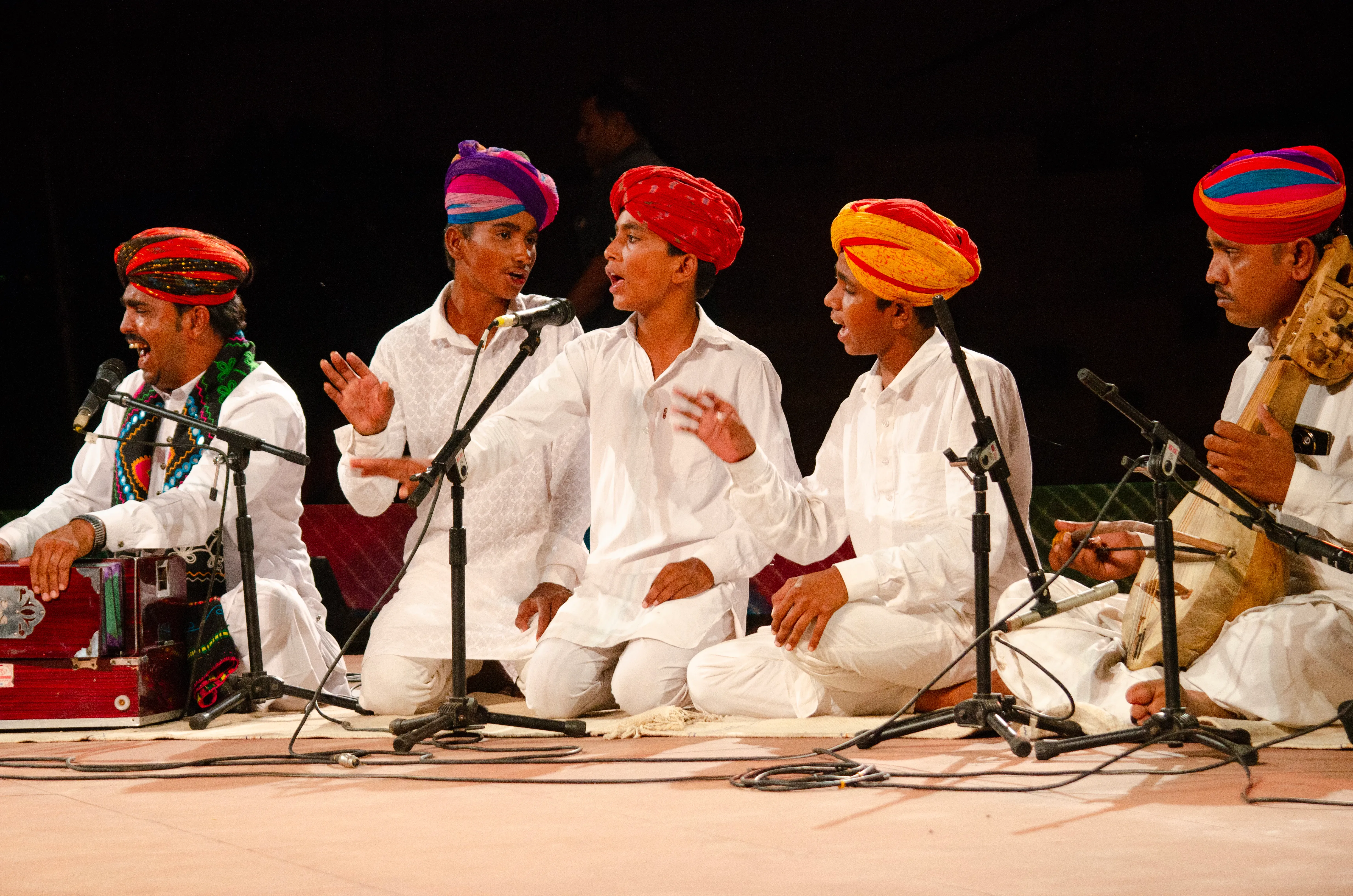
The Langa community is a Muslim hereditary musician caste. Their internal social structure is organized around the jajmani system, which defines hereditary relationships between Langa musicians and specific patron families belonging to other communities. Each Langa family has historically maintained a fixed set of jajman (patron) families, and musical services at life-cycle ceremonies of those families are the primary occupational obligation of the relationship. Jajmani relationships are inherited through the male line and are considered binding social obligations on both sides. Within the Langa community, the division between Sarangiya and Surnaiya groups is maintained with considerable strictness. Sarangiya Langas play the Sindhi Sarangi and other string instruments and are vocalists. Surnaiya Langas play wind instruments including the Murli, Surnai (oboe-type instrument), and Satara or Algoza (paired wooden flutes), and do not sing vocal compositions. This division is occupationally and sometimes socially maintained, and musicians from the two sub-groups perform together in specific ensemble contexts.
Relevance
Langa music holds high cultural relevance as a documentation of the musical traditions of western Rajasthan and as an active living practice. The tradition has been recorded by ethnomusicologists and institutions including the Smithsonian Center for Folklife and Cultural Heritage, with recordings by artists such as Lakha Khan and Mame Khan (shared by some Langa musicians) archived at the Smithsonian Folkways collection. The Jodhpur RIFF (Rajasthan International Folk Festival), an annual music festival held at Mehrangarh Fort, has featured Langa musicians prominently and has contributed to their visibility in national and international contexts. Several Langa musicians have performed internationally in Europe, North America, and East Asia through festival invitations and cultural exchange programs.
The master sarangi player Lakha Khan (1942 to 2018) is the most internationally recognized Langa musician. He performed at major international folk and world music festivals and his recordings document the repertoire and performance practice of the Sarangiya Langa tradition. His passing was noted by ethnomusicologists as a significant loss for the Sindhi Sarangi tradition, as few players of his technical caliber remain.
History
Background
The historical documentation of Langa music as an organized community tradition is primarily available from ethnomusicological studies conducted from the 1960s onward. The community itself maintains oral genealogical accounts tracing their musical lineage through several generations, but written records predating the 20th century are not available in accessible archives. The jajmani system that structures Langa musical practice is attested in broader anthropological literature on Rajasthan from the colonial period, though specific documentation of the Langas within those accounts is limited.
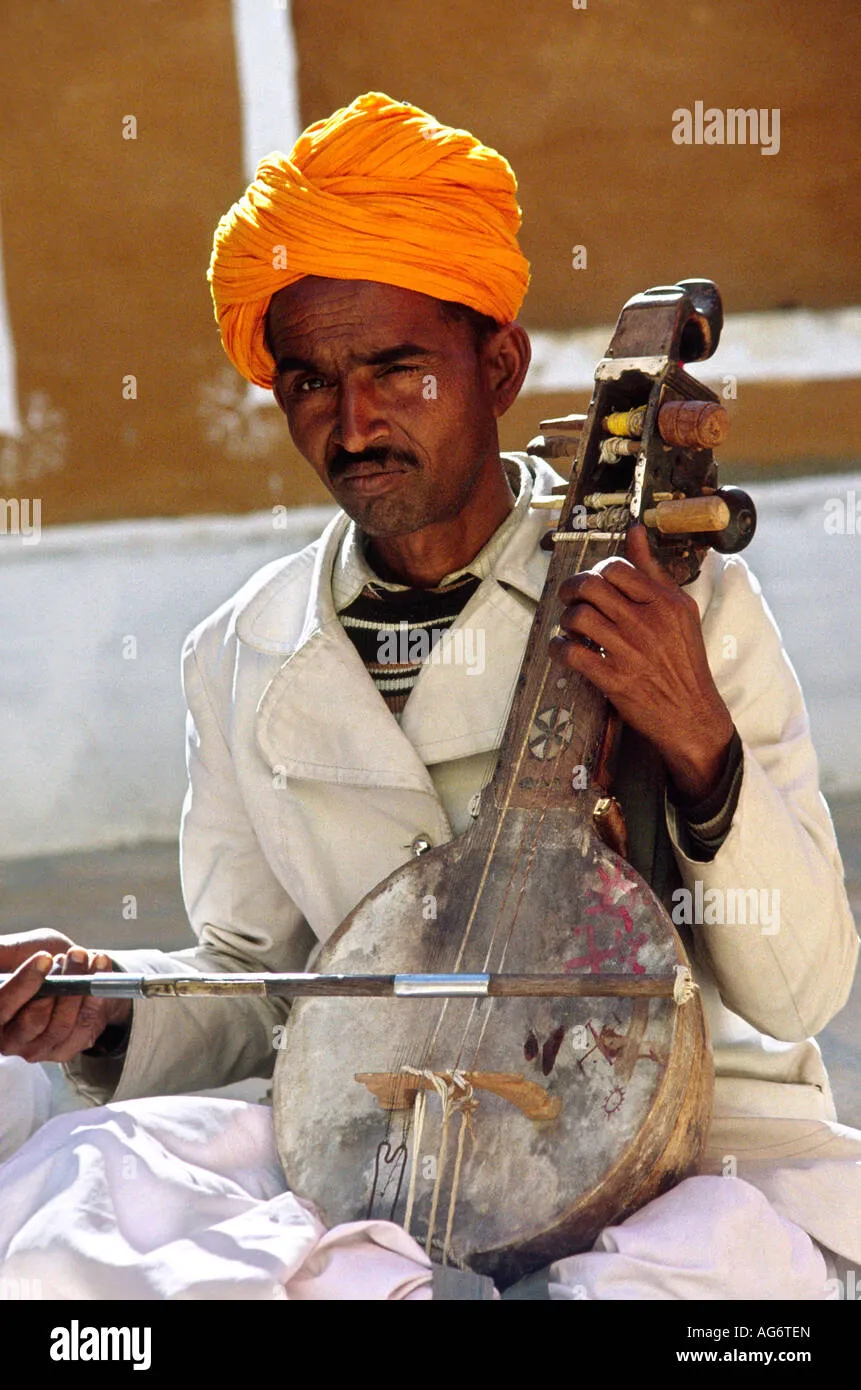
The integration of Sindhi Sarangi into the Langa tradition is likely attributable to the historical cultural exchanges between Barmer and Sindh, regions that share ecological, linguistic, and social characteristics. The Sindhi Sarangi, with its construction of mango or rosewood body and approximately four main bowed strings supported by twenty or more sympathetic (resonating) strings, is structurally distinct from the classical North Indian sarangi used in Hindustani music and represents a regional instrumental development of the broader sarangi family.
Culture and Societies
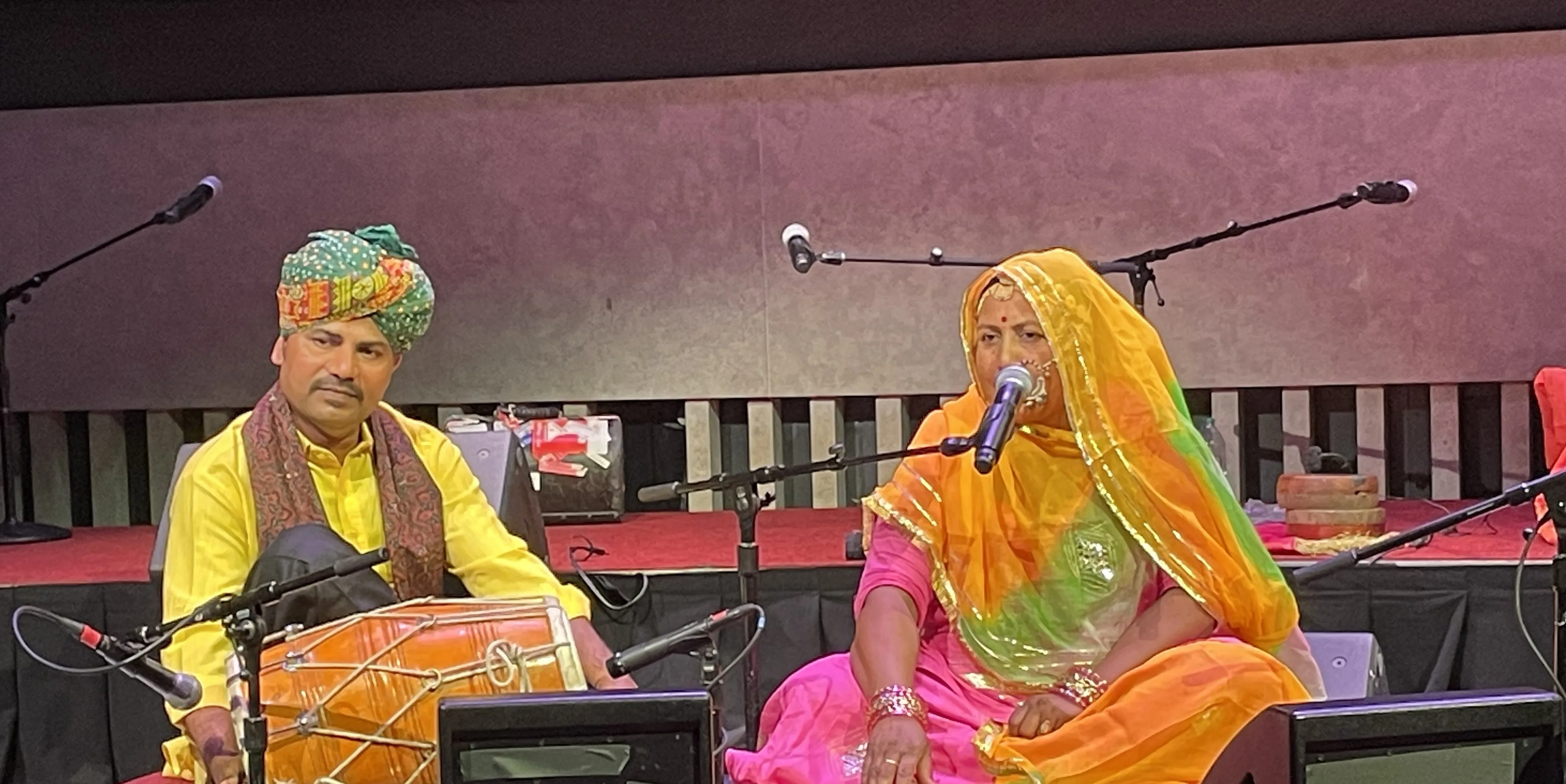
Langa music is embedded in the social fabric of the pastoral and agricultural communities of western Rajasthan. The primary performance contexts are life-cycle ceremonies (birth of a son, marriage, circumcision) and seasonal festivals including Holi and harvest ceremonies. At weddings, Langa musicians perform through multiple nights, singing compositions that praise the families of the bride and groom and narrating genealogical histories. This genealogical function, shared with the Manganiyar tradition, positions the Langa musicians as carriers of community memory.
The repertoire of the Langas includes both Hindu and Islamic themes. Songs about desert kings and local heroes, compositions referencing the Dhola-Maru legend (a Rajasthani love narrative), Sufi devotional poetry, and compositions invoking Hindu deities are all part of the Langa repertoire. This integration of Hindu and Islamic material is consistent with the broader pattern of syncretic devotional practice in the Thar Desert region and is not considered contradictory within the community's own understanding of their tradition.
Religious Significance
Langa music does not have a specific religious function in the sense of ritual liturgy, but religious content is present in the repertoire. Songs praising Allah and the Prophet Muhammad, compositions referencing Sufi saints, and compositions invoking Hindu deities such as Shiva and Krishna are all included in the Langa repertoire. The Sufi influence on Langa music is evident in the presence of poetry associated with the Chishti and other Sufi orders of Rajasthan. Performance at dargahs (shrines of Muslim saints) and at Hindu temples is both documented and attested by practitioners.
Understanding the Art
Style
The musical style of Langa performances is characterized by raga-based melodic frameworks combined with desert-regional melodic idioms that do not always conform to classical Hindustani raga grammar. The concept of the Duha, a non-metered introductory couplet sung before the main composition, is a structural feature specific to Langa performance and serves as an expressive prelude establishing the emotional and devotional tone of the piece that follows. Performances typically begin with slower, elaborative singing before moving to faster, rhythmically driven sections.
A characteristic feature of Langa vocal style is the use of ornament-heavy melodic movement, particularly the meend (glide) and gamak (oscillation), which are extensively employed and give the tradition a distinctly regional identity when compared to standard Hindustani classical performance. The Sarangiya Langas demonstrate significant improvisatory skill within the framework of their melodic tradition.
Central Motifs and Their Significance
The thematic content of Langa music centers on several recurring categories: praise compositions for patron families and their lineages; desert landscape imagery referencing the camel, the well, the sand dune, and the migratory bird; romantic narrative poetry set in the Thar Desert context such as Dhola-Maru; devotional compositions addressing Sufi themes of longing and union; and heroic narratives recounting the exploits of Rajput rulers and desert warriors. These thematic categories are not mutually exclusive and individual compositions may combine multiple registers.
Process
Langa music is transmitted within family lineages through informal but systematic oral pedagogy. Young male children of the community begin observational learning from early childhood by attending performances and gradually receive formal instruction in instrument playing and vocal technique from their fathers and elder male relatives. There is no written notation system within the tradition; all musical knowledge is transmitted aurally. Female musicians within the Langa community exist but have not historically performed in public contexts; their role in transmission within the household has been documented by ethnomusicologists but not comprehensively studied.
Mediums Used
The primary instruments of the Langa tradition are the Sindhi Sarangi (bowed chordophone with approximately four main strings and twenty or more sympathetic strings), the Algoza (paired wooden flutes played simultaneously with circular breathing), the Murli (single flute), the Surnai (double-reed wind instrument of the oboe family), the Dholak (double-headed hand drum), and the Khadtal (wooden clapper instrument played in pairs). The harmonium has been increasingly adopted in performance contexts, particularly in urban settings. The classical Langa tradition did not use percussion instruments in the same manner as Manganiyar music, a distinction noted by ethnomusicologists as reflecting the Sufi-influenced aesthetic of the tradition.
New Outlook
The Langa tradition faces structural challenges related to the decline of the jajmani system, which historically provided economic stability for musicians in exchange for hereditary service. As patron communities have increasingly moved away from the obligations of the jajmani relationship, Langa musicians have had to seek income through festival performances, recordings, and institutional support. The Jodhpur RIFF festival has been instrumental in providing performance opportunities and income to Langa musicians and in connecting them with national and international audiences.
Ethnomusicological concern has been expressed about the Sindhi Sarangi, which requires years of intensive training to play with proficiency and whose economic viability as a performance instrument has declined. Several reports, including observations by the late Lakha Khan himself, note that younger musicians in the community have gravitated toward the harmonium, which is easier to learn and more versatile in commercial performance contexts. Efforts to document the Sindhi Sarangi repertoire and technique through recording archives and educational programs have been initiated by cultural organizations.
Learn Langa Sangeet
Bibliography
Sources
Kothari, Komal. Folk Music and Musical Instruments of Rajasthan. Rupayan Sansthan, 1977.
Neuman, Daniel M. The Life of Music in North India. University of Chicago Press, 1990.
Thielemann, Selina. The Music of South Asia. APH Publishing, 1999.
Bor, Joep, editor. The Raga Guide. Nimbus Records in association with the Rotterdam Conservatory of Music, 1999.
Image Sources
"Langa." Alamy, https://www.alamy.com/stock-photo/langa-rajasthan.html. Accessed 09 July 2026.
"Mehruddin Langa, Rajasthani Folk Musician and Singer Artist from India." Wikimedia Commons, https://commons.wikimedia.org/wiki/File:Mehruddin_Langa_Rajasthani_folk_musician_and_singer_artist_from_India.jpg. Accessed 09 July 2026.
"Langa Manganiyar Music." Wikimedia Commons, https://commons.wikimedia.org/wiki/File:Langa_manganiyar_music.jpg. Accessed 09 July 2026.
"Why India's Langa Musicians Have a High Reputation." Global Indian Times, https://www.globalindiantimes.com/p/music-folk. Accessed 09 July 2026.
"Langa Musician." Alamy, https://www.alamy.com/stock-photo/langa-musician.html. Accessed 09 July 2026.