
Karagattam/ Karakattam - The Folk Dance Tradition of Tamil Nadu
Delve into Karagattam, the ancient folk dance of Tamil Nadu associated with the worship of Mariamman (the rain goddess) and Gangai Amman (the river goddess)...
Introduction
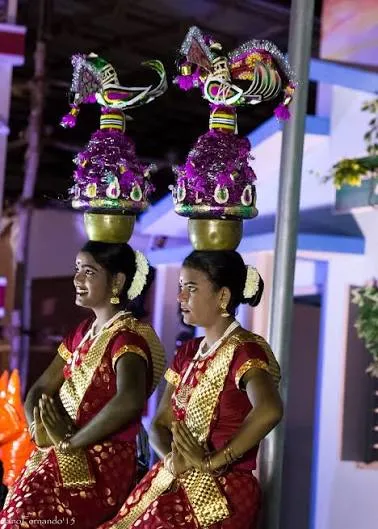
Karagattam (also spelled Karakattam or Karagam) is an ancient folk dance of Tamil Nadu, India, in which performers balance decorated clay or metal pots on their heads while executing intricate body movements, acrobatic postures, and expressive footwork. The art form is primarily associated with the worship of Mariamman, the rain goddess, and Gangai Amman, the river goddess, and has been performed historically during temple festivals, village fairs, and seasonal agricultural ceremonies. References to the dance form appear in early Tamil literature, including the Silappadikaram (a Sangam-era epic dated approximately to the 2nd century CE), which lists a comparable form called marakkal attam among dances performed by the accomplished courtesan character Madhavi. The art form has multiple variants, of which the devotional Sakthi Karagam and the entertainment-focused Atta Karagam are the principal categories recognized in contemporary practice.
Etymology
The name Karagattam derives from two Tamil words: karam (or kara), meaning water pot, and attam, meaning dance. Some sources also parse the name as Kara (hand or water) and Agam (pot), with the compound understood as a pot used in ritual practice, specifically a water-filled pot used as a sacred vessel in South Indian temple tradition. The dance is named for the central prop and performance element: the pot balanced on the dancer's head. In the Caribbean Tamil diaspora community, the practice is known as Karagam Puja or Kalasa Puja, with kalasa being the Sanskrit and Tamil term for a sacred pot or vessel, reflecting the religious meaning embedded in the object.
Origin
Karagattam is believed to have originated in Thanjavur (Tanjore) district, a region of Tamil Nadu historically associated with cultural and artistic production under the Chola and later dynasties. Oral tradition, as documented by the Serendipity Arts essay on the subject (2020), traces the dance's origin to a practice in which the head priest of a temple would carry pots of water for worship, with the delicate act of balancing creating the initial ritual form called Sakthi Karagam. Over time, when male community members joined the performance, the entertainment-oriented Atta Karagam developed. The academic paper Dance form of Karagattam: The Regional Folk Dance in Tamil Nadu (Shanlax International Journal of Arts, Science and Humanities, 2019), authored by researchers from Alagappa University, identifies the dance as rooted in the worship of Mariamman. Tamil literary sources referenced in scholarly accounts suggest the form derived from Bharatam and other early Tamil dance traditions.
Location
Karagattam is practiced across Tamil Nadu, with particular strength in the districts of Thanjavur, Villupuram, Madurai, Thoothukudi (Tuticorin), and Salem. The Kuravan-Kurathi Vesham (gypsy couple theatrical sequence) that evolved from Karagattam repertoire is documented as popular in Villupuram, Madurai, Thoothukudi, and Tanjore. The dance is also performed in Tamil communities in Sri Lanka and in the Caribbean Tamil diaspora, where it survives as Karagam Puja. The dance is performed in the Tamil months of Chittirai (April-May) and Aadi (July-August) during temple festivals (kovil thiruvizha).
Community
Karagattam has historically been performed by women from rural Tamil Nadu, particularly from communities associated with agricultural labor and village temple service. The art form is not the exclusive property of a single caste or community; it is a regional folk tradition with broad community participation in village festival contexts. Female performers of Karagattam have historically faced social stigma in Tamil Nadu, with performers sometimes classified or treated as low-status women due to the association of public female performance with prostitution in colonial and post-colonial social discourses. The Serendipity Arts essay (2020) documents this historical social prejudice and its contemporary persistence, noting that traditional Karagattam performers frequently distance themselves from the commercialized Kuravan-Kurathi Attam (KKA) variant of the form, which has attracted controversy for sexually explicit content.
Relevance
Karagattam is one of the most recognizable folk dance forms of Tamil Nadu and appears in state cultural programmes, school curricula, and tourism promotion. The dance has appeared in Tamil cinema since at least 1989 (Karakattakkaran, featuring the song Maanguyilae Poonguyile) and has been featured in subsequent films. It is performed during temple festivals, harvest season celebrations, marriage ceremonies, and community events across Tamil Nadu. The form is listed as a high-relevance, thriving tradition in contemporary cultural surveys. However, distinctions between the traditional devotional form and the commercialized entertainment variant are an ongoing concern among practitioners and cultural scholars.
History
Background
The earliest documented reference to a comparable dance form in Tamil literature is found in the Silappadikaram, a Sangam-period epic (approximately 2nd century CE), which describes eleven dance forms performed by Madhavi and includes marakkal attam (wooden leg dance), a related balance-focused form. The broader Tamil literary tradition of the Sangam period, which spans approximately the 3rd century BCE to the 4th century CE, provides the cultural context within which these performance forms developed. The Chola period (9th-13th centuries CE) is identified by multiple Tamil cultural sources as a period of artistic flourishing in which performing arts associated with Mariamman worship were institutionalized in village festival contexts. The connection to agricultural fertility worship reflects the agro-ecological context of the Kaveri River delta, centered on Thanjavur, where wet-rice agriculture created the economic foundation for ritual and artistic practice.
Culture and Societies
Karagattam is embedded within the annual cycle of temple festivals in Tamil Nadu villages. The deity Mariamman, associated with rain, pox diseases, and village protection, is one of the most widely worshipped deities in rural Tamil Nadu. Her festivals require elaborate ceremonial activity, including processions, offerings, and performances, of which Karagattam is a central element. The Serendipity Arts documentation of the Kuravan-Kurathi Aattam sequence within Karagattam repertoire points to the dance's function as a social commentary medium: the kuravan-kurathi (gypsy couple) characters traditionally address current affairs, politics, and social issues through humorous dialogue and satirical song, performing a community-oriented social critique function alongside the religious ceremony.
Religious Significance
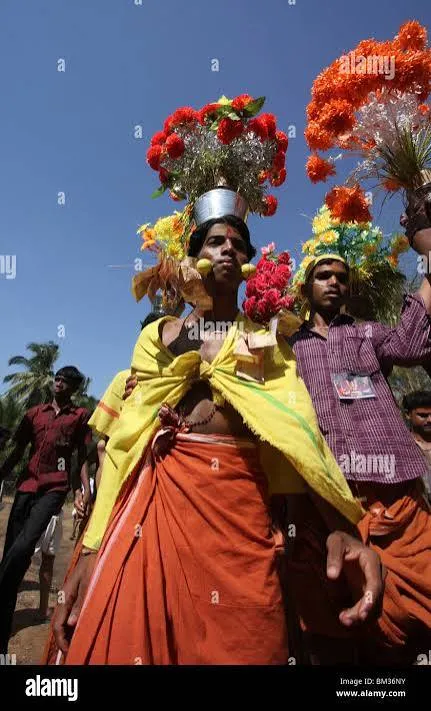
Karagattam has deeply documented religious associations. The primary devotional form, Sakthi Karagam, is a temple ritual performed as an offering to Mariamman. The pot (karagam) carried on the head is a sacred vessel associated with the deity's power and presence; in the Sakthi Karagam variant, the performer is considered to carry the goddess on their head during the procession or performance. The pot is decorated with colorful flowers, particularly neem leaves (which have medicinal and ritual significance in South Indian traditions) and a rotating paper parrot at the top, a decorative element specific to Karagattam. The dancer performs at temple festivals, typically during the Aadi (July-August) month when Mariamman worship is most intense, also associated with monsoon season and prayers for rain. The practice also extends to Gangai Amman (river goddess) worship, with the water pot serving as a ritual representation of the river's sacred waters.
Understanding the Art
Style
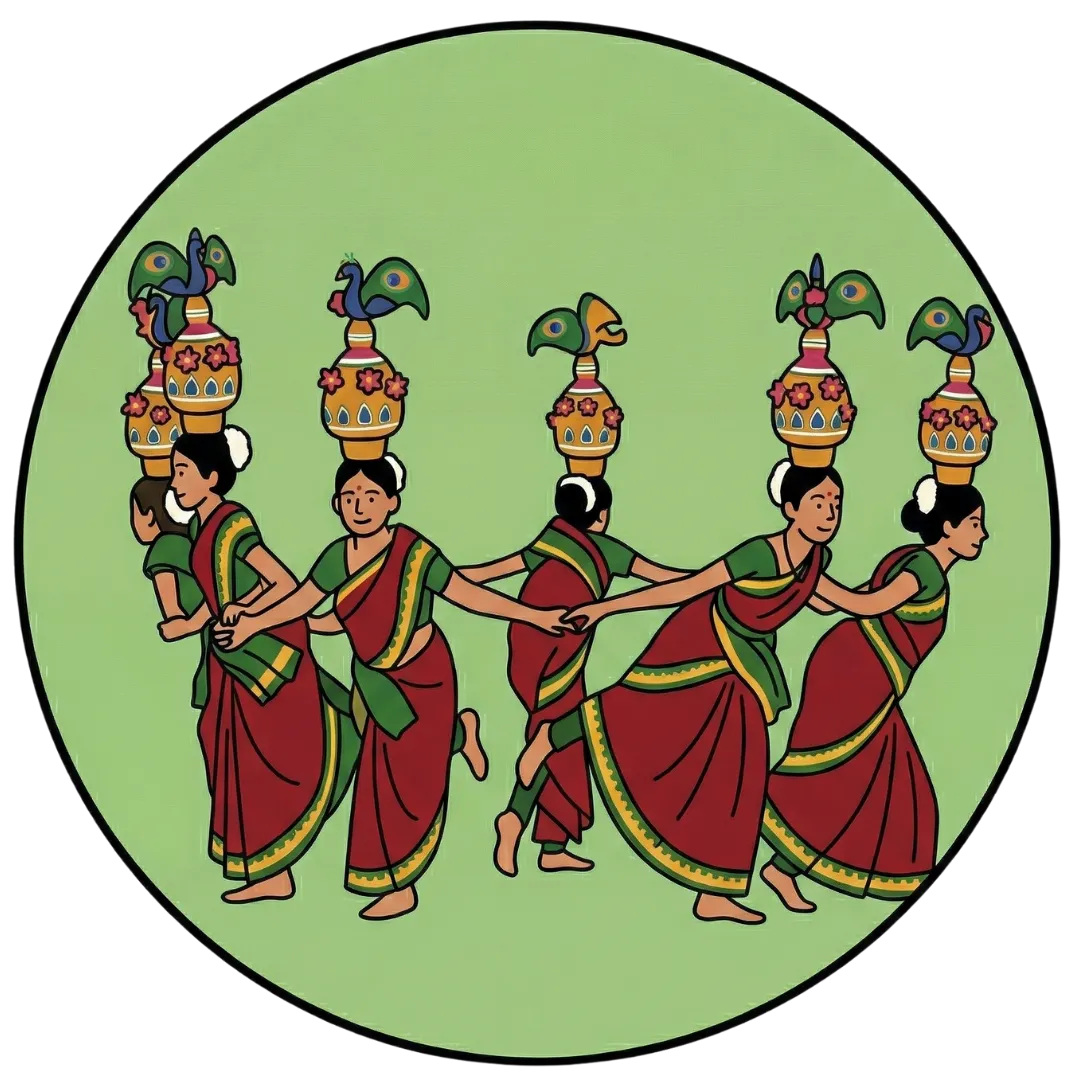
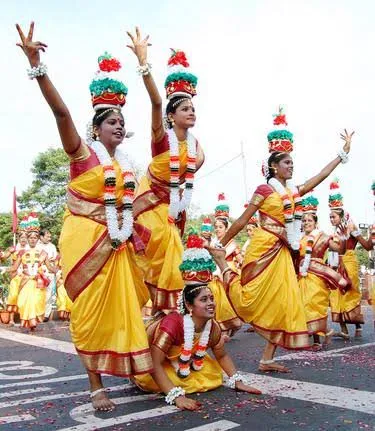
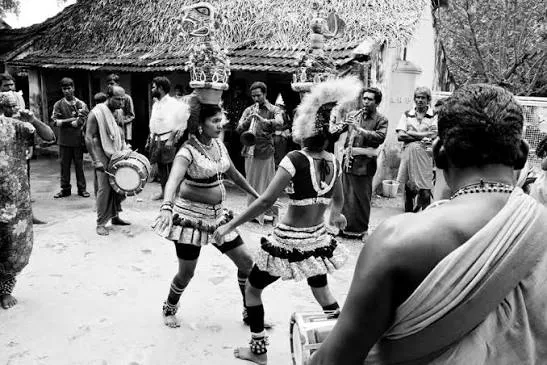
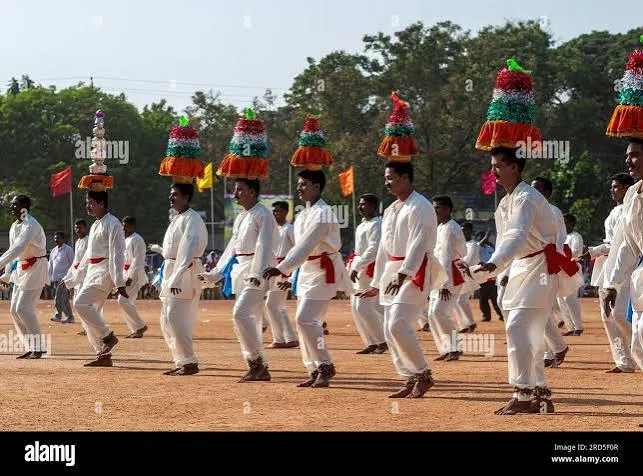
Karagattam involves the continuous balancing of a decorated pot on the dancer's head while performing body movements, footwork, and acrobatic poses. The pot may be clay or metal; metal pots have become more common in contemporary performance due to their durability. The pot is filled with water or left empty and is adorned with flowers (often fresh neem and marigold), colored paper decorations, and a rotating paper parrot (poo karagam style). Some performances layer multiple pots. The body movements include deep bends, splits, spins, and acrobatic postures such as threading a needle while bending backward, dancing on a rolling wooden block, and ascending and descending a ladder. These movements require extensive physical training and balance. Some steps described in performance accounts closely resemble circus-style acrobatics.
Central Motifs and Their Significance
The primary symbolic complex of Karagattam centers on the water pot as a symbol of divine presence and agricultural fertility. In the devotional context, the pot represents the goddess Mariamman and the bounty of rain that she provides. The dance as an act of gratitude and petition to the goddess for continued rainfall and good harvest reflects the agrarian social context in which the art form developed. The neem leaf decorations on the pot carry medicinal and protective significance specific to Mariamman worship, in which the goddess is associated with healing from disease (particularly smallpox and chickenpox, historically associated with Mariamman). The parrot is a symbol of speech, beauty, and divine communication in Tamil folk iconography.
Process
A typical Karagattam performance follows a structured sequence. The Serendipity Arts essay documents the following repertoire elements: Kumba Attam (salutations and introduction), Mookkayi Vesham (elderly female character offering proverbs and commentary), and Kuravan-Kurathi Vesham (gypsy couple performing humorous social commentary). The performance begins with the dancer offering prayers to the deity, then to the guru, and then to the assembled audience. The musical accompaniment is provided by a Naiyandi Melam ensemble, which typically includes two nathaswarams (a double-reed wind instrument), one sudhipetti (bellows organ), thalam (cymbals), and thavil drums. In southern Tamil Nadu, an urumi (two-headed drum) is also used.
Mediums Used
The karagam pot is the defining prop and is prepared specifically for each performance with fresh flowers and decorations. Clay pots were traditional; bronze and stainless steel vessels are now more common. The dancer wears a traditional cotton sari in the Sakthi Karagam form; the Atta Karagam variant allows more varied costuming. Nadaswaram (wind instrument), thavil (barrel drum), and other percussion instruments form the musical ensemble. In the theatrical KKA variant, costumes are more elaborate and include character-specific makeup and attire for the kuravan-kurathi roles.
New Outlook
Karagattam faces a complex social landscape in contemporary Tamil Nadu. The traditional Sakthi Karagam and Atta Karagam forms continue to be performed in village contexts and at cultural festivals, and the dance maintains high relevance in state cultural programming. However, the commercialized Kuravan-Kurathi Attam variant has attracted controversy due to sexually explicit content at private events, leading to legal interventions and debates about performer safety and dignity. The Serendipity Arts essay (2020) documents these tensions in detail, noting that performers face both patriarchal social pressure and exploitation within the commercial event circuit. Distinctions between the traditional and commercial forms are important for any contextual assessment of Karagattam's current status.
Learn Karagattam
Bibliography
Sources
Devi, Ragini. Dance Dialects of India. Rev. ed., Motilal Banarsidass, 1990.
Dharmalingam, B., et al. “Dance Form of Karagattam: The Regional Folk Dance in Tamil Nadu.” Shanlax International Journal of Arts, Science and Humanities, vol. 7, no. 1, 2019, pp. 71–75.
Diamond, Sarah Louise. Karagattam: Performance and the Politics of Desire in Tamil Nadu, India. PhD diss., University of Pennsylvania, 1999. ProQuest Dissertations and Theses Global, Publication No. 9937718.
Krishnadas, Priya. Folk Performing Arts: Tamilnadu. Madras Craft Foundation, 2008.
Image Sources
“Karagattam: The Good, the Bad, the Ugly.” Serendipity Arts, https://serendipityarts.org/writing-initiatives/karagattam-the-good-the-bad-the-ugly/. Accessed 4 July 2026.
“Karagattam.” Alamy, https://www.alamy.com/stock-photo/karagattam.html. Accessed 4 July 2026.
“Karagattam Folk Dance.” Alamy, https://www.alamy.com/stock-photo/karagattam-folk-dance.html. Accessed 4 July 2026.
“Karagattam Performance.” Flickr, https://www.flickr.com/photos/kals555/8401653111. Accessed 4 July 2026.
“Karagattam Performance.” Flickr, https://www.flickr.com/photos/manofernando/16194182429. Accessed 4 July 2026.