
Kamsale - The Folk Dance Tradition of Karnataka
Discover Kamsale, a devotional dance tradition of approximately one thousand years old, performed in Karnataka to worship Mahadeshwara, a regional form of Lord Shiva...
Introduction
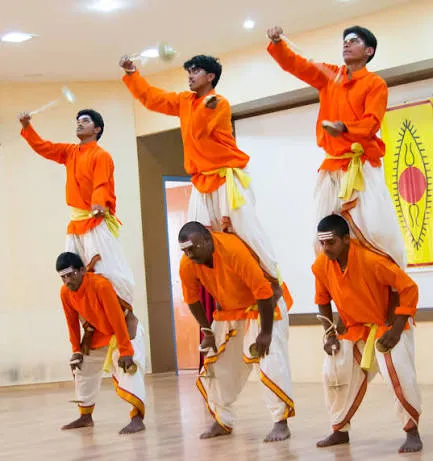
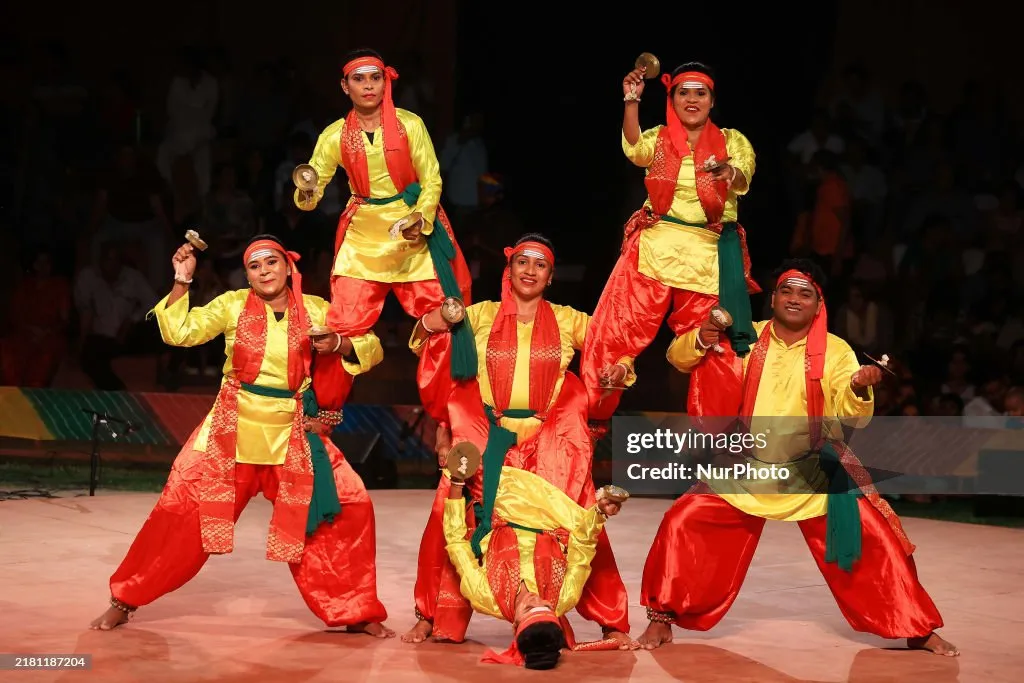
Kamsale is a devotional dance of the Halumatha (Kuruba Gowda) community of Karnataka, performed in worship of Lord Mahadeshwara, a significant regional form of Shiva venerated at the Mahadeshwara Hills (Male Mahadeshwara) in Chamarajanagara district. The dance takes its name from the kamsale, a pair of brass cymbals with a specific construction: one cup-shaped plate called 'adi battalu' and one flat plate called 'gari,' representing sky and earth respectively. The tradition is practiced in the districts of Chamarajanagara, Ramanagara, Mandya, Mysore, and Bengaluru. Kamsale is part of a diiksha (devotional vow) tradition: performers take an oath as devotees of Mahadeshwara and are taught the dance by a spiritual leader. The tradition is estimated to be approximately one thousand years old.
Etymology
The word 'kamsale' derives from the Sanskrit 'kamsya tala,' meaning bronze cymbals. In Kannada, 'kamsale' refers specifically to the pair of brass plates used in this devotional tradition. The two plates are named 'adi battalu' (the cup-shaped plate, representing the sky) and 'gari' (the flat plate, representing the earth). The cosmic symbolism of the instrument, in which the two plates represent sky and earth and their striking together represents the union of cosmic principles, is integral to the devotional understanding of the tradition.
Origin
Kamsale is traced to the eleventh century in Karnataka's regional tradition and is attributed to the devotional culture surrounding the Mahadeshwara Hills (Male Mahadeshwara Betta) in present-day Chamarajanagara district. The Mahadeshwara temple is one of the most significant pilgrimage sites for the Halumatha (Kuruba Gowda) community, and the Kamsale tradition developed as part of the ongoing devotional life of the pilgrimage complex. The diiksha system, in which performers take a formal vow of devotion before beginning to learn the dance, places the form within the institutional structure of a religious order rather than a purely artistic or community performance tradition.
Location
Kamsale is practiced in the districts of Chamarajanagara, Ramanagara, Mandya, Mysore, and Bengaluru in Karnataka, corresponding to the regions of significant Halumatha (Kuruba Gowda) community settlement. The major performance occasions are at the Mahadeshwara Hills during the festivals of Diwali, Shivaratri, and Ugadi, when large numbers of Kamsale performers converge on the pilgrimage site as part of the festival activities.
Community
Kamsale is the devotional dance of the Halumatha community, who are devotees of Lord Mahadeshwara. The tradition is taught by a spiritual leader within the community, reflecting the religious organizational structure in which the dance functions. The performer Kamsale Mahadevaiah of Mysore is documented as a notable practitioner of the tradition. The form appears in Kannada popular culture, having been featured in Kannada films including Janumadha Jodi and Jogi.
Relevance
Kamsale is a low-visibility tradition at the national level but has significant cultural relevance within the Halumatha community and within the broader folk tradition of Karnataka. Its appearance in Kannada films has given it some popular recognition beyond the devotional community context. It represents a distinctive devotional performance tradition that combines the sonic symbolism of the kamsale instrument with the physical expression of dance in a direct act of worship.
History
Background
The Mahadeshwara Hills pilgrimage tradition in Chamarajanagara is one of the oldest and most sustained pilgrimage traditions in southern Karnataka, with a history extending over at least a thousand years in folk and regional religious accounts. The Kamsale dance, as a constituent practice of this pilgrimage tradition, has developed within this long institutional context. The diiksha system connects each practitioner to the lineage of teachers stretching back to the tradition's founders, creating a form of institutional continuity that is not primarily oral but is organized through the religious authority of the spiritual teacher.
Culture and Societies
Kamsale performers take a formal devotional vow (diiksha) before beginning to learn the tradition, and the learning relationship is established with a spiritual leader rather than a performance teacher in the conventional sense. This distinguishes Kamsale from folk dance traditions transmitted through family or community practice without a religious organizational framework. At the Mahadeshwara Hills during Diwali, Shivaratri, and Ugadi, large numbers of Kamsale practitioners perform at the temple, creating a collective devotional soundscape of the kamsale cymbals. The songs performed are known as Kamsale Mela, an oral corpus that exists without printed literature.
Religious Significance
Kamsale has direct and primary religious significance. The entire tradition is organized around the worship of Lord Mahadeshwara. The kamsale instrument, with its cosmic symbolism of sky and earth, is understood as a vehicle for devotional sound that invokes the deity. The diiksha taken by performers is a religious vow; performing Kamsale is a fulfillment of that vow and an act of ongoing devotion. The pilgrimage to the Mahadeshwara Hills, which is the primary occasion for large-scale Kamsale performance, is itself a religious act.
Understanding the Art
Style
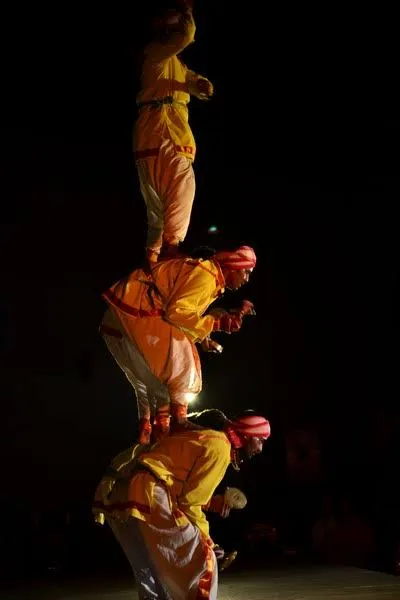
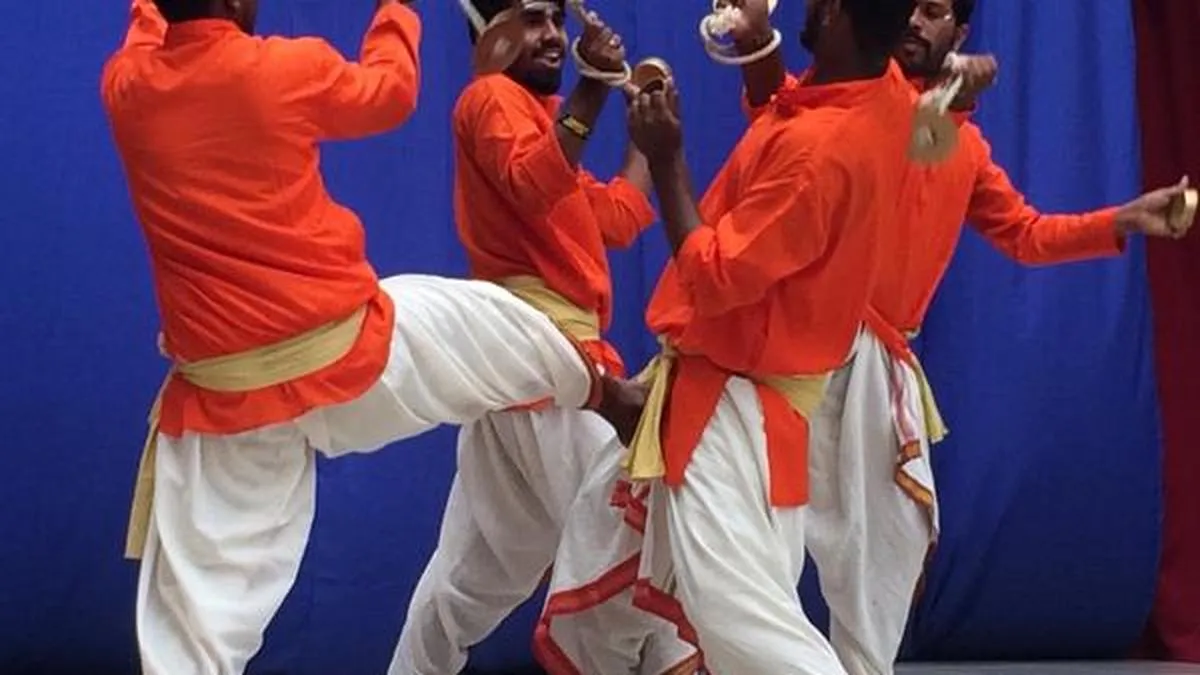
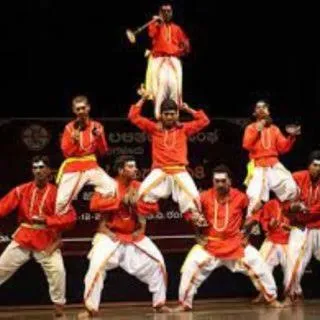
Kamsale dance combines religious fervor with what available sources describe as martial dexterity, reflecting the Kuruba Gowda community's martial heritage as a pastoral community. The movements of the dance include offensive and defensive maneuvers that echo martial training, performed while striking the kamsale cymbals in complex rhythmic patterns. The performance requires coordination between the rhythmic striking of the cymbals and the choreographed physical movements. Performances can be individual or in groups.
Central Motifs and Their Significance
The kamsale instrument is itself the central motif: the two plates of sky and earth, when struck together, produce the devotional sound that is the heart of the tradition. The martial movements of the dance body reflect the Kuruba Gowda warrior tradition and give the form a dual character as both devotional act and physical practice. The songs of the Kamsale Mela tradition preserve the devotional literature of the Halumatha community in an exclusively oral form.
Process
A Kamsale performance begins with the performer taking the two brass plates of the kamsale instrument. The smaller cup-shaped plate (adi battalu) is held in one hand and the flat plate (gari) in the other. The performer strikes the plates together in complex rhythmic patterns while executing the dance movements. Songs from the Kamsale Mela corpus are sung during the performance. The dance can be performed solo or in groups of performers who play and move together.
Mediums Used
The kamsale is the defining instrument: a pair of brass plates comprising the cup-shaped adi battalu and the flat gari. No other instruments are standardly required, though additional percussion may accompany group performances. Performers wear traditional attire associated with the devotional identity of the Halumatha community: typically white or saffron-colored dress reflecting a devotional status, with the specific costume varying by occasion and community tradition.
New Outlook
Kamsale is a vulnerable tradition at the national level, classified as low-visibility. Within the Halumatha community, the pilgrimage tradition at Mahadeshwara Hills provides a continuing institutional context for the form's practice, and the diiksha system creates a structured mechanism for transmission. However, the form's visibility outside the community is limited, and comprehensive documentation is not available in English-language academic sources. The Karnataka Janapada Akademi has some documentation of the form, and it appears in state cultural programming. The appearance of Kamsale in Kannada popular films has increased its visibility within Karnataka's popular culture but has not been accompanied by sustained preservation initiatives.
Learn Kamsale
Bibliography
Sources
Hanur Krishnamurthy. Kamsale: Male Mahadeshwara Aradhana Sampradaya. Regional publication, n.d.
Karnataka Janapada Akademi. Documentation of Karnataka Folk Dances. Karnataka Janapada Akademi, various years.
Kothari, Sunil. Folk Dances of India. Marg Publications, 1994.
Sangeet Natak Akademi. Karnataka Folk Traditions. Sangeet Natak Akademi, various years.
Image Sources
"Kamsale Kunitha." What's the Scene, https://whatsthescene.com/tag/kamsale-kunitha/. Accessed 21 July 2026.
Nair, N. "The Folk Instrument of Karnataka." The Hindu, 6 Dec. 2018, https://www.thehindu.com/entertainment/dance/the-folk-instrument-of-karnataka/article25680504.ece. Accessed 21 July 2026.
"Kamsale Performance by Devara Guddaru." ResearchGate, https://www.researchgate.net/figure/Kamsale-performance-by-Devara-Guddaru_fig1_352593696. Accessed 21 July 2026.
"Karnataka Artists Perform the Traditional Kamsale Dance." Getty Images, https://www.gettyimages.com/detail/news-photo/karnataka-artists-perform-the-traditional-kamsale-dance-news-photo/2181187204. Accessed 21 July 2026.
"File:Kamsale2.jpg." Wikimedia Commons, https://commons.wikimedia.org/wiki/File:Kamsale2.jpg. Accessed 21 July 2026.