
Hindustani Classical - The Music Tradition of North India
Dive deep into Hindustani Classical Music, a melodic framework that revolves around musical phrasing, tala and a rhythmic cycle...
Introduction
Hindustani classical music is the classical music tradition of northern India, characterised by the central role of raga, a melodic framework governing note selection and musical phrasing, and tala, a rhythmic cycle. It is melodic music without the concept of harmony as understood in Western traditions, and its fundamental quality is improvisation within a defined structural framework. The tradition emerged from the ancient foundations of Vedic chant and the theoretical system codified in texts including the Natyashastra and Sangita-Ratnakara, and acquired its distinctive modern form through the synthesis of indigenous classical traditions with Persian and Islamic musical influences from the medieval period. It diverged from the Carnatic tradition of southern India around the twelfth century.
Etymology
The term Hindustani refers to the cultural and geographical tradition of northern India and the broader Indian subcontinent, distinguishing this tradition from the Carnatic classical music of southern India. The two traditions are collectively described as Indian classical music, or Shastriya Sangeet in Sanskrit, and Marg Sangeet, meaning the path or high art. The central conceptual term is raga, derived from the Sanskrit verb ranj, meaning to colour or to please, denoting the melodic framework that gives the music its emotional and structural character.
Origin
Northern India; roots in Vedic chant traditions and the Natyashastra; distinctive modern form developed from the medieval period through the influence of Persian and Islamic musical traditions; diverged from Carnatic music around the twelfth century CE
Location
North India, Pakistan, Bangladesh; significant presence internationally through the Indian diaspora and through the work of musicians including Ravi Shankar, Pandit Bhimsen Joshi, and Ustad Zakir Hussain
Community
Historically transmitted through hereditary musician families; the gharana system organised practice around lineages of teachers and students; the tradition was democratised through the educational reforms of Vishnu Narayan Bhatkhande and Vishnu Digambar Paluskar in the early twentieth century
Relevance
Thriving; Hindustani classical music has a strong institutional, educational, and performance infrastructure globally; several of its major exponents have received the Bharat Ratna, India's highest civilian award
History
Background
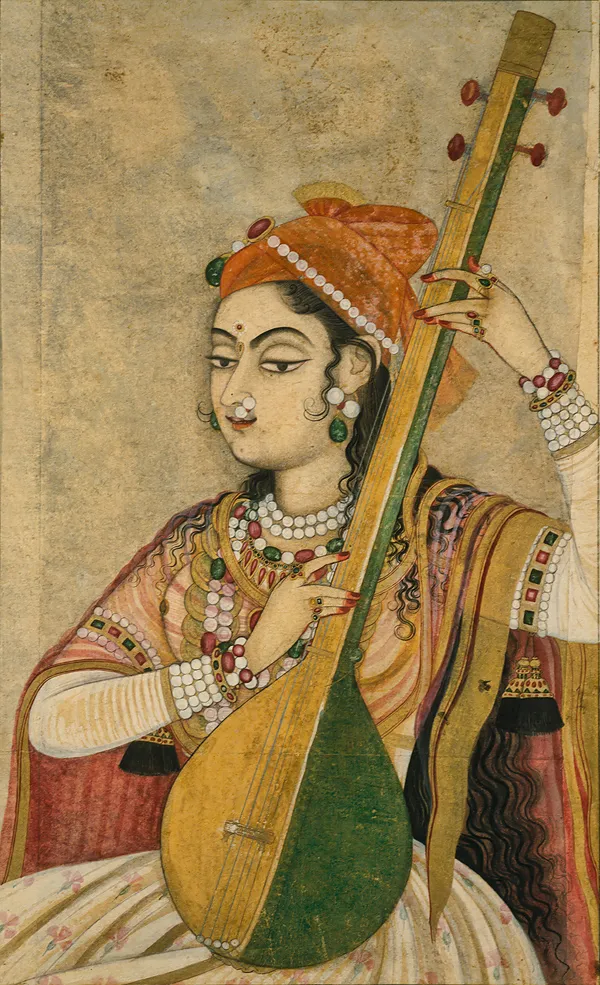
The theoretical foundations of Indian classical music are set out in the Natyashastra of Bharata, dated to the second or third century CE, and in the Dattilam, probably of the third or fourth century CE. The Sangita-Ratnakara of Sarangadeva, a comprehensive thirteenth-century Sanskrit text, is regarded by practitioners of both Hindustani and Carnatic traditions as a foundational theoretical work. Narada's Sangita Makarandha, written around 1100 CE, is the earliest text in which rules similar to those of contemporary Hindustani classical music can be identified. The divergence of the North Indian tradition from what would become Carnatic music began in approximately the twelfth century, as northern India came under the political influence of Islamic sultanates. The cultural interchange that followed produced new forms of synthesis including qawwali and khyal.The most influential musician of the Delhi Sultanate period was Amir Khusrau (1253-1325), sometimes described as the father of Hindustani classical music. He systematised many aspects of the tradition, introduced ragas including Zeelaf and Sarparda, and his influence extended to the development of the sitar and tabla. At the court of Gwalior, Raja Man Singh Tomar (1486-1516) compiled the Mankutuhal, documenting musical forms of his time and facilitating the development of dhrupad, the ancient devotional vocal form. Tansen, the court musician of Emperor Akbar in the sixteenth century, is credited with introducing major innovations in raga composition including Miyan ki Todi, Darbari Kanada, and Miya ki Malhar. Many modern gharanas trace their musical lineage to Tansen.
Culture and Societies
After the dissolution of the Mughal Empire, the patronage of classical music shifted to smaller princely courts including Awadh, Patiala, and Banaras. This dispersal of patronage produced the diversity of regional styles now organised under the gharana system. The gharana, meaning house in Urdu, is a system of social and musical organisation linking musicians by lineage or apprenticeship and by adherence to a shared performance style. Ten major khyal gharanas have been identified, including the Gwalior, Delhi, Agra, Atrauli-Jaipur, Kirana, and Patiala schools, each characterised by distinct approaches to the elaboration of raga and the presentation of composition.At the end of the nineteenth century, two scholars undertook the systematic reform of Hindustani music's educational and theoretical infrastructure. Vishnu Digambar Paluskar founded the Gandharva Mahavidyalaya in 1901, the first music school in India to run on public support and donations rather than royal patronage, and to be open to students of all backgrounds. Vishnu Narayan Bhatkhande conducted extensive fieldwork among gharanas between 1909 and 1932, producing his four-volume Hindustani Sangeetha Padhathi and consolidating the ragas of the tradition into ten thaats, or parent scale categories. This classification, though acknowledged to have limitations, provided a workable pedagogical framework that remains in use. All India Radio in the post-independence period helped bring musicians to public attention, partially compensating for the collapse of the princely patronage system.
Religious Significance
Hindustani classical music has documented and longstanding associations with religious and devotional practice. The Bhakti and Sufi traditions contributed significantly to the development of the tradition, and devotional content forms a major part of the classical repertoire across all forms. Dhrupad, the most ancient surviving vocal form, originated as temple music and remains closely associated with worship. The thumri form draws from the devotional lyrical traditions of Braj Bhasha, with particular reference to Krishna worship. The raga system itself is associated in classical theory with specific times of day and seasons, and with psychological and emotional states, linking musical practice to a cosmological understanding of sound. An aspect of the tradition going back to Sufi times is its religious neutrality in performance: Muslim ustads may sing compositions in praise of Hindu deities, and Hindu pandits may sing Islamic compositions, reflecting the syncretic character of the tradition's historical development.
Understanding the Art
Style
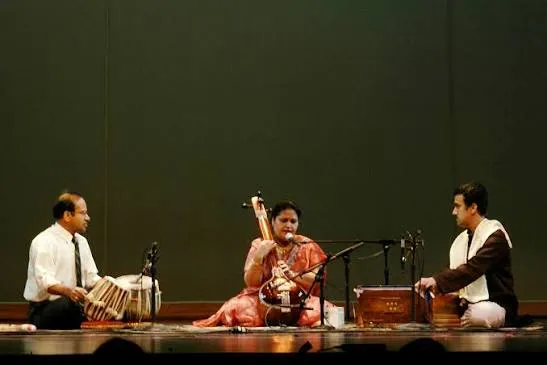
A Hindustani classical performance is structured around the exploration of a single raga across a performance session that may last from thirty minutes to several hours. The principal vocal forms are dhrupad, the most ancient and formal; khyal, which evolved from dhrupad and provides greater scope for improvisation; tarana, a rhythmically driven form using non-lexical syllables; and thumri, the semi-classical form associated with devotional and romantic lyrical content. Dhrupad has four banis or singing styles: Gauhar, Khandar, Dagur, and Nauhaar. The gradual evolution from structured composition to improvised elaboration follows a defined sequence: alap, the slow and unmetered exploration of the raga; jod, the introduction of a steady pulse; jhala, a rapid elaboration; and bandish, the composed refrain that anchors the performance. Tala provides the rhythmic framework, with major cycles including Teentaal (16 beats), Ektaal (12 beats), Jhaptaal (10 beats), and Rupaktaal (7 beats).
Central Motifs and Their Significance
The raga is the central organising principle of Hindustani classical music. Each raga is defined by its ascending and descending scale, its characteristic phrases and ornamental movements, its vadi and samvadi notes of primary and secondary importance, its associated time of day and season, and its characteristic emotional quality or rasa. The North Indian system recognises approximately ten thaats or parent scales from which the ragas are derived, based on Bhatkhande's classification. Microtonal nuances, known as shrutis, are integral to the authentic presentation of ragas. The sargam, the system of solmisation using syllables sa, re, ga, ma, pa, dha, ni, provides the pedagogical framework for learning the raga vocabulary.
Process
Hindustani classical music is transmitted through the guru-shishya parampara, the teacher-student relationship, which historically involved the student living in close proximity to the teacher for an extended period, sometimes for years or decades. This system facilitated the transmission of the subtle improvisational conventions and stylistic decisions that define a gharana's approach. The decline of the courtly patronage system in the twentieth century led to a partial institutionalisation of training through conservatories and universities, though many prominent musicians continue to regard direct one-to-one transmission with a single teacher as essential to the development of a performing voice or instrumental technique.
Mediums Used
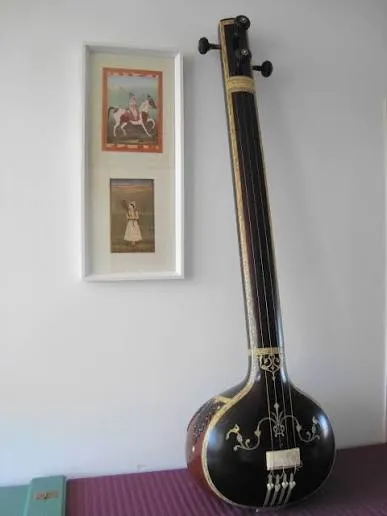
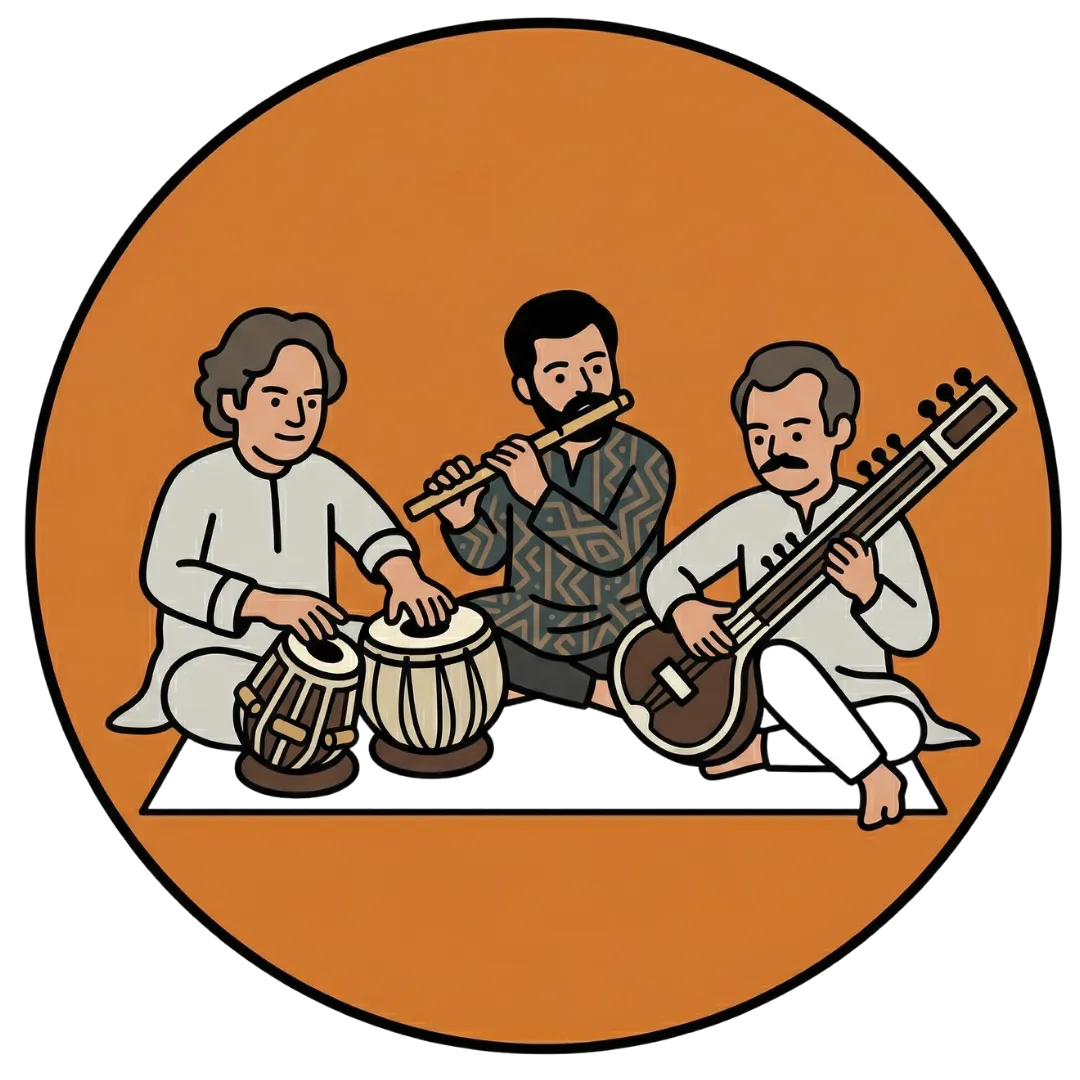
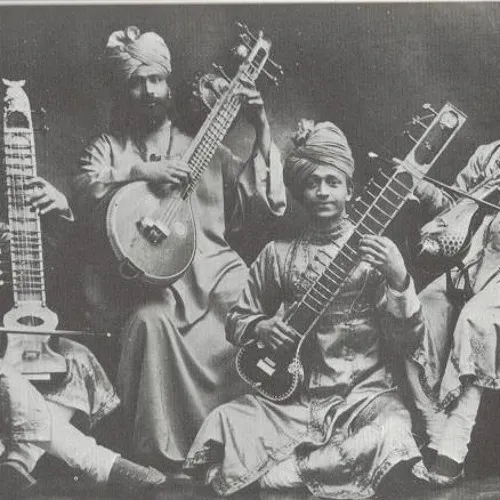
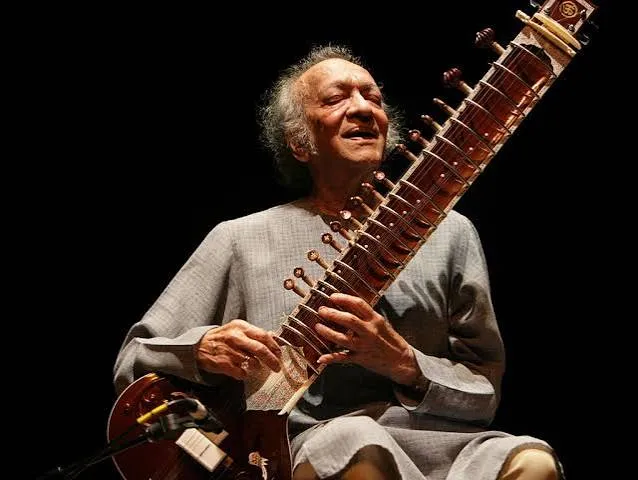
The principal vocal form is the khayal bandish, the composed text sung in a specific raga and tala. Major instruments include the sitar, sarod, tabla, sarangi, harmonium, bansuri, and shehnai. The tabla, a pair of hand drums, is the primary percussion instrument of Hindustani classical music. The tanpura provides the continuous drone that anchors the performance in the tonal centre of the raga. The sitar, popularised internationally by Ravi Shankar, is a plucked string instrument with frets. The sarod, a fretless instrument allowing sliding notes, is associated with a different tradition of improvisational elaboration.
New Outlook
Hindustani classical music maintains a robust institutional and performance infrastructure in India and internationally. All India Radio, Bangladesh Betar, and Radio Pakistan continue to broadcast classical performances. The Sangeet Natak Akademi, the national academy of music, dance, and drama established by the Government of India, supports musicians and institutions. Musicians including Pandit Ravi Shankar, Pandit Bhimsen Joshi, and Ustad Bismillah Khan have been awarded the Bharat Ratna. International exposure from the 1950s onwards through musicians such as Ravi Shankar, who performed at Monterey and Woodstock, established the tradition in global consciousness. The gharana system has faced challenges from the accessibility of recorded music and the exposure of contemporary students to multiple teachers and traditions, which some observers note may affect the cultivation of distinct stylistic identities.
Learn Hindustani Classical Music

Bibliography
Sources
Bhatkhande, Vishnu Narayan. Hindustani Sangeetha Padhathi. 4 vols., 1909–1932.
Bor, Joep, editor. The Raga Guide: A Survey of 74 Hindustani Ragas. Nimbus Records, 1999.
Raja, Deepak. Hindustani Music: A Tradition in Transition. D.K. Printworld, 2005.
Ghosh, Nikhil. Fundamentals of Raga and Tala with a New System of Notation. Bombay, 1968.
Neuman, Daniel M. The Life of Music in North India: The Organization of an Artistic Tradition. Wayne State University Press, 1980.
Clayton, Martin. Time in Indian Music: Rhythm, Metre, and Form in North Indian Rag Performance. Oxford University Press, 2000.
Image Sources
"Vintage Indian Classical Music." SoundCloud, https://soundcloud.com/darrensangita/sets/vintage-indian-classical-music. Accessed 09 July 2026.
"Baroque Era." Frary Guitar, https://fraryguitar.com/history_frary73/Baroque06.htm. Accessed 09 July 2026.
"Indian Classical Music." Caleidoscope, https://caleidoscope.in/art-culture/indian-classical-music. Accessed 09 July 2026.
"An Indian Classical Music Performance." Wikimedia Commons, https://commons.wikimedia.org/wiki/File:An_Indian_classical_music_performance.jpg. Accessed 09 July 2026.
"Male Vocal Tanpura, Miraj, 1963." Wikimedia Commons, https://commons.wikimedia.org/wiki/File:Male_vocal_Tanpura,_Miraj_1963.JPG. Accessed 09 July 2026.