

Guler Painting: Himachal’s Most Refined Pahari Miniature Art
Let's learn about Guler Miniature Paintings!
Introduction and Origin
From the Punjab Hills of Himachal Pradesh comes one of India's most quietly breathtaking painting traditions. Guler painting, practised in the small hill state of Guler with its capital at Haripur, represents the point where Mughal technical refinement met the deep emotional world of Rajput storytelling. Between 1450 and 1780 AD, artists working under the Guler kings produced miniatures of extraordinary delicacy, and the legacy they built went on to shape the entire Pahari School of painting, including the celebrated Kangra style. For anyone curious about traditional Indian art, the Guler school offers an entry into one of the subcontinent's most sophisticated artistic traditions.
What Is Guler Painting?
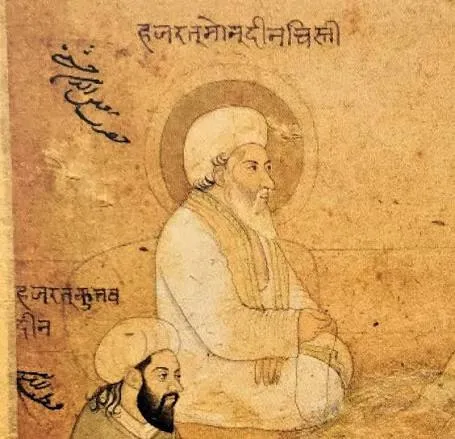
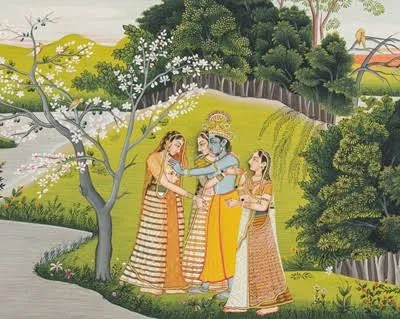
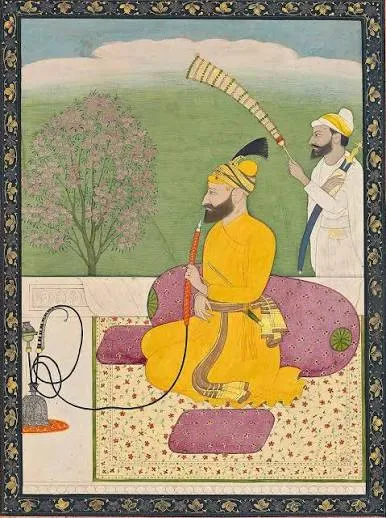
Guler painting is a school of Pahari miniature painting that originated in the hill state of Guler in present-day Himachal Pradesh. The name itself traces back to the word gwala, meaning a herder, and the art form was once called Gwaler, which translates to the place of the cowherd. These miniatures are made on handmade paper from Sialkot, painted with mineral colours, vegetable extracts, dyes, and indigo, with fine brushes made from squirrel hair. Gold and silver foils called varakh are used for decorative borders and embellishments. The paper surface is prepared by burnishing it with stone after coating it with a mixture of khadiya and gond. The paintings are characterised by neat, distinctly defined forms, meticulous linework blended with expressive colour, and a romantic sensibility that sets Guler apart from the more formally Mughal-influenced Pahari works.
History and Origin
The Guler school is considered an ancient style of Indian painting, with its period of greatest flourishing spanning from 1450 to 1780 AD under successive rulers of the Guler kingdom. Artists appear to have been well established at court by the end of Dalip Singh’s reign. The most celebrated family to emerge from this era was that of Pandit Seu, whose son Nainsukh became one of the outstanding miniature painters of the 18th century. By the mid-1700s, several Guler artists had moved to neighbouring kingdoms, most notably to Kangra, where they established what became known as Kangra Kalam, considered to have its origins directly in the Guler School.
The school absorbed multiple cultural influences over its long history. Mughal court painting left a deep imprint on Guler’s technique, while Rajput aesthetics shaped its emotional and narrative content. The 18th-century growth of Pahari painting was significantly driven by Guler, and when the style spread into the Kangra valley around 1780, it gave birth to the Kangra school. Later in the 19th century, as Sikh power consolidated across the Punjab hills, painters increasingly looked to the Sikh courts for patronage, and the Sikh way of life began influencing the visual world of Guler miniatures.
Key Features and Famous Artists
Key Features and Visual Style
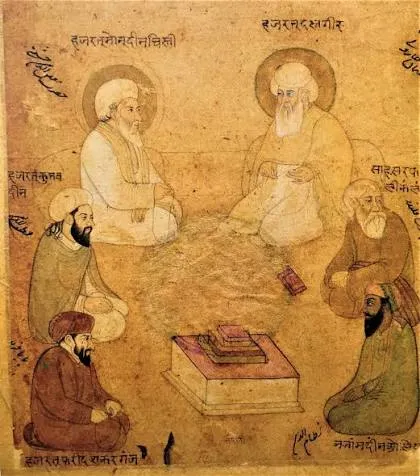
Guler painting occupies a unique position within the Pahari School because it synthesises Mughal technical discipline with a quality of romantic emotionalism that is distinctly its own. The forms are neat and clearly defined, the lines meticulous, and the overall effect is one of careful refinement. Unlike several other Pahari schools, Guler paintings show relatively less Mughal influence in their thematic and emotional register, leaning instead toward devotional and romantic subjects treated with warmth and immediacy.
Colours are derived from minerals, vegetable extracts, dyes, and indigo, producing a palette that is rich but never harsh.
Gold and silver varakh foils are applied to enhance borders and add decorative embellishment to the finished work.
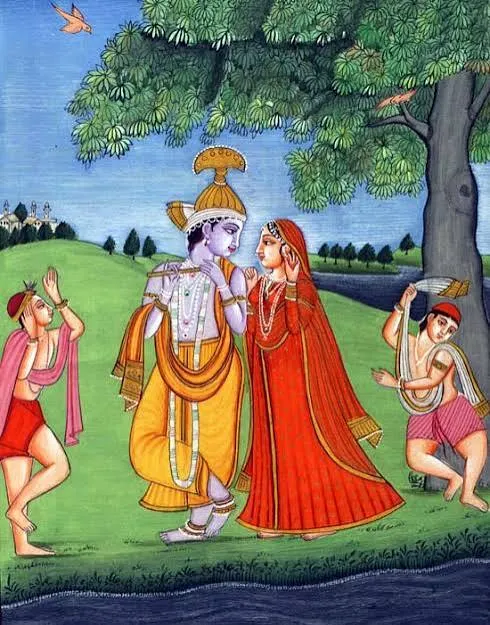
Central motifs include the romance of Radha and Krishna as a symbol of heavenly love, royal portraits, court scenes, and scenes drawn from the Ramayana and Mahabharata.
Favourite literary and romantic themes include Jayadeva’s Gita Govinda, Bihari’s Sat Sai, the Bhagwat Purana, and Punjabi romances such as Sassi-Punnun, Heer-Ranjha, and Sohni-Mahiwal.
The painting process begins with a pencil sketch on prepared handmade paper, proceeds lightest colour to darkest, and completes foreground before background, with a finished painting taking one to two weeks on average.
Surrounding natural scenery is integrated as a stylistic element, with the greenery and landscape of the hills appearing as expressive backdrops within the compositions.
Famous Artists of Guler Painting
The most transformative figure in the history of Guler painting is Nainsukh of Guler, Himachal Pradesh, who worked in the mid-18th century and is recognised as one of the greatest Pahari miniature painters ever to have worked in the subcontinent. A member of the celebrated Pandit Seu family, Nainsukh developed a personal, intimate style that captured both the courtly and the human dimensions of his subjects with unusual directness. His brother Manaku, also from Guler, contributed a major series of works based on the Gita Govinda and the Bhagwat Purana, and is considered equally important to the development of the school.
In the modern era, Vijay Sharma of Himachal Pradesh stands as the artist most responsible for keeping the Guler-Pahari tradition alive. A Padma Shri awardee recognised in 2009, Sharma’s miniatures have been exhibited in Europe and the United States. He was commissioned by the Himachal Pradesh government to create a miniature painting as a tribute to Gulzar during a state conference. He runs the NGO Shilpa Parishad, which works specifically for advancing the Pahari art form and is credited with preserving a tradition that was at risk of disappearing.
How to Learn Guler Painting
If you want to learn Guler painting or explore the broader Pahari miniature tradition, Rooftop offers online courses taught by practising master artists from this tradition. The courses cover foundational techniques including surface preparation, pigment mixing, linework, and compositional approaches drawn directly from the classical Pahari School. Learning from artists who work within a living tradition gives you access to knowledge that no textbook or museum visit can replicate. You can start at your own pace from anywhere in India.
Where to See and Buy Guler Painting
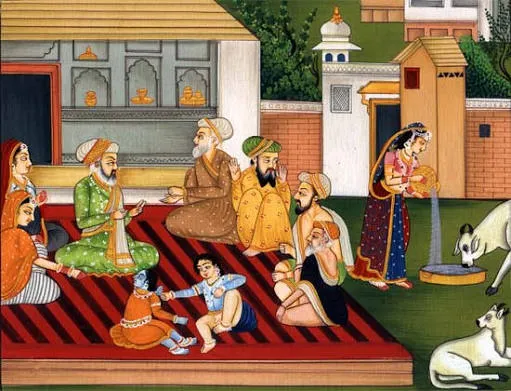
Authentic Guler paintings are held in major museum collections across India, including the National Museum in New Delhi and the Bhuri Singh Museum in Chamba, Himachal Pradesh, which holds an important collection of Pahari works. The Himachal Pradesh State Museum in Shimla also preserves examples from this school. For those who want to bring a piece of this tradition home, Rooftop’s shop carries original artworks by practising Indian folk and traditional artists. You can also explore the full range of Indian folk art on the Rooftop Art Wiki to understand how Guler fits within the wider landscape of Pahari School painting and miniature traditions from the hills.
Learn Guler Miniature

Frequently Asked Questions
What is Guler painting and where does it come from?
Guler painting is a school of Pahari miniature painting that developed in the hill state of Guler, now part of Himachal Pradesh in northern India. It flourished between 1450 and 1780 AD under the patronage of Guler’s ruling kings, and it is considered the origin point of the Pahari School, which later produced the Kangra style. The name Guler derives from the word gwala, meaning a herder, and the capital of this small hill state was the town of Haripur.
Which state is Guler painting from, and what school does it belong to?
Guler painting comes from Himachal Pradesh in northern India, from a former hill state whose capital was Haripur. It belongs to the Pahari School of miniature painting, a broad tradition of hill-state court painting that flourished across the Punjab hills. Guler is considered the school from which the celebrated Kangra style directly descended when Guler artists migrated to the Kangra valley around 1780.
Who are the most famous artists of the Guler painting tradition?
The most celebrated historical artists are Nainsukh and his father Pandit Seu, who worked at the Guler court in the 18th century. Nainsukh’s brother Manaku produced major works on themes from the Gita Govinda and the Bhagwat Purana. In the contemporary period, Vijay Sharma of Himachal Pradesh, a Padma Shri awardee, is the artist most associated with the revival and preservation of this tradition, and his works have been exhibited internationally.
What materials and colours are used in Guler painting?
Guler paintings are made on handmade paper from Sialkot, which is prepared by burnishing with stone after applying a coating of khadiya and gond. Pigments are derived from minerals, vegetable extracts, dyes, and indigo, giving the palette a refined and luminous quality. Paintbrushes are made from squirrel hair, and gold and silver varakh foils are applied to enhance borders and add embellishment to completed works.
How is Guler painting different from other Pahari miniature styles?
Guler painting is considered the most refined of the Pahari schools, distinguished by its neat and distinctly defined forms, meticulous linework, and a romantic emotional sensibility that balances Mughal technical precision with deep Rajput feeling. Unlike some later Pahari styles, Guler paintings show relatively less Mughal visual influence in their thematic approach, favouring devotional and romantic subjects. The school also gave birth to the Kangra style, making it foundational to the development of Pahari painting as a whole.
Can I learn Guler painting or Pahari miniature art online?
Yes. Rooftop offers online courses in Indian miniature painting traditions taught by master artists. The courses are self-paced and accessible from anywhere in India, covering the techniques, materials, and compositional principles of traditional Pahari and miniature schools. Starting with foundational skills such as pigment preparation and linework gives learners the grounding they need to progress into more complex compositions.
Guler painting carries within it the full emotional range of the Pahari hills: devotion, romance, court life, and the beauty of nature. It is a tradition that shaped Indian miniature painting for centuries and continues to reward everyone who encounters it. Explore Pahari miniature courses on Rooftop and begin your journey into one of India’s most refined traditional art forms.
Bibliography
Sources
Goswamy, B.N.(1968) Pahari Painting: the family as the basis of style, Marg Publication, XXI, no. 4, 17-62.
Randhawa, M. S., Randhawa, D. S. (1982) Guler Painting. New Delhi: Publications Division Govt. of India.
Randhawa, M. S. (1953) Guler the birthplace of Kangra Art, Marg, VI, no. 4, 30-42.
Image Sources
"A Kangra School Painting from a Gita Govinda Series Depicting Carefree Krishna, Guler, 18th–19th Century." Zacke, https://www.zacke.at/auction/lot/lot-624---a-kangra-school-painting-from-a-gita-govinda-series-depicting-carefree-krishna-guler-18th-19th-century/. Accessed 21 July 2026.
"Detail of Hazrat Muin-ud-Din from a Guler Painting Showing an Imaginary Meeting of Sufi Saints." Wikimedia Commons, https://commons.wikimedia.org/wiki/File:Detail_of_Hazrat_Muin-ud-Din_from_a_Guler_painting_showing_an_imaginary_meeting_of_Sufi_saints.jpg. Accessed 21 July 2026.
"Guler Painting Showing an Imaginary Meeting of Sufi Saints (Baba Farid, Khawaja Qutub-ud-din, Hazrat Muin-ud-Din, Hazrat Dastgir, Abn Ali Kalandar, and Khawaja Nizamuddin Aulia)." Wikimedia Commons, https://commons.wikimedia.org/wiki/File:Guler_painting_showing_an_imaginary_meeting_of_Sufi_saints_(Baba_Farid,_Khawaja_Qutub-ud-din,_Hazrat_Muin-ud-Din,_Hazrat_Dastgir,_Abn_Ali_Kalandar,_and_Khawaja_Nizamuddin_Aulia).jpg. Accessed 21 July 2026.
"Guler Style." Hill Post, https://hillpost.in/2005/03/guler-style/93/. Accessed 21 July 2026.
"Painting of a Raja, Probably Raja Raj Singh of Chamba State, Smoking on a Terrace, Guler-style at Chamba, ca. 1790." Wikimedia Commons, https://commons.wikimedia.org/wiki/File:Painting_of_a_raja,_probably_Raja_Raj_Singh_of_Chamba_State,_smoking_on_a_terrace,_Guler-style_at_Chamba,_ca.1790.jpg. Accessed 21 July 2026.