
Gambhira - The Folk Dance Tradition of West Bengal
Get to know about Gambhira, that marks the Bengali New Year by performing the folk art that combines musical theatre, dance, song, and satire
Introduction
Gambhira is a folk performing art from the Malda district of West Bengal that combines musical theatre, dance, song, and satire to address social and regional issues. It is traditionally performed in connection with the Chaitra Sankranti festival, which marks the Bengali New Year and is associated with the worship of Lord Shiva. The form uses satirical skits and song to critique social injustice, political conduct, and communal affairs, and has served historically as a public forum through which villagers articulate their concerns before symbolic representations of divine authority. A distinctive feature of Gambhira is its inclusion of an episode resembling a news bulletin, in which performers report on local events and controversies, a feature that appears to be unique among Bengal's folk theatrical traditions.
Etymology
The name derives from the Sanskrit gambhira, meaning profound, deep, or grave, which in Bengali folk usage evolved to denote a quality of poise or seriousness associated with Lord Shiva. Shiva is known in folk tradition as Gambhira, meaning the solemn or deep one, and the performance tradition bears his epithet as its name. A secondary interpretation connects the term to gambhiri, an old term for a chandimandap, or community space for worship. Haridas Palit, a researcher from the Malda Jatiyo Shikha Samiti, traced this connection in his work Addyer Gambhira. Origin: Malda district, West Bengal, and Chapai Nawabganj, Bangladesh; roots traced to the cultural activity of the Pala and Sena dynastic periods
Location
Malda and Murshidabad districts of West Bengal; Chapai Nawabganj, Rajshahi, and Naogaon districts in Bangladesh
Community
Predominantly the Koch, Poundrik, and Rajbanshi communities of the Malda region; performed by both Hindu and Muslim communities, representing a notably secular dimension of a festival primarily associated with Shiva worship
Relevance
Vulnerable; the form continues to be actively performed in Malda and in Bangladesh, but faces pressures from electronic media and changing audience demographics
History
Background
The roots of Gambhira are traced to the Koch people residing in the Malda region, and to their agricultural traditions and performance forms, including an older tradition known as Bolbahi or Bolbai consisting of songs and satirical skits about local events. Scholars have connected the tradition's origins to the broader cultural history of the Gour region, encompassing present-day Malda, during the Pala and Sena dynastic periods. The current form of Gambhira emerged during the Pala period in the tenth century according to some sources, though detailed documentation is limited. Haridas Palit and the economist Benoy Kumar Sarkar traced the history of the form and connected it to the cultural history of the Vedic period, though such long-range historical claims require cautious assessment given the limited documentary evidence available.During the colonial period, Gambhira became a documented vehicle of social and political dissent. In 1945, a performance by Motor Babu's troupe led to arrests for criticising English Bazar officials and zamindari exploitation. During the Swadeshi period, Benoy Kumar Sarkar engaged with Gambhira as a medium of nationalist expression. A song was banned for using the term bilati indur, or foreign rat, to refer to British colonisers, and the poet-singer Md. Sufi was briefly imprisoned.
Culture and Societies
Gambhira festivals traditionally unfolded over four to five days in the Malda district. The first day involved the Ghatbhara ceremony, the installation of a sacred pot marking the beginning of Shiva Puja. The second and third days featured Choto Tamasha, children performing masked dances, and Bado Tamasha, adults enacting satirical skits. The fourth day included Bolbai songs as a closing element. The format features two principal performers playing the roles of nana, a maternal grandfather representing Lord Shiva, and nati, a grandson, engaging in dialogue that allows the community's concerns to be articulated before the symbolic divine authority. A chorus reinforces catchphrases from behind.A significant cultural feature is that while Gambhira is a Hindu festival, Muslim communities of the Malda region participate actively in performances. When Muslim performers stage Gambhira, the characters are adapted from Hindu figures to those more appropriate to the community's own tradition. This intercommunal participation is well-documented and represents a notable dimension of the form's cultural significance. The form is also performed in Bangladesh, where the grandfather-and-grandson structure is used to address socio-political issues in the Dinajpur, Rangpur, and Rajshahi regions.
Religious Significance
Gambhira has documented religious significance in its connection to the Gajan festival associated with Shiva worship at the Bengali New Year. An idol of Shiva is installed in an open hut prior to performance. The first performance part, the bondolan, involves performers singing and dancing to invoke Shiva. An actor portraying the god, in a costume incorporating simulated matted hair and tiger skin, then listens to the troubles of the audience, serving as a divine interlocutor for community concerns. However, the satirical and social commentary dimensions of the form have consistently occupied an equal or greater prominence than the strictly devotional content, and the participation of Muslim communities in what is formally a Shiva festival demonstrates the secular dimensions of its social function.
Understanding the Art
Style
Gambhira is an all-male performance tradition in which all roles, including those of female characters and goddesses, are enacted by men. The third part of the performance, the charyari, is a skit performed by four actors in which the subject matter changes between scenes, accompanied by gestures, comical body movements, and music. The dialogues are improvised around an overarching theme rather than delivered from a written script. Satire is delivered through the combination of song and dialogue; music is often adapted from popular Bengali and Hindi cinema songs to match the contemporary tone of the skits. The local news reporting section, called reporting, is staged as a media programme in which actors play journalists reporting on current local events.
Central Motifs and Their Significance
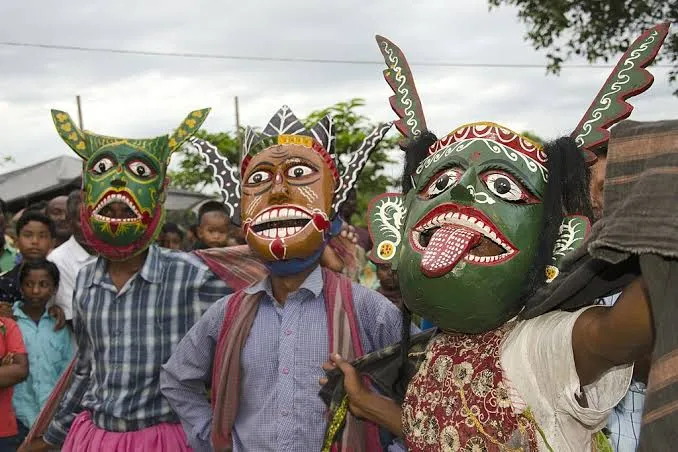
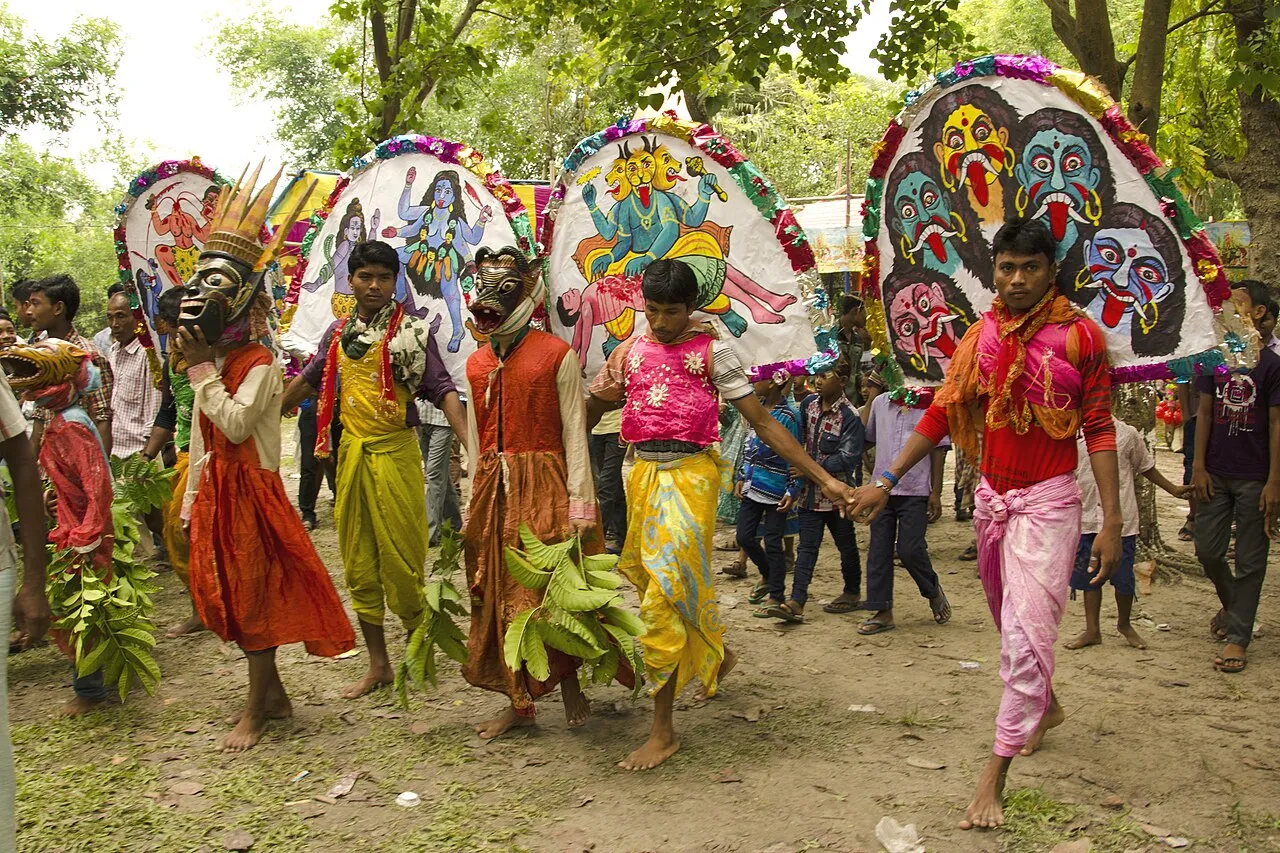
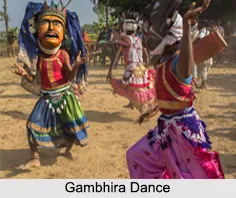
The central structural motif of Gambhira is the dialogue between the grandfather nana, representing Shiva and thus divine authority, and the grandson nati, representing the community. Through this framework, concerns about social inequality, political corruption, caste discrimination, gender inequality, and economic hardship are articulated. Historical examples document the form's engagement with colonial exploitation, post-independence political turbulence, and contemporary communal politics. Songs have addressed zamindari abuses, the partition of Bengal and its effect on the silk weavers of Malda, and corruption among officials. The masks worn in certain sections of the performance, particularly the Mukha Naach or masked dance on the Bado Tamasha night, represent deities including Kali, Chamunda, and Shiva, as well as characters from the Puranas. The performers are believed to undergo a transformation into the deity during the dance.
Process
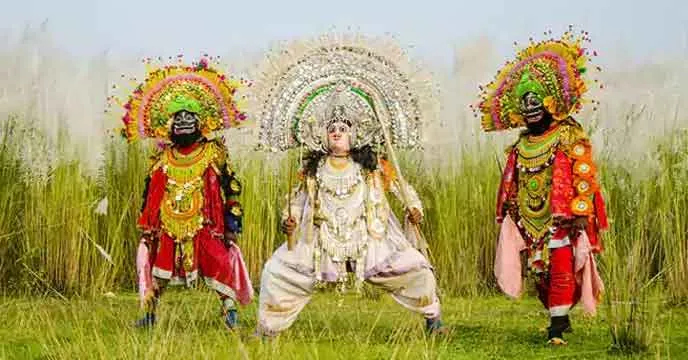
Gambhira performances take place in open-air settings, often in front of village gathering spaces or community mandaps. Costumes are deliberately minimal, intended to represent marginalised communities including Rajbanshi, Chai, Poundra, Koch, and Mahali. The use of torn or rejected dress is an iconoclastic statement critiquing the culture of elite colonial Bengal. Masks used in the tradition are carved from neem and fig trees by local craftspeople. Instruments include the harmonium, flute, dhak or large drum, Judi, and cornet. Dancers wear nati, or brass anklets, on their feet, producing metallic sounds synchronised with footwork.
Mediums Used
The musical instruments of Gambhira are the dhak, harmonium, flute, drums, cymbals, cornet, and in some forms the tabla. Masks are carved from neem and fig wood by local craftspeople. Costumes are minimal by design. Performance occurs in open-air community spaces without elaborate stage construction.
New Outlook
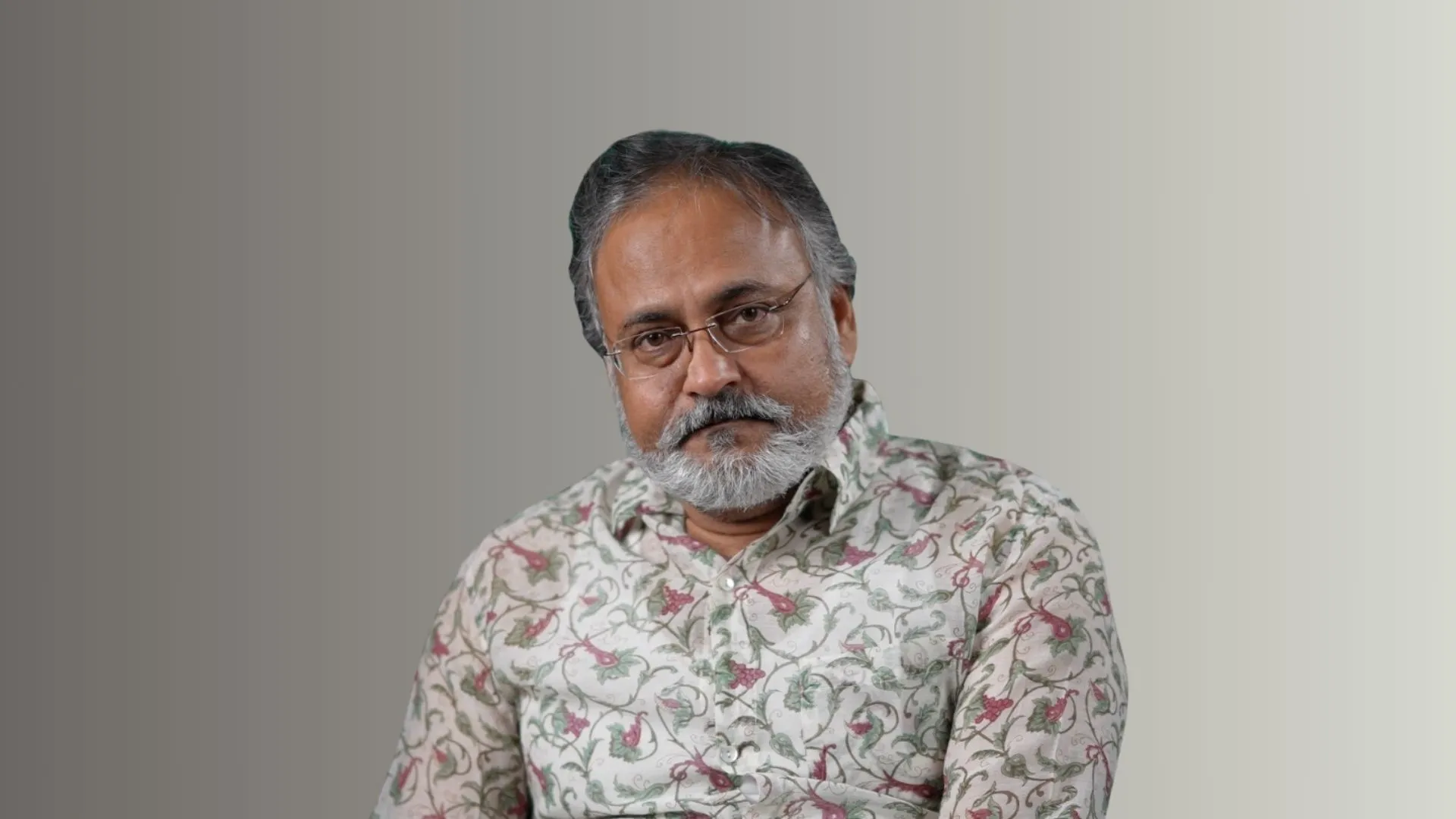
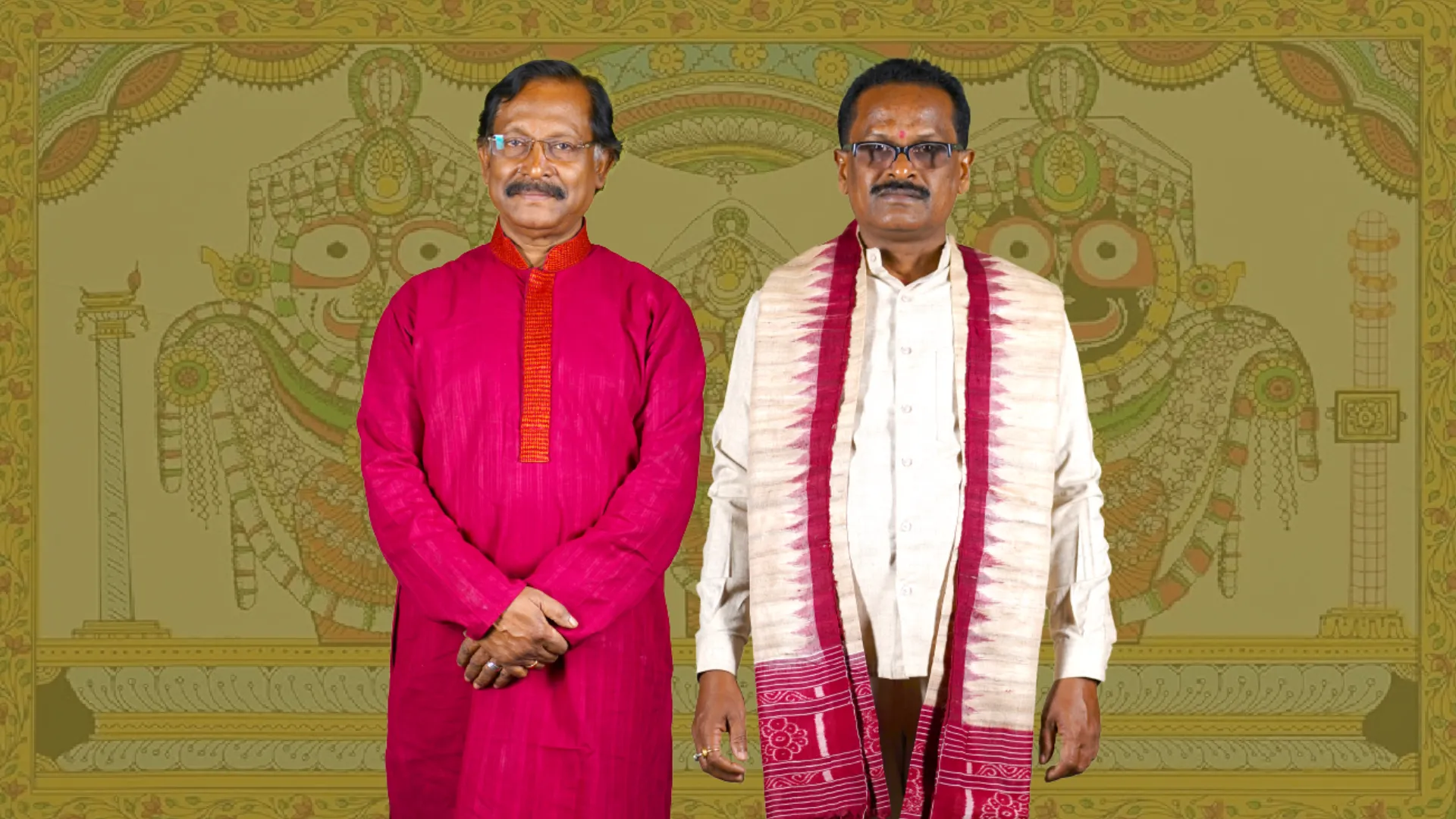
Gambhira continues to be performed in the Malda district and in Bangladesh, where it has attracted renewed scholarly and cultural attention. The tradition is maintained by troupe leaders including Dhonkrishna Adhikari and Krishna Dhan Das Goswami, who have passed the tradition to younger practitioners. In Bangladesh, new performers are incorporating contemporary sounds into the traditional framework. The digital age has created pressure on Gambhira's role as a medium for popular opinion formation, as social media and electronic journalism now fulfil many of the informational functions previously served by the form. The adaptation of cinematic music into Gambhira performances represents a response to changing audience expectations.
Learn Gambhira
Bibliography
Sources
Palit, Haridas. Addyer Gambhira. Malda.
Roy, Aratrika. "Gambhira: A Study of Localized Culture of Malda in Bengali Folklore." RCSAS, vol. 3, no. 3, 2023.
"Gambhira Dance and Festival: Communication with Our Past and Present." Academia.edu, MA thesis, various Calcutta universities, https://www.academia.edu/.
"Gambhira." MAP Academy: Encyclopaedia of Art, https://mapacademy.io/article/gambhira/.
Image Sources
"Folk Dances of West Bengal." IndiaNetZone, https://www.indianetzone.com/folk_dances_west_bengal. Accessed 09 July 2026.
"Gambhira Dance." Wikidata, https://www.wikidata.org/wiki/Q61363131. Accessed 09 July 2026.
"Gambhira Folk Dance: The Plight of the Unemployed Will Come Up in Gambhira." Uttarbanga Sambad, https://uttarbangasambad.com/gambhira-folk-dance-the-plight-of-the-unemployed-will-come-up-in-gambhira/. Accessed 09 July 2026.
"Folk Dance Drama: Gambhira Festival." Caleidoscope, https://caleidoscope.in/art-culture/folk-dance-drama-gambhira-festival. Accessed 09 July 2026.
"Gombhira Dance: A Folk Dance of Malda in West Bengal." Culture and Heritage, 2023, https://cultureandheritage.org/2023/11/gombhira-dance-a-folk-dance-of-malda-in-west-bengal.html. Accessed 09 July 2026.